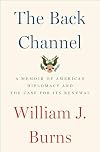
I picked up this book to understand the machinery of American diplomacy as I’ve been fascinated by the reach and influence of the State Department since I was a kid watching the news on CRT screens.
On that front, I was left wanting more. While Burns recounted in his book high-level meetings with colleagues, superiors, counterparts and even heads of state, the narrative often feels anecdotal rather than procedural. I was looking for the "logistics" of the craft: the gritty details of how backchannels are built and the daily friction of embassy life. Instead, these elements are mostly mentioned in passing.
However, the book is still an essential read for its "backstage tour" of modern history. Burns provides an incredible vantage point on the tectonic shifts in global power, specifically the rise of Putin in Russia and the cascading turmoil across the Middle East.
On that front, I was left wanting more. While Burns recounted in his book high-level meetings with colleagues, superiors, counterparts and even heads of state, the narrative often feels anecdotal rather than procedural. I was looking for the "logistics" of the craft: the gritty details of how backchannels are built and the daily friction of embassy life. Instead, these elements are mostly mentioned in passing.
However, the book is still an essential read for its "backstage tour" of modern history. Burns provides an incredible vantage point on the tectonic shifts in global power, specifically the rise of Putin in Russia and the cascading turmoil across the Middle East.
Merely an hour after finishing this book, the Wall Street Journal ran a story on a new Foxconn-operated Mac Mini facility in the US.
Thanks to the insights I’d just read in the book, I could immediately place the news in context: the facility is too small and its mission too simple to be a genuine effort by Apple to diversify or move its supply chain. In short: it’s a political move.
That’s how good this book truly is.
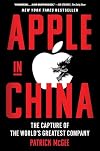
It offers a surprisingly intimate view of the world of Apple’s production logistics, backed by internal documents (some reported for the first time) and interviews with top managers from both Apple and its partners.
The book starts in the company's early years, tracing its evolution from a firm that once cherished its own American factories to one that is now completely beholden to a complex, multi-layered network of Chinese suppliers.
What I really liked is how the book meticulously tracks this transition at every stage. It doesn’t just explain the "how" and "why" of the shift to outsourcing; it also focuses on the "who." By also reporting on the backgrounds and motivations of the people behind these moves, McGee provides a unique look at the logic—and the missteps—that built the modern Apple machine.
I also particularly appreciated the judgment-free analysis of Chinese corporate culture and how those differences fundamentally shaped Apple’s strategy.
Thanks to the insights I’d just read in the book, I could immediately place the news in context: the facility is too small and its mission too simple to be a genuine effort by Apple to diversify or move its supply chain. In short: it’s a political move.
That’s how good this book truly is.
It offers a surprisingly intimate view of the world of Apple’s production logistics, backed by internal documents (some reported for the first time) and interviews with top managers from both Apple and its partners.
The book starts in the company's early years, tracing its evolution from a firm that once cherished its own American factories to one that is now completely beholden to a complex, multi-layered network of Chinese suppliers.
What I really liked is how the book meticulously tracks this transition at every stage. It doesn’t just explain the "how" and "why" of the shift to outsourcing; it also focuses on the "who." By also reporting on the backgrounds and motivations of the people behind these moves, McGee provides a unique look at the logic—and the missteps—that built the modern Apple machine.
I also particularly appreciated the judgment-free analysis of Chinese corporate culture and how those differences fundamentally shaped Apple’s strategy.
Focus: The ASML way - Inside the power struggle over the most complex machine on earth by Marc Hijink
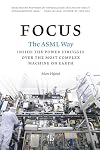
You’d think that by writing this book, the author would have learned a thing or two about focus. Unfortunately, you’d be mistaken.
The first half of the book chronicles ASML’s rise from a Philips spinoff in a literal shed to the world’s sole EUV lithography maker -- a journey that should have been a compelling narrative. Instead, it feels like a massive data dump.
It’s as if the author simply unloaded every scrap of research they collected, with no intention on creating a narrative. This inevitably resulted in far too many "side quests." The opening chapters were particularly disorienting; I felt trapped in a cloud of events and characters with no anchor, no reference, and no sense of past or future.
The second half is a significant improvement, both in its organization and its subject matter. Here, the author captures ASML’s evolution into a major—if initially reluctant—geopolitical actor in the semiconductor industry.
I had a much easier time following the flow of events in this section, despite the author’s insistence on a jagged, non-linear timeline that remained somewhat destabilizing.
The second half is also where the book finally finds its substance, at least for me. This section pulled back the curtain on the maneuvering to which both the company and its home country were subjected in the name of national security.
It’s worth noting the book is a translation, which I didn't realize going in. While that's not an issue in itself of course, the show more execution was hit-or-miss. Some clunky phrasing was accidentally funny, but at other times, it resulted in confusion. show less
The first half of the book chronicles ASML’s rise from a Philips spinoff in a literal shed to the world’s sole EUV lithography maker -- a journey that should have been a compelling narrative. Instead, it feels like a massive data dump.
It’s as if the author simply unloaded every scrap of research they collected, with no intention on creating a narrative. This inevitably resulted in far too many "side quests." The opening chapters were particularly disorienting; I felt trapped in a cloud of events and characters with no anchor, no reference, and no sense of past or future.
The second half is a significant improvement, both in its organization and its subject matter. Here, the author captures ASML’s evolution into a major—if initially reluctant—geopolitical actor in the semiconductor industry.
I had a much easier time following the flow of events in this section, despite the author’s insistence on a jagged, non-linear timeline that remained somewhat destabilizing.
The second half is also where the book finally finds its substance, at least for me. This section pulled back the curtain on the maneuvering to which both the company and its home country were subjected in the name of national security.
It’s worth noting the book is a translation, which I didn't realize going in. While that's not an issue in itself of course, the show more execution was hit-or-miss. Some clunky phrasing was accidentally funny, but at other times, it resulted in confusion. show less
Surge: My Journey with General David Petraeus and the Remaking of the Iraq War (Yale Library of Military History) by Peter R. Mansoor

While the book is rich in details and very informative, it also feels a little repetitive. At times, it seems like the author struggled to reach the assigned number of pages.
Some thoughts and ideas are repeated throughout the book without any clear reason. This issue becomes more noticeable in the final chapter, the retrospect, which feels like a condensed version of what came before.
Content-wise, the book feels somewhat self-congratulatory and biased, especially for something written by a historian. Some bias might be expected, as Mansoor is sharing his experience as part of the surge. However, the book often resembles an '80s or '90s movie. There's a stark divide between characters: the "good guys" (the MNF-I under Petraeus and the Republicans) doing everything right, and the "bad guys" (the MNF-I under Petraeus' predecessor, the Democrats, the rest of the U.S. military not under Petraeus, and, of course, the insurgents).
This simplistic divide and lack of nuance suggest cherry-picking, which is unfortunate, given the overall quality of the book.
Some thoughts and ideas are repeated throughout the book without any clear reason. This issue becomes more noticeable in the final chapter, the retrospect, which feels like a condensed version of what came before.
Content-wise, the book feels somewhat self-congratulatory and biased, especially for something written by a historian. Some bias might be expected, as Mansoor is sharing his experience as part of the surge. However, the book often resembles an '80s or '90s movie. There's a stark divide between characters: the "good guys" (the MNF-I under Petraeus and the Republicans) doing everything right, and the "bad guys" (the MNF-I under Petraeus' predecessor, the Democrats, the rest of the U.S. military not under Petraeus, and, of course, the insurgents).
This simplistic divide and lack of nuance suggest cherry-picking, which is unfortunate, given the overall quality of the book.