
The Heart of Resistance was a great start to a series.
I enjoyed the adventure story style of the book. Characters were introduced, and the plot-line unfolded. New characters, and more plot. The story kept developing. We learned about the world a bit at a time as the story progressed. There wasn’t a dump of information about the world to snap you out of the story.
The steampunk world was set up as a world of colonialism and resistance – a foundation that should lend itself comfortably to subsequent books in the series, or just in the world.
Some of the characters acted too young for the situations they were in, and the stated worldliness they had. The brattiness displayed by the main characters was off-putting several times, and conflicted with the story. Subsequent character development should take care of that.
The overall story was charming. Sufficient tension to keep turning the pages to find out how it all comes out in the end.
I will definitely be following along when the second book in the series is released.
I enjoyed the adventure story style of the book. Characters were introduced, and the plot-line unfolded. New characters, and more plot. The story kept developing. We learned about the world a bit at a time as the story progressed. There wasn’t a dump of information about the world to snap you out of the story.
The steampunk world was set up as a world of colonialism and resistance – a foundation that should lend itself comfortably to subsequent books in the series, or just in the world.
Some of the characters acted too young for the situations they were in, and the stated worldliness they had. The brattiness displayed by the main characters was off-putting several times, and conflicted with the story. Subsequent character development should take care of that.
The overall story was charming. Sufficient tension to keep turning the pages to find out how it all comes out in the end.
I will definitely be following along when the second book in the series is released.
 This review was written for LibraryThing Early Reviewers.
Fine concepts for a series. Young prince striving to be an adult in a world turned dangerous.
Dialogue needs a bit of consistency work. Changes the characters’ demeanor from one scene to another.
Distance and size of places needs to be nailed down. Would help the story pacing.
Good effort by a new author.
Dialogue needs a bit of consistency work. Changes the characters’ demeanor from one scene to another.
Distance and size of places needs to be nailed down. Would help the story pacing.
Good effort by a new author.
This review was written for LibraryThing Early Reviewers.
Poetry as a misappropriated weapon. Humanity over-populated, under-resourced, and stagnating. The rich uncaring, the poor without hope.
A galactic, multi-alien civilization that may offer salvation.
Humanity has spread to multiple worlds, but overcrowding and lack of resources has resulted in many on government assistance without dignity or hope of improvement. The main character, a poet who wrote a protest of how most were being treated in mankind’s worlds, sees his words made into a violent protest against aliens, and the existing government. The radicals hope to capture him to use as a pawn for their cause. A megalomaniac behind the radicals secretly brainwashes and pulls the strings of increasing millions of the despondent poor.
Offered a way to be an ambassador to the alien civilization due to his ability to learn their language, the protagonist sets off to try to gain entry for humanity to the galactic fold.
The novel reads a bit like some of the science fiction from the 60’s & 70’s. Radical ideas, multi-level higher existence, and the idea that humanity is unique, offering something that is missing in the aliens’ civilization.
The novel starts a bit slow, the ideas and newspeak like words take a bit to get through, but the pace picks up. The lines of “poetry” throughout the novel distract from the plot’s progression, but do function as an example of the protagonist's thought processes. Crises develop, and the solutions form the basis of the story.
The show more Pollutant Speaks is a strange and engaging novel. The main character is sometimes pitiable, other times enviable, in the situations he is presented and actions he takes. It is an overall enjoyable read, though not easy. But, it has a critical element: it makes the reader ponder about what the author is saying, no matter if there is agreement. show less
A galactic, multi-alien civilization that may offer salvation.
Humanity has spread to multiple worlds, but overcrowding and lack of resources has resulted in many on government assistance without dignity or hope of improvement. The main character, a poet who wrote a protest of how most were being treated in mankind’s worlds, sees his words made into a violent protest against aliens, and the existing government. The radicals hope to capture him to use as a pawn for their cause. A megalomaniac behind the radicals secretly brainwashes and pulls the strings of increasing millions of the despondent poor.
Offered a way to be an ambassador to the alien civilization due to his ability to learn their language, the protagonist sets off to try to gain entry for humanity to the galactic fold.
The novel reads a bit like some of the science fiction from the 60’s & 70’s. Radical ideas, multi-level higher existence, and the idea that humanity is unique, offering something that is missing in the aliens’ civilization.
The novel starts a bit slow, the ideas and newspeak like words take a bit to get through, but the pace picks up. The lines of “poetry” throughout the novel distract from the plot’s progression, but do function as an example of the protagonist's thought processes. Crises develop, and the solutions form the basis of the story.
The show more Pollutant Speaks is a strange and engaging novel. The main character is sometimes pitiable, other times enviable, in the situations he is presented and actions he takes. It is an overall enjoyable read, though not easy. But, it has a critical element: it makes the reader ponder about what the author is saying, no matter if there is agreement. show less
This review was written for LibraryThing Early Reviewers.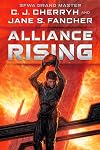
I really enjoyed this look at the early history of the Alliance-Union universe.
Alliance Rising takes place before Downbelow Station and Heavy Time, and may be the earliest novel in the timeline. The novel provides backstory about the Alpha Station, perfect for those who read the early novels decades ago.
Alliance Rising focuses on the economic and political life of the Alpha Station before Sol (Earth) had direct FTL access to it. At the time, most seem to think that Sol will soon find the FTL jump points to break out to the wider universe. Sol’s building of a large ship at Alpha Station seems to reinforce this, and makes others throughout the merchanters and stations curious about the ship.
Alliance Rising contains a lot of information about how the Alliance-Union universe functions at the time of the novel, and the characters’ internal reflections and musings serve to flesh out the story. Indeed, the characters extended musings remind me of the interludes Cherryh wrote for the Merovingen Nights anthologies.
Alliance Rising is a buildup to the next novels in the Hinder Stars series. The action mostly comes mid-way through up to the end of the novel, not atypical of Cherryh's more anthropological novels. The style of the novel seems mostly of Cherryh, and I can’t really say I see much stylistic input from Fancher.
I am looking forward to the next novel, and won’t wait so long after its publication to read it.
Alliance Rising takes place before Downbelow Station and Heavy Time, and may be the earliest novel in the timeline. The novel provides backstory about the Alpha Station, perfect for those who read the early novels decades ago.
Alliance Rising focuses on the economic and political life of the Alpha Station before Sol (Earth) had direct FTL access to it. At the time, most seem to think that Sol will soon find the FTL jump points to break out to the wider universe. Sol’s building of a large ship at Alpha Station seems to reinforce this, and makes others throughout the merchanters and stations curious about the ship.
Alliance Rising contains a lot of information about how the Alliance-Union universe functions at the time of the novel, and the characters’ internal reflections and musings serve to flesh out the story. Indeed, the characters extended musings remind me of the interludes Cherryh wrote for the Merovingen Nights anthologies.
Alliance Rising is a buildup to the next novels in the Hinder Stars series. The action mostly comes mid-way through up to the end of the novel, not atypical of Cherryh's more anthropological novels. The style of the novel seems mostly of Cherryh, and I can’t really say I see much stylistic input from Fancher.
I am looking forward to the next novel, and won’t wait so long after its publication to read it.
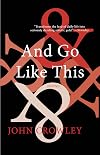
And Go Like This by John Crowley, Small Beer Press, 2019
A collection of shorter works is always an unknown. Will the stories remind you of the favorite novels of the author? Will the stories evoke the emotions and memories of what has gone before? Or, will the collection be unexpected: new stories that differ from expectations?
And Go Like This falls into the latter type. It is a mixture of styles and story types that differ greatly from Crowley’s novels I have previously read. Some, like “The Girlhood of Shakespeare’s Heroines” seem wandering and allegorical, taking time to move toward a conclusion. Others, such as “Conversation Hearts” use an artificial structure that at first seemed to break up the story, but turned out to be satisfying by story end.
The best was the new work, “Anosognosia”. It evoked the fantastical side of Crowley’s talent – that slight step to the side of reality that his best stories take. The pacing and story developed gradually, slowly taking the reader outside this world. It reminded me of Little, Big - showing how our world could be much more than we realize.
The collection, while short, should contain something that every Crowley fan will relish.
A collection of shorter works is always an unknown. Will the stories remind you of the favorite novels of the author? Will the stories evoke the emotions and memories of what has gone before? Or, will the collection be unexpected: new stories that differ from expectations?
And Go Like This falls into the latter type. It is a mixture of styles and story types that differ greatly from Crowley’s novels I have previously read. Some, like “The Girlhood of Shakespeare’s Heroines” seem wandering and allegorical, taking time to move toward a conclusion. Others, such as “Conversation Hearts” use an artificial structure that at first seemed to break up the story, but turned out to be satisfying by story end.
The best was the new work, “Anosognosia”. It evoked the fantastical side of Crowley’s talent – that slight step to the side of reality that his best stories take. The pacing and story developed gradually, slowly taking the reader outside this world. It reminded me of Little, Big - showing how our world could be much more than we realize.
The collection, while short, should contain something that every Crowley fan will relish.
This review was written for LibraryThing Early Reviewers.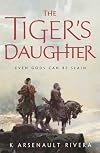
The Tiger's Daughter does not live up to the hype. The book is very slow moving, mostly due to the author's device of using a letter sent from one main character to another as the story vehicle. As this letter is hundreds of pages long, the novel ends up being told to the reader, not experienced by the reader. There is no action or suspense: just an artificial seeming, present tense/past tense second person info dump. Even when the letter ends, the book continues in a strange present tense/past tense didactic manner, kind of like a history book.
Unfortunately, The Tiger's Daughter does not resemble the book's synopsis. If it had, it would have been much more interesting than the "he said, she said" text actually contained between the covers.
Unfortunately, The Tiger's Daughter does not resemble the book's synopsis. If it had, it would have been much more interesting than the "he said, she said" text actually contained between the covers.
This review was written for LibraryThing Early Reviewers.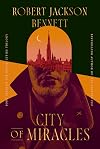
Everyone's favorite operative shines in this conclusion to the Divine Cities trilogy. The book brings together the remaining key members of the first two novels, each in their own way, to fight the final battle. New characters are introduced that help develop the (generally fast paced) story. There are a couple of instances where the story seemed to drag a bit, but the action and plot picked back up quickly.
The end is what one would expect, though there were a couple of twists to finish off the story. Amazing how quickly the book sped to its conclusion.
The end is what one would expect, though there were a couple of twists to finish off the story. Amazing how quickly the book sped to its conclusion.
This review was written for LibraryThing Early Reviewers.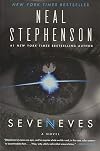
An amazing novel. Seveneves presents the reader with two years to the end of Earth, and the willpower of humanity to survive the destruction of its only home. Stephenson applies potentially realistic scientific methods for humanity to survive its planet's destruction, while not losing the strong personal narratives of the characters.
This review was written for LibraryThing Early Reviewers.