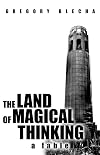
"The Land of Magical Thinking" asks the whimsical question, What would the country be like if the Great Depression never ended?
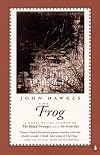
ohn Hawkes' "The Frog" is a sensual, indulgent tale about a boy named Pascal who swallows a frog while sleeping beside a pond. The frog's presence induces severe stomach pains, but when Pascal's mother tries to remedy her son's suffering with curatives from the local pharmacist, Pascal determines that he must protect the frog buried in his belly, and thus prevent his mother from seeing what an oddity he has become. From that point, Pascal's psyche becomes fused with Armand, the frog that lives inside him.
Throughout his insular life, Armand chooses when he will emerge from Pascal's throat - once, for example, when wooed by a young girl who is more enchanted by Armand the frog than by Pascal the boy. While Pascal freely operates as an agent of his own passions and desires, other times he is nothing more than the motor while Armand steers him, a host overtaken by its parasite.
Pascal seldom leaves the cloistered walls of his various homes - the pastoral grounds of the Domaine Ardente, Saint-Mamès, an asylum for the afflicted, and the brothel of Madame Fromage where Pascal serves as a sort of concierge. His life is paranthetical, almost a footnote. At the end the reader is left to wonder how to weave and assimilate Pascal's enigmatic fable into his own. Perhaps there is a larger meaning to this story, or perhaps it is simply a guilty pleasure, a richly-worded, evocative and pleasurable narrative to fill a rainy afternoon...
Throughout his insular life, Armand chooses when he will emerge from Pascal's throat - once, for example, when wooed by a young girl who is more enchanted by Armand the frog than by Pascal the boy. While Pascal freely operates as an agent of his own passions and desires, other times he is nothing more than the motor while Armand steers him, a host overtaken by its parasite.
Pascal seldom leaves the cloistered walls of his various homes - the pastoral grounds of the Domaine Ardente, Saint-Mamès, an asylum for the afflicted, and the brothel of Madame Fromage where Pascal serves as a sort of concierge. His life is paranthetical, almost a footnote. At the end the reader is left to wonder how to weave and assimilate Pascal's enigmatic fable into his own. Perhaps there is a larger meaning to this story, or perhaps it is simply a guilty pleasure, a richly-worded, evocative and pleasurable narrative to fill a rainy afternoon...
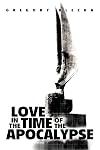
Gregory Blecha's rare fusion of brilliance, heart, and humor comes to life in this satirical novel that defies genre by simultaneously managing to be a moving and unadulterated love story.
The narrative style evokes Kim Stanley Robinson's futuristic sci-fi classic Pacific Edge and its they-could-be-my-neighbors realism, as well as the headlong rush of The Da Vinci Code's opening chapters (a pace maintained here from beginning to end).
Yet Blecha's voice is unequivocally his own. He captures human flaws and failings with bull's-eye farce but also with benevolence and hope. And his vision of the strange bedfellows in the United States' future is uniquely provocative - I may be laughing, but I'm also stocking my underground bunker.
Love in the Time of the Apocalypse is dedicated in part to the author's late brother Bryan - also the name of the novel's hapless yet intrepid, indefatigable, and surprising protagonist. I can only imagine that the real Bryan would be proud to live on in his trouble-prone and endearing namesake who, even as the world plummets toward disaster, keeps on believing in the love that conquers all - including the apocalypse.
Nicole Hunter
The narrative style evokes Kim Stanley Robinson's futuristic sci-fi classic Pacific Edge and its they-could-be-my-neighbors realism, as well as the headlong rush of The Da Vinci Code's opening chapters (a pace maintained here from beginning to end).
Yet Blecha's voice is unequivocally his own. He captures human flaws and failings with bull's-eye farce but also with benevolence and hope. And his vision of the strange bedfellows in the United States' future is uniquely provocative - I may be laughing, but I'm also stocking my underground bunker.
Love in the Time of the Apocalypse is dedicated in part to the author's late brother Bryan - also the name of the novel's hapless yet intrepid, indefatigable, and surprising protagonist. I can only imagine that the real Bryan would be proud to live on in his trouble-prone and endearing namesake who, even as the world plummets toward disaster, keeps on believing in the love that conquers all - including the apocalypse.
Nicole Hunter