This thing was just kind of bland. I read it quickly, but I was uninvested and uninterested. It’s not bad, but that kind of makes it worse. I just have nothing to say about this. Prose and format was very interesting from a craft perspective.
Blegh.
Blegh.
Watchmen, as seen in my Watchmen review, is my favorite comic/graphic novel of all time. Yes, I count it as both. I’ve been reading through Alan Moore’s other most famous works, starting with the Killing Joke, and while I found that one a slight let down, I LOVED V for Vendetta.
I wanted so badly to find out who V is through the whole book, but I was so happy when he wasn’t unmasked. Incredible decision. Whole thing is just great.
I appreciated the forward stating what Moore believes he got wrong about the premise, but I’m also not particularly worried about the reality of the premise as much as what is played with in the premise, and that is done excellently.
Whole thing is great. Writing is great, art is great, coloring is great. Not as good as Watchmen but also an immediate favorite.
I wanted so badly to find out who V is through the whole book, but I was so happy when he wasn’t unmasked. Incredible decision. Whole thing is just great.
I appreciated the forward stating what Moore believes he got wrong about the premise, but I’m also not particularly worried about the reality of the premise as much as what is played with in the premise, and that is done excellently.
Whole thing is great. Writing is great, art is great, coloring is great. Not as good as Watchmen but also an immediate favorite.
Unmask Alice: LSD, Satanic Panic, and the Imposter Behind the World's Most Notorious Diaries by Rick Emerson
Good book! I read this because of the recommendation by Sarah Z on YouTube in the video about phony memoirs and I did end up enjoying it quite a bit! This is probably closer to a 4.5 star read for me, but I don’t feel so strongly about it as to push it up to 5 stars.
A lot of this is information that has been known for some time (the parts about Alden Barrett in particular), but this is clearly a well researched book that weaves a compelling narrative. I could have done without some of the speculation about long-dead people’s inner monologues, and at points I feel as if Emerson pulls punches on characters who aren’t clearly, blatantly evil, and even sometimes then, but generally my complaints are minor in comparison to the larger work.
I sped through this. It was a 480 page ebook, which felt daunting looking at it, but the whole thing flew by. I was entirely drawn in by the book, and would have basically read it in one sitting if not for being called to family dinner.
Great time. Do be warned it does contain a bit of heavier material (mentions of murder, assault of all kind, abuse, SUICIDE, drug use, among others), but Emerson doesn’t dwell in these areas or describe them graphically. Suicide and drug use both are featured prevalently, but the topic of the works he’s discussing are almost entirely about those topics.
I do also feel that he may have given Sparks a lot of weight in larger social movements than she actually had. I do believe her works contributed to show more the panic around both drugs and the occult, but I don’t know if the extent to which they contributed is as vast as Emerson thinks. I do also kind of think Sparks might be evil, so I’m not complaining too much.
Good read. I’d recommend if you’re interested in the debunking of crazy “true story” narratives. show less
A lot of this is information that has been known for some time (the parts about Alden Barrett in particular), but this is clearly a well researched book that weaves a compelling narrative. I could have done without some of the speculation about long-dead people’s inner monologues, and at points I feel as if Emerson pulls punches on characters who aren’t clearly, blatantly evil, and even sometimes then, but generally my complaints are minor in comparison to the larger work.
I sped through this. It was a 480 page ebook, which felt daunting looking at it, but the whole thing flew by. I was entirely drawn in by the book, and would have basically read it in one sitting if not for being called to family dinner.
Great time. Do be warned it does contain a bit of heavier material (mentions of murder, assault of all kind, abuse, SUICIDE, drug use, among others), but Emerson doesn’t dwell in these areas or describe them graphically. Suicide and drug use both are featured prevalently, but the topic of the works he’s discussing are almost entirely about those topics.
I do also feel that he may have given Sparks a lot of weight in larger social movements than she actually had. I do believe her works contributed to show more the panic around both drugs and the occult, but I don’t know if the extent to which they contributed is as vast as Emerson thinks. I do also kind of think Sparks might be evil, so I’m not complaining too much.
Good read. I’d recommend if you’re interested in the debunking of crazy “true story” narratives. show less
Probably really just under five stars (it’s not one of my absolute favorites), but still a really good book.
Ngozi has yet to let me down. I loved Check, Please!, and I figured I should finally check out her other work. Flip is wonderful, and works for me basically from cover to cover. I’m not in the exact circumstance of Chi-Chi, and not in the same situation as Ngozi, not by a long shot on either of them, but I still felt very seen by Flip. A good book makes you feel that way, I think. I really enjoyed the ambiguity of the ending, and appreciate the thought put into every page. Recommend recommend recommend.
Ngozi has yet to let me down. I loved Check, Please!, and I figured I should finally check out her other work. Flip is wonderful, and works for me basically from cover to cover. I’m not in the exact circumstance of Chi-Chi, and not in the same situation as Ngozi, not by a long shot on either of them, but I still felt very seen by Flip. A good book makes you feel that way, I think. I really enjoyed the ambiguity of the ending, and appreciate the thought put into every page. Recommend recommend recommend.
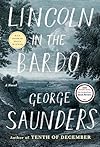
Well, Lincoln in the Bardo remains my favorite book of all time, easily. Nothing has ever compared to it, and I suspect nothing ever really will.
I’ve got Saunders’s newest book (Vigil) on my hold list right now. I want to read it desperately, but I also know it will likely never compare to Lincoln in the Bardo for me. Sometimes, a work consumes you so wholly everything else by that author pales in comparison, making the works just slightly worse than they really are.
I read Lincoln in the Bardo first almost exactly three years ago. It took me a single sitting, and then I just stared. I thought. I was utterly blown away.
I was nineteen, and had previously been reading a steady diet of young adult fiction. Lincoln in the Bardo was like nothing I had ever consumed. It was stunning. It was eye opening. I’ll never experience the feeling I had in those few moments after it ever again.
I understand Lincoln in the Bardo isn’t for everyone. It is a very specific book, and it just isn’t going to work for some people. But it works so perfectly, so beautifully, for me. I love it.
I’m always afraid to revisit my favorite works. I am a changing person, and maybe something will reveal an un-ignorable, completely horrid flaw I can’t look over. Maybe my tastes will have just changed. Maybe the initial awe I felt clouded my vision, and now I can see it clearly.
This is the third time I’ve read Lincoln in the Bardo. The first was stunning. The second I understood it better, from show more intense review and discussion in class. The third just solidified what I already knew about it: it is my favorite book, and that’s unlikely to change any time soon.
Lincoln in the Bardo switches between a few settings and styles. In our final chapters in one of these settings, we get this line: “And love may yet be ours.” It hit me like a truck, even on a reread. The context makes this line, already powerful, just that much more impactful.
And love may yet be ours, indeed. show less
I’ve got Saunders’s newest book (Vigil) on my hold list right now. I want to read it desperately, but I also know it will likely never compare to Lincoln in the Bardo for me. Sometimes, a work consumes you so wholly everything else by that author pales in comparison, making the works just slightly worse than they really are.
I read Lincoln in the Bardo first almost exactly three years ago. It took me a single sitting, and then I just stared. I thought. I was utterly blown away.
I was nineteen, and had previously been reading a steady diet of young adult fiction. Lincoln in the Bardo was like nothing I had ever consumed. It was stunning. It was eye opening. I’ll never experience the feeling I had in those few moments after it ever again.
I understand Lincoln in the Bardo isn’t for everyone. It is a very specific book, and it just isn’t going to work for some people. But it works so perfectly, so beautifully, for me. I love it.
I’m always afraid to revisit my favorite works. I am a changing person, and maybe something will reveal an un-ignorable, completely horrid flaw I can’t look over. Maybe my tastes will have just changed. Maybe the initial awe I felt clouded my vision, and now I can see it clearly.
This is the third time I’ve read Lincoln in the Bardo. The first was stunning. The second I understood it better, from show more intense review and discussion in class. The third just solidified what I already knew about it: it is my favorite book, and that’s unlikely to change any time soon.
Lincoln in the Bardo switches between a few settings and styles. In our final chapters in one of these settings, we get this line: “And love may yet be ours.” It hit me like a truck, even on a reread. The context makes this line, already powerful, just that much more impactful.
And love may yet be ours, indeed. show less
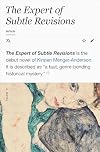
This is a beautifully written piece of fiction I honestly have trouble categorizing. I deeply enjoyed it from cover to cover, especially as I realized where the story was going and how some of the threads were coming together.
I find a great piece of fiction able to weave threads together in a way that makes things guessable, but not telegraphed. It’s a hard line to walk, and the Expert of Subtle Revisions does it near perfectly.
It’s a crisp 256 page read (although my ebook was slightly longer), and it just chugs along and makes each of those 256 pages worth it in every way.
It’s urban fantasy. It’s contemporary fiction. It’s historical fiction. It’s sci-fi. It’s a mystery. The Expert of Subtle Revisions is hard to categorize, but that’s part of what makes it so remarkable.
I can recognize some of the flaws that might keep someone from loving this, but to me it was just perfect. Highly recommend (boy am I glad to say that!). I’m considering buying a copy.
My reviews for things I actually liked are always so much shorter than those for things I hate. Hilarious. Generally, it’s because I don’t want to spoil anything. And also because I love to be a hater.
Take this short little review as a glowing endorsement.
I find a great piece of fiction able to weave threads together in a way that makes things guessable, but not telegraphed. It’s a hard line to walk, and the Expert of Subtle Revisions does it near perfectly.
It’s a crisp 256 page read (although my ebook was slightly longer), and it just chugs along and makes each of those 256 pages worth it in every way.
It’s urban fantasy. It’s contemporary fiction. It’s historical fiction. It’s sci-fi. It’s a mystery. The Expert of Subtle Revisions is hard to categorize, but that’s part of what makes it so remarkable.
I can recognize some of the flaws that might keep someone from loving this, but to me it was just perfect. Highly recommend (boy am I glad to say that!). I’m considering buying a copy.
My reviews for things I actually liked are always so much shorter than those for things I hate. Hilarious. Generally, it’s because I don’t want to spoil anything. And also because I love to be a hater.
Take this short little review as a glowing endorsement.
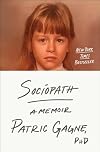
At least I’m consistent. The two books I’ve rated one star on here have both been pretty horrible about mental health.
Where to begin with Sociopath? Maybe the fact the first anecdote of the memoir, which has primed you to view this whole thing a certain way, is about Gagne stealing glasses as a baby, which is somehow painted with a “look what I did light”. I am so sorry, Patric, but you stole those glasses because someone thought it was cute. Babies can’t actually conceal shit, and are notably bad at sleight of hand.
The truth is, there’s a lot I take issue with in this book. The idea that children can be sociopaths (this is inaccurate), the idea that sociopathy is just ignored by psychiatry and psychology (this is untrue, just because Gagne dislikes new terminology doesn’t mean it’s inherently wrong), and, of course, the insistence through most of the back half that Gagne has basically solved the sociopath (she has no published research).
I’m going to ignore one of the issues brought up in a lot of reviews: if Gagne is a sociopath at all. I don’t actually think it matters. She sounds, at points, almost like the stereotype of a sociopath; at others, it sounds like she has something closer to OCD or even autism. It could be she has more comorbid disorders that have been overlooked because of a sociopathy diagnosis, it could be that this is really just how her sociopathy works, it could be she was given an incorrect diagnosis. The point I’m going to make show more stands no matter which of these are true; she is making sweeping generalizations about how sociopaths are and operate based entirely on a sample size of one: herself.
I was frustrated, to be clear, that there was no discussion of any of the other plethora of disorders that could account for the very specific symptoms she was expressing. Gagne talks about feeling complete apathy, lack of guilt, lack of love, etc., but she often displays actions that are counterintuitive to this.
This right here is why the diagnostic criteria and name for sociopathy were changed. The new criteria are based almost entirely on external characteristics. Gagne acts like antisocial personality disorder is a completely new thing that can only be diagnosed when extreme action has already been taken: it isn’t. Extreme behavior is likely to occur, but the diagnostic criteria apply generally to less serious actions, like chronic lying or failure to complete important tasks. Additionally, there are still a few sections that do still ask for personal feelings, but these have been reduced.
When I was diagnosed with bipolar (spoiler, I also have a much maligned mental health disorder) I was diagnosed based on a self-report, but a self-report of actions. Of course, what I was feeling was also accounted for, but with any mental health disorder, there are going to be people who mistake normal emotion for something destructive. You may think you have no empathy, but actions may say something different.
This is less a commentary on Gagne’s diagnosis and more about her treatment of literally anything to do with mental health. She has a PhD in clinical psychology. I’ve seen people say she got her degree from a diploma mill. Her PhD, at least, is from an accredited organization, although their website says they only confer PsyDs. I’m giving her the benefit of the doubt here and presuming she did get a PhD and they no longer offer that. Gagne should be more careful, at this juncture, about her presentation of mental health and the psychiatry industry, but she isn’t. She just isn’t.
She makes a lot of claims about sociopathy in this book. Some, like that no medication can really “fix” sociopathy, drove me up the wall. One, medication is often a part of a treatment plan for ASPD. Two, she compared this to bipolar, which, as someone in bipolar treatment, there is no cure for. You will be monitoring medication and mental state for the rest of your life. I’m not cured, I’m managing.
She similarly makes a lot of incorrect and stereotypical comparisons to OCD. That’s just something that bothered me.
Gagne makes some claims that would be incredibly groundbreaking in the study of ASPD (she uses sociopath, of course). She’s very insistent on them, actually. The big problem here is that she has no published research. As far as I can tell, she has never done any kind of clinical research. The other big problem is that she is basing these claims entirely on herself and how she operates.
Her dissertation is not available online. Gagne claims on her website it was because it was published before this was the standard. I’ve routinely come across dissertations written by typewriter and with figures done by hand from the eighties online, but I’ll again give her the benefit of the doubt here.
Gagne’s website has a list of citations, for some reason. This was a major, major red flag for me. Not a single one of them is less than twenty years old, with a majority being from the forty to seventy year old range. This is incredibly poor form in terms of research etiquette.
I’m sure this is in part because Gagne states the new “antisocial personality disorder” term makes research hard and because she clearly takes umbrage with this diagnosis. Of course her sources are old, she’s researching an outdated term.
Gagne clearly doesn’t want to have ASPD, she wants to be a sociopath. I won’t even try to explain this. Just know she does.
I’m exploding this book with my mind. Don’t read it. I haven’t even touched on the horrible mental health professionals in this. Goddamn. Some psychologists are bad at their jobs. show less
Where to begin with Sociopath? Maybe the fact the first anecdote of the memoir, which has primed you to view this whole thing a certain way, is about Gagne stealing glasses as a baby, which is somehow painted with a “look what I did light”. I am so sorry, Patric, but you stole those glasses because someone thought it was cute. Babies can’t actually conceal shit, and are notably bad at sleight of hand.
The truth is, there’s a lot I take issue with in this book. The idea that children can be sociopaths (this is inaccurate), the idea that sociopathy is just ignored by psychiatry and psychology (this is untrue, just because Gagne dislikes new terminology doesn’t mean it’s inherently wrong), and, of course, the insistence through most of the back half that Gagne has basically solved the sociopath (she has no published research).
I’m going to ignore one of the issues brought up in a lot of reviews: if Gagne is a sociopath at all. I don’t actually think it matters. She sounds, at points, almost like the stereotype of a sociopath; at others, it sounds like she has something closer to OCD or even autism. It could be she has more comorbid disorders that have been overlooked because of a sociopathy diagnosis, it could be that this is really just how her sociopathy works, it could be she was given an incorrect diagnosis. The point I’m going to make show more stands no matter which of these are true; she is making sweeping generalizations about how sociopaths are and operate based entirely on a sample size of one: herself.
I was frustrated, to be clear, that there was no discussion of any of the other plethora of disorders that could account for the very specific symptoms she was expressing. Gagne talks about feeling complete apathy, lack of guilt, lack of love, etc., but she often displays actions that are counterintuitive to this.
This right here is why the diagnostic criteria and name for sociopathy were changed. The new criteria are based almost entirely on external characteristics. Gagne acts like antisocial personality disorder is a completely new thing that can only be diagnosed when extreme action has already been taken: it isn’t. Extreme behavior is likely to occur, but the diagnostic criteria apply generally to less serious actions, like chronic lying or failure to complete important tasks. Additionally, there are still a few sections that do still ask for personal feelings, but these have been reduced.
When I was diagnosed with bipolar (spoiler, I also have a much maligned mental health disorder) I was diagnosed based on a self-report, but a self-report of actions. Of course, what I was feeling was also accounted for, but with any mental health disorder, there are going to be people who mistake normal emotion for something destructive. You may think you have no empathy, but actions may say something different.
This is less a commentary on Gagne’s diagnosis and more about her treatment of literally anything to do with mental health. She has a PhD in clinical psychology. I’ve seen people say she got her degree from a diploma mill. Her PhD, at least, is from an accredited organization, although their website says they only confer PsyDs. I’m giving her the benefit of the doubt here and presuming she did get a PhD and they no longer offer that. Gagne should be more careful, at this juncture, about her presentation of mental health and the psychiatry industry, but she isn’t. She just isn’t.
She makes a lot of claims about sociopathy in this book. Some, like that no medication can really “fix” sociopathy, drove me up the wall. One, medication is often a part of a treatment plan for ASPD. Two, she compared this to bipolar, which, as someone in bipolar treatment, there is no cure for. You will be monitoring medication and mental state for the rest of your life. I’m not cured, I’m managing.
She similarly makes a lot of incorrect and stereotypical comparisons to OCD. That’s just something that bothered me.
Gagne makes some claims that would be incredibly groundbreaking in the study of ASPD (she uses sociopath, of course). She’s very insistent on them, actually. The big problem here is that she has no published research. As far as I can tell, she has never done any kind of clinical research. The other big problem is that she is basing these claims entirely on herself and how she operates.
Her dissertation is not available online. Gagne claims on her website it was because it was published before this was the standard. I’ve routinely come across dissertations written by typewriter and with figures done by hand from the eighties online, but I’ll again give her the benefit of the doubt here.
Gagne’s website has a list of citations, for some reason. This was a major, major red flag for me. Not a single one of them is less than twenty years old, with a majority being from the forty to seventy year old range. This is incredibly poor form in terms of research etiquette.
I’m sure this is in part because Gagne states the new “antisocial personality disorder” term makes research hard and because she clearly takes umbrage with this diagnosis. Of course her sources are old, she’s researching an outdated term.
Gagne clearly doesn’t want to have ASPD, she wants to be a sociopath. I won’t even try to explain this. Just know she does.
I’m exploding this book with my mind. Don’t read it. I haven’t even touched on the horrible mental health professionals in this. Goddamn. Some psychologists are bad at their jobs. show less
Strange Houses: A Chilling Mystery Unraveled Through Sinister Floor Plans – From the bestselling author of Strange Pictures by Uketsu
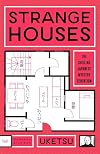
You could probably convince me to bump this to 3.5 stars, but I’m feeling 3 at the moment.
This is a pretty outlandish story. I was more engaged before the very convoluted explanation at the end, unfortunately. It was good, to be clear; I just don’t feel like it quite stuck the landing.
I’m not opposed to crazy horror/thrillers. I don’t need reality in my fiction, I’m reading fiction to have fun. This just felt like it jumped the shark a little bit.
The dialogue particularly felt a little stilted. I’m unsure how much of that is a) the cultural norms around conversation in Japan and b) the difficulty of translation. I’m willing to let that go, but it did stick out to me.
Formatting was great. I’ll definitely check out the other books Uketsu has written. There’s definitely potential there (atmosphere was great!), I’m just not sure this one did it for me entirely.
This was under 200 pages by my ebook count. If you need a quick little horror read that is, for all its flaws, very engaging, this is it.
This is a pretty outlandish story. I was more engaged before the very convoluted explanation at the end, unfortunately. It was good, to be clear; I just don’t feel like it quite stuck the landing.
I’m not opposed to crazy horror/thrillers. I don’t need reality in my fiction, I’m reading fiction to have fun. This just felt like it jumped the shark a little bit.
The dialogue particularly felt a little stilted. I’m unsure how much of that is a) the cultural norms around conversation in Japan and b) the difficulty of translation. I’m willing to let that go, but it did stick out to me.
Formatting was great. I’ll definitely check out the other books Uketsu has written. There’s definitely potential there (atmosphere was great!), I’m just not sure this one did it for me entirely.
This was under 200 pages by my ebook count. If you need a quick little horror read that is, for all its flaws, very engaging, this is it.
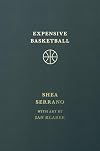
I’d say this one is just over 4 stars, but not quite 4.5. Do with that what you will.
I enjoyed this much more than Football, which, with its similar cover and similar premise as a collection of essays on a sport, made me nervous to pick this one up. But I really enjoyed it!
Expensive Basketball is about moments in professional basketball that made Shea Serrano happy. I enjoyed this. I liked reading his recollections of moments in the sport, many of which I had only seen on tape, and I enjoyed the way he talked about them. Some of the essays didn’t hit for me (I particularly disliked the Steph Curry one), but enough of them did that I consider this a very worthwhile read. I strongly disagree with his assertion LeBron James is the best basketball player ever, but that’s because I hate LeBron.
I’d say this book is written for the casual-to-moderately-invested basketball fan. You need a little bit of basketball knowledge for this one, which is fine. I wouldn’t recommend this to someone who has never engaged with the game, and I’d never recommend it to someone overly invested in the game. I, however, am right in the sweet spot.
I would have liked if he’d expanded beyond professional basketball. Some of the greatest basketball moments have occurred in collegiate play, and I’d have loved to see some of that in there.
Good book, not great. Fun time. 4.25 stars or something.
I enjoyed this much more than Football, which, with its similar cover and similar premise as a collection of essays on a sport, made me nervous to pick this one up. But I really enjoyed it!
Expensive Basketball is about moments in professional basketball that made Shea Serrano happy. I enjoyed this. I liked reading his recollections of moments in the sport, many of which I had only seen on tape, and I enjoyed the way he talked about them. Some of the essays didn’t hit for me (I particularly disliked the Steph Curry one), but enough of them did that I consider this a very worthwhile read. I strongly disagree with his assertion LeBron James is the best basketball player ever, but that’s because I hate LeBron.
I’d say this book is written for the casual-to-moderately-invested basketball fan. You need a little bit of basketball knowledge for this one, which is fine. I wouldn’t recommend this to someone who has never engaged with the game, and I’d never recommend it to someone overly invested in the game. I, however, am right in the sweet spot.
I would have liked if he’d expanded beyond professional basketball. Some of the greatest basketball moments have occurred in collegiate play, and I’d have loved to see some of that in there.
Good book, not great. Fun time. 4.25 stars or something.
I’m not entirely certain where exactly I’d rate this. I’m almost feeling 3.5 stars, but certainly not 3. I think it’s 4 stars, but give me three weeks and my mind might have changed.
Positives: setting setting setting. Very fun, very enjoyable setting. Really loved the small town, great atmosphere. Fun build in the story. Good mystery elements, although not the most well weaved web I’ve ever experienced. The personal conflicts were understandable and interesting. I like the build of the background from one story to another. That was very satisfying. The footnotes were really fun.
Negatives: Characters. Undercooked at best, boring at worst. I felt there was a lot of tell don’t show with the characters, which is usually a bad sign. Incredibly one note villains. Telegraphing of twists. I was so certain we were supposed to know things inherently (i.e. this thing isn’t what the people say it is) that when these things were presented as twists I was genuinely shocked it was supposed to be a mystery. Some of it I was surprised by, some I really wasn’t. The magic felt so underutilized. I wanted MORE!
Reading my long list of negatives I feel like I should probably bump this down, but I don’t want to. I liked this book a lot, even if I felt like it was a little undercooked. Maybe it’s not quite 4 stars, but I don’t feel like I can actually rate it lower than that without betraying my enjoyment of this.
If you like urban fantasy, give this a shot, but it is lacking show more in points that make me hesitant to just unabashedly recommend it to anyone. Be prepared. show less
Positives: setting setting setting. Very fun, very enjoyable setting. Really loved the small town, great atmosphere. Fun build in the story. Good mystery elements, although not the most well weaved web I’ve ever experienced. The personal conflicts were understandable and interesting. I like the build of the background from one story to another. That was very satisfying. The footnotes were really fun.
Negatives: Characters. Undercooked at best, boring at worst. I felt there was a lot of tell don’t show with the characters, which is usually a bad sign. Incredibly one note villains. Telegraphing of twists. I was so certain we were supposed to know things inherently (i.e. this thing isn’t what the people say it is) that when these things were presented as twists I was genuinely shocked it was supposed to be a mystery. Some of it I was surprised by, some I really wasn’t. The magic felt so underutilized. I wanted MORE!
Reading my long list of negatives I feel like I should probably bump this down, but I don’t want to. I liked this book a lot, even if I felt like it was a little undercooked. Maybe it’s not quite 4 stars, but I don’t feel like I can actually rate it lower than that without betraying my enjoyment of this.
If you like urban fantasy, give this a shot, but it is lacking show more in points that make me hesitant to just unabashedly recommend it to anyone. Be prepared. show less
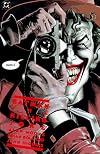
3.5 stars, hovering towards 4. Breaking my usual round down rules because I do think it is closer to 4 than 3 stars.
I read the Deluxe Edition colored by Brian Bolland, and I thought it was quite good!
The big thing is, as I just mentioned in my Lincoln in the Bardo review, sometimes knowing what the author can do makes their other works pale just slightly in comparison. I’m going to be honest, I might have liked The Killing Joke like 40% more if it wasn’t written by Alan Moore. Watchmen, in my opinion, is maybe the greatest superhero comic ever written, and it’s hard not to compare his other works to it.
I completely understand why this is Thee seminal Joker story. It does suffer from the short page count. I feel some of it’s very interesting themes and ideas go a bit underdeveloped (it is stated, but not, in my opinion, shown how Batman and Joker are mirrors of each other, both insane in different directions), and I did find some of the bits with Barbara Gordon a bit gouache, in part because so little time is spent with her. She isn’t allowed to react, only have things occur to her.
Don’t read the introduction. Go back to it. It kind of accidentally spoiled bits of what was going to occur, if only in vague terms.
Do read the version colored by Bolland. I do like Higgin’s coloring work in Watchmen, but some of the panels in comparison are better in the Bolland version of The Killing Joke.
The Killing Joke is only 53 pages (under an hour read, for me), and I’d show more recommend it if only because it’s an easy, quick read for something considered so seminal to the story of Batman and the genre generally.
Because it is so short and a comic on top of that, I may end up striking this from my yearly reading challenge list. I’m currently 7 books ahead of pace (although depending on where I’m at at the end of June I might up my goal), so I don’t particularly need it. I’m going to hold off on that for now. show less
I read the Deluxe Edition colored by Brian Bolland, and I thought it was quite good!
The big thing is, as I just mentioned in my Lincoln in the Bardo review, sometimes knowing what the author can do makes their other works pale just slightly in comparison. I’m going to be honest, I might have liked The Killing Joke like 40% more if it wasn’t written by Alan Moore. Watchmen, in my opinion, is maybe the greatest superhero comic ever written, and it’s hard not to compare his other works to it.
I completely understand why this is Thee seminal Joker story. It does suffer from the short page count. I feel some of it’s very interesting themes and ideas go a bit underdeveloped (it is stated, but not, in my opinion, shown how Batman and Joker are mirrors of each other, both insane in different directions), and I did find some of the bits with Barbara Gordon a bit gouache, in part because so little time is spent with her. She isn’t allowed to react, only have things occur to her.
Don’t read the introduction. Go back to it. It kind of accidentally spoiled bits of what was going to occur, if only in vague terms.
Do read the version colored by Bolland. I do like Higgin’s coloring work in Watchmen, but some of the panels in comparison are better in the Bolland version of The Killing Joke.
The Killing Joke is only 53 pages (under an hour read, for me), and I’d show more recommend it if only because it’s an easy, quick read for something considered so seminal to the story of Batman and the genre generally.
Because it is so short and a comic on top of that, I may end up striking this from my yearly reading challenge list. I’m currently 7 books ahead of pace (although depending on where I’m at at the end of June I might up my goal), so I don’t particularly need it. I’m going to hold off on that for now. show less
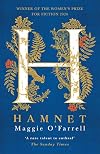
Apparently semi-historical novels that get a little supernatural and funky with it just get me. Cried a little bit.
Excellent read.
Excellent read.
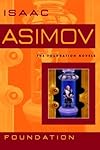
Hovering between 4 and 4.5 stars.
First, I completely understand why Foundation is a classic and a cornerstone of the sci-fi genre. It is really, really good, and some of my complaints with Foundation are, unfortunately, because it is a pioneer in the genre.
That being said, I’m now going to list a few complaints.
Foundation is very straightforward. My favorite pieces of fiction are a little more twisty and play with genre. I’m pretty sure if I read Foundation upon publication I would feel very differently, but as it stands I am quite a bit late to the party on the grounds of I was born in 2003. Foundation felt as if it hit most of the major beats in a sci-fi novel, but again, I’m pretty sure that’s because it was a foundational (ha) piece of sci-fi literature.
I found the characters a little surface level. I wish I had more time with their inner worlds instead of just their actions.
Space politics! I actually really liked this bit. I don’t read a lot of this kind of sci-fi, and I really enjoyed it as a piece. I could have done with a little less of the characters explaining the space politics to me, but that’s getting into nitpicking territory.
That being said, I’m only listing my complaints because everyone has covered what makes Foundation great for me. It’s an incredible sci-fi novel, even if it hasn’t immediately become one of my favorites. I’m looking forward to Second Foundation.
If you like sci-fi, read Foundation. It’s a classic of the genre for a show more reason. It only took me nearly seven months to finish because I lost my paperback and that took a lot of wind out of my sails. show less
First, I completely understand why Foundation is a classic and a cornerstone of the sci-fi genre. It is really, really good, and some of my complaints with Foundation are, unfortunately, because it is a pioneer in the genre.
That being said, I’m now going to list a few complaints.
Foundation is very straightforward. My favorite pieces of fiction are a little more twisty and play with genre. I’m pretty sure if I read Foundation upon publication I would feel very differently, but as it stands I am quite a bit late to the party on the grounds of I was born in 2003. Foundation felt as if it hit most of the major beats in a sci-fi novel, but again, I’m pretty sure that’s because it was a foundational (ha) piece of sci-fi literature.
I found the characters a little surface level. I wish I had more time with their inner worlds instead of just their actions.
Space politics! I actually really liked this bit. I don’t read a lot of this kind of sci-fi, and I really enjoyed it as a piece. I could have done with a little less of the characters explaining the space politics to me, but that’s getting into nitpicking territory.
That being said, I’m only listing my complaints because everyone has covered what makes Foundation great for me. It’s an incredible sci-fi novel, even if it hasn’t immediately become one of my favorites. I’m looking forward to Second Foundation.
If you like sci-fi, read Foundation. It’s a classic of the genre for a show more reason. It only took me nearly seven months to finish because I lost my paperback and that took a lot of wind out of my sails. show less
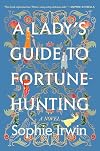
Honestly, nothing wrong objectively, I just wasn’t feeling it and was getting strangely stressed. Maybe I’ll return to it another time!
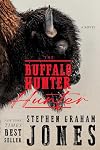
Good, solid 4 star read.
Honestly, as someone who really doesn’t like horror, this really captivated me and didn’t make me freak out too much. I do have a hard “horror during daylight hours only” policy or I can’t go to sleep, which helped.
I did guess where some of it was going, but parts of the end left me at a complete loss. The last eighth maybe knocked it down a little for me. I was feeling five stars or a really high 4.5 through most of the book, but the ending was slightly unsatisfying to me. I enjoyed it, but I wish there were a few things that went slightly different directions.
It all makes sense, to be clear! There were hints at where all of it was going sprinkled throughout, but I wish there was maybe like 25% more buildup. Part of it is the least compelling voice to me was the modern character’s, and she narrated most of the last bit.
Good read. I’d definitely visit Stephen Graham Jones’s other work, I’m just also a wimp who needs time between horror novels and also I have one billion books checked out.
It took me a while to read because of my hard limit on when I was reading, but I found myself wanting to break my rule and read into the night, which is a good sign with a horror novel for me. I just chose to not do the thing that would prevent me from sleeping.
I would recommend, especially if you enjoy horror. It’s a very unique premise and written incredibly well. I may have liked it even more if I was a horror aficionado, but I’m a scaredy show more cat and this is the first horror novel I’ve read in over a year. show less
Honestly, as someone who really doesn’t like horror, this really captivated me and didn’t make me freak out too much. I do have a hard “horror during daylight hours only” policy or I can’t go to sleep, which helped.
I did guess where some of it was going, but parts of the end left me at a complete loss. The last eighth maybe knocked it down a little for me. I was feeling five stars or a really high 4.5 through most of the book, but the ending was slightly unsatisfying to me. I enjoyed it, but I wish there were a few things that went slightly different directions.
It all makes sense, to be clear! There were hints at where all of it was going sprinkled throughout, but I wish there was maybe like 25% more buildup. Part of it is the least compelling voice to me was the modern character’s, and she narrated most of the last bit.
Good read. I’d definitely visit Stephen Graham Jones’s other work, I’m just also a wimp who needs time between horror novels and also I have one billion books checked out.
It took me a while to read because of my hard limit on when I was reading, but I found myself wanting to break my rule and read into the night, which is a good sign with a horror novel for me. I just chose to not do the thing that would prevent me from sleeping.
I would recommend, especially if you enjoy horror. It’s a very unique premise and written incredibly well. I may have liked it even more if I was a horror aficionado, but I’m a scaredy show more cat and this is the first horror novel I’ve read in over a year. show less

3.5/5 stars. To be fair, I think my rating of this book has been influenced by the amount of terrible poetry I have consumed in my Brit Lit class up to this point. Asides from Sir Gawain and the Green Knight, this is probably the best thing I've actively read for my class this year. I found the look into De Quincey's psyche very interesting, and liked the look into the way he ended up addicted to opium. I have the same problem as a lot of other reviewers, in that it took too long to get to the interesting stuff (aka the Horrors of Opium), but I actually enjoyed his background and summary of his life a lot more than I expected to, as I really loved his writing. All in all, I would take writing an essay on this over about 90% of what I have read for Brit Lit any day of the week.
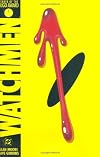
Three years ago, I first read Watchmen for a speculative fiction seminar. It emerged as one of my three favorites (its position between two and three flips depending on the day, with Cloud Atlas taking the other spot), and I was delighted to have enjoyed it as much as I did then on a reread.
It’s not a perfect book, not by any means, but it fascinated me. The discussions it incited in class were not, in my opinion, the most difficult (that honor goes to Lincoln in the Bardo, my favorite thing I read for class), but were some of the most interesting. The superhero is so ubiquitous in American pop culture, especially with the boom of the MCU. But, one asks after reading Watchmen, is such a person as the ideal of an Iron Man or Captain America possible? Can one be a “superhero” without holding a selfishness that prevails beyond all else?
One of the most interesting parts of Watchmen is that none of the superheroes, with the exception of Dr. Manhattan, are superhuman. What kind of person, it asks, wants to become a masked crusader? What does this say of their nature? What kind of person then turns away from it? What does this say? Each character is a different expression of those questions, and each holds an equally interesting answer.
Every character has skeletons in the closet. Each of them are, in unique ways, horrible people. And yet, you cannot help but understand and sympathize with many, if not all, of them. It’s incredible.
Watchmen, man. I love it.
It’s not a perfect book, not by any means, but it fascinated me. The discussions it incited in class were not, in my opinion, the most difficult (that honor goes to Lincoln in the Bardo, my favorite thing I read for class), but were some of the most interesting. The superhero is so ubiquitous in American pop culture, especially with the boom of the MCU. But, one asks after reading Watchmen, is such a person as the ideal of an Iron Man or Captain America possible? Can one be a “superhero” without holding a selfishness that prevails beyond all else?
One of the most interesting parts of Watchmen is that none of the superheroes, with the exception of Dr. Manhattan, are superhuman. What kind of person, it asks, wants to become a masked crusader? What does this say of their nature? What kind of person then turns away from it? What does this say? Each character is a different expression of those questions, and each holds an equally interesting answer.
Every character has skeletons in the closet. Each of them are, in unique ways, horrible people. And yet, you cannot help but understand and sympathize with many, if not all, of them. It’s incredible.
Watchmen, man. I love it.
Holy fuck. Holy fucking fuck. What the hell.
Great book. Never read it.
I loved the writing and the formatting. Wonderful interviews. Never read it.
The combination of fact with this fictional scenario was incredibly interesting. NEVER READ IT.
I cannot in good conscious recommend this book to another living soul, but I really enjoyed it. Goodreads you suck for recommending this to me.
The main complaints I see from others are: a)the U.S. fires in retaliation in the scenario presented, not first , and b) there's not enough discussion of facts and too much purple prose.
To the first point, I think that this specific scenario was written as a purposefully bad scenario, but not a worst case.The fact of the matter is if the U.S. ever fires first, it is going to be to annihilate. There will not be a single bomb, it will be an arsenal. The scenario presented was very calculated to include a moment of doubt on if retaliatory fire is necessary and to show that even then it will bring other countries into it and that this is still devasting. There is no good ending in nuclear war, except to maybe accept annihilation of your own people and never respond for the good of the world, which is just never going to happen.
The second is more personal preference, but I didn't think there was too much purple prose or description of tragedy in comparison to the actual (fictional) events. The "chapters" are quite short (more section breaks than real chapters) so any chapter-long description was show more often still less than two pages.
The fear of a nuclear apocalypse will not escape me for a little while. Goddamn you book and also Goodreads for, again, recommending this to me. show less
Great book. Never read it.
I loved the writing and the formatting. Wonderful interviews. Never read it.
The combination of fact with this fictional scenario was incredibly interesting. NEVER READ IT.
I cannot in good conscious recommend this book to another living soul, but I really enjoyed it. Goodreads you suck for recommending this to me.
The main complaints I see from others are: a)
To the first point, I think that this specific scenario was written as a purposefully bad scenario, but not a worst case.
The second is more personal preference, but I didn't think there was too much purple prose or description of tragedy in comparison to the actual (fictional) events. The "chapters" are quite short (more section breaks than real chapters) so any chapter-long description was show more often still less than two pages.
The fear of a nuclear apocalypse will not escape me for a little while. Goddamn you book and also Goodreads for, again, recommending this to me. show less
Well. I kind of hated this.
Objectively, this isn't the worst book I've read. I can't give it one star because it nowhere near reaches the level of suck the only one star book I have on this account reached. But I still kind of hated this.
Chapter one almost immediately lost me. I was so angry I started highlighting things. Highlighting things. I don't highlight. I've tried to become a highlighter, and I've failed every time. This is so out of form for me I don't think I've ever done it besides pouring over some very few assigned reading for class.
What was so bad? Well, the third sentence of the book is "It's because [football] itself is so complicated and overorganized that there's no reasonable way to replicate it recreationally." I was almost on board until Klosterman claimed hockey was easier to play recreationally and immediately dismissed flag football and backyard football as valid forms of recreational football. This is, in my opinion, simply untrue.
Hockey, my favorite sport, is incredibly discriminatory based on wealth. Equipment, even rec equipment, is so incredibly expensive it is restricted almost entirely to rich white people. You need ice. You need to pay for a league. Eliminating flag football makes rec football in a similar bracket, but flag football is a valid way of participating in the game. Two-touch is valid.
Klosterman insists shooting baskets in your backyard gets you in the same mindset as an NBA star going at it alone in the gym, but that throwing show more passes on the college quad doesn't get you in the same mindset as a NFL star. Why? What is so fundamentally different about these actions? What?
This drove me up the wall. From the beginning he feels like he wants to make football this unknowable entity, but this is unfair. What makes football different from any other sport?
Klosterman also makes the argument in chapter one that football is the way it is because it is such a unique television product, again I fundamentally disagree. He insists football fans reframe the sport through a television lens, even when watching live. But the truth is, as he points out two chapters later, a large portion of football fans engage with football from a non-televised perspective.
I was in marching band through both high school and college. Almost every football game I've watched has been live. That's not to say I don't watch televised football, I enjoy the college football playoffs, I watch my collegiate team (go Yale!), I watch the Super Bowl like most of America. But I spent four years attending eleven football games a year with my high school marching band, and about six a year in college. I've watched most of my football in person.
In Texas, high school football is akin to a religion. Klosterman points this out. I lived in a small town in Texas for most of my life; I experienced this first hand. When I was in seventh grade, our team went to the state finals; the whole town shut down to go to Jerryworld and watch. Most small town Texans spend more time watching live high school football than the NFL. It's frustrating to read.
Klosterman, in my opinion, throws up a lot of strawmen.
Chapters 2-6 are what save this from a one star review. They're three star writing, in my opinion, with even some brief glimpses of four star writing. Fun.
Even chapter three, the bit on Texan high school football, made me angry through a description of six-man football (my brother played in high school, although at a different school from the one I attended). It felt reductive.
Chapter seven. Time for Chuck Klosterman to tackle racism.
The most interesting question in professional sports is why so many top athletes, especially in the NBA and NFL, are black, but so few of them break into executive and coaching roles, despite their white counterparts making the jump. Why is the part of the sport that destroys your body the part the black players are locked to? Klosterman throws this question out, and immediately ignores it to spend the rest of the chapter pontificating on the black quarterback. I'm not denying the history of the subtle racism employed to deny black men from the quarterback position isn't worth discussing, but to pose and ignore such a prevalent issue now was very frustrating.
"I'm thinking about race and football not because I want to but because it has to be part of this," Klosterman states towards the end of chapter seven, but he's spent the chapter discussing what is essentially a nonissue. He's found a problem of race that is not maybe solved, but is on the up, while ignoring one of the most pressing questions about race in sport. I wanted to punt the man.
Chapter eight was unremarkable.
Chapter nine. Time for Chuck Klosterman to tackle CTE.
I'll just give you a quote here. "Football is crazy. But it is an insanity we must accept and permit ourselves to enjoy, unless we believe people are obligated to remove every unessential hazard from day-to-day existence. [...] I don't believe human life can be fulfilling if the only goal is ensuring it lasts as long as possible."
But CTE isn't something that shorts the lifespan by one year, or ten years, or twenty years. Players die, often and horrifically, before sixty. This isn't even getting into the issue of other, more subtle injuries in the sport. Players will live forever in pain or addicted to painkillers or physically disabled. The body is an asset in all sports, and this is something that cannot be ignored.
I'm a sports enjoyer. I love sports. I watch them obsessively. I also have a treatise on the treatment of the athlete as a commodity brewing. Health is no longer personal, the person is the thing you are selling. It's gauche at best and active exploitation at worst. Football is not about personal risk: it's about personal risk for the pure entertainment of others. How can we reconcile that?
I don't want to ban sports. I want a real discussion of the risks and treatment of athletes, and this was not that.
Chapter ten. Time for Chuck Klosterman to tackle the future of football.
I actually have little issue with this chapter. It's fair in its description, but I do believe it will take longer than the timeline he lays out.
There was one quote, though. "Football will recede from prominence as average people lose their relationship to the sport's interior culture." YOU CLAIMED. IT WAS TV. YOU SAID. IT WAS THE TV PRODUCT. OH I WILL KILL.
In the final chapter, Klosterman has some awful takes on the metric system, but for brevity I'll leave that alone. I just want you to know he says "You can play basketball with a volleyball," which, while technically true, is so hard and unenjoyable it's basically false.
My final complaint is his use of technical language. He throws out abbreviations and words without any explanations (positions, mainly, but FBS is used a lot). This book should be for people with an interest in sports but uninvolved with football, for people interested in football as an American institution, and for casual fans of the sport. You need to give background and context, my guy.
I'll leave you with this: Football is meant to be an examination of America’s obsession with football. It fails. Don't read this. show less
Objectively, this isn't the worst book I've read. I can't give it one star because it nowhere near reaches the level of suck the only one star book I have on this account reached. But I still kind of hated this.
Chapter one almost immediately lost me. I was so angry I started highlighting things. Highlighting things. I don't highlight. I've tried to become a highlighter, and I've failed every time. This is so out of form for me I don't think I've ever done it besides pouring over some very few assigned reading for class.
Hockey, my favorite sport, is incredibly discriminatory based on wealth. Equipment, even rec equipment, is so incredibly expensive it is restricted almost entirely to rich white people. You need ice. You need to pay for a league. Eliminating flag football makes rec football in a similar bracket, but flag football is a valid way of participating in the game. Two-touch is valid.
Klosterman insists shooting baskets in your backyard gets you in the same mindset as an NBA star going at it alone in the gym, but that throwing
This drove me up the wall. From the beginning he feels like he wants to make football this unknowable entity, but this is unfair. What makes football different from any other sport?
Klosterman also makes the argument in chapter one that football is the way it is because it is such a unique television product, again I fundamentally disagree. He insists football fans reframe the sport through a television lens, even when watching live. But the truth is, as he points out two chapters later, a large portion of football fans engage with football from a non-televised perspective.
I was in marching band through both high school and college. Almost every football game I've watched has been live. That's not to say I don't watch televised football, I enjoy the college football playoffs, I watch my collegiate team (go Yale!), I watch the Super Bowl like most of America. But I spent four years attending eleven football games a year with my high school marching band, and about six a year in college. I've watched most of my football in person.
In Texas, high school football is akin to a religion. Klosterman points this out. I lived in a small town in Texas for most of my life; I experienced this first hand. When I was in seventh grade, our team went to the state finals; the whole town shut down to go to Jerryworld and watch. Most small town Texans spend more time watching live high school football than the NFL. It's frustrating to read.
Klosterman, in my opinion, throws up a lot of strawmen.
Chapters 2-6 are what save this from a one star review. They're three star writing, in my opinion, with even some brief glimpses of four star writing. Fun.
Even chapter three, the bit on Texan high school football, made me angry through a description of six-man football (my brother played in high school, although at a different school from the one I attended). It felt reductive.
Chapter seven. Time for Chuck Klosterman to tackle racism.
The most interesting question in professional sports is why so many top athletes, especially in the NBA and NFL, are black, but so few of them break into executive and coaching roles, despite their white counterparts making the jump. Why is the part of the sport that destroys your body the part the black players are locked to? Klosterman throws this question out, and immediately ignores it to spend the rest of the chapter pontificating on the black quarterback. I'm not denying the history of the subtle racism employed to deny black men from the quarterback position isn't worth discussing, but to pose and ignore such a prevalent issue now was very frustrating.
"I'm thinking about race and football not because I want to but because it has to be part of this," Klosterman states towards the end of chapter seven, but he's spent the chapter discussing what is essentially a nonissue. He's found a problem of race that is not maybe solved, but is on the up, while ignoring one of the most pressing questions about race in sport. I wanted to punt the man.
Chapter eight was unremarkable.
Chapter nine. Time for Chuck Klosterman to tackle CTE.
I'll just give you a quote here. "Football is crazy. But it is an insanity we must accept and permit ourselves to enjoy, unless we believe people are obligated to remove every unessential hazard from day-to-day existence. [...] I don't believe human life can be fulfilling if the only goal is ensuring it lasts as long as possible."
But CTE isn't something that shorts the lifespan by one year, or ten years, or twenty years. Players die, often and horrifically, before sixty. This isn't even getting into the issue of other, more subtle injuries in the sport. Players will live forever in pain or addicted to painkillers or physically disabled. The body is an asset in all sports, and this is something that cannot be ignored.
I'm a sports enjoyer. I love sports. I watch them obsessively. I also have a treatise on the treatment of the athlete as a commodity brewing. Health is no longer personal, the person is the thing you are selling. It's gauche at best and active exploitation at worst. Football is not about personal risk: it's about personal risk for the pure entertainment of others. How can we reconcile that?
I don't want to ban sports. I want a real discussion of the risks and treatment of athletes, and this was not that.
Chapter ten. Time for Chuck Klosterman to tackle the future of football.
I actually have little issue with this chapter. It's fair in its description, but I do believe it will take longer than the timeline he lays out.
There was one quote, though. "Football will recede from prominence as average people lose their relationship to the sport's interior culture." YOU CLAIMED. IT WAS TV. YOU SAID. IT WAS THE TV PRODUCT. OH I WILL KILL.
In the final chapter, Klosterman has some awful takes on the metric system, but for brevity I'll leave that alone. I just want you to know he says "You can play basketball with a volleyball," which, while technically true, is so hard and unenjoyable it's basically false.
My final complaint is his use of technical language. He throws out abbreviations and words without any explanations (positions, mainly, but FBS is used a lot). This book should be for people with an interest in sports but uninvolved with football, for people interested in football as an American institution, and for casual fans of the sport. You need to give background and context, my guy.
I'll leave you with this: Football is meant to be an examination of America’s obsession with football. It fails. Don't read this. show less
Somewhere between 4 and 4.5 stars, can't quite decide.
I read Calpurnia Tate approximately once a month if not more between the ages of eight and eleven. It was easily my favorite book before the likes of Percy Jackson and the Sisters Grimm consumed me. I loved it deeply, probably in part because I deeply related to Calpurnia (or Callie Vee, as she is referred to by most of the characters). I too was a young girl in rural Texas with a deep interest in science, although I leaned towards space instead of biology. As a twenty-one year old, I have taken a turn into the biological sciences, but I was a veritable treasure trove of space facts for my elementary school years.
I was never pushed like she was towards a life of housekeeping; I was born in 2003 and my parents if anything pushed me and my sisters heavily towards the sciences. I was engaged in Girl Scouts from second grade onwards, and I spent many summers in science camps. But I was surrounded by girls who had already named their theoretical children and would discuss crushes as if they were planning marriage in the third grade.
This was, of course, before I realized I was gay. I didn't even know gay people existed until I was nearly twelve. I felt deeply isolated from my peers, though, and sometimes went as far as picking a boy to say I had a crush on just to fit in with my friends. This isn't to say this is wrong. I have deep respect for stay-at-home moms. My mother was one of them, and she's maybe my favorite person show more on Earth. I just felt immensely isolated in a way I wouldn't be able to put words to for many more years.
I felt understood by Calpurnia Tate in way I had never really felt in a book before. I tore through it time and time again, and I loved it with my whole heart.
So why, at twenty-two, am I wavering in my love? In part, I am no longer a child. The prose is still lovely, complex enough to keep me drawn in but easy enough for an elementary schooler to digest. The stories (the book is a series of connected vignettes) are compelling and fun.
I have two main issues: One, although I enjoy the fact everyone in Calpurnia's life is more or less subtly disapproving of her ambition to be a scientist, it did sadden me on a reread that not one person is willing to back her without reservations. The characters feel real in their disapproval, but it just makes me sad for Calpurnia, who hasn't reached a point she wants to participate in the domestic arts by the end of the book.
My much bigger issue is the setting. The book is set just over 30 years post-Civil War in Texas. I'm not expecting middle grade literature to delve into the complex racial politics in this time period, but there are several black servant characters in the book and several allusions to racial injustice of the time. Calpurnia is appropriately ignorant for a white, wealthy twelve-year-old girl of the time, but at one point she mentions and flies past a story of a mixed woman being killed by her white husband for concealing her race.
One of my biggest pet peeves in books is when there are allusions to issues of race, sexuality, or gender that never go explored. Again, I don't exactly know how to fix this. Calpurnia Tate is middle grade, and I'm not expecting a treatise on the Reconstruction era South, but the mentions of serious racism that are glossed over are uncomfortable at best. I don't want the story to be void of this entirely, which would also be wrong in its own right, I just wish it was executed in a slightly better way I can't even particularly put words to.
I still find Calpurnia Tate overall a beautiful novel. I completely understand my infatuation with it as a child.
I'm unsure as to if I'll pick up the sequel. It was published when I was twelve, and I had been consumed by other series at that point. I never read it; I didn't realize there was a sequel until I looked up Calpurnia Tate on Libby. I almost want to leave Calpurnia right where she is.
As it stands, I have about twenty books on my TBR I need to plow through before I think about the sequel. Maybe I'll revisit her in May.
If you have a middle grade reader, I cannot recommend Calpurnia Tate enough. I'd recommend supplementing with other middle grade books with a focus on racism and civil rights. I remember reading One Crazy Summer around this time, which was my first introduction to the Black Panther Party. I can't speak to the quality of it, as I last read it over a decade ago, but a quick Google search says it's been well received.
I'm not sure I can recommend this to adult readers, as it is clearly middle grade, but I do still love it. I'm just not sure there isn't a veil of childhood hanging over it still.
Thank you to my parents, who gave me this book for Christmas probably fifteen years ago. I appreciate it greatly. show less
I read Calpurnia Tate approximately once a month if not more between the ages of eight and eleven. It was easily my favorite book before the likes of Percy Jackson and the Sisters Grimm consumed me. I loved it deeply, probably in part because I deeply related to Calpurnia (or Callie Vee, as she is referred to by most of the characters). I too was a young girl in rural Texas with a deep interest in science, although I leaned towards space instead of biology. As a twenty-one year old, I have taken a turn into the biological sciences, but I was a veritable treasure trove of space facts for my elementary school years.
I was never pushed like she was towards a life of housekeeping; I was born in 2003 and my parents if anything pushed me and my sisters heavily towards the sciences. I was engaged in Girl Scouts from second grade onwards, and I spent many summers in science camps. But I was surrounded by girls who had already named their theoretical children and would discuss crushes as if they were planning marriage in the third grade.
This was, of course, before I realized I was gay. I didn't even know gay people existed until I was nearly twelve. I felt deeply isolated from my peers, though, and sometimes went as far as picking a boy to say I had a crush on just to fit in with my friends. This isn't to say this is wrong. I have deep respect for stay-at-home moms. My mother was one of them, and she's maybe my favorite person show more on Earth. I just felt immensely isolated in a way I wouldn't be able to put words to for many more years.
I felt understood by Calpurnia Tate in way I had never really felt in a book before. I tore through it time and time again, and I loved it with my whole heart.
So why, at twenty-two, am I wavering in my love? In part, I am no longer a child. The prose is still lovely, complex enough to keep me drawn in but easy enough for an elementary schooler to digest. The stories (the book is a series of connected vignettes) are compelling and fun.
I have two main issues: One, although I enjoy the fact everyone in Calpurnia's life is more or less subtly disapproving of her ambition to be a scientist, it did sadden me on a reread that not one person is willing to back her without reservations. The characters feel real in their disapproval, but it just makes me sad for Calpurnia, who hasn't reached a point she wants to participate in the domestic arts by the end of the book.
My much bigger issue is the setting. The book is set just over 30 years post-Civil War in Texas. I'm not expecting middle grade literature to delve into the complex racial politics in this time period, but there are several black servant characters in the book and several allusions to racial injustice of the time. Calpurnia is appropriately ignorant for a white, wealthy twelve-year-old girl of the time, but at one point she mentions and flies past a story of a mixed woman being killed by her white husband for concealing her race.
One of my biggest pet peeves in books is when there are allusions to issues of race, sexuality, or gender that never go explored. Again, I don't exactly know how to fix this. Calpurnia Tate is middle grade, and I'm not expecting a treatise on the Reconstruction era South, but the mentions of serious racism that are glossed over are uncomfortable at best. I don't want the story to be void of this entirely, which would also be wrong in its own right, I just wish it was executed in a slightly better way I can't even particularly put words to.
I still find Calpurnia Tate overall a beautiful novel. I completely understand my infatuation with it as a child.
I'm unsure as to if I'll pick up the sequel. It was published when I was twelve, and I had been consumed by other series at that point. I never read it; I didn't realize there was a sequel until I looked up Calpurnia Tate on Libby. I almost want to leave Calpurnia right where she is.
As it stands, I have about twenty books on my TBR I need to plow through before I think about the sequel. Maybe I'll revisit her in May.
If you have a middle grade reader, I cannot recommend Calpurnia Tate enough. I'd recommend supplementing with other middle grade books with a focus on racism and civil rights. I remember reading One Crazy Summer around this time, which was my first introduction to the Black Panther Party. I can't speak to the quality of it, as I last read it over a decade ago, but a quick Google search says it's been well received.
I'm not sure I can recommend this to adult readers, as it is clearly middle grade, but I do still love it. I'm just not sure there isn't a veil of childhood hanging over it still.
Thank you to my parents, who gave me this book for Christmas probably fifteen years ago. I appreciate it greatly. show less
Without Consent: A Landmark Trial and the Decades-Long Struggle to Make Spousal Rape a Crime by Sarah Weinman
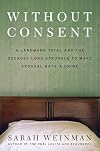
I wish I could give this a higher rating, but 4 stars feels fitting. In parts, the overall framing device (the first martial rape trial in the United States) felt as if it was being inserted into other stories in clunky ways. Generally, I found it quite moving, but I wish there was a bit more at the end about how the fight for criminalization of martial rape isn’t over—while there is a brief mention of states with large loopholes in their laws, there is no discussion of what should or can be done about this, or the people fighting it. Similarly, there is a brief mention that the overturning of Roe v. Wade may impact legality of marital rape, but again, no further discussion. All in all, I found this an important look into the incredibly recent fight for marital rape to be considered a crime at all. I liked the overall framing, I liked that it explored what sensationalizing crime does to a person. I like that it included discussion of why victims return to their abusers, and how breaking the cycle is difficult, although I wish it delved deeper. I was expecting more analysis at the end, when I thought I had another hundred pages left, but those final pages were entirely citations. It did leave me with more interest in older feminist literature, which is a win!
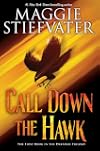
[DNF]
Look, I loved the Raven Cycle. I plowed through them in three days in high school during a snowstorm, and I was instantly in love. I was so excited when I heard about CDTH. I bought it immediately. I was ready. Looking back, I think some of it was my immense need for queer stories in my life at the time. I was living in a homophobic small town, with few queer spaces I’d carved out for myself, and anything that reflected me I jumped on like a rabid dog.
I reread the Raven Cycle this week, and I was as in love as I was at seventeen. I figured, hey, you weren’t the biggest fan of the Dreamer Trilogy, but now you’re twenty two and in a new phase of life. You just survived an Ivy League. Maybe you’ll love it this time! You DNFed halfway through Mister Impossible after being immensely let down by CDTH, but you’ve changed as a person!
I DNFed after 100 pages. I just couldn’t do it.
Looking back at it now, the draw of TRC was at least in part the relationships between Blue specifically and the boys. I’d give The Dream Thieves a solid 4 because of this—I found Ronan grating to an extent on a reread, and I missed Blue. It’s easily my least favorite of the four books. I stopped to chug through the graphic novel in a couple of hours because I needed a break from the book.
I didn’t like the new characters. I was annoyed with the old characters. I was bored. I was frustrated. I couldn’t do 400 more pages.
It’s too big. There’s too much going on, but I don’t show more care about any of it. It doesn’t feel magical, it feels bland.
In previous years, I would have slogged through. But I’ve grown as a person, and, honestly, it doesn’t even have the element of having interesting flaws to keep me going. It’s just so bland. So I returned my library books, and moved on.
If you love this, I’m very happy for you! It’s just simply not for me, unfortunately. I wanted to reread it and just adore it, but that didn’t happen. I’ve tried some of Maggie’s other work, too, and frankly none of it has hit for me. She struck gold with TRC, and I don’t know if she’s been able to find it since.
Anyways, if she writes a spinoff about Blue I will 100% be picking it up. Honestly, if she writes anything in this universe that doesn’t require the Dreamer Trilogy to be read, I’ll be picking it up. We will have to see. show less
Look, I loved the Raven Cycle. I plowed through them in three days in high school during a snowstorm, and I was instantly in love. I was so excited when I heard about CDTH. I bought it immediately. I was ready. Looking back, I think some of it was my immense need for queer stories in my life at the time. I was living in a homophobic small town, with few queer spaces I’d carved out for myself, and anything that reflected me I jumped on like a rabid dog.
I reread the Raven Cycle this week, and I was as in love as I was at seventeen. I figured, hey, you weren’t the biggest fan of the Dreamer Trilogy, but now you’re twenty two and in a new phase of life. You just survived an Ivy League. Maybe you’ll love it this time! You DNFed halfway through Mister Impossible after being immensely let down by CDTH, but you’ve changed as a person!
I DNFed after 100 pages. I just couldn’t do it.
Looking back at it now, the draw of TRC was at least in part the relationships between Blue specifically and the boys. I’d give The Dream Thieves a solid 4 because of this—I found Ronan grating to an extent on a reread, and I missed Blue. It’s easily my least favorite of the four books. I stopped to chug through the graphic novel in a couple of hours because I needed a break from the book.
I didn’t like the new characters. I was annoyed with the old characters. I was bored. I was frustrated. I couldn’t do 400 more pages.
It’s too big. There’s too much going on, but I don’t show more care about any of it. It doesn’t feel magical, it feels bland.
In previous years, I would have slogged through. But I’ve grown as a person, and, honestly, it doesn’t even have the element of having interesting flaws to keep me going. It’s just so bland. So I returned my library books, and moved on.
If you love this, I’m very happy for you! It’s just simply not for me, unfortunately. I wanted to reread it and just adore it, but that didn’t happen. I’ve tried some of Maggie’s other work, too, and frankly none of it has hit for me. She struck gold with TRC, and I don’t know if she’s been able to find it since.
Anyways, if she writes a spinoff about Blue I will 100% be picking it up. Honestly, if she writes anything in this universe that doesn’t require the Dreamer Trilogy to be read, I’ll be picking it up. We will have to see. show less
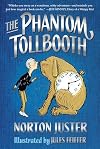
Well, I did mean to read something other than another childhood favorite today.
The Phantom Tollbooth is just a joy from cover to cover. I read this one in about an hour and a half flat, in part because, yes, it is for children, and in part because it really does just suck you in and doesn't let you out until you've finished.
God, the illustrations. They're just so immensely perfect for this eclectic little story.
Milo is such a fun little character. Everyone here is such a fun little character. I almost wish we had spent more time with each of them, but the breakneck speed is also part of what makes the Phantom Tollbooth so charming.
Cannot recommend this enough to anyone with an elementary schooler, especially as a first foray into independent chapter book reading. It's immensely fun, clever, and playful in just the right way. Children will take both moral lessons and some practical things (the vocabulary here is excellent) from it.
My one gripe with the Phantom Tollbooth may be the amount of characters and settings. I think it might have served the book well, especially in the back half, to spend slightly more time in a few spots instead of cramming so many characters in. Either that or give it about fifty more pages. It's a very minor issue, though, almost not worth mentioning.
I'm unsure as to if I'd recommend this to an adult who hasn't read it before. I'm always uncertain to what extent nostalgia is clouding my view of these books. It's a hell of a thing.
The Phantom Tollbooth is just a joy from cover to cover. I read this one in about an hour and a half flat, in part because, yes, it is for children, and in part because it really does just suck you in and doesn't let you out until you've finished.
God, the illustrations. They're just so immensely perfect for this eclectic little story.
Milo is such a fun little character. Everyone here is such a fun little character. I almost wish we had spent more time with each of them, but the breakneck speed is also part of what makes the Phantom Tollbooth so charming.
Cannot recommend this enough to anyone with an elementary schooler, especially as a first foray into independent chapter book reading. It's immensely fun, clever, and playful in just the right way. Children will take both moral lessons and some practical things (the vocabulary here is excellent) from it.
My one gripe with the Phantom Tollbooth may be the amount of characters and settings. I think it might have served the book well, especially in the back half, to spend slightly more time in a few spots instead of cramming so many characters in. Either that or give it about fifty more pages. It's a very minor issue, though, almost not worth mentioning.
I'm unsure as to if I'd recommend this to an adult who hasn't read it before. I'm always uncertain to what extent nostalgia is clouding my view of these books. It's a hell of a thing.
I cannot believe it. I’m rating a romance novel 4 stars.
Granted, it’s probably just under four stars in reality. I can’t actually say it’s better than some of the books in the Raven Cycle, which I just read and gave half the books in it 4 stars. But goddamn, did I enjoy it.
I, in a massive act of reader sacrilege, watched Heated Rivalry before it read it, and I absolutely adored the show. That’s probably part of why I enjoyed the book so much, but honestly it was just a fun read! The tension throughout was well done, and I enjoyed both main characters’ internal monologue. There were a lot more random side characters, which is just a consequence of the show having a limited budget, but I liked that quite a bit.
I probably enjoyed the show more, which is typical of romance adaptations for me, but people online have VASTLY exaggerated the problems with the book in comparison to the show. There were changes I liked in the show, there were things in the book I liked better. Particularly, some of the book side characters’ traits were changed in strange ways in the show, for reasons unknown to me, and I didn’t like that. The show is, however, an incredibly faithful adaptation, to the point large sections of dialogue are identical. A lot of the issues I have with the book are present in the show, and vice versa.
As a hockey fanatic, I can solidly say the people claiming this is hockey RPF with the serial numbers filed off are wrong. Both Shane and Ilya are show more amalgamations of several hockey player archetypes, and honestly their characters and their dynamic aren’t really identical to anything that exists in real life. There are certainly aspects of this that are reflective of real life (the Montreal/Boston rivalry is probably the most famous in hockey, although Leafs fans might fight me on that), but you’d have to squint pretty hard to say this is RPF. I guess the comparisons to Ovechkin and Crosby are there, but the Weird Probably-Has-Undiagnosed-Neurodivergence Canadian Hockey Machine is a very common type of guy and Ilya reminds me more of some of the early 2010s party boys than Ovechkin. Ovechkin and Crosby never even had a particularly large rivalry, outside of the general “two great players” thing. Pittsburgh’s traditional rival is Philadelphia, and it was Crosby’s teammate and Ovechkin’s draft-mate, Malkin (another Russian superstar), who actually had a brief beef with Ovechkin.
If you know hockey, you have to straight up ignore quite a bit of that. They both score 67 goals as rookies, which is, frankly, insane any time and particularly in the low scoring era they were rookies in. Even Ovechkin, the only NHL player to surpass 900 goals in his career, capped out at 52. The rest of it makes sense, but, as I see in a lot of sports romance/stories, the numbers are really inflated. Additionally, both begin their rookie careers a full year after being drafted, which is a bit weird in my opinion, but not impossible. Most people aren’t in it for the hockey as much as the vibe of hockey, which is definitely there. Honestly, there isn’t a ton of hockey action, but I’d rather that than inaccurate hockey. Rachel Reid clearly knows quite a bit about hockey culture (the language used and actions of the players are very accurate), so I’m not mad about it.
All in all, really fun time! Sorry about the derail into IRL hockey talk, I’m frankly quite insane about these things. As I chug through the rest of the series, prepare for more of that. Although I still 100% enjoy regency romance and other historical romances more than contemporary romance as a whole, this may have been my favorite romance read of the past year, to the shock of everyone including me. Also, great distraction from my college’s basketball team not making March Madness. show less
Granted, it’s probably just under four stars in reality. I can’t actually say it’s better than some of the books in the Raven Cycle, which I just read and gave half the books in it 4 stars. But goddamn, did I enjoy it.
I, in a massive act of reader sacrilege, watched Heated Rivalry before it read it, and I absolutely adored the show. That’s probably part of why I enjoyed the book so much, but honestly it was just a fun read! The tension throughout was well done, and I enjoyed both main characters’ internal monologue. There were a lot more random side characters, which is just a consequence of the show having a limited budget, but I liked that quite a bit.
I probably enjoyed the show more, which is typical of romance adaptations for me, but people online have VASTLY exaggerated the problems with the book in comparison to the show. There were changes I liked in the show, there were things in the book I liked better. Particularly, some of the book side characters’ traits were changed in strange ways in the show, for reasons unknown to me, and I didn’t like that. The show is, however, an incredibly faithful adaptation, to the point large sections of dialogue are identical. A lot of the issues I have with the book are present in the show, and vice versa.
As a hockey fanatic, I can solidly say the people claiming this is hockey RPF with the serial numbers filed off are wrong. Both Shane and Ilya are show more amalgamations of several hockey player archetypes, and honestly their characters and their dynamic aren’t really identical to anything that exists in real life. There are certainly aspects of this that are reflective of real life (the Montreal/Boston rivalry is probably the most famous in hockey, although Leafs fans might fight me on that), but you’d have to squint pretty hard to say this is RPF. I guess the comparisons to Ovechkin and Crosby are there, but the Weird Probably-Has-Undiagnosed-Neurodivergence Canadian Hockey Machine is a very common type of guy and Ilya reminds me more of some of the early 2010s party boys than Ovechkin. Ovechkin and Crosby never even had a particularly large rivalry, outside of the general “two great players” thing. Pittsburgh’s traditional rival is Philadelphia, and it was Crosby’s teammate and Ovechkin’s draft-mate, Malkin (another Russian superstar), who actually had a brief beef with Ovechkin.
If you know hockey, you have to straight up ignore quite a bit of that. They both score 67 goals as rookies, which is, frankly, insane any time and particularly in the low scoring era they were rookies in. Even Ovechkin, the only NHL player to surpass 900 goals in his career, capped out at 52. The rest of it makes sense, but, as I see in a lot of sports romance/stories, the numbers are really inflated. Additionally, both begin their rookie careers a full year after being drafted, which is a bit weird in my opinion, but not impossible. Most people aren’t in it for the hockey as much as the vibe of hockey, which is definitely there. Honestly, there isn’t a ton of hockey action, but I’d rather that than inaccurate hockey. Rachel Reid clearly knows quite a bit about hockey culture (the language used and actions of the players are very accurate), so I’m not mad about it.
All in all, really fun time! Sorry about the derail into IRL hockey talk, I’m frankly quite insane about these things. As I chug through the rest of the series, prepare for more of that. Although I still 100% enjoy regency romance and other historical romances more than contemporary romance as a whole, this may have been my favorite romance read of the past year, to the shock of everyone including me. Also, great distraction from my college’s basketball team not making March Madness. show less
3.5 stars.
I will excuse the fact that by the time this story happens enforcers basically no longer existed in hockey, at least in the role Ryan is outlined to be, because an enforcer with severe anxiety who hates being an enforcer is fun!
(But people still fight, Kate, you say, who does the fighting?! Regular guys, mostly. A guy who has only scored a few goals in his career and whose main job is to drop the gloves no longer exists in that form. Tough guys still exist, but they exist more in the form of a Tom Wilson, who I despise—a guy who is capable of playing and scoring at a high level as well as fighting. These guys are also often considered “headhunters” i.e. players who injure others a lot, often (allegedly) on purpose. Hockey as a game has evolved to the point where everyone, including your fourth line of forwards and third pair of defensemen, need to be able to score, assist, and defend, to some extent, at a ridiculously high level. Because no team really has enforcers, carrying one is ostensibly dead weight. If someone hurts your Superstar Guy, everyone on the ice is just going to punch you at once. Group effort.)
Yes, I read this in three and a half hours (took a break for Bridgerton Season 4 finale in the middle). In my defense, my ebook was about a crisp 265 pages of actual material. That’s baby numbers (also I read ridiculously fast).
In terms of content, I liked this more than Game Changer, but less than Heated Rivalry. Ryan Price was a really show more interesting character, and I wish, like Game Changer, we had about 50 more pages to explore his internal state. I really thought this one just straight up wasn’t going to have a third act conflict, so imagine my shock when fifty pages before the end there is one, and imagine my greater shock when it was resolved in under two chapters.
The sex in this felt really impactful and interesting because of the way it purposefully explored Ryan’s mental state. All of the other books scenes never felt out of character or uninterested in what it said about the characters (I disagree with the people who have argued the sex should be sacrificed for more character development, because I think the sex says a lot about them) but these scenes felt particularly interested in being an exploration of character, which I really liked!
Again, I don’t wish the book had less of anything, I just wish it had about 50 to 80 more pages to explore more.
I also really liked Fabian, I just felt much less connected to him than Ryan. Both are interesting characters! (I will partially push back on the idea presented that hockey players would be mostly dating other hockey player-looking men. I do think Ryan is right in thinking someone particularly gender non-conforming wouldn’t be widely accepted, but I also think hockey players have enough internalized homophobia and weirdness about gender roles to mainly go for a stereotypical twink, as much as I, a lesbian who’s somewhat gnc, at least for rural Texas, hate to say it.)
I think Fabian particularly suffers from the incredibly short page count. We see a lot of him with his friends, which is important to his character, but it means a lot of his short time on page is spent exploring his relationships. Because Ryan is portrayed as such a loner, his short time on page is mostly used as exploration of his internal world. I wish we’d have gotten more of that for Fabian.
All in all, good, quick read! It suffers for its short page length, but it was interesting enough that I would have plowed through in a sitting if my mom didn’t badger me into Bridgerton.
**Ok, I got the first three books in a compilation volume from Hoopla, and although I have never run into this before, at least the second volume (books 4 through 6) are SIGNIFICANTLY cut down. I don’t think the first volume does this, but some of my issues with the length might be because of this. Curse you, Hoopla, but I only get 5 books a month and I try to be crafty. The whole series is like a two month wait minimum at any and all of my libraries.
***The second volume isn't actually cut down, I discovered. My ebook is counting two pages as one page, for some godforsaken reason. show less
I will excuse the fact that by the time this story happens enforcers basically no longer existed in hockey, at least in the role Ryan is outlined to be, because an enforcer with severe anxiety who hates being an enforcer is fun!
(But people still fight, Kate, you say, who does the fighting?! Regular guys, mostly. A guy who has only scored a few goals in his career and whose main job is to drop the gloves no longer exists in that form. Tough guys still exist, but they exist more in the form of a Tom Wilson, who I despise—a guy who is capable of playing and scoring at a high level as well as fighting. These guys are also often considered “headhunters” i.e. players who injure others a lot, often (allegedly) on purpose. Hockey as a game has evolved to the point where everyone, including your fourth line of forwards and third pair of defensemen, need to be able to score, assist, and defend, to some extent, at a ridiculously high level. Because no team really has enforcers, carrying one is ostensibly dead weight. If someone hurts your Superstar Guy, everyone on the ice is just going to punch you at once. Group effort.)
Yes, I read this in three and a half hours (took a break for Bridgerton Season 4 finale in the middle). In my defense, my ebook was about a crisp 265 pages of actual material. That’s baby numbers (also I read ridiculously fast).
In terms of content, I liked this more than Game Changer, but less than Heated Rivalry. Ryan Price was a really show more interesting character, and I wish, like Game Changer, we had about 50 more pages to explore his internal state. I really thought this one just straight up wasn’t going to have a third act conflict, so imagine my shock when fifty pages before the end there is one, and imagine my greater shock when it was resolved in under two chapters.
The sex in this felt really impactful and interesting because of the way it purposefully explored Ryan’s mental state. All of the other books scenes never felt out of character or uninterested in what it said about the characters (I disagree with the people who have argued the sex should be sacrificed for more character development, because I think the sex says a lot about them) but these scenes felt particularly interested in being an exploration of character, which I really liked!
Again, I don’t wish the book had less of anything, I just wish it had about 50 to 80 more pages to explore more.
I also really liked Fabian, I just felt much less connected to him than Ryan. Both are interesting characters! (I will partially push back on the idea presented that hockey players would be mostly dating other hockey player-looking men. I do think Ryan is right in thinking someone particularly gender non-conforming wouldn’t be widely accepted, but I also think hockey players have enough internalized homophobia and weirdness about gender roles to mainly go for a stereotypical twink, as much as I, a lesbian who’s somewhat gnc, at least for rural Texas, hate to say it.)
I think Fabian particularly suffers from the incredibly short page count. We see a lot of him with his friends, which is important to his character, but it means a lot of his short time on page is spent exploring his relationships. Because Ryan is portrayed as such a loner, his short time on page is mostly used as exploration of his internal world. I wish we’d have gotten more of that for Fabian.
All in all, good, quick read! It suffers for its short page length, but it was interesting enough that I would have plowed through in a sitting if my mom didn’t badger me into Bridgerton.
**Ok, I got the first three books in a compilation volume from Hoopla, and although I have never run into this before, at least the second volume (books 4 through 6) are SIGNIFICANTLY cut down. I don’t think the first volume does this, but some of my issues with the length might be because of this. Curse you, Hoopla, but I only get 5 books a month and I try to be crafty. The whole series is like a two month wait minimum at any and all of my libraries.
***The second volume isn't actually cut down, I discovered. My ebook is counting two pages as one page, for some godforsaken reason. show less
Murderbot was everything it was hyped up to be. I plowed through All Systems Red and Artificial Condition in a sitting at a track meet. (Also read Project Hail Mary at a track meet. Highly recommend small school high school track meets for chugging through some science fiction.) Murderbot itself is hilarious, the supporting cast sweet and fun.
Great little romp. I'm chugging along through the other novellas as we speak. Shoutout to my local library for having them all avaliable!
Great little romp. I'm chugging along through the other novellas as we speak. Shoutout to my local library for having them all avaliable!
Game Changer: Now Streaming on Crave and HBO Max (Game Changers: Heated Rivalry Book Series 1) by Rachel Reid
It was fun! I enjoyed it, which was shocking as I usually HATE contemporary romance. The third act conflict was a little sudden and a little too easily resolved. (I wish the book had about 50 more pages.) If I was a bigger fan of contemporary romance I might have rated it a bit higher, but as it stands I think it’s worth my average romance rating of three stars. It’s certainly not lower than that, I just can’t in good conscience rate it higher than my favorite regency romances. It didn’t take itself too seriously. Highly self congratulatory writing is usually a downside for me, so I appreciated this.
3.5 Stars, closer to 3 than 4
I remember loving Wilder Girls at 16. It was my first introduction to body horror, a trope (WRITTEN ONLY) I adore now. I loved the atmosphere, the mystery, the vibe. I thought it was incredible. Well, I’ve been on a rereading kick, and I’d figured I’d give it a go at 22. It did, unfortunately, let me down immensely.
Part of it is that I’m aging out of YA rapidly. Part of it I’ve read books with an interesting, similar premise I’ve enjoyed better. A large part of it is I really didn’t enjoy the mystery of it this time around.
Everything felt underdeveloped and as if, in parts, the author didn’t quite know where things were going. At the very end, the main character says, in reference to the disease all the girls have, “it’s trying to make me better.” This frustrated me—the same character has lost an eye to this disease. It felt like this should be treated as a revelation, but it was just confusing and frustrating to me.
I’m also dipping my toes into biology (I’m a physicist by degree, pivoting into biophysics for grad school) and parts of this just felt so completely incomprehensible from a biological point of view. That’s entirely a me problem, but boy did it drive me up the wall a bit.
The characters also felt underdeveloped. I feel like I don’t understand any of them, even though I just spent nearly 350 pages with the three main girls. The ending was much, much more jarring than I remember.
The atmosphere is still show more lovely.
2020 REVIEW BELOW:
I loved this book. It was the first book I read in February that wasn't terrible, and I loved it to death. It was just incredible. I loved the plot, the characters, the setting, the writing, the disease. It was amazing.
I was drawn in from the first chapter. I would highly recommend it to everyone. show less
I remember loving Wilder Girls at 16. It was my first introduction to body horror, a trope (WRITTEN ONLY) I adore now. I loved the atmosphere, the mystery, the vibe. I thought it was incredible. Well, I’ve been on a rereading kick, and I’d figured I’d give it a go at 22. It did, unfortunately, let me down immensely.
Part of it is that I’m aging out of YA rapidly. Part of it I’ve read books with an interesting, similar premise I’ve enjoyed better. A large part of it is I really didn’t enjoy the mystery of it this time around.
Everything felt underdeveloped and as if, in parts, the author didn’t quite know where things were going. At the very end, the main character says, in reference to the disease all the girls have, “it’s trying to make me better.” This frustrated me—the same character has lost an eye to this disease. It felt like this should be treated as a revelation, but it was just confusing and frustrating to me.
I’m also dipping my toes into biology (I’m a physicist by degree, pivoting into biophysics for grad school) and parts of this just felt so completely incomprehensible from a biological point of view. That’s entirely a me problem, but boy did it drive me up the wall a bit.
The characters also felt underdeveloped. I feel like I don’t understand any of them, even though I just spent nearly 350 pages with the three main girls. The ending was much, much more jarring than I remember.
The atmosphere is still show more lovely.
2020 REVIEW BELOW:
I loved this book. It was the first book I read in February that wasn't terrible, and I loved it to death. It was just incredible. I loved the plot, the characters, the setting, the writing, the disease. It was amazing.
I was drawn in from the first chapter. I would highly recommend it to everyone. show less
Solid 4.5.
The Martian remains my favorite Weir, but this is VASTLY better than Artemis. As always with Weir, you have to put the realism of the science out of sight out of mind, but when don’t you in science fiction? Quite an enjoyable read, and I did get a bit teary eyed at the end there.
The Martian remains my favorite Weir, but this is VASTLY better than Artemis. As always with Weir, you have to put the realism of the science out of sight out of mind, but when don’t you in science fiction? Quite an enjoyable read, and I did get a bit teary eyed at the end there.