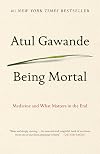
Malcolm Gladwell mentioned the author in an interview and my doctor daughter confirmed that it would be a good book to read, as indeed it was. Although a surgeon, the author has been able to write about complex medical issues so that a layman can understand. The subject is made more poignant by the author's personal experience with the death of his father. It could be the most important book that any of us could read.
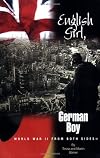
I was given the book by its publisher, Hilary Borner. I had recently been to Costa Rica, where I had met Tessa Borner; the late Martin Borner had been my customer back in the 1990's. The book is cleverly presented with photographs and contemporary letters. Then the accounts of each spouse are juxtaposed so that one can view WW2 and its aftermath from the personal experiences of civilians, whose lives merge as post-war immigrants to Canada.
The writing is first class and the stories flow along smoothly, but counterpoised with entirely different war time experiences. I had recently stayed in Halifax, near Pier 21, where so many immigrants like Martin and Tessa arrived, and where my own father had departed for service overseas in 1945.
Martin's account of the invasion and occupation of the Russian Army and the bombing of Dresden and his personal experiences escaping that bombing and then across the border into West Germany twice was particularly gripping. I highly recommend this book to anybody who has an interest in the impact WW2 had on civilians living in the danger zones.
The writing is first class and the stories flow along smoothly, but counterpoised with entirely different war time experiences. I had recently stayed in Halifax, near Pier 21, where so many immigrants like Martin and Tessa arrived, and where my own father had departed for service overseas in 1945.
Martin's account of the invasion and occupation of the Russian Army and the bombing of Dresden and his personal experiences escaping that bombing and then across the border into West Germany twice was particularly gripping. I highly recommend this book to anybody who has an interest in the impact WW2 had on civilians living in the danger zones.
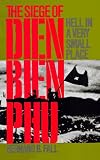
I have re read this book after 27 years and after a personal trip to the site of the battle. With greater maturity, I enjoyed the book much more with the second reading. The threat of Communism was perhaps less than the years of anti-colonial war that the Vietnamese people had to endure to finally throw off the foreign yoke, much as the French themselves had to fight off German occupation in several wars. The irony is that neither the French, nor the Americans (with their Revolutionary War experience) either identified with the Vietnamese struggle for their own independence.
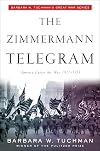
Similar to The Guns of August, the author has successfully tied the documentary evidence into a suspenseful narrative, which makes putting the book down difficult! She has become my favourite author of history.

After almost 30 years I have reread this book and together with several trips to Vietnam, including Dien Bien Phu, Hue, Route 1 and Route 9 and have enjoyed it more and value the author's insights. The book is well written and the author enjoyed first hand experience travelling with the French. When now visits Vietnam and meets the now happy and industrious people, one can only feel regret at the many years the French and then Americans futilely attempting to impose first colonial rule and then imported western political system, which itself evolved out of past revolutionary wars. The Vietnamese people can stand proudly with any in the world in the knowledge that they have justly earned their national freedom in spite of the huge obstacles thrown in its path.
The Selfish Gene: 30th Anniversary Edition--with a new Introduction by the Author by Richard Dawkins
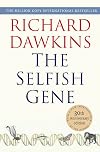
Although Darwin, together with Wallace, observed and explained evolution between species, Dawkins gets into the why and how of evolution and in my view successfully explains complicated genetic theories in a way to enable the non-scientist to understand. This was one of the most interesting books I have read.
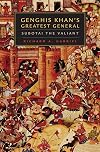
Given the success of the Mongols in winning an empire larger than the Romans in a much shorter time span, one would expect a much longer book, but perhaps due to the dearth of original sources, the author chose to restrict the scope of this book to a single general. The military success of this general thereby reveals the success the Mongols enjoyed during Genghis Khan's life before infighting by his heirs blunted the strategic objective of conquering the whole world.
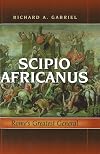
This biography was very thoroughly researched by a very experienced military historian. It contains very detailed accounts, with maps of several battles during the Second Punic War and includes much of the available political background in Rome which both helped and hindered Scipio's military and political careers.
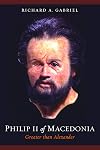
This is a very well researched history written by an erudite military historian and lecturer. Given the high level of detail and the occasional omission of places described in the narrative from the enclosed maps, there is some difficulty in following the geography. The author's conclusion is convincing.
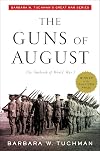
Of all the books on battles and wars that I have read, this was the best written. It is exciting to read and difficult to put down. The author researched the subject thoroughly and approached it with superb focus and economy. The portraits of the main characters are succinctly etched. As well, if does not have a discernible bias, say like Churchill's "The World in Crisis, 1911-1918".

As I was assigned to Khe Sahn during the later part of the siege in 1968, this book had particular relevance. I believe is a good account of the battle.
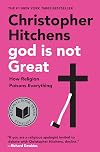
For my money the best discussion of religion I've ever read. It is rather quaint the way Hitchens refers to some of his subjects as "mammals".

I enjoyed the Rubaiyat so much that I memorized it as a young man, while walking home from work. I was only able to recall the entire book 4 times, but I can still recall certain quatrains.
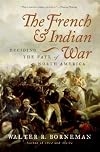
This book is well organized and well written, augmented with maps and reads like a novel. The author finishes with some personal "what-ifs" which are often the questions one has about historical events.
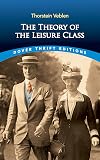
Veblen's prose is almost intentionally abstruse, full of polysyllabics, many of which cannot be found in modern dictionaries. It seems almost as though he did not want to be understood by the uneducated.
Veblen's ideas were perceptive, but his ways of expressing them, tortured and professorial. This book is definitely a candidate for condensation, a la Reader's Digest. This book could probably be more successful as a long essay, written in the modern vernacular.
Veblen's ideas were perceptive, but his ways of expressing them, tortured and professorial. This book is definitely a candidate for condensation, a la Reader's Digest. This book could probably be more successful as a long essay, written in the modern vernacular.
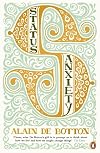
I'm rereading this book and enjoy it more the second time, perhaps because I'm not reading it out of curiosity this time. I'm presently living in Jakarta and I can see people living the rat race and being preoccupied with status.
Weddings here can be huge and expensive affairs, held in 5-star hotels, while the huge mass of Indonesia lives very poorly and there is much unemployment, undereducation and general preoccupation with personal survival. Yet, the "haves" run must have their Rolex watches, Mercedes Benzs and luxury Singapore condo getaways.
Although most people here claim to be religious, their personal ethics would be more fitting for satan-worshipers.
But this is probably true of most large cities, where the competition for material goods sucks people into the rat race and qualities of greater intrinsic value: such as kindness, true friendship and humility are cast-away as obstacles to greater status.
De Botton seems to be incredibly well read and mentions several novels which have sent me packing to Gutenberg to download and read or reread.
Reading this book can save you a lot of money and perhaps help to reduce the stress of living as one understands the futility of pursuing the acquisition of luxuries.
Weddings here can be huge and expensive affairs, held in 5-star hotels, while the huge mass of Indonesia lives very poorly and there is much unemployment, undereducation and general preoccupation with personal survival. Yet, the "haves" run must have their Rolex watches, Mercedes Benzs and luxury Singapore condo getaways.
Although most people here claim to be religious, their personal ethics would be more fitting for satan-worshipers.
But this is probably true of most large cities, where the competition for material goods sucks people into the rat race and qualities of greater intrinsic value: such as kindness, true friendship and humility are cast-away as obstacles to greater status.
De Botton seems to be incredibly well read and mentions several novels which have sent me packing to Gutenberg to download and read or reread.
Reading this book can save you a lot of money and perhaps help to reduce the stress of living as one understands the futility of pursuing the acquisition of luxuries.
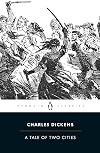
I hadn't read Dickens in more than 20 years, perhaps put-off by having to read Great Expectations in high school. But since my daughter mentioned Tale of Two Cities, I downloaded from Gutenberg at no cost. It was a good read, although slightly escapist. Except for the lawyer, the characters were not developed very deeply, mostly one-dimensional.
What I got most out of it was the atmosphere and the horror of the French Revolution and how the politics dehumanized people, perhaps like other revolutions, the Russian foremost. Dickens provides the motivation behind the Terror and then traps the protagonists innocently into it. The hero is handsome and virtuous, but his naivite ends up endangering his friends and family. His "do-gooding" unleashes evil events.
Now I'm prepared to go back an read more Dickens, now that I don't have to.
What I got most out of it was the atmosphere and the horror of the French Revolution and how the politics dehumanized people, perhaps like other revolutions, the Russian foremost. Dickens provides the motivation behind the Terror and then traps the protagonists innocently into it. The hero is handsome and virtuous, but his naivite ends up endangering his friends and family. His "do-gooding" unleashes evil events.
Now I'm prepared to go back an read more Dickens, now that I don't have to.
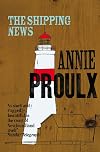
My interest in this novel was its setting in Newfoundland, which I visited in 1971 and retains a rustic culture unique to Canada. I think that the author has captured this culture, altough her plot was slow-paced, if not difficult to detect. The character development was shallow and it was not really until the last two chapters the story went anywhere and for that reason, seemed a little contrived, not unlike a murder mystery, where suddenly all the pieces of the puzzle are neatly arranged and the story ends.
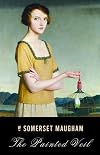
I really enjoyed the book and then watched the DVD yesterday and agree with Heaven-Ali's comments about that version. It seems to be relatively faithful, both in plot and spirit. In my view, Maugham, more than Henry James, captures the nuances of human behaviour which really give us a lesson each time we read one of his works.
Since Michener was famous for his research, the historical authenticity should be reliable.
This is one of the most implausible stories I've ever read and borders on fantasy/science fiction. In my view, the philosophical message is thereby weakened.

Excellent background to explain the moral hollowness of the British mercantile penetration into China and the explanation behind Asia's current phobia against drugs.
I think Greer's objectivity as a feminist was distorted by her unhappy relationship with her father. She is a brilliant woman, with a big chip on her shoulder. She is an educated Rossie O'Donnell.

Excellent synthesis of modern Egyptian culture with the history of overthrow of the British protectorate early in the 19th C.
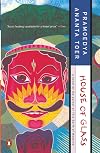
A brilliant final novel to the Buru Quartet, where we learn the tragic outcome of the hero Minke and the fate that can befall a hero, and the significance of personal sacrifice to political development.

When I read it in high school 40 yrs+ ago, it was a very exciting book and look, here I am now living in Indonesia, but yet to go to Komodo.

Read it when I was in high school so long ago, but I really liked it at the time.
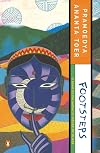
Excellent historical novel of turn-of-century Java under Dutch colonial rule.
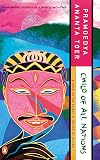
Excellent historical novel of turn-of-century Java, still under Dutch colonial rule.