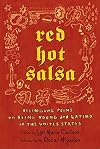
Red Hot Salsa: Bilingual Poems on
Being Young and Latino in the United
States. Edited by Lori Marie Carlson.
2005. 160p. Holt, S14.95 (0-8050-
7616-6).
Carger, C., & Carillo-Daniel, M. (2006, January). Red Hot Salsa: Bilingual Poems on Being Young and Latino in the United States. Book Links, 15(3), 49-49. Retrieved July 5, 2007, from Academic Search Premier database.
Gr. 8-12. In this anthology Garlson
includes the work of 37 Latino
poets, divided into five sections that
relate to the topics of language and
identity, neighborhoods, love, familyRed Hot Salsa: Bilingual Poems on
Being Young and Latino in the United
States. Edited by Lori Marie Carlson.
2005. 160p. Holt, S14.95 (0-8050-
7616-6).
Gr. 8-12. In this anthology Garlson
includes the work of 37 Latino
poets, divided into five sections that
relate to the topics of language and
identity, neighborhoods, love, familyRed Hot Salsa: Bilingual Poems on
Being Young and Latino in the United
States. Edited by Lori Marie Carlson.
2005. 160p. Holt, S14.95 (0-8050-
7616-6).
Gr. 8-12. In this anthology Garlson
includes the work of 37 Latino
poets, divided into five sections that
relate to the topics of language and
identity, neighborhoods, love, familyRed Hot Salsa: Bilingual Poems on
Being Young and Latino in the United
States. Edited by Lori Marie Carlson.
2005. 160p. Holt, S14.95 (0-8050-
7616-6).
Gr. 8-12. In this anthology Garlson
includes the work of 37 Latino
poets, divided into five sections that
relate to the topics of language and
identity, neighborhoods, show more love, family moments and memories, and victory.
The poems in varied forms are
seamlessly translated into English and
Spanish. show less
Being Young and Latino in the United
States. Edited by Lori Marie Carlson.
2005. 160p. Holt, S14.95 (0-8050-
7616-6).
Carger, C., & Carillo-Daniel, M. (2006, January). Red Hot Salsa: Bilingual Poems on Being Young and Latino in the United States. Book Links, 15(3), 49-49. Retrieved July 5, 2007, from Academic Search Premier database.
Gr. 8-12. In this anthology Garlson
includes the work of 37 Latino
poets, divided into five sections that
relate to the topics of language and
identity, neighborhoods, love, familyRed Hot Salsa: Bilingual Poems on
Being Young and Latino in the United
States. Edited by Lori Marie Carlson.
2005. 160p. Holt, S14.95 (0-8050-
7616-6).
Gr. 8-12. In this anthology Garlson
includes the work of 37 Latino
poets, divided into five sections that
relate to the topics of language and
identity, neighborhoods, love, familyRed Hot Salsa: Bilingual Poems on
Being Young and Latino in the United
States. Edited by Lori Marie Carlson.
2005. 160p. Holt, S14.95 (0-8050-
7616-6).
Gr. 8-12. In this anthology Garlson
includes the work of 37 Latino
poets, divided into five sections that
relate to the topics of language and
identity, neighborhoods, love, familyRed Hot Salsa: Bilingual Poems on
Being Young and Latino in the United
States. Edited by Lori Marie Carlson.
2005. 160p. Holt, S14.95 (0-8050-
7616-6).
Gr. 8-12. In this anthology Garlson
includes the work of 37 Latino
poets, divided into five sections that
relate to the topics of language and
identity, neighborhoods, show more love, family moments and memories, and victory.
The poems in varied forms are
seamlessly translated into English and
Spanish. show less
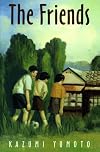
Title: The Friends., By: N.V., Horn Book Magazine, 00185078, Nov/Dec96, Vol. 72, Issue 6
Database: Academic Search Premier
BOOKLIST: FOR INTERMEDIATE READERS
Ages 8 to 12
Kazumi Yumoto The Friends(g)
172 pp. Farrar 10/96 ISBN 0-374-32460-3 15.00
(g) indicates that the book was read in galley or page proof. Tire publisher's price is the general retail price and does not indicate a possible discount to libraries. Age levels are only suggestions; the individual child is the real criterion.
Translated by Cathy Hirano. In this award-winning book from Japan, three boys' morbid curiosity about death is artfully transformed into a celebration of life and friendship. When the grandmother of one of the school chums dies, they become obsessed with the experience. What do dead people look like, they wonder, and what happens after they die? They find a solitary old man in a nearby neighborhood who doesn't seem long for this world and begin to stalk him (surreptitiously, they think), hoping to catch him at the point of his demise. In a plot that is laced with ghoulish humor, the boys find their task becoming ever more complicated as they get to know the man. Concerning themselves with matters that young American readers might find peculiar, they worry about his poor eating habits and his social isolation, and they help him with his housekeeping chores. The book is firmly set in another place and another culture. Scenes at soccer camp, at "cram school" (where they study for show more junior-high-school entrance exams), with parents, and in the marketplace will make clear to young readers that they are not at home. But some things they will recognize. A friendship develops between the man and the three boys, as we knew it would, and his death at the end is not unexpected. What may be a surprise is how much we care.
~~~~~~~~
By Nancy Vasilakis show less
Database: Academic Search Premier
BOOKLIST: FOR INTERMEDIATE READERS
Ages 8 to 12
Kazumi Yumoto The Friends(g)
172 pp. Farrar 10/96 ISBN 0-374-32460-3 15.00
(g) indicates that the book was read in galley or page proof. Tire publisher's price is the general retail price and does not indicate a possible discount to libraries. Age levels are only suggestions; the individual child is the real criterion.
Translated by Cathy Hirano. In this award-winning book from Japan, three boys' morbid curiosity about death is artfully transformed into a celebration of life and friendship. When the grandmother of one of the school chums dies, they become obsessed with the experience. What do dead people look like, they wonder, and what happens after they die? They find a solitary old man in a nearby neighborhood who doesn't seem long for this world and begin to stalk him (surreptitiously, they think), hoping to catch him at the point of his demise. In a plot that is laced with ghoulish humor, the boys find their task becoming ever more complicated as they get to know the man. Concerning themselves with matters that young American readers might find peculiar, they worry about his poor eating habits and his social isolation, and they help him with his housekeeping chores. The book is firmly set in another place and another culture. Scenes at soccer camp, at "cram school" (where they study for show more junior-high-school entrance exams), with parents, and in the marketplace will make clear to young readers that they are not at home. But some things they will recognize. A friendship develops between the man and the three boys, as we knew it would, and his death at the end is not unexpected. What may be a surprise is how much we care.
~~~~~~~~
By Nancy Vasilakis show less
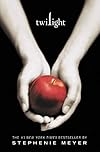
Bergin, M. (2006, March). Twilight. Library Media Connection, 24(6), 69-69. Retrieved July 1, 2007, from Academic Search Premier database.
Meyer, Stephanie
Twilight
2005. 512pp. $17.99 hc. Megan Tingley
Books (Little, Brown and Company).
0-316-16017-2. Grade 10 & Up
K-5
6-8
9-12 When her mother remarries, Bella
moves herself to her father’s home for her
senior year. Bella is resigned to a bored and
overprotected existence with her police
chief father, but to her surprise, finds herself
noticed in the small school where everyone
has known each other since childhood. The
person she notices though is the mysterious
and mercurial Edward Cullen. Topaz
eyes, ivory skin, and the grace of a large cat
all give off dangerous signals, but Bella is
drawn in and even Edward’s warning that
he is dangerous will not keep her away.
Bella knows it is crazy, but could Edward be
a vampire? Meyer has written a story that
will appeal to teens from the lush romanticism
to the action-packed finale. As a
heroine, the klutzy Bella embodies the girl
who has been “average” for so long that she
no longer sees anything remarkable about
herself. Without considering the supernatural
aspects, it is a classic story of the starcrossed
lovers who can only be separated by
great tragedy. While there is nothing more
explicit in the story than a couple passionate
clinches, Meyer is painfully accurate
in the emotional and physical responses
to being in proximity of the object of your
desire. First in a show more trilogy, readers will be anxiously
awaiting the release date of the second
volume. Recommended. Melissa Bergin,
Library Media Specialist/NBCT, Niskayuna
(New York) High School show less
Meyer, Stephanie
Twilight
2005. 512pp. $17.99 hc. Megan Tingley
Books (Little, Brown and Company).
0-316-16017-2. Grade 10 & Up
K-5
6-8
9-12 When her mother remarries, Bella
moves herself to her father’s home for her
senior year. Bella is resigned to a bored and
overprotected existence with her police
chief father, but to her surprise, finds herself
noticed in the small school where everyone
has known each other since childhood. The
person she notices though is the mysterious
and mercurial Edward Cullen. Topaz
eyes, ivory skin, and the grace of a large cat
all give off dangerous signals, but Bella is
drawn in and even Edward’s warning that
he is dangerous will not keep her away.
Bella knows it is crazy, but could Edward be
a vampire? Meyer has written a story that
will appeal to teens from the lush romanticism
to the action-packed finale. As a
heroine, the klutzy Bella embodies the girl
who has been “average” for so long that she
no longer sees anything remarkable about
herself. Without considering the supernatural
aspects, it is a classic story of the starcrossed
lovers who can only be separated by
great tragedy. While there is nothing more
explicit in the story than a couple passionate
clinches, Meyer is painfully accurate
in the emotional and physical responses
to being in proximity of the object of your
desire. First in a show more trilogy, readers will be anxiously
awaiting the release date of the second
volume. Recommended. Melissa Bergin,
Library Media Specialist/NBCT, Niskayuna
(New York) High School show less
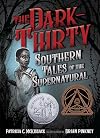
The Dark-Thirty: Southern Tales of the Supernatural: (Newbery Honor Book, Coretta Scott King Author Award, ALA Notable C by Patricia C. Mckissack
https://blackboard.sc.edu/webapps/portal/frameset.jsp?tab_id=_108_1
Title: The Dark-Thirty (Book)., By: McPherson, Kay, School Library Journal, 03628930, Jan93 Supplement, Vol. 39, Issue 1
Database: Academic Search Premier
Find More Like ThisThe Dark-Thirty (Book)
Section: Grades 3 - 6
McKISSACK, Patricia C. The Dark-Thirty: Southern Tales of the Supernatural, illus by Brian Pinkney. 122p. CIP. Knopf. 1992. $15. ISBN 0-679-81863-4. LC 92-3021.
Gr 4 Up—Ten original stories, all with a foundation in African-American history or culture. Some are straight ghost stories, many of which are wonderfully spooky and all of which have well-woven narratives. There is a tale from slavery times; a story set among the Brotherhood of Sleeping Car Porters; and one from the 1940s segregated South, in which a black man's ghost brings revenge upon the white klansman who murdered him. Strong characterizations are superbly drawn in a few words. The atmosphere of each selection is skillfully developed and sustained to the very end. Pinkney's stark scratch-board illustrations evoke an eerie mood, which heightens the suspense of each tale. This is a stellar collection for both public and school libraries looking for absorbing books to hook young readers. Storytellers also will find it a goldmine,
~~~~~~~~
By Kay McPherson, Central Atlanta-Fulton Public Library, GA
Title: The Dark-Thirty (Book)., By: McPherson, Kay, School Library Journal, 03628930, Jan93 Supplement, Vol. 39, Issue 1
Database: Academic Search Premier
Find More Like ThisThe Dark-Thirty (Book)
Section: Grades 3 - 6
McKISSACK, Patricia C. The Dark-Thirty: Southern Tales of the Supernatural, illus by Brian Pinkney. 122p. CIP. Knopf. 1992. $15. ISBN 0-679-81863-4. LC 92-3021.
Gr 4 Up—Ten original stories, all with a foundation in African-American history or culture. Some are straight ghost stories, many of which are wonderfully spooky and all of which have well-woven narratives. There is a tale from slavery times; a story set among the Brotherhood of Sleeping Car Porters; and one from the 1940s segregated South, in which a black man's ghost brings revenge upon the white klansman who murdered him. Strong characterizations are superbly drawn in a few words. The atmosphere of each selection is skillfully developed and sustained to the very end. Pinkney's stark scratch-board illustrations evoke an eerie mood, which heightens the suspense of each tale. This is a stellar collection for both public and school libraries looking for absorbing books to hook young readers. Storytellers also will find it a goldmine,
~~~~~~~~
By Kay McPherson, Central Atlanta-Fulton Public Library, GA

References
Gepson, L. (2004, November 15). Shooter (Book). Booklist, 101(6), 608-608. Retrieved July 1, 2007, from Academic Search Premier database.
http://search.ebscohost.com/login.aspx?direct=true&db=aph&AN=15269385&am...
Shooter. By Walter Dean Myers. Read by Chad Coleman, Bernie McInerney, and
Michelle Santopietro. 2004. 3.5hr. unabr. Harper, CD, $22 (0-06-074765-X). 800-242-7737.
Gr. 7–12. Myers’ powerful book works well
in audio because the text consists of interviews,
newspaper accounts, police reports,
and diary entries that slowly reveal the
events surrounding a shocking, fatal school
shooting. Initially, McInerney uses factual,
precise, and unemotional tones to relay
chilling details, which are divulged layer by
layer as interviewers (mental health professionals,
etc.) patiently and persistently
extricate information from two teen friends
of the shooter who were present when the
incident occurred. The adult characters
question the teens, trying to determine
their involvement and pondering what led
to the assassin’s smoldering anger and
alienation. Coleman gives 17-year-old African
American student Cameron Porter a
realistic, likable, and youthful voice. Santopietro
is less successful in the role of
Carla Evans: She speaks in a slightly ethnic New York accent to reflect Carla, who is
described in the text as a Caucasian teenager from the Midwest. Luckily for listeners,
Carla’s role is small. In the chilling conclusion, Coleman reads the angry assassin’s
diary entries with a manic show more pacing befitting the choppy sentences and nonsensical
connections. This final discourse—in which the narrative speaks of rats in the teen’s
brain tittering and squeaking—is truly frightening. —Lolly Gepson show less
Gepson, L. (2004, November 15). Shooter (Book). Booklist, 101(6), 608-608. Retrieved July 1, 2007, from Academic Search Premier database.
http://search.ebscohost.com/login.aspx?direct=true&db=aph&AN=15269385&am...
Shooter. By Walter Dean Myers. Read by Chad Coleman, Bernie McInerney, and
Michelle Santopietro. 2004. 3.5hr. unabr. Harper, CD, $22 (0-06-074765-X). 800-242-7737.
Gr. 7–12. Myers’ powerful book works well
in audio because the text consists of interviews,
newspaper accounts, police reports,
and diary entries that slowly reveal the
events surrounding a shocking, fatal school
shooting. Initially, McInerney uses factual,
precise, and unemotional tones to relay
chilling details, which are divulged layer by
layer as interviewers (mental health professionals,
etc.) patiently and persistently
extricate information from two teen friends
of the shooter who were present when the
incident occurred. The adult characters
question the teens, trying to determine
their involvement and pondering what led
to the assassin’s smoldering anger and
alienation. Coleman gives 17-year-old African
American student Cameron Porter a
realistic, likable, and youthful voice. Santopietro
is less successful in the role of
Carla Evans: She speaks in a slightly ethnic New York accent to reflect Carla, who is
described in the text as a Caucasian teenager from the Midwest. Luckily for listeners,
Carla’s role is small. In the chilling conclusion, Coleman reads the angry assassin’s
diary entries with a manic show more pacing befitting the choppy sentences and nonsensical
connections. This final discourse—in which the narrative speaks of rats in the teen’s
brain tittering and squeaking—is truly frightening. —Lolly Gepson show less