Inclusive conversations : fostering equity, empathy, and belonging across differences by Mary-Frances Winters
A rather high-level overview of why inclusive conversations are important, and some of the general principles which go into deeply engaging with one another across difference. It's probably quite good for people starting their inclusion work. That said, it's a book of guidelines, not techniques. I was disappointed that there weren't more specific conversational "moves" suggested which would help a reader enact the broader values discussed in the book.
Also, the library e-book edition I read was poorly copy-edited. There was a surprisingly high rate of errors in the text (missing words, etc.). Not enough to make the book hard to read overall, but enough that I'm commenting on it here. I hope that's not a problem in other editions.
Also, the library e-book edition I read was poorly copy-edited. There was a surprisingly high rate of errors in the text (missing words, etc.). Not enough to make the book hard to read overall, but enough that I'm commenting on it here. I hope that's not a problem in other editions.

Some portions of this book were good, mostly in the last half. I'm taken, for instance, with Rubin's attention to the stages of creation (which I might call ideation, editing, incorporating feedback, and sharing) and the absolute necessity of respecting the stage you're in so that you can get to the next stage. I'm really taken with his metaphor that every experience in our lives acts as a "prism" which cast unique patterns based on the input of neutral events, and that art is about exploring those different patterns, choosing which to focus on or how to combine them. He also applies this metaphor to our collaborators.
The first half, unfortunately, struck me as frequently surface-level, ranging from the obvious to the uninvestigated. Rubin is correct, of course, that there's not a one-size-fits-all creativity solution, and I don't much mind the fact that every suggestion seemed to be paired with "or the opposite... whatever works." But *some* specific techniques to try would have been more my speed.
I should also say I think this is not a good text for audiobook, which is how I encountered it. Rubin's voice is so peaceful, and the topics and language so warm and fuzzy, that I frankly found it hard to stay engaged. I did appreciate the chimes at the end of each chapter, as an invitation to hit pause and think or meditate for a moment. But I think I would have gotten more out of Rubin's aphorisms if I'd been focused on a paper book.
The first half, unfortunately, struck me as frequently surface-level, ranging from the obvious to the uninvestigated. Rubin is correct, of course, that there's not a one-size-fits-all creativity solution, and I don't much mind the fact that every suggestion seemed to be paired with "or the opposite... whatever works." But *some* specific techniques to try would have been more my speed.
I should also say I think this is not a good text for audiobook, which is how I encountered it. Rubin's voice is so peaceful, and the topics and language so warm and fuzzy, that I frankly found it hard to stay engaged. I did appreciate the chimes at the end of each chapter, as an invitation to hit pause and think or meditate for a moment. But I think I would have gotten more out of Rubin's aphorisms if I'd been focused on a paper book.
Amazing full-cast audiobook production; very appropriate for a novel in oral history format. I was not expecting the main character to be the editor, but it's a deft choice to follow her journey as well as Opal's.
Probably not a bad starting place, if you've been studiously avoiding all discussion of generative AI. That said, if you've read more than a couple articles about the benefits and dangers, there's not a lot that's new here. My experience was that most of the first third of the book felt like a rehash of things I'd already read in the news and on blogs, and the conclusion felt a little bit like "well, things sure are gonna be different."
That said, I think there were a couple of things in the section on creativity which were interesting. I'm still thinking about Mollick's assertion that one of the functions of a letter of recommendation is that someone burned their time to write it, as a sign of how much they like the applicant. I'm not sure I accept it entirely, but it's a fascinating lens on human creative activity. It may have been more true when the old-boys'-network approach to hiring had fewer bureaucratic checks, but I think it's worth noting that it treats recommendations as creative activity, so the idea applies very widely. How much of the "touch of the human" (as opposed to anything mass produced) is about recognizing time invested?
In the jobs section, I thought Mollick's construction of tasks, systems, and jobs could be very useful, maybe the most useful thought tool in the book. I like his assertion that the biggest economic benefits will accrue to those companies who approach AI democratically, working with employees to determine the best way to use AI in show more pursuit of more interesting jobs and better products or services. I don't *believe* it, or more accurately I don't believe that corporate culture can survive getting scooped up by larger companies and venture capital, but I sure do like the dream.
A format note: I listened to the audiobook, which Mollick narates himself. I liked the human touch of his accent, even if it meant he didn't enunciate as clearly or speak as slowly as a professional voice actor would. On the other hand, it was sometimes clear that a take or recording session had gone on too long; he didn't have the skill of presenting a consistent level of personal energy across the whole text. I bring this up because, in the last year or so, I've listened to 3 audiobooks written by authors whose speaking voices I know well, and been frustrated at points when the voice actor made choices which I believe are at odds with how the author meant a passage. This was useful in reminding me what professionals bring to the table. (Though it still makes me wonder about the use of AI voice clones...) show less
That said, I think there were a couple of things in the section on creativity which were interesting. I'm still thinking about Mollick's assertion that one of the functions of a letter of recommendation is that someone burned their time to write it, as a sign of how much they like the applicant. I'm not sure I accept it entirely, but it's a fascinating lens on human creative activity. It may have been more true when the old-boys'-network approach to hiring had fewer bureaucratic checks, but I think it's worth noting that it treats recommendations as creative activity, so the idea applies very widely. How much of the "touch of the human" (as opposed to anything mass produced) is about recognizing time invested?
In the jobs section, I thought Mollick's construction of tasks, systems, and jobs could be very useful, maybe the most useful thought tool in the book. I like his assertion that the biggest economic benefits will accrue to those companies who approach AI democratically, working with employees to determine the best way to use AI in show more pursuit of more interesting jobs and better products or services. I don't *believe* it, or more accurately I don't believe that corporate culture can survive getting scooped up by larger companies and venture capital, but I sure do like the dream.
A format note: I listened to the audiobook, which Mollick narates himself. I liked the human touch of his accent, even if it meant he didn't enunciate as clearly or speak as slowly as a professional voice actor would. On the other hand, it was sometimes clear that a take or recording session had gone on too long; he didn't have the skill of presenting a consistent level of personal energy across the whole text. I bring this up because, in the last year or so, I've listened to 3 audiobooks written by authors whose speaking voices I know well, and been frustrated at points when the voice actor made choices which I believe are at odds with how the author meant a passage. This was useful in reminding me what professionals bring to the table. (Though it still makes me wonder about the use of AI voice clones...) show less

It's very infrequent that I borrow an (audio)book from the library and, upon finishing it, rush to buy a hard copy just so I can have such a beautiful thing on my shelves. This has been one of those times. Listening to Tweedy talk about these 50 songs is like the best radio show imaginable, mixing music criticism, broader philosophy, and personal anecdote deftly. (The songs themselves aren't there but the publisher did put out a playlist on at least one of the major streaming services.)

There are a couple gems in this collection - Michael Swanwick's stunning A Midwinter's Tale, John Christopher's tragic Christmas Roses - and a few fun twists - Connie Willis' The Pony, Isaac Asimov's Christmas Without Rodney (though right at the end). Most of the rest were less interesting to me as stories, though it's an interesting collection of ways science fiction was thinking about religion and secular trappings of Christmas and their role in colonization.

I adore the movie, and I wanted to like this collection more than I did. Unfortunately, the movie has primacy in my head, so I got taken out of the storytelling a little by recognizing some parts and having to reconcile others. Shepherd's writing is darker than the movie, less Norman Rockwell-ian in recalling the Great Depression. There’s a lot to like in his humor and I think I might enjoy his stories better if I didn’t already think I knew them, but the overall tone is substantially different.
VB6 : eat vegan before 6:00 to lose weight and restore your health... for good : the flexible diet you can really stick to, with more than 60 easy, delicious recipes by Mark Bittman
There's certainly a lot to like in this book. It's a reasonable approach to eating less meat and animal product, and more veggies. It's well-written to convince anyone that they can make some progress on that goal and see benefits for themselves and the planet. I think the general principles about diet flexibility, making simple substitutions, cooking in big batches, and using leftovers creatively, are useful, and it's good that they're framed as "principles" not "rules".
That said, there's a lot I can't get behind. The recipes strike me as very basic. I think they've been written for an audience which doesn't cook and needs to be told how easy it will be, and given permission to experiment. That's probably fine, but as a more experienced cook I didn't find much of it inspiring or even interesting, and the side bars of "other things you could put in this recipe" struck me as lacking detail. (I should admit here I haven't used any of the recipes yet and my opinion might change.) While I think there's a good argument about over-processed food, there's also the woo-woo fear of "chemicals" which always puts my teeth on edge.
That said, there's a lot I can't get behind. The recipes strike me as very basic. I think they've been written for an audience which doesn't cook and needs to be told how easy it will be, and given permission to experiment. That's probably fine, but as a more experienced cook I didn't find much of it inspiring or even interesting, and the side bars of "other things you could put in this recipe" struck me as lacking detail. (I should admit here I haven't used any of the recipes yet and my opinion might change.) While I think there's a good argument about over-processed food, there's also the woo-woo fear of "chemicals" which always puts my teeth on edge.

I'm realizing that, much as I love short stories, it's been a long while since I read a single-author collection, and in most of the single-author collections I can think of, the author pretty much stays in their stylistic lane. As a result, I'm finding it interesting to think about why I responded well to some of the stories in this diverse collection, and poorly to others. I note that in every case, it's the characters which drew me into the world, most especially in "Big Cat" and "Bricks, Sticks, Straw" and "The Vicar of Mars" (and to a lesser extent, "The Ki-Anna"). In each of those stories, the struggles of the characters kept me engaged with the possibilities of the world. The conflicts seemed, for want of a better word, "human."
With the very notable exception of "Bricks, Sticks, Straw", I also note that I didn't respond as well to the "hard sci-fi" elements of stories like "The Flame is Roses" or "Emergence" or "The Seventh Gamer." To me, these felt more like the technologies were being explored than the characters were, and I just didn't find myself drawn into the puzzle as well.
Some of the stories are in very clear genres. "Stella and the Adventurous Roots" is a charming fable, and I like fables. "The Old Schoolhouse" is probably a pretty good horror story in the style of H.P. Lovecraft, but I don't care for Lovecraft. "Cheats" is the first chapter of a young adult book. It's not supposed to be a self-contained story, and it's not for my old eyes.
With the very notable exception of "Bricks, Sticks, Straw", I also note that I didn't respond as well to the "hard sci-fi" elements of stories like "The Flame is Roses" or "Emergence" or "The Seventh Gamer." To me, these felt more like the technologies were being explored than the characters were, and I just didn't find myself drawn into the puzzle as well.
Some of the stories are in very clear genres. "Stella and the Adventurous Roots" is a charming fable, and I like fables. "The Old Schoolhouse" is probably a pretty good horror story in the style of H.P. Lovecraft, but I don't care for Lovecraft. "Cheats" is the first chapter of a young adult book. It's not supposed to be a self-contained story, and it's not for my old eyes.
 This review was written for LibraryThing Early Reviewers.
Found this on my Facebook page from 2012; reposting here because I think it's all still true.
Seth Godin has been applying his "markets are changing" thinking to education for a while, so it's no surprise that he's collected and expanded these thoughts into a manifesto. It's well worth reading. Here are a few of my thoughts:
1) Two weeks ago, at ELI, I said to a colleague that "it's not that teaching to the test is bad, it's that our tests are broken." Nice to have a famous person say that over and over. The big problem is that our high-stakes tests don't test the right skills, so teaching to them does hurt people.
2) We're building a huge infrastructure of open information, and even closed information at better price points, but this is really only relevant to people with the drive to benefit from them. (There are too many other distractions if you're not in hot pursuit of a skill or knowledge base.) So the question is, how can we raise more people with the drive to learn?
3) I'd like to see a response which fleshes out what the role of a teacher looks like in this regime. This goes hand-in-hand with the above... in lots of fields, people need scaffolding, both emotionally and intellectually. I'll also throw out the question again - what would college look like if we didn't have to spend time unlearning bad habits from high school?
Manifesti are hard reading, even when you agree. Long ones moreso. Take breaks, question sentences, don't hurt yourself.
Seth Godin has been applying his "markets are changing" thinking to education for a while, so it's no surprise that he's collected and expanded these thoughts into a manifesto. It's well worth reading. Here are a few of my thoughts:
1) Two weeks ago, at ELI, I said to a colleague that "it's not that teaching to the test is bad, it's that our tests are broken." Nice to have a famous person say that over and over. The big problem is that our high-stakes tests don't test the right skills, so teaching to them does hurt people.
2) We're building a huge infrastructure of open information, and even closed information at better price points, but this is really only relevant to people with the drive to benefit from them. (There are too many other distractions if you're not in hot pursuit of a skill or knowledge base.) So the question is, how can we raise more people with the drive to learn?
3) I'd like to see a response which fleshes out what the role of a teacher looks like in this regime. This goes hand-in-hand with the above... in lots of fields, people need scaffolding, both emotionally and intellectually. I'll also throw out the question again - what would college look like if we didn't have to spend time unlearning bad habits from high school?
Manifesti are hard reading, even when you agree. Long ones moreso. Take breaks, question sentences, don't hurt yourself.
The third reconstruction : Moral Mondays, fusion politics, and the rise of a new justice movement by William J. Barber, II
It took me a while to figure out that this book is, in essence, a sermon. Readers looking for a history of the Moral Mondays movement, or a blow-by-blow memoir, or a handbook for successful fusion politics, may be disappointed in this book's relative lack of detail. But consider the book's form - one man's story of his religious and political journey, with frequent and intentional repetition of points of theology, history, and law, and expert code switching to reveal just enough of Rev. Barber's personal side. This is a sermon, designed to convince people that multiracial, interfaith, multi-issue coalitions can defeat big money elitist extremists in state politics... indeed, it seems to be Rev. Barber's view that only fusion politics holds much hope of success for a "third reconstruction" of American society.
This is a very broad but very short book, and there are a number of points where I would be interested in more depth, from the Reconstruction history of North Carolina to the theological views of Niebuhr and Hauerwas on Christian social action. That said, it's largely convincing, a fast and engaging read. It's probably most successful at forcing the questions "why not here? why not me?'
This is a very broad but very short book, and there are a number of points where I would be interested in more depth, from the Reconstruction history of North Carolina to the theological views of Niebuhr and Hauerwas on Christian social action. That said, it's largely convincing, a fast and engaging read. It's probably most successful at forcing the questions "why not here? why not me?'
This review was written for LibraryThing Early Reviewers.The Making of Major League: A Juuuust a Bit Inside Look at the Classic Baseball Comedy by Jonathan Knight
A fun tribute to a fun movie. I was surprised at just how long Major League was in development, and how hard the shoot seems to have been. Access to the cast and crew gives the story a gauzy, "authorized biography" feel... which is mostly fine, but there are a couple of places where Knight noticeably pulls his punches. (Charlie Sheen admits that using steroids to get in shape for the film caused him some anger management problems... and nobody's got a corroborating story? Come on.) That said, I'm not sure I would have slogged through a no-holds-barred expose on this sweet little film. A loving memoir which I could rip through in 3 short sittings was a pleasant piece of end-of-summer reading.
This review was written for LibraryThing Early Reviewers.
The survey focuses on digital humanities centers as organizations - how are they organized and supported, how do they relate to their users generally. It's interesting, but a little abstract. I found Appendix F more compelling - a study of the specific question "can I find and understand the scholarly tools produced by the centers." Good reading for academic web designers, instructional technologists, and librarians.
Lani Guinier's new book The Tyranny of the Meritocracy will be of interest to many in the connectivist circles where I run. We believe that individual knowledge is created in social contexts and through social interaction. We prize collaboration skills. We've heard it all, and buy it - that this is an increasingly connected age, that good jobs will involve work in teams, that globalization and demographic change will require the abilities to negotiate diversity, that the "problems of the twenty-first century" are only solvable by multidisciplinary teams, that in fact many of those social and political problems have roots in people who can't communicate outside themselves or their home group. We want to work for an America (for a world) where all people have equal prospects regardless of the color of their skin and circumstances of their birth.
Then we exist in an educational system which mostly rewards people for individual accomplishment, and trains them accordingly in individualistic methods which are remarkably vulnerable to the privileges of class and race.
Guinier points out that this is out of step. She uses Amartya Sen's definition that merit is the "incentive system which rewards the actions a society values" and points out the stunning disconnect between the skills we claim to value for democracy, and the "testocratic" skills of the K-Ph.D system. This focus on individualized tests and grades actually serves to reinforce power relationships in society - first, show more because those with the means to impact curricula or hire tutors have a massive incentive to do so, and perhaps more ominously, because students who succeed in the testocracy are allowed to believe that they have achieved success alone, without noting the assistance of their teachers, parents, and classmates. More democratic education would do a better job of reinforcing the importance of working together across difference - and provide that benefit more equitably to those locked out of our current system.
The argument against the SAT is iron-clad. It predicts family income and race much better than grades in the first year of college, and was never designed to assess anything further out than the first year. Yet I found Guinier's hope for a system like the Posse Foundation's Dynamic Assessment Process a bit optimistic. Surely, if elite colleges shifted admissions to some form of behavioral interview, it would create a market for coaching. Such tutoring might be more socially valuable than classes on "SAT words" and how to answer a multiple choice question, but it would still be unevenly distributed. We can already see this in admissions processes which do value extracurricular and community involvement. Anyone can take such opportunities, and it makes the admissions process better to consider them. Kids whose families don't need them to work, or whose parents can shuttle them from school to club to volunteer site, can take advantage of more of them. It might still be better than the system we've got, but not quite as diverse as Guinier argues.
Guinier goes on to suggest alternatives in college preparation, recruitment, and pedagogy. As someone who works with college professors on teaching issues, it's easy for me to hear the argument that we need to make changes in K-12 schools and the college admissions office. (It's always easier when someone else has to change.) Then she points out that it wouldn't be fair to bring students into college for their collaborative skills, and demand of them the same individualized pedagogy we tend to use now. Students selected for democratic skills will prosper most in a democratic classroom. Oh. That's a challenge.
It struck me as interesting that the models here weren't particularly new to me. It seems impossible to read 5 articles on improving college teaching without someone bringing up the peer instruction work of Eric Mazur, as Guinier does. Yet most of the work in the "blended learning" sphere focuses simply on how group work and class discussion is better for retention and transfer of domain knowledge. That's an easy sell; it's harder to talk about the idea that you might actually shift your learning goals in a collaborative classroom. Guinier's frames these potentially fractious issues within the purpose of higher education in a democracy, and if you've accepted the assertion through the first half of the book,
Of course, the assertion that college exists to develop good citizens is not universally accepted. Even among those who accept the general idea, we debate exactly what the proper components of a liberal education are. Guinier asserts that colleges exist to fill a democratic need, without much considering the counter-arguments, and other than skills related to diversity and teamwork, she doesn't have specific recommendations for a curriculum. Given how much we hear about colleges as paths to "good jobs", though, or how much "student development" can be taken for granted within the academy, Guinier provides a clear argument, crisply stated and well worth the read. show less
Then we exist in an educational system which mostly rewards people for individual accomplishment, and trains them accordingly in individualistic methods which are remarkably vulnerable to the privileges of class and race.
Guinier points out that this is out of step. She uses Amartya Sen's definition that merit is the "incentive system which rewards the actions a society values" and points out the stunning disconnect between the skills we claim to value for democracy, and the "testocratic" skills of the K-Ph.D system. This focus on individualized tests and grades actually serves to reinforce power relationships in society - first, show more because those with the means to impact curricula or hire tutors have a massive incentive to do so, and perhaps more ominously, because students who succeed in the testocracy are allowed to believe that they have achieved success alone, without noting the assistance of their teachers, parents, and classmates. More democratic education would do a better job of reinforcing the importance of working together across difference - and provide that benefit more equitably to those locked out of our current system.
The argument against the SAT is iron-clad. It predicts family income and race much better than grades in the first year of college, and was never designed to assess anything further out than the first year. Yet I found Guinier's hope for a system like the Posse Foundation's Dynamic Assessment Process a bit optimistic. Surely, if elite colleges shifted admissions to some form of behavioral interview, it would create a market for coaching. Such tutoring might be more socially valuable than classes on "SAT words" and how to answer a multiple choice question, but it would still be unevenly distributed. We can already see this in admissions processes which do value extracurricular and community involvement. Anyone can take such opportunities, and it makes the admissions process better to consider them. Kids whose families don't need them to work, or whose parents can shuttle them from school to club to volunteer site, can take advantage of more of them. It might still be better than the system we've got, but not quite as diverse as Guinier argues.
Guinier goes on to suggest alternatives in college preparation, recruitment, and pedagogy. As someone who works with college professors on teaching issues, it's easy for me to hear the argument that we need to make changes in K-12 schools and the college admissions office. (It's always easier when someone else has to change.) Then she points out that it wouldn't be fair to bring students into college for their collaborative skills, and demand of them the same individualized pedagogy we tend to use now. Students selected for democratic skills will prosper most in a democratic classroom. Oh. That's a challenge.
It struck me as interesting that the models here weren't particularly new to me. It seems impossible to read 5 articles on improving college teaching without someone bringing up the peer instruction work of Eric Mazur, as Guinier does. Yet most of the work in the "blended learning" sphere focuses simply on how group work and class discussion is better for retention and transfer of domain knowledge. That's an easy sell; it's harder to talk about the idea that you might actually shift your learning goals in a collaborative classroom. Guinier's frames these potentially fractious issues within the purpose of higher education in a democracy, and if you've accepted the assertion through the first half of the book,
Of course, the assertion that college exists to develop good citizens is not universally accepted. Even among those who accept the general idea, we debate exactly what the proper components of a liberal education are. Guinier asserts that colleges exist to fill a democratic need, without much considering the counter-arguments, and other than skills related to diversity and teamwork, she doesn't have specific recommendations for a curriculum. Given how much we hear about colleges as paths to "good jobs", though, or how much "student development" can be taken for granted within the academy, Guinier provides a clear argument, crisply stated and well worth the read. show less
This review was written for LibraryThing Early Reviewers.
I'm a Liberty Meadows fan from way back, but this collection disappointed me. It's hard to say whether the jokes haven't held up, or whether they were just never aimed at people in their 40s. It's Cho's early work, so of course it's less polished in both art and writing. I was surprised, though, at just how many of the best jokes eventually made it into Liberty Meadows. Ultimately I think it's for serious Cho fans (or UMD alums from the 90s) only.
Mudville madness : fabulous feats, belligerent behavior, and erratic episodes on the diamond by Jonathan Weeks
This moderately interesting reference book is seriously marred by its sub-par indexing. The book is organized by date, and the name index is pretty good, but if you want to look up place or team names, or topics like "double plays" or "fires" or "brawls", good luck. This seriously hampers its usefulness for any but the most diehard student of baseball history.
It reads like the back page of the Sports section - a few paragraphs about notable events in yesterday's games, in the style of a sports beat reporter from the '50s. My tolerance for that kind of writing isn't high, which for me made this a book to dip in and out of.
It reads like the back page of the Sports section - a few paragraphs about notable events in yesterday's games, in the style of a sports beat reporter from the '50s. My tolerance for that kind of writing isn't high, which for me made this a book to dip in and out of.
This review was written for LibraryThing Early Reviewers.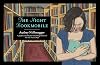
"The Night Bookmobile" should be taught in every library school. In fact, it should be the subject of the application essay, though for different reasons. Niffenegger's afterword says that it's a book in part about the "claims that books place on their readers"; with some 20 years of librarianship under my belt I'll say it's also a book about the claims that librarians place on their libraries.
There's an excellent recording by Christina Pickles for the podcast Selected Shorts; hard to find but worth the hunt. That was my introduction; I requested the print book from the library the day after I heard it. It's interesting to compare the details added by Pickles' performance with the ones in Niffenegger's illustrations.
There's an excellent recording by Christina Pickles for the podcast Selected Shorts; hard to find but worth the hunt. That was my introduction; I requested the print book from the library the day after I heard it. It's interesting to compare the details added by Pickles' performance with the ones in Niffenegger's illustrations.
In high school, my best friend taught me the principle that anything worth talking about can be compared to baseball. For years, we've tested that theory and never to my recollection been stumped. In some ways, this book is an exercise at that game - baseball is social; religion is social. The circular, sacred time of the baseball season works the same way the religious festivals in the liturgical year do. Baseball fans bring their past to life in their stories, as do religious people. In Ebbetts Field or your place of worship (or both), as the song says, "you gotta have heart."
Let me start, then, with the positive. The stories are well spun. It's another book for the pile of "smart people reminisce about baseball," and it fits with the others. When Sexton describes praying for the Dodgers in '55, when he relates Mays' catch or Mazeroski's homer, you are there. When he talks about his family, his faith, his academic study of religion, too, you follow along easily. It's a book that's easy to enjoy, and I know many people who will.
So where does my dissatisfaction with this book come from? In part, because to me much of it is obvious. It's worth noting that this book comes out of an introductory-level course, and many of the ideas from Eliade and Tillich are presented at that basic level. Sadly for me, I spent a semester in college with a course called "the introduction to the study of religion", so I already knew of these ideas and saw them little expanded in this book. (I show more must say that the week spent with this book was infinitely preferable to that dreadfully boring semester.)
Like a textbook, this volume is rather thinly argued. The first and last chapters hold the actual thesis - that baseball calls us to an attentive, slowed-down worldview, a contemplative, focused state which we would do well to spill into the rest of our lives, in the way religion does. You'll get no argument from me. In between, there are plenty of examples which draw out the comparison, but they ramble like hot stove discussions (and coffeshop theology) ramble, without really bolstering the point.
Perhaps my problem is that I was seeking too hard in this book, looking too critically for a sublime experience connecting baseball and faith. I think people who are more able to meet the book on its own terms will have a better reading experience.
Edit: I recommended this book to a friend, and he devoured it. Bumping my rating a half-star, because this confirms that there's something valuable here, even if I'm not the target audience. show less
Let me start, then, with the positive. The stories are well spun. It's another book for the pile of "smart people reminisce about baseball," and it fits with the others. When Sexton describes praying for the Dodgers in '55, when he relates Mays' catch or Mazeroski's homer, you are there. When he talks about his family, his faith, his academic study of religion, too, you follow along easily. It's a book that's easy to enjoy, and I know many people who will.
So where does my dissatisfaction with this book come from? In part, because to me much of it is obvious. It's worth noting that this book comes out of an introductory-level course, and many of the ideas from Eliade and Tillich are presented at that basic level. Sadly for me, I spent a semester in college with a course called "the introduction to the study of religion", so I already knew of these ideas and saw them little expanded in this book. (I show more must say that the week spent with this book was infinitely preferable to that dreadfully boring semester.)
Like a textbook, this volume is rather thinly argued. The first and last chapters hold the actual thesis - that baseball calls us to an attentive, slowed-down worldview, a contemplative, focused state which we would do well to spill into the rest of our lives, in the way religion does. You'll get no argument from me. In between, there are plenty of examples which draw out the comparison, but they ramble like hot stove discussions (and coffeshop theology) ramble, without really bolstering the point.
Perhaps my problem is that I was seeking too hard in this book, looking too critically for a sublime experience connecting baseball and faith. I think people who are more able to meet the book on its own terms will have a better reading experience.
Edit: I recommended this book to a friend, and he devoured it. Bumping my rating a half-star, because this confirms that there's something valuable here, even if I'm not the target audience. show less
This review was written for LibraryThing Early Reviewers.
In this magnificent gem of a book, Bart Giamatti argues for a classical view of sports and leisure generally. Drawing heavily from Aristotle and Shakespeare, he argues that the mark of truly free people is in how they use their freedom. Many areas of our public and private lives have some element of "work" to them, some compulsion to produce in a particular way, but in our games, we live by the rules which we choose for no particular reason at all. When we play a game, we choose to create the game's world for a while, and even when we participate as spectators, we hope to see a spectacular performance within that created world. This is a philosophical, abstract section; beautiful but (as other reviewers have noted) deceptively deep in places.
In the second section of the book, Giamatti considers the role of sports in cities, pointing out the social benefits and tensions in our arenas. This section is somewhat more practical and less theoretical. With twenty-some additional years, we can see Giamatti's predictions coming through in some places, such as his concern over athlete's salaries and the cost of the sport becoming a barrier between the athlete and the fans. In others, such as the issues around steroids and cheating, we can only wonder how he might have handled the 90s or 2000s. As the first section makes you think about theories, the second section makes you consider our current world of leisure.
The third section is a smart man's paean to his beloved sport of show more baseball. The baseball section of your local library or bookstore is chock-full of this kind of writing, and Giamatti's is as good as anyone else's I've read. That said, it's not particularly better, nor does it reflect his status as commissioner in any obvious way. Perfectly nice to read, though, and a dense volume like this probably does need a lighter ending. show less
In the second section of the book, Giamatti considers the role of sports in cities, pointing out the social benefits and tensions in our arenas. This section is somewhat more practical and less theoretical. With twenty-some additional years, we can see Giamatti's predictions coming through in some places, such as his concern over athlete's salaries and the cost of the sport becoming a barrier between the athlete and the fans. In others, such as the issues around steroids and cheating, we can only wonder how he might have handled the 90s or 2000s. As the first section makes you think about theories, the second section makes you consider our current world of leisure.
The third section is a smart man's paean to his beloved sport of show more baseball. The baseball section of your local library or bookstore is chock-full of this kind of writing, and Giamatti's is as good as anyone else's I've read. That said, it's not particularly better, nor does it reflect his status as commissioner in any obvious way. Perfectly nice to read, though, and a dense volume like this probably does need a lighter ending. show less
This review was written for LibraryThing Early Reviewers.Fifty acres and a poodle : a story of love, livestock, and finding myself on a farm by Jeanne Marie Laskas
What a surprise, that this book should jump off the shelves of a second-hand store and into my wife's hands. Back in the late 90s, when Laskas was writing up her transition to farm life in essays for the Washington Post Magazine on Sundays, my then-girlfriend and I would hand them back and forth, commenting on the writing, commenting on the unfolding story. And my girlfriend, a rural Ohioan at heart, would rhapsodize about chucking all our suburban life and getting a farm. And I would say something insensitive like "did you read the part where it says sheep are stupid?"
Flash forward to 2013. My girlfriend is now my wife, and we live on a 2-acre spread in a little town in Ohio. Running into Laskas after all these years, then, was a little like running into an old college friend who just happens to have made some very similar choices to your own. No, a 2-acre yard is exactly nothing like a farm, and yet I fear that I recognized some of Laskas's struggles with "what am I going to do with all this space?" Moreso, I found myself shaking my head at her urbanite's missteps in rural culture, and then I found myself remembering the times I've put my foot in my mouth.
By turns funny and sad, this is an honest and well-crafted memoir. It's probably not the kind of thing which would appeal to me if I didn't recognize the author, but let me introduce you to my old friend Jeanne... she has some interesting things to say.
Flash forward to 2013. My girlfriend is now my wife, and we live on a 2-acre spread in a little town in Ohio. Running into Laskas after all these years, then, was a little like running into an old college friend who just happens to have made some very similar choices to your own. No, a 2-acre yard is exactly nothing like a farm, and yet I fear that I recognized some of Laskas's struggles with "what am I going to do with all this space?" Moreso, I found myself shaking my head at her urbanite's missteps in rural culture, and then I found myself remembering the times I've put my foot in my mouth.
By turns funny and sad, this is an honest and well-crafted memoir. It's probably not the kind of thing which would appeal to me if I didn't recognize the author, but let me introduce you to my old friend Jeanne... she has some interesting things to say.
The most common criticism of late-20th and early 21st century journalism seems to be that it's not "real journalism" anymore. Kovach and Rosenstiel offer a model which considers that the thing we call "journalism" might not be a monolith. They find historical precedents for 4 different models - a "journalism of verification" which matches that "real journalism" category, a "journalism of assertion" which values immediacy over analysis, a "journalism of affirmation" which presents news in a way most likely to reinforce the beliefs of its audience, and an "interest-group journalism" in which special interests create content which looks like news to an uninformed viewer. They also recognize a "journalism of aggregation", in which organizations and individuals curate the "news feed" that is interesting to them.
While the bulk of the book talks about the first 3 models, and how to recognize and analyze them, the real theme of the book might be the last category. Individuals have increasingly accepted more of the responsibility for collecting their own varied sources of news, and the broad journalism industry has responded in logical ways to stay in business. If we are all becoming "aggregators" in one sense or another, we need to understand the different kinds of journalism, and know how to evaluate them (as what they are, not what we wish they were).
I didn't find the last section, on the future of news, as satisfying as the rest of the book. As good journalists, Kovach and show more Rosenstiel are measured in their language and conservative in their predictions. Unfortunately, that style which works so well for the rest of the book doesn't match the job of forecasting. (This is also the section where I felt too many sentences began or ended with "as we discuss in our other book...")
This book should be taught in high school, as part of preparation for informed citizenship. (Sadly, it probably will mostly be taught in college journalism classes.) show less
While the bulk of the book talks about the first 3 models, and how to recognize and analyze them, the real theme of the book might be the last category. Individuals have increasingly accepted more of the responsibility for collecting their own varied sources of news, and the broad journalism industry has responded in logical ways to stay in business. If we are all becoming "aggregators" in one sense or another, we need to understand the different kinds of journalism, and know how to evaluate them (as what they are, not what we wish they were).
I didn't find the last section, on the future of news, as satisfying as the rest of the book. As good journalists, Kovach and show more Rosenstiel are measured in their language and conservative in their predictions. Unfortunately, that style which works so well for the rest of the book doesn't match the job of forecasting. (This is also the section where I felt too many sentences began or ended with "as we discuss in our other book...")
This book should be taught in high school, as part of preparation for informed citizenship. (Sadly, it probably will mostly be taught in college journalism classes.) show less
This review was written for LibraryThing Early Reviewers.
I didn't find the laugh-out-loud humor in this collection which I loved in "Me Talk Pretty One Day" or "Holidays on Ice." This collection focuses more on Sedaris' family, and I think he draws his family so well that I could identify with them easily. Identification with both sides, unfortunately, is the enemy of comedy; it's easier to laugh at Sedaris' jokes at the expense of the whackos and snobs in the earlier collections.
"Dress Your Family..." is as well written as the other collections; I just found it darker.
"Dress Your Family..." is as well written as the other collections; I just found it darker.
This is a book which argues passionately for sustained thought, aesthetics, and relationships, in a world which is becoming increasingly "fragmentary" due in part to the philosophical lock-in created by the way we use and design our information tools.
Ironically, the book is written in a frustrating series of loosely-connected one to three page micro-essays.
Following Lanier's thought is made more difficult by this; he hops from gripe to gripe, expecting the user to follow his train of thought with little aid other than the force of his invective. It is a "manifesto," and as such it is sorely lacking in the trappings of deep thought like attributed sources, or clear definitions of concepts.
I agree with a lot of what Lanier says, which is one of the things which makes this sloppy book so frustrating. For example, he quite rightly states that anonymity is a de-personalizing force which enables much of the worst, most harmful behavior on the Internet. However, he never credits Facebook for fighting this trend by opening their authentication system to other web sites. Instead, he attacks Facebook for its oppressive, impersonal graphic design - a fair criticism, but it seems, a missed opportunity for balance in this "manifesto".
In a similar example, in one chapter he criticizes the idea that "open science" could lead to discoveries in evolutionary biology, and then in the next he praises the advances in computational linguistics made possible by large electronic text show more collections. Again, both criticisms seem fair based on my limited knowledge of the disciplines... but Lanier doesn't address that aspect, or even the similarity of the two efforts.
At the end of the day, I find myself wishing for a more scholarly book by Lanier on a smaller subset of these topics. Particularly in the computing areas where I respect his vast knowledge - the nature of the operating system, the possibilities of virtual reality, the very nature of "intelligence", artificial or not, and the way all of these areas have social effects - I know Lanier has a lot to teach me. Unfortunately, this book isn't about "teaching." It's about "convincing." show less
Ironically, the book is written in a frustrating series of loosely-connected one to three page micro-essays.
Following Lanier's thought is made more difficult by this; he hops from gripe to gripe, expecting the user to follow his train of thought with little aid other than the force of his invective. It is a "manifesto," and as such it is sorely lacking in the trappings of deep thought like attributed sources, or clear definitions of concepts.
I agree with a lot of what Lanier says, which is one of the things which makes this sloppy book so frustrating. For example, he quite rightly states that anonymity is a de-personalizing force which enables much of the worst, most harmful behavior on the Internet. However, he never credits Facebook for fighting this trend by opening their authentication system to other web sites. Instead, he attacks Facebook for its oppressive, impersonal graphic design - a fair criticism, but it seems, a missed opportunity for balance in this "manifesto".
In a similar example, in one chapter he criticizes the idea that "open science" could lead to discoveries in evolutionary biology, and then in the next he praises the advances in computational linguistics made possible by large electronic text show more collections. Again, both criticisms seem fair based on my limited knowledge of the disciplines... but Lanier doesn't address that aspect, or even the similarity of the two efforts.
At the end of the day, I find myself wishing for a more scholarly book by Lanier on a smaller subset of these topics. Particularly in the computing areas where I respect his vast knowledge - the nature of the operating system, the possibilities of virtual reality, the very nature of "intelligence", artificial or not, and the way all of these areas have social effects - I know Lanier has a lot to teach me. Unfortunately, this book isn't about "teaching." It's about "convincing." show less
The Extra 2%: How Wall Street Strategies Took a Major League Baseball Team from Worst to First by Jonah Keri
This book reads like a series of feature articles suitable for the Sunday sports pages of a newspaper. On the upside, that means it's a quick and accessible read. On the downside, the chapters are poorly connected to one another, jumping from one aspect of the Rays' history and transition to another without any through line (or even connective tissue).
Some of the chapters work - the biographical profile of manager Joe Maddon is, for my money, the most engrossing and entertaining section of the book. In fact, this chapter is so good that it made me acutely aware of how slim the biographical profiles of the other main figures are. (The Snidley Whiplash portrayal of owner Vince Naimoli, which takes up a lot of space early in the book, is entertaining at first but grows repetitive.)
For the baseball stathead, there's not enough explanation of the new Rays' methods to be instructive. For business fans, the ownership group is treated with such kid gloves that we don't get to see inside their heads very well. (I nearly laughed out loud at the end of the book, when Twins owner Carl Pohlad was lambasted for "launch[ing] his career ... by foreclosing on family farms during the Great Depression", after Keri had so carefully danced around the Rays' owners' prior careers at Goldman Sachs and Bear Sterns.) But it did serve as a fair introduction to a franchise which I didn't know anything about.
Some of the chapters work - the biographical profile of manager Joe Maddon is, for my money, the most engrossing and entertaining section of the book. In fact, this chapter is so good that it made me acutely aware of how slim the biographical profiles of the other main figures are. (The Snidley Whiplash portrayal of owner Vince Naimoli, which takes up a lot of space early in the book, is entertaining at first but grows repetitive.)
For the baseball stathead, there's not enough explanation of the new Rays' methods to be instructive. For business fans, the ownership group is treated with such kid gloves that we don't get to see inside their heads very well. (I nearly laughed out loud at the end of the book, when Twins owner Carl Pohlad was lambasted for "launch[ing] his career ... by foreclosing on family farms during the Great Depression", after Keri had so carefully danced around the Rays' owners' prior careers at Goldman Sachs and Bear Sterns.) But it did serve as a fair introduction to a franchise which I didn't know anything about.
This review was written for LibraryThing Early Reviewers.
In first section of the book, Kamenetz examines the social-structural and economic issues in higher education which drive costs up and graduation down. This section works reasonably well and should give people pause. Kamenetz did a fair job of convincing me that current methods cannot merely be scaled up to educate substantially more students; new players and approaches will be necessary (possibly including new philosophies about the uses of education and credentials).
The second section, in which Kamenetz tours the various technological means for delivering information, isn't as successful. It reads like a mere catalog of various options, not critically examining any of them. Everything is presented as "potentially revolutionary"; options aren't even compared to each other, let alone existing pedagogical strategies. It devolves into a gee-whiz tour, more in the style of the Travel and Leisure section of a newspaper than a work of investigation or analysis.
The second section, in which Kamenetz tours the various technological means for delivering information, isn't as successful. It reads like a mere catalog of various options, not critically examining any of them. Everything is presented as "potentially revolutionary"; options aren't even compared to each other, let alone existing pedagogical strategies. It devolves into a gee-whiz tour, more in the style of the Travel and Leisure section of a newspaper than a work of investigation or analysis.
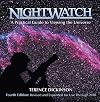
Dickinson writes about the heavens with the infectious passion of an expert tour guide. The sky charts are beautiful and clearly explained. An exceptional book for someone who's been kind of thinking about learning more about the night sky.
My one minor criticism is in the section on telescopes and binoculars. While it contains clear and useful advice, I felt like the technical details Dickinson gives were beyond me. (This comes around again in the astrophotography section.) Presumably, Dickinson sacrificed a couple of pages of Optics 101 for length, focus, and style - but it would've helped me. Of course, maybe the point is that you can enjoy stargazing without the investment of money which requires you to understand the equipment better. Which, again, is a fantastic point for a newbie considering a WalMart trash scope.
My one minor criticism is in the section on telescopes and binoculars. While it contains clear and useful advice, I felt like the technical details Dickinson gives were beyond me. (This comes around again in the astrophotography section.) Presumably, Dickinson sacrificed a couple of pages of Optics 101 for length, focus, and style - but it would've helped me. Of course, maybe the point is that you can enjoy stargazing without the investment of money which requires you to understand the equipment better. Which, again, is a fantastic point for a newbie considering a WalMart trash scope.
Eschew foreign entanglements. Beware the military industrial complex. Stop being fat, lazy, and greedy. All good pieces of advice. But how many times can you repeat them before they become "turn down that noise you call music" and "hey you kids, get off my lawn?"
Bacevich seems determined to find out. For 176 pages, he creates a catalog of ways, small and large, in which American society and (mostly) politics is fatally flawed. Only in the last 6 pages of the book does he bother to suggest concrete strategies that might make things better.
It's worth pointing out that I think Bacevich is right about an awful lot of this analysis. But at the end of the day, he has almost no point but hectoring, negative criticism.
Bacevich seems determined to find out. For 176 pages, he creates a catalog of ways, small and large, in which American society and (mostly) politics is fatally flawed. Only in the last 6 pages of the book does he bother to suggest concrete strategies that might make things better.
It's worth pointing out that I think Bacevich is right about an awful lot of this analysis. But at the end of the day, he has almost no point but hectoring, negative criticism.
I had the opposite reaction to the first review. The birthing stories struck me as repetitive and predictable, and I skipped most of them.
What helped my mental preparation was Ina May's persuasive and rational argument for midwifery. Her research appears solid and should be read more widely. For me, that was the best part of the book.
What helped my mental preparation was Ina May's persuasive and rational argument for midwifery. Her research appears solid and should be read more widely. For me, that was the best part of the book.

The central idea of this book - that Attila must've known something about people - is interesting. Roberts has a very modern interpretation of the history, which might be useful even if it's not true.
Most of the book is written in an aphoristic style, which seemed refreshing at first, but gradually made me wonder if I shouldn't be reading Sun Tzu instead (or eating fortune cookies.)
Oh, and fair warning: Roberts found his exclamation point key! And uses it! A lot! Just like the great Attila would!
Most of the book is written in an aphoristic style, which seemed refreshing at first, but gradually made me wonder if I shouldn't be reading Sun Tzu instead (or eating fortune cookies.)
Oh, and fair warning: Roberts found his exclamation point key! And uses it! A lot! Just like the great Attila would!