I am not sure why, but over the last few years I have read or at least started a few introductory mathematical logic books. I like this one best, probably because it spends much more time and effort on semantics and connecting up the relationship between English and the forma language. Much of the books is examples, which are quite helpful. Recommended as a first book.
A good text if you want to get an overview of Geology.
As I think I know world history pretty well, I read this book not in the pursuit of knowledge, but just to see how someone could wrap their hands around such a large topic and still do it justice. Well, not only did Christopher Lascelles do a good job at this, but I found that I learned quite a bit of things that I did not know. So much for my smug assumption that I knew world history well!
I had expected this to be just a narration of kings and queens and battles, but it is so much more than that. The author does pick the high points, but spends a least a few sentences describing the circumstances and significane of the events he narrates. And the writing style is very easy to read...you could read this whole book in a couple of evenings (which is what I did).
I wish our schools would require high school students to read something like this, while at the same time picking out particular subjects for details study. It would greatly improve the literacy of all.
I do have 2 minor issues with the book. First, unless I somehow am reading this wrong, it says that the D-Day invasions and the invasion of Italy by the Allies both occurred in the summer of 1943...in fact D-Day was in 1944.
The other issue I have is around footnotes. The book is littered with one sentence footnotes supplying little extra tidbits of knowledge. It is annoying to constantly have to flip to them, and frankly what is there is interesting enough and short enough to just have been included in the basic show more text.
However, overall I thought this a great book and one I will recommend, particularly to young people who want to get an overview of history. show less
I had expected this to be just a narration of kings and queens and battles, but it is so much more than that. The author does pick the high points, but spends a least a few sentences describing the circumstances and significane of the events he narrates. And the writing style is very easy to read...you could read this whole book in a couple of evenings (which is what I did).
I wish our schools would require high school students to read something like this, while at the same time picking out particular subjects for details study. It would greatly improve the literacy of all.
I do have 2 minor issues with the book. First, unless I somehow am reading this wrong, it says that the D-Day invasions and the invasion of Italy by the Allies both occurred in the summer of 1943...in fact D-Day was in 1944.
The other issue I have is around footnotes. The book is littered with one sentence footnotes supplying little extra tidbits of knowledge. It is annoying to constantly have to flip to them, and frankly what is there is interesting enough and short enough to just have been included in the basic show more text.
However, overall I thought this a great book and one I will recommend, particularly to young people who want to get an overview of history. show less
 This review was written for LibraryThing Early Reviewers.
This is really a reference work that will be useful to anyone who is working with UGC. It seems very thorough and complete. The only problem I have with it is that it will very rapidly become outdated.
This review was written for LibraryThing Early Reviewers.
Most ancient history books about the Persian wars of Greece are colored by the viewpoint of the victors, the Greeks. This author tries (and succeeds) to present more of what it would have looked like to the Persians. Historians might not like the amount of unverified speculation indulged in, it makes for a good read. It once again demonstrates to me just how absolutely remarkable the Greeks were in coming up with democracy, flawed as it may have been.
Me the People: One Man's Selfless Quest to Rewrite the Constitution of the United States of America by Kevin Bleyer
Why was this book written? I can enjoy a humorous book as well as anybody, but the subject is a serious one and the humor here is over the top and, frankly, repetitive and not all that funny.
It's hard to see what the author's message is other than there are lots of inconsistencies in the way the US is governed and that the source of at least some of that is the constitution. So what, we all know that. There is no real solution here.
Irony and satire can be useful, but not when it is boring...and this book rapidly becomes boring.
It's hard to see what the author's message is other than there are lots of inconsistencies in the way the US is governed and that the source of at least some of that is the constitution. So what, we all know that. There is no real solution here.
Irony and satire can be useful, but not when it is boring...and this book rapidly becomes boring.
This review was written for LibraryThing Early Reviewers.
Much more interesting than I thought it would be, this is an introduction to Logic, not just mathematical logic. In other words, the most interesting part of this beginner book is the exposition of the relation between language and logic. While I didn't do the exercises, I did find it valuable to read and think about them.

While I don't always agree with Landsburg's conclusions, this book is an interesting view of how to use economics to think about not just the major problems of society, but many everyday issues as well. So long as the concept of incentivized behavior is present, Landsburg seems interested and manage to convey the thought process quite well.

Great portrait of madness. Nabokov hates Freudians, and displays that hatred by not really providing a shred of evidence as to the cause of Luzhin's madness. His playing throughout the book with chess themes is wonderful, almost a game trying to catch them all.
I read this because the scrolls will be on display at the Museum of Science in Boston next year and I wanted to be knowledgable about them. This book accomplished that, though it certainly was not very exciting. It reads like a textbook, alternating between passages of great interest and sections clearly in place to ensure academics will give the book a high rating for documenting anything that is not 100% factual and presenting all sides of an issue. It serves a purpose, but was not a fun read for a layperson like myself.

I was given this by our South African friends, John and Clare. Clare grew up in Zimbabwe (Rhodesia) and had to leave after things starting getting intolerable. It's a funny yet sobering account of what life in Zimbabwe is currently like for the few whites who consider themselves Zimbabweans and chose to stay.
Wow! Two alternating stories, slowly converging on each other. One in the style of William Gibson or Neal Stephenson, the other as if written by Franz Kafka (though not quite so depressing as that implies)...with a bit of Raymond Chandler throw in (it is hard boiled after all). He's clearly thought a lot about mind and memory; an easy...

First half of this was wonderful, author creates an amazing world, both real and virtual. But the book became hard to finish as the plot got bogged down in discussions of Sumerian languages and ancient religions. Worth reading to meet the two main characters: Hiro, the katana wielding super hacker and Y.T. the 15 year old "chick" (her description) who works as a courier on a super advanced skateboard!

Was a moderately interesting read...all of the Greek myths told via a biography of Zeus, with the author and his wife telling of their visits to the modern day locale of some of the tales.
The War That Killed Achilles: The True Story of Homer's Iliad and the Trojan War by Caroline Alexander
If I knew about this book previously, I would have read it and the actual Illiad at the same time (alternating a chapter in this book with the corresponding chapter(s) in the Illiad. When you read the Illiad, particularly the first time, you miss so much. Ms. Alexander makes sure you don't miss anything. She explains and expands upon all the references that are important. Most importantly and dramatically, she sets the scene and mood for the actual story. It sounds trite to say but true nonetheless, the story comes alive with her narrative. At the same time, she opines on what it must have been like hearing this as a Greek of old. Well done
This new translation has transformed the Iliad by removing those aspects of the text that made it an orally recited poem instead of written literature, while still being as faithful as possible to the original. Hence, those looking for a traditional version may not like it, but I thought it was wonderful. The emotions of the characters are rich, not hidden or masked by the ritualistic language. If you have never read the Iliad, this is probably not the translation to start with...but if you want to "experience" the story I would highly recommend it.
Augustus is portrayed as a benevolent despot who sacrifices runs roughshod over the feelings of his family to secure Rome. I like the image of the teenaged Augustus seeing his destiny as ruler of the world. His most brillant change was the transference of the army from being paid by the generals to being paid by Rome...hence no more civil wars as there were no more private armies. His modest home has recently been found and opened...hope to visit it when we go to Italy this summer.

Not your typical Agatha Christie...she based it on a papyrus fragment from Egypt. It tells the tale of an ancient Egyptian family whose members are dying one by one. She weaves in what is know of Egyptian religion and culture. Well done and a quick fun read.
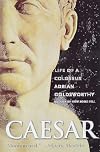
What a complex figure...pardoning his enemies, sometimes more than once, yet clearly calculatedly ruthless when he had to be (by the way, is anybody ever ruthful?). Writing not only books to glorify his own deeds, but also texts on philosophy, poetry, plays, biographies, clearly he was one of history's most interesting characters. I wonder what the world would have been like had he lived longer and established a new Roman Republic.
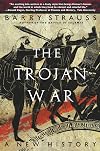
An interesting commentary on the Iliad, but not one that focuses on the text itself, but rather compares the story to what we now of Bronze Age Greece. A lot of discussion is devoted to the question of the historicity of the tale. It's a very light read, without much substance...but I don't think it really sheds much light on the subject.
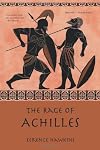
Amazing book...a modern version of the Iliad written in very hard to put down, explicit prose. If you are in love with the classic version and hate to see anyone fooling around with the Western canon, you will hate this. The language is wonderful, and you get the author's strong sense of the interior lives of all the principal characters. Odysseus in particular is amazing...basically an atheist with a strong sense of irony, he pretends the goddess Athena is constantly speaking to him. Achilles becomes a mostly evil character, more so than in the original (as bad as he was there). You begin to understand what the relationship between the Greek gods and people must have felt like. Best book I have read in a long time.
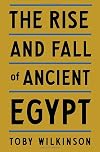
I have read this 2x as I find the story of the Pharohs to be so amazing. No other culture survive as long as them. Just think: we are closer in time (2000 years) to the last pharaohs than they were to the beginning of Egypt(5000 years ago). They employed their own archaeologists to help decipher their own past. And this comprehensive history gives not only the facts but the flavor or ancient Egypt.
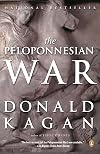
Incredible amount of detail about this ancient conflict, yet Kagan maintained my interest throughout. The contrast between a democracy(Athens) fighting a war and an oligarchy(Sparta) has interesting messages even for today, though in many ways this conflict seemed more like gang wars over territory in a city than the epic struggle portrayed here.
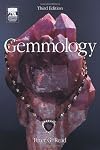
Detailed book about all facets of gems (pun intended). I learned a lot.
The No. 1 Ladies' Detective Agency: A No. 1 Ladies' Detective Agency Novel (1) by Alexander McCall Smith

What fun! I actually read this the first time I visited South Africa and Botswana, it clearly is written as the introduction to a series. While the 'cases' solved by the protagonist are clever and amusing, the best part is her character portrait as a middle aged enthusiastic citizen of Botswana.
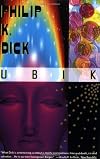
I had forgotten what an innovative writer Philip K. Dick had been...he writes on so many levels at the same time.A bit hard to follow until you just let yourself go with it.
Mostly about radioactive carbon dating, this should have been a long essay, not a whole book. Mostly historical, without too much explanation of the actual technique.
What an absolutely marvelous book! It is clearly accessible to a young audience, but actually could be enjoyed by anyone of any age. The author does not "dumb down" the subject, nor does she write in the condescending manner very common to science books for children. While not myself a physicist, I am widely read in the subject at both the layman and semi-professional level and I did not detect any mistakes, nor any subjects that were glossed over as too complicated. There is a great balance of text and illustrations that I really enjoyed. My only complaint about the book is the title, as it undersells what this book has accomplished as it covers far more than just black holes, but serves as an introduction to many subjects: gravity, astronomical distances, mass and density, formation and life history of stars, gravitational lensing, x-ray astronomy, radio astronomy, and more. I'd recommend this book for anyone who wants an introduction to modern astronomy.
This review was written for LibraryThing Early Reviewers.