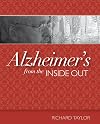
This book quite literally changed my life. I have a mild cognitive function issue so reading the potential risks or what may develop from the point of a patient instead of the doctor is invaluable. It was a little tough to get through sometimes because not only was the author a teacher and not a writer, but he was also in the stages of Alzheimer's so you had to sort things out from time to time to follow along, that being said, what a remarkable book! I now know what I may end up experiencing through my process of dementia, which will be an invaluable tool in my own care should I need it. This book is not for the faint of heart I must warn you, and if you have someone in your life with Alzheimer's and have no idea what to expect you may find it a bit brutal. It is open, honest and teaches good lessons. I'm glad I purchased it. It cleared up a lot of myths and helped me to get my head around Alzheimer's, dementia and other brain injury and diseases. -Serena W.
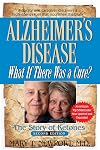
A complex subject, I find from practice experience in working with peopl with Alzheimer,s that if you start the coconut treatment when first discovered in the person it will delay the decline by at least half, if used much later it has little effect. The main problem is the medical profession ignor it and even the society have no working experience other than offering advice to use cross words and mind games which in my opinion do nothing to combat the disease. I started a friend on the coconut diet 12years ago when first diagnosed, she has survived to date while I not others have succumbed within 4to 5 years, so follow the diet in the hope a cure will be found in time. -taisul@hotmail.com
Alzheimer's Dementia Activities DVD: "Filling the Day with Meaning" with Teepa Snow, MS, OTR/L, FAOTA by Ms Teepa Snow, Otr/l, Faota
I love Teepah Snow! This dvd was very informative and will come in handy when dealing with people with dementia and Alzheimers. My client is not at the level that a lot of these activities fit, but they will come in handy for when that time comes. I highly recommend this dvd. -Nancy W.
The Alzheimer's Creativity Project: The Caregiver's Ultimate Guide to a Good Day; Communication and Activities in the World of Alzheimer's by Jytte Fogh Lokvig
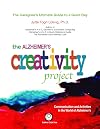
great book for caregivers and family members of people with Alzheimer's. very useful information. this author seems to have a lot of knowledge on this subject but writes in a way that is simple enough for everyone to understand. -JessicaB

The book presents large skyscrapers, recent or under construction, throughout the world with of course a concentration in Asia.
For each building, a concise, well-written text provides background information and comments.
The book's large scale is perfectly adapted to the topic and allows the gorgeous photographs to be presented to their full effect.
This work is strongly recommended as a cheap and practical way of developing a better awareness of a continuing global trend that touches only today the largest of our western cities. Pierre Gauthier
For each building, a concise, well-written text provides background information and comments.
The book's large scale is perfectly adapted to the topic and allows the gorgeous photographs to be presented to their full effect.
This work is strongly recommended as a cheap and practical way of developing a better awareness of a continuing global trend that touches only today the largest of our western cities. Pierre Gauthier
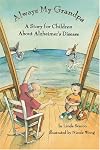
We bought this book to help our 4 year old son understand what is happening with Grandpa. My dad has been getting worse lately (not knowing where he was, getting lost while running, and has had a few instances where, for a short period, he did not know who my mom was). So we figured it was time to tell our son what was really going on with Grandpa - Up to know we just told him that Grandpa forgets things easily.
I thought the book was written well for a young child and it really brings up the issues that we are going to be dealing with - forgetfullness, repeated questions, not remembering family members, forgetting that the stove is on, and that he may die sooner because of this disease.
We stopped several times while reading the book to make sure our son was OK and to answer any of his questions. He hid under the covers at one point until we talked through his questions and fear about this. After the book was over he said he understood it. We will read it to him again and I am sure have more in depth conversations each time. But I think it will be good for him that he can now talk to Grandpa about it and that he understands what is going on. -Frank Firek
I thought the book was written well for a young child and it really brings up the issues that we are going to be dealing with - forgetfullness, repeated questions, not remembering family members, forgetting that the stove is on, and that he may die sooner because of this disease.
We stopped several times while reading the book to make sure our son was OK and to answer any of his questions. He hid under the covers at one point until we talked through his questions and fear about this. After the book was over he said he understood it. We will read it to him again and I am sure have more in depth conversations each time. But I think it will be good for him that he can now talk to Grandpa about it and that he understands what is going on. -Frank Firek
The Alzheimer's and Memory Café: How to Start and Succeed with Your Own Café by Phd Jytte Fogh Lokvig
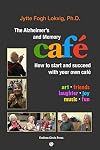
Dr. Lokvig is a fount of compassion, inspiration, and information in the field of dementia, and this book offers additional proof of her insights and creativity. This excellent work on Alzheimer’s and Memory Cafes, which she helped to introduce in the United States, shows readers how to successfully start, organize, and explore the gifts of the cafe. This charming and informative book offers ideas beyond the cafe, however, and can widen the thinking of anyone wanting meaningful ways to stay connected through the dementia journey. The cover proclaims, “art friends, laughter, joy, music and fun” and Dr. Lokvig offers us a myriad of ways to add those into our lives while we help create more dementia inclusive communities.
Deborah Shouse, former family caregiver, and author of Connecting in the Land of Dementia: Creative Activities to Explore Together -D. Shouse
Deborah Shouse, former family caregiver, and author of Connecting in the Land of Dementia: Creative Activities to Explore Together -D. Shouse
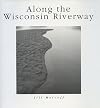
Richly textured and nuanced images by Wisconsin photographer Jill Metcoff captures the beauty of this river in the unglaciated, rolling southwestern part of the state. Both intimate views and vast vistas with the perspective of someone who knows the area personally. Appealing to those who love b/w photography as well as those who love exploring accessible corners of our world. -D. Rosenthal

I was very deeply moved by this film, sometimes laughing, sometimes crying, feeling joy and hope and inspiration. This is the most stirring documentary and film I have ever seen. It has inspired me to make it a mission to spread the Music and Memory program to as many memory care centers as possible. My mother had Alzheimer's and seeing her response to familiar music showed me the promise of this program. This incredible film shows not only the results of bringing personalized music to those with memory impairment but also the brain research behind it and the general improvement of quality of life for both the person with dementia and for that person's family. You will not regret seeing this film and may find yourself similarly inspired. I've started making my personal music list for if and when I may need to have access to that music to bring me back alive and I have begun to add my favorite music to my daily life at the start of each day and find I am much better off for this small change in my daily routine! -L. Mikol

I liked the book and gave a few away for gifts. Easy read with great wisdom to share. -Marge G
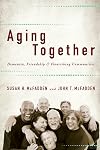
The most fortunate among us will age well. But not all of us will age in community. This is the crux of this powerful book.
I'm a pastor of a church and as I read this book I thought of Carl and Eunice. Carl is a World War Two veteran and Eunice is his devoted wife. Eunice has some form of dementia (the complexities of which Susan and John McFadden helpfully explain in detail in the opening chapters). Carl was a postmaster in a small Wisconsin town, and Eunice kept their home. The two of them come to church almost every Sunday hand in hand. Given their generation, I'm not sure they always held hands in public, but now they need to because of Eunice's lack of physical stability. It's a wonderful thing to watch.
Carl seems to know what the McFadden's are arguing for. Eunice needs community as much as or more than she needs medication for her disability.
Something horrible happened in the 17th century. DeCartes' cogito ergo sum turned our world around in difficult ways. Thinking or remembering is not the decider of our personhood. We are created in the image of God to be in community and Carl insists that Eunice needs to be in community even more than whatever medicines she is being given for her memory loss.
In the times of Jesus, the completeness or incompleteness of our bodies seemed to have been the decider of our being created in the "image of God." Lepers should not be touched and the blind should not be allowed in temple. Now, since DeCartes, it is our minds that focus show more our essential being. And those with incomplete minds are isolated in painful ways. Carl knows that this is not right. So he drives his wife to Women's Guild meetings and sits in the car while she "communes" with her friends (Friendship is a major point of discussion in this book). Eunice is not a "thing" to be used. She is not a "productive unit." She is a person and Carl is stubborn about that.
We live in a competitive society, in which "a person's worth is measured in terms of productivity, accumulation of wealth and consumption of goods." Eunice is certainly not in that category and, to be honest, neither is Carl.
This is a hopeful book about the counter-intuitive. -J. Gorman show less
I'm a pastor of a church and as I read this book I thought of Carl and Eunice. Carl is a World War Two veteran and Eunice is his devoted wife. Eunice has some form of dementia (the complexities of which Susan and John McFadden helpfully explain in detail in the opening chapters). Carl was a postmaster in a small Wisconsin town, and Eunice kept their home. The two of them come to church almost every Sunday hand in hand. Given their generation, I'm not sure they always held hands in public, but now they need to because of Eunice's lack of physical stability. It's a wonderful thing to watch.
Carl seems to know what the McFadden's are arguing for. Eunice needs community as much as or more than she needs medication for her disability.
Something horrible happened in the 17th century. DeCartes' cogito ergo sum turned our world around in difficult ways. Thinking or remembering is not the decider of our personhood. We are created in the image of God to be in community and Carl insists that Eunice needs to be in community even more than whatever medicines she is being given for her memory loss.
In the times of Jesus, the completeness or incompleteness of our bodies seemed to have been the decider of our being created in the "image of God." Lepers should not be touched and the blind should not be allowed in temple. Now, since DeCartes, it is our minds that focus show more our essential being. And those with incomplete minds are isolated in painful ways. Carl knows that this is not right. So he drives his wife to Women's Guild meetings and sits in the car while she "communes" with her friends (Friendship is a major point of discussion in this book). Eunice is not a "thing" to be used. She is not a "productive unit." She is a person and Carl is stubborn about that.
We live in a competitive society, in which "a person's worth is measured in terms of productivity, accumulation of wealth and consumption of goods." Eunice is certainly not in that category and, to be honest, neither is Carl.
This is a hopeful book about the counter-intuitive. -J. Gorman show less

I never write reviews but I must make an exception for this book. It is absolutely a must-read for a Parkinson’s spouse. The author writes about the many challenges of the disease and offers realistic suggestions on how to respond as a caregiver and spouse. I found myself highlighting many paragraphs and can see myself referring to this book frequently as my husband’s disease progresses. I will also recommend this book to my adult children since the author’s husband experienced many of the same symptoms as their father.
I have read several books about Parkinson’s Disease. What sets this one apart is it is a quick and easy read. The author tells you many things that doctors won’t volunteer, or you might not know enough to ask about. -Goodtoo
I have read several books about Parkinson’s Disease. What sets this one apart is it is a quick and easy read. The author tells you many things that doctors won’t volunteer, or you might not know enough to ask about. -Goodtoo
Adorable Photographs of Our Baby: Meaningful, Mind Stimulating Activities and More for the Memory Challenged, Their Loved Ones, and Involved Professionals by Susan Berg
I have read this book and find it to be very informative and easy to use. There are so many useful ideas and suggestions on how to communicate with a patient with dementia. The games are easy to do with one-on-one or with a group. The pictures are large and colorful and should bring smiles to many people. I would highly recommend this book to anyone who is a caregiver, nursing homes, and I have even given a copy to our local library. They were very pleased to receive it. This book should get a lot of use. Thank you for finding a way to connect with our memory impaired relatives. -Charles F. Henry Jr.
I can not wait to share this information with as many people as possible.
I too, am an Alzheimer's and Dementia care trainer, Judith has a wealth of information and such compassion it exudes from the pages. I love that, it is also so very important to capture the best of the good days with quality activities.
What I love most about this book is after every activity there is an assessment section. Often if we take the time to clearly assess what we have done, does it work or does it not. We can make choices and decisions that will bring positive results. Anytime we have a good day or make a joyful moment in the life of someone living with Dementia there is no better feeling.
Thank you Judith this is an amazing collection of ideas and thoughts.
I need to buy a few more to share with my colleagues.
Beth Murillo RN -Beth Mcgovern
I too, am an Alzheimer's and Dementia care trainer, Judith has a wealth of information and such compassion it exudes from the pages. I love that, it is also so very important to capture the best of the good days with quality activities.
What I love most about this book is after every activity there is an assessment section. Often if we take the time to clearly assess what we have done, does it work or does it not. We can make choices and decisions that will bring positive results. Anytime we have a good day or make a joyful moment in the life of someone living with Dementia there is no better feeling.
Thank you Judith this is an amazing collection of ideas and thoughts.
I need to buy a few more to share with my colleagues.
Beth Murillo RN -Beth Mcgovern
Activities for the Family Caregiver: Vascular Dementia: How To Engage / How To Live by Scott Silknitter
This little book is easy to read. I read it cover to cover in less than an hour. It is full of good tips, and is organized so that you can easily refer to it when needed. It is definitely a good investment for anyone caring for a loved one with vascular dementia. -A Mom Who Knows
I needed this book years ago when I first became a caregiver. I had absolutely no idea what I was doing or what I needed to do. I was frustrated, tired and overwhelmed. The authors and contributors of this book have done something brilliant here. I have read more than a few caregiving books and none that lay it out for you with clear, simple suggestions. Absolutely everything will not pertain to your specific caregiving situation, but there is a wealth of information that will pertain to just about any given situation. Everything from organization, self-care, to traveling with your caree. Even after being a caregiver myself for 6 years now, there still were a multitude of things referenced in this book that I had no idea about and that I am going to start implementing. If you are a caregiver then you'll want to read this. If you know a caregiver then you'll want to buy this for them. It will be the most helpful thing you can purchase for yourself or someone you love. -Andria Porter
The 36-Hour Day: A Family Guide to Caring for People Who Have Alzheimer Disease and Other Dementias (A Johns Hopkins Press Health Book) by Nancy L. Mace
Thorough and compassionate, offering accessible information and practical advice, The 36-Hour Day is a necessary resource for families living with dementia. Still the gold standard, this book is the trusted reference that families turn to first―and over and over―for guidance and support in caring for someone with Alzheimer's disease. -- Lisa Genova, author of Still Alice