A Parent in a Really Extreme Situation
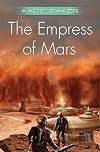
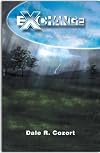
Travel across alternate history time-lines is a fairly old idea going back to at least H. Beam Piper's Paratime series. Sudden relocation of towns to an earlier period in time is also an idea that's been around awhile. But this book adds its own fillip to these concepts, where some area of our current-day world is suddenly exchanged with an area of an alternate time line where humans never evolved, saber-tooth tigers and other such animals survived to current times, and monkeys seemed to gotten quite a bit more intelligent. But the exchanges are not permanent; they only seem to last for a period of one to two weeks, and then the exchanged areas snap back to their original time-lines.
With this as the background scenario, this book follows Sharon Mack, divorced mother of an autistic and perhaps prescient daughter, who is caught in one of these exchanges and must fight her way through the dangers of this odd new world to retrieve her daughter, who was kidnapped by her former husband, all the while knowing that her time is limited until the exchange reverts. There are mysteries and plot twists abounding, such as how a small cult managed to plan for this exchange and had building materials, tools, and machines ready to roll when the exchange did happen, as their intention is to stay in this new world and build their own society. There is a bit of philosophizing about the benefits and drawbacks of being able to live in world where there is show more no government, no law or rules of society that must be followed. There is romance and there are battles against both animals and the even more deadly adversary, other humans. The dangers inherent in the interaction of time-lines that have evolved in such radically different ways are spelled out, from possible ecological disasters of animals from one world taking over in the other world where their natural predators don't exist to the possibility of world-wide pandemics caused by different bacteria and viruses - an item that few alternate history works prior to this have really looked at.
Characterization is good. Sharon is quite easy to empathize with, and her reactions to events and her situation make sense. Her potential love interest, Leo West, one of the leaders of the cult faction, may be a little bit too much of a superman, seemingly always there to save the day, but he makes a very good contrast to the whining of Sharon's former husband. Other characters are not shown is as good detail, but they are adequate to support the plot. The romance aspect of this novel was, perhaps, a little too predictable, but that seems to be the norm for romantic portrayals. Not shown was a wider look at our current world where such exchanges have been happening for some time, nor any real attempt at a scientific explanation for how this could occur, and this I felt should have had more exposition to more solidly ground the book in a believable world.
A very good, quick read with a nice set of ideas behind it.
--- Reviewed by Patrick Shepherd (hyperpat) show less
Travel across alternate history time-lines is a fairly old idea going back to at least H. Beam Piper's Paratime series. Sudden relocation of towns to an earlier period in time is also an idea that's been around awhile. But this book adds its own fillip to these concepts, where some area of our current-day world is suddenly exchanged with an area of an alternate time line where humans never evolved, saber-tooth tigers and other such animals survived to current times, and monkeys seemed to gotten quite a bit more intelligent. But the exchanges are not permanent; they only seem to last for a period of one to two weeks, and then the exchanged areas snap back to their original time-lines.
With this as the background scenario, this book follows Sharon Mack, divorced mother of an autistic and perhaps prescient daughter, who is caught in one of these exchanges and must fight her way through the dangers of this odd new world to retrieve her daughter, who was kidnapped by her former husband, all the while knowing that her time is limited until the exchange reverts. There are mysteries and plot twists abounding, such as how a small cult managed to plan for this exchange and had building materials, tools, and machines ready to roll when the exchange did happen, as their intention is to stay in this new world and build their own society. There is a bit of philosophizing about the benefits and drawbacks of being able to live in world where there is show more no government, no law or rules of society that must be followed. There is romance and there are battles against both animals and the even more deadly adversary, other humans. The dangers inherent in the interaction of time-lines that have evolved in such radically different ways are spelled out, from possible ecological disasters of animals from one world taking over in the other world where their natural predators don't exist to the possibility of world-wide pandemics caused by different bacteria and viruses - an item that few alternate history works prior to this have really looked at.
Characterization is good. Sharon is quite easy to empathize with, and her reactions to events and her situation make sense. Her potential love interest, Leo West, one of the leaders of the cult faction, may be a little bit too much of a superman, seemingly always there to save the day, but he makes a very good contrast to the whining of Sharon's former husband. Other characters are not shown is as good detail, but they are adequate to support the plot. The romance aspect of this novel was, perhaps, a little too predictable, but that seems to be the norm for romantic portrayals. Not shown was a wider look at our current world where such exchanges have been happening for some time, nor any real attempt at a scientific explanation for how this could occur, and this I felt should have had more exposition to more solidly ground the book in a believable world.
A very good, quick read with a nice set of ideas behind it.
--- Reviewed by Patrick Shepherd (hyperpat) show less
The Computer-Mind Meld
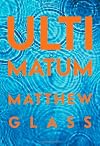
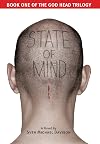
As a near future techno-thriller, this book does a decent job of holding you in your seat, trying to follow all of its twists and turns while racing along through some tough, gritty, and very bloody crime scenes.
Jake Travissi is our main character, a disgraced rule-bending cop who gets a chance to redeem himself by being one of the very early adopters of the P-Chip, an device implanted directly into the brain which, besides being wired up to the net, allows direct and conscious control of many of the body’s autonomous functions, such as thermal regulation and adrenaline control. Jake loves his dog and grieves mightily for his wife and daughter, whom he witnessed being blown to bits by a bomber on a carnival merry-go-round. With his new P-Chip, Jake has the opportunity to do major damage to other creeps like his bomber, and he launches into his new career with Homeland Security with gusto.
But there are some flies that quickly appear in this rosy view: are his memories real? Is he really the person he thinks he is, or is the P-Chip’s web connection an avenue that will allow others to completely control not just his body, but his very recollections of what his body is doing?
Around this scenario Davison creates a very good picture of a future world with lots of new high-tech gizmos coupled with a much higher degree of government control than currently exists, as global warming’s effects have finally gotten serious attention and moves to show more ameliorate the condition, such as practically mandating the end of the gasoline driven car and laws restricting the use of air-conditioning. Beyond the world scene, Davison is bringing to the fore the question of personal freedom versus control by either the government or by those who think they are the elite and therefore have the only right answers to how the world should be run. His characterization of not just Jake but those around him is quite good, especially in the area of showing just how many people are quick to take the easy road and leave personal morality behind them.
There are some areas that I thought could have been better. For the early third of the book, there is a general level of confusion about what is really going on, and a lack of definition that would have made me ‘see’ the scenes, while at the same time having almost too much detail about the scientific gadgetry. Sanchez, the main player behind the manipulations, doesn’t really become visible as more than a talking head till almost halfway in. Some of the plans that Sanchez comes up with seem overly complicated and unnecessary to achieve his goals, so much so that they started to strain my suspension of disbelief. Public acceptance of general use of P-Chip seems to happen too easily and too quickly, even with the shown heavy advertising and the positive news generated by successful crime busting by P-Chip enhanced police. This area could have used some more exposition, showing just how those who question its use are side-lined and how most people’s fear of invasive surgery is overcome.
As both a warning about loss of personal control and a promise of what might be possible in the future, this book comes across very well. It’s a quick, page-turning read, but might have been a little better with more philosophizing and scene exposition.
Reviewed by Patrick Shepherd (hyperpat) show less
As a near future techno-thriller, this book does a decent job of holding you in your seat, trying to follow all of its twists and turns while racing along through some tough, gritty, and very bloody crime scenes.
Jake Travissi is our main character, a disgraced rule-bending cop who gets a chance to redeem himself by being one of the very early adopters of the P-Chip, an device implanted directly into the brain which, besides being wired up to the net, allows direct and conscious control of many of the body’s autonomous functions, such as thermal regulation and adrenaline control. Jake loves his dog and grieves mightily for his wife and daughter, whom he witnessed being blown to bits by a bomber on a carnival merry-go-round. With his new P-Chip, Jake has the opportunity to do major damage to other creeps like his bomber, and he launches into his new career with Homeland Security with gusto.
But there are some flies that quickly appear in this rosy view: are his memories real? Is he really the person he thinks he is, or is the P-Chip’s web connection an avenue that will allow others to completely control not just his body, but his very recollections of what his body is doing?
Around this scenario Davison creates a very good picture of a future world with lots of new high-tech gizmos coupled with a much higher degree of government control than currently exists, as global warming’s effects have finally gotten serious attention and moves to show more ameliorate the condition, such as practically mandating the end of the gasoline driven car and laws restricting the use of air-conditioning. Beyond the world scene, Davison is bringing to the fore the question of personal freedom versus control by either the government or by those who think they are the elite and therefore have the only right answers to how the world should be run. His characterization of not just Jake but those around him is quite good, especially in the area of showing just how many people are quick to take the easy road and leave personal morality behind them.
There are some areas that I thought could have been better. For the early third of the book, there is a general level of confusion about what is really going on, and a lack of definition that would have made me ‘see’ the scenes, while at the same time having almost too much detail about the scientific gadgetry. Sanchez, the main player behind the manipulations, doesn’t really become visible as more than a talking head till almost halfway in. Some of the plans that Sanchez comes up with seem overly complicated and unnecessary to achieve his goals, so much so that they started to strain my suspension of disbelief. Public acceptance of general use of P-Chip seems to happen too easily and too quickly, even with the shown heavy advertising and the positive news generated by successful crime busting by P-Chip enhanced police. This area could have used some more exposition, showing just how those who question its use are side-lined and how most people’s fear of invasive surgery is overcome.
As both a warning about loss of personal control and a promise of what might be possible in the future, this book comes across very well. It’s a quick, page-turning read, but might have been a little better with more philosophizing and scene exposition.
Reviewed by Patrick Shepherd (hyperpat) show less
The Grass is Always Greener
This book introduces a rather different city of Avalon, one that is midway between the world of faerie and that of man, that you can actually find on a map and travel by airplane almost to its gates, where both some magics and some tech can work, and is the only portal for trade between the two worlds.
But the story is not about Avalon itself, but rather a 16 year old, Dana, with a great voice, an alcoholic mother, and a very absent father, about whom Dana knows almost nothing except that he's some high mucky-muck in the Avalon world of politics, and whom her mother fled from for reasons that seem to change every time Dana asks about him. Finally getting thoroughly fed up with trying to handle the embarrassments and messes her mother keeps making for her, Dana decides to go to Avalon to find her father, figuring it couldn't be any worse than the life she's currently leading.
What she finds in Avalon is not quite what she expected, as she finds herself immediately involved in the political shenanigans of the Avalon ruling council, with sub-texts of fomented discord by the battle for supremacy between the ruling factions of Faerie. Here she finds the beginnings of romance right alongside distrust of her own ability to properly evaluate other people's character, and where everyone seems to be out to use her for their own ends.
Dana is a likeable and quite believable teen throughout this work, hardworking, independent, and with a solid moral show more compass. Her mental state mirrors that of many teens who feel alienated and put upon by the vagaries of life, who just know that 'things will be better' somewhere else, or with different parents, and the inevitable 'knowledge' that she's already an adult - and why doesn't the world recognize that fact? Her growth through the trials of this book is nicely portrayed, and her final conclusion may surprise some readers, but actually makes good sense.
Most of the other characters of this book are not given very much development room, and quite a few of them come across as near-stereotypes. The descriptive work on the city of Avalon is quite sparse, making it difficult for me to really 'see' it as a real city. The plot developments come thick and fast, but I did feel that some information was inappropriately withheld from the reader for too long just to heighten suspense and keep confusion reigning supreme. There are many threads and world-building snippets that are introduced but not given any resolution here, which I suppose will be the subject of further books in this series. But as it is, the ending feels like something of an anti-climax, both happening too fast and only resolving a small portion of the entire story arc.
This is a world that shows much promise. If further books can flesh out what has been started here at the same level of immediacy and relevance that this book displays, then this will be a very good series, good reading both for teens and adults.
---Reviewed by Patrick Shepherd (hyperpat) show less
This book introduces a rather different city of Avalon, one that is midway between the world of faerie and that of man, that you can actually find on a map and travel by airplane almost to its gates, where both some magics and some tech can work, and is the only portal for trade between the two worlds.
But the story is not about Avalon itself, but rather a 16 year old, Dana, with a great voice, an alcoholic mother, and a very absent father, about whom Dana knows almost nothing except that he's some high mucky-muck in the Avalon world of politics, and whom her mother fled from for reasons that seem to change every time Dana asks about him. Finally getting thoroughly fed up with trying to handle the embarrassments and messes her mother keeps making for her, Dana decides to go to Avalon to find her father, figuring it couldn't be any worse than the life she's currently leading.
What she finds in Avalon is not quite what she expected, as she finds herself immediately involved in the political shenanigans of the Avalon ruling council, with sub-texts of fomented discord by the battle for supremacy between the ruling factions of Faerie. Here she finds the beginnings of romance right alongside distrust of her own ability to properly evaluate other people's character, and where everyone seems to be out to use her for their own ends.
Dana is a likeable and quite believable teen throughout this work, hardworking, independent, and with a solid moral show more compass. Her mental state mirrors that of many teens who feel alienated and put upon by the vagaries of life, who just know that 'things will be better' somewhere else, or with different parents, and the inevitable 'knowledge' that she's already an adult - and why doesn't the world recognize that fact? Her growth through the trials of this book is nicely portrayed, and her final conclusion may surprise some readers, but actually makes good sense.
Most of the other characters of this book are not given very much development room, and quite a few of them come across as near-stereotypes. The descriptive work on the city of Avalon is quite sparse, making it difficult for me to really 'see' it as a real city. The plot developments come thick and fast, but I did feel that some information was inappropriately withheld from the reader for too long just to heighten suspense and keep confusion reigning supreme. There are many threads and world-building snippets that are introduced but not given any resolution here, which I suppose will be the subject of further books in this series. But as it is, the ending feels like something of an anti-climax, both happening too fast and only resolving a small portion of the entire story arc.
This is a world that shows much promise. If further books can flesh out what has been started here at the same level of immediacy and relevance that this book displays, then this will be a very good series, good reading both for teens and adults.
---Reviewed by Patrick Shepherd (hyperpat) show less
 This review was written for LibraryThing Early Reviewers.
The premise for this work is good: of all the world's land surface, who really owns all the various bits of it? Clearly land ownership is not equitably distributed; some own much more than others. This book presents reams of statistics about land ownership in just about every country and territory in the world, and most of these numbers have been well researched and are as good a set of numbers as you are likely to see, given that some countries have almost zero real data collection processes about these matters, and many more are in such a state of inner turmoil that determining who 'owns' what is a frustrating and near-meaningless endeavor.
But this book is marred by a major flaw, that of trying to impose the author's particular feelings on how land ownership should be dealt with, rather than investigating the reasons and history of how it is currently set up, and just how the world economies are very dependent on such distribution. In the first chapter, the author continuously points out that there is plenty of land for everybody, several acres for every man, woman, and child on the planet, and that if only such a equal distribution could be achieved, all the worlds troubles would go away. While it is certainly true that many of the world's wars have been over ownership of particular pieces of land, what this author misses are several facts:
1. Large portions of the world's surface, while technically marginally habitable, in reality will not support any type of show more heavy-density human presence. Areas such as the Australian outback, the huge Artic tundra areas, large tracts of land around and in the Sahara desert, the many heavily mountainous regions of the world should all be subtracted from the available land area that is available for divvying up amongst the world's population. There are very good reasons why so much of the world's population is concentrated in relative small areas of the planet, but this book does not delve into those reasons.
2. Many areas of the world can be farmed, but the most efficient, greatest yield-producing methods for many of these areas cannot be done in small plots, but rather require large tracts that lend themselves to mechanized farming methods, or have so little vegetation that their only viable use is grazing land at many acres per cow.
3. The best pieces of land are relatively small in comparison to all the rest, and like any item in short supply, there is strong competition for such pieces. Once someone has managed to gain control of such areas, they will normally do all they can to maintain that control. As the author presents no concrete plan for just how his 'equitable' distribution of land could be achieved, his harping about just how much of the world is controlled by so few comes across as a very irritating whine.
This same author viewpoint leads him to make some claims, that while they are 'technically' true, are absurd on their face, such as the claim that Queen Elizabeth II personally holds close to a sixth of world's land. Most of this is actually claimed by the British Crown, not the Queen personally, and if the Crown ever tried to actually invoke that claim (such as all of Australia) and kick all the current inhabitants out, there would be instant and massive opposition. Of much more interest was the author's detailing of what the Queen actually holds in her own name (not the Crown's), and this list is quite impressive, truly showing her to actually be one of largest landholders in the world. If all of this book had been like this one area, it would have truly been a very useful and enlightening look at who really owns the world. As it is, the only really useful items here are the statistics he has compiled on all the various countries listing area, population, and general form of land ownership, as this data is not easily findable all collected in one place.
Note also that this is not a book for casual reading; other than the first chapter the balance is composed of data listings for each country (or, for the US, each state) followed by a short half page set of tidbits about the area, some of which, while interesting, have nothing to do with land ownership.
Recommended only for statistical use.
---Reviewed by Patrick Shepherd (hyperpat) show less
But this book is marred by a major flaw, that of trying to impose the author's particular feelings on how land ownership should be dealt with, rather than investigating the reasons and history of how it is currently set up, and just how the world economies are very dependent on such distribution. In the first chapter, the author continuously points out that there is plenty of land for everybody, several acres for every man, woman, and child on the planet, and that if only such a equal distribution could be achieved, all the worlds troubles would go away. While it is certainly true that many of the world's wars have been over ownership of particular pieces of land, what this author misses are several facts:
1. Large portions of the world's surface, while technically marginally habitable, in reality will not support any type of show more heavy-density human presence. Areas such as the Australian outback, the huge Artic tundra areas, large tracts of land around and in the Sahara desert, the many heavily mountainous regions of the world should all be subtracted from the available land area that is available for divvying up amongst the world's population. There are very good reasons why so much of the world's population is concentrated in relative small areas of the planet, but this book does not delve into those reasons.
2. Many areas of the world can be farmed, but the most efficient, greatest yield-producing methods for many of these areas cannot be done in small plots, but rather require large tracts that lend themselves to mechanized farming methods, or have so little vegetation that their only viable use is grazing land at many acres per cow.
3. The best pieces of land are relatively small in comparison to all the rest, and like any item in short supply, there is strong competition for such pieces. Once someone has managed to gain control of such areas, they will normally do all they can to maintain that control. As the author presents no concrete plan for just how his 'equitable' distribution of land could be achieved, his harping about just how much of the world is controlled by so few comes across as a very irritating whine.
This same author viewpoint leads him to make some claims, that while they are 'technically' true, are absurd on their face, such as the claim that Queen Elizabeth II personally holds close to a sixth of world's land. Most of this is actually claimed by the British Crown, not the Queen personally, and if the Crown ever tried to actually invoke that claim (such as all of Australia) and kick all the current inhabitants out, there would be instant and massive opposition. Of much more interest was the author's detailing of what the Queen actually holds in her own name (not the Crown's), and this list is quite impressive, truly showing her to actually be one of largest landholders in the world. If all of this book had been like this one area, it would have truly been a very useful and enlightening look at who really owns the world. As it is, the only really useful items here are the statistics he has compiled on all the various countries listing area, population, and general form of land ownership, as this data is not easily findable all collected in one place.
Note also that this is not a book for casual reading; other than the first chapter the balance is composed of data listings for each country (or, for the US, each state) followed by a short half page set of tidbits about the area, some of which, while interesting, have nothing to do with land ownership.
Recommended only for statistical use.
---Reviewed by Patrick Shepherd (hyperpat) show less
This review was written for LibraryThing Early Reviewers.