I learned more about ISIS and radical Islam from this one book than I could have learned from decades of wall-to-wall "news" coverage on the topic.

Probably not the framing book you are looking for. This has very little to offer the typical DIY or semi-pro framer and is mostly focused on highly custom hand-decorated frames. Even if I were looking to enter the very niche world of bespoke frames, I doubt I'd be able to successfully do it from a book. These skills would be best learned in a apprenticeship type of setting, or at least an educational context with access to specialty materials and experienced teachers. There is some cool stuff demonstrated here, but I don't think the book has much practical value.

One of the most upsetting dystopias I've encountered, perhaps because it describes no great calamity but merely the changing climate that seems at this point inevitable, and humans at their very worst: greedy, short-sighted, oppressive, and cruel. Lauren is one of those protagonists you cannot help but get heavily invested in, and I gotta say, I find her religious philosophy pretty enticing…
This is the most thorough book on DIY framing I've found. It manages to present quite a lot of information, including fairly detailed usage instructions, yet keeps everything very concise and accessible. The instructional photographs could sometimes be clearer, and you may have to re-read some sections a few times to fully understand them, but there's lots of good advice and helpful background context to be had.
I also appreciated the section on DIY frame building. There aren't many trustworthy sources covering this topic, and while the advice here is not exhaustive, it's a very nice distillation of some of the best basic techniques available.
Having been published in 1996, it's a bit dated by now. This is most noticeable in that some of the things listed as "emerging technologies" are now commonplace. I think some of the specific brands and tools listed have vanished by now as well (though others, like the venerable Logan Graphics line, are still chugging along almost unchanged). Still, the framing world doesn't move that fast and most of the techniques presented are still valid.
My only real complaint with the content is that the thoroughness may result in some information overload. When choosing a mounting technique, for example, there are probably only one or two options that need to be considered for your particular circumstances. But there's not much to guide you to the right options other than reading through the descriptions of all fifteen or so options presented in show more the book.
This book is also focused on the technical aspects of framing, and doesn't offer much advice on aesthetic issues like matching frame styles to artwork, or selecting complementary mat colors.
I also liked [b:Mat, Mount and Frame It Yourself|222526|Mat, Mount and Frame It Yourself|David Logan|https://i.gr-assets.com/images/S/compressed.photo.goodreads.com/books/1388616761l/222526._SX50_.jpg|215505], and found that it had a more focused selection of information and more advice on design decisions. Still, if I were only choosing one framing book, it would be this one, by merit of how much ground it covers without ever overstaying its welcome. show less
I also appreciated the section on DIY frame building. There aren't many trustworthy sources covering this topic, and while the advice here is not exhaustive, it's a very nice distillation of some of the best basic techniques available.
Having been published in 1996, it's a bit dated by now. This is most noticeable in that some of the things listed as "emerging technologies" are now commonplace. I think some of the specific brands and tools listed have vanished by now as well (though others, like the venerable Logan Graphics line, are still chugging along almost unchanged). Still, the framing world doesn't move that fast and most of the techniques presented are still valid.
My only real complaint with the content is that the thoroughness may result in some information overload. When choosing a mounting technique, for example, there are probably only one or two options that need to be considered for your particular circumstances. But there's not much to guide you to the right options other than reading through the descriptions of all fifteen or so options presented in show more the book.
This book is also focused on the technical aspects of framing, and doesn't offer much advice on aesthetic issues like matching frame styles to artwork, or selecting complementary mat colors.
I also liked [b:Mat, Mount and Frame It Yourself|222526|Mat, Mount and Frame It Yourself|David Logan|https://i.gr-assets.com/images/S/compressed.photo.goodreads.com/books/1388616761l/222526._SX50_.jpg|215505], and found that it had a more focused selection of information and more advice on design decisions. Still, if I were only choosing one framing book, it would be this one, by merit of how much ground it covers without ever overstaying its welcome. show less
This is a good, solid DIY guide to framing. It's not as comprehensive as [b:Matting and Framing Made Easy|2125629|Matting and Framing Made Easy|Janean Thompson|https://i.gr-assets.com/images/S/compressed.photo.goodreads.com/books/1312036764l/2125629._SX50_.jpg|2131069], but the subset of topics it covers is a good selection for common framing needs of the amateur or semi-pro. In particular I appreciated the advice on selecting mat colors and choosing attractive mat border dimensions, as these are important factors that the average layperson won't have experience in.
This book doesn't have a lot to say about DIY frame building. Understandable given that many people won't be interested in that area, just a limitation to be aware of.
You'll likely end up supplementing this book with other sources of information, but it makes a good place to start on. It gets you on the right track and introduces you to common options without overwhelming you with information.
This book doesn't have a lot to say about DIY frame building. Understandable given that many people won't be interested in that area, just a limitation to be aware of.
You'll likely end up supplementing this book with other sources of information, but it makes a good place to start on. It gets you on the right track and introduces you to common options without overwhelming you with information.
This is the best defense I have ever read of anarchism as a political philosophy, even though it's a science fiction book set on distant planets. I love a book set in a fully-imagined world—even the parts of the world that barely make it into the story. Some of Ursula K Le Guin's short stories leave me feeling a bit flat because they tend to focus on imagining different social structures and sometimes lack the narrative and characters to carry it. In novel form, though, she fleshes out those parts beautifully so we have a whole story to carry us through the exploration of a couple worlds, one very different from our own and one suspiciously similar…
Birdscaping in the Midwest: A Guide to Gardening with Native Plants to Attract Birds by Mariette Nowak
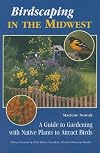
Are you the target audience, i.e. living in the midwest and wanting to landscape for birds? If so, you will be entirely happy with this book. It has tons of information on bird needs, case studies, suggested garden plans, and best of all, plant lists. Oh, the excellent plant lists. Lots of plants, organized by size and type, and with all the information you might want, from scientific name to soil conditions to size to flowering and fruiting dates.
It's entirely focused on native plants, and the author makes a good case for preferring natives in birdscapes. Still, if you're looking to include some non-natives in your landscaping (say, for human food production), you'll have to look elsewhere for that information.
If you're looking to focus on hummingbirds, you'll probably do better with another resource like [b:Attracting Butterflies & Hummingbirds to Your Backyard: Watch Your Garden Come Alive With Beauty on the Wing|664363|Attracting Butterflies & Hummingbirds to Your Backyard Watch Your Garden Come Alive With Beauty on the Wing|Sally Roth|https://images.gr-assets.com/books/1312061359s/664363.jpg|650423]. But for all other bird needs, this is the one, and the only one you'll need at that.
It's entirely focused on native plants, and the author makes a good case for preferring natives in birdscapes. Still, if you're looking to include some non-natives in your landscaping (say, for human food production), you'll have to look elsewhere for that information.
If you're looking to focus on hummingbirds, you'll probably do better with another resource like [b:Attracting Butterflies & Hummingbirds to Your Backyard: Watch Your Garden Come Alive With Beauty on the Wing|664363|Attracting Butterflies & Hummingbirds to Your Backyard Watch Your Garden Come Alive With Beauty on the Wing|Sally Roth|https://images.gr-assets.com/books/1312061359s/664363.jpg|650423]. But for all other bird needs, this is the one, and the only one you'll need at that.
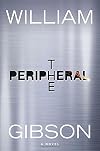
There's so little that can be said about this book without spoiling some of the journey, but I can say this: like all of the best science fiction, the futuristic devices exist not for their own sake but as vehicles for us to ask questions about ourselves, the society we're building, and the world around us. It's chock full of characters who are interesting and likable to varying degrees, but who also feel very real and flawed and human. Flynne is a joy of a protagonist, tough and smart but also very aware of the limits of her agency. Wilf is harder to like, but he's on a journey whether he likes it or not, and it's very fun to be along for the ride. I appreciate a light touch with the viewpoint switching, enough to give us a story but not so much as to become exhaustive and exhausting. There was one tiny thing about the narrative that bugged me, but it's hardly enough to detract from a great story, great world, and great writing.
Attracting Butterflies & Hummingbirds to Your Backyard: Watch Your Garden Come Alive With Beauty on the Wing (A Rodale Organic Gardening Book) by Sally Roth
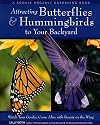
This is the book to get on gardening for hummingbirds and butterflies. It has a lot of information on the lifecycle, behavior, and needs of hummingbirds and butterflies, plus a comprehensive reference with illustrations and information on each species. There are some good plant lists organized by various sites and formats, though I would have liked a "master list" for easy reference and better comparisons between plants. A good step above all the other books on the subject that I read. This is the one I'd reach for first every time.
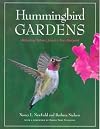
A pretty good book on the subject. Lots of information on hummingbird behavior and lifecycles. Decent amount of information on hummingbird plants, although I would have like more organized plant lists. Here's the thing: I like this book but I found [b:Attracting Butterflies & Hummingbirds to Your Backyard: Watch Your Garden Come Alive With Beauty on the Wing|664363|Attracting Butterflies & Hummingbirds to Your Backyard Watch Your Garden Come Alive With Beauty on the Wing|Sally Roth|https://images.gr-assets.com/books/1312061359s/664363.jpg|650423] to be better suited to my needs in almost every way.
How to Grow Perennial Vegetables: Low-maintenance, Low-impact Vegetable Gardening by Martin Crawford
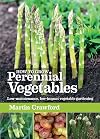
Good: nicely organized and attractively laid-out. A large selection of plants represented, both common and uncommon varieties. Good information on culinary uses of the plants.
Bad: Seemed oriented more towards the UK than US (obviously fine if you live in the UK). Info on cultivation was a little more inconsistent and sometimes incomplete.
Overall this works great as a source of inspiration for new plants to grow, but I'd probably turn to another reference to confirm the growing conditions and day-to-day needs of the plants.
Bad: Seemed oriented more towards the UK than US (obviously fine if you live in the UK). Info on cultivation was a little more inconsistent and sometimes incomplete.
Overall this works great as a source of inspiration for new plants to grow, but I'd probably turn to another reference to confirm the growing conditions and day-to-day needs of the plants.
Seed to Seed: Seed Saving and Growing Techniques for Vegetable Gardeners, 2nd Edition by Suzanne Ashworth
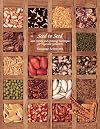
A great book on seed saving, suitable for everyone from those just getting started to the serious breeder. Well-organized, and contains all the relevant information you need to save seeds for each species / family. I checked this out from the library and quickly realized I was going to want my own copy for reference.
Perennial Vegetables: From Artichoke to Zuiki Taro, a Gardener's Guide to Over 100 Delicious, Easy-to-grow Edibles by Eric Toensmeier
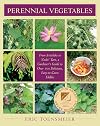
Good: Thorough reference with good plant information. Lots of common and uncommon species discussed. Generally pretty good growing information and some culinary information.
Bad: Seems a little dated. Some of the entries are listed more for the possibility of improved cultivars in the future, which isn't all that useful to a gardener looking to plant now (unless you are aiming to undertake an ambitious breeding program). Not comprehensive—I discovered a number of enticing options in the similar Martin Crawford book that weren't discussed here.
Overall a solid book and good reference. I purchased a copy after first checking it out from the library, and plan to use it as the point of first reference for most of my more unusual gardening experiments.
Bad: Seems a little dated. Some of the entries are listed more for the possibility of improved cultivars in the future, which isn't all that useful to a gardener looking to plant now (unless you are aiming to undertake an ambitious breeding program). Not comprehensive—I discovered a number of enticing options in the similar Martin Crawford book that weren't discussed here.
Overall a solid book and good reference. I purchased a copy after first checking it out from the library, and plan to use it as the point of first reference for most of my more unusual gardening experiments.
Gardens for Birds, Hummingbirds, & Butterflies (Black & Decker Outdoor Home Series) by Linda D. Harris
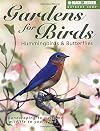
It was an okay reference, but I felt like the information was a bit sparse in some areas and there was nothing here that I couldn't find in other books in the subject. I'd trade this in in a second for the combination of [b:Attracting Butterflies & Hummingbirds to Your Backyard: Watch Your Garden Come Alive With Beauty on the Wing|664363|Attracting Butterflies & Hummingbirds to Your Backyard Watch Your Garden Come Alive With Beauty on the Wing|Sally Roth|https://images.gr-assets.com/books/1312061359s/664363.jpg|650423] and [b:Birdscaping in the Midwest: A Guide to Gardening with Native Plants to Attract Birds|1581559|Birdscaping in the Midwest A Guide to Gardening with Native Plants to Attract Birds|Mariette Nowak|https://images.gr-assets.com/books/1387177198s/1581559.jpg|1574399].
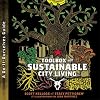
Pretty good primer on a number of sustainable and alternative practices. Like others in this category, it gives you enough information to get you started but you'll probably need to dig into more complete references if you're tackling one of the bigger projects. The depth of the information provided here was a little inconsistent. Some project types get full treatment while others are passed over in a couple quick paragraphs. Those are pretty forgivable shortcomings, though, for a book that covers a lot of ground. The authors also inject an unapologetically political viewpoint into the book; their point being that sustainability cannot be effective if it is considered as agnostic pieces in isolation of a larger vision for rebuilding. I was fine with the tone and generally agree with their take, just be ready for that.
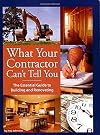
A decent book that does better in some areas than others. Has a very thorough guide to writing and negotiating contracts, which is obviously an important part of the process. I wasn't as wowed by the sections on shopping for a contractor and scoping out a project. The advice is also much more slanted towards major projects (large additions, new builds, etc), and I didn't feel like most of it transferred well to smaller projects. At the end of the day, I'm glad I read it but didn't walk away feeling all that much more confident about starting my project than before.
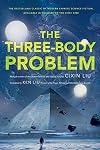
I thought this should be right up my thinky-sci-fi alley, but it just didn't grab me at all. There were some cool physics concepts worked into the story, but I thought the writing really let it down. Maybe something was lost in translation, either in a technical sense or a broader cultural sense. The reader gets bounced from one narrative style to the next—one minute you're accessing a character's inner thoughts, the next you're reading an interview transcript, then another character dispassionately recounts past events, then a historical document but paraphrased by an anonymous government official… it's a jarring narrative flow and because it's all a bit dry, the jumps don't do much to add to the atmosphere of the story. The characters start as interesting sketches, but they never really grow beyond that point, and we don't get enough information about any of their inner lives to feel much kinship (or hatred, or sympathy, or anything really). And it's all set against the backdrop of a post-Cultural Revolution China, but I didn't get much of a sense for how that setting affects anything in the storyline, beyond providing the exposition for a couple of the characters.
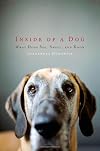
A fascinating and beautiful look at what we can infer about the inner lives of our dogs. I love that the author leans on scientific studies for the information but is willing to provide some commentary and interpretation of her own to fill out the places the available science doesn't take us. This isn't really a practical guide to dog training—look elsewhere if that's what you want. But it's a great read for anyone who wants a better idea of how our dog friends see the world, how they see us, what they understand, and what they feel.

I like the conceit well enough, and it's a fun and unusual way to drive the narrative. Unfortunately, the plot itself fell flat for me. There were little glimpses of interesting characters and subplots and the stuff that forms the life of a novel, but too much of it felt contrived (in a bad way). I suspect some people who are really, really excited about words will be happy with this as a love letter to the English language. Judged as a book, though, I think it comes up short.
I don't think this aged as well as some of the other landmarks of early dystopian science fiction. The whole thing feels like a very strong reflection of the post-Silent Spring, mid-Vietnam zeitgeist of its publication date of 1972. It's of some interest as a sort of historical document; a vivid depiction of an apocalypse that never came to pass. At the same time, though, all the detailed descriptions of specific threats make the whole thing feel quite dated. We might still have an apocalypse, but it won't be this one.
There are some good notes. The characters are sketched out well enough that I managed to keep track of almost all of them despite an absurd amount of jumping around to different viewpoints. And some themes still feel relevant today, like the way that environmental pressures put extra strain on race, class, and national tensions. Unfortunately, the depiction of race interactions is so clumsily antiquated that we're right back to feeling the age of the text.
It suffers from a number of non-age-related flaws as well. The plot loses its way pretty badly in the middle. Around the same time, the book starts to lean very heavily on a particular narrative device that I would have found exceedingly clever when I was in middle school but not at any point after that. I can respect this as an important work of its time, but I did not enjoy it as a book.
There are some good notes. The characters are sketched out well enough that I managed to keep track of almost all of them despite an absurd amount of jumping around to different viewpoints. And some themes still feel relevant today, like the way that environmental pressures put extra strain on race, class, and national tensions. Unfortunately, the depiction of race interactions is so clumsily antiquated that we're right back to feeling the age of the text.
It suffers from a number of non-age-related flaws as well. The plot loses its way pretty badly in the middle. Around the same time, the book starts to lean very heavily on a particular narrative device that I would have found exceedingly clever when I was in middle school but not at any point after that. I can respect this as an important work of its time, but I did not enjoy it as a book.
The story of the Donner Party is so incredible that you don't need to fancy it up at all, just tell it accurately and honestly and sympathetically. This book does a great job of exactly that. Despite how large this event looms in our collective imagination, I knew almost nothing about what actually happened. Nor did I know much about the experience of westward emigrants beyond what our generation learned from playing Oregon Trail. I thoroughly enjoyed learning about both of these things in a format that was enlightening but also very engaging. It's so well-written that I never found myself getting bogged down in the early parts that cover everyday life on the trail, or even becoming impatient for drama that we know waits on the horizon. The disaster itself is meticulously documented, and laid out in a way that helps make sense of a complicated and messy affair. We even finish with some context that places the Donner Party and its members in the greater historical narrative of the settling of California.
I don't think I've thought about any other book over years and years as much as I've thought about [b:Watchmen|472331|Watchmen|Alan Moore|https://i.gr-assets.com/images/S/compressed.photo.goodreads.com/books/1442239711l/472331._SY75_.jpg|4358649]. The themes explored by this book haunt me, inspire me, worry me. It's a masterpiece. Which is not to say it's without flaws! Some of the interstitial material is pretty weak and doesn't add much of anything to the story. One storyline in particular also really drags emotionally for me, important though it is to the rest of the book. And the female characters are bland, which is a disappointment for a book in which all the other protagonists are rich, complex, deeply interesting people. Still, such is the power of this work that it remains a masterpiece regardless of the flaws.
A thoughtful and interesting essay-slash-short-book that does exactly what the title suggests: makes a case for flogging in modern society. The thesis is this: the United States' prison system is out of control, inhumane, and ineffective; a system of voluntary flogging, however brutal of a practice it is, would accomplish the goals of criminal punishment at a fraction of the cost, more honestly, and without the massive damage to society of prolonged mass incarceration. Moskos spends a ton of time saying "I know you're still horrified at this idea…", but I was pretty much on board after the initial statement of intent.
Interestingly, Moskos doesn't try to make a case for flogging as a deterrent, pointing out only that imprisonment appears to be largely useless as a deterrent so flogging could not do worse (fair enough). He claims instead, simply, that we should flog because people want criminals to be punished. I don't know how I feel about this idea in general, though I acknowledge the pragmatism of it and it's true that we can't do worse than we already do.
He's also pretty dismissive of all prison reform efforts, without providing as much evidence as other claims receive. This might be partly out of necessity to the argument being made—defending flogging depends on it being placed among alternatives that are equally brutal, and if prison reform held the potential to be humane and effective, no one would agree to implement flogging. However, he does make a convincing show more argument that the things most wrong with prison are also the things that make it prison, so any system that effectively treats criminals is likely to not look much like prison at all.
In all, it's a quick read and worth it for the chance to ponder an unusual idea. You might be convinced as well. I'm not sure yet how I should work "I read an essay and now I'm pro-flogging" into casual conversation, but I'll figure it out. show less
The Art of Hummingbird Gardening: How to Make Your Backyard into a Beautiful Home for Hummingbirds by Mathew Tekulsky
Lots of great photos of hummingbirds, and fun stories about hummingbirds in gardens. Probably an enjoyable read if you're simply a hummingbird enthusiast looking for a good time. However, it was slim on practical instructions for designing your own garden to attract hummingbirds. There are anecdotes of garden design and plant suggestions scattered throughout, but nothing like a systematic approach to plant selection or garden layout. And there's a fairly extensive appendix of plants that hummingbirds might use, but not much on which plants are _most_ favored, or on what current research has to say on hummingbirds' relationship to various plants. Maybe there really is nothing more to a good hummingbird garden than using a variety of plants they like and following the generic rules of landscape design, but I didn't leave this book feeling like I had any more direction than when I started.
I have to wonder if the translation is to blame here.
This book is less of a gripping crime thriller than a meditation on the ways one's sense of self is intertwined with place, history, and folk. And that's fine -- in fact, I'm probably more inclined to enjoy the latter than the former. But this type of novel demands evocative writing, and I found the prose to be anything but. It's bland to the point of banal. We are treated to excruciatingly detailed descriptions of everything the characters do, whether or not those descriptions do anything to advance either the plot or the aforementioned philosophical questions. We get conversations between characters that manage to be both stilted and painfully mundane all at once. And we get the trope of having the protagonists' every emotion spelled out for us in detail, which I thought was the first thing any aspiring writer learned not to do.
So this is where I wonder if something was lost in translation. If I was more taken with the prose, I could have enjoyed the book (though it certainly still has moments where it is repetitive or forced). Maybe it works better in the native Norwegian.
This book is less of a gripping crime thriller than a meditation on the ways one's sense of self is intertwined with place, history, and folk. And that's fine -- in fact, I'm probably more inclined to enjoy the latter than the former. But this type of novel demands evocative writing, and I found the prose to be anything but. It's bland to the point of banal. We are treated to excruciatingly detailed descriptions of everything the characters do, whether or not those descriptions do anything to advance either the plot or the aforementioned philosophical questions. We get conversations between characters that manage to be both stilted and painfully mundane all at once. And we get the trope of having the protagonists' every emotion spelled out for us in detail, which I thought was the first thing any aspiring writer learned not to do.
So this is where I wonder if something was lost in translation. If I was more taken with the prose, I could have enjoyed the book (though it certainly still has moments where it is repetitive or forced). Maybe it works better in the native Norwegian.
An intriguing world and a good adventure tale, encased in an infuriating narrative technique that cast a pall over the whole thing for me. I tore through this book, but only partly out of enjoyment and partly out of trying to get through the flashback so we could get on with the current world, only to realize with slowly sinking dread that the flashback would be lasting through the end of the book. And, it seems, through perhaps the entire next book as well. Who knows, maybe even longer! I, for one, do not intend to find out.

I wonder if this book could serve as a primer (see what I did there) of sorts to the world of serious science fiction. On the one hand, it opens with some hardcore nerdy techno-gesticulating that would probably turn off people less excited about the genre (and sadly, it starts to wander off in this direction at the end as well). On the other hand, within a couple chapters the book had gotten its hooks into me in a way that goes beyond the average scifi narrative. It would be hard for anyone, no matter their commitment to scifi, to not start caring deeply about the characters and what happens to them.
My hypothesis is that the strength of the story may be enough to drag along people who otherwise wouldn't touch a book like this, and once they're in the middle of it, the reader may find that they actually enjoy a lot of the world-building elements. The setting is a future that is strange and wonderful and terrible, but familiar enough that one can imagine how we might get there from here. Stephenson has a fantastic imagination and excels at building sprawling sagas that he manages to hold together by weaving in several strong narrative threads.
It's got a lot to like even if futuristic cypherpunk isn't your usual cup of tea -- but you have to give it the benefit of the doubt to make it past the first couple pages.
My hypothesis is that the strength of the story may be enough to drag along people who otherwise wouldn't touch a book like this, and once they're in the middle of it, the reader may find that they actually enjoy a lot of the world-building elements. The setting is a future that is strange and wonderful and terrible, but familiar enough that one can imagine how we might get there from here. Stephenson has a fantastic imagination and excels at building sprawling sagas that he manages to hold together by weaving in several strong narrative threads.
It's got a lot to like even if futuristic cypherpunk isn't your usual cup of tea -- but you have to give it the benefit of the doubt to make it past the first couple pages.
I'm not sure that the expansive title of "War" is really the right choice for this book, as its scope is so tightly focused that never comes close to painting a full picture of the war in Afghanistan, much less of war as a general concept. It's a bit odd to get such a intimate portrait of the American soldiers stationed in the Korengal valley while so little time is spent on the enemy that we hardly even know who they are or why they are fighting. Even the allied Afghani forces are nearly invisible in this account, and their occasional entry into the narrative is more jarring for the realization that they've been fighting (and dying) alongside the Americans this whole time, unacknowledged.
That said, this intentional myopia probably makes for a better book. It's a riveting account of what life is like for an infantry soldier in modern warfare, and even more interestingly, of how war makes soldiers think and feel. It's a rare author who can do equal justice to describing the sound of a bullet passing by your head, and the troubled psyche of a teenager taught to kill and stuck in a combat outpost isolated from normal society. If the book has any claim to universal insight about war, it's probably in this thoughtful account of how war changes the people who fight in it.
That said, this intentional myopia probably makes for a better book. It's a riveting account of what life is like for an infantry soldier in modern warfare, and even more interestingly, of how war makes soldiers think and feel. It's a rare author who can do equal justice to describing the sound of a bullet passing by your head, and the troubled psyche of a teenager taught to kill and stuck in a combat outpost isolated from normal society. If the book has any claim to universal insight about war, it's probably in this thoughtful account of how war changes the people who fight in it.
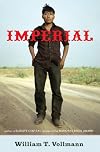
Who is our author, William T. Vollman? Imagine that Norman Maclean took peyote, climbed to the top of the Y in the Hollywood sign, and spent three days up there hallucinating that he was Hunter S. Thompson. Then on the third night he disappeared and no one heard a thing from him until five months later he stepped off a cargo ship in San Pedro with a tattoo and a slight limp that he didn't have before. That, perhaps, is William T. Vollman. Or else that's only the memory of a William T. Vollman who never was.
William T. Vollman is a slightly mad person, and this is a very mad book. I've been reading it for months and I'm not even a quarter of the way through. Imperial County is a sprawling enigma of a place that's hard to love yet hard not to be transfixed by, and so it's perhaps fitting that Imperial the book is a sprawling work wrought over a decade by an author who cannot bring himself to believe wholeheartedly in anything Imperial has ever stood for, but cannot bring himself to leave it alone either.
I don't know that I could recommend this book, exactly, to anyone. But if the gaze of a confident man is set upon this course, well, there's hardly anything I could say to turn you from it. Nor would I, perhaps. This world needs those seekers who do not doubt themselves.
Imperial the book is a tangled mess of borders, of histories, of loss, of people whose faces are right before you but still unknowable, or maybe familiar but just out of reach of the faded photograph's point show more of focus; of fragments of dreams that were and stories that never were, lives that are lived only in the records they left or lives that were lived beyond the reach of our records at all. Of course, I think William T. Vollman would agree that Imperial the county, Imperial the land, Imperial that resists all attempts at delineation; Imperial is all of those things, too. show less
William T. Vollman is a slightly mad person, and this is a very mad book. I've been reading it for months and I'm not even a quarter of the way through. Imperial County is a sprawling enigma of a place that's hard to love yet hard not to be transfixed by, and so it's perhaps fitting that Imperial the book is a sprawling work wrought over a decade by an author who cannot bring himself to believe wholeheartedly in anything Imperial has ever stood for, but cannot bring himself to leave it alone either.
I don't know that I could recommend this book, exactly, to anyone. But if the gaze of a confident man is set upon this course, well, there's hardly anything I could say to turn you from it. Nor would I, perhaps. This world needs those seekers who do not doubt themselves.
Imperial the book is a tangled mess of borders, of histories, of loss, of people whose faces are right before you but still unknowable, or maybe familiar but just out of reach of the faded photograph's point show more of focus; of fragments of dreams that were and stories that never were, lives that are lived only in the records they left or lives that were lived beyond the reach of our records at all. Of course, I think William T. Vollman would agree that Imperial the county, Imperial the land, Imperial that resists all attempts at delineation; Imperial is all of those things, too. show less
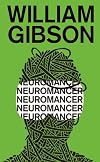
Some science fiction ages well, and some does not. I went into this prepared to be disappointed. After a bad run through Haldeman's socially dated The Forever War, I wasn't feeling optimistic about a 1984 book on the subject of computer networks and hacking. In 1984, remember, the Internet was a newborn. TCP/IP was two years old. The term "computer virus" was only coined that same year. The first great computer worm wouldn't appear until 1988. Surely, this would be science fiction that doesn't age well.
And yet. And yet! Somehow, against all odds, this book is great. The technology is totally believable (Gibson was smart enough to describe the broader concepts only vaguely, leaving the reader's imagination to fill in the gaps). The vision of the world of cyberspace is eerily accurate, complete with corporate fiefdoms and a new mercenary class of thieves and profiteers. And most importantly, it's a good book. The characters are compelling and complicated and human. The setting has the vibrant hodgepodge that would come to exemplify the cyberpunk genre, little bits of today's society thrown in a blender, amped up, lit in neon. And the plot is gripping the whole way through, each piece of information leading to new questions.
The only thing I can hold against it: the descriptions of cyberspace as a glowing virtual city and the urgency of operators tapping away at their keypads are so evocative that I suspect this book was the origin of all the crap that shows up in every show more Hollywood hacker movie. Still, that's hardly William Gibson's fault, now is it? show less
And yet. And yet! Somehow, against all odds, this book is great. The technology is totally believable (Gibson was smart enough to describe the broader concepts only vaguely, leaving the reader's imagination to fill in the gaps). The vision of the world of cyberspace is eerily accurate, complete with corporate fiefdoms and a new mercenary class of thieves and profiteers. And most importantly, it's a good book. The characters are compelling and complicated and human. The setting has the vibrant hodgepodge that would come to exemplify the cyberpunk genre, little bits of today's society thrown in a blender, amped up, lit in neon. And the plot is gripping the whole way through, each piece of information leading to new questions.
The only thing I can hold against it: the descriptions of cyberspace as a glowing virtual city and the urgency of operators tapping away at their keypads are so evocative that I suspect this book was the origin of all the crap that shows up in every show more Hollywood hacker movie. Still, that's hardly William Gibson's fault, now is it? show less