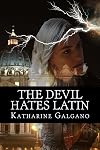
Corrupt clergy, lavender mafia, traditional Catholics on the warpath...is this the latest headline on Church Militant or LifeSite News? No, it's Katherine Galgano's excellent thriller The Devil Hates Latin. Published well before the revelations that rocked the American Church in 2018, Galgano's prescient book matches Dan Brown-style drama with authentic Catholic theology. No albino monks here, although there are certainly crooked religious orders.
These are dark times for the Catholic Church, and while there are many groups and individuals who are working to save it—there are also groups using it to further their own corrupt agendas. This dichotomy is reflected in the decay of secular society as well. Sometimes it seems like the good guys never win, and sometimes it all comes down to stubbornness and determination. Luckily the White family has that in droves. Living in exile in Rome after Mr. White was convicted of white collar crime and then presidentially pardoned, they have a son at home and two grown daughters: one married to an air force officer, the other a member of a thriving order of Dominican Sisters. All is well, until the son enters seminary and sees something he shoudn't, until the family sets their eye on the same building complex as an order of homosexualists with ties to Latin American drug money, until their married daughter has enough of her husband's addictions and returns home with her children and her husband in pursuit. When the world goes wrong, show more the only place to go is church. But what happens when the church comes after you?
Highly recommended for those who enjoy Catholic fiction, a good conspiracy, cultural criticism, and the Latin mass. Those who enjoyed this book may also enjoy The Death of a Pope by Piers Paul Read, Father Elijah by Michael O'Brien, or The Church of Spies by Mark Riebling. show less
These are dark times for the Catholic Church, and while there are many groups and individuals who are working to save it—there are also groups using it to further their own corrupt agendas. This dichotomy is reflected in the decay of secular society as well. Sometimes it seems like the good guys never win, and sometimes it all comes down to stubbornness and determination. Luckily the White family has that in droves. Living in exile in Rome after Mr. White was convicted of white collar crime and then presidentially pardoned, they have a son at home and two grown daughters: one married to an air force officer, the other a member of a thriving order of Dominican Sisters. All is well, until the son enters seminary and sees something he shoudn't, until the family sets their eye on the same building complex as an order of homosexualists with ties to Latin American drug money, until their married daughter has enough of her husband's addictions and returns home with her children and her husband in pursuit. When the world goes wrong, show more the only place to go is church. But what happens when the church comes after you?
Highly recommended for those who enjoy Catholic fiction, a good conspiracy, cultural criticism, and the Latin mass. Those who enjoyed this book may also enjoy The Death of a Pope by Piers Paul Read, Father Elijah by Michael O'Brien, or The Church of Spies by Mark Riebling. show less
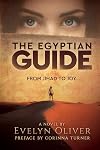
What does it mean to fall in love? To give all of yourself to a cause? Clara Cumberhart doesn't know and doesn't really care. All she cares about is her tourist agency job and her modern lifestyle. All she wants is to get to Houston in time for her sister's wedding. And yet while stuck in Paris waiting for her delayed connection from Cairo to Texas, she stumbles out of her ennui into a world far wider and far more dangerous than anything she could have imagined. And it all begins with a letter from The Egyptian Guide.
By opening and reading the letter, Clara becomes the unwitting linchpin in a series of events that culminate in the death of four people and the saving of dozens—without ever leaving Orly Airport. Shocked back to her childhood Catholicism, her entire life takes on new meaning. The letter opens the way to a new job serving others and a new life among in the Coptic Catholic community of Cairo, one both tested and strengthened by the sacrifices of its martyrs. Her love of her faith in turn brings her to a man who can offer the kind of love she's always dreamed of. Giving herself over to love, whether of God or man, is not easy, but still Clara perseveres. The world is a hard place full of doubts, trials, and temptations. Friends can seem enemies and enemies friends. The only way though is the trust in God, and trust Clara does. But what happens when the sacrifices God demands are more than you can bear? What then? Clara is about to find out.
A strong debut show more novel, with good characterizations and a tight narrative structure that manages to be inherently Catholic without being preachy. Clara is not always the best person, but she's always an interesting one. The story does suffer a bit with pacing towards the end, speeding up so that some plot points and characters seem to appear only to spin off into nothing, but this is a forgivable frustration in an otherwise excellent work. There aren't many novels focusing on the Christian experience in the modern Middle East, much less Catholic ones, so this volume will be a welcome addition to many shelves.
Highly recommended for those who enjoy Catholic fiction, thrillers, speculative fiction, and books with plots ripped from the headlines.
Readers who enjoy this book may also enjoy The First Century after Beatrice by Amin Maalouf, The Lord of the World and The Dawn of All by Robert Hugh Benson, and Martin Mosebach's upcoming travel memoir The 21: A Journey into the Land of Coptic Martyrs. show less
By opening and reading the letter, Clara becomes the unwitting linchpin in a series of events that culminate in the death of four people and the saving of dozens—without ever leaving Orly Airport. Shocked back to her childhood Catholicism, her entire life takes on new meaning. The letter opens the way to a new job serving others and a new life among in the Coptic Catholic community of Cairo, one both tested and strengthened by the sacrifices of its martyrs. Her love of her faith in turn brings her to a man who can offer the kind of love she's always dreamed of. Giving herself over to love, whether of God or man, is not easy, but still Clara perseveres. The world is a hard place full of doubts, trials, and temptations. Friends can seem enemies and enemies friends. The only way though is the trust in God, and trust Clara does. But what happens when the sacrifices God demands are more than you can bear? What then? Clara is about to find out.
A strong debut show more novel, with good characterizations and a tight narrative structure that manages to be inherently Catholic without being preachy. Clara is not always the best person, but she's always an interesting one. The story does suffer a bit with pacing towards the end, speeding up so that some plot points and characters seem to appear only to spin off into nothing, but this is a forgivable frustration in an otherwise excellent work. There aren't many novels focusing on the Christian experience in the modern Middle East, much less Catholic ones, so this volume will be a welcome addition to many shelves.
Highly recommended for those who enjoy Catholic fiction, thrillers, speculative fiction, and books with plots ripped from the headlines.
Readers who enjoy this book may also enjoy The First Century after Beatrice by Amin Maalouf, The Lord of the World and The Dawn of All by Robert Hugh Benson, and Martin Mosebach's upcoming travel memoir The 21: A Journey into the Land of Coptic Martyrs. show less

A sweet tale of family and growing up on the Hungarian Plain. Seredy manages to capture the customs and traditions of a lost time and craft an enjoyable story. I'm not the biggest fan of her illustrations, but they do well here and ably assist in bringing the story to life.

Luther's True Face is a biography of Martin Luther from the Catholic perspective. Based mostly on French sources, the author points to key character flaws and a lack training that led the man to be put in a position to destroy the Church. Ultimately, the author feels that Luther never really had a vocation at all. As well as exploring Luther's life, he also makes clean work of his theology. All in all, an excellent book for anyone who is looking for answers about one of the most destructive and polarizing figures of his time. Highly recommended.
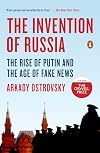
The Invention of Russia is a comprehensive and compelling look at the way that media played a role in the fall of the Soviet Union, the wild 90s, and the rise of Putin's New Russia. It's a very interesting look at matters that have suddenly become highly relevant, with the events of 2016. Begining with the Krushchev era, the book shows how intellectuals and the media both reflected public opinion and molded it. We also watch its awkward relationship with the government, sometimes in opposition, sometimes in its pocket. The author has a theory about generational change in Russian society that does seem to at least have a kernel of truth. Whether or not this will actually be able to stop Putin and his ideological allies remains to be seen. Russia is a mess, but the state puts on a strong front and distracts its citizens with glorious victory. Anything than have the people realize just how far behind they've fallen as they did in the 60s, 70s, and 80s. But while war can bring cohesion, it can only work for so long. Only time will tell what the future holds for Russia, its people, and its media.
Highly recommended for anyone with an interest in current events, Russian and/or Soviet history, or media studies. The book was actually originally published in 2015 with a different subtitle, but has been given a new preface for the 2017 paperback edition that ties in Putin's election manipulations and the rise of fake news to the books overall narrative about the relationship between show more Russians, their government, and their media. show less
Highly recommended for anyone with an interest in current events, Russian and/or Soviet history, or media studies. The book was actually originally published in 2015 with a different subtitle, but has been given a new preface for the 2017 paperback edition that ties in Putin's election manipulations and the rise of fake news to the books overall narrative about the relationship between show more Russians, their government, and their media. show less

The Turkish wars come alive again. A must read. Highly recommended.
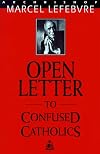
A classic that every traditionalist should read at least once. Highly recommended.
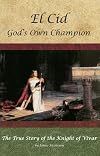
A great retelling of the story of one of Catholicism's greatest knights. Highly recommended.
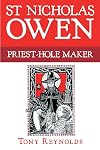
St. Nicholas Owen tells what we know about the life of a little known and yet highly important figure in the underground Church of Elizabethan England. Owen was a skilled joiner who turned his skills with wood into a valuable resource for his cause. He became a builder of priest-holes, hidden places in buildings where priests could hide when the authorities came for them. Because during Nicholas's time, to be a Catholic priest incurred an automatic death sentence the moment he set foot on English soil. Nicholas gave up everything to work with the Jesuit mission in England and he was very, very good at what he did. But, as is wont to happen, the authorities eventually caught up with him and he died while being racked in the Tower. He is numbered among the 40 Martyrs of England and Wales.
A gripping story of sacrifice and faith. Highly recommended for anyone with an interest in Elizabethan England, the recusant Church, or the lives of the saints.
A gripping story of sacrifice and faith. Highly recommended for anyone with an interest in Elizabethan England, the recusant Church, or the lives of the saints.
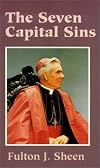
The seven last words meet the seven deadly sins in a series of Lenten homilies. Classic Fulton Sheen, and excellent spiritual reading.
She's already saved Mars, but in Arabella and the Battle of VenusArabella now has to rescue Captain Singh from Napoleon's prison on Venus. Still very willful, she is willing to do whatever it takes to break him out of prison. But Venus turns out to be very different from Mars. It will take all of her allies and all that she has to figure things out. Not to mention survive a visit from Napoleon himself. A nice second installment. I can't wait for book three. Highly recommended for fans of historical fantasy, but you'll want to start with the first book to fully understand what is going on here.
is a case of two sisters, who look just enough alike to pass as one another among people they've never met. When Cassie asks her sister to pretend to be her so that she doesn't have to go to Cornwall and stay with her in-laws, her sister finds it impossible to day no. She's just come out of a bad break-up and needs a vacation—plus, she's never been able to say no to Cassie. So off to Cornwall she goes, and naturally she falls in love with her sister's brother-in-law. Whatever will she do now? Lots of fun with a nice Cornish setting.
features a heroine who runs an art studio. A chance encounter with a handsome stranger is soon followed-up by the discovery of a previously unknown grandmother, and she suddenly finds herself embroiled in all kinds of family drama—with a bit of romance tossed in for extra measure. Just what is so important about the painting of the woman in blue that her father kept up in the attic? And why does someone seem out to get her? A fun piece of clean romance.
The Enemy at the Gate is a compelling account of the Siege of Vienna and its aftermath. The Ottoman defeat in 1683 marked the end of any serious threat to Western Europe, but it was not at all apparent that they would be defeated. Until, of course, they were. The author does a good job of setting the stage for the battle and provides a good general history of Eastern Europe and the almost constant war that took place there during the late medieval and early modern periods. I, for one, would not have enjoyed being Hungarian during that era. The end of the book feels a bit rushed, like the author was approaching a page limit, but still had a lot to cover and decided to squeeze it all in. But 7/8 of the book is good, informative reading, which is more than enough for 4 stars.
Highly recommended for anyone who enjoys European history, or wonders why some Europeans have hang-ups about Turkish immigration.
Highly recommended for anyone who enjoys European history, or wonders why some Europeans have hang-ups about Turkish immigration.
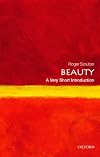
A nice, short overview of the field of aesthetics and the importance of beauty. The author manages to pack a lot of information into such a small book, and yet it somehow still manages not completely overwhelm the reader with facts and jargon. Definitely recommended for anyone with an interest in the subject.
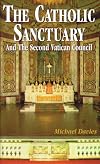
A short pamphlet describing the changes most Catholic churches underwent after Vatican II in regards to how they decorated and arranged church sanctuaries. Suffice to say, Davies does not approve and has some words for those who destroyed much that was good in the quest for novelty and "modernity". Martin Mosebach also touches on this topic in his own book, The Heresy of Formlessness. A bit of preaching to the choir, but Davies does summarize everything nicely in one place.

The life and martyrdom of St. Oliver Plunkett, an Irish bishop executed in the 17th century after a show trial in London, told in a graphic format. The art is good, but I found the plot a bit choppy. Still, the world needs more books like this one to help share the Faith and our Catholic history with the world.

Absolute Relativism contains everything you ever needed to know about relativism and how to combat it—all in less than sixty pages. The question and answer format makes it extremely readable, and the author's conversational style makes it accessible to anyone with an interest in the subject no matter their background or knowledge level. Highly recommended for anyone with an interest in the topic.
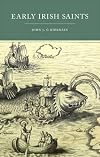
Early Irish Saints is a collection of essays on the lives of individual early Irish saints from Patrick to Columbanus of Bobbio. Each essays covers what we know about that particular saint as well as some of the legends and stories passed down about him. It is not only male saints; there are several women featured as well. What is particularly nice is that the author uses recent sources, but still manages to remain fairly orthodox in his works—i.e. he never claims that St. Bridget is actually a Celtic deity re-purposed by the Church. Overall, a solid collection and definitely a book to be read by anyone with an interest in the saints of Ireland or medieval Irish culture. Highly recommended.

Maria Chapdelaine is the story of a girl's coming of age in the depths of the Quebec wilderness. Life is hard there, but Maria and her family get by. She has three suitors, each of whom is very different. Eutrope Gagnon is her neighbor and promises her a life much like the one she has now, Francois Paradis is an adventurous trapper who grew up nearby but doesn't have the patience for the farm, and finally, Lorenzo Surprenant is the nephew of a neighbor who has emigrated to the United States where he makes good money in a factory and can promise her a much easier and luxurious life than the others. Who will she choose?
A celebration of French Canadian culture and highly recommended for those with an interest in good literature in general or in novels about pioneer living in the early twentieth century.
A celebration of French Canadian culture and highly recommended for those with an interest in good literature in general or in novels about pioneer living in the early twentieth century.

The Ballad of the White Horse tells the story of Alfred the Great's shock victory over the invading Norsemen at the Battle of Ethandun near the White Horse of Uffington (a famous figure carved into chalk hill at some point in mists of England's prehistoric past). Written in ballad meter, we watch Alfred travel from the depths of despair, as his kingdom is lost to him, to the joy of victory over his enemies as many brave men die heroic (and bloody) deaths on the battlefield. Chesterton being Chesterton, there are many lessons to be imparted and learned here, but as always he makes the process enjoyable for himself and for his readers.
A poem for those who don't think they like poetry, it may be metered but its meaning is easy to pick out and the plotting is strong. My edition is a facsimile of an edition from the 1920s and is filled with fabulous period art nouveau illustrations. Highly recommended for fans of Chesterton and those with an interest in Alfred the Great or English history.
A poem for those who don't think they like poetry, it may be metered but its meaning is easy to pick out and the plotting is strong. My edition is a facsimile of an edition from the 1920s and is filled with fabulous period art nouveau illustrations. Highly recommended for fans of Chesterton and those with an interest in Alfred the Great or English history.

The Shuttle is a tale of transatlantic marriage gone wrong and how the love of a sister manages to put things to right. In the early days of easy travel across the Atlantic, a British baronet manages to marry silly but extremely wealthy Rosy Vanderpoel. All he wants is her money, and he resents that it will be left in her hands instead of his upon their marriage. So the moment he gets her away from her family, he begins isolating and tormenting her. Her loving family across the ocean wonders how she is doing as letters begin tapering off and they hear no news of her. Twelve years later her younger sister, a much stronger character, heads to England to find her sister and get to the bottom of things. What she finds shocks her, and she immediately sets to work trying to ameliorate things for poor Rosy in such a way that her husband can do nothing. But what about Betty herself? Jane Austen may have said that a single woman in want of a fortune must be in want of a husband, but a single woman with a fortune must be wary. As her sister's case shows, you often never know whether its you or your money a man wants until it is too late. So she respects her sister's impoverished neighbor, the Earl of Mount Dunstan, because he too finds the marriage mart disgusting, even though it would benefit him to make use of it. He would much rather find a more honest way of going about it. But every plan that anyone has has to be put on the shelf when Rosy's husband unexpectedly shows up and show more is determined to keep the power in his own hands, as befits a man of his station. And power may not be enough, as he soon sets his sights on Betty . . .
A very interesting piece of Edwardian melodrama about the Transatlantic marriage mart in which impoverished European nobles would marry rich American heiress in a trade of money for titles. As the author shows, such unions were often unhappy. The book does a good job of showing the kinds of power that a many could have over his wife, and takes a remarkably strong stand against spousal abuse. I also really liked how it captured a sense of how a gentleman was supposed to act, particularly in relation to his dependents (i.e. tenants & employees). That's certainly something that has been lost in the interim, probably to our disadvantage. Highly recommended to anyone who has enjoyed Burnett's adult works, or who has an interest in Edwardian society or literature. show less
A very interesting piece of Edwardian melodrama about the Transatlantic marriage mart in which impoverished European nobles would marry rich American heiress in a trade of money for titles. As the author shows, such unions were often unhappy. The book does a good job of showing the kinds of power that a many could have over his wife, and takes a remarkably strong stand against spousal abuse. I also really liked how it captured a sense of how a gentleman was supposed to act, particularly in relation to his dependents (i.e. tenants & employees). That's certainly something that has been lost in the interim, probably to our disadvantage. Highly recommended to anyone who has enjoyed Burnett's adult works, or who has an interest in Edwardian society or literature. show less
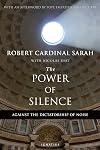
The Power of Silence is the much anticipated follow up to Cardinal Sarah's memoir God or Nothing (if you haven't read that, stop what you're doing and go read it now—it's a life-changing book). In this volume, his focus is on the importance of silence, a virtue which has seemingly been discarded by modern society as useless or boring. In response, he and his trusty interviewer/sidekick, French journalist Nicolas Diat, explore the meaning and purose of silence as well as the venerable Carthusian Order—a monastic order in which silence plays a major role in daily life. The end of the book includes a discussion between Cardinal Sarah, Diat, and the Prior of Grande Charteuse about the order and about silence. A necessary book, and one I can highly recommend to anyone with an interest in the subject or in Cardinal Sarah.
Nothing Superfluous: An Explanation of the Symbolism of the Rite of St. Gregory the Great by The Rev. James W. Jackson Fssp
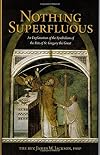
Nothing Superfluous is a step-by-step walk through the symbolism of the holy mass according to the Rite of St. Gregory the Great (also known as the extraordinary form, Tridentine mass, or "Vetus Ordo"). Beginning with the importance of symbolism as a religious experience, the author then proceeds to take the reader on a tour of the mass from beginning to end, uncovering the deep meaning of what is going on and making it available to a wider audience in the process. It makes for great spiritual reading and really helped to make me re-think some of my attitudes about mass and why things happen the way they do. Highly recommended for anyone with an interest in liturgy and liturgical symbolism, whatever rite you attend, although some familiarity with the older form would probably be helpful.
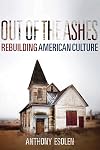
Out of the Ashes takes a look at the world today and all the chaos and misery it contains and seeks to find a way forward that will help us regain control and take back what has been lost. If you've read Esolen before, then you know what to expect. For those who haven't, this is just as good a place to get started as any. Each chapter is dedicated to ideas for how to recover a particular aspect of society, such as beauty, school, manhood, or play. The author discusses how things were, what has gone wrong, and then provides some ideas for how to make things better. Like most of Esolen's works, it's hard to put down once you get started. Conservatives will probably get more out of this than progressives, and Catholics more than Protestants, but there is much here that everyone can agree on. Highly recommended for Esolen fans, those interested in building a better society, or Catholic social teachings.
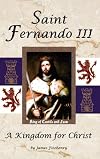
Saint Fernando III is a narrative biography of King Ferdinand III of Castile and Leon, a great leader of the Reconquista. You won't find many footnotes, but you will find adventure, intrigue, and plenty of daring-dos. The book recounts the saint's entire life from his childhood at his maternal grandfather's court in Castile through his tumultuous young adulthood being used as a political pawn between factions in Castile and his father, the King of Leon. Finally, we see him come into his own as King of Castile, bringing a measure of political calm to the domestic politics and beginning a long, but successful campaign to take back Spain from its Moroccan overlords. It's this last bit that takes up the majority of the book, but it also makes for incredibly interesting reading.
If you like biographies that read like adventure novels or have an interest in Spanish history or the Reconquista, this book is for you. Highly recommended.
If you like biographies that read like adventure novels or have an interest in Spanish history or the Reconquista, this book is for you. Highly recommended.

Happy the Land is the follow-up volume to the author's excellent memoir of living off-the-grid in Maine, We Took to the Woods. From the very beginning we know that her husband has since died, and that this book is in part a tribute to him. We get to experience more of the small wonders of everyday life in rural Western Maine, recounting stories of her family and their friends (neighbors is a bit of a stretch when you're talking about the Maine backwoods), and we also get to experience some of her widowed life in small-town Maine since it's too dangerous for a single person to live alone in the woods. No matter what happens to her, she never seems to lose her pluck and zest for life.
There's something about Rich's writing style that makes her stories compelling, no matter how trivial the subject. It's like we're all sitting around the campfire and she's telling you all about her life. Absolutely brilliant stuff and anyone who wants to learn how to write well could benefit by reading and imitating some of her style. Highly recommended for anyone who enjoys interesting memoirs, Maine, or well-written non-fiction.
There's something about Rich's writing style that makes her stories compelling, no matter how trivial the subject. It's like we're all sitting around the campfire and she's telling you all about her life. Absolutely brilliant stuff and anyone who wants to learn how to write well could benefit by reading and imitating some of her style. Highly recommended for anyone who enjoys interesting memoirs, Maine, or well-written non-fiction.
A Heart for Europe: The Lives of Emperor Charles and Empress Zita of Austria-Hungary by Joanna Bogle

A Heart for Europe is a good double biography of the last Emperor and Empress of Austria-Hungary, Bl. Karl I and Zita. The authors do a good job of covering both their lives, although Karl gets a bit more attention at times, as befits his station as a head of state. Beginning with childhood, the book follows the subjects as they find themselves unexpectedly hurdled into places and situations they never expected to be, all while Europe falls apart around them. The postwar situation is covered well, and helps lay the groundwork for understanding why Karl is currently on his way to being recognized as a saint (Blessed is the second-to-last stage of the canonization process). If you've ever wondered if some of the bloodshed and slaughter of the twentieth century could have been avoided, Karl is a man whose story you need to read. And his wife is an inspiration in her own right. My only complaint is that they could have cited their sources better, but they were writing when many of the people who knew the Imperial couple were still alive, which has benefits of its own. Highly recommended for anyone with an interest in Central European history, World War I, or interesting biographies.
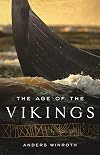
The Age of the Vikings is a solid, readable history of Viking Scandinavia. Instead of moving chronologically, it is organized thematically into chapters with names like "Violence in a Violent Time", "At Home on the Farm", and "Arts and Letters". By book's end, the reader has been taken a very nice survey of Norse culture and history and has travelled around the known world from Vinland to Constantinople and beyond. It's a nice book and one worth picking up if you have an interest in Medieval Scandinavia and the cultures it spawned. Highly recommended.