

I don't think I've ever read a novel that captures the slow, excruciating sense of the approaching inevitable the way that The Guardians does. Even if you're not one who readily gives their heart to a story or its well-drawn inhabitants, Ana Castillo will capture you, and she will break your heart.
 This review was written for LibraryThing Early Reviewers.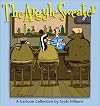
As many others have said, the first thing cartoonist Scott Hilburn's work will remind you of is The Far Side. However, The Argyle Sweater's humor has a slightly different tilt to it, which is sometimes a positive thing. There were a couple of laughs and a few chuckles to be had, but this seems very much like a first compilation of a strip that has a lot of growing left to do. (Also, I think that the best strip ended up on the cover. Kind of reminds me of a movie whose best scenes are all in the trailer.) I'll be curious to see what the next book is like. In the end, though, it's unfortunate that Hilburn's artwork--and I'm sorry, but simply squaring off a feature or two really doesn't count as differentiation, IMHO--is so heavily reminiscent of Gary Larson's; I suspect that the unevenness of the former's wit might’ve been less evident otherwise.
This review was written for LibraryThing Early Reviewers.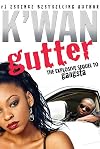
Well. Let this be a lesson to me: Beware the perils of uncorrected proofs.
I'm not just saying that because of all the typos that riddled K'wan's *Gutter,* although they did make me twitch; I'm also saying it because there are a couple-few contradictory elements still bobbing around in there that really cause storyline confusion. (I wish I'd had a highlighter on hand to keep track of them during this fairly quick read. One example off the top of my head: Has Gutter married Sharell or not? All other plot points being equal, I'd say of course not, but there are occasions when she's referred to as his wife, not just "his lady," say, or "his bitch.")
Aside from that . . . *oy.*
Even without touching on the raging misogyny and the piled-on, caked-on violence (and seriously, the first person to come at me with any "keepin' it real" shit or holla 'bout how I'm jus' hatin' is gon' catch a *bad* one, f'real yo), this one was painful. The tone was wildly inconsistent; even the dialogue of a given character could vary so jarringly from paragraph to paragraph that I'd have to double back and check to see who the heck was talking, again. We're also asked to keep track of too many characters that are lobbed at us by the fistful, many of whom have various aliases, and to revel in the "realness" of thundering hordes of retrograde thugs.
The framing device might be the funniest part. The bracketing "narrator" is a teenage girl named Kenyatta, who's named after her father Kenyatta, who was show more also known as Gutter. She's fresh from a tantrum, wondering how come her mom is harshing on her 'cause she wants to write about her family--the part of the family she finally found out about on her recent trip to LA. Her best homey Baby Loc comes in through her bedroom window to say hey; apparently he's just one of those bred-in-the-bone street thugs, despite the entirety of his upbringing and all his educational advantages (wow, ain't THAT a hopeful trope?), but you know, he's still got his girl Ken's back and shit. Since all this Hidden History she's learned concerns him too, she starts in on the story--at which point the book very conveniently shifts into omniscient voice until the epilogue.
Unfortunately, it seems to me that far too much time and pride were invested in the choreography of the violence and the intricacies of the betrayal-ridden, revenge-driven plotting, and not nearly enough in trifles like characterization or dialogue. In fact, the book resembled nothing so much to me as a treatment for a nouveau-blaxploitation movie. Not a movie that *I* would pay money to see, but whatever.
I suppose I *do* have to wonder what else I expected from the cover's promise of "The explosive sequel to Gangsta."
What did I expect? In a word? Better.
What did I get? Strained occasional attempts at characterization, schizophrenic dialogue, masses of glorified misogyny and violence, and a good metric ton of "black/ghetto" stereotypes: drug-selling, shit-smoking, wig-splitting gang members; out-of-wedlock children with hugely neglectful teenage mothers and the occasional long-suffering grandmother; males implacable in their violence, overweening (and misplaced) "pride," hunger for vengeance, entitlement, greed, and determination to see that the next generation comes up the same way; attitudinal women who're also somehow resigned to being treated with indifference at best, objectifying and violence-ridden hate at worst; men's lies, dismissals, and controlling behaviors relabeled as displays of love and caring for women; "horse-assed" strippers; "bitch" and "nigga" falling--or expectorated--from every mouth. Don't even get me started.
The funny thing is, I'm probably part of the target audience for this book, especially when you take a look at the other exultation on the cover: "#1 Essence best selling author." Okay, it could be I'm a bit long in the tooth to fit right in the pocket of the target-audience on this one, but I'm definitely *Essence*-aged, and the idea of *any* black woman, be she 18 or 78, picking this up and figuring it's, you know, *aiight* to be reading such monstrous and hate-full shit about her sisters and brothers because, you know, it's money in a brutha's pocket and plus he's *keepin' it real* just makes me wanna spit like a camel. WTF, *Essence*?? Are we *really* so hard-up for anything with our faces on it or in it that we're willing to eat this kind of shit up sideways??
Wait--no. Don't answer that one. Please.
I'm sorry--*really* sorry--but no. In fact, *hell* no. show less
I'm not just saying that because of all the typos that riddled K'wan's *Gutter,* although they did make me twitch; I'm also saying it because there are a couple-few contradictory elements still bobbing around in there that really cause storyline confusion. (I wish I'd had a highlighter on hand to keep track of them during this fairly quick read. One example off the top of my head: Has Gutter married Sharell or not? All other plot points being equal, I'd say of course not, but there are occasions when she's referred to as his wife, not just "his lady," say, or "his bitch.")
Aside from that . . . *oy.*
Even without touching on the raging misogyny and the piled-on, caked-on violence (and seriously, the first person to come at me with any "keepin' it real" shit or holla 'bout how I'm jus' hatin' is gon' catch a *bad* one, f'real yo), this one was painful. The tone was wildly inconsistent; even the dialogue of a given character could vary so jarringly from paragraph to paragraph that I'd have to double back and check to see who the heck was talking, again. We're also asked to keep track of too many characters that are lobbed at us by the fistful, many of whom have various aliases, and to revel in the "realness" of thundering hordes of retrograde thugs.
The framing device might be the funniest part. The bracketing "narrator" is a teenage girl named Kenyatta, who's named after her father Kenyatta, who was show more also known as Gutter. She's fresh from a tantrum, wondering how come her mom is harshing on her 'cause she wants to write about her family--the part of the family she finally found out about on her recent trip to LA. Her best homey Baby Loc comes in through her bedroom window to say hey; apparently he's just one of those bred-in-the-bone street thugs, despite the entirety of his upbringing and all his educational advantages (wow, ain't THAT a hopeful trope?), but you know, he's still got his girl Ken's back and shit. Since all this Hidden History she's learned concerns him too, she starts in on the story--at which point the book very conveniently shifts into omniscient voice until the epilogue.
Unfortunately, it seems to me that far too much time and pride were invested in the choreography of the violence and the intricacies of the betrayal-ridden, revenge-driven plotting, and not nearly enough in trifles like characterization or dialogue. In fact, the book resembled nothing so much to me as a treatment for a nouveau-blaxploitation movie. Not a movie that *I* would pay money to see, but whatever.
I suppose I *do* have to wonder what else I expected from the cover's promise of "The explosive sequel to Gangsta."
What did I expect? In a word? Better.
What did I get? Strained occasional attempts at characterization, schizophrenic dialogue, masses of glorified misogyny and violence, and a good metric ton of "black/ghetto" stereotypes: drug-selling, shit-smoking, wig-splitting gang members; out-of-wedlock children with hugely neglectful teenage mothers and the occasional long-suffering grandmother; males implacable in their violence, overweening (and misplaced) "pride," hunger for vengeance, entitlement, greed, and determination to see that the next generation comes up the same way; attitudinal women who're also somehow resigned to being treated with indifference at best, objectifying and violence-ridden hate at worst; men's lies, dismissals, and controlling behaviors relabeled as displays of love and caring for women; "horse-assed" strippers; "bitch" and "nigga" falling--or expectorated--from every mouth. Don't even get me started.
The funny thing is, I'm probably part of the target audience for this book, especially when you take a look at the other exultation on the cover: "#1 Essence best selling author." Okay, it could be I'm a bit long in the tooth to fit right in the pocket of the target-audience on this one, but I'm definitely *Essence*-aged, and the idea of *any* black woman, be she 18 or 78, picking this up and figuring it's, you know, *aiight* to be reading such monstrous and hate-full shit about her sisters and brothers because, you know, it's money in a brutha's pocket and plus he's *keepin' it real* just makes me wanna spit like a camel. WTF, *Essence*?? Are we *really* so hard-up for anything with our faces on it or in it that we're willing to eat this kind of shit up sideways??
Wait--no. Don't answer that one. Please.
I'm sorry--*really* sorry--but no. In fact, *hell* no. show less
This review was written for LibraryThing Early Reviewers.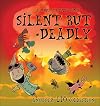
This is just brilliant--delightfully twisted, dark and skewed, shamelessly bizarre, strangely sweet, sweetly strange. There's virtually no dialogue; while a menu of pantomime and sight gags could easily become wearying, though, Mark Tatulli keeps things balanced and fresh with a great mix of Addams-ish dark and Gorey-absurdist sweet. And every time you start to think that the Wattersonian echoes might be getting a bit loud, he throws in something from deep in the fang-ridden dark and changes up the balance again.
As a matter of fact, Tatulli balances many potentially difficult elements here: cute and horror, humor and doom, pseudo-invincible protagonist and occasional disaster, grade-school crushes and megalomania, innocence and cynicism, parental neglect and blessed freedom, on and on. His responses to the restrictions of newspaper-comics layout are creative and interesting; his crossovers with other comics are almost always full of the kind of snark that makes me wonder whether he gets hate-mail or mash notes from the artists whose work he skewers.
The strip's eponymous protagonist is a seriously inventive, surprisingly sensitive kid who may not be able to spell "caution" right, but can still whomp up a pretty mean experimental laser. Lio has a fondness for ghouls, ghosts, and monsters--which is a good thing, since they seem to be in great supply; they range from the predators under his bed and the tentacled horror in the lake at sleep-away camp to the motley crew that show more conspires to throw him a surprise birthday party. He's also a bit of a crusader for social justice, freeing lobsters from restaurant tanks, wreaking vengeance on obnoxious cellphone talkers and smokers, and coming up with inventions that help protect him (and other kids, for a price) from bullies and other mundane nightmares of childhood.
I'm a bit embarrassed to say that this is the first time I've seen this doom-y doom-y delight of a strip; I suppose that's what I get for not reading newspapers anymore. The previous Lio book is definitely at the top of my wishlist, though.
*Silent but Deadly* is highly recommended. show less
As a matter of fact, Tatulli balances many potentially difficult elements here: cute and horror, humor and doom, pseudo-invincible protagonist and occasional disaster, grade-school crushes and megalomania, innocence and cynicism, parental neglect and blessed freedom, on and on. His responses to the restrictions of newspaper-comics layout are creative and interesting; his crossovers with other comics are almost always full of the kind of snark that makes me wonder whether he gets hate-mail or mash notes from the artists whose work he skewers.
The strip's eponymous protagonist is a seriously inventive, surprisingly sensitive kid who may not be able to spell "caution" right, but can still whomp up a pretty mean experimental laser. Lio has a fondness for ghouls, ghosts, and monsters--which is a good thing, since they seem to be in great supply; they range from the predators under his bed and the tentacled horror in the lake at sleep-away camp to the motley crew that show more conspires to throw him a surprise birthday party. He's also a bit of a crusader for social justice, freeing lobsters from restaurant tanks, wreaking vengeance on obnoxious cellphone talkers and smokers, and coming up with inventions that help protect him (and other kids, for a price) from bullies and other mundane nightmares of childhood.
I'm a bit embarrassed to say that this is the first time I've seen this doom-y doom-y delight of a strip; I suppose that's what I get for not reading newspapers anymore. The previous Lio book is definitely at the top of my wishlist, though.
*Silent but Deadly* is highly recommended. show less
This review was written for LibraryThing Early Reviewers.
If you enjoy things like Walt Kelly's Pogo and Chuck Jones' animated work (Bugs Bunny, the Road Runner, some Tom & Jerry, The Phantom Tollbooth, etc.), you'll probably love this comic. It's witty, hilarious, tongue-in-cheek, adventure-packed, intelligently whimsical, and exquisitely drawn. Smith shifts without effort from the intimate to the epic, from the slapstick to the poignant. The story does deepen and darken as it progresses, but Phoney's greedy, shameless perfidy is forever. TPB compilations 1-9 present all the individually published issues. "Stupid, stupid rat creatures!"