
John Bale was a friar, poet and playwright during the time of Henry VIII. He became Protestant, in part from personal conviction, but also for the same reason as Henry--he wanted to be able to marry: in Bale's case (at least in this version), his love was a one-time prostitute, dancer, actor and musician, Dorothy, aka "Haut-Jambes", a force of nature and an amazing character. He eventually becomes a bishop in the new Church, but falls out of favour in the reign of Mary and has to flee to Germany.
The book is far from straightforward historical fiction: instead it is a series of vignettes of Bale, Dorothy, their daughter Lydia and grand daughter Lucretia (in Arden's imagining, Shakespeare's Dark Lady). The religious exposition dragged a bit for me, but whenever those women came on the scene, I was riveted. Bale remains something of a cipher, seen from a variety of perspectives but never his own, a kind of absence in the centre of the story.
The book is far from straightforward historical fiction: instead it is a series of vignettes of Bale, Dorothy, their daughter Lydia and grand daughter Lucretia (in Arden's imagining, Shakespeare's Dark Lady). The religious exposition dragged a bit for me, but whenever those women came on the scene, I was riveted. Bale remains something of a cipher, seen from a variety of perspectives but never his own, a kind of absence in the centre of the story.
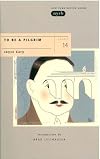
A wonderful book, and I can't do it justice after only one reading. My notes here are only my first thoughts, so be generous.
Tom Wilcher, the employer of housekeeper Sara Monday from the first book in this trilogy, Herself Surprised, recounts his life from near its end. As he sees it, his life has had 3 great waves: the first was during the tumultuous years from his birth somewhere in (I'm guessing) the 1870s to the First World War, which saw massive social unrest in Great Britain that brought his brother and him into progressive politics; the second was his middle-aged years when he returned from the army and settled into practicing law and looking after the family estate (purchased, not inherited, by his father); and the final wave sees him preparing for his death, marshalling the passing-on of the estate to his niece and nephew during the troubled years leading up to WWII.
This might sound a little prosaic, but Tom is full of contradictions and wonderful observations, and all of the characters he comments on are a delight. My favourites are his brother Bill and Bill's wife Amy. Bill is a professional soldier, who decides he needs to marry in the two weeks he is home on leave. A practical soul, he judges that none of the local belles will accept and marry him that quickly, so he seeks out Amy, a shy, homely 17 year old orphan. They proceed to squabble amicably through decades of marriage. Tom describes them with such affection that I really looked forward to any mention show more of them.
Tom himself is, in turns, religious, lecherous, insightful, blind and honest as far as his own limited understanding of his motivations allows, but above all, he is a pilgrim. The idea of being a pilgrim, referenced in the title of the novel and taken from a line in a hymn attributed to Bunyan, is alluded to several times in the novel with variations. I'm sure I didn't catch all of them, but from what I can piece together, Tom sees himself as a pilgrim seeking Christian faith and grace, but at the end of his life, he also comes to understand his country as a pilgrim that is constantly seeking a way to be heaven on earth and is never satisfied with its current condition.
The 3 waves of Tom's life are not told in a single chronological order; rather the 3 waves are threaded together, one paralleling or offering a contrast to another.
Wonderful book, and should be far better known than it is. show less
Tom Wilcher, the employer of housekeeper Sara Monday from the first book in this trilogy, Herself Surprised, recounts his life from near its end. As he sees it, his life has had 3 great waves: the first was during the tumultuous years from his birth somewhere in (I'm guessing) the 1870s to the First World War, which saw massive social unrest in Great Britain that brought his brother and him into progressive politics; the second was his middle-aged years when he returned from the army and settled into practicing law and looking after the family estate (purchased, not inherited, by his father); and the final wave sees him preparing for his death, marshalling the passing-on of the estate to his niece and nephew during the troubled years leading up to WWII.
This might sound a little prosaic, but Tom is full of contradictions and wonderful observations, and all of the characters he comments on are a delight. My favourites are his brother Bill and Bill's wife Amy. Bill is a professional soldier, who decides he needs to marry in the two weeks he is home on leave. A practical soul, he judges that none of the local belles will accept and marry him that quickly, so he seeks out Amy, a shy, homely 17 year old orphan. They proceed to squabble amicably through decades of marriage. Tom describes them with such affection that I really looked forward to any mention show more of them.
Tom himself is, in turns, religious, lecherous, insightful, blind and honest as far as his own limited understanding of his motivations allows, but above all, he is a pilgrim. The idea of being a pilgrim, referenced in the title of the novel and taken from a line in a hymn attributed to Bunyan, is alluded to several times in the novel with variations. I'm sure I didn't catch all of them, but from what I can piece together, Tom sees himself as a pilgrim seeking Christian faith and grace, but at the end of his life, he also comes to understand his country as a pilgrim that is constantly seeking a way to be heaven on earth and is never satisfied with its current condition.
The 3 waves of Tom's life are not told in a single chronological order; rather the 3 waves are threaded together, one paralleling or offering a contrast to another.
Wonderful book, and should be far better known than it is. show less
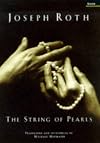
I really like Joseph Roth's books about the decay of the old Habsburg Empire. In this one, the Shah of Persia visits Vienna and lusts after a Countess at a ball. To satisfy him without sullying the Countess, a courtier suggests that they pull a switch and loan the Shah the courtier's former lover, who resembles the Countess; the Shah rewards her with a string of pearls, which are promptly sold.
Selling is the unifying theme--the pearls are sold, Mizzi's virtue is sold (over and over), pamphlets retelling the story of the Shah's affair and the crass character of a court where this could occur are sold to a voracious readership, then used to blackmail the courtier, and on it goes. Almost no one here has any backbone: everyone goes along making vague schemes to get by, to choose the most expedient solution, to sell themselves, and to steal or blackmail. The only solid person is a soldier "of the people", a breath of decency in the novel, whose advancement can only happen if he leaves the centre and goes off to the fringes of the empire to work as a paymaster in the army.
This probably sounds horribly depressing, but it isn't. There's a kind of satirical gaiety to it that got me through.
Selling is the unifying theme--the pearls are sold, Mizzi's virtue is sold (over and over), pamphlets retelling the story of the Shah's affair and the crass character of a court where this could occur are sold to a voracious readership, then used to blackmail the courtier, and on it goes. Almost no one here has any backbone: everyone goes along making vague schemes to get by, to choose the most expedient solution, to sell themselves, and to steal or blackmail. The only solid person is a soldier "of the people", a breath of decency in the novel, whose advancement can only happen if he leaves the centre and goes off to the fringes of the empire to work as a paymaster in the army.
This probably sounds horribly depressing, but it isn't. There's a kind of satirical gaiety to it that got me through.

>26 >27 Thanks to you both!
#2 Finished last night-- [The Master and Margarita]. I can't find the right touchstone for this, but just looking at the list on offer gives me an inkling as to why I put off reading this for so long--there are commentaries, adaptations, keys to reading and so on that make this funny, playful book seem more intimidating than it really is. Yes, it's a satire of Stalinist Russia, but you can enjoy it without necessarily understanding the precise targets.
What happens when the Devil comes to town? Two intellectuals arguing about Pontius Pilate in a park in Moscow are the first to find out, with disastrous, and absurd, results. The chaos continues as the devil presents himself as a (black) magician at a theatre: his show involves offering to trade the women in the audience's normal clothing for expensive evening dresses--but these disappear, as do the fistfuls of money the Devil and his henchmen hand out.
This exposure of human greed and weakness is a continuous theme throughout the book. The main part of the story of the Devil, his victims, and the story of the lovers, the Master and Margarita, is threaded through with the tale of Pontius Pilate and his anguish at sentencing the Philosopher to death when he really just wants to talk to him; this tale begins as a novel by the Master but eventually becomes a part of the main plot. In both threads, human greed and weakness are offset by love which the Devil seems indifferent to, but which still works show more as a force in the world.
The tone of the book moves from silly slapstick and absurd excess at the beginning to a dreamlike and spare beauty at the end. A wonderful book! show less
#2 Finished last night-- [The Master and Margarita]. I can't find the right touchstone for this, but just looking at the list on offer gives me an inkling as to why I put off reading this for so long--there are commentaries, adaptations, keys to reading and so on that make this funny, playful book seem more intimidating than it really is. Yes, it's a satire of Stalinist Russia, but you can enjoy it without necessarily understanding the precise targets.
What happens when the Devil comes to town? Two intellectuals arguing about Pontius Pilate in a park in Moscow are the first to find out, with disastrous, and absurd, results. The chaos continues as the devil presents himself as a (black) magician at a theatre: his show involves offering to trade the women in the audience's normal clothing for expensive evening dresses--but these disappear, as do the fistfuls of money the Devil and his henchmen hand out.
This exposure of human greed and weakness is a continuous theme throughout the book. The main part of the story of the Devil, his victims, and the story of the lovers, the Master and Margarita, is threaded through with the tale of Pontius Pilate and his anguish at sentencing the Philosopher to death when he really just wants to talk to him; this tale begins as a novel by the Master but eventually becomes a part of the main plot. In both threads, human greed and weakness are offset by love which the Devil seems indifferent to, but which still works show more as a force in the world.
The tone of the book moves from silly slapstick and absurd excess at the beginning to a dreamlike and spare beauty at the end. A wonderful book! show less

How historically accurate is this? I've no idea, but I would argue that it doesn't matter. This is more a portrayal of Owen Brown's struggle with his own nature and with his famous father, John Brown, with the underlying theme of sacrifice, especially John Brown's sacrifice of his sons on the altar of his belief.
A thread running throughout is Abraham's willingness to sacrifice Issac; Brown seems willing to sacrifice of all his sons, yet in the end, Owen's survival possibly belies that, and raises doubt of Brown's complete conviction in his success at Harper's Ferry, as it is he who arranges for Owen not to be there.
Another reviewer suggests that this book condones terrorism. Far from it, but it certainly reveals what faith in a cause and fanatical determination might look like close up.
Amazing book, beautifully written.
A thread running throughout is Abraham's willingness to sacrifice Issac; Brown seems willing to sacrifice of all his sons, yet in the end, Owen's survival possibly belies that, and raises doubt of Brown's complete conviction in his success at Harper's Ferry, as it is he who arranges for Owen not to be there.
Another reviewer suggests that this book condones terrorism. Far from it, but it certainly reveals what faith in a cause and fanatical determination might look like close up.
Amazing book, beautifully written.

Sara Monday is a sweet-natured rogue, a kind of 20th century Moll Flanders, and this is the story of her career as cook, wife, artist's muse and... well, no spoilers. Sara always seems to turn her setbacks into benefits to herself and to those she loves; it's a pleasure to see how her mind works. She is, however, a surprise to herself--hence the title.
One of the beauties of the book is Sara's gift of description. Here is a random sample:
The sun was so bright as a new gas-mantle--you couldn't look at it even through your eyelashes, and the sand so bright gold as deep-fried potatoes. The sky was like washed-out Jap silk and there were just a few little clouds coming out on it like down feathers out of an old cushion; the rocks were so warm as new gingerbread cakes and the sea had a melty thick look, like oven glass.
One of the beauties of the book is Sara's gift of description. Here is a random sample:
The sun was so bright as a new gas-mantle--you couldn't look at it even through your eyelashes, and the sand so bright gold as deep-fried potatoes. The sky was like washed-out Jap silk and there were just a few little clouds coming out on it like down feathers out of an old cushion; the rocks were so warm as new gingerbread cakes and the sea had a melty thick look, like oven glass.
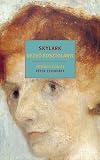
Skylark, unmarried, 35, and still living with her parents, goes to visit relatives for a week. In her absence, her parents indulge in lost pleasures that they had abandoned. On the final night, however, her father has a sudden insight about Skylark that he shares with his wife. The final chapters--well, I don't want to give anything away. Great book.
Most of the book is wonderfully sensual--food, theatre, cards, drinking, all against the backdrop of small town Hungarian life in 1899.
Most of the book is wonderfully sensual--food, theatre, cards, drinking, all against the backdrop of small town Hungarian life in 1899.