Ida B: . . . and Her Plans to Maximize Fun, Avoid Disaster, and (Possibly) Save the World by Katherine Hannigan
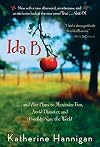
Surprisingly fierce narrator and loose-limbed plot form this nuanced slice of life, geared towards under-12-year-olds but lovely for a much wider audience.
Ida B. Applewood is in-between all kinds of grief for her cancer-stricken mother, her family's loss of land, and her changing personal circumstances. To cope, she communes with trees, sasses (Hannigan lets her throw around fabulous off-the-cuff metaphors: hot rage is "lid barely on the pot and water bubbling all over") and changes in spite of herself.
In lieu of resolution typical of fiction for children, Ida ends in limbo, safe because she's developed a few new tactics: reaching out to others and accepting her own hard times.
Sweet tough thing.
Ida B. Applewood is in-between all kinds of grief for her cancer-stricken mother, her family's loss of land, and her changing personal circumstances. To cope, she communes with trees, sasses (Hannigan lets her throw around fabulous off-the-cuff metaphors: hot rage is "lid barely on the pot and water bubbling all over") and changes in spite of herself.
In lieu of resolution typical of fiction for children, Ida ends in limbo, safe because she's developed a few new tactics: reaching out to others and accepting her own hard times.
Sweet tough thing.
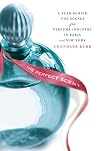
I read it across the street from a Neiman Marcus, in order to storm the gates for spritzes of "Jardin sur le Nil" and "Infusion d'Iris" and "L'Heure Bleue."
It's rarely described in words, but Chandler Burr really tries; he's a NYT journalist who recently found his niche in writing about scent and perfume. His earlier book, "The Emperor of Scent" (on the trail of Luca Turin, a gregarious neurophysicist and perfume genius), chronicled the biological side of odor, a corner of human experience largely mysterious to scientists and untouched by writers.
Chandler's new book focuses more on the craftsmanship and business of making two big-name perfumes in 2006 (one is Sarah Jessica Parker's unorthodox and lively perfume direction; the other is an Hermes perfume about an Egyptian garden). Art, science and commerce, together forever at last!
It's rarely described in words, but Chandler Burr really tries; he's a NYT journalist who recently found his niche in writing about scent and perfume. His earlier book, "The Emperor of Scent" (on the trail of Luca Turin, a gregarious neurophysicist and perfume genius), chronicled the biological side of odor, a corner of human experience largely mysterious to scientists and untouched by writers.
Chandler's new book focuses more on the craftsmanship and business of making two big-name perfumes in 2006 (one is Sarah Jessica Parker's unorthodox and lively perfume direction; the other is an Hermes perfume about an Egyptian garden). Art, science and commerce, together forever at last!
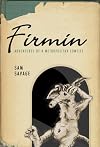
Bibliophiles, flaneurs, urbanists and cynics have a hero in Firmin, the voice of this strange and rich little gem. Written by a one-time professor and mechanic, Firmin has a corner on poignant, indignant street life; he also enlightens poor wretches like me who couldn't get swept away by "Ratatouille."
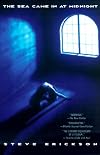
So fine, and a rarity: this puts wild "science" into science fiction. Stunningly vivid characters speed through this novel like frames in a zoetrope, united by an unfamiliar way of interpreting life. To get to know Louise Blumenthal (snuff film screenwriter, grieving mother), or Kristen, or Angie is to get to know a new way of thinking of time, of memory and life story.
"The Third Policeman": so droll! Admittedly, I read it after hearing it tied to "Lost" but come on, Desmond. It's better seen as a goofy literary partner to Dylan Thomas and "Pale Fire": a foggy tale about mood and humor, not about mind-benders.
As a bonus, O'Brian's grasp of particle physics isn't entirely outlandish. At this moment, you're just a few electrons away from merging with your chair.
As a bonus, O'Brian's grasp of particle physics isn't entirely outlandish. At this moment, you're just a few electrons away from merging with your chair.
Iran circa 1980, seen from the center of a whirlwind of memories, lies and scraps of paper. Even a novice reader becomes an insider with R. Kapuscinski's guidance
Kitty rolls up her shirtsleeves and tends to a dying drunkard; dippy Levin freaks out against education for women and peasants; Anna needs one last split second to finish her unstoppable thoughts. It's all simultaneous and more vivid than anything in print, and now smooth and pleasurable with this Pevear-Volokhonsky translation.
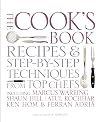
Whoa, cook: you are all that. "The Cook's Book" is a manual: how to tenderize and whip, how to braise and caramelize, how to make the perfect French-style scrambled eggs (hint: "French" means "add an extra stick of butter"), how to pull pork. Every step is illustrated thoroughly with gorgeous photos, and every chapter is written by an expert in the field: Charlie Trotter does veggies, Pierre Herme makes pastries, Rick Bayless teaches Mexican, etc.
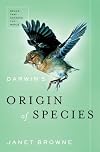
Dense yet brief, not a biography of Darwin but a story of the conception, creation and reception of the book that changed everything. Other men were cast out of society for promoting very similar theories: Darwin's mild-mannered character and lovely writing helped make "On the Origin of the Species" a hit.
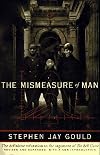
One reason why I love science is that it's self-correcting; unfortunately, the corrections take centuries because cultural institutions profit from inventions like "irrational" women and "sub-primate" racial groups. Rest in peace, Stephen Jay Gould: a great writer who takes the reader by the hand through a difficult path.
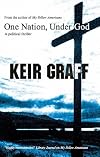
A thoughtful thriller about Christian fundamentalism chipping away at local and national politics. The characters drink Mountain Dew, eat banquet-sized southern dinners and these everyday details are tender and true
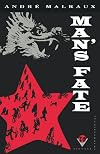
A little dull but no surprise: this is a required text on the shelf of every French citizen. best bet: read a greatest-hits version of Malraux's memoirs