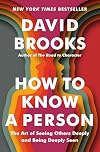
I've often enjoyed the essays of David Brooks as a political commentator. He's natural and balanced, and he references high principles as he argues for what makes people and society better. In this book I found most of the ideas already familiar to me. They are also presented as those of a student who is trying to learn them, not a teacher who has mastered them. I appreciate the humility, but if I really want to learn an art, I will look for an accomplished artist, even in the art of seeing others deeply.
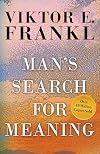
“What a person actually needs is not a tensionless state but rather the striving and struggling for a worthwhile goal, a freely chosen task.”
These words speak very deeply to me. I see how often I have mistaken happiness as a kind of freedom from unpleasantness, or a beatific, relaxed sense of peace. I have usually then observed how little happiness I experience! When I see how much deeper happiness comes from the creative movement within myself to discover and define my world, I reflect that I have led a very happy life.
Franks’s voice is straightforward and economical. He moves quickly from one idea to the next, with utter conviction. He was certainly a gifted therapist due to his willingness to see healing as the patient’s work, not the doctor’s skill. I may not read this book again for its lyricism, but I will certainly refer to its solid wisdom.
These words speak very deeply to me. I see how often I have mistaken happiness as a kind of freedom from unpleasantness, or a beatific, relaxed sense of peace. I have usually then observed how little happiness I experience! When I see how much deeper happiness comes from the creative movement within myself to discover and define my world, I reflect that I have led a very happy life.
Franks’s voice is straightforward and economical. He moves quickly from one idea to the next, with utter conviction. He was certainly a gifted therapist due to his willingness to see healing as the patient’s work, not the doctor’s skill. I may not read this book again for its lyricism, but I will certainly refer to its solid wisdom.
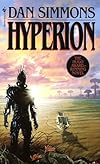
I really need to change the way I choose books to read, especially in this genre. Awards don't seem to mean much, beyond the author's skill in managing a lot of ideas and details. Character and connection are what I am seeking, and these seem so rare.
This author clearly knows his classics, with references to Shakespeare and Chaucer. He also knows a little science. Probably the most engaging part of the book was the story of a high speed space traveler, who incurs large amounts of "time debt" in relation to his lover, who reaches her seventies while he ages only a few years. But that story is told not in deep tones of reflective prose, but in brief glimpses, often focused more on sexual encounters than on a sense of emotional connection.
Too many of the stories seem to evoke the same tired, jaded voice that I read again and again in modern literature. People who feel betrayed by the universe and so immune to any naive belief in the goodness of humankind that a brief smile from a stranger is an oasis. It's not clear to me at all what would motivate these people to tell their deepest secrets to one another in long narratives, nor what would motivate them to go on pilgrimage to a "deity" that seems bent on the ghoulish destruction of human life. The religious references seem like a mockery of any real religious faith.
I don't mean for my review to exaggerate; I think I am just reaching a frustration level that has boiled over. I did finish the book, after all, feeling the show more mystery of what is going on in this universe, with its struggles among a hegemonic society, a rebellious set of outcasts, and a remote AI consciousness that seems intent on manipulating all the humans for its own ends. But the finish only reveals that another book will be needed to explain it all. Oh well. show less
This author clearly knows his classics, with references to Shakespeare and Chaucer. He also knows a little science. Probably the most engaging part of the book was the story of a high speed space traveler, who incurs large amounts of "time debt" in relation to his lover, who reaches her seventies while he ages only a few years. But that story is told not in deep tones of reflective prose, but in brief glimpses, often focused more on sexual encounters than on a sense of emotional connection.
Too many of the stories seem to evoke the same tired, jaded voice that I read again and again in modern literature. People who feel betrayed by the universe and so immune to any naive belief in the goodness of humankind that a brief smile from a stranger is an oasis. It's not clear to me at all what would motivate these people to tell their deepest secrets to one another in long narratives, nor what would motivate them to go on pilgrimage to a "deity" that seems bent on the ghoulish destruction of human life. The religious references seem like a mockery of any real religious faith.
I don't mean for my review to exaggerate; I think I am just reaching a frustration level that has boiled over. I did finish the book, after all, feeling the show more mystery of what is going on in this universe, with its struggles among a hegemonic society, a rebellious set of outcasts, and a remote AI consciousness that seems intent on manipulating all the humans for its own ends. But the finish only reveals that another book will be needed to explain it all. Oh well. show less
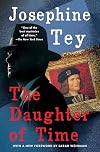
This book introduced me to the very divergent historical accounts of Richard III, the murderous villain of Shakespeare's play, but in all likelihood not so evil. There are some interesting meditations on the purposeful distortions of history as written by the victors. These probably sounded more edgy in 1951 than they do now, when revisionism has had a big sway.
As a story, it made me want to finish, but the characters and dialogue seemed more likely a vehicle for the subject matter than a focus of interest in themselves.
As a story, it made me want to finish, but the characters and dialogue seemed more likely a vehicle for the subject matter than a focus of interest in themselves.
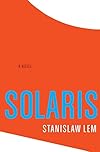
This story intrigued me enough to read to the end, but I found the result disappointing. It is a meditation on consciousness, individuality, intelligence, and scientific inquiry. It poses a lot of questions, and I don't really expect it to answer them, but I do wish for some deeper understanding of those questions eventually. I like how science fiction can place its characters in extreme situations and then analyze how their unscientific human selves respond. In this case I wanted to know more about those responses. Who were the other visitors, and how did they affect their mates? If we accept that these visitors are sent to challenge and provoke the scientists, what do they learn about themselves, or what at least can we learn about them? Is human endeavor pointless in the end? I understand why literature often shows the weaknesses and blindness of human activity, but sure it can offer us some hope of transcending them.
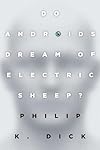
This was a quick read, and engrossing the first time. I found the strange contrasts and parallels between the "real" humans and the "fake" androids thought provoking. I was afraid the tone of the book would be relentlessly dark and morbid, but that was not the case at first. Then the tone seemed to change.
The "Mercerism" religion seems contrived and fairly anti-religious. It made me reflect how rarely one sees a portrayal of religion in fiction without an emphasis on the dogmatic and bizarre. Dune is a counter example, to some extent. There the religion seems powerful and meaningful, although it is often being manipulated.
Electric Sheep successfully creates a world of mystery and intensity. It's just not a world I particularly want to experience more than once.
The "Mercerism" religion seems contrived and fairly anti-religious. It made me reflect how rarely one sees a portrayal of religion in fiction without an emphasis on the dogmatic and bizarre. Dune is a counter example, to some extent. There the religion seems powerful and meaningful, although it is often being manipulated.
Electric Sheep successfully creates a world of mystery and intensity. It's just not a world I particularly want to experience more than once.
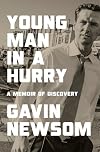
As Newsom looks like a US presidential candidate, this seemed like a timely read. I like the humility of the story and the many frank details of painful family weaknesses. I also like the resolute commitment to a politics of inclusion and human kindness. The book is intended to make the author known to the public, and I think it succeeds. Time will tell how consequential his life will become.
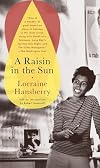
I was surprised by how funny the dialogue was sometimes, the way the characters adopt voices and attitudes. A wide range of responses to the treatment of Black Americans is on display, including the Nigerian reformist who compares the poverty in his country with the relative affluence of the US. I expected the growing sense of despair but was surprised by the affirmation of courage and dignity in the end.
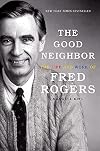
After watching Won't You Be My Neighbor for the third time, I can't seem to get enough detail about this man who seems so familiar. I don't know if I ever watched him on television before the age of six, but I definitely did after that. I believe Fred Rogers spoke a language that made sense to me, about love. I don't know if I ever really accepted his words, "I like you just the way you are," or if I can accept them now.
Toward the beginning of this book I felt the author's voice intruding somewhat, telling me too much how to think about its subject, but as the stories of Fred's life continued, I lost that feeling and became immersed in his legacy. Simple while extraordinary. Saintly but natural. Gentle and powerful and relentless. I am very glad to have this vision of his life.
Toward the beginning of this book I felt the author's voice intruding somewhat, telling me too much how to think about its subject, but as the stories of Fred's life continued, I lost that feeling and became immersed in his legacy. Simple while extraordinary. Saintly but natural. Gentle and powerful and relentless. I am very glad to have this vision of his life.
The simple prose and bare description of this farmer's life gives a sense of the unremitting hard work necessary to survive in rural China. But it is a claustrophobic experience for me. The protagonist is constantly meditating on the waves of good and bad fortune, comparing his status to that of others. He may go through some kind of growth experience, but I cannot stay with him long enough to find out.
While the well-traveled idea of magical gifts alongside social exclusion has its appeal, I find myself losing interest in the story. I do not think I need all characters to have noble intentions, but seeing them continually trapped in petty conflict feels unfulfilling.I left this book unfinished.
I see the literary quality of this book. I really do. Irving has a quiet, compelling voice that weaves references together like recurring melodic themes. He speaks naturally, giving equal weight to the sacred and the mundane. It is the blurring of sacred and mundane that ultimately cause me to put the book down unfinished.
I believe the mundane can be sacred, but I do not believe the sacred can be mundane. To say otherwise renders the word "sacred" meaningless. So while I read patiently through the boyish exploits of the main characters and the strange account of a mother's death, I could not quite accept the scene of the Christmas pageant, which delights too much in its irreverence.
I am left wondering where the narrative will ultimately lead. I know that the upheaval of the sixties and the moral controversy of Vietnam will become a subject. But I do not have any sense that Irving intends to uphold or convey the sense of the sacred, despite his presentation of Owen Meany as a Christlike figure or his constant references to religious life. For me, the absence is too hollow.
I believe the mundane can be sacred, but I do not believe the sacred can be mundane. To say otherwise renders the word "sacred" meaningless. So while I read patiently through the boyish exploits of the main characters and the strange account of a mother's death, I could not quite accept the scene of the Christmas pageant, which delights too much in its irreverence.
I am left wondering where the narrative will ultimately lead. I know that the upheaval of the sixties and the moral controversy of Vietnam will become a subject. But I do not have any sense that Irving intends to uphold or convey the sense of the sacred, despite his presentation of Owen Meany as a Christlike figure or his constant references to religious life. For me, the absence is too hollow.
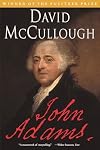
What a delightful, invigorating read. I found myself increasingly drawn into the relationships among these relatively few architects of a new nation and how they cooperated and battled with one another, how they respected and insulted each other's efforts. Adams, for his part, seemed to refrain from the insulting, but never flinched from the battling. The book certainly deepened my respect for this man's contribution to American government and thought.
I was also surprised to gain a much warmer and more personable view of John Adams from the book than i did from the HBO series based on it. He could be irritating and infuriating to people, no doubt, but he was also tremendously engaging, passionate, and loyal.
A historian must tread carefully between dry facts and records and the human stories they suggest. McCullough performs this balance remarkably well. I found myself engrossed in the life of Adams and his family without departing from the documented details.
I was also surprised to gain a much warmer and more personable view of John Adams from the book than i did from the HBO series based on it. He could be irritating and infuriating to people, no doubt, but he was also tremendously engaging, passionate, and loyal.
A historian must tread carefully between dry facts and records and the human stories they suggest. McCullough performs this balance remarkably well. I found myself engrossed in the life of Adams and his family without departing from the documented details.
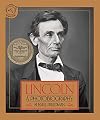
I came expecting a very personal photographic look at the life of Lincoln, "the most photographed man of his time." This is not really the focus of the book, which tells a more straightforward story of his life, along with the history of civil war politics. As a book for young readers, it is certainly a good introduction to this hero of the presidency, with a combination of the personal and the political.
I particularly enjoyed this book because I am a school founder and leader. Many moments were inspirational; others were examples that I would never follow. What comes through the the extraordinary commitment of an individual to building a community based on bedrock principles of good conduct and the desire to succeed. Frank Boyden had a rare combination of compassion and persuasiveness. The writing is direct and anecdotal. The anecdotes are very memorable!
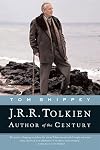
Extraordinary reading. Shippey is demonstrating on how many levels this Old-English-scholar-turned-first-time-novelist succeeded in creating an epic for the modern age. Even though it is not set in the modern age. Because it is not set there. A modern mythology could not draw all its images from modern times, because mythology must answer the needs of the time, not simply reflect those needs back. Our lives are now surrounded by the inventions of humankind, and our great existential doubt is whether those tools will save us, harm us, change us, destroy us, turn us into monsters, or some combination of all of these outcomes. The answer to that fear is in the ancient naturalistic strands of tradition: pastoral life, woods, journeys in the wilderness, and appeals to heroic struggle.
First, the language. How is it that Tolkien can create such a complex, meaningful story simply by pursuing the implications of etymology? Again and again it seems he invents some facet of Middle-Earth in order to explain the existence of a word. Tolkien himself is quoted saying, "The 'stories' were made rather to provide a world for the languages than the reverse. To me a name comes first and the story follows." It is that cultural depth, buried in our own language, that gives The Lord of the Rings such a resonance. Maybe words become shadows and distortions of the things they represent, but the histories of words and the relationships they imply can infuse those things with even more meaning.
I show more love the analysis of The Silmarillion. This was the source, the wellspring of Tolkien's inspiration, and it evokes such a sense of high destiny, as if we are witnessing the fate of worlds unfold from the perspective of ages. At the same time, it feels immediate and present, like we are participating in the stories ourselves, through the constant themes of choice, error, doom, love, and betrayal. This is the experience of myth that Karen Armstrong describes. Perhaps most readers find these stories hard to penetrate. I do not. I wish in some way to make them more accessible, to retell the stories to an audience so that they feel the impact of them. show less
First, the language. How is it that Tolkien can create such a complex, meaningful story simply by pursuing the implications of etymology? Again and again it seems he invents some facet of Middle-Earth in order to explain the existence of a word. Tolkien himself is quoted saying, "The 'stories' were made rather to provide a world for the languages than the reverse. To me a name comes first and the story follows." It is that cultural depth, buried in our own language, that gives The Lord of the Rings such a resonance. Maybe words become shadows and distortions of the things they represent, but the histories of words and the relationships they imply can infuse those things with even more meaning.
I show more love the analysis of The Silmarillion. This was the source, the wellspring of Tolkien's inspiration, and it evokes such a sense of high destiny, as if we are witnessing the fate of worlds unfold from the perspective of ages. At the same time, it feels immediate and present, like we are participating in the stories ourselves, through the constant themes of choice, error, doom, love, and betrayal. This is the experience of myth that Karen Armstrong describes. Perhaps most readers find these stories hard to penetrate. I do not. I wish in some way to make them more accessible, to retell the stories to an audience so that they feel the impact of them. show less
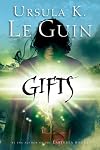
This story drew me in. The fears about the gifts of the Upland families and the simple farming culture that exists all around them create a kind of simplicity that I love. As usual with Le Guin's stories, I feel somewhat distant from the characters, but the two at the center have a beautiful, trusting relationship.
The first chapter confused me, and I had to go back and read it again. I can see why it was placed there, for setting up interest in the story, but it gives a stream of little details that have no context yet.
The first chapter confused me, and I had to go back and read it again. I can see why it was placed there, for setting up interest in the story, but it gives a stream of little details that have no context yet.
This is my favorite Jane Austen. I feel that in writing about Fanny Price, Jane was trying to envision someone that she admired but whom she could not exactly emulate. It is similar to the relationship between Eliza Bennett (who I think reflected the author's personality best) and her sister Jane, who seems almost too good. What would a story be like told through Jane's eyes? That, in a way, is what we have in Mansfield Park.
Although Fanny seems almost trapped at times by her own desire to self-effaced and unimportant, her position as observer of the Bertram family gives extraordinary insight on the complex motivations of people as they negotiate their inclinations in life with the people around them. Fanny sees all, and she has firm convictions about the relative merits of different behavior. She also sees deeply into herself. I can easily spend a lot of time with her.
Although Fanny seems almost trapped at times by her own desire to self-effaced and unimportant, her position as observer of the Bertram family gives extraordinary insight on the complex motivations of people as they negotiate their inclinations in life with the people around them. Fanny sees all, and she has firm convictions about the relative merits of different behavior. She also sees deeply into herself. I can easily spend a lot of time with her.
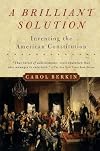
This is a very readable and accessible description of how the Constitution was debated and composed, with insightful stories about the people involved and what motivated them. After reading it I had a feeling for the time and place and how the founding fathers experienced it. As a piece of literature I found it more functional and less lyrical. I appreciated the contrast between how the creators of the US government saw their work and what became of it in modern times.
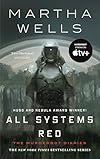
The narrator’s voice is delightful! This story surprised me. There is a compassionate center, and a creative view of the world.
I cared about the main character in this novel. The violence became overbearing. Believability was also questionable. The motivation of the antagonist never really explained. It did get interesting when the consequences of traveling among universes began to collide with each other.
When I first read this book I summed up my reaction very simply: the writing is excellent, but I hated the story. To me the message is important, and the message here is that humans (away from social constraint) are fundamentally cruel and indifferent to one another.
The character of Casaubon is so purposely repellent that he makes this reading an arduous task.
I may not be the best audience for science fiction because I appreciate character as much as the ideas. It took a long time for this book to connect me with the narrator; he seemed out of touch with his feelings. Maybe that was intentional, but because of the story's structure, we don't really see the actual situation until more than halfway through the book, which is a bit late to establish the reader's interest in the outcome.
Ayurveda Lifestyle Wisdom: A Complete Prescription to Optimize Your Health, Prevent Disease, and Live with Vitality and Joy by Acharya Shunya
Acharya Shunya gives a very accessible version of Ayurveda that also remains true to its traditional roots. Her experiences since childhood with these ancient health practices have a personal and authentic tone. Putting aside some of the more esoteric guidance, she counsels her students to listen to their own bodies and learn from them. Simplicity runs through her counsel. For me it was an excellent introduction, but also a thorough reference text that I plan to make part of my library.
I loved this book. It's better to read in small batches; the thoughts and images need time to sink in. By the end I had to keep going, however. This girl's combination of trauma and resistance is endearing. One reflection that will stay with me: fumbling with "a, an, the" sends the demeaning signals that one's English is non-native.
Hundley tells an extraordinary story about the quest to make California a population magnet and an economic powerhouse through control of its water. His theme is that people's relationship with water — which is determined by a fundamental cultural attitude toward nature — has a far-reaching impact on our social systems and environment. The history of water in California is a fascinating dive into the law, politics, agriculture, and wealth generated by this huge, arid state. I found his language engaging, and his ability to trace the connections from one generation to another helpful in forming my understanding.
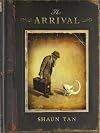
I have finally sat down with this book and followed it to the end, here in the big octagonal reading room at the Mountain View library. Such a moving compilation of immigrant stories and impressions, full of the perseverance of so many generations as they escape poverty and war to forge new lives in an utterly strange place. I felt the smallness of each individual in the face of a grand, daunting, and mysterious world. At the same time, each enounter leads to a new relationship, a new story, and a feeling of kinship as the man realizes how many have gone before him and generously wish to encourage him forward. So much discussion possible about the migrant experience with this work. It is also heartwarming to read the author's acknowledgements at the end — referring even to specific images that inspired him. The Arrival is filled with loneliness, yet it becomes a story of the links among us.
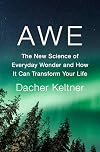
Dacher Keltner takes a physiological approach to the study of emotions, as he showed in his previous work, Born to be Good, which I also recommend. This research starts where that one left off, choosing a particular emotion to examine that leads to the heart of the human endeavor, the feeling of awe, which he defines as “the feeling of being in the presence of something vast that transcends your current understanding of the world.”
I read this book because I have pursued the experience of awe throughout my educational career, and Keltner is giving us a clear pathway for the study of awe and its benefits in a manner that bridges science and culture. He addresses spirituality from a sociological point of view (and a personal one), without making any metaphysical claims. He is, after all, a biologist at heart.
I admire the breadth of experience reflected in this writing, including interviews with artists, scientists, activists, and one famous film director. Throughout he makes clear that awe holds a fundamental value for people, whether they realize it or not. Keltner has a gift for weaving the scientific, the sacred, the profane, and the humorous together.
I read this book because I have pursued the experience of awe throughout my educational career, and Keltner is giving us a clear pathway for the study of awe and its benefits in a manner that bridges science and culture. He addresses spirituality from a sociological point of view (and a personal one), without making any metaphysical claims. He is, after all, a biologist at heart.
I admire the breadth of experience reflected in this writing, including interviews with artists, scientists, activists, and one famous film director. Throughout he makes clear that awe holds a fundamental value for people, whether they realize it or not. Keltner has a gift for weaving the scientific, the sacred, the profane, and the humorous together.