
A brief and by-the-numbers account of the author's time flying F-105s in Vietnam, Basel's Pak Six will offer little to those beyond the most die hard of aviation memoir aficionados. For readers familiar with the topic, the book will feel needless and frustratingly light. Basel's prose is generally not descriptive and offers little in the way of contemplative reflection or analytical heft. Most passages consist of 1-1.5 page 'vignettes' of a mission or its planning or the officers club or the author's R&R trips off base. Even the mass-market paperback copy stretches only 160 pages of liberally-spaced formatting with hand-drawn maps and flightsuit patches. The memoir provides little more than a glancing, surface view of the author's experience or the larger nature of the particular segment of the air war in which he was involved. Which isn't to imply that one should expect every combat memoir to address the larger subjects of morality or mortality or the existential psychodrama of being in combat. Indeed, for the reader, a memoir of excessive soul-searching can feel indulgent and navel gazing; tactical complaints can become histrionic and begrudging; excessive detail can feel suffocating and unfocused. So Pak Six disappoints not in failing to touch upon those subjects, but in its lack of depth of detail, context, or individuality. While combat memoirs almost always touch upon the differences between combat as experienced and combat as presented in pop culture, Basel has an show more annoying tendency to frequently comment upon the "just realized" fraudulence of Hollywood's representation of valor, service, or war. Gee, really? Repeated comments like these only serve to underscore the unoriginality of his description.
If there is any redeeming aspect of this memoir, it is the fact that Basel's simple, quick, declarative prose style can occasionally achieve a jarring, pulpy edginess, especially in the few scenes where missions are particularly 'hairy.' In these instances, the lingo-heavy patter, the short sentences, and the lack of depth can give the book a sharp power and immediacy that ably evokes the speed and disorientation of aerial combat. A number of the missions, from the confusion of the bombing runs on heavily-defended points in North Vietnam (the route 'package' of the title) to the almost accidental felicity of the author's "MIG kill," do give the reader a good sense of author's experience. And, on occasion, his peculiar melange of scattershot scenes, jargon mash-up, random passages of italicized inner monologue, and heavy use of cliched metaphor and simile can blur into a sort of narrative haze that is punctured by the quick adrenaline jolt of the missions -- no doubt a similar feeling to those experienced by the pilots. But far too often, the brevity and laconic triteness make the book feel distant, rote, and inconsequential
In the end, Pak Six is burdened by the availability of so many better memoirs (books like Thud Ridge or When Thunder Rolled or 100 Missions North, which cover the same experiences of F-105 pilots so much more poetically and movingly), that it disappoints by what it isn't. The standards of the genre, given other offerings, are just too high to pull Pak Six out of the category of better-than-average mass-market paperback. It is simply too anecdotal and picayune to recommend to anyone other than the completist. show less
If there is any redeeming aspect of this memoir, it is the fact that Basel's simple, quick, declarative prose style can occasionally achieve a jarring, pulpy edginess, especially in the few scenes where missions are particularly 'hairy.' In these instances, the lingo-heavy patter, the short sentences, and the lack of depth can give the book a sharp power and immediacy that ably evokes the speed and disorientation of aerial combat. A number of the missions, from the confusion of the bombing runs on heavily-defended points in North Vietnam (the route 'package' of the title) to the almost accidental felicity of the author's "MIG kill," do give the reader a good sense of author's experience. And, on occasion, his peculiar melange of scattershot scenes, jargon mash-up, random passages of italicized inner monologue, and heavy use of cliched metaphor and simile can blur into a sort of narrative haze that is punctured by the quick adrenaline jolt of the missions -- no doubt a similar feeling to those experienced by the pilots. But far too often, the brevity and laconic triteness make the book feel distant, rote, and inconsequential
In the end, Pak Six is burdened by the availability of so many better memoirs (books like Thud Ridge or When Thunder Rolled or 100 Missions North, which cover the same experiences of F-105 pilots so much more poetically and movingly), that it disappoints by what it isn't. The standards of the genre, given other offerings, are just too high to pull Pak Six out of the category of better-than-average mass-market paperback. It is simply too anecdotal and picayune to recommend to anyone other than the completist. show less

Overshadowed by the attack on Pearl Harbor, and sometimes forgotten amidst the more famous campaigns of the Pacific, tiny Wake Island suffered its own sudden attack just five hours after Pearl Harbor on that "Day of Infamy." Under-defended due to strategic confusion and without reinforcements due to upper-command incompetence, the small garrison of navy personnel, marines, and construction-contract civilians endured constant bombing over much of the short conflict. With only a handful of aircraft and AAA, and a few dozen light machine-guns, the force managed to repulse one attempted landing and sink several ships in the Japanese fleet. Severely out manned and with dwindling supplies and no hope of reinforcement, the island was eventually surrendered on Dec. 23. What followed was almost 4 years of misery and hardship as those captured were scattered throughout POW camps in Japan, China, & Korea and subjected to untold starvation, abuse, and hard labor.
Cunningham's book is a fairly straightforward oral history, comprised of the stories of around 70 participants across the spectrum of rank and service. Originally started as a project to track down information on the author's brother -- a Wake veteran -- the book focuses exclusively on the military participants. Given the presence of so many civilians on the island, from contractors to the employees of the PanAm seaplane port, the book would have benefited from the inclusion of a variety of voices. Many of the civilian show more contractors, after all, participated heavily in the fighting, manning artillery positions and serving in the infantry and suffering the same POW experiences as their military counterparts. Still, the action on the island, and the horror of the POW experience, is ably and thoroughly recounted, and the book is capably organized.
At times, though, Cunningham's work suffers from some of the problems that plague so many oral history books - poor editorial control and narrative redundancy. Given the personal nature of the project's origin, it's understandable that Cunningham is loath to amend or rearrange much of the material provided to him. But that doesn't make the reading any easier. The stories Cunningham presents sometimes effect the overall narrative stream. While he should be commend him for feeling the need to include each and every Wake veteran's story, some of these submissions consist of nothing more than a few sentences, and often the material seems taken from a short, aimless telephone conversation or postcard-sized written response. To include late in the middle of the chapters dealing with the island's defense, for instance, a vet's 5 sentence summary of his enlistment, service, imprisonment, and return to civilian life, is to necessarily diminish the impact of the stories surrounding it. Including these featureless and non-descriptive summaries (provided by vets clearly uninterested or unwilling to offer a more descriptive or contemplative recounting) can make the story feel tiny and lost.
Thankfully these moments are few and far between, and generally appear in the first half of the book. Other aspects of the battle and its aftermath are vividly described in many of the transcripts: the shock and surprise of the war, the tiny, nowhere feeling of the island's defenders, the sometimes lingering recriminations of the veterans towards their captors. Certainly, the stories of the veterans' POW experiences contains the strongest and most effecting material (understandable given the brevity of the conflict itself (less than 3 weeks) compared to their term of imprisonment (44 months)). From the brutality of their captors to the back-breaking labor, this section of the book paints a bleak picture of the POW experience at the hands of the Japanese. Torture, abuse, the officer corps' abdication of leadership (officer POWs did little to no work and received dramatically more rations), and the daily struggle for survival all are depicted in great detail in powerful personal stories and vignettes.
Given the dearth of memoirs about Wake Island and the battle's brief and early occurrence in the timeline of the Pacific theater in WWII, Hell Wouldn't Stop is a worthwhile addition to both the library of military studies and to the canon of oral histories. show less
Cunningham's book is a fairly straightforward oral history, comprised of the stories of around 70 participants across the spectrum of rank and service. Originally started as a project to track down information on the author's brother -- a Wake veteran -- the book focuses exclusively on the military participants. Given the presence of so many civilians on the island, from contractors to the employees of the PanAm seaplane port, the book would have benefited from the inclusion of a variety of voices. Many of the civilian show more contractors, after all, participated heavily in the fighting, manning artillery positions and serving in the infantry and suffering the same POW experiences as their military counterparts. Still, the action on the island, and the horror of the POW experience, is ably and thoroughly recounted, and the book is capably organized.
At times, though, Cunningham's work suffers from some of the problems that plague so many oral history books - poor editorial control and narrative redundancy. Given the personal nature of the project's origin, it's understandable that Cunningham is loath to amend or rearrange much of the material provided to him. But that doesn't make the reading any easier. The stories Cunningham presents sometimes effect the overall narrative stream. While he should be commend him for feeling the need to include each and every Wake veteran's story, some of these submissions consist of nothing more than a few sentences, and often the material seems taken from a short, aimless telephone conversation or postcard-sized written response. To include late in the middle of the chapters dealing with the island's defense, for instance, a vet's 5 sentence summary of his enlistment, service, imprisonment, and return to civilian life, is to necessarily diminish the impact of the stories surrounding it. Including these featureless and non-descriptive summaries (provided by vets clearly uninterested or unwilling to offer a more descriptive or contemplative recounting) can make the story feel tiny and lost.
Thankfully these moments are few and far between, and generally appear in the first half of the book. Other aspects of the battle and its aftermath are vividly described in many of the transcripts: the shock and surprise of the war, the tiny, nowhere feeling of the island's defenders, the sometimes lingering recriminations of the veterans towards their captors. Certainly, the stories of the veterans' POW experiences contains the strongest and most effecting material (understandable given the brevity of the conflict itself (less than 3 weeks) compared to their term of imprisonment (44 months)). From the brutality of their captors to the back-breaking labor, this section of the book paints a bleak picture of the POW experience at the hands of the Japanese. Torture, abuse, the officer corps' abdication of leadership (officer POWs did little to no work and received dramatically more rations), and the daily struggle for survival all are depicted in great detail in powerful personal stories and vignettes.
Given the dearth of memoirs about Wake Island and the battle's brief and early occurrence in the timeline of the Pacific theater in WWII, Hell Wouldn't Stop is a worthwhile addition to both the library of military studies and to the canon of oral histories. show less
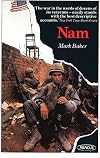
At times harrowing, brutal, and deeply disturbing, Baker's oral history of Vietnam paints a bleak picture of the conflict through the accounts of unnamed participants in the action. Focusing heavily on the experiences of the front-line troops, Nam can be an overwhelming book in its presentation of the brutality and horrors of the war. Full of graphic recollections of massacre, violence, degradation, inhumanity, and suffering, the unflinching tales make it powerful statement on thewar's cruelty and pointlessness. Comprised of interviews with dozens of veterans, the book as a whole focuses inordinately on a grunt-level view of the action. The personal histories are presented without attribution or any suggestion of rank, service, or operational role. Instead of recounting each individuals tale in its own narrative arc, Baker has pulled sections from each interview and arranged them under broader headings, like "Initiation," "Operations," "War Stories," and "The World." The book isn't intended to illustrate a panoramic view of the conflict through the stories of a variety of veterans. Instead, while containing the stories of a few medical, aviation and supply officers, the book's overwhelming focus is on the infantry privates and non-coms that served on the front lines of the battles.
The author has no doubt intended the tales to serve as a contrapuntal barrage to the hollow, romanticized notions of duty, honor, and sacrifice that pervade so many accounts of this and other show more conflicts. And with its nebulous political justifications, shifting, contradictory strategies, and cynical moral affectations, Vietnam was arguably a darker and more terrible conflict than others in recent American history. It was, no doubt, a military enterprise which deserves the evisceration of the patriotic hogwash and sentimental propaganda that normally attends -- and serves to buttress -- such martial undertakings. Yet Baker's near obsession with the inhumanity of the action and his repeated return to ghastly and sickening episodes can sometimes undermine the power of the book. The anonymity of the narrators and the heavy editing and arrangement of their stories sometimes reduces the personal impact of their tales into a long wash of horror stories. Even when grouped under the somewhat abstract and nebulous "subject headings" provided by the author, the stories invariable revert to the tales of murder, desecration, and other shocking and repellent occurrences. Just as one grows suspicious of mendacious tales of endless bravery, honor, and inhuman courage, in a view of war free of blood and suffering, so do the endless heinous stories and graphic accounts of savagery sometimes incapacitate the reader's ability to understand the multiplicity of emotions and experiences of the combatants. Nam feels, at times, as one-sided and blinkered as the putrid political propaganda to which it intends to serves as a corrective. Still, parts of the book, especially the final section when veterans recount returning to a country which had forgotten them and offered virtually no aid in re-assimilation, are quietly devastating. Though Baker has edited the transcripts and removed much of the conversational syntax and feel, the disorientation and incomprehension felt by the narrators rings clear, and the book can never betray their bewildering sense of loss and waste.
In the end though, Nam, despite its flaws, is still a disquieting, powerful document and a crystalline account of how the war effected those who served in Vietnam. The immediacy of the veterans' experiences contained in Nam overshadows any shortcomings the book may have. As the narrators depict countless personal stories of the pain, trauma, and confusion of war, time and again they remind us of the monstrous and agonizing consequences of fighting. show less
The author has no doubt intended the tales to serve as a contrapuntal barrage to the hollow, romanticized notions of duty, honor, and sacrifice that pervade so many accounts of this and other show more conflicts. And with its nebulous political justifications, shifting, contradictory strategies, and cynical moral affectations, Vietnam was arguably a darker and more terrible conflict than others in recent American history. It was, no doubt, a military enterprise which deserves the evisceration of the patriotic hogwash and sentimental propaganda that normally attends -- and serves to buttress -- such martial undertakings. Yet Baker's near obsession with the inhumanity of the action and his repeated return to ghastly and sickening episodes can sometimes undermine the power of the book. The anonymity of the narrators and the heavy editing and arrangement of their stories sometimes reduces the personal impact of their tales into a long wash of horror stories. Even when grouped under the somewhat abstract and nebulous "subject headings" provided by the author, the stories invariable revert to the tales of murder, desecration, and other shocking and repellent occurrences. Just as one grows suspicious of mendacious tales of endless bravery, honor, and inhuman courage, in a view of war free of blood and suffering, so do the endless heinous stories and graphic accounts of savagery sometimes incapacitate the reader's ability to understand the multiplicity of emotions and experiences of the combatants. Nam feels, at times, as one-sided and blinkered as the putrid political propaganda to which it intends to serves as a corrective. Still, parts of the book, especially the final section when veterans recount returning to a country which had forgotten them and offered virtually no aid in re-assimilation, are quietly devastating. Though Baker has edited the transcripts and removed much of the conversational syntax and feel, the disorientation and incomprehension felt by the narrators rings clear, and the book can never betray their bewildering sense of loss and waste.
In the end though, Nam, despite its flaws, is still a disquieting, powerful document and a crystalline account of how the war effected those who served in Vietnam. The immediacy of the veterans' experiences contained in Nam overshadows any shortcomings the book may have. As the narrators depict countless personal stories of the pain, trauma, and confusion of war, time and again they remind us of the monstrous and agonizing consequences of fighting. show less