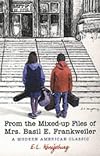
I have a lot of really important emotional baggage tied up with this book. It was the first work of fiction that I can recall where I didn't just identify with the protagonists, but actively fantasized about doing what they did (there was a Sesame Street TV special around the same time where Big Bird, etc. get stranded overnight at the Met, which probably did not help in this regard).
As a child, New York City, and the Met specifically, were places where we went during visits to my grandparents in New Jersey, and my grandmother in particular is associated with NYC culture for me (theater, museums, concerts, architecture -- the parts more grand than scary). I read this book many dozens of times at her house, and have enjoyed it dozens of times since growing up, too.
So, for me, not only is this book a fantastically written story (Konigsberg's best, imho, and I think she's a great author overall) which captures perfectly the intelligent, awkward stubbornness of its main characters, but it also carries my inner idealization of New York City, and the exciting, everything-in-the-world, anything-possible feeling of NYC and of cities in general.
As a child, New York City, and the Met specifically, were places where we went during visits to my grandparents in New Jersey, and my grandmother in particular is associated with NYC culture for me (theater, museums, concerts, architecture -- the parts more grand than scary). I read this book many dozens of times at her house, and have enjoyed it dozens of times since growing up, too.
So, for me, not only is this book a fantastically written story (Konigsberg's best, imho, and I think she's a great author overall) which captures perfectly the intelligent, awkward stubbornness of its main characters, but it also carries my inner idealization of New York City, and the exciting, everything-in-the-world, anything-possible feeling of NYC and of cities in general.
Found out about this collection because a number of my favorite webcomic artists have participated. Really looking forward to reading more of the series.
This is ok, but really, see the play, which is both grander and sadder, or at least read the play.

I wasn't really expecting to enjoy this book as much as I did. I picked it up because of a chance inference from a webcomic I read (see http://namesakecomic.com), which caused me to search for a major work of literature whose protagonist is named Vanessa. Walpole characterizes using language I would find tiresome from most authors -- "he was the sort of XX who YY" kind of things; however, somehow he ends up portraying something subtle about century-old-English-cultural-norm YY as well as about character XX when he does this. I also suspect that I am slightly biased toward any book that requires occasional reference to the 8-generation genealogical chart in the back flyleaf.
A completely unnecessary book, a money-grab. A rehashing of the material which has already been published and analyzed over the past 2 decades by C. T. Additionally, while C. T. is a very good literary scholar, he's either a terrible writer or unable to get the language of J. R. R. T.'s notes up to the level of his published writing; the prosody and flow are stilted and unmusical.
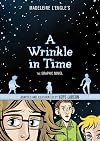
This book is a labor of intense love, or I miss my guess. It shows. The adaptation is true in spirit, and the art (for me) complements the feel of the original book without distracting from it for its own sake. Meg's internal asides are given front stage when they're important to the philosophical journey, and don't take up more than a frame two. That's a fine rope to tread. My only complaint is that the medium of the graphic novel naturally carries a somewhat faster pace than straight prose, so the whole book seemed to go by a little too quickly. Or I suppose that could be because I read it so avidly. I'll have to reread, I guess.
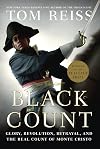
Engaging not just because the subject is engaging -- also a very personal history of pre- and post-revolutionary France (with an unusual awareness of race issues in early modern Europe). Superb and exhaustive scholarship while maintaining easy readability made this a winner for me.
I've given these books 3 stars overall, but this one gets four stars because of the most awesome climactic twist in the history of everything.
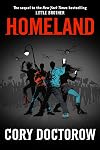
OMG MY HEART RATE DIDN"T GO BELOW 200 BPM until the last couple of chapters. In another book that might have been disastrous, but I like Mr. Doctorow's writing enough that I minded neither segment of the rollercoaster. Good story, too, and one of the only thrilling adventure books you'll find in which a gun is never fired. It's important to note as well the social agenda behind Mr. Doctorow's books, which I applaud.
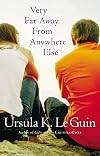
This book changed my life as a late teenager. The clarity (typical for UKLeG) with which the author portrays the compulsion, fear, joy, and paralysis of both human love and human striving for excellence allowed me to see myself in new ways. I can't think of another book involving a romance where I identified with *both* people in the relationship.
OMG, I am so exhausted. But in a good way.