Ambivalent Affinities: A Political History of Blackness and Homosexuality after World War II by Jennifer Dominique Jones
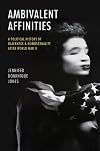
This book is a collection of connected essays - snapshots from US history - of the interplay between civil rights activism for Black Americans and gay/lesbian activism. There are many misconceptions about the relationship between homosexuality and Blackness, even in liberal, leftist, and queer spaces. Jennifer Dominique Jones does not directly debunk them all, but instead illustrates various moments in history that show how this relationship changed over time, ranging from the NAACP fighting for veterans discharged for homosexuality or SCLC/WOMEN's complicated relationship with the communities most affected by HIV/AIDS. A recurring theme in this book is the discursive relationship between homosexual sex and interracial sex, which would become very important to campaigns for marriage equality in the 2000s. She also devotes some chapters to discussing the specter of homosexual and interracial sex in far-right white supremacist literature, which was a surprising but welcome turn.
Overall this book is focused more on history than abstract theory compared to some of the other things I read. At a few points I found the author's analysis a bit repetitive, but I suppose it is better to spell out your points explicitly than risk being misunderstood. As a white queer person, I found this book an interesting series of windows into historical Black activism in the US. My favorite chapter was on the HIV/AIDS awareness campaigns headed by SCLC/WOMEN; I think it would be of particular show more interest to those interested in the history of medicine, public health, or social work. show less
Overall this book is focused more on history than abstract theory compared to some of the other things I read. At a few points I found the author's analysis a bit repetitive, but I suppose it is better to spell out your points explicitly than risk being misunderstood. As a white queer person, I found this book an interesting series of windows into historical Black activism in the US. My favorite chapter was on the HIV/AIDS awareness campaigns headed by SCLC/WOMEN; I think it would be of particular show more interest to those interested in the history of medicine, public health, or social work. show less
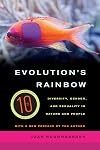
This book is controversial in the evolutionary biology community because Joan Roughgarden denies sexual selection in favor of her own theory of "social selection." (She is also a Christian theistic evolutionist, though this does not come up much in Evolution's Rainbow.) I am not a biologist, but these ideas, from what I know, would be considered fringe by other evolutionary biologists even if they weren't unfortunately biased against Roughgarden for being a trans woman. Please read biologists' critiques of this book before accepting all its arguments uncritically.
Roughgarden is at her strongest when she calls out the misogyny and transmisogyny in biological literature. She is at her weakest when she dabbles in fields outside her domain, especially the social sciences. I understand this book's overarching argument that queerness is part of the natural "rainbow" of human genetics, but Roughgarden is, in my opinion, too ambitious in scope. This book would have been more coherent if she had stuck to biological and medical topics - which she is qualified to write about - rather than veering into theology and anthropology.
Roughgarden is at her strongest when she calls out the misogyny and transmisogyny in biological literature. She is at her weakest when she dabbles in fields outside her domain, especially the social sciences. I understand this book's overarching argument that queerness is part of the natural "rainbow" of human genetics, but Roughgarden is, in my opinion, too ambitious in scope. This book would have been more coherent if she had stuck to biological and medical topics - which she is qualified to write about - rather than veering into theology and anthropology.

The author of this book, Edith Ayrton Zangwill, was a British suffragist who wrote several novels. This book starts out with very feminist themes and the character development is good. However, the plot is a bit predictable and the prose is nothing to write home about. It might be interesting to read from a historical perspective, but overall this book was not my "style."

George Lippard is one of those authors who was popular during his lifetime but has since fallen into obscurity. To give you an idea, this book was an American bestseller before Uncle Tom's Cabin. Its lurid and sensational depictions of crime among Philadelphia's elite, as well as its sexual content (though tame by modern standards), contributed to its success.
Lippard was a friend of Edgar Allen Poe, and their writing styles share some features in common. It is not everyone's cup of tea, but once I became acquainted to the style, I eventually came to accept it. This book is extremely long, having been released in multiple parts, and to be perfectly honest starts to "lose the plot" a bit around Book 5. There is a lot going on in this book with all the characters and subplots; virtually no one who appears once in the book is forgotten. However, Lippard had an irritating habit of jumping around in time, which can be a little confusing at times. But it's easy to see why this book was initially so popular, even if its appeal did not stand the test of time.
Lippard was a friend of Edgar Allen Poe, and their writing styles share some features in common. It is not everyone's cup of tea, but once I became acquainted to the style, I eventually came to accept it. This book is extremely long, having been released in multiple parts, and to be perfectly honest starts to "lose the plot" a bit around Book 5. There is a lot going on in this book with all the characters and subplots; virtually no one who appears once in the book is forgotten. However, Lippard had an irritating habit of jumping around in time, which can be a little confusing at times. But it's easy to see why this book was initially so popular, even if its appeal did not stand the test of time.
Rambling, racist, and outdated. Unless you have a niche interest in popular paleontology books from the 1920s, avoid.
It's very interesting to read about all the research that was being done on nonhuman animal intelligence by the 1920s - it belies the assumption that scientists considered animals "dumb brutes." This book is well-sourced and should be of interest to historical researchers.
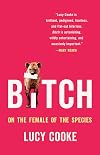
An excellent and thorough demolition of misogynist myths about sexuality in nonhuman animals. The writing style is humorous and accessible, without being crass or dumbing down its message. As someone who studied under Richard Dawkins himself, Cooke is well qualified to write this book critiquing some of biology's more stubborn Victorian dogmas. I recommend this book to a general population of people interested in either evolutionary biology or in combining gender studies and science studies.
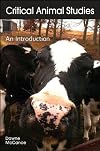
Here is an extremely helpful guide and introduction to critical animal studies. This book has a very Derridean slant (Dawne McCance is a Derrida scholar), but is not extremely dense. It's probably suitable for graduate students or advanced undergraduates. McCance covers different approaches to animal ethics, what makes critical animal studies actually "critical," feminism and psychoanalysis, and more. I recommend this book to any critical theory or philosophy fan curious about how critical animal studies connects to their own interests.
The only reason this book does not get 5 stars is that it leaves out (by the author's own admission) anarchist and Marxist contributions to critical animal studies. This book probably would have been a lot longer if it had included them.
The only reason this book does not get 5 stars is that it leaves out (by the author's own admission) anarchist and Marxist contributions to critical animal studies. This book probably would have been a lot longer if it had included them.
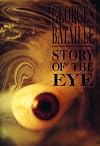
Gorgeously disgusting, showing Bataille's transgressive mind to its fullest. I read this book twice because there was just so much to analyze.

This is the first time I've read Freud. Before this, everything I knew about Freud came from secondary sources or through "osmosis" (learning from listening to other people talk about him). I am more sympathetic to psychoanalysis than a lot of modern people, but in this book Freud's pessimism and misogynist/heterosexist assumptions about gender roles are on full display. To be generous, I saw this book as more of an indictment of Western society than human culture as a whole.
I don't know where the image of Freudian therapists as "touchy-feely" came from. This book is pretty cynical.
I don't know where the image of Freudian therapists as "touchy-feely" came from. This book is pretty cynical.
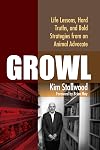
This book is an interesting view into the mind of someone who's managed to turn social justice into a personal career. Sometimes it reads like an extended cover letter for whatever future position he may hold; at other times, the author is more reflective. Since this is a short book covering such a long time frame, it is easy for other players in the animal rights movement to be left out or not given much attention; therefore, I'd recommend this as a history of Kim Stallwood's involvement, but not of the movement as a whole.
At several points, Kim Stallwood asserts that vegans engaging in illegal direct action like sabotage and actual liberation of animals may be agents provocateurs planted to discredit the animal rights movement. This is an extremely nasty and uncharitable allegation against people who don't adhere to Stallwood's ideal of corporate liberal career activism.
Some pictures from Kim Stallwood's personal collection are fun to look at.
At several points, Kim Stallwood asserts that vegans engaging in illegal direct action like sabotage and actual liberation of animals may be agents provocateurs planted to discredit the animal rights movement. This is an extremely nasty and uncharitable allegation against people who don't adhere to Stallwood's ideal of corporate liberal career activism.
Some pictures from Kim Stallwood's personal collection are fun to look at.
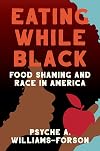
This book is very challenging to read, not because of its difficulty (it's clearly written), but because it goes against a lot of assumptions "food justice" advocates make when talking about locavorism, healthy eating, etc.
The author is at her strongest when analyzing fatphobia in the media, the immigrant experience with food, and the pitfalls of the "locavore" movement. In this respect it is a stunning rebuke to people like Michael Pollan or the "nonexclusionary gastronativism" of Fabio Parasecoli (see my previous review on Gastronativism: Food, Identity, Politics). On the other hand the book at times had an underlying hostility toward vegans and vegetarians that I felt was unwarranted, since it framed these more as healthy lifestyle preferences instead of a social justice movement for the well-being of nonhuman animals.
I would recommend this book to anyone interested in deconstructing the common tropes of food justice.
The author is at her strongest when analyzing fatphobia in the media, the immigrant experience with food, and the pitfalls of the "locavore" movement. In this respect it is a stunning rebuke to people like Michael Pollan or the "nonexclusionary gastronativism" of Fabio Parasecoli (see my previous review on Gastronativism: Food, Identity, Politics). On the other hand the book at times had an underlying hostility toward vegans and vegetarians that I felt was unwarranted, since it framed these more as healthy lifestyle preferences instead of a social justice movement for the well-being of nonhuman animals.
I would recommend this book to anyone interested in deconstructing the common tropes of food justice.

Another odd Little Blue Book that gives a glimpse into what proponents of "rational sex education" thought of homosexuality at the time. The views expressed in this book are somewhat pathologizing but overall surprisingly positive. The author, William J. Fielding (who also wrote Woman's Sexual Life, which I previously reviewed) emphasizes the ways "inverts" or homosexuals have contributed to society, and can be found in other cultures outside the West.
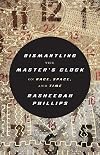
Probably the best book I've read so far in 2026. The descriptions of physics experiments went a little over my head at times, but it really starts to come together in the second chapter (though the author says you can read the chapters in any order). Rasheedah Phillips has a very interesting background, as a practicing lawyer, artist, activist, and critical theorist all rolled into one marvelous writer. Her book isn't just abstract theory, but is directly tied to the lived experiences of Black people, especially the renters she works with in Philadelphia. It's very hard for me to name a favorite chapter from this book - they were all just really good. Some of her writing is directly tied to her art, but she always explains them in enough detail that I was not lost or missing context.
As I read this book, I often couldn't help but make mental comparisons to Braiding Sweetgrass by Robin Wall Kimmerer. If you enjoyed that book's exploration of marginalized epistemologies in science, then you will probably enjoy this as well. Despite being very theoretical, it's not impenetrably dense.
As I read this book, I often couldn't help but make mental comparisons to Braiding Sweetgrass by Robin Wall Kimmerer. If you enjoyed that book's exploration of marginalized epistemologies in science, then you will probably enjoy this as well. Despite being very theoretical, it's not impenetrably dense.
I'm not sure what William J. Fielding's credentials were, but he had some interesting opinions on women's health. For instance, he thought that climate influenced the age of onset of the menstrual cycle, and that menopause did not affect a woman's sex drive.
Haldeman-Julius Publications published multiple books on sexual health by this author, and their frank treatment of sexuality got them in hot water with the FBI. This is an interesting read from a historical perspective, but don't use this for personal advice.
Haldeman-Julius Publications published multiple books on sexual health by this author, and their frank treatment of sexuality got them in hot water with the FBI. This is an interesting read from a historical perspective, but don't use this for personal advice.
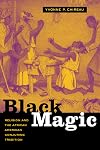
This is a very thorough investigation into conjure and its connections with West African and Christian magical traditions. Yvonne P. Chireau especially relies on the firsthand testimonies of survivors of slavery and their descendants to illustrate the role conjure has played in African American life from slavery into the Harlem Renaissance. This is not a "how-to" manual of conjure, but explores its development and resonance in other aspects of African American life, such as the first HBCUs, medicine, and the blues.
This book is not heavily in conversation with other literature on "Western" esoteric traditions, but as someone more familiar with those, I felt I expanded my horizons a bit by reading this book.
This book is not heavily in conversation with other literature on "Western" esoteric traditions, but as someone more familiar with those, I felt I expanded my horizons a bit by reading this book.
This book is an extremely detailed and intimate history of lesbian life in Atlanta, Georgia and Charlotte, North Carolina. Historian La Shonda Mims also integrates comparisons of Black and white lesbian experiences throughout the book. I have never been to either Atlanta or Charlotte, but reading this book almost made me feel like I was, in some sense, "there." Mims carefully utilizes many obscure sources for her study and analysis of Southern lesbians; it was very thorough, clearly written, and well-researched.
My one major critique of this book is that it does not have much information on trans lesbians. This is apparently a critique at least one other scholar has made of the book, so I know I am not alone in this. Nevertheless, I would recommend this book to anyone interested in lesbian history and activism in an understudied region in queer studies.
My one major critique of this book is that it does not have much information on trans lesbians. This is apparently a critique at least one other scholar has made of the book, so I know I am not alone in this. Nevertheless, I would recommend this book to anyone interested in lesbian history and activism in an understudied region in queer studies.

From a historical perspective, this book is fascinating as the first American autobiography written by/about a lesbian. However, Mary Casal (pseudonym for Ruth Fuller Field) never refers to herself as a lesbian in this book, and she spent much of her life isolated from any organized queer community. (This book was published in the 1920s, and the butch-femme labels and dynamic now famous in lesbian culture would not fully emerge until the 1940s.) Despite her numerous relationships with other women, she characterizes herself as a rarity and an "invert" (a sexological term of the time) who is exclusively attracted to women but not to men.
Although its understandings of sexuality are certainly dated by modern standards, the experience of compulsory heterosexuality and societal shame about sexual topics are still unfortunately quite current. I would recommend this book to people interested in historical queer literature, and who want to understand how queer people lived when they were separated from an open community of people like them. I feel that my empathy grew as I read this book.
Sensitive readers should note that the early chapters of the book have several scenes describing sexual assaults the author experienced, including child sexual abuse.
Although its understandings of sexuality are certainly dated by modern standards, the experience of compulsory heterosexuality and societal shame about sexual topics are still unfortunately quite current. I would recommend this book to people interested in historical queer literature, and who want to understand how queer people lived when they were separated from an open community of people like them. I feel that my empathy grew as I read this book.
Sensitive readers should note that the early chapters of the book have several scenes describing sexual assaults the author experienced, including child sexual abuse.
I have never been to Los Angeles, but reading Amy Shimshon-Santo's book made it seem like a vibrant, complicated, and familiar place. Her ethnographic skill, artistic sensibilities, and empathy for the often-overlooked perspectives of youth shine through in these essays and pictures.
My favorite chapter was on the author's grandmother, an activist named Reva Mucha, and her persecution by the US government during the Cold War. After reading this book, I want to become more aware of the history in my own community and family.
My favorite chapter was on the author's grandmother, an activist named Reva Mucha, and her persecution by the US government during the Cold War. After reading this book, I want to become more aware of the history in my own community and family.
 This review was written for LibraryThing Early Reviewers.
This short book's exploration of gastronativism - defined as "the ideological use of food to advance ideas about who belongs to a community and who does not" - is the culmination of arguments made on Fabio Parasecoli's blog and in previous scholarly articles. Although it was interesting for me as someone with little previous knowledge of food studies, I believe the author was trying to do too much in just under 200 pages.
Parasecoli carefully distinguishes between exclusionary and nonexclusionary gastronativism, with the former on the political right and the latter characterized by antiglobalization groups and other, more inclusive activists. He backs up his arguments with many real-life examples from around the world, covering anti-immigrant sentiment to culinary tourism to peasant movements and more. However, given that the term "gastronativism" is inspired by the American nativist movement, which has always been white supremacist and exclusionary in character, I question whether nonexclusionary gastronativism is even a coherent concept that should be compared to its exclusionary counterpart.
I don't think this was a bad book, but it was very jumbled and jumped around a lot. This book would have benefited from better organization and a more limited scope.
Parasecoli carefully distinguishes between exclusionary and nonexclusionary gastronativism, with the former on the political right and the latter characterized by antiglobalization groups and other, more inclusive activists. He backs up his arguments with many real-life examples from around the world, covering anti-immigrant sentiment to culinary tourism to peasant movements and more. However, given that the term "gastronativism" is inspired by the American nativist movement, which has always been white supremacist and exclusionary in character, I question whether nonexclusionary gastronativism is even a coherent concept that should be compared to its exclusionary counterpart.
I don't think this was a bad book, but it was very jumbled and jumped around a lot. This book would have benefited from better organization and a more limited scope.

I read this book in preparation for it being published on Project Gutenberg. It was published in 1849 and is now in the public domain.
The author of this book had good reason to stay anonymous - it seems they had a simmering hatred for just about everything about New Orleans. They were evidently a very moralistic Christian abolitionist and possibly a teetotaler, taking aim at everything from slavery to alcohol to "desecration of the Sabbath." Given this book was written anonymously, it is difficult to tell at times where fact ends and the author's opinions begin, though they refer to newspaper clippings throughout.
Regardless of the author's obvious ideological leanings, it is an interesting account of New Orleans in its thoroughness. The book does not have chapters, but is divided into short sections on different aspects of the city, such as its educational system (one of the few things the author praises) and even how the remains of deceased persons are interred.
Readers should note that the last 20 or so pages are extremely graphic depictions of slavery, including the torture and murder of enslaved persons. I am very glad this book is being preserved for the historical record. Hopefully future researchers will find value in it.
The author of this book had good reason to stay anonymous - it seems they had a simmering hatred for just about everything about New Orleans. They were evidently a very moralistic Christian abolitionist and possibly a teetotaler, taking aim at everything from slavery to alcohol to "desecration of the Sabbath." Given this book was written anonymously, it is difficult to tell at times where fact ends and the author's opinions begin, though they refer to newspaper clippings throughout.
Regardless of the author's obvious ideological leanings, it is an interesting account of New Orleans in its thoroughness. The book does not have chapters, but is divided into short sections on different aspects of the city, such as its educational system (one of the few things the author praises) and even how the remains of deceased persons are interred.
Readers should note that the last 20 or so pages are extremely graphic depictions of slavery, including the torture and murder of enslaved persons. I am very glad this book is being preserved for the historical record. Hopefully future researchers will find value in it.

I read this public domain book in preparation for it being posted to Project Gutenberg. It was published in 1917 and is now in the public domain. However, I can find out very little about its forgotten author, Marah Ellis Ryan, except that she was an actor and an activist for Native American rights who lived among the Hopi for some time. This book seems to be the only one she wrote about Ireland.
The book is a series of romantic short stories, with happy and tragic endings, set across Irish history. The earliest is set immediately after the Christianization of Ireland, and the latest is set at the outbreak of World War I. I am not a fan of romances to begin with, but I found the character development lacking and the stories somewhat cliche as I kept reading, despite the varied endings.
For some reason, this book was tagged "occult" by some other users on LibraryThing. Although Irish paganism and vaguely anti-Christian themes are common throughout the stories, this book is not really about magic or the occult, especially after the first few stories. What is more prominent is the book's Irish nationalism, which veers into racist territory at times, even though the author was evidently trying to "punch up" at English colonialism. In The Druid Path, the various stories are united not just by their romantic genre, but by the past being an eternal recurrence and even an ethnic memory.
In my opinion, the second-to-last story was the most interesting because of its references to show more earlier in the book. However, the book as a whole was difficult to read, partially because of the sappy writing as well as a dialect or register of English I was unfamiliar with. In the future, this book may be of interest to people with an academic interest in lesser-known women authors or nationalistic literature. Otherwise, I would not recommend it. show less
The book is a series of romantic short stories, with happy and tragic endings, set across Irish history. The earliest is set immediately after the Christianization of Ireland, and the latest is set at the outbreak of World War I. I am not a fan of romances to begin with, but I found the character development lacking and the stories somewhat cliche as I kept reading, despite the varied endings.
For some reason, this book was tagged "occult" by some other users on LibraryThing. Although Irish paganism and vaguely anti-Christian themes are common throughout the stories, this book is not really about magic or the occult, especially after the first few stories. What is more prominent is the book's Irish nationalism, which veers into racist territory at times, even though the author was evidently trying to "punch up" at English colonialism. In The Druid Path, the various stories are united not just by their romantic genre, but by the past being an eternal recurrence and even an ethnic memory.
In my opinion, the second-to-last story was the most interesting because of its references to show more earlier in the book. However, the book as a whole was difficult to read, partially because of the sappy writing as well as a dialect or register of English I was unfamiliar with. In the future, this book may be of interest to people with an academic interest in lesser-known women authors or nationalistic literature. Otherwise, I would not recommend it. show less
Western Water A to Z: The History, Nature, and Culture of a Vanishing Resource by Robert. R. Crifasi
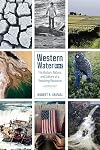
I have lived in the American West and have lately taken an interest in the interplay of water and culture, so when I found this book I figured I should pick it up and read it. However, this book was probably intended as a supplement or starting point for further interests, rather than as something to read all the way through (as I did). The book is structured like an encyclopedia with short entries, usually no more than 2 pages, on topics ranging from the ecological (like beavers) to the technological (like canals) to the political (like water wars).
The entries seemed heavily focused on the arid climates that make up much of the American West, with less of an emphasis on more temperate places like Western Washington and Oregon. It seemed that many of the entries pertained to Arizona, California, and Colorado. I was most interested in the development of water law in the West, which proved inspiring for a personal project on water law in Israel and Palestine.
I would recommend this book to people who want a starting point into further research on Western water.
The entries seemed heavily focused on the arid climates that make up much of the American West, with less of an emphasis on more temperate places like Western Washington and Oregon. It seemed that many of the entries pertained to Arizona, California, and Colorado. I was most interested in the development of water law in the West, which proved inspiring for a personal project on water law in Israel and Palestine.
I would recommend this book to people who want a starting point into further research on Western water.
In Search of the River Jordan: A Story of Palestine, Israel and the Struggle for Water by James Fergusson
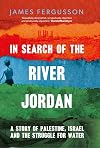
As a journalist with a degree in hydrology, James Fergusson is definitely well qualified to write this book. He also has an interesting personal connection: he is distantly related to Arthur Balfour, and this family history seems to color his perceptions of Zionism, at least at first. In Search of the River Jordan chronicles his disillusionment with Israel's water policy toward Palestinians over the course of his travels, even as he admires the country's engineering history and water infrastructure. Unfortunately, he stops short of actually supporting Palestinian liberation, and instead encourages Israel's "enlightened self-interest" in using its advanced water technology to restore water access in Gaza and the West Bank.
The first section of the book is about Palestine, with a focus on the West Bank. It's often said nowadays that water is a "human right," but this was not recognized by the United Nations until 2010, partially in response to the ongoing water conflicts between Palestinians in the West Bank and Israelis building illegal settlements there. Fergusson and his informants do excellent work at providing this context, as well as explaining the failure of the Oslo Accords and Joint Water Commission. He also carefully dispels popular misconceptions about the Palestinian people, portraying them as complex and diverse individuals rather than exclusively agrarian, polarized, and peasant-like. What I found most interesting was the exploration of Palestinian and Israeli show more water law, and their precedents in Islamic and Ottoman water law.
In the second section of the book, Fergusson's lingering sympathies for Zionism become more apparent. He repeatedly marvels at Israel's water infrastructure and admires intrepid Zionist engineers and planners of the "old school," as if Zionism was a good idea from the start and only became corrupted later. Although he does demonstrate that this infrastructural development has wrought destruction on Palestine's ecosystems and livelihoods, for some reason he glosses over the substantial environmental costs of Israel's desalination plants, from which more than half its drinking water is derived. My favorite parts of this section were the history of the National Water Carrier and explanation of how water is ingrained into Israeli national consciousness.
The reporting in this book is generally good, even if Fergusson's conclusions are disappointingly boring and naive. However, I thought it was a decent factual introduction to the role water has played in the colonization of Palestine. People interested in Palestine, water resource management, and environmentalists may enjoy this book. show less
The first section of the book is about Palestine, with a focus on the West Bank. It's often said nowadays that water is a "human right," but this was not recognized by the United Nations until 2010, partially in response to the ongoing water conflicts between Palestinians in the West Bank and Israelis building illegal settlements there. Fergusson and his informants do excellent work at providing this context, as well as explaining the failure of the Oslo Accords and Joint Water Commission. He also carefully dispels popular misconceptions about the Palestinian people, portraying them as complex and diverse individuals rather than exclusively agrarian, polarized, and peasant-like. What I found most interesting was the exploration of Palestinian and Israeli show more water law, and their precedents in Islamic and Ottoman water law.
In the second section of the book, Fergusson's lingering sympathies for Zionism become more apparent. He repeatedly marvels at Israel's water infrastructure and admires intrepid Zionist engineers and planners of the "old school," as if Zionism was a good idea from the start and only became corrupted later. Although he does demonstrate that this infrastructural development has wrought destruction on Palestine's ecosystems and livelihoods, for some reason he glosses over the substantial environmental costs of Israel's desalination plants, from which more than half its drinking water is derived. My favorite parts of this section were the history of the National Water Carrier and explanation of how water is ingrained into Israeli national consciousness.
The reporting in this book is generally good, even if Fergusson's conclusions are disappointingly boring and naive. However, I thought it was a decent factual introduction to the role water has played in the colonization of Palestine. People interested in Palestine, water resource management, and environmentalists may enjoy this book. show less

I have never read Kenneth Grahame's work and have little reason to read children's literature, so a lot of this essay was lost on me. However, it is written well and might be a good starting point for further analysis of The Wind in the Willows.

A short essay on artistic inspiration as a means of overcoming our fear of mortality. Clint Marsh's inspiration is from Éliphas Lévi's Transcendental Magic, particularly the Four Powers of the Sphinx. I consider these "powers" influential on my own practice, and it was great to see another application of them. One of Marsh's better essays.
I recommend this pamphlet to aspiring artists and ceremonial magicians.
I recommend this pamphlet to aspiring artists and ceremonial magicians.

A humorous and insightful essay about how to deal with naysayers demanding "proof" of magic, as well as aggressive and unpleasant people in general. Clint Marsh underscores the potential alchemy of transforming conflicts and questions into opportunities for connection.
I do not really talk about my practice with others (Fourth Power of the Sphinx and all that), but if you're the kind of occultist who does, this pamphlet might be of interest to you.
I do not really talk about my practice with others (Fourth Power of the Sphinx and all that), but if you're the kind of occultist who does, this pamphlet might be of interest to you.

Among the Isles of Shoals is different than anything else I have read so far. I read it as a volunteer for Distributed Proofreaders, which listed its genre as "Mixed Form." However, I think it is better described as nature writing, albeit of a unique kind that does not adhere to conventional argument or plot. The book is best described as thick description of the Isles of Shoals, interspersed with poetry and illustrated with short anecdotes from the author's life and historical knowledge. Celia Thaxter spent most of her life on these islands, and she communicates with great passion and care the impressions they left on her psyche. There is an abstracted beauty to Among the Isles of Shoals, but it only becomes clear when the reader "zooms out" and beholds the entire work.
The best way to read this book is in short bursts, with the sound of the ocean in your ears. There are no chapter divisions. I recommend this book to nature appreciators and readers interested in philosophy of place.
The best way to read this book is in short bursts, with the sound of the ocean in your ears. There are no chapter divisions. I recommend this book to nature appreciators and readers interested in philosophy of place.

One of Clint Marsh's best essays for occultists. What does it mean to make decisions about what we believe? It's a question that had been haunting me for years, but only recently became articulated. From a superstitious perspective, I could say encountering Marsh's essay was serendipitous.
Finally, there is a talisman for readers to trace and use themselves, hopefully replacing some outmoded superstitions with a positive one. (I have not had a chance to try the talisman yet, but I thought it was a suitable way to end the essay.) I'd like to shove this essay in the face of every psychiatrist.
Finally, there is a talisman for readers to trace and use themselves, hopefully replacing some outmoded superstitions with a positive one. (I have not had a chance to try the talisman yet, but I thought it was a suitable way to end the essay.) I'd like to shove this essay in the face of every psychiatrist.
Nine Defenses Against the Basilisk: Black & White Magic for Surviving Extreme Anxiety by Clint Marsh

Another fun little Fiddler's Green leaflet. This one is about "magical" responses to the modern basilisk of anxiety. It's a slightly occult spin on standard self-care advice, so I didn't actually learn much, but it was motivating. It reminded me of Circling the Star by Anthony Rella (Gods & Radicals Press, 2018).
I live with some anxiety symptoms and found the leaflet entertaining overall, enhanced by the illustrations. If you take psychiatry seriously, you might disagree.
I live with some anxiety symptoms and found the leaflet entertaining overall, enhanced by the illustrations. If you take psychiatry seriously, you might disagree.