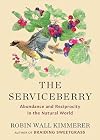
A thoroughly enjoyable read. The author's voice is authentic and personal as she addresses larger issues about how the natural economy of abundance and reciprocity compares with the economics of capitalist acquisition, individualism, hoarding, scarcity, and exploitation where perpetual growth is the unsustainable goal. She gently invites us to consider how a gift economy may be essential for the survival of the human and other species.
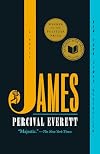
Birthright Citizens: A History of Race and Rights in Antebellum America (Studies in Legal History) by Martha S. Jones
Very engaging reading. Martha Jones uses antebellum Baltimore with a sizable and growing population of free African-Americans as the focus of her work. In that cosmopolitan trade center in the border slave state of Maryland, she looks at how free blacks carried themselves as rights-bearing, using the law to secure types of legal rights in the face of one of the strongest state movements to deport free blacks outside the country and to encourage emigration with restrictive and disabling black laws. While considering the civic performance of everyday free blacks, Jones also attends to the larger context of the world of legal thought where black abolitionists and other’s laid claim on a theoretical basis to citizenship based on native birth. The quest for recognition that citizenship was theirs by virtue of native birth, of course, was only vouchsafed with enactment of the 14th Amendment of the US Constitution after the Civil War.
If I have any hesitations about the book, it is the lingering suspicion that upon occasion it seems to me Jones hangs rather too much on slender reeds. Jones rigorously searches for further background on some of the situations she writes about, but there is often little more to go on than the barebones of legal pleadings and rulings in trial courts and commissions. Perhaps the mere usage of the courts to gain licenses or redress for injuries or to protect property is sufficient to support Jones’s thesis that “free” African-Americans used show more the law and the courthouse as if they had rights that white people were bound to respect before, during, and after the Dred Scott decision purported to (or was interpreted as) settle the question of their citizenship status.
All in all, an enlightening read marred only by some poor copy-editing thar failed to supply missing words and correct misspellings. show less
If I have any hesitations about the book, it is the lingering suspicion that upon occasion it seems to me Jones hangs rather too much on slender reeds. Jones rigorously searches for further background on some of the situations she writes about, but there is often little more to go on than the barebones of legal pleadings and rulings in trial courts and commissions. Perhaps the mere usage of the courts to gain licenses or redress for injuries or to protect property is sufficient to support Jones’s thesis that “free” African-Americans used show more the law and the courthouse as if they had rights that white people were bound to respect before, during, and after the Dred Scott decision purported to (or was interpreted as) settle the question of their citizenship status.
All in all, an enlightening read marred only by some poor copy-editing thar failed to supply missing words and correct misspellings. show less
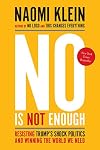
Probing analysis of where we are and how we got here with realistic assessment of how things could get worse but an overall upbeat view of the opportunity of turning these dark days toward a radically different, sustainable, just, and equitable society. Kudos. Naomi has done it again!
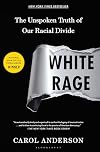
Powerful and brief is good in my book. I have done lots of reading in the area of white supremacist ideology and US history with respect to government and legal policies respecting African Americans, and this is a punchy and well written short volume that traces the consistent betrayal of our stated ideals when it comes down to a showdown with ensuring continued white dominance. And, I would disagree with the reviewer who said there wasn't much new here. There were a couple of new revelations to me , including President Andrew Johnson's championing of free 160 acre giveaways to poor whites while opposing dividing the liberated plantations to the formerly enslaved who had worked it -- to cite just one example. A highly recommended read/listen.
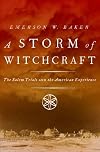
Thoroughly researched and well-written. Baker combines genealogy with detailed historical analysis to tell the most complete story of the outbreak of the Salem witch accusations and trials. His close attention to the location of people both physically and in family contexts with property disputes complements mastery of historical context - the trauma of ongoing war with the Wabanaki, the loss of the Massachusetts Bay Charter, disputes about moral reformation and returning to the original Puritan vision for the colony vs a general loosening of church discipline, the breakdown of the legal system as a result of the charter change, and the struggles of various players to maintain or better their status. Baker combines these masterfully. And he goes on to assess the aftermath -- how did this fractious society come back together painfully over the generations. My only criticism is that I sometimes found it very difficult -- despite Baker's attempts to make matters as easy as possible -- to follow the interrelationships of all the actors, and there is quite a cast. Altogether, however, an excellent read that I heartily recommend to anyone interested in the complex history of the Salem trials, and indeed, of New England colonial history. There is much meat here.
When Affirmative Action Was White: An Untold History of Racial Inequality in Twentieth-Century America by Ira Katznelson
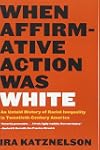
Critical to understanding the existing gaps between African Americans and whites in today's society, this book addresses the deliberate policy decisions made during the New Deal and the Fair Deal to exclude the vast majority of African Americans from the benefits of Social Security and fair labor reforms. While Congress was under control of the Southern Democrats, neither Roosevelt nor Truman was able to win gains for a social safety net without exclusions that basically upheld Jim Crow in the South. Even fairer public policies enacted by the federal government were guaranteed to be administered by state and local governments -- in the hands of white administrators in the South and most of the North. Because of discrimination in the military in both World Wars, even the liberal GI Bill, which supposedly benefitted all GIs helped only a handful of African Americans, while enabling most "white" GIs (now including Jews and Italians post-war) to gain a governement-financed education and government-guaranteed loans. Today's existing wealth gaps were built on this foundation of "white affirmative action."
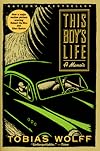
Several friends recommended this book to me. It took forever for me to get to it. And I read it after I read his brother's biography of their father, The Duke of Deceit, a pathological liar as both sons turn out to be. The writing in both books is excellent, but unfortunately, I didn't like any of the characters in either book. If you have never contemplated what "white privilege" means, you can begin here and add a dose of "class privilege." The poor choices that Toby makes repeatedly get overlooked and bailed out if they ever create adverse consequences. He gets dozens of "second chances" that no person of color or one without at least the modicum of "upbringing" that permits artful dodging would get. Prevarication, bamboozling, and posturing abound. I agree with the reviewer below, who described most of the book as reflecting Toby's younger life as a picture of "increasing entropy."
I am a fan of Russo's fiction. I have read all of his works, so I was very excited to see that he had published a memoir of his life. This was a page-turner from start to finish with moments of out-loud laughter, knowing nods, and tears. Russo is intimate in his details and lucid and compelling in his prose. He lays out his relationship with his mother in all its complexity and frustration, drawing the reader into the mystery of it. The recalled memories of this relationship and how intertwined with Gloversville and an extended family casts his fiction in a brighter light. I am ready to reread his works all over again.
Disturbing the Peace: The Story of Father Roy Bourgeois and the Movement to Close the School of the Americas by James Hodge
A very well written biography of Father Roy Bourgeois and his spiritual journey from Cajun football hero in Louisiana bayou country to founder and leader of the School of the Americas Watch, an organization that shares his dedication to exposing the role of the United States military supported by U.S. taxpayers in the training of Latin American troops to support the oligarchical elites in Latin America through counterinsurgency techniques (including torture, terrorism against unions, press, and other civil institutions). In a very readable format that helps us identify with Father Bourgeois, we see him grow from a naval officer to working with orphans in Vietnam to choosing to pursue a career as a Maryknoll priest serving the poorest of the poor in Latin America. We learn with Bourgeois of the atrocities committed by US trained military and paramilitary forces and grow in anger with him as he finds his work in countering nonviolently but vehemently the School of the Americas and educating US citizens and the U.S. Congress about the crimes against humanity committed by its graduates.