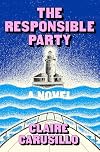
This book is a lot of fun. It is chock full of witticisms and clever turns of phrase, and it leans into being quirked-up and over-the-top in a way that is simultaneously lovable and grating. As a backdrop for its intergenerational murder mystery, the book satirizes whiny and pathetic millennials, thoughtlessly destructive baby boomers, and the repressed, drug-addled generations that preceded them. The satire necessitated flawed characters to epitomize each era, and if you find yourself getting annoyed at them (like I was), that is probably the point.
Overall, the book is well-paced, well-structured, and engaging. It's not a story or style that everyone will appreciate, but there are plenty of others to whom I will be recommending it.
Overall, the book is well-paced, well-structured, and engaging. It's not a story or style that everyone will appreciate, but there are plenty of others to whom I will be recommending it.
 This review was written for LibraryThing Early Reviewers.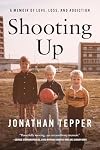
I enjoyed this heartfelt memoir, but the writing isn't good enough for me to recommend it widely.
The book is an honest depiction of an extremely unconventional childhood. The author's experience was remarkable—and moving—enough to keep me engaged despite poor editing, an occasionally shallow recounting of events, and an uneven quality of writing across the chapters.
This book sometimes gave the impression that nobody read it in its entirety before publication. For example, the author often gives the same background repeatedly, as if the previous chapter did not make a nearly identical introduction. While some chapters meditate eloquently on loss and grief, and some kept me from putting the book down with their suspense, others felt formulaic. The author bears some responsibility for this, but I believe inadequate revision on the part of the editor is more to blame.
My other gripe with this memoir is that the author missed key opportunities to reflect. For example, the book abounds with introspection related to the struggle for identity and the drive to learn and succeed, but it never seems to consider whether the author's family dynamic was less than perfect. This is a glaring omission considering the emphasis on describing the family and their interactions in detail. To me, the author's father was tyrannical as patriarch; it seems likely that he indirectly harmed the family at the same time that he was directly helping their community. Despite laying out the facts to show more suggest this conclusion, the author never reckons with its implications.
Quibbles aside, this was a fascinating look into a radically different time and place. show less
The book is an honest depiction of an extremely unconventional childhood. The author's experience was remarkable—and moving—enough to keep me engaged despite poor editing, an occasionally shallow recounting of events, and an uneven quality of writing across the chapters.
This book sometimes gave the impression that nobody read it in its entirety before publication. For example, the author often gives the same background repeatedly, as if the previous chapter did not make a nearly identical introduction. While some chapters meditate eloquently on loss and grief, and some kept me from putting the book down with their suspense, others felt formulaic. The author bears some responsibility for this, but I believe inadequate revision on the part of the editor is more to blame.
My other gripe with this memoir is that the author missed key opportunities to reflect. For example, the book abounds with introspection related to the struggle for identity and the drive to learn and succeed, but it never seems to consider whether the author's family dynamic was less than perfect. This is a glaring omission considering the emphasis on describing the family and their interactions in detail. To me, the author's father was tyrannical as patriarch; it seems likely that he indirectly harmed the family at the same time that he was directly helping their community. Despite laying out the facts to show more suggest this conclusion, the author never reckons with its implications.
Quibbles aside, this was a fascinating look into a radically different time and place. show less
This review was written for LibraryThing Early Reviewers.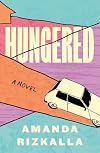
Hungered is a page-turner, with short chapters that make it easy to say "just one more" until, before you know it, you've accidentally blasted through half the book. It's eloquent, but no word is wasted, and the writing never impedes the story.
The characters' struggle to survive in spite of an uncaring (and sometimes actively hostile) society creates a natural tension that ebbs and flows, but never completely resolves. Each moment feels designed to prompt reflection: would I have helped the protagonist? Are those around me struggling in unseen ways? Could this happen to me? The novel left me a bit harrowed, and a bit unsatisfied, which I believe to be the author's intended effect.
Overall, a very solid, quick read. I will be recommending it to friends when it is published more widely.
The characters' struggle to survive in spite of an uncaring (and sometimes actively hostile) society creates a natural tension that ebbs and flows, but never completely resolves. Each moment feels designed to prompt reflection: would I have helped the protagonist? Are those around me struggling in unseen ways? Could this happen to me? The novel left me a bit harrowed, and a bit unsatisfied, which I believe to be the author's intended effect.
Overall, a very solid, quick read. I will be recommending it to friends when it is published more widely.
This review was written for LibraryThing Early Reviewers.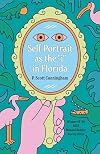
Deeply personal, and full of personality. Some great poems among many good ones, and just a few that didn't land. I found the poems about fatherhood to be the most touching. The poems with more environmental themes often sacrificed introspection for description, which, while vivid, was less moving for me. Overall, the collection is very short, but worthwhile!
This review was written for LibraryThing Early Reviewers.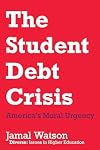
I was disappointed by this book. The writing was just alright, the editing was poor, and the messaging was muddled. It is a spirited call to action, but offers little insightful or actionable information.
As a member of Generation Z (and a recent college graduate), it's already clear to me that the rising cost of college and the proliferation of crippling student debt have led to a crisis that must be addressed. That the issue disproportionately affects underprivileged people, and that it is a civil rights issue, seems an unsurprising, if unfortunate, consequence. Now what? I don't know, because the book didn't tell me much else, aside from some history and the names of organizations working on the problem. Given the author's background, I expected him to have informed opinions on the best paths forward, but this book didn't offer much in the way of solutions.
Framing student debt relief as reparations is interesting and, to me, novel. I wish the book explored this more deeply. There are other ideas like free college that the book mentions, but barely elaborates on, even though I would imagine there are rich literature and nuanced policy discussions to draw from.
The editor's failure is that each chapter feels independent; they do not form a cohesive whole. For example, some concepts are reintroduced in subsequent chapters as if they have not been mentioned, while other concepts and acronyms are not introduced at all. Another consequence of the poor editing is that the show more book's messaging on student loans is surprisingly inconsistent for a book nominally about them causing a crisis: the author wavers between demonizing them and lauding them. Historically, they were used to make college more accessible. But the cost of college rose as a result, and now they inadvertently overburden those they were intended to help. If you don't already know this, you will be confused why the author is defending them in one chapter after attacking them just a moment ago in the previous chapter.
If you are well removed from current or future college students, recent graduates, or their parents, and haven't heard that overwhelming student debt is bad, or if you want a pep talk that higher education should be attainable, you will probably find value in reading this book. If, on the other hand, you already agree with that and want an in-depth exploration of possible paths forward, you can safely pass on this book. show less
As a member of Generation Z (and a recent college graduate), it's already clear to me that the rising cost of college and the proliferation of crippling student debt have led to a crisis that must be addressed. That the issue disproportionately affects underprivileged people, and that it is a civil rights issue, seems an unsurprising, if unfortunate, consequence. Now what? I don't know, because the book didn't tell me much else, aside from some history and the names of organizations working on the problem. Given the author's background, I expected him to have informed opinions on the best paths forward, but this book didn't offer much in the way of solutions.
Framing student debt relief as reparations is interesting and, to me, novel. I wish the book explored this more deeply. There are other ideas like free college that the book mentions, but barely elaborates on, even though I would imagine there are rich literature and nuanced policy discussions to draw from.
The editor's failure is that each chapter feels independent; they do not form a cohesive whole. For example, some concepts are reintroduced in subsequent chapters as if they have not been mentioned, while other concepts and acronyms are not introduced at all. Another consequence of the poor editing is that the show more book's messaging on student loans is surprisingly inconsistent for a book nominally about them causing a crisis: the author wavers between demonizing them and lauding them. Historically, they were used to make college more accessible. But the cost of college rose as a result, and now they inadvertently overburden those they were intended to help. If you don't already know this, you will be confused why the author is defending them in one chapter after attacking them just a moment ago in the previous chapter.
If you are well removed from current or future college students, recent graduates, or their parents, and haven't heard that overwhelming student debt is bad, or if you want a pep talk that higher education should be attainable, you will probably find value in reading this book. If, on the other hand, you already agree with that and want an in-depth exploration of possible paths forward, you can safely pass on this book. show less
This review was written for LibraryThing Early Reviewers.