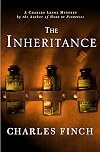
When I finished the previous title in the Charles Lenox series I said "This is my favorite." Now I may need to revise that assessment. Charles Lenox is maturing as a character, becoming more nuanced and more self-reflective. His friendships take center stage here as he explores a long-ago mystery that reemerges. The writing is evenly paced and descriptive without being repetitive.
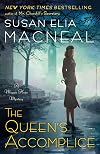
Maggie Hope is a serious, likeable young woman trying to do the right thing in a world and family gone mad. This sixth entry in the series is, unfortunately, the weakest. My initial thought was the writing was poorly edited and rushed. Next I found the book a "transition" book--written to introduce the next book in the series. Many major events were left unfinished and barely referred to in subsequent chapters. The character of Maggie is well-developed and clearly growing in her awareness of her own values and hopes. I do recommend this book but wish it were a stronger entry.
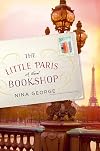
I loved this book! The language was beautiful and the descriptions of Monsieur Perdu's grief and loss were insightful and true to my experience.
I also loved the way people created the community and family they needed.
I also loved the way people created the community and family they needed.
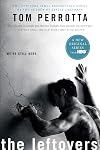
Really interesting premise and an unusual twist on the idea of the Rapture. The "action" of the murders seemed gratuitous and added for effect--
violence just for the sake of adding something to the story.
I read this close in time to reading "The Returned" and it was an interesting juxtaposition.
violence just for the sake of adding something to the story.
I read this close in time to reading "The Returned" and it was an interesting juxtaposition.
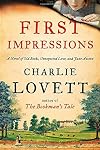
I often find stories when stories alternate between time periods it feels like a contrived technique. In First Impressions however the technique works and feels integral to the story.
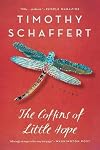
What wonderful, quirky characters populate this story! There are multiple layers to this story and while on one level there isn't much "action"
on another level there are multiple stories occurring. The mystery of the missing girl is not resolved and yet the book feels complete.
I highly recommend and look forward to reading more by Schaffert.
on another level there are multiple stories occurring. The mystery of the missing girl is not resolved and yet the book feels complete.
I highly recommend and look forward to reading more by Schaffert.
The Confession: An Inspector Ian Rutledge Mystery (Inspector Ian Rutledge Mysteries) by Charles Todd
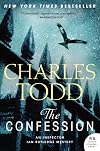
This was the first book I read by Charles Todd (mother-son writing team). I became impatient with the story and with the character of Rutledge; however after a month I was still thinking about the story and decided to re-read. I'm glad I did as I found I paid more attention the second time. While this isn't my favorite of the Rutledge books I still found the development of the moral sensibility of Ian Rutledge fascinating and well-illustrated in this volume.
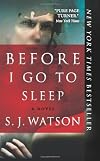
Months after finishing this I am still wondering about the lives of the characters after the story ended. The "villain" of the book is truly creepy and psychologically abusive. I anticipated the resolution but loved the story anyway.
Quick, light read that I thoroughly enjoyed while reading but can't remember much about a week after finishing. Would be a good "beach" read.
Gritty description of life in Germany during W W II. Memorable characters and brutal action yet humane and endearing.

Only the poetry of Emily Dickinson made this book tolerable. I wondered throughout if the author was trying too hard to be clever and over-reached the story of Austin and Mabel. That story alone would have been worth telling. The modern day parallel seemed contrived. I did not find any of the characters truly believable.
And Sometimes I Wonder About You: A Leonid McGill Mystery (Leonid McGill Mysteries) by Walter Mosley
A new Walter Mosley book is always a reason to celebrate. I love Leonid McGill and have wished there were more stories about this great character. Here is a man just trying to live his life the best he can and he is beset by all kinds of problems and people, especially in his family. He just wants to be a good man and take care of those around him. The reappearance of Leonid's father unsettles Leonid but is of unexpected help to his family, especially Leonid's wife. I would always welcome having Leonid on my side.
When I read the last sentences of this book I gasped. I loved this story and continue to think about it months after finishing it. What do miracles cost? Who pays and who gets to decide to whom "miracles" are given? I also loved the subtle way race was presented. I had read several chapters before I realized I had no idea the race of the characters. In some ways this reminds me of "Peace Like a River" by Leif Enger and there is no higher compliment I can give than that.
I found this book very thought provoking; undoubtedly this was due, in part, to the death of my husband two years ago. I kept wondering what I would do if, like the Hargraves, I was I met my husband at the door. Would I want him to return, even for a short time; would I believe it was in fact him?
The premise of the story was fascinating but often in the story I was frustrated by the lack of input from the "returned." Do they remember anything at all of the in-between-time? Was Mott simply telling the story from the point of view of those who lost loved ones?
I also pondered the theological implications of this event. All in all this was a somewhat disturbing yet captivating book. I thought about the characters and my reaction to the story for many days after finishing. Maybe in the end that is a true sign of a great book. (I was also intrigued by the issue of race in the story; it was subtle but there)
The premise of the story was fascinating but often in the story I was frustrated by the lack of input from the "returned." Do they remember anything at all of the in-between-time? Was Mott simply telling the story from the point of view of those who lost loved ones?
I also pondered the theological implications of this event. All in all this was a somewhat disturbing yet captivating book. I thought about the characters and my reaction to the story for many days after finishing. Maybe in the end that is a true sign of a great book. (I was also intrigued by the issue of race in the story; it was subtle but there)
While I figured out the big "reveal" about three-fourths of the way through the book I still found this story unexpected enjoyable. I was disappointed in the ending as it felt contrived but even with this fault I'm glad I read the story. I have a graduate degree in Medieval Studies and have generally found fictional accounts of this time-period either inaccurate or extremely dry. This account conveys the sense of time and place well and relatively accurately. I enjoyed this book much more than I expected.
Surprisingly compelling story about the discovery, testing and mass-production of penicillin. The competition between the pharmaceutical companies shows the underbelly of these companies desire for profits in the midst of great need.
One of my favorite Flavia books.
A Fine Summer's Day: An Inspector Ian Rutledge Mystery (Inspector Ian Rutledge Mysteries) by Charles Todd
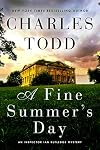
Even in his mid-twenties Ian Rutledge knew what he wanted to do with his life: speak for those who, because of murder, could not speak for themselves. This addition to the
Rutledge series introduces the young Rutledge on the eve of W W I. Rutledge is caught up in several seemingly unrelated murders scattered throughout England. He is also
newly engaged and trying to give his fiance the attention she requests. As always, Rutledge is a disciplined, moral man who considers carefully what his principles are and
follows them even at great cost. This "look back" added valuable insight into Rutledge's life--especially his relationship to his fiance and his sister.
Rutledge series introduces the young Rutledge on the eve of W W I. Rutledge is caught up in several seemingly unrelated murders scattered throughout England. He is also
newly engaged and trying to give his fiance the attention she requests. As always, Rutledge is a disciplined, moral man who considers carefully what his principles are and
follows them even at great cost. This "look back" added valuable insight into Rutledge's life--especially his relationship to his fiance and his sister.
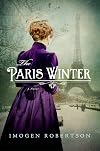
Unexpectedly good. Imogen Robertson was unknown to me before reading "The Paris Winter" and she is an excellent storyteller. Her descriptions of Paris in 1909-1910 read like an eyewitness account.. She caught the passion and desperation of those early women artists who absolutely HAD to create in spite of the hardships and sacrifices they experienced. I did figure out the ending about two-thirds of the way through the book but was intrigued to figure out how Maud was going to resolve her own need for vengeance.
Highly recommend.
Highly recommend.
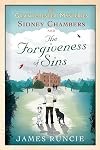
This book was on display at the library on the new books and I was captivated by the title. What a delightful read. About halfway through I thought the author must be related to the late Archbishop of Canterbury as he described the life of a village priest so intimately. James is indeed the son of the late Robert Runcie. James said in an interview that Sidney is "loosely" based upon his father. I loved the description of Sidney's moral dilemmas and his sensitivity to his calling. Found a treasure!
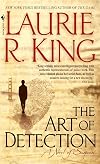
On one hand I struggled to finish this book as I found the storyline about Will difficult to read at this time in my life. On the other hand I've read Mary Kay Zuravleff's other two books and was willing to trust her. I'm so glad I persevered. Zuravleff perfectly captures a family falling apart but also trying desperately to stay together. Each voice is spot-on and individual. Some passages took my breath away with their beauty or insight. Looking forward to other works by Zuravleff.
Love Among The Chickens: A Story Of The Haps And Mishaps On An English Chicken Farm by P. G. Wodehouse

Story about Ukridge and his wife who start a chicken farm; Jeremy Garnet accompanies Ukridge, falls in love and faces many challenges due to Ukridge's dreams.
Ukridge stories plus manyother short stories, some with characters from the Jeeves books
Hesterley is charged with murder; accompanies an elderly woman from Scotland to
London
London
Nurse killed in clinic; Rathborne defends client who he finds is actually guilty

Miriam Gershow brings the lives of those tragic, strained faces seen too frequently on television who plead for information about a missing child. In pain-staking detail Gershow chronicles the reality behind the headlines and the new clips that the Pasternak family experiences after the disappearance of Danny, the “golden” child of the family. Bookish, awkward Lydia, the younger sister, wryly describes the disintegration of routine, her parent’s crumbling marriage and the desperate need for answers. Lydia finds herself suddenly sought out by her brother’s jock friends and befriended by an extremely extroverted classmate. As Lydia recounts family interactions and the treatment Danny both received and gave the reader comes to understand that this family’s brokenness occurred long before Danny disappeared. The realistic portrayal of this family often makes for uncomfortable reading and yet I felt compelled to continue to attend and not look away.
Maisie Dobbs has changed from the small, young girl who read through the night to the accomplished, well-educated woman of means. Maisie continues her investigative business utilizing the techniques taught to her by her mentor, Maurice. Through earlier cases Maisie came to the attention of Special Branch officials who are those watching the activities of those advocating peace at all costs. These officials ask Maisie to work undercover at a small college who advocate peace at all costs. While there the founder of the college is killed and Maisie assists in the investigation. While engaged in this activity we find Maisie also enlisting Billy’s help in investigating the suspicious death of one of Maisie’s friends. Maisie’s personal life also develops in this installment.
Flavia deLuce, that intrepid young chemist, is back in this third mystery following the Sweetness at the Bottom of the Pie and The Weed that Strings the Hangman’s Bag. During a church fete at Bishop’s Lacy when an old gypsy woman reads Flavia’s fortune, Flavia accidently sets the gypsy’s tent on fire. Flavia feels responsible for the gypsy and tells the gypsy she can park her caravan at Buckshaw, Flavia’s family home. The gypsy’s presences reawakens an old crime and Flavia must work to solve the mystery before more people are injured or killed while simultaneously dodging the attacks of her sisters. Flavia is funny, clever and incredibly observant.