Excellent biography of singer/actress Helen Morgan, well known throughout the 1920's and 1930's. Her role in the 1936 film Showboat is a winner and this version is so much better than the slick MGM version of 1951. Morgan also starred in the stage versions of Showboat in the original 1927 version. She also starred in the last version of the Ziegfeld Follies. She had multiple stepfathers and marriages. She was also a soft touch for anyone down on their luck or anyone who admired something she was wearing. She was an alcoholic and passed at the young age of 41. The author has done a great job of letting us know her life and has several valuable appendices that includes a stageography, filmography, radiography, discography, and principle cabaret appearances of which let us know what she was doing when. Found just one typo on page 73 where the word "playing" was used instead of the correct word "paying". Highly recommended.
Mom, Dad, Me, and Classic TV - Growing Up with Classic Television's Harry Ackerman and Elinor Donahue by Peter K. Ackerman
Very disappointing. I wanted to find out more about Elinor Donahue and especially her memories of working with Robert Young on Father Knows Best and the cast of the Andy Griffith Show. She was the first to play a sweetheart of Andy and was a lady pharmacist to boot which was unusual for the time but forward thinking of the writers to have a woman in that profession. I would love to know what she thinks about little "Opie" becoming an Academy Award winning director. She worked with many others in both tv and film that it would have been nice to know what she thought of them.
Instead the book is more about the author's life as the son of Elinor Donahue and producer Harry Ackerman, famous for his work on series Bewitched, The Flying Nun, and Gidget among others. While the author's memories of meeting people like Elizabeth Montgomery, Robert Young, and Paul Lynde among others were interesting and his work as a production assistant on various television shows showed the hard work the assistants do to make the show a success and appease the whims of cast members, that was not why I had purchased the book.
Additionally, the book needed to have a better set of eyes as a proofreader as there were spelling errors, sentence structure errors, and factual errors. As an example page 100 has "camera" spelled as "cameral". Page 104 has a sentence that reads "...one night our coach put our session on hold and us that he was coming in that night to help another actor..." Page 97 says about show more the tv series The Golden Girls that it was "a sitcom about three old ladies who lived together." It was four old ladies that lived together. show less
Instead the book is more about the author's life as the son of Elinor Donahue and producer Harry Ackerman, famous for his work on series Bewitched, The Flying Nun, and Gidget among others. While the author's memories of meeting people like Elizabeth Montgomery, Robert Young, and Paul Lynde among others were interesting and his work as a production assistant on various television shows showed the hard work the assistants do to make the show a success and appease the whims of cast members, that was not why I had purchased the book.
Additionally, the book needed to have a better set of eyes as a proofreader as there were spelling errors, sentence structure errors, and factual errors. As an example page 100 has "camera" spelled as "cameral". Page 104 has a sentence that reads "...one night our coach put our session on hold and us that he was coming in that night to help another actor..." Page 97 says about show more the tv series The Golden Girls that it was "a sitcom about three old ladies who lived together." It was four old ladies that lived together. show less
Excellent autobiography detailing Harry Carey Jr.'s work with John Ford. Carey was in 7 films directed by the great John Ford starting with 3 Godfathers. During that film, Carey was Ford's "whipping boy" who was constantly criticized by Ford for anything he did. Ford had one of these on every film. Carey's work in that film is amazing. The book is wonderful and provides many laughs, especially the stories about Ward Bond. While Ford was probably the best director of Westerns there ever has been, he was also a bully with the way he treated people. Some like Henry Fonda and even Ben Johnson walked away. Others like Carey's father and George O'Brien were ostracized for some infraction that they never found out what they did. Carey described some of his issues with alcohol that may or may not have been related to the tensions of working with Ford. This book provides a good look at what it was like on a John Ford film set.
Biography of screenwriter June Mathis - best known for The Four Horsemen of the Apocalypse (1921) and Blood and Sand (1922) and for introducing the world to Rudolph Valentino. She later held executive positions at Metro Pictures and Famous Players Lasky. She was only 40 when she passed of a heart attack and is interred next to Valentino. The author does a thorough job of examining the films she worked on. I wish there had been a succinct listing/chart/table of all films in which Mathis' had worked, listing title, year, major cast members, and Mathis' role. I also would have liked a a follow-up as to what happened to her husband and her step-sister Laura.
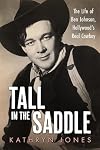
I had high hopes for this biography as Ben Johnson was one of the very best cowboy actors - EVER. However, it is discouraging when there are grammatical errors, and when you get a factual error or two, you really lose confidence in the author and have to make a decision as to whether you will continue reading the book or not.
Samples of spelling/grammatical errors were many but include:
"Hawk's biographer Todd McCarthy wrote that it remained "debatable" whether Hawk quit or was fired.." (p 28 - Director Howard Hawks name was plural and included an S on the end).
"After six long months of shooting. One-Eyed Jacks wrapped up location filming in June 1959." (p 115 - a comma was needed instead of a period).
Factual errors include:
P. 52: "...3 Godfathers tells the story of a trio-on-the-lam cowboys who escape to the desert after robbing a bank in a town named New Jerusalem." NO - the bank was robbed in a town named Welcome and the sole remaining cowboy of the three ended up in a town named New Jerusalem.
P. 88: "...at six feet, two inches tall, Ben dwarfed the five-foot, four-inch Ladd." I have never seen one quote of Ladd being at five-foot, four-inches - most have been five-foot, six-inches or five-foot, seven-inches. He would still be dwarfed by Johnson but the author should have provided a verifiable footnote on this height. And why did the author not use dashes in Ben's height but did in Ladd's?
P. 198: "...in 1964 from The Cincinnati Kid, starring Spencer Tracy as a show more high-stakes poker master..." Tracy was NOT in The Cincinnati Kid, it was Edward G. Robinson.
If you can overlook these kind of errors, the rest of the book presented many interviews with those who knew or worked with Johnson as well as quotes from Johnson himself. So with these you really got to know what kind of man Johnson was - overall fairly decent except for dalliances with women other than his wife. There was a filmography and a list of tv appearances.
I would have given this 5 stars except for the errors. show less
Samples of spelling/grammatical errors were many but include:
"Hawk's biographer Todd McCarthy wrote that it remained "debatable" whether Hawk quit or was fired.." (p 28 - Director Howard Hawks name was plural and included an S on the end).
"After six long months of shooting. One-Eyed Jacks wrapped up location filming in June 1959." (p 115 - a comma was needed instead of a period).
Factual errors include:
P. 52: "...3 Godfathers tells the story of a trio-on-the-lam cowboys who escape to the desert after robbing a bank in a town named New Jerusalem." NO - the bank was robbed in a town named Welcome and the sole remaining cowboy of the three ended up in a town named New Jerusalem.
P. 88: "...at six feet, two inches tall, Ben dwarfed the five-foot, four-inch Ladd." I have never seen one quote of Ladd being at five-foot, four-inches - most have been five-foot, six-inches or five-foot, seven-inches. He would still be dwarfed by Johnson but the author should have provided a verifiable footnote on this height. And why did the author not use dashes in Ben's height but did in Ladd's?
P. 198: "...in 1964 from The Cincinnati Kid, starring Spencer Tracy as a show more high-stakes poker master..." Tracy was NOT in The Cincinnati Kid, it was Edward G. Robinson.
If you can overlook these kind of errors, the rest of the book presented many interviews with those who knew or worked with Johnson as well as quotes from Johnson himself. So with these you really got to know what kind of man Johnson was - overall fairly decent except for dalliances with women other than his wife. There was a filmography and a list of tv appearances.
I would have given this 5 stars except for the errors. show less
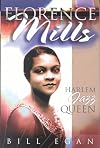
Excellent biography of Florence Mills. She started singing before she was 10 years old and later headlined shows as a singer/dancer (taught by Bill "Bojangles" Robinson). She seemed like a truly good person who did her best to overcome the prejudice of her time and want blacks to be treated well. She seemed to have a quiet dignity. Unfortunately, her voice was not recorded but the author did not really tell us why - was it because the equipment of the early 1920's could not accurately capture her sweet soprano or was it the prejudices of the time? She also was not captured in any film footage of the era which likely explains why she is not well known today. She passed in 1927 at the young age of 31. I wish the author had told us what happened with her sisters who she started her singing career with as well as other members of her trios after her sisters dropped out.
The Michael Jackson Tapes: A Tragic Icon Reveals His Soul in Intimate Conversation by Rabbi Shmuley Boteach
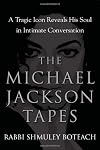
This book contains transcripts of taped conversations between Michael Jackson, and the author, Rabbi Shmuley Boteach. Shmuley was attempting to get Jackson on track, i.e. use his celebrity for good by working with parents, not children, getting off drugs, finding a lasting relationship with a woman, returning to the church, etc. While Shmuley was well intended, Jackson's desire to be the most famous person in the world prevented this. The one thing Shmuley did not seem to recommend to Jackson was that he get psychological counseling. Jackson had an infatuation with children, a fear of getting old and of old people, and a abhorrence of women. Additionally, he was addicted to prescription drugs like Demoral. And some people are not meant to be married - Jackson would not have been a good husband. Shmuley felt that if Jackson did not turn his life around, he would die young. Shmuley was proven right.
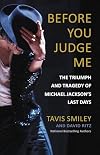
This book details the last few months of Michael Jackson's life. The strain of committing to 50 concerts instead of the original 10 caused Jackson much stress. In preparing for the concerts he was having botox treatments by one doctor to look younger which also included injections of demerol to relieve pain. Then he was having different meds, including propofol, to help him sleep by Dr. Conrad Murray. Like Elvis, he was getting different meds from different doctors which proved as fatal to Jackson as it did to Elvis.
Excellent biography of Michael Jackson. Author Taraborrelli not only attended a Jackson 5 concert as a child, he interviewed Michael and other family members numerous times throughout Michael's life as well as was at Neverland and attended Michael's trial. This author has done numerous excellent books including one on Sinatra and one on Elizabeth Taylor. This is a worthy addition to his publications. Well done.
Excellent book detailing the women stunt ladies. While many of the stunts were in Westerns, some ladies doubled in non-Western films. The book is divided into chapters for each woman and sorted by Before the Cameras (stunt women with Buffalo Bill's Wild West Shows and rodeos), Silent Stunters, and Stunting in the Talkies. A short chapter for each lady (along with photos) detail some of the films they stunted in and stars they stunted for. In the silent days, some of the ladies stunted for men like Tom Mix and Hoot Gibson. I was amazed at how long some of these ladies lived (well into their late 80's and 90's). I would have liked a filmography for each lady at the end of her chapter. One typo on page 135 where the word aboard was inserted where abroad should have been there. Well done.

Autobiography of singer/songwriter Jimmy Fortune, formerly with the Statler Brothers. This book tells of his journey from the mountains of Virginia to being picked as the tenor singer for the Statler Brothers. With the Statler's he also wrote several hit songs like "Elizabeth" and "More Than a Name on a Wall". His journey through life and his faith in the Lord are inspiring.
Biography of songwriter (music) M.K. Jerome who wrote for many Warner Brothers films and did the beautiful song throughout the 1943 film Stage Door Canteen entitled Goodnight Sweetheart. The book was written by his grandson. He also wrote the song Knock on Wood which was featured in Casablanca. Jerome was born Maurice Kraus and worked on Tin Pan Alley for Irving Berlin's publishing firm. The book provides a good view of what it was like to be a songwriter for a film studio where you had to write songs to fit situations which certainly would be more challenging than just sitting down to write a song based on your thoughts or feelings. The book provides a good look at his life and the downturn songwriters of that generation experienced when rock and roll became popular. Jerome did well enough as he had a home in Hollywood an was able to put his grandson through college. I wish though, the author had followed up on his grandmother as well as his parents as they were integral parts of Jerome's life. There are misspellings on page 111 with Brynie Foy for Bryan Foy and page 114 with Pat O'Brian for Pat O'Brien. The book concludes with some commentary from Will Friedwald, cited songs by chapter, and recommended reading and listening. Overall a very good book. I would hope the author would create a Wikipedia listing for his grandfather.
This was an excellent biography of Carole Lombard who tragically lost her life in an airplane crash in early 1942 when returning home to husband Clark Gable from a war bond tour. The book gave a lot of great info on her early life in Indiana and especially her mother and two older brothers. Her love of film developed early and she started in Mack Sennett comedies before graduating to some really great films like My Man Godfrey with ex-husband William Powell and Twentieth Century with John Barrymore. She also shone in dramatic roles in Vigil in the Night but the public preferred her as a comedienne. She had a knack for reading scripts and working with great directors as well as identifying up and coming actors and giving them a start. The book is hard on Clark Gable for his frugality and side affairs with women. The book includes a filmography. Highly recommended.

A look at 50 of the films made during Hollywood's Pre-Code era (1930-1934). These are great films that push the censorship of the times. After 1934, many of these films were either significantly cut on re-release or not able to be released at all due to the more stringent Production Code under Joseph Breen. My personal favorites of this era are Red-Headed Woman with Jean Harlow, Three on a Match with Ann Dvorak, and Baby Face with Barbara Stanwyck. Read about the films and then try to catch them on Turner Classic Movies.
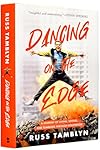
Always enjoyed Russ Tamblyn's film work - especially the incredible dance sequence in Seven Brides for Seven Brothers. Not a really big fan of West Side Story but he also did incredible dancing there as well. He was under contract at MGM for many years. I am glad he found a path (in addition to acting) in artwork to hone his many talents. I just wonder though, if he would have wanted one of his daughters to be one of six shacked up with a man, as he was.
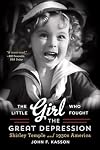
Interesting look at Shirley Temple and how she (and FDR) got the country through the Depression. I would have to agree with the author on this as her films were upbeat and got folks' minds off their troubles. She was a talented kid but pushed by a stage mother. While she earned over $3 million during her short career, between mom and her banker father, she found she only had about $44,000 when she married her second father. Sometimes though, the book read more like a textbook which is why I gave it 4 stars instead of 5.
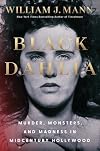
Very good look at the last months of Elizabeth Short's life, her tragic death, the sensational newspaper coverage, and the police investigation. The police certainly went through a lot of potential suspects but never charged anyone. The mishandling of some of the case by so-called police psychiatrist J. Paul de River really showed how inept leadership at the police were including removing the two original investigators. I would have to agree with whom the author (and one of the police) felt was the actual killer. There are some good photographs in the book as well. I would have given the book 5 stars but the fact that you have to access notes via a QR code made me reduce this to 4 stars. I do not buy ebooks but invest in hard / soft copy books. I do not want to read a book on a screen. I would have poured through these notes if they had been available. I hope this is not the future trend of notes in any biography.
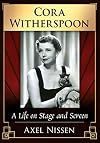
Great book on character actress Cora Witherspoon who usually played snobby society women in films in the 1930's and 1940's. She was born in New Orleans and had a successful career on Broadway and touring the US in stage productions before going to Hollywood. She also appeared on television during the early days in the 1950's. The author did a lot of research on her stage career including reviews and where she appeared across the country. I would have liked to have seen her career summarized in a filmography, list of stage performances with dates/locations and television appearances. On page 147 the author identified actor Richard Barthelmess as a silent picture star which he was but Barthelmess also had a successful career in sound films in the early 1930's.
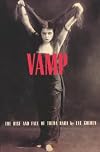
Good biography of silent screen legend Theda Bara. Especially noteworthy is the author's work on summarizing Bara's films when most of them are considered lost. Well researched with a filmography.
This was a nice book but I could not get through it for several reasons: 1) the print was too small which made it (for me) difficult to read and since it was oversized I could not hold book and magnifying glass; 2) disappointed that the photos did not have captions; 3) many of the films discussed I had not seen; and 4) the discussion of the films I had seen became too technical with talks of lenses. While I was familiar with lenses and F-stops from my past as a still photographer I had hoped for more discussion of working with the director/actors for the films I was familiar with. This will appeal more to folks who want camera details.
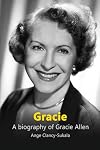
Book could have been so much better if it had had a proofreader. There were numerous instances where the same sentence (or almost the same) was presented in two consecutive paragraphs (pages 32, 66-67 and 110). I would have liked to have seen early photos of Gracie when she was on stage with her sisters. The author also should have indicated that after her death, Gracie has top billing as she is "above" George at Forest Lawn so they are Allen and Burns. I did learn some things about her early life that I did not know. I also think these books should follow-up as to what happened with her children/grandchildren. I do need to say that there was a filmography and to my delight, a list of the tv shows, including all 8 seasons with Burns and Allen including air dates, and her appearances on The Jack Benny Show. Additionally there was a list of stops for Gracie's Presidential campaign in 1940 and information on The Gracie Awards.
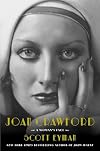
Another well researched book by Scott Eyman on Joan Crawford. For the first time, really got an idea of what she was like - a dedicated film star intent on doing her best work before the camera and one who was devoted to her fans. And despite her affair with Gable and marriages to actors Douglas Fairbanks Jr, Franchot Tone, and Philip Terry, her true love seemed to be Pepsi president Alfred Steele. Yes, she could be demanding but it seemed to be about her work and how she felt she should be treated. The relationship between her adopted children is discussed and I would have to agree that both Christina and Christopher were difficult, belligerent children while her relationship with Cindy and Cathy seemed to be normal. As she aged, she became more isolated (but isn't that the case with most of us) but still maintained her own place. I saw one discrepancy in that in 1931 she starred in Today We Live with Gary Cooper, Franchot Tone, and Robert Young. Initially in the film she was in love with Young but after meeting Cooper fell for him (who wouldn't??). The film is discussed by the author on page 114. But then on page 138 when he discusses 1937's The Bride Wore Red and makes the comment "It was Crawford's first picture opposite Robert Young" which was not true because he was in the 1931 film. Otherwise, the book is a good, honest look at Joan Crawford the film star and Joan Crawford the woman. There is no filmography though.
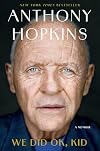
Autobiography of two time Academy Award winner Anthony Hopkins whose childhood was unbelievable. He was constantly told he was stupid - by his parents and by his teachers. At one point in school he was asked to read a poem and the teacher told him he did good. That was the first praise he had ever gotten. He was a loner and did not have much confidence in himself but finally made it to the Royal Academy of Dramatic Arts and eventually the stage. It was in films that he really shone (and which he prefers). Very good book.
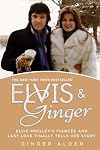
The author was in Elvis Presley's life for the last 9 months of his life. She was just 20 years old so once again, Presley gets a very young woman in his life (his comment that what would he do with a 40 year old woman is revolting). The Elvis portrayed in this book is different from what is in previous books by folks like Linda Thompson, Priscilla Presley, and biographer Peter Gularnick. He is a lot less controlling than portrayed in the other books but you don't know if the author did not want to show this side of him. His tendency to take a gun to things he didn't like such as a television set or a running toilet shows he is somewhat unbalanced. The author was with Presley just a few months and indicated she did not get to know the others who lived and worked with Elvis very well. She also did not stay at Graceland "full-time" as Linda Thompson did. She is the one who discovered Presley's body and is telling her story over 35 years after Presley's death. She was aware of Presley's use of drugs to sleep and could not understand that and every time she attempted to talk to Presley about it he would get angry. She said she didn't get to know most of the folks living/working at Graceland but she wasn't there very much and when she was there she spent her time with Presley. I got the impression she was somewhat immature. She left a lot of unanswered questions. 1) After the reports came out about the extent of drugs in Presley, what opinion did she have on cause of death as show more she seems to imply that she believed the initial reports of heart attack; 2) While Elvis promised to pay the mortgage on her mother's home, his death stopped that even though her mother sued the estate. We never found out if her mother was able to keep the home or had to sell it; 3) How would she have handled Presley's infidelities which is one of the reasons Thompson left him; and 4) Being young she expected a happy marriage with a son by Presley but with two woman having left him because he was smothering them with his control, would she have been able to survive that? I would have liked these questions answered which is why I did not give the book 5 stars. show less
A little thing called life : on loving Elvis Presley, Bruce Jenner, and songs in between by Linda Thompson
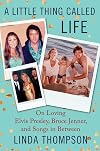
Well written book by actress/lyric writer Linda Thompson. Her first relationship was with Elvis Presley for almost 5 years. He was controlling and wanted her to be available all the time - yet he could have affairs and justified this to her. Additionally he liked for her to talk to him in baby talk. She did a lot to keep him alive during these last years, staying awake at night to make sure his breathing was right. I don't know how she did it. Her first marriage was to Olympic champion Bruce Jenner to whom she had two sons. Shortly after the birth of the second son, Jenner told her he identified as a woman and wanted to transition but to remain married to her as a woman. While she did her best to support him, she divorced him. He essentially had little to no communication with his young sons despite her efforts. Her third marriage was to record producer, arranger, composer, and musician David Foster who had three marriages prior to Thompson. This should have been a sign. While they were married for 14 years and were a successful songwriting team with Thompson writing the lyrics and Foster the music. One of their songs written for the Kevin Costner/Whitney Houston film The Bodyguard was nominated for an Academy Award. Foster was extremely controlling to the point where he did not want anyone to sit in his kitchen chair - even when he was not home. He resented living in the home she and Jenner had purchased and contributing to her sons expenses since she had asked for no show more alimony or child support from Jenner. This book should show women that they need to stick up for themselves instead of being ruled by people like Elvis Presley or David Foster. show less
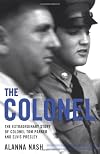
Very good book that shows Col Parker's relationship with Elvis. This man took advantage of Elvis, his father, and the estate. A 50% commission, while to Elvis and his family, seemed like they were getting a good deal, was robbery. This is especially because the Colonel had the nerve to then charge Elvis for expenses. The author had a lot of interviews with those who worked with both Elvis and the Colonel and did appropriate follow-up as to what the Colonel's estate was when he passed.
The colonel and the king : Tom Parker, Elvis Presley, and the partnership that rocked the world by Peter Guralnick
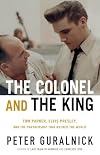
Author Peter Guralnick, who did the two volume biography of Elvis Presley, now takes on the relationship between Colonel Parker and Elvis. The book begins with biographical data on Colonel Parker, his Dutch background, and coming to the US as an illegal immigrant, his days in the carnival, as director of an animal shelter in Florida, and then his beginnings of managing music stars from Gene Austin, to Eddy Arnold, to Hand Snow, and then to Elvis. Many of the deals are explained but it is plain that the Colonel is taking advantage of the business ignorance of Elvis and his father with his 50% take (which is not on everything but even 25% is over industry standard). After Elvis' death, the Colonel continues to promote Elvis. However, the end of the biography section on the Colonel does not tell us what, upon his death, the Colonel's estate was worth or much about what, if any, funeral services were held. The second section details letters the Colonel wrote throughout the years, to Elvis, Vernon Presley, Hal Wallis (director of many of the films), officials at RCA, etc. The Colonel does pretty good for someone with a 4th grade education but I'm sure the executives saw through the misspelled words and corn pone humor. In the end though, the Colonel was an excellent deal maker - more so for himself than for Elvis.
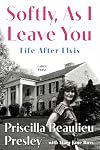
This book continues events in Priscilla's life after her first book (Elvis and Me) written decades ago. She updates us on all her activities - both films/tv as an actress and her charity work. I think she shows a maturity and learning that Elvis never did and question whether, with his "guys" around all the time, if he ever would have if he had lived. The losses Priscilla suffered with losing first grandson Benjamin and then Lisa Marie had me in tears. The fact that she continues to persevere and not only wrote this book but is going out and doing her show An Intimate Evening with Priscilla Presley (which I will see this week) shows her resilience.

Look at life with Elvis from Priscilla's viewpoint. She was a child of 14 when she met him and 17 when she moved into Graceland to live with him. As a "mama's boy" Elvis did not have sex with her until they married but they did heavy petting. Essentially she was a child he groomed. She could not express her own opinion about his music, even though he asked for it, as he became angry if she disagreed with him. After they married and she had a child, he became more distant and she knew he was seeing other women. For her own sanity and personal growth she had to leave him. A good move on her part. Essentially Elvis wanted her to be the good little wife to meet his needs but not have any thoughts of her own. A good book.
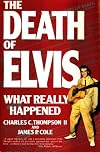
Amazing book that discusses the "cover up" on cause of Elvis Presley's death, i.e. the hospital announced heart disease BEFORE the toxicology results were in. His heart was enlarged but others on the team felt it was not the cause of death. The head of the hospital never changed his story even after toxicology results showed he had 10 times the safe level of codeine as well as 13 other drugs include Quaaludes with borderline toxicity, the head of the hospital never changed his opinion. The book talks about the fight to get the autopsy results and various investigations into the doctors who prescribed all this medicine include the main doctor, Dr. George Nichopoulos, who just from Jan-Aug 1977 (when Elvis passed) prescribed a total of 8,805 pills for Elvis (and I do not know if this includes the drugs he injected into Elvis). It is sad as Elvis thought because a doctor prescribed this stuff it was safe but at same time, he had several doctors he would request drugs from and none said no to him. I won't say what the authors felt, with consultants, were the final 4 possibilities as to what happened were - you will have to read it yourself - but it is sad.