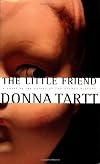
This novel isn't for everyone, but those who enjoy modern Southern Gothic will like it. Set in a small Mississippi town in the 1970s, all of the gothic themes are in here--focusing on gloom, terror, and certain amount of confusion of good and evil; turning institutions like religion, education, and marriage on their head; showing the lies of society's rules and customs, and how the world is anything but an orderly and sensible place; demonstrating the corruption and hypocrisy of societies institutions; ripping apart common stereotypes.
Or, to put things more concretely, in the words of novelist Pat Conroy: "My mother, Southern to the bone, once told me, 'All Southern literature can be summed up in these words: On the night the hogs ate Willie, Mama died when she heard what Daddy did to Sister.'"
Those who need a pat and neatly-tied-up ending shouldn't read Tartt's book, or if they do will be disappointed. I couldn't put it down, mainly because I kept wanting to see where Tartt was going with this. I found myself getting lost in this thing and staying up late three nights in a row reading, which these days is very unusual for me. All I can say is, Tartt's writing cast a weird spell over me.
Harriet Cleve Dusfrsnes--12 years old, fierce, bossy, and unsupervised by those who ought to care about what troubles her. One of her great aunts says to her that it's "awful" being a child--"at the mercy of other people."
Tartt's third book, The Goldfinch is one of my favorite novels. show more This one isn't, but it certainly is memorable. Probably the highest praise I can give the book is that it makes me want to re-read my Flannery O'Connor. show less
Or, to put things more concretely, in the words of novelist Pat Conroy: "My mother, Southern to the bone, once told me, 'All Southern literature can be summed up in these words: On the night the hogs ate Willie, Mama died when she heard what Daddy did to Sister.'"
Those who need a pat and neatly-tied-up ending shouldn't read Tartt's book, or if they do will be disappointed. I couldn't put it down, mainly because I kept wanting to see where Tartt was going with this. I found myself getting lost in this thing and staying up late three nights in a row reading, which these days is very unusual for me. All I can say is, Tartt's writing cast a weird spell over me.
Harriet Cleve Dusfrsnes--12 years old, fierce, bossy, and unsupervised by those who ought to care about what troubles her. One of her great aunts says to her that it's "awful" being a child--"at the mercy of other people."
Tartt's third book, The Goldfinch is one of my favorite novels. show more This one isn't, but it certainly is memorable. Probably the highest praise I can give the book is that it makes me want to re-read my Flannery O'Connor. show less
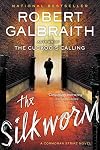
I guess at some point just about every novelist, if they write long enough, feels the need to get the "novel about writers writing," the book industry, etc. out of their system. They all do it, and some better than others (John Irving's Last Night in Twisted River comes to mind). Here is Rowling's crack at it. It's possible that the intricacies of literary London are simply over my head.
Can we say a word about the epigraphs? Oof. Yeah. OK. Jacobean.
Overwrought was the word that often came to mind as I plowed through this thing. Maybe overblown. Strained. Certainly I strained to get to the ending. Why? I can't say. 455 pages; 50 chapters; 900 characters (OK, so I'm exaggerating about the characters). I think I have Kindle to thank (blame) for staying with this book. At about chapter 28, I thought--surely, I'm about at the end. My Kindle edition had no TOC and no page numbers. If I had pulled this thing off the library shelf and flipped through it, there's about a 99% chance that I would have put it right back on the shelf.
If someone reads this because they're a Rowling fan, then they'll probably like it. If they read it because they enjoy a good detective/mystery story--well, frankly, Galbraith/Rowling just isn't very good at writing in that genre. She gets incredibly generous reviews, but a Tana French or a Stieg Larsson, she's not. The Harry Hole series by Jo Nesbo offers a much more believable crime/detective hero than Rowling's Cormoran Strike. Strike's leg thing gets show more old in this book just like it did in Cuckoo's Calling, but mostly Strike isn't particularly believable as a PI. He's supposedly an ex-SIB (Special Investigation Branch), but Rowling seems to have forgotten Strike's background. She certainly doesn't use it with any depth. show less
Can we say a word about the epigraphs? Oof. Yeah. OK. Jacobean.
Overwrought was the word that often came to mind as I plowed through this thing. Maybe overblown. Strained. Certainly I strained to get to the ending. Why? I can't say. 455 pages; 50 chapters; 900 characters (OK, so I'm exaggerating about the characters). I think I have Kindle to thank (blame) for staying with this book. At about chapter 28, I thought--surely, I'm about at the end. My Kindle edition had no TOC and no page numbers. If I had pulled this thing off the library shelf and flipped through it, there's about a 99% chance that I would have put it right back on the shelf.
If someone reads this because they're a Rowling fan, then they'll probably like it. If they read it because they enjoy a good detective/mystery story--well, frankly, Galbraith/Rowling just isn't very good at writing in that genre. She gets incredibly generous reviews, but a Tana French or a Stieg Larsson, she's not. The Harry Hole series by Jo Nesbo offers a much more believable crime/detective hero than Rowling's Cormoran Strike. Strike's leg thing gets show more old in this book just like it did in Cuckoo's Calling, but mostly Strike isn't particularly believable as a PI. He's supposedly an ex-SIB (Special Investigation Branch), but Rowling seems to have forgotten Strike's background. She certainly doesn't use it with any depth. show less
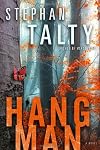
I loved Stephan Talty's first novel, Black Irish. I enjoyed but didn't love this second novel with Buffalo native homicide detective Abbie Kearney. The Buffalo setting, a city in decline, is an interesting setting for the novel; Talty obviously knows the city well, although if you missed his first novel, then you missed a lot of what Talty has to say about the city--and also about Abbie as well. Maybe I've read too much in the police procedural genre, but I'm beginning to weary of the serial killer meme. The "twist" at the end seemed forced. I have the sense from this book that Talty has already explored to the limit the nuances of his protagonist, Absalom Kearney. Maybe I'm wrong--I hope I'm wrong, because surely there will be more in this series.
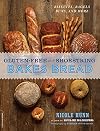
This is not your mother's kitchen. Nor yours, either, if you haven't been paying attention. Gluten-free recipes are taking over, and whether this is just another diet fad or whether it is here to stay is still up for grabs. But let's put all of that aside and just say you're convinced for whatever reason about eating gluten-free. Gluten-free bread in the stores is not only expensive, but it also often tastes like sawdust. Enter Nicole Hunn with her gluten-free bread recipes.
These recipes are tasty and wonderful, but they are not for the casual baker. To get the most out of this cookbook, you must be committed to the gluten-free diet, and also committed to baking, gluten-free. Committed enough to buy the multiple varieties of flours that Nicole uses in these recipes. Here's a sample of what I've bought so far, and I'll think I have everything I need, just to realize that I'm missing yet another ingredient: superfine white rice flour, potato starch (not to be confused with potato flour, because they are different, and you'll need both), tapioca starch (which is the same as tapioca flour, so you're OK there), teff flour, sweet white sorghum flour, brown rice flour, white rice flour, xanthan gum--I know I've forgotten some. Then you'll need a French rolling pin, lidded plastic proofing buckets (a couple of different sizes), a pizza peel, a pizza stone, a Kitchen Aid stand mixer is nice--are you getting it? Also, these recipes cannot be reliably made without a scale that show more measures grams. IF you're willing to commit to this level, then you will love this book and you will delight in these recipes.
I gave it 5 stars, even though more pictures would have made it a better book. That and better organization. OK, so maybe it should be 4 stars, but I'm giving it 5 because of the fabulous results I'm getting from these recipes. show less
These recipes are tasty and wonderful, but they are not for the casual baker. To get the most out of this cookbook, you must be committed to the gluten-free diet, and also committed to baking, gluten-free. Committed enough to buy the multiple varieties of flours that Nicole uses in these recipes. Here's a sample of what I've bought so far, and I'll think I have everything I need, just to realize that I'm missing yet another ingredient: superfine white rice flour, potato starch (not to be confused with potato flour, because they are different, and you'll need both), tapioca starch (which is the same as tapioca flour, so you're OK there), teff flour, sweet white sorghum flour, brown rice flour, white rice flour, xanthan gum--I know I've forgotten some. Then you'll need a French rolling pin, lidded plastic proofing buckets (a couple of different sizes), a pizza peel, a pizza stone, a Kitchen Aid stand mixer is nice--are you getting it? Also, these recipes cannot be reliably made without a scale that show more measures grams. IF you're willing to commit to this level, then you will love this book and you will delight in these recipes.
I gave it 5 stars, even though more pictures would have made it a better book. That and better organization. OK, so maybe it should be 4 stars, but I'm giving it 5 because of the fabulous results I'm getting from these recipes. show less
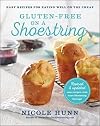
Anyone who has ever done any gluten-free shopping knows that gluten-free generally will cost somewhere around 20-30% (or more) more than regular gluten flour products, and with the price of groceries going up astronomically, who needs that, right? For example, I just bought a bag of eight gluten-free frozen biscuits for $7.95. Are you kidding me? Plus, they literally had no taste and the texture was like sand.
This is a cookbook that takes the sting out of the cost of eating gluten-free. These recipes look very good, for things like flour tortillas, cheese crackers, pastry crust, French bread, various flatbreads, pizza dough, pancakes--you get the idea.
Naturally, a person has to be willing to bake. The past couple of years, I've been saving a lot of money by baking my own bread (I figure my bread costs me about 50 cents per loaf). I save money, plus I just enjoy baking bread. Figuring out how to make gluten-free bread has been something of a challenge. I finally found a recipe for great gluten-free bread in The New Artisan Bread in Five Minutes a Day (their method is the only one I use for making bread). However, it involved buying 3 kinds of flour plus xanthan gum, so it's something of a hassle--but good. In this new cookbook, the author mentions a website where you can buy all-purpose gluten-free flour in bulk, saving boatloads of $$. The website is www.betterbatter.org for anyone who is interested. Their all-purpose flour contains the three flours from the Artisan show more Bread cookbook, plus the xanthan gum, which is one of the more expensive ingredients in the Artisan recipe ($14 for an 8 oz. bag in my grocery store).
This "Shoestring" cookbook appears to have some great recipes, plus excellent tips for streamlining work in the kitchen and saving money, in general. My biggest knock on the book is that it has very few pictures. Oh well. The audience for this cookbook seems to be young people just starting out who haven't been taught very much about how to eat at home on a budget. It would make an excellent gift for any young person just setting up housekeeping who is interested in learning how to shop and cook on a budget. Or for someone who is wondering how to cook gluten-free for dinner guests (you don't have to buy flour in bulk--you can get a small bag of gluten-free flour in any store that sells Bob's Red Mill brand). Or for anyone who is new to the gluten-free diet and is wanting to avoid processed food and make your own.
Highly recommended, 4-stars; pictures would have made it a definite 5-star effort. show less
This is a cookbook that takes the sting out of the cost of eating gluten-free. These recipes look very good, for things like flour tortillas, cheese crackers, pastry crust, French bread, various flatbreads, pizza dough, pancakes--you get the idea.
Naturally, a person has to be willing to bake. The past couple of years, I've been saving a lot of money by baking my own bread (I figure my bread costs me about 50 cents per loaf). I save money, plus I just enjoy baking bread. Figuring out how to make gluten-free bread has been something of a challenge. I finally found a recipe for great gluten-free bread in The New Artisan Bread in Five Minutes a Day (their method is the only one I use for making bread). However, it involved buying 3 kinds of flour plus xanthan gum, so it's something of a hassle--but good. In this new cookbook, the author mentions a website where you can buy all-purpose gluten-free flour in bulk, saving boatloads of $$. The website is www.betterbatter.org for anyone who is interested. Their all-purpose flour contains the three flours from the Artisan show more Bread cookbook, plus the xanthan gum, which is one of the more expensive ingredients in the Artisan recipe ($14 for an 8 oz. bag in my grocery store).
This "Shoestring" cookbook appears to have some great recipes, plus excellent tips for streamlining work in the kitchen and saving money, in general. My biggest knock on the book is that it has very few pictures. Oh well. The audience for this cookbook seems to be young people just starting out who haven't been taught very much about how to eat at home on a budget. It would make an excellent gift for any young person just setting up housekeeping who is interested in learning how to shop and cook on a budget. Or for someone who is wondering how to cook gluten-free for dinner guests (you don't have to buy flour in bulk--you can get a small bag of gluten-free flour in any store that sells Bob's Red Mill brand). Or for anyone who is new to the gluten-free diet and is wanting to avoid processed food and make your own.
Highly recommended, 4-stars; pictures would have made it a definite 5-star effort. show less

No, this is not the "definitive" biography of Sinclair Lewis; however, Mark Schorer's biog "definitely" destroyed Lewis's career, at least for a generation (c.1960-1990) and possibly longer. Chances are, if you were in school during those years, you weren't assigned to read anything by Sinclair Lewis.
Schorer despised Lewis, and his "serene loathing" of Lewis, as Gore Vidal once called it, is found throughout the book. Vidal once asked Schorer (a man who drank almost as much as Lewis) why he had taken on a subject he so clearly despised. Schorer's answer: money.
Read this biog if this sort of reputation destruction interests you (in academic circles where reputation-building is taught, Schorer's book is an exemplar of destruction), but don't stop there. Try a more recent Lewis biog by Richard Lingeman (2005), Sinclair Lewis: Rebel from Main Street.
Schorer despised Lewis, and his "serene loathing" of Lewis, as Gore Vidal once called it, is found throughout the book. Vidal once asked Schorer (a man who drank almost as much as Lewis) why he had taken on a subject he so clearly despised. Schorer's answer: money.
Read this biog if this sort of reputation destruction interests you (in academic circles where reputation-building is taught, Schorer's book is an exemplar of destruction), but don't stop there. Try a more recent Lewis biog by Richard Lingeman (2005), Sinclair Lewis: Rebel from Main Street.
The story and writing were bland and unmemorable. There was nothing interesting enough about the character or the setting to make me want to pick up the next one in the series.
The Kennedy Half-Century: The Presidency, Assassination, and Lasting Legacy of John F. Kennedy by Larry J. Sabato
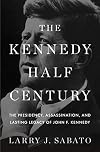
True to the its subtitle, the book covers the Kennedy presidency, assassination, and the legacy of JFK, particularly as it relates to the presidents who have come after him. This book is recommended for American political history wonks, naturally. However, I would also recommend it as an excellent overview of the past 50 years for anyone who would like to understand that period better, particularly as it relates to the American presidency.
There's an excellent website that's associated with the book:http://www.thekennedyhalfcentury.com/
Sabato has done a thorough job, and while of course not everyone will agree with all of his conclusions, fully one-fourth of the book is notes, many of which include further references to documents that can be accessed on the internet.
Highly recommended.
There's an excellent website that's associated with the book:http://www.thekennedyhalfcentury.com/
Sabato has done a thorough job, and while of course not everyone will agree with all of his conclusions, fully one-fourth of the book is notes, many of which include further references to documents that can be accessed on the internet.
Highly recommended.
Well, here I go again, I guess, but I haven't read a novel this bad since. . .oh, probably [The Execution of Noa P. Singleton]. That was another "Best Book of the Month" by Amazon. The Eggers book was the best book (or novel, or whatever) for Oct. 2013. I chose this book because of a discussion group here at LT, and that's the only reason I finished the thing.
This is supposedly a [1984]-type book (don't get me started on the positive comparisons people have made between Eggers and Orwell) about social media and how it could affect our lives, if pushed to the extreme.
There are so many places where Eggers fails to deliver. To mention a few: The main premise of the book is absurd: that we will be better people if we are constantly being watched. If that's satire, then he could work with that, but Eggers never makes clear whether this is satire, camp, or what? The characters are cardboard cutouts; the protagonist is too wooden, shallow, and insipid even to dislike. The writing is juvenile. The sex scenes ditto (and laughable--and cringeworthy).
I think Eggers meant this for satire, but Eggers brags in an interview about having done no research for the book, and what he offers is too thin and facile for satire. Dystopian? How about just dopian? To add insult to injury, this thing is so long, tedious, preachy, and repetitious that it was simply painful to read.
Rated at half a star because I couldn't figure out how to give it less.
Eggers is supposedly thought of quite highly as show more a writer in some of his previous works: [A Heartbreaking Work of Staggering Genius], for example, or [Zeitoun]. But this book was my first impression of Eggers, and you only get one chance at a first impression. I'd have to be stranded on a 12-hour flight with nothing else to read for me to be induced to pick up one of his other books. show less
This is supposedly a [1984]-type book (don't get me started on the positive comparisons people have made between Eggers and Orwell) about social media and how it could affect our lives, if pushed to the extreme.
There are so many places where Eggers fails to deliver. To mention a few: The main premise of the book is absurd: that we will be better people if we are constantly being watched. If that's satire, then he could work with that, but Eggers never makes clear whether this is satire, camp, or what? The characters are cardboard cutouts; the protagonist is too wooden, shallow, and insipid even to dislike. The writing is juvenile. The sex scenes ditto (and laughable--and cringeworthy).
I think Eggers meant this for satire, but Eggers brags in an interview about having done no research for the book, and what he offers is too thin and facile for satire. Dystopian? How about just dopian? To add insult to injury, this thing is so long, tedious, preachy, and repetitious that it was simply painful to read.
Rated at half a star because I couldn't figure out how to give it less.
Eggers is supposedly thought of quite highly as show more a writer in some of his previous works: [A Heartbreaking Work of Staggering Genius], for example, or [Zeitoun]. But this book was my first impression of Eggers, and you only get one chance at a first impression. I'd have to be stranded on a 12-hour flight with nothing else to read for me to be induced to pick up one of his other books. show less
Reardon has done an excellent job with these letters. Anyone interested in Julia Child, Bernard DeVoto, the early life of Mark DeVoto, Cambridge, Mass. in the 1950s, American book publishing in the 1950's, American cooking in the 1950s, the hatred of Democrats for the Eisenhower administration through the eyes of Avis DeVoto, or the making of Julia Child's masterpiece cookbook, Mastering the Art of French Cooking, will enjoy this book. 5 stars, with no hesitation. Highly recommended.
I read a lot of literary correspondence, and I have a large collection of letter editions (much unread) on my shelves. I think I really got interested in other people's letters when I was in grad school doing work on Willa Cather. In an article about the letters written for the Willa Cather Newsletter and Review, Andrew Jewell writes: "For many Willa Cather scholars, there are certain missing manuscripts that haunt the mind. . . ." Jewell captures perfectly the feeling I have about these letters--I've been haunted by them since I started studying Cather 20 or so years ago. To think that they can finally be quoted from--and we can throw out those nasty paraphrases!!--is nothing less than a revolution in Cather scholarship.
The provision of Cather's will stated that her letters couldn't be published or quoted from. She had a nephew who lived into his 90s who very strictly adhered to Cather's wishes. The Cather scholars at the U of Nebraska, led by Susan Rosowski, had a very good relationship with Charles Cather, and they were respectful of his intention to honor Cather's wishes about the letters. When Charles Cather died in about 2008, he made a gift to the University of a collection of manuscripts, letters, and other artifacts from Cather's working life the likes of which will literally change the landscape of future Cather scholarship.
It's not my purpose here to argue whether the letters should or shouldn't be published. I believe the Cather Foundation has done the right show more thing by publishing them, and I also believe that Janice Stout and Andrew Jewell, the book's editors, were the right people to put out this first book. I would also predict that in the not-so-distant future we will see a book of Cather Family Letters edited by someone in the Cather family.
Stout and Jewell did a good job with this book. Choosing what to include and what to leave out--only about 10% of the existing collection appears in the book--must have been a difficult task, and I think they've done an admirable job. My one quibble with the book, and it's a pretty big one, is that the editorial notes to guide the reader through these letters are extremely limited. This was obviously an editorial choice, and I don't know their thinking behind the minimalist approach. For the general reader, I imagine the lack of notes will feel like a curious omission--or a frustrating lack.
In my head, this book ought to get 4 stars, but from my heart I'm giving it 5 stars. show less
The provision of Cather's will stated that her letters couldn't be published or quoted from. She had a nephew who lived into his 90s who very strictly adhered to Cather's wishes. The Cather scholars at the U of Nebraska, led by Susan Rosowski, had a very good relationship with Charles Cather, and they were respectful of his intention to honor Cather's wishes about the letters. When Charles Cather died in about 2008, he made a gift to the University of a collection of manuscripts, letters, and other artifacts from Cather's working life the likes of which will literally change the landscape of future Cather scholarship.
It's not my purpose here to argue whether the letters should or shouldn't be published. I believe the Cather Foundation has done the right show more thing by publishing them, and I also believe that Janice Stout and Andrew Jewell, the book's editors, were the right people to put out this first book. I would also predict that in the not-so-distant future we will see a book of Cather Family Letters edited by someone in the Cather family.
Stout and Jewell did a good job with this book. Choosing what to include and what to leave out--only about 10% of the existing collection appears in the book--must have been a difficult task, and I think they've done an admirable job. My one quibble with the book, and it's a pretty big one, is that the editorial notes to guide the reader through these letters are extremely limited. This was obviously an editorial choice, and I don't know their thinking behind the minimalist approach. For the general reader, I imagine the lack of notes will feel like a curious omission--or a frustrating lack.
In my head, this book ought to get 4 stars, but from my heart I'm giving it 5 stars. show less
A rating of two stars is probably one star too many.
I really wanted to like this book, because I believe in supporting debut novels. So I'm giving this book two stars because I'm sure Silver was really, really trying. But I'm at 268/308, and I honestly don't care how the book ends. Silver's writing is stunningly bad, completely distracting from everything else she's trying to do. At this point in the book I can only laugh out loud at her tortured metaphors. On just about every page are sentences that sound like candidates for the Bulwer-Lytton contest.
"I do sit alone, sometimes, wondering whether the clouds are gathering together, communing like a collection of cotton balls in a tightly sealed ziplock bag, or whether they've been flattened out like a stack of pancakes. Or if they've been vaccinated with a syringe of rainy dye so that only a select few darken into grays, blacks, and charcoals." OMG.
"Madison McCall tried unsuccessfully to throw out my interrogation, but only after an intestinal road of paperwork throwing around words like Miranda and police misconduct." What does this sentence even mean?
"My bladder was full, my eyes were leaking, my pores were leaking, but none of them could move." Huh?
"His heart was too visible outside his garments, where it resided like lint on a week-old sweater." No comment required.
Almost worse than her writing is the fact that she can thank "the team at Crown" for all their help, including her "fiercely kind" editor Christine show more Kopprasch (this book had an editor!?) and the rest of them for their "creative and inventive marketing and publicity." Yeah, thanks loads for suckering me into buying this thing, including AMAZON who made this an Amazon Best Book of the Month for June. Wow, June must be one terrible month for book publishing.
Understand that I'm not simply mocking or having fun at the expense of a debut novel. I respect this woman's effort. What insults me is the aggressive professional marketing this thing has received. The quotations from the "editorial reviews" at Amazon are simply over-the-top. Call me naïve, which I pretty much get called by someone at least once a day, but this kind of marketing is dishonest and wrong, and it disrespects readers who buy these books IN GOOD FAITH with hard-earned $$ (not to mention spending our hard-earned reading time as well).
P.S. I finished the book, and, true to form, Ms. Silver never stopped with the metaphors. My favorite one at the end is the gun resting on the table, "almost like a scared puppy during a thunderstorm. . . my gun by congenital defect. . . ." And no, I have no idea what that means. And yes, a rating of two stars is one too many, so I'm bumping it down to one star. show less
I really wanted to like this book, because I believe in supporting debut novels. So I'm giving this book two stars because I'm sure Silver was really, really trying. But I'm at 268/308, and I honestly don't care how the book ends. Silver's writing is stunningly bad, completely distracting from everything else she's trying to do. At this point in the book I can only laugh out loud at her tortured metaphors. On just about every page are sentences that sound like candidates for the Bulwer-Lytton contest.
"I do sit alone, sometimes, wondering whether the clouds are gathering together, communing like a collection of cotton balls in a tightly sealed ziplock bag, or whether they've been flattened out like a stack of pancakes. Or if they've been vaccinated with a syringe of rainy dye so that only a select few darken into grays, blacks, and charcoals." OMG.
"Madison McCall tried unsuccessfully to throw out my interrogation, but only after an intestinal road of paperwork throwing around words like Miranda and police misconduct." What does this sentence even mean?
"My bladder was full, my eyes were leaking, my pores were leaking, but none of them could move." Huh?
"His heart was too visible outside his garments, where it resided like lint on a week-old sweater." No comment required.
Almost worse than her writing is the fact that she can thank "the team at Crown" for all their help, including her "fiercely kind" editor Christine show more Kopprasch (this book had an editor!?) and the rest of them for their "creative and inventive marketing and publicity." Yeah, thanks loads for suckering me into buying this thing, including AMAZON who made this an Amazon Best Book of the Month for June. Wow, June must be one terrible month for book publishing.
Understand that I'm not simply mocking or having fun at the expense of a debut novel. I respect this woman's effort. What insults me is the aggressive professional marketing this thing has received. The quotations from the "editorial reviews" at Amazon are simply over-the-top. Call me naïve, which I pretty much get called by someone at least once a day, but this kind of marketing is dishonest and wrong, and it disrespects readers who buy these books IN GOOD FAITH with hard-earned $$ (not to mention spending our hard-earned reading time as well).
P.S. I finished the book, and, true to form, Ms. Silver never stopped with the metaphors. My favorite one at the end is the gun resting on the table, "almost like a scared puppy during a thunderstorm. . . my gun by congenital defect. . . ." And no, I have no idea what that means. And yes, a rating of two stars is one too many, so I'm bumping it down to one star. show less
Oh how I had to struggle to finish this book. I somehow had the idea that it would be like James Herriot's books, as in All Creatures Great and Small. Not Even A Little. Angela's Ashes? Oh ha, not close. Overall, it was a grim read without much redemption.
There were parts of the book that I found engaging, probably because of my own work as an RN in labor & delivery. Then there was my favorite character, Chummy, who unfortunately appeared in only one chapter. However, there were some real spoiler chapters in the book, particularly where Worth chose to write (three chapters!) about a prostitute she had met on her rounds. If her book had been about prostitution, I suppose she would have been justified; however, I felt blindsided after reading those chapters and wished that I had skipped them. I also could have done without about 90% of the bathroom "humor" that was written into this thing.
Probably the most interesting part of the book was the community of the London Docklands as they existed in the 1950s. Worth's book left me wishing she had been able to incorporate more about the area into the book. I imagine a book like London's Docklands by Fiona Rule would cover the subject better.
I think my basic problem with the book could be summed up pretty simply: Worth isn't much of a storyteller. This book seems like a real missed opportunity.
There were parts of the book that I found engaging, probably because of my own work as an RN in labor & delivery. Then there was my favorite character, Chummy, who unfortunately appeared in only one chapter. However, there were some real spoiler chapters in the book, particularly where Worth chose to write (three chapters!) about a prostitute she had met on her rounds. If her book had been about prostitution, I suppose she would have been justified; however, I felt blindsided after reading those chapters and wished that I had skipped them. I also could have done without about 90% of the bathroom "humor" that was written into this thing.
Probably the most interesting part of the book was the community of the London Docklands as they existed in the 1950s. Worth's book left me wishing she had been able to incorporate more about the area into the book. I imagine a book like London's Docklands by Fiona Rule would cover the subject better.
I think my basic problem with the book could be summed up pretty simply: Worth isn't much of a storyteller. This book seems like a real missed opportunity.

It's almost as if the title is a joke on the reader: The Betrayal of the Reader's Trust, is more like it. I just now finished the book, and I'm checking to see if my copy of the book is missing some pages. I'm really stunned by the ending. It's as if Hill needed to finish the book for some reason, and did--THE END. There are several plot lines that she just left dangling. Yes, I know this is a series, but I think it's unfair to the reader to leave so many threads unresolved. For example, there's a woman with motor neurone disease (what we in the U.S. call ALS, or Lou Gehrig's disease); we follow her for awhile, and then simply never hear about her again. What happened to her? We don't know. This book is a big disappointment. I've seldom known of another writer who let down her loyal following the way Hill did in this book. Well--I can certainly think of others, namely Patricia Cornwell in the Kay Scarpetta series. But that case was extreme; many people think Cornwell stopped writing that series at some point and allowed some hack to write continue writing them for her. That isn't the case here. Hill writes very well, and this book is no exception to the others, in terms of how it is written. She just left off about the last quarter of the book. Terrible.
While I'm at it, I might as well add my other complaints about the book. Hill is absolutely obsessed with illness and death. The fifth book in the series was much the same, although she takes her obsession to an extreme in show more this one. Absolutely nothing uplifting or positive or remotely humorous happens in any of these characters lives. For example, a book or two ago she introduced a wonderful new character named Julia, new wife of Simon and Cat's cold, emotionally unavailable, and obnoxious father. She was a real breath of fresh air, but in this book she's anxious and unhappy throughout the book because her relationship with her new husband seems to be unraveling. For reasons that seem inexplicable, Hill seems to have deliberately torn apart every positive thing she had going in this series. Rated 2 stars, for big disappointment.
As of 2012, there's one book more in the series: A Question of Identity. I'd love to hear Hill's discussion about why anyone should buy the book. show less
While I'm at it, I might as well add my other complaints about the book. Hill is absolutely obsessed with illness and death. The fifth book in the series was much the same, although she takes her obsession to an extreme in show more this one. Absolutely nothing uplifting or positive or remotely humorous happens in any of these characters lives. For example, a book or two ago she introduced a wonderful new character named Julia, new wife of Simon and Cat's cold, emotionally unavailable, and obnoxious father. She was a real breath of fresh air, but in this book she's anxious and unhappy throughout the book because her relationship with her new husband seems to be unraveling. For reasons that seem inexplicable, Hill seems to have deliberately torn apart every positive thing she had going in this series. Rated 2 stars, for big disappointment.
As of 2012, there's one book more in the series: A Question of Identity. I'd love to hear Hill's discussion about why anyone should buy the book. show less
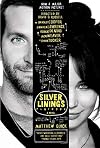
Matthew Quick, author of Silver Linings Playbook (289 pages), pulls off a tricky feat in this first novel, managing to present the reader with a likeable unreliable narrator. Thirty-something Pat Peoples has been released from a mental institution and is living in his parents' basement. A worried, obsessive mother, an angry, aloof father, a hyper-successful brother, a mentally unstable widowed sister-in-law of his high school best friend: these are some of the characters who surround Pat as he tries to piece his life back together.
I think the strength of the book is in these characters. My favorite was Tiffany, the disturbed young widow who befriends Pat. "She looks sad. She looks angry. She looks different from everyone else I know--she cannot put on that happy face others wear when they know they are being watched. She doesn't put on a face for me, which makes me trust her somehow." Pat may best be described as "sweet"--until, that is, something sets him off. The poor mother walks on eggshells around him as well as her husband (Patrick) in an effort to keep peace in the family.
We see the story through the eyes of Pat, and it doesn't take long to realize that his reality may be a little "off"--how much off is something the author plays with throughout the story. My disappointment with the book is that Quick could have done more with this aspect of the book. Instead, Quick went in the direction of a sweet and feel-good outcome, whereas a darker resolution felt like it show more was always just (barely) below the surface. It almost seems as though Quick had something else in mind, and then turned away from that darker possibility: "Life is not a PG feel-good movie. Real life often ends badly. Literature tries to document this reality, while showing us it is still possible for us to endure nobly."
I would have given it 3 stars; however, I bumped it up to 3.5 stars since it's a first novel. I'll be interested to see where Quick goes from here.
And P.S. I hear the movie is much better than the book, although I haven't yet seen the movie show less
I think the strength of the book is in these characters. My favorite was Tiffany, the disturbed young widow who befriends Pat. "She looks sad. She looks angry. She looks different from everyone else I know--she cannot put on that happy face others wear when they know they are being watched. She doesn't put on a face for me, which makes me trust her somehow." Pat may best be described as "sweet"--until, that is, something sets him off. The poor mother walks on eggshells around him as well as her husband (Patrick) in an effort to keep peace in the family.
We see the story through the eyes of Pat, and it doesn't take long to realize that his reality may be a little "off"--how much off is something the author plays with throughout the story. My disappointment with the book is that Quick could have done more with this aspect of the book. Instead, Quick went in the direction of a sweet and feel-good outcome, whereas a darker resolution felt like it show more was always just (barely) below the surface. It almost seems as though Quick had something else in mind, and then turned away from that darker possibility: "Life is not a PG feel-good movie. Real life often ends badly. Literature tries to document this reality, while showing us it is still possible for us to endure nobly."
I would have given it 3 stars; however, I bumped it up to 3.5 stars since it's a first novel. I'll be interested to see where Quick goes from here.
And P.S. I hear the movie is much better than the book, although I haven't yet seen the movie show less

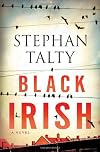
Detective Absalom Kearney has come home to work for the Buffalo PD and take care of her ailing adopted father, legendary cop John Kearney. Abbie finds herself working a case in her hometown South Buffalo, also known as The County, "a patch of Ireland in the wilds of America," and she quickly becomes caught up in the secrets and ancient blood feuds that are part of the life in the working-class Irish-Catholic neighborhood. While investigating the physical evidence left behind by the twisted serial killer she is chasing, Abbie also finds herself confronting painful secrets of her own family origin.
The strength of this book is the excellent writing of Stephan Talty. Although this is his first novel, Talty has written several non-fiction books, including Empire of Blue Water. I was completely caught up by the character of Abbie Kearney, 31 years old, already on her second police job and needing to get this one right, since the first one in Miami she had somehow messed up. As one of the few women detectives on the Buffalo force and also a graduate of Harvard, she doesn't fit in, to put it mildly. Why had she come back?--"On good days, it was to take care of her father, and to finally discover who she was, as corny as that sounded. Because she hadn't found it anywhere else, not at Harvard, not in Miami. . . . On bad days, it was because she felt at home in the city's wind-swept emptiness; its air of desolation suited her own."
The other element that adds interest and lifts the show more story beyond the average police procedural is Talty's use of place--so well-created that "place" becomes a character in the novel, much the same way that "time" is a character in John Irving's works. Buffalo has fallen from a city that once had more millionaires per capita than any city in the entire world, to a place where the highways that were built for the boom years are empty: "You could drive for twenty minutes at a time at three on a weekday afternoon and not see another car pass you. The highway system was a network of veins laid across a dead heart."
Black Irish will probably remind readers of Tana French's best work in her Dublin Murder Squad series, particularly Faithful Place. Fans of good writing in general and police procedural/mystery thrillers specifically can only hope for more to come from Abbie Kearney. show less
The strength of this book is the excellent writing of Stephan Talty. Although this is his first novel, Talty has written several non-fiction books, including Empire of Blue Water. I was completely caught up by the character of Abbie Kearney, 31 years old, already on her second police job and needing to get this one right, since the first one in Miami she had somehow messed up. As one of the few women detectives on the Buffalo force and also a graduate of Harvard, she doesn't fit in, to put it mildly. Why had she come back?--"On good days, it was to take care of her father, and to finally discover who she was, as corny as that sounded. Because she hadn't found it anywhere else, not at Harvard, not in Miami. . . . On bad days, it was because she felt at home in the city's wind-swept emptiness; its air of desolation suited her own."
The other element that adds interest and lifts the show more story beyond the average police procedural is Talty's use of place--so well-created that "place" becomes a character in the novel, much the same way that "time" is a character in John Irving's works. Buffalo has fallen from a city that once had more millionaires per capita than any city in the entire world, to a place where the highways that were built for the boom years are empty: "You could drive for twenty minutes at a time at three on a weekday afternoon and not see another car pass you. The highway system was a network of veins laid across a dead heart."
Black Irish will probably remind readers of Tana French's best work in her Dublin Murder Squad series, particularly Faithful Place. Fans of good writing in general and police procedural/mystery thrillers specifically can only hope for more to come from Abbie Kearney. show less
 This review was written for LibraryThing Early Reviewers.
Whole Grains for a New Generation: Light Dishes, Hearty Meals, Sweet Treats, and Sundry Snacks for the Everyday Cook by Liana Krissoff
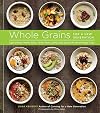
I got a fab new cookbook for Christmas: Whole Grains for a New Generation, by Liana Krissoff. This is the young woman who did such a great job with Canning for a New Generation, one of my absolutely favorite recipe books, for both recipes used for canning and recipes for using what gets canned (could that be a more awkward sentence--ha!). In the canning book she has a lovely sense of humor that I'm not seeing so much of in this one; however, if a person is looking for excellent recipes using whole grains, this is the book. The book is filled with beautiful colored photographs of the food. And excellent explanations about the grains and how to use them (who knew millet was the "filler" used in birdseed and can be cooked with cauliflower to make something that's better-tasting than mashed potatoes?). Do you know how to make almond milk--and better yet, what to do with it?
The recipes in this book are definitely "out there" and are not for the faint of heart. I would say they are also for those who are comfortable in the kitchen and who like spending time there--in other words, for those who like to cook. In my earlier life, I would have been attracted to but also put off by the recipes in this cookbook; however, I find that as other things in my life drop away, I feel a stronger pull towards spending a lot more time in the kitchen. I also have all the kitchen tools I need, which of course is a big help. For example, if she tells you to use a non-reactive saucepan for the show more spicy red-tomato chutney, then yes, you really need to use a non-reactive saucepan.
In a perfect world, I would have had a mother like Krissoff's. I love her stories of how these recipes came about, like the time she took her visiting family to a funky semi-vegetarian cafe in Louisville, Kentucky and they ordered a dish called "A Thousand and One Lentils." Krissoff writes: "I'm thankful that my mom had the foresight to take notes {typical of her mother, if you read the other recipes in this book and the canning book}. What follows is her rendition, made many times since the Kentucky days, and it may well be the most comforting, satisfying meal in this book"--1,001 Lentils and Brown Basmati Rice with Cucumber-Tomato Salad. Her mother (and grandmother) sounds like a gem, and they taught her well--and here she is, passing it all along to those of us whose mothers thought "cooking" was heating up a Swanson frozen pot pie. Thank you, Liana (and your mother and grandmother)! show less
The recipes in this book are definitely "out there" and are not for the faint of heart. I would say they are also for those who are comfortable in the kitchen and who like spending time there--in other words, for those who like to cook. In my earlier life, I would have been attracted to but also put off by the recipes in this cookbook; however, I find that as other things in my life drop away, I feel a stronger pull towards spending a lot more time in the kitchen. I also have all the kitchen tools I need, which of course is a big help. For example, if she tells you to use a non-reactive saucepan for the show more spicy red-tomato chutney, then yes, you really need to use a non-reactive saucepan.
In a perfect world, I would have had a mother like Krissoff's. I love her stories of how these recipes came about, like the time she took her visiting family to a funky semi-vegetarian cafe in Louisville, Kentucky and they ordered a dish called "A Thousand and One Lentils." Krissoff writes: "I'm thankful that my mom had the foresight to take notes {typical of her mother, if you read the other recipes in this book and the canning book}. What follows is her rendition, made many times since the Kentucky days, and it may well be the most comforting, satisfying meal in this book"--1,001 Lentils and Brown Basmati Rice with Cucumber-Tomato Salad. Her mother (and grandmother) sounds like a gem, and they taught her well--and here she is, passing it all along to those of us whose mothers thought "cooking" was heating up a Swanson frozen pot pie. Thank you, Liana (and your mother and grandmother)! show less

This is one of the best biographies I've ever read. It must have been a very difficult one to write. Somehow Stevenson manages to tell what she knows about the utter craziness of Sylvia Plath's personality without being judgemental and without making the reader hate her subject (or, conversely, hate the writer).
Plath must have been one of the most difficult people to be around, evah. She could never in her own mind be wrong about anything, so any bad behavior on her part was either blamed on someone else or else instantly forgotten by Sylvia through her strategy of total amnesia. I have known one person like this in my life, and I associate all of the traits I read about here with toxic narcissism, although Stevenson never uses the term.
An example of "bad behavior": Sylvia was married to Ted Hughes, also a poet. They had a good marriage, in that they both respected each other's work. However, Sylvia had a jealous streak that knew no boundaries. She wanted Ted all to herself, all the time. One day Ted and a male friend went to a pub for lunch. Evidently they were gone "too long" (the friend says that for some reason "40 minutes" sticks in his mind). By the time they returned to the flat, they found that in a fit of rage and retribution Sylvia had ripped to pieces all of Ted's manuscripts, notes, and journals. And she evidently did this to him more than once--but not more than twice, because he eventually left her. However, and I don't know this to be true because I haven't show more read the things he published about Sylvia, his friends say that he never had a bad word to say about her--not ever.
Stevenson chose to include, in the appendix, a memoir of Sylvia written by a woman who knew her well in London. She says that there aren't that many people who are in possession of the facts about Sylvia: "among those of us who are, there must be one or two who can't afford to fall foul of feminist apartheid or risk a boycott by the Lib Lobby. Moreover, nobody I know was prepared to say a word as long as Sylvia's children were growing up, with the result that her hagiographers got a head start of two decades plus in which to shape their apotheosis, which snowballed onward and upward virtually unchallenged."
This was a fascinating, fast, compelling read. I gave it 5 stars. show less
Plath must have been one of the most difficult people to be around, evah. She could never in her own mind be wrong about anything, so any bad behavior on her part was either blamed on someone else or else instantly forgotten by Sylvia through her strategy of total amnesia. I have known one person like this in my life, and I associate all of the traits I read about here with toxic narcissism, although Stevenson never uses the term.
An example of "bad behavior": Sylvia was married to Ted Hughes, also a poet. They had a good marriage, in that they both respected each other's work. However, Sylvia had a jealous streak that knew no boundaries. She wanted Ted all to herself, all the time. One day Ted and a male friend went to a pub for lunch. Evidently they were gone "too long" (the friend says that for some reason "40 minutes" sticks in his mind). By the time they returned to the flat, they found that in a fit of rage and retribution Sylvia had ripped to pieces all of Ted's manuscripts, notes, and journals. And she evidently did this to him more than once--but not more than twice, because he eventually left her. However, and I don't know this to be true because I haven't show more read the things he published about Sylvia, his friends say that he never had a bad word to say about her--not ever.
Stevenson chose to include, in the appendix, a memoir of Sylvia written by a woman who knew her well in London. She says that there aren't that many people who are in possession of the facts about Sylvia: "among those of us who are, there must be one or two who can't afford to fall foul of feminist apartheid or risk a boycott by the Lib Lobby. Moreover, nobody I know was prepared to say a word as long as Sylvia's children were growing up, with the result that her hagiographers got a head start of two decades plus in which to shape their apotheosis, which snowballed onward and upward virtually unchallenged."
This was a fascinating, fast, compelling read. I gave it 5 stars. show less
Now Eat This! Italian: Favorite Dishes from the Real Mamas of Italy--All Under 350 Calories by Rocco DiSpirito
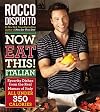
I wasn't sure I even wanted this book, since I have so many other recipe books that I don't need another one. However, dear husband, who grew up with the cooking of Italian grandmothers, urged me to get this one.
I was skeptical, since I've worked hard to lighten up my Italian recipes, mainly by using recipes from my Cooking Light magazines, but once I opened the book, I was hooked. I like recipe books that have colored photographs, and the ones in this book are superb. I also like Rocco Dispirito's inclusion of his family stories, particularly the one about his Italian grandmother:
"Anna Maria Iacoviello . . . . She is the woman who shepherded a whole generation of my ancestors into the United States and helped them hold onto their Italian culture while becoming good Americans. She re-created her Italian lifestyle on Long Island, New York. She raised chickens and rabbits and grew thirty types of produce, including tomatoes, peppers, cucumbers, eggplants, herbs, pears, apples, figs, cherries, and even mulberries. She made her own wine, bread, canned tomatoes, sausages, and prosciutto. She made life in America as Italian as it gets."
Yesterday I made his version of chicken parmesan. I didn't expect to like it, since my own recipe is one that is just to die for--and yet reasonably low in fat/calories. His is even lower--and I like it better! I couldn't believe it.
Today I'm going to try his Pasta e Fagioli, a pasta and bean soup. He adds pancetta to his, an ingredient I've show more never used before, so I'm looking forward to giving that a try. His recipe seems quite different from the ones I'm used to in that he doesn't use tomatoes. We'll see--I may have to add some, but I'm willing to try it without at least once.
There must be 20 or 30 other recipes that I'd love to try, so this book is a real winner. 5 stars! show less
I was skeptical, since I've worked hard to lighten up my Italian recipes, mainly by using recipes from my Cooking Light magazines, but once I opened the book, I was hooked. I like recipe books that have colored photographs, and the ones in this book are superb. I also like Rocco Dispirito's inclusion of his family stories, particularly the one about his Italian grandmother:
"Anna Maria Iacoviello . . . . She is the woman who shepherded a whole generation of my ancestors into the United States and helped them hold onto their Italian culture while becoming good Americans. She re-created her Italian lifestyle on Long Island, New York. She raised chickens and rabbits and grew thirty types of produce, including tomatoes, peppers, cucumbers, eggplants, herbs, pears, apples, figs, cherries, and even mulberries. She made her own wine, bread, canned tomatoes, sausages, and prosciutto. She made life in America as Italian as it gets."
Yesterday I made his version of chicken parmesan. I didn't expect to like it, since my own recipe is one that is just to die for--and yet reasonably low in fat/calories. His is even lower--and I like it better! I couldn't believe it.
Today I'm going to try his Pasta e Fagioli, a pasta and bean soup. He adds pancetta to his, an ingredient I've show more never used before, so I'm looking forward to giving that a try. His recipe seems quite different from the ones I'm used to in that he doesn't use tomatoes. We'll see--I may have to add some, but I'm willing to try it without at least once.
There must be 20 or 30 other recipes that I'd love to try, so this book is a real winner. 5 stars! show less

Refinements of Love, a very, very naughty novel about the "what if's" in Clover Hooper Adams's life, by Sarah Booth Conroy. It was published in 1993, so it's been around for awhile. I read this after reading the (somewhat) disappointing new biography of Clover by Natalie Dykstra, Clover Adams: A Gilded and Heartbreaking Life. I'm also reading the only published collection that exists of Clover's letters, The Letters of Mrs. Henry Adams, published in 1936. What a great thing it would be if someone were to work up a new, unexpurgated edition of those letters. But I digress...
Sarah Booth Conroy goes to some interesting "what if" places in this novel: What if Clover wrote the two novels attributed to Henry Adams, Democracy: A Novel and Esther: A Novel? What if Henry Adams had GOOD REASON to want Clover out of his life? What if Clover's death wasn't a suicide?
I was honestly prepared to thoroughly dislike this novel, since I normally dislike revisionist, fictionalized history. However, Conroy did such a wonderful job with Clover's character (which was my criticism of Dykstra's biography, that in the new biography Dykstra chose to "bland out" Clover's most interesting characteristics), plus it's clear that Conroy also did a good amount of research into Clover, Henry, their circle of friends, and Washington D.C. society in the 1880s.
I'm not sure I buy Conroy's solution about the mystery of Clover's death, but she makes a good case for things not being what they were made to show more seem. What I find more convincing is the idea that Clover wrote the two novels that have been attributed to Henry. Those can be found in The Library of America edition of the writings of Henry Adams.
This novel is a fast read. Whatever the truth about the last months of Clover's life, this was a thoroughly engaging, gossipy, rollicking good read. Sarah Booth Conroy, who died in 2009, wrote for the Washington Post, covering Washington parties, social life, and Washington history. She knows her material, and she's a good writer.
Before reading this one, I hugely recommend reading one of the Clover or Henry Adams biographies first--the book is much more fun with some knowledge and context of these people and the times. Without that, I'm sure some would think the book "stupid" or worthy of one star. The book Sarah Booth Conroy particlarly recommends is one I haven't read yet, but it's on my list: The Five of Hearts, by Patricia O'Toole, billed as "An intimate portrait of Henry Adams and his friends." I gave this book 4.5 stars. show less
Sarah Booth Conroy goes to some interesting "what if" places in this novel: What if Clover wrote the two novels attributed to Henry Adams, Democracy: A Novel and Esther: A Novel? What if Henry Adams had GOOD REASON to want Clover out of his life? What if Clover's death wasn't a suicide?
I was honestly prepared to thoroughly dislike this novel, since I normally dislike revisionist, fictionalized history. However, Conroy did such a wonderful job with Clover's character (which was my criticism of Dykstra's biography, that in the new biography Dykstra chose to "bland out" Clover's most interesting characteristics), plus it's clear that Conroy also did a good amount of research into Clover, Henry, their circle of friends, and Washington D.C. society in the 1880s.
I'm not sure I buy Conroy's solution about the mystery of Clover's death, but she makes a good case for things not being what they were made to show more seem. What I find more convincing is the idea that Clover wrote the two novels that have been attributed to Henry. Those can be found in The Library of America edition of the writings of Henry Adams.
This novel is a fast read. Whatever the truth about the last months of Clover's life, this was a thoroughly engaging, gossipy, rollicking good read. Sarah Booth Conroy, who died in 2009, wrote for the Washington Post, covering Washington parties, social life, and Washington history. She knows her material, and she's a good writer.
Before reading this one, I hugely recommend reading one of the Clover or Henry Adams biographies first--the book is much more fun with some knowledge and context of these people and the times. Without that, I'm sure some would think the book "stupid" or worthy of one star. The book Sarah Booth Conroy particlarly recommends is one I haven't read yet, but it's on my list: The Five of Hearts, by Patricia O'Toole, billed as "An intimate portrait of Henry Adams and his friends." I gave this book 4.5 stars. show less
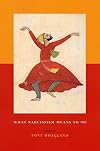
I love, love, love these poems. That's my review, so sue me, but don't dare flag this as "not a review."
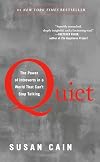
I find myself pulled in opposite directions when I think about this book, which is why I've decided to give the book 3 stars--right in the middle of my rating scale. I'm tempted, though, to give it less. I may be in the minority in being only lukewarm about this book, but then again, as a dedicated introvert, I've pretty much been in the minority all of my life. I'm sure that some people, particularly those who haven't yet thought very deeply about the issues surrounding introversion, will find this book helpful. However, for me there wasn't anything in the book that I found particularly exciting or new.
The book offers some good information; Cain has done a fair job of setting out many of the issues that affect introversion/extroversion--"Is Temperament Destiny" and "Beyond Temperament" are two good example chapters. However, anyone picking up this book and expecting an anecdote-filled, easy, self-help read will be disappointed. One of the blurbs on the back of the book is from Naomi Wolfe (The Beauty Myth) who calls the book a "readable page-turner." That's pretty much exactly what I wouldn't call this book. I received this book in December, and I gave myself until the end of January to finish it. I didn't make it. I think looking at a long upcoming chapter titled "When Should You Act More Extroverted?" was what ultimately did me in. Maybe if I were younger I would feel a need to "act" more extroverted and would want some tips on when I should do that, but after a show more lifetime of living with my introverted self, and frankly being just fine with that, a chapter with tips about acting is simply off-putting.
I also didn't particularly appreciate her insertion of politics into the book. What was the point of that? Frankly, she pretty much lost me with her "sensitive" introvert Al Gore and global warming example.
Who is the audience for this book? I can't speak for Ms. Cain, but I think that if you're an extrovert who wants to go beyond the "shy" stereotype in understanding what it means to be an introvert, then probably you would find this book helpful. If you're an introvert (or think you are) and haven't yet read anything that's been published about what it means to be introverted, and you want to read such things, then this is not the book I would recommend, at least not as a place to start. show less
The book offers some good information; Cain has done a fair job of setting out many of the issues that affect introversion/extroversion--"Is Temperament Destiny" and "Beyond Temperament" are two good example chapters. However, anyone picking up this book and expecting an anecdote-filled, easy, self-help read will be disappointed. One of the blurbs on the back of the book is from Naomi Wolfe (The Beauty Myth) who calls the book a "readable page-turner." That's pretty much exactly what I wouldn't call this book. I received this book in December, and I gave myself until the end of January to finish it. I didn't make it. I think looking at a long upcoming chapter titled "When Should You Act More Extroverted?" was what ultimately did me in. Maybe if I were younger I would feel a need to "act" more extroverted and would want some tips on when I should do that, but after a show more lifetime of living with my introverted self, and frankly being just fine with that, a chapter with tips about acting is simply off-putting.
I also didn't particularly appreciate her insertion of politics into the book. What was the point of that? Frankly, she pretty much lost me with her "sensitive" introvert Al Gore and global warming example.
Who is the audience for this book? I can't speak for Ms. Cain, but I think that if you're an extrovert who wants to go beyond the "shy" stereotype in understanding what it means to be an introvert, then probably you would find this book helpful. If you're an introvert (or think you are) and haven't yet read anything that's been published about what it means to be introverted, and you want to read such things, then this is not the book I would recommend, at least not as a place to start. show less
This review was written for LibraryThing Early Reviewers.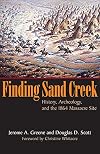
Last night I finished Finding Sand Creek, by Jerome Greene and Douglas Scott, published in 2004. This was a book about the National Park Service search to verify the location of the site of the 1864 Sand Creek Massacre. This is a fairly technical book. The subtitle is, "History, Archeology, and the 1864 Massacre Site." Congress directed the parks service to verify this site as a step towards creating a national historic site. I'm not sure who the audience for this book is. It doesn't seem to be the general reader, one who has an interest in the subject. I found it to be very dry and plodding. However, I suppose that the authors did what they set out to do, so for that reason I'll give it 3 stars instead of 2.
My disappointment with the book was with the first chapter where the authors told the story of the Sand Creek Massacre (it's been termed a "Massacre" ever since December of 1864). It seems to me that the authors had a conclusion and wrote backwards to meet that conclusion. There was no sense that their discussion was meant to be anything other than a presentation of the standard storyline that a person could get from watching the 1970 movie, Soldier Blue, the Hollywood production that came out same year that the My Lai Massacre occurred. I believe the truth of the story of Sand Creek is far more complex than the one-sided standard apologetic treatment presented here.
One place where I've found a different story of Sand Creek is in Irving Howbert's 1925 book, Memories show more of a Lifetime in the Pike's Peak Region. Howbert gives a 2-chapter discussion of Sand Creek, and his description of the events puts a completely different spin on what happened that day. I plan also plan to read a book by Gregory Michno, Battle at Sand Creek: The Military Perspective.
I'll say here that I don't ever expect the official standard story line to change: that the evil, stupid U.S. soldiers mindlessly butchered the kind, peaceful Native Americans. However, it's distrubing to me that Greene and Scott in this "History," which I'm sure is sold in every National Park gift shop, is so one-sided, when they had available to them hundreds of records, including first-hand accounts, that suggest to the fair-minded that there is another side to the story of Sand Creek. On second thought, I'm going to give the book 2 stars. show less
My disappointment with the book was with the first chapter where the authors told the story of the Sand Creek Massacre (it's been termed a "Massacre" ever since December of 1864). It seems to me that the authors had a conclusion and wrote backwards to meet that conclusion. There was no sense that their discussion was meant to be anything other than a presentation of the standard storyline that a person could get from watching the 1970 movie, Soldier Blue, the Hollywood production that came out same year that the My Lai Massacre occurred. I believe the truth of the story of Sand Creek is far more complex than the one-sided standard apologetic treatment presented here.
One place where I've found a different story of Sand Creek is in Irving Howbert's 1925 book, Memories show more of a Lifetime in the Pike's Peak Region. Howbert gives a 2-chapter discussion of Sand Creek, and his description of the events puts a completely different spin on what happened that day. I plan also plan to read a book by Gregory Michno, Battle at Sand Creek: The Military Perspective.
I'll say here that I don't ever expect the official standard story line to change: that the evil, stupid U.S. soldiers mindlessly butchered the kind, peaceful Native Americans. However, it's distrubing to me that Greene and Scott in this "History," which I'm sure is sold in every National Park gift shop, is so one-sided, when they had available to them hundreds of records, including first-hand accounts, that suggest to the fair-minded that there is another side to the story of Sand Creek. On second thought, I'm going to give the book 2 stars. show less
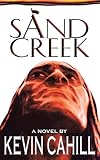
The issue of what happened at the Battle Sand Creek vs. what people say happened at the Sand Creek Massacre has a whole lot to do with the politics of what was going on in Colorado Territory in 1864 and continues to this day with the politics that went into creating our newest National Park, "The Sand Creek Massacre" National Historic site. The controversy is much too complicated to go into here.
Here's what I want to say about Cahill's book: If you're looking for an account that follows the politically correct scripted line of the event, then Cahill's book is a good resource. Much to my disappointment, and believing that he was going to write a balanced account of the event based on what he wrote in the introduction, instead Cahill has written an account that uses fictionalized dialogue that shows the people involved to be the standard White Hat Angel Indians vs. the Black Hat Devil Soldiers. It's quite disappointing. Cahill's website, advertised in his book, is kclonewolf.com. Lonewolf?? He doesn't tell us where that comes from, but I think the "lonewolf" makes pretty clear where Cahill himself is coming from.
It took me awhile to catch on to Cahill's cleverly disguised one-sided "proof," since I was suckered into believing he was sincere in his introduction, that "to this day the Colorado Third's Volunteer's attack on the Cheyenne and Arapahoe Indians camped at Sand Creek is the subject of controversy, accusation, and recrimination. . . . Responsibility for the affair show more at Sand Creek lies on both sides of the river." It's very clear, reading the book, which side of the river Cahill believes the responsibility lies--really. I think what opened my eyes to Cahill's point of view was his cartoonish and one-sided representation of the Colorado 3rd Cavalry as bar trash, thieves, and thugs picked up by Col. Chivington in Denver. Responsible historians have shown this "fact" that is frequently repeated in the story of the battle of Sand Creek as being historically inaccurate. In fact, many of the 3rd Cavalry volunteers were stand-up citizens defending their livelihoods along the front range. Most of them lived out their lives and became major contributors to their communities.
If you're looking for a book that might give you something other than the gradeschool PC line about the barbaric actions of the US Soldiers who massacred the peace-loving Indians, then I would recommend Gregory Michno's Battle at Sand Creek: The Military Perspective.
I have no idea how in the world to rate this novel by Cahill. My gut says it's worth 2 stars, so I guess that's what it gets. show less
Here's what I want to say about Cahill's book: If you're looking for an account that follows the politically correct scripted line of the event, then Cahill's book is a good resource. Much to my disappointment, and believing that he was going to write a balanced account of the event based on what he wrote in the introduction, instead Cahill has written an account that uses fictionalized dialogue that shows the people involved to be the standard White Hat Angel Indians vs. the Black Hat Devil Soldiers. It's quite disappointing. Cahill's website, advertised in his book, is kclonewolf.com. Lonewolf?? He doesn't tell us where that comes from, but I think the "lonewolf" makes pretty clear where Cahill himself is coming from.
It took me awhile to catch on to Cahill's cleverly disguised one-sided "proof," since I was suckered into believing he was sincere in his introduction, that "to this day the Colorado Third's Volunteer's attack on the Cheyenne and Arapahoe Indians camped at Sand Creek is the subject of controversy, accusation, and recrimination. . . . Responsibility for the affair show more at Sand Creek lies on both sides of the river." It's very clear, reading the book, which side of the river Cahill believes the responsibility lies--really. I think what opened my eyes to Cahill's point of view was his cartoonish and one-sided representation of the Colorado 3rd Cavalry as bar trash, thieves, and thugs picked up by Col. Chivington in Denver. Responsible historians have shown this "fact" that is frequently repeated in the story of the battle of Sand Creek as being historically inaccurate. In fact, many of the 3rd Cavalry volunteers were stand-up citizens defending their livelihoods along the front range. Most of them lived out their lives and became major contributors to their communities.
If you're looking for a book that might give you something other than the gradeschool PC line about the barbaric actions of the US Soldiers who massacred the peace-loving Indians, then I would recommend Gregory Michno's Battle at Sand Creek: The Military Perspective.
I have no idea how in the world to rate this novel by Cahill. My gut says it's worth 2 stars, so I guess that's what it gets. show less
Artisan Bread in Five Minutes a Day: The Discovery That Revolutionizes Home Baking by Jeff Hertzberg
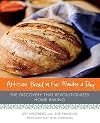
I'm going to bake bread this way for the rest of my life. That's my review of this book, and don't you dare flag this as "Not a Review." I bake bread from this book about 5 times a week. I have two bread dough tubs that live in my refrigerator so that I can always have dough available for two different kinds of breads. One of the author's tips is, "Don't wash the bread dough tub," because from the little bit of dough that's left in the tub you get a good sourdough starter for the next batch of bread. I love this book, and my family is so happy to have fresh-baked bread. My husband walks in the door and says, "It sure smells good in here," and I tell him, "That's the point, darling."

Isabel Russell was hired as Katharine White's secretary, and she worked for her for the last seven years of KSW's life. Because of illness and aging, increasing issues with her sight, and her own strong personality traits that had little to do with being an octogenarian, KSW was a difficult person to work for, particularly if you happened to be her personal secretary.
I think one of the reasons I had problems early on with Russell's presentation in this book was because she was writing about a woman whom she didn't meet until she was in her late 70s to mid-80s. I wondered, had Russell known KSW at an earlier time in her life--like in her 40s or 50s, for example--and had she written the same things about her, would what she wrote have struck me as being so negative and harsh? Probably not. I think what bothered me was that Russell's critique of KSW came at a time when Katharine was an old woman. She was a strong personality all of her life, and through her job of 50-some years she exercised a great deal of power and control. It seems to me that a lot of the behaviors that made her so difficult for a secretary to work for were mainly strategies used by an aging woman trying to hang on to accustomed influence and control.
I think that Russell had an ethical dilemma in writing this memoir that she didn't deal with effectively. There are parts of this memoir that have the emotional tone of revenge. Clearly Russell had been wounded at times, and maybe many times, by KSW's show more treatment of her. A first draft where she could have written all of that out, helping her come to terms with all of it, might have been a good idea. Then another draft and maybe another, where she might have eased up on some of her harsher judgments, probably would have been a good idea. I'm sure that Russell felt she was writing the "truth," but an acknowledgment that hers was only one truth would have given Russell more credibility as a fair memoirist. There is a lack of compassion for KSW in the memoir that is troubling.
The writing in this book was excellent, which only makes me wish even more that Russell had found a way to deal more effectively with the way she approached her issues with Katharine White.
This was a difficult book to rate. It was interesting and well-written, although, in my opinion, flawed. I would recommend it for anyone who is interested, for whatever reason, in reading about Katharine and E.B. White. Readers who are disposed to want pure hagiography about this couple obviously won't like this book. However, I think the book is useful in rounding out the public portrait of this couple. 3 stars show less
I think one of the reasons I had problems early on with Russell's presentation in this book was because she was writing about a woman whom she didn't meet until she was in her late 70s to mid-80s. I wondered, had Russell known KSW at an earlier time in her life--like in her 40s or 50s, for example--and had she written the same things about her, would what she wrote have struck me as being so negative and harsh? Probably not. I think what bothered me was that Russell's critique of KSW came at a time when Katharine was an old woman. She was a strong personality all of her life, and through her job of 50-some years she exercised a great deal of power and control. It seems to me that a lot of the behaviors that made her so difficult for a secretary to work for were mainly strategies used by an aging woman trying to hang on to accustomed influence and control.
I think that Russell had an ethical dilemma in writing this memoir that she didn't deal with effectively. There are parts of this memoir that have the emotional tone of revenge. Clearly Russell had been wounded at times, and maybe many times, by KSW's show more treatment of her. A first draft where she could have written all of that out, helping her come to terms with all of it, might have been a good idea. Then another draft and maybe another, where she might have eased up on some of her harsher judgments, probably would have been a good idea. I'm sure that Russell felt she was writing the "truth," but an acknowledgment that hers was only one truth would have given Russell more credibility as a fair memoirist. There is a lack of compassion for KSW in the memoir that is troubling.
The writing in this book was excellent, which only makes me wish even more that Russell had found a way to deal more effectively with the way she approached her issues with Katharine White.
This was a difficult book to rate. It was interesting and well-written, although, in my opinion, flawed. I would recommend it for anyone who is interested, for whatever reason, in reading about Katharine and E.B. White. Readers who are disposed to want pure hagiography about this couple obviously won't like this book. However, I think the book is useful in rounding out the public portrait of this couple. 3 stars show less
In reading the citizen reviews for Elizabeth Street by Laurie Fabiano at Amazon.com, I've come to the conclusion, after reading the book, that the author has a very big, admiring family. Despite the good story that Fabiano has to tell, based on her own family history, the other aspects of the book are thin and flawed. She has added a "select bibliography" at the end of the book, so where it appears that she has done her research into the period, she doesn't seem to have found a way to get that material into the book. Except superficially, there simply is no genuine feel in the book for the early 1900s, Elizabeth Street, New York City.
Additionally, there is something "off" about the dialogue/narration ratio of the book that I can't quite put my finger on, except to note that Fabiano never finds a narrative voice. In fact, there is no indication that she understands the concept of narrator, even on the most basic level, a fact which leaves her depending heavily on dialogue, another weakness of this novel. In a word, the dialogue is bad, on the level of the dialogue found in a daytime soap opera. Add in the problem she has with shifting point of view, another aspect of the novel Fabiano doesn't seem to grasp, and you have a recipe for a very plodding read. What made me finish the book was that it is instructive as an excellent example of bad writing.
I'm one of those who pays attention to reader reviews. I buy or read a lot of books based on what other readers have to say show more about the book. Over at Amazon today there are almost 200 reviews for this book, and 172 of them are either 4 or 5-star reviews filled with over-the-moon laudatory praise for this book. Bogus reviews may sell a few books in the short run, but ultimately quality, or, as in this case the lack of it, will out. show less
Additionally, there is something "off" about the dialogue/narration ratio of the book that I can't quite put my finger on, except to note that Fabiano never finds a narrative voice. In fact, there is no indication that she understands the concept of narrator, even on the most basic level, a fact which leaves her depending heavily on dialogue, another weakness of this novel. In a word, the dialogue is bad, on the level of the dialogue found in a daytime soap opera. Add in the problem she has with shifting point of view, another aspect of the novel Fabiano doesn't seem to grasp, and you have a recipe for a very plodding read. What made me finish the book was that it is instructive as an excellent example of bad writing.
I'm one of those who pays attention to reader reviews. I buy or read a lot of books based on what other readers have to say show more about the book. Over at Amazon today there are almost 200 reviews for this book, and 172 of them are either 4 or 5-star reviews filled with over-the-moon laudatory praise for this book. Bogus reviews may sell a few books in the short run, but ultimately quality, or, as in this case the lack of it, will out. show less
The audience for this book seems to be twofold: 1) those who don't read very much; and/or 2) those who don't read history. I give O'Reilly kudos for writing a book that might draw people into reading about Lincoln or the Civil War who might not otherwise do so. He seems to have worked hard at the "dramatic" aspect of the storytelling, which works for an audience of readers who normally wouldn't read a history book.
However, for those who do read history or who are conversant with Lincoln's story and Civil War history, there really isn't anything here that hasn't been done better elsewhere. Anyone reading this book should be prepared for a completely one-sided telling of this tale. O'Reilly's take on Lincoln is that he was the greatest president the country has ever had, and the whole book flows from that premise. There are no surprises here: what you see is what you get.
However, for those who do read history or who are conversant with Lincoln's story and Civil War history, there really isn't anything here that hasn't been done better elsewhere. Anyone reading this book should be prepared for a completely one-sided telling of this tale. O'Reilly's take on Lincoln is that he was the greatest president the country has ever had, and the whole book flows from that premise. There are no surprises here: what you see is what you get.
One of the risks of an author publishing novels that don't live up to past efforts is that she can lose her good readers, which seems to be what's happened in pretty good measure to Cornwell, if the LT and Amazon citizen "reviews" for this book are any indication. Plus, no less that three people here at LT whose opinions I respect very highly have said that they too have stopped reading her.
The readers who are left, at least some of the ones commenting, have some rather odd things to say about this book:
1. "Too focused on technology." / Since these books are about a forensic pathologist, if they didn't focus on "technology" or the science of forensics, then they would be rather superficial. Cornwell's ability to write about the science involved in her plots has always been a strong point.
2. This goes to the same point as #1 above: "Used jargon that I didn't understand." / One of the reasons I read--anything, be it novels or anything else--is to learn new things. I guess a person is either interested enough in the subject a writer is writing about, or they're not. If someone isn't moved to look up the things they don't understand, one can hardly fault the author or the book for that, and perhaps instead of writing a negative review, that reader ought to choose something else.
3. "No passion between Scarpetta and Benton." / Try a romance novel. I thought the back-and-forth between Scarpetta and her husband Wesley Benton was realistic and probably the best that Cornwell has show more done with these two characters for awhile. They work together, so they have to maintain a professional relationship as well as personal. The "passion" is there, it's just not the fall-into-bed "passion" of a couple of 20-year-olds.
4. "The fractured plot was too difficult to follow; the story had strange twists." / Huh? I don't know how to judge the exact reading level of a book, but I would say that if a reader can't follow this plot, then they either aren't interested in the forensic thriller genre, or they might need to practice on something less complex. An Alex Cross book by James Patterson comes to mind.
What I liked about the book:
Cornwell has gone back to writing in the first person from the point of view of Kay Scarpetta. I think that's a good choice for her, since she seems to be more solidly in control of her material when she's writing from inside of Kay's head.
Addtionally, Cornwell has some great scenes in this thing, including some wonderful business with a new young male assistant that is screamingly funny. There's another scene where Scarpetta is on a phone call with a patrician Boston mother of a young man with Asperger's; the mother's son is accused of murdering a six-year-old with a nail gun. Scarpetta is responding to this woman who is becoming increasingly voluble and agitated while at the same time Benton is listening to the conversation, responding to Kay. The scene demonstrates the narrative assurance of a pro.
Another thing I liked is that at the end of the book, Kay adopts a new dog named Sock, a rescue greyhound. I love it when writers include pets in their books, if they really do love animals, that is, and what Cornwell does between Scarpetta and this dog is very nice--very sweet--and has the effect of humanizing Kay a little bit. And she can use it.
And I guess finally the plot--I liked it; the story was good. If I find myself stealing time from things I should be doing in order to read a novel, then that's a pretty good indication the book is not only holding my attention, but it's also entertaining or thought-provoking or something beyond the run-of-the-mill. show less
The readers who are left, at least some of the ones commenting, have some rather odd things to say about this book:
1. "Too focused on technology." / Since these books are about a forensic pathologist, if they didn't focus on "technology" or the science of forensics, then they would be rather superficial. Cornwell's ability to write about the science involved in her plots has always been a strong point.
2. This goes to the same point as #1 above: "Used jargon that I didn't understand." / One of the reasons I read--anything, be it novels or anything else--is to learn new things. I guess a person is either interested enough in the subject a writer is writing about, or they're not. If someone isn't moved to look up the things they don't understand, one can hardly fault the author or the book for that, and perhaps instead of writing a negative review, that reader ought to choose something else.
3. "No passion between Scarpetta and Benton." / Try a romance novel. I thought the back-and-forth between Scarpetta and her husband Wesley Benton was realistic and probably the best that Cornwell has show more done with these two characters for awhile. They work together, so they have to maintain a professional relationship as well as personal. The "passion" is there, it's just not the fall-into-bed "passion" of a couple of 20-year-olds.
4. "The fractured plot was too difficult to follow; the story had strange twists." / Huh? I don't know how to judge the exact reading level of a book, but I would say that if a reader can't follow this plot, then they either aren't interested in the forensic thriller genre, or they might need to practice on something less complex. An Alex Cross book by James Patterson comes to mind.
What I liked about the book:
Cornwell has gone back to writing in the first person from the point of view of Kay Scarpetta. I think that's a good choice for her, since she seems to be more solidly in control of her material when she's writing from inside of Kay's head.
Addtionally, Cornwell has some great scenes in this thing, including some wonderful business with a new young male assistant that is screamingly funny. There's another scene where Scarpetta is on a phone call with a patrician Boston mother of a young man with Asperger's; the mother's son is accused of murdering a six-year-old with a nail gun. Scarpetta is responding to this woman who is becoming increasingly voluble and agitated while at the same time Benton is listening to the conversation, responding to Kay. The scene demonstrates the narrative assurance of a pro.
Another thing I liked is that at the end of the book, Kay adopts a new dog named Sock, a rescue greyhound. I love it when writers include pets in their books, if they really do love animals, that is, and what Cornwell does between Scarpetta and this dog is very nice--very sweet--and has the effect of humanizing Kay a little bit. And she can use it.
And I guess finally the plot--I liked it; the story was good. If I find myself stealing time from things I should be doing in order to read a novel, then that's a pretty good indication the book is not only holding my attention, but it's also entertaining or thought-provoking or something beyond the run-of-the-mill. show less