4.5/5 stars
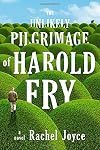
This novel was an unexpected gem! Recently retired, unassuming Harold Fry leads a quiet life. One day he receives a letter from an old friend, Queenie Hennessey, who is dying of cancer. He walks to the mailbox to post his response but decides to deliver it personally instead. Thus, Harold sets off on his unusual journey. I know it sounds strange, but this was incredibly heartwarming book, and one of my favorites of 2012.
This novel was an unexpected gem! Recently retired, unassuming Harold Fry leads a quiet life. One day he receives a letter from an old friend, Queenie Hennessey, who is dying of cancer. He walks to the mailbox to post his response but decides to deliver it personally instead. Thus, Harold sets off on his unusual journey. I know it sounds strange, but this was incredibly heartwarming book, and one of my favorites of 2012.
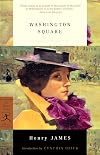
After seeing The Heiress on Broadway (starring Dan Stevens of Downton Abbey fame!), I felt compelled to read the novel behind the play. I'm not sure how long the book has been on my shelf, but the measure is in years rather than months.
My love of the show certainly influenced my reaction to the book, and it often felt like I was watching the play again as I read. As far as Henry James novels go, this seems to be among the most readable. He is famous for long, convoluted sentences, especially in later works, but there was very little of that here. Washington Square is relatively straight-forward and easy to follow.
A description of Catherine:
"She was a healthy, well-grown child, without a trace of her mother's beauty. She was not ugly; she had simply a plain, dull, gentle countenance. The most that had ever been said for her was that she had a "nice" face; and, though she was an heiress, no one had ever thought of regarding her as a belle. Her father's opinion of her moral purity was abundantly justified; she was excellently, imperturbably good; affectionate, docile, obedient, and much addicted to speaking the truth. In her younger years she was a good deal of a romp, and though it is an awkward confession to make about one's heroine, I must add that she was something of a glutton. She never, that I know of, stole raisins out of the pantry, but she devoted her pocket money to the purchase of creme cakes..." p. 12
and on her character awakening:
"Catherine meanwhile had made a show more discovery of a very different sort; it had become vivid to her that there was a great excitement in trying to be a good daughter. She had an entirely new feeling, which may be described as a state of expectant suspense about her own actions. She watched herself as she would have watched another person, and wondered what she would do. It was as if this other person who was both herself and not herself, had suddenly sprung into being, inspiring her with a natural curiosity as to the performance of untested functions." p. 104
My rating:
3.5/5 stars
Bottom line:
Overall, a very readable and enjoyable Henry James novel, but The Portrait of a Lady is still my favorite. The play is highly recommended! show less
My love of the show certainly influenced my reaction to the book, and it often felt like I was watching the play again as I read. As far as Henry James novels go, this seems to be among the most readable. He is famous for long, convoluted sentences, especially in later works, but there was very little of that here. Washington Square is relatively straight-forward and easy to follow.
A description of Catherine:
"She was a healthy, well-grown child, without a trace of her mother's beauty. She was not ugly; she had simply a plain, dull, gentle countenance. The most that had ever been said for her was that she had a "nice" face; and, though she was an heiress, no one had ever thought of regarding her as a belle. Her father's opinion of her moral purity was abundantly justified; she was excellently, imperturbably good; affectionate, docile, obedient, and much addicted to speaking the truth. In her younger years she was a good deal of a romp, and though it is an awkward confession to make about one's heroine, I must add that she was something of a glutton. She never, that I know of, stole raisins out of the pantry, but she devoted her pocket money to the purchase of creme cakes..." p. 12
and on her character awakening:
"Catherine meanwhile had made a show more discovery of a very different sort; it had become vivid to her that there was a great excitement in trying to be a good daughter. She had an entirely new feeling, which may be described as a state of expectant suspense about her own actions. She watched herself as she would have watched another person, and wondered what she would do. It was as if this other person who was both herself and not herself, had suddenly sprung into being, inspiring her with a natural curiosity as to the performance of untested functions." p. 104
My rating:
3.5/5 stars
Bottom line:
Overall, a very readable and enjoyable Henry James novel, but The Portrait of a Lady is still my favorite. The play is highly recommended! show less
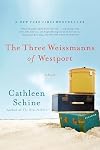
Modern adaptations of classic novels seem to be everywhere lately and The Three Weissmanns of Westport, inspired by Jane Austen's Sense and Sensibility, is one of the best I've come across. It's nearly as smart and witty as Jane herself, plus it's teeming with literary references.
I snapped it up (for only $1.50) at the library book sale last summer for two reasons. First and foremost, I love Jane Austen. Second, in the late 80's I lived near Westport, CT and was drawn to the setting. I was not disappointed on either account - Schine's novel would make Jane proud and it perfectly captures Westport, too. I nodded in recognition at traffic references on Old Post Road, the rapidly redeveloping beachfront, and the general description of Fairfield County's suburban lifestyle. I certainly got more than got my money's worth here!
The Three Weissmanns of Westport is the type of intelligent beach read I find myself craving each summer. Let me emphasize that the novel absolutely stands on it own. You do not need to be familiar with Sense and Sensibility in order to enjoy it.
However, I would recommend at least watching a movie adaptation (either before or after) to get a true sense of the novel's cleverness. It's been at least ten years since I read Sense and Sensibility, so recollected only the broadest plot details. I watched the old BBC adaptation a few days after finishing and it really added to my appreciation of what Schine has accomplished. It also made me want to reread Sense show more and Sensibility. show less
I snapped it up (for only $1.50) at the library book sale last summer for two reasons. First and foremost, I love Jane Austen. Second, in the late 80's I lived near Westport, CT and was drawn to the setting. I was not disappointed on either account - Schine's novel would make Jane proud and it perfectly captures Westport, too. I nodded in recognition at traffic references on Old Post Road, the rapidly redeveloping beachfront, and the general description of Fairfield County's suburban lifestyle. I certainly got more than got my money's worth here!
The Three Weissmanns of Westport is the type of intelligent beach read I find myself craving each summer. Let me emphasize that the novel absolutely stands on it own. You do not need to be familiar with Sense and Sensibility in order to enjoy it.
However, I would recommend at least watching a movie adaptation (either before or after) to get a true sense of the novel's cleverness. It's been at least ten years since I read Sense and Sensibility, so recollected only the broadest plot details. I watched the old BBC adaptation a few days after finishing and it really added to my appreciation of what Schine has accomplished. It also made me want to reread Sense show more and Sensibility. show less
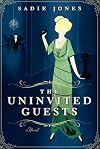
I'll admit to being initially drawn to The Uninvited Guests by the cover. Shallow, I know, but there you have it. When positive reviews began appearing around the blogosphere, I added my name to the library hold list and reached the top in just a few weeks. At home, I was delighted to discover the novel has gorgeous endpapers, too. This is a very visually appealing book!
The Edwardian Era setting helped satisfy my Downton Abbey withdrawal syndrome, and I immediately enjoyed the author's use of language - so smart and witty. Several laugh-out-loud moments had my family raising eyebrows and glancing in my direction. The novel was a quick read and I finished the final half in a single afternoon, an unusual occurrence for me.
My verdict? Enjoyable overall, yet it fell short of my expectations. The story seemed a little flat and the macabre plot elements just seemed weird. I was expecting more to be made of Smudge's drawings, especially since they adorn the endpapers. The characters, in general, weren't especially likable and I never really cared about any of them.
I found myself thinking about the book for several days after finishing. My appreciation may have increased slightly, yet I still can't muster more than a 'good' rating.
The Edwardian Era setting helped satisfy my Downton Abbey withdrawal syndrome, and I immediately enjoyed the author's use of language - so smart and witty. Several laugh-out-loud moments had my family raising eyebrows and glancing in my direction. The novel was a quick read and I finished the final half in a single afternoon, an unusual occurrence for me.
My verdict? Enjoyable overall, yet it fell short of my expectations. The story seemed a little flat and the macabre plot elements just seemed weird. I was expecting more to be made of Smudge's drawings, especially since they adorn the endpapers. The characters, in general, weren't especially likable and I never really cared about any of them.
I found myself thinking about the book for several days after finishing. My appreciation may have increased slightly, yet I still can't muster more than a 'good' rating.
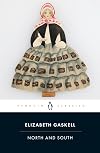
Why has it taken me so long to read an Elizabeth Gaskell novel? North and South is an excellent book with well-drawn characters, themes of class and religion, and a love story, too. I was initially reminded of Jane Austen (always a favorite), but as the novel progressed these themes were explored on a broader, more worldly scale. Also, although Gaskell was writing only several decades later than Austen, I was surprised to find her language much more accessible.
This was a combination read/listen for me. Juliet Stevenson's narration was nothing short of perfection.
Very highly recommended
4.5/5 stars
This was a combination read/listen for me. Juliet Stevenson's narration was nothing short of perfection.
Very highly recommended
4.5/5 stars
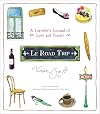
A perfect beginning to my "Paris in July" reading! Le Road Trip is full of thoughts on travel, love, and France. The artwork/illustrations perfectly complement the tone of Swift's writing. It left me energized and excited to continue my armchair travel through France. Le Road Trip is a beautiful book.
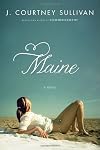
Oh, how I love a good family saga! Chapters told from alternating viewpoints by three generations of women, and a large summer home on the Maine coast only enhance the experience. Maine by J. Courtney Sullivan offers both, along with the requisite problems and drama you've come to expect in a multi-generational family story. Just don't expect it to be neatly tied up with a ribbon at the end... life isn't like than anyway.
4.5/5
4.5/5
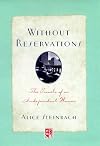
My book club discussed Without Reservations on a cold, snowy morning earlier this week. The book itself is Pulitzer Prize winning journalist Alice Steinbach's account of a year-long European sabbatical taken to discover who she really was without her career and children, but our discussion quickly veered toward our own travel tales and aspirations. We all mostly enjoyed the book, but questioned whether her ultimate goal for the trip was realized.
I loved Steinbach's writing, especially the postcards of personal insight and inspiration mailed home (to herself) throughout the trip. They appear at the beginning of each chapter. I hope to read her later book, Educating Alice: Adventures of a Curious Woman, sometime this year.
I loved Steinbach's writing, especially the postcards of personal insight and inspiration mailed home (to herself) throughout the trip. They appear at the beginning of each chapter. I hope to read her later book, Educating Alice: Adventures of a Curious Woman, sometime this year.
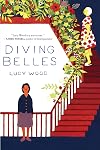
Magical, mythical, a little quirky, sometimes creepy, and just plain fun!
Diving Belles, an engaging new short story collection by Lucy Wood, grabbed me from the opening passage:
"Iris crossed her brittle ankles and folded her hands in her lap as the diving bell creaked and juddered towards the sea. At first, she could hear Demelza shouting and cursing as she cranked the winch, but the as bell was cantilevered away from the deck her voice was lost in the wind. Cold air rushed through the open bottom of the bell, bringing with it the rusty smell of The Matriarch's liver-spotted flanks and the brackish damp of seaweed. The bench Iris was sitting on was narrow and every time the diving bell rocked she pressed against the footrest to steady herself. She kept imagining that she was inside a church bell and that she was the clapper about to ring out loudly into the water, announcing something. She fixed her eyes on the small window and didn't look down. There was no floor beneath her feet, just a wide open gap and the sea peaked and spat. She lurched downwards slowly, metres away from the side of the trawler, where a layer of barnacles and mussels clung on like the survivors of a shipwreck."
The collection features women turning to stone, husbands disappearing with mermaids, a house with an attitude, leprechauns, and more. It's no wonder Wood has been compared to Angela Carter. My natural tendency is to breeze through a collection like this in a single day, and a peaceful hotel show more balcony in Lake Placid proved to be an ideal reading spot. However, I'd recommend that you dole the stories out over several days, or even a week, instead. You'll enjoy returning to Lucy Wood's wonderfully weird world again and again. show less
Diving Belles, an engaging new short story collection by Lucy Wood, grabbed me from the opening passage:
"Iris crossed her brittle ankles and folded her hands in her lap as the diving bell creaked and juddered towards the sea. At first, she could hear Demelza shouting and cursing as she cranked the winch, but the as bell was cantilevered away from the deck her voice was lost in the wind. Cold air rushed through the open bottom of the bell, bringing with it the rusty smell of The Matriarch's liver-spotted flanks and the brackish damp of seaweed. The bench Iris was sitting on was narrow and every time the diving bell rocked she pressed against the footrest to steady herself. She kept imagining that she was inside a church bell and that she was the clapper about to ring out loudly into the water, announcing something. She fixed her eyes on the small window and didn't look down. There was no floor beneath her feet, just a wide open gap and the sea peaked and spat. She lurched downwards slowly, metres away from the side of the trawler, where a layer of barnacles and mussels clung on like the survivors of a shipwreck."
The collection features women turning to stone, husbands disappearing with mermaids, a house with an attitude, leprechauns, and more. It's no wonder Wood has been compared to Angela Carter. My natural tendency is to breeze through a collection like this in a single day, and a peaceful hotel show more balcony in Lake Placid proved to be an ideal reading spot. However, I'd recommend that you dole the stories out over several days, or even a week, instead. You'll enjoy returning to Lucy Wood's wonderfully weird world again and again. show less
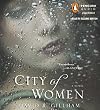
City of Women is best described in two words: tense and intense. As residents of Berlin during WWII deal with the hardships of war, they are confronted daily with military actions which, for those like Sigrid Schröder, pose a moral dilemma. The constant doubts and suspicions of family, neighbors, and coworkers impart a palpable tension that is unrelenting over the course of the novel.
It took me a little longer than usual to become fully invested in this novel. However, once involved, City of Women haunted me night and day until I finished... and then for days afterward. The experience, while not exactly enjoyable, gives plenty of food for thought.
A note on the audio production:
City of Women is one of the best-executed narrations I have come across in ten years of listening to audiobooks. I can't imagine another narrator doing a better job with this than Suzanne Bertish. Her voice and tone are pitch perfect; you can literally feel the tension, anger, and fear. The audio version of this novel enhances and heightens the overall experience - very highly recommended.
Read or listen?
Listen, most definitely.
My rating: 4 stars
It took me a little longer than usual to become fully invested in this novel. However, once involved, City of Women haunted me night and day until I finished... and then for days afterward. The experience, while not exactly enjoyable, gives plenty of food for thought.
A note on the audio production:
City of Women is one of the best-executed narrations I have come across in ten years of listening to audiobooks. I can't imagine another narrator doing a better job with this than Suzanne Bertish. Her voice and tone are pitch perfect; you can literally feel the tension, anger, and fear. The audio version of this novel enhances and heightens the overall experience - very highly recommended.
Read or listen?
Listen, most definitely.
My rating: 4 stars
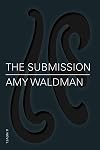
I can't remember the last time a novel caused me to think like this. A blind competition for designing a 9/11 memorial is won by a Muslim - what happens next? An excellent choice for book clubs.
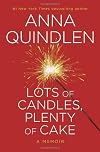
Listening to Lots of Candles, Plenty of Cake was like spending time with an old friend. I've been an Anna Quindlen fan for years - from her Life in the 30's columns back the 80's through her most recent novel. This memoir is especially relevant to women over fifty and includes reflections on aging, family life, friends, faith, career, and more. I loved each and every one of them!
Lots of Candles, Plenty of Cake also has the distinction of being the first book I have ever knowingly purchased twice on the same day. After downloading the audiobook, I drove off to collect my daughter (with all her belongings) at college and bring her home the summer. Before reaching my destination, I stopped at a Barnes & Noble along the way to purchase a hardcover copy. There were so many passages I wanted to go back and reread, I needed a print copy, too. A favorite book of 2012!
My rating: 5 stars
Lots of Candles, Plenty of Cake also has the distinction of being the first book I have ever knowingly purchased twice on the same day. After downloading the audiobook, I drove off to collect my daughter (with all her belongings) at college and bring her home the summer. Before reaching my destination, I stopped at a Barnes & Noble along the way to purchase a hardcover copy. There were so many passages I wanted to go back and reread, I needed a print copy, too. A favorite book of 2012!
My rating: 5 stars
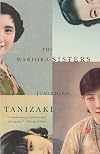
The Makioka Sisters by Junichiro Tanizaki, originally published serially in Japan during the 1940's, offers "a detailed characterization of four daughters of a wealthy Osaka merchant family who see their way of life slipping away in the early years of World War II."
Quite a departure from the mostly British and American classics I have been choosing lately, this book started slowly, mostly due to unfamiliar Japanese names which were hard to keep straight. A character list hastily scrawled on a post-it note stuck to the inside cover helped immensely and I breezed through the rest of the novel.
What I loved:
-the characters
-cultural traditions surrounding courtship and marriage
-descriptions, especially of dress and dance
-recurring references to cherry blossoms and fireflies
Most of all, I loved how one family mirrored a country's struggle. The four Makioka sisters represented both ends of the spectrum between a traditional and modern way of life.
My rating: 4.5/5 stars
Quite a departure from the mostly British and American classics I have been choosing lately, this book started slowly, mostly due to unfamiliar Japanese names which were hard to keep straight. A character list hastily scrawled on a post-it note stuck to the inside cover helped immensely and I breezed through the rest of the novel.
What I loved:
-the characters
-cultural traditions surrounding courtship and marriage
-descriptions, especially of dress and dance
-recurring references to cherry blossoms and fireflies
Most of all, I loved how one family mirrored a country's struggle. The four Makioka sisters represented both ends of the spectrum between a traditional and modern way of life.
My rating: 4.5/5 stars

I loved The Tenant of Wildfell Hall. It is officially my new favorite Brontë novel!
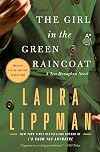
After reading What the Dead Know in 2011, Laura Lippman became one of my favorite mystery writers. Her latest book, The Girl in the Green Raincoat, was previously serialized in the New York Times and has been called a "masterful Hitchcockian thriller from one of the very best in the business".
I'm usually pretty compulsive when it comes to reading series in order, but had heard this novella can stand on its own. While that is certainly true, I would have appreciated it even more if I'd already 'known' Tess and understood her history.
Still, this was a very well-written mystery that makes me want to go back and start at the beginning (Baltimore Blues).
My rating:
3.5/5 stars
I'm usually pretty compulsive when it comes to reading series in order, but had heard this novella can stand on its own. While that is certainly true, I would have appreciated it even more if I'd already 'known' Tess and understood her history.
Still, this was a very well-written mystery that makes me want to go back and start at the beginning (Baltimore Blues).
My rating:
3.5/5 stars
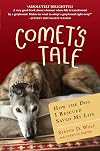
Comet's Tale is a truly heartwarming story of a man and his dog. As Steven Wolf's spinal health deteriorated and simple activities became insurmountable tasks, his rescued greyhound, Comet, was called to the life of a service dog.
The book begins as Comet 'chooses' Steve. It talks about Comet's adjustment to life as a pet, her eventual training (its highs and lows), and the compromises Steve makes due to disability. I loved reading about Comet's devotion to her master, and frequently found myself smiling and nodding my head in recognition of what I have come to recognize as nearly universal greyhound actions, habits, and mannerisms.
Comet's Tale prompted me to reflect on the many ways Zelda has enriched our lives, and it reaffirmed the decision we made two and a half years ago to rescue a retired greyhound. This is a book any dog lover will enjoy, but for greyhound owners like me (or anyone considering adopting a retired racer) it is a must read.
The book begins as Comet 'chooses' Steve. It talks about Comet's adjustment to life as a pet, her eventual training (its highs and lows), and the compromises Steve makes due to disability. I loved reading about Comet's devotion to her master, and frequently found myself smiling and nodding my head in recognition of what I have come to recognize as nearly universal greyhound actions, habits, and mannerisms.
Comet's Tale prompted me to reflect on the many ways Zelda has enriched our lives, and it reaffirmed the decision we made two and a half years ago to rescue a retired greyhound. This is a book any dog lover will enjoy, but for greyhound owners like me (or anyone considering adopting a retired racer) it is a must read.
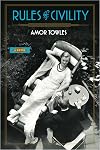
This may just be my favorite book so far this year! I will post a review on my blog after our July book club meeting.
Months elapsed between reading Rules of Civility and gathering my thoughts for a review - a scenario that is far too common these days, I'm afraid. What is there to say now?
-I loved this book.
-I relished each and every sentence.
-I will read anything Amor Towles ever writes.
-In addition to the writing, I loved the atmosphere, setting, characters, and plot.
A favorite book of 2012.
Months elapsed between reading Rules of Civility and gathering my thoughts for a review - a scenario that is far too common these days, I'm afraid. What is there to say now?
-I loved this book.
-I relished each and every sentence.
-I will read anything Amor Towles ever writes.
-In addition to the writing, I loved the atmosphere, setting, characters, and plot.
A favorite book of 2012.
"Oh Wilmet, life is perfect now! I've got everything that I could possibly want. I keep thinking that it's like a glass of blessings - life, I mean..."
"That comes from a poem by George Herbert, doesn't it?" I said. 'When God at first made man, Having a glass of blessings standing by ..."
"But don't forget that other line ... how when all the other blessing had been bestowed, rest lay in the bottom of the glass..." (loc 3996)
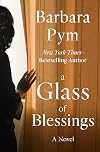
Barbara Pym novels have been my "comfort read" of choice for several years. After all, what could be more cozy than life revolving around tea drinking and church activities in a quaint English village? When Open Road Media asked if I'd like to review their recently released e-book of A Glass of Blessings, I jumped at the chance.
From the opening paragraph, I was transported to familiar Pymsian surroundings and settled in to enjoy my visit. Before long, however, it became apparent that this story might be something a little different. Pym's characters in A Glass of Blessings display the expected entertaining array of human foibles, but Wilmet Forsyth is deeper and more complex than other Pym heroines. She is immensely likable, yet I often found myself growing frustrated with her. Over the course of the novel, Wilmet gains significant personal insights that eventually allow her to forge stronger relationships with both family and friends.
A Glass of Blessings is my fourth, and new favorite, Barbara Pym novel, but I imagine some aspects must have shocked show more her readers in 1958. Kudos to Open Road Media for releasing the ebooks in time for Barbara Pym's Centenary and making her work available to a new generation of readers.
My rating:
4.5/5 stars show less
"That comes from a poem by George Herbert, doesn't it?" I said. 'When God at first made man, Having a glass of blessings standing by ..."
"But don't forget that other line ... how when all the other blessing had been bestowed, rest lay in the bottom of the glass..." (loc 3996)
Barbara Pym novels have been my "comfort read" of choice for several years. After all, what could be more cozy than life revolving around tea drinking and church activities in a quaint English village? When Open Road Media asked if I'd like to review their recently released e-book of A Glass of Blessings, I jumped at the chance.
From the opening paragraph, I was transported to familiar Pymsian surroundings and settled in to enjoy my visit. Before long, however, it became apparent that this story might be something a little different. Pym's characters in A Glass of Blessings display the expected entertaining array of human foibles, but Wilmet Forsyth is deeper and more complex than other Pym heroines. She is immensely likable, yet I often found myself growing frustrated with her. Over the course of the novel, Wilmet gains significant personal insights that eventually allow her to forge stronger relationships with both family and friends.
A Glass of Blessings is my fourth, and new favorite, Barbara Pym novel, but I imagine some aspects must have shocked show more her readers in 1958. Kudos to Open Road Media for releasing the ebooks in time for Barbara Pym's Centenary and making her work available to a new generation of readers.
My rating:
4.5/5 stars show less
If you're thinking of reading this one, why not listen instead? The audio version, narrated by the author, lends an additional sense of authenticity to the stories. This was my first experience with Junot Díaz - now I want to read The Brief Wondrous Life of Oscar Wao.
On Saturday I posted about the sixtieth anniversary of Ernest Hemingway's The Old Man and the Sea. Originally published in Life magazine, it sold more than five million copies in two days, went on to become a best-seller in book form, and is now considered a classic. It is a perennial fixture on high school reading lists all over the country.
Confession time: I disliked The Old Man and the Sea when I read it in high school. An old man and a big fish? Come on. Neither could possibly be considered interesting subject matter for a fourteen or fifteen year old girl. In the end though, I did the required reading, complained bitterly about being bored, wrote the requisite essay, and promptly forgot all about it.
Over the years, I have come to appreciate Hemingway - a handful of novels, some short stories, and, of course, A Moveable Feast - but never returned to The Old Man and the Sea. Saturday's anniversary seemed to be a sign. I pulled the book from the shelf and read,
" He was an old man who fished alone in a skiff in the Gulf Stream and he had gone eighty-four days now without taking a fish. In the first forty days a boy had been with him. But after forty days without a fish the boy's parents had told him that the old man was now definitely and finally salao, which is the worst form of unlucky, and the boy had gone at their orders in another boat which caught three good fish the first week. It made the boy sad to see the old man come in each day with his skiff empty and he show more always went down to help him carry either the coiled lines or the gaff and harpoon and the sail that was furled around the mast. The sail was patched with flour sacks and, furled, it looked like the flag of permanent defeat."
Wait a minute. Is this really the same book I read in high school? How did I totally ignore the beauty in the simplicity of Hemingway's prose? Was I not touched by the boy's devotion to the old man? Did I miss the old man's respect for the fish, or have I simply forgotten? And what about the old man and his struggles to overcome physical limitations?
Yes, The Old Man and the Sea is more than just a fishing story. And while it will never be considered a personal favorite, I have a newfound appreciation for this classic Hemingway novel. show less
Confession time: I disliked The Old Man and the Sea when I read it in high school. An old man and a big fish? Come on. Neither could possibly be considered interesting subject matter for a fourteen or fifteen year old girl. In the end though, I did the required reading, complained bitterly about being bored, wrote the requisite essay, and promptly forgot all about it.
Over the years, I have come to appreciate Hemingway - a handful of novels, some short stories, and, of course, A Moveable Feast - but never returned to The Old Man and the Sea. Saturday's anniversary seemed to be a sign. I pulled the book from the shelf and read,
" He was an old man who fished alone in a skiff in the Gulf Stream and he had gone eighty-four days now without taking a fish. In the first forty days a boy had been with him. But after forty days without a fish the boy's parents had told him that the old man was now definitely and finally salao, which is the worst form of unlucky, and the boy had gone at their orders in another boat which caught three good fish the first week. It made the boy sad to see the old man come in each day with his skiff empty and he show more always went down to help him carry either the coiled lines or the gaff and harpoon and the sail that was furled around the mast. The sail was patched with flour sacks and, furled, it looked like the flag of permanent defeat."
Wait a minute. Is this really the same book I read in high school? How did I totally ignore the beauty in the simplicity of Hemingway's prose? Was I not touched by the boy's devotion to the old man? Did I miss the old man's respect for the fish, or have I simply forgotten? And what about the old man and his struggles to overcome physical limitations?
Yes, The Old Man and the Sea is more than just a fishing story. And while it will never be considered a personal favorite, I have a newfound appreciation for this classic Hemingway novel. show less
Thank you, Colin Firth.
Your voice added depth and meaning to a piece of literature which previously left me feeling profoundly indifferent. It's been ten years since I read The End of the Affair by Graham Greene. My reaction at the time was one of total apathy - no connection, no sympathy, not so much as a trace of like or dislike toward any of the characters. Greene's prose elicited a similarly flat response.
However, listening to you read Greene's work was a very moving, albeit depressing, experience. So depressing, in fact, it took weeks to finish a short six and a half hour audiobook. (I put it aside several times to read something cheerier.) How did that feeling elude me in print?
Several weeks have passed, and I continue to think about an audiobook that left no lasting impression in print. As various passages come to mind, I marvel the sheer beauty of Greene's writing. I still don't care much for the story, but I can appreciate what Greene accomplished and will now consider reading more of his work.
This production is a testament to audiobooks and the power of the spoken word.
My rating: 4.5/5 stars
Your voice added depth and meaning to a piece of literature which previously left me feeling profoundly indifferent. It's been ten years since I read The End of the Affair by Graham Greene. My reaction at the time was one of total apathy - no connection, no sympathy, not so much as a trace of like or dislike toward any of the characters. Greene's prose elicited a similarly flat response.
However, listening to you read Greene's work was a very moving, albeit depressing, experience. So depressing, in fact, it took weeks to finish a short six and a half hour audiobook. (I put it aside several times to read something cheerier.) How did that feeling elude me in print?
Several weeks have passed, and I continue to think about an audiobook that left no lasting impression in print. As various passages come to mind, I marvel the sheer beauty of Greene's writing. I still don't care much for the story, but I can appreciate what Greene accomplished and will now consider reading more of his work.
This production is a testament to audiobooks and the power of the spoken word.
My rating: 4.5/5 stars