I expected this book to be worth reading. I didn't expect it to be so worthwhile in the way it was. At its core, this is a book about the young black students in Nashville, led by a devout apostle of the nonviolent approach to social action of Mahatma Gandhi, to begin what in some respects was the second major leg of the American Civil Rights Movement with the Nashville Boycotts, starting in 1958. (Rosa Parks was taken off the bus in Montgomery, Alabama, in late 1955, beginning the Montgomery boycott. Emmitt Till was killed a few months earlier, with his mother courageously using an open casket to show the world what had been done to her son, in essense to all blacks over the many Jim Crow years.) The author writes about the actions together and apart of the people in this civil rights movement, often taking the reader aside to tell a sort of mini-biography of the cast of characters, allowing a deeper understanding of the complexities of managing a group of each of the individuals joining together to accomplish a type of societal earthquake. As I delved into the story being told, I sensed a certain tone to the writing, a certain reserve, which I eventually decided was one of reverence for the people he was writing about. The author is able to pass along this same reverence to readers by immersing us into the very human aspects of the individuals and their goals. The narrative goes beyond the Nashville boycotts to the Freedom Riders and, somewhat less so, to Freedom show more Summer, the March on Washington, and other notable events. All in all, the blending of biographies and deep insights into historical events is quite mesmerizing. Eventually, however, the author gets to the follow-through. What happened to these "characters" after all these notable events? In a movie, this is usually just a few minutes, at best, of "Bill Jones, quarterback for the State Champion football team, now sells used cars in his hometown. Mary Smith went on to serve as a nurse in the Vietnam War..." In this book, the author essentially continues the mini-biographies of each of the cast of characters, some being natural extensions of what they had been doing as students, some far removed, into such items as what Dairy Queen they sold to get a Burger King franchise, which they, in turn, traded in for a McDonald's franchise. In short, not every follow-up was instructive to the point of the book, but the author seemingly felt compelled to tie up all lose ends. Indeed, the author was thorough in his reporting throughout. So, what exactly made the author write this book the way he did? He is best known for a Pulitzer Prize and best-selling books on the Vietnam War. Secondarily, he is also very well known for his classic sports related books about epic World Series games and the like. (He died in a car accident on his way to interview a famous NFL quarterback in research for another epic championship game.) The answer comes from the fact that this notable journalist got his professional start at the Nashville Tennessean as these "Children" of the book were forming the SNCC and making history in America. I think of this book as the author's homage to those only slightly younger black students who he studied as a young reporter some 40 years earlier than when this book was written. Despite having already having read literally dozens of books on the struggle for civil rights in America, I still found this book highly rewarding. show less
I never intentionally read a book I expect to dislike or expect to be substandard in any way. At the same time, I don't expect a book to be even better than I have been led to believe it may be. This was such a book. It is still resonating with me. The book is essentially both a biography of the economist, John Maynard Keynes, and also an analysis of his economic thinking and how it developed as well as how it got repackaged by those that followed him, particularly as it applies to John Kenneth Galbraith. Indeed, it might be argued that this is both about Keynes and Galbraith, despite the title. The word craft used by the author is exemplary for general phrasing and the like, but the writing also skillfully blends together the personal life with the economic theory of its main subject, and it takes multiple economic theories and explains them in the clear ways I expect only from the most engaging of college professors. I minored in Economics in college, so I likely have more familiarity than the average reader with the book's subject. (My wife, who has more formal education than I, didn't even know who John Maynard Keynes was. I did not ask her if she knew who John Kenneth Galbraith was.) With that in mind, I do not know if the average reader will find this book as thoroughly captivating as I did. The author clearly had an affinity for his subject, readily willing and able to discuss a myriad of pros and cons. I would say I would be eager to read another book by him, but show more I doubt he has the same affinity for another subject to the same degree. For those reading this who doubt this book could draw them in, if I pointed out that John Maynard Keynes was a close friend of Virginia Woolf, among many others, would that wet your fiction-book predisposition to at least check the book out to see how you like it? show less
This is a clear, crisp, insightful review of specific segment of American history that a lot of Americans know in part already, and plenty that the average American does not know. [Note to Trump supporters: There is absolutely no mention of the Continental Army seizing the airports, so you may not trust anything written in this book.] As I read the book, I thought this would have been the history professor I would like to have had in college. The author takes more than a few fairly complicated historical events and makes sense of their juxtapositions and transitions. Very well known Americans like Washington and Adams are highlighted, but also much lesser known key figures like Robert Morris. If you didn't know already that the Declaration of Independence ("1776!") and the U.S. Constitution ("We the People") were not same thing, then you might be stunned to know that there was an Articles of Confederation in between those two documents and that the original U.S. Constitution -- pay close attention "originalists" -- did not have a Bill of Rights. All in all, this was a most pleasant history read, even if does assume at times that the reader already knows a minimum level of real American history as opposed to myth.
Konzentrationslager (KL): Concentration Camp. There is so very much I could write about this book. Rather than do that, I will limit myself to just four specific points. I preface these statements by pointing out that I had already read an extensive narrative about a specific Nazi concentration camp in Sarah Helms book, Ravensbrück: Life and Death in Hitler's Concentration Camp for Women, which covered much of the same concepts about the "general business" of the camps, though geared specifically at the differences for women. In addition, a broad coverage of the camps was included in Timothy Snyder's book, Bloodlands: Europe Between Hitler and Stalin. And, of course, like lots of people before me I read books like Elie Wiesel's book, Night, and watched the Spielberg movie, "Schindler's List." My first point is that I believe the average American, at least at first blush, thinks first of Jews, gas chambers, and probably Auschwitz, when Nazi concentration camps are mentioned. While there is no doubt -- regardless of what Holocaust deniers might say -- Jews did indeed suffer horrendous assembly line genocide in the KL and elsewhere -- so in saying the KL were much more than that is not to diminish what what happened to Jews. Quite the contrary. Nazi disdain for a vast host of peoples not fitting their Aryanism ideal, cast its evil even broader and deeper. Gays, prostitutes, street people, petty criminals, thugs, mentally and physically disabled, Gypsies (Roma), Jehovah show more Witnesses (primarily because they wouldn't swear allegiance), and definitely Slavs in great numbers, meaning lots and lots of Russians and Poles. Despite the common connection made today, White Supremacy, as bad as it truly is, is more tolerant and inclusive than Hitler's Nazi ideal. Slavs are White, after all. My second point is how much incompetence there was in running the KL. Shifts in who and how persons were treated in the camps were fairly common. And there was a significant amount of "reinventing the wheel" at the various KL sites on how to manage these new tasks as they shifted, belying the reputation of German efficiency in the Third Reich. That brings me to my third point which comes with the last months of the Third Reich and how they tried to react to the squeeze put on space and resources as the Allied forces closed in, while seemingly never letting go of their knee-jerk behavior in mistreating as many people as they could. Nothing quite makes this point as the time Himmler hopes to curry some favor with the approaching Allied armies and decides to formally surrender a single major camp. While painting buildings and other nice "spring cleaning" activities for the "guests" arriving, somehow they forgot they had thousands of dead bodies piled up for all new arrivals to see, and while the conquering army was already in the camp, SS guards continued to shoot errant prisoners, until finally stopped. They simply could not see the depths of their depravity. And finally, I will point out something mentioned at times in this book that is pointed out more comprehensively in Snyder's book and more eloquently in Helm's book. The Russian troops approaching the many KL sites were apparently hell bent on matching the Nazi depravity by such actions as raping their own Russian women soldiers after they had been allowed to escape their KL imprisonment in Ravensbrück. There are history books with more literary flair than this one, but it is still quite readable...assuming you can tolerate the subject matter. Its obvious scholarship justifies its high marks. show less
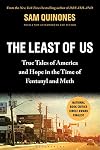
I would argue that this is essentially two books, not one. It's not that it's written that way. It's just that there is a significant portion that is quite clear and concise and important information for the average reader to know about the ins and outs of what America is dealing with regarding its current and significant drug-related morass. (What I will label the "Walmart Drug Ecosystem" was especially intriguing to me.) There is a great deal included in this book, with convincing evidence, that the typical mass media is not passing along to the public in any meaningful way. It was just yesterday that I read a news story in a Pulitzer Prize-winning newspaper that mentioned certain "truths" about current community drug issues that were known to this book's author -- and, of course, to anyone who would have read this book -- at least as far back as late 2021 when this book was first published. So, not new news. Old news that the media is just now reporting? And then there is the rest of the book, which is basically all coming from the author's personal interviews with several specific people at a handful of locations in America, locations that the author clearly has taken as a clear representative sampling of all drug-related issues. There is no effort to verify that what he has been told by individuals in these locations is universally true everywhere else. (Though, I will grant that they touch on likely issues in a lot of communities.) Indeed, especially at the end of show more the book, the author hands out what he regards as solutions that are not tested elsewhere or even clearly successful. I got the distinct impression I was being subjected to a classic Frank Capra movie. "It's a Wonderful Life" and "Mr. Smith Goes to Washington" immediately came to mind. I would think that even Mr. Capra, if he were alive, would agree that those movies may be inspirations for community change but would never be foundations for legislation and policy decisions to tackle problems. In my opinion, that uplifting thinking is in contrast to the hard realities presented elsewhere in the book. A point which reminds me that the author effectively never mentions the massive political barriers to acting on the "enlightenment" he seems so fond of pointing out from the individuals he interviewed. I am rating this book as highly as I am because of what is mostly reported in the first part of the book. Unfortunately, most readers, people who much prefer fiction over non-fiction, will not bother to read this book unless the "human interest" part of the book is there. They might even skim over the part I think is so important, and I don't think that will help find solutions, just empathy. show less
Freezing Order: A True Story of Money Laundering, Murder, and Surviving Vladimir Putin's Wrath by Bill Browder
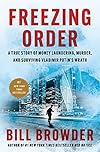
I read a lot of non-fiction, much of it is written by historians and investigative journalists. I read some fiction, too. The subject of this book would normally fit into the historian/journalists bucket for me. Except. Except it reads much more like a fast-paced fictional crime novel. Check that. It reads more like a used car salesman telling stories to a half-inebriated group of people at a neighborhood cocktail party. Does it surprise you in the least that I have very mixed feelings about this book? In its defense, I came across no "facts" listed in this book about what was happening that I hadn't had supported elsewhere by sources I trust. So, arguably, what the author says I have taken as true, in essence. On the other hand, because this book is written more as a sort of memoir by a person who makes money by persuading others to give him their money, i.e., by a person used to manipulating thought of others to his own advantage, plus, it is not written by a historian (with a certain historian's rules for presenting facts, nor written by a journalist, following known journalistic ethics in presentation, then this book "feels" more like a used car salesman telling me how an old lady barely drove the car he's showing me. To be clear -- to repeat -- I have no solid reason to question what is in this book. It just felt like I should. Certainly, feeling a good portion of the book with meaningless filler did not help. Really, just how important to me is it to know what kind show more of a sandwich he ordered for himself and his daughter on their umpteenth skiing vacation in a foreign country? The family just hanging out, enjoying themselves...while the author has just spent page after page explaining why a despot in yet another country may be trying to have him killed? People who like fiction will probably love this non-fiction book. Me? I prefer non-fiction books that don't have me constantly questioning if it's made up or not. show less
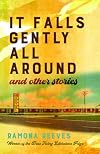
The author of this book is not John Updike. Why (you may ask) are you bringing up John Updike. Well, I have read more books by John Updike than any other author -- no other author is even vaguely close -- and early on in reading this book, I thought of Updike's books. "Updike is known for his well-crafted prose that explores the hidden tensions and problems of middle-class American life." Most were novels and short stories set in America's Northeast. I saw this book --early on -- as sort of a somewhat lower class study of life in the American South. Alabama in this particular case. An interconnected set of characters, in stories spaced apart in time, ebbing and flowing (and mostly very depressed and disappointed in their lives and often very willing to think lesser of those around them. You know. Typical human stuff. At least that's apparently how the author sees it. Then, about two-thirds through the book, after only a couple slight hiccups, the wheels started to come off the cart. What were major character traits soon became less convincing, as if the author had never been expecting to have to flesh them out all the way, and failed to know people with those characteristics well enough to flesh them out, so apparently there was some guessing going on, or, at the every least, some unfounded assumptions. Patterns of behavior shifted without rational explanation. I wondered why the "logic" of the narrative veered off the road it had been on, so much toward the end. It seems show more that most of the earlier stories (or chapters, which ever you prefer in this case) were written earlier and published as short stories, while the bulk of the last third was not, implying that someone convinced the author to elaborate on the connected narrative of the earlier works wrap every thing up into a nice ending. If that is so, I'm not sure if the author was rushed to finish or never saw its ending as clearly as what came before, but I lost all association with John Updike in the end. I've grown weary of fictional writers that can't research their own characters and their surrounding as extensively as good non-fiction writers have no choice but doing. Throwing out the argument that something is fantasy or science fiction does not make it acceptable for covering up simple ignorance and misunderstandings about how life works in reality, especially when the writing is marketing itself as just that. show less

This collection of short stories surprised me somewhat because I might argue that I was more impressed with the translator than I was with the author. Admittedly, since I am not fluent in Russian, I cannot, with any authority, say what I admired so much in the translation wasn't inherent in the original Russian of the 19th century. In any event, the writing was so fresh and so easily mistaken for a much more contemporary writer. As for the stories themselves, I was reading the book because it contains a translation of "The Singers" which is studied in George Saunders book, A Swim in a Pond in the Rain: In Which Four Russians Give a Master Class on Writing, Reading, and Life, which I am prepping to read. It also includes "First Love" from which a movie was made many years ago, at a time when lens filters used to distort the images were all the rage. Frankly, my favorite story was "Bezhin Meadow" partly because of its narratives perspective for the given situation, but also because I could identify so well with it. I can't honestly say the stories themselves compel me to recommend the book, but, all in all, it was a very pleasurable read.
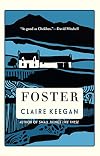
Is this a novella or a short story? It's only slightly longer than a short story I read just before this, in a collection from Ivan Turgenev, so maybe it's just a short story. I reads like a short story to me, but what a beautiful, captivating story it is. I was immediately lifted up by its power, and not let back down again until long after I had closed the book in my hands. There was a point in reading it in which I actually became a bit fearful of what was to come, because I wasn't at all sure I would be ready for the emotion it would bring out of me. I suppose there are readers who would not be so taken with the author's prose as I was. I've since thought about how I can identify with much of what the main character went through, so maybe that is why it grabbed me so tightly. I don't really care. I absolutely loved this book, and I might get the audio version, too, if for no other reason than to give myself the impression that someone else besides myself knows the story as well as I do, since they would have just read it to out loud to me. Heaven knows nobody I know likes most of the same books I do, even if a few strangers might.
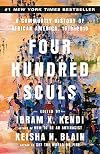
There will be people who are going to be disappointed in how low I rate this book. Perhaps it is justified. This collection of essays and poems has a lot going for it: it covers a lot of ground historically in the black experience in America (400 years), the prose is uniformly well done (I'm not qualified to rate the limited amount of poetry), and it has a variety of approaches to the topic at hand. On the other hand, it is not always faithful to the 5 year chunks of American history that each essay represents, and the depth of focus in each essay is quite variable. Some authors clearly tried to draw out historical context for their assigned time period. Others barely wrote about persons or events for the assigned periods, but waxed philosophically about wide concepts that could have applied to much wider issues and time periods. Ultimately, it reminded me of going to a conference on a particular topic: medical, technological, educational, artistic, etc., where the conference attendees get to choose from a variety of speakers, many of whose lectures or panels do not relate to each other than in the broadest scope of the conference theme. I have read dozens of books now on the black experience in America, and this is like cocktail party hors d'oeuvres. It is not a comprehensive, consistent coverage of 400 years in Black America. Ibram X. Kendi's own book, Stamped From the Beginning, would be a better choice, but even that impressive work really only covers a certain aspect show more of what Black America has experienced. Will this book provide a starting point to introduce the less informed to an important subject? I think that depends on the person. For every person who finds the kindling in this book to build a fire to read much more extensively, I'm afraid there will be an equal number who will conclude they have read quite enough on the subject and never read much more. To me that would be a pity. There are several important, impressive, worthwhile works out there. show less
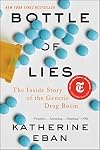
This book is fairly limited in its scope, but it points out important issues that affect pretty much everyone because pretty much everyone, at one time or another, uses prescription medication. The main focus here is on a company in India and the government regulation of that company, but the issues raised go well beyond the "star attraction" of this book. There are "bad" people and bad companies and bad regulators and bad oversight of those regulators...and bad understanding by the average prescription drug buyer of how bad everything is. Many of us badly need to read this.
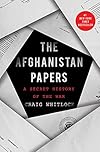
The scope of this book is limited, in the sense that it specifically covers just the United States involvement in Afghanistan, but it is so comprehensive while still concise that it deserves top marks for its efforts. Admittedly, the author had a couple massive but key resources to help him focus broadly but still very deeply into his subject. I have read several books touching on Afghanistan and specifically of America's involvement in it, and this would be one of my top choices for the less informed. My first choice would be, Tamin Ansary's book, Games Without Rules: The Often Interrupted History of Afghanistan, which covers the long and unique history of Afghanistan as the target of empire after empire. It helps explain the morass that seems so obvious into which the United States would get itself in Afghanistan. A second choice would be Anand Gopal's book, No Good Men Among the Living: America, the Taliban, and the War through Afghan Eyes, because it so intimately captures the daily life of the Afghanistans and their involvement with the occupying military coalition. This book serves as a great end to the set. Having said that, regardless of your political position, I predict it will make you nauseated reading about the decades of wasted U.S. taxpayer money. It should certainly help you better understand what Biden faced when he decided to withdraw the U.S. from Afghanistan. Highly recommended.
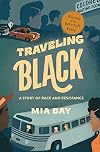
This is the work Candacy A. Taylor (perhaps) meant to write in her book, Overground Railroad, but failed to do. It is a solidly researched and smoothly written accounting of the myriad of pains American Blacks have suffered in merely traveling across the country. Trains, buses, cars, planes, and all the associated entities connected with them: passenger terminals, gas stations, lodging, eating, etc. It joins my personal Pantheon of best histories on the Black experience in the United States. In this case, the focus is transportation. It joins Ari Berman's book, Give Us the Ballot, and Carol Anderson's book, One Person, No Vote, on voting rights, Richard Rothstein's book, The Color of Law, on housing, Douglas A. Blackmon's book, Slavery By Another Name, and Michelle Alexander's book, The New Jim Crow, on incarceration, Danielle L. McGuire's book, At the Dark End of the Street, on women, and Phillip Dray's book, At the Hands of Persons Unknown, on lynchings. There are many fine histories out there besides these, but any reader, especially one who is not Black, or who is too young to have experienced what others may have gone through before them, would be far ahead of the average American, by reading these books, in understanding the massive obstacles that one set of Americans have put in Black America's way over the decades. As a side note about this particular book, besides the overwhelming and damaging biases displayed in this book, one reaction I had while reading it was show more how often the discrimination never even managed to go beyond simply petty nonsense, a desperate clinging to some vestige of superiority, like something an immature school kid would do to another classmate in spite, but, in these lesser cases, it was government officials and business leaders being the spoiled children, acting out. In short, at best, they never even rise past being really pathetic. Read this book and the others quickly before your state or local government bans them all, and burns them on the street in front of your house. show less
Twilight of the Gods: War in the Western Pacific, 1944-1945 (Vol. 3) (The Pacific War Trilogy) by Ian W. Toll
The third and final volume of the author's War in the Pacific is well worth the extra pages he crams into this last book. It is not quite the same as the first two volumes. For starters, especially at the beginning, he digs into a lot of "lose ends" that are worth knowing but were passed over in the first two volumes. In at least one case, he goes back and covers an armaments subject for which he must have dug up even more insight since he first approached the subject. At first reading, it seemed redundant, but a closer look revealed more data than earlier. The bulk of the rest of the book is in keeping with the author's past flair for placing the reader as fully into the various battles as can be had without reverting to just a series of memoirs. Speaking of which, this books notes show a huge list of first-hand accounts from which he derived a comprehensive impression of each and every major conflict on which he reports. The reporting on Iwo Jima and Okinawa are especially emotionally taxing, which comes from the many separate tellings by numerous participants. After finishing this book, I went back and rewatched Clint Eastwood's "Letters from Iwo Jima" film. It now seems a distortion of what took place, while still capturing a limited part of the emotional struggles. Finally, the book's Epilogue is both a very suitable conclusion to the three part set, as well as a masterful summary of many often overlooked but essential issues about the Pacific War, Japan, and reveals show more differences from the much more often documented European Theater of World War II. Even if, as a reader, one would not want to dig through the various war engagements, I would still recommend general history readers to read through the final chapter. It's that good, in my mind. Overall, I highly recommend the entire series. show less
First, this was not the book I expected it to be. Secondly, after reading this author's books, watching movies based on his books, or both, it became clear to me that the common thread I saw in all of them, was that he was drawn to those folks that listened to different drummers in dealing with a variety of tasks at hand. And, finally, while there is a lot to recommend this book -- the man knows how to tell a story -- this book had one of the most disappointingly tepid book endings that I can recall reading. Somewhat surprisingly to me, it seems these three points are all related. I was expecting much more reporting on what happened in the Trump administration that helped or hurt the handling of the COVID-19 pandemic. In some ways, the Trump response is almost an afterthought. What went wrong then was just a variation on what went wrong earlier in avoiding -- or not -- any pandemic -- at least according to what the author takes time to report. Michael Osterholm's book, The Deadliest Enemy, is as good, and perhaps better in that regard. This book concentrates much more on the personal intricacies of the many failings of bureaucratic health management with its political overlords. In getting down to those personal intricacies, the author's nose for "different drummer" followers takes over. Ultimately, the author ends the book with a weak flourish over just one of those people, as if the others were never quite as important. The best thing I can say about the book is that it show more wonderfully captures the pettiness and waste of bureaucratic machinations in various governmental bodies, a subject of which I am too well versed over may years. show less
Black Wave: Saudi Arabia, Iran, and the Forty-Year Rivalry That Unraveled Culture, Religion, and Collective Memory in the Middle East by Kim Ghattas
I've read several books about the Middle East, Muslim governance, the multiple wars in the area (civil and otherwise), and the huge affects of oil discovery on the area economy. With that in mind, this book was a bit of a review of many events and situations of which I was already well aware. Nevertheless, I was surprised to find myself feeling like a person working on jigsaw puzzle where all of a sudden someone had taken pieces that I had been staring at long time and pointing out where they fit in this huge puzzle of the Middle East. The author concentrates on Iran and Saudi Arabia, but the series of events in many parts of the Middle East took place in very close proximity to each others. In February 1979, the reign of the Shah of Iran falls and the Iranian Revolution and the Ayatollah Khomeini sets the country on a dramatically different course. A month later, the Egypt-Israel Peace Treaty is signed, creating disturbing rumblings throughout the Muslim world. Four months later in July, Saddam Hussein seizes control of the Iraq government. Four months later still in Mecca, Saudi Arabia, radical Islamists seize the Grand Mosque, an event that had nowhere near the same publicity in America at the time that the Iranian Revolution had. And, of course, just one month later, the Soviet Union invaded Afghanistan. There were other actions in Syria, Pakistan, and Lebanon not long before that also served to essentially be prep work for the dynamics that the Iranian Revolution and show more the seizure of the Grand Mosque had set into motion the great rivalry between Iran and Saudi Arabia. Some years ago, I read a book centered on the Israelis involved in the Six-Day War and the aftermath for several years. I noted in my review that my biggest take away was my new found knowledge of how much Israelis hate each other. Not so long ago, I read another book that went into great detail about how Israelis and Muslims seemly were compelled to assassinate each other. And now we have a book that makes it abundantly clear how much Muslims hate each other. Ugh! Yes, I'm over simplifying. Everybody had more than enough reasons to hate each other, so why not kill all of them. One last point: the author actually makes a point at the end of the book about her optimism that things will work out. She had just given the reader every reason to come to a very different conclusion, but maybe she'll explain herself better in her next book. I'm certainly not convinced. show less
For any American who has read Dee Brown's book, Bury My Heart at Wounded Knee, or something equivalent, it is readily obvious that the United States did a masterful job of treating its indigenous peoples horribly. But, Canada, Oh, Canada, how creative you were with your own "little Indians". Imagine if Hitler and his pure Aryan Nazis had decided to round up all the children of those non-Aryan and otherwise "substandard" Aryans in Germany and officially announced that they would be sent to Nazi Youth Camps just for them, for indoctrination to the Nazi Way. No ifs, ands, or buts, about it, you're going. Kidnap-abduction style, if the opportunity is the most convenient one at any given moment. But surely, it would have been just bad luck if those youth camps with a purpose, a.k.a. residential or industrial schools, ended up being more Nazi concentration camp than summer camp. Canada officially had dozens of them. Little kids, in some cases, were literally swept off the street with no word to relatives what had happened to then. For roughly 70 years, kids 6 to 16 were held captive in institutions, until the government finally took over operation from the too often pedophile-infested church orders that ran them up to that point. A few years later they were closed down. There is an actual residential school off Vancouver Island in British Columbia, that may have served as the model for the author's narrative. To give some perspective to its lack of good deeds to indigenous show more children, in less than 10 years from its beginning, more than a third of the children sent there for indoctrination had died. Not from a horrible communicable disease, a natural disaster, or massive accident. Just general institutional wear and tear, so to speak. Just last year -- after the author finished writing this book -- over 100 unmarked graves were discovered. So much for the very significant events behind this fictional telling of five children who attended such a residential school. The story told touches on both the structure of the abusive institutions and the individual crimes committed in them, but there are dozens of books and videos that do a much better job of making clear how deeply devastating life in those "schools" was. So, the actual abuse was not the key point of the book. Indeed, I have heard the author state plainly that her purpose in writing the book was in answer to the question often asked of the survivors: "Why don't you just get over it?" Very oddly, it is some of the author's own characters, both survivors and offspring of survivors, that incessantly ask that question of other survivors. Again, there are numerous videos of actual survivors of the many schools who make it much more clear than the book does why the survivors don't so easily let it all go. No, I see the point behind this particular book to be: No matter how much you throw at us to break us -- some of us, at least -- will not only survive but thrive. In the meantime, the reader can ignore the many logical and factual contradictions in the narrative, such as the junker car that is purchased to go on a trip, which takes the driver to places she has somehow driven to many times before -- without a car? Or the ACAB border patrol officers who are somehow on just one side of the U.S.-Canada border? Or the trip hundreds of miles long with just one rest stop and that to let her dog run around? If I hadn't lived in and visited many of the areas mentioned in this book, I very likely wouldn't notice these obvious embellishments, but I have and I did. It's my impression that most fans of fiction don't care a whit about facts that contradict the narrative, so count that as only a problem for me. show less
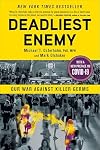
For folks who generally don't pay much attention to what's going on around them, this book is better than my rating may imply. They'll learn quite a lot. For those who don't follow science, this book is beyond your comprehension. For many of the others, this book will be a bit disjointed. Sometimes -- the bulk of the time -- it is a lucid, concise explanation of the world and the world of infectious diseases. At too many other times, it seems more like a seminar given at a medical convention. At others still, it seems more like a expert panel testifying to government policy wonks. In short, for the "average Joe or Josey", there will be sections where the author will be talking right past you. Of course, I could be wrong. Maybe the average citizen knows whether we really need $200 million or $2 billion for a particular government health care initiative. I don't. Having said all that, for the potential reader soaking up the bulk of the narrative about diseases and what it means for we average citizens, before starting to read this, please realize that the book was originally published about three years before the COVID-19 pandemic struck world-wide. (There's a COVID preface in the latest edition.) Of course, SARS and MERS and ebola and H1N1 and a host of other deadliest enemies had been threatening in recent years, so it had made sense that the U.S. federal administration had prepared a plan to confront the next health care tsunami. And then the tsunami struck and the show more wisest person in the world -- just ask him -- threw it all out the window. The result? Pretty much everything that this books primary author predicted -- warned -- would happen, then happened BIG TIME. The one thing the book does not dwell on is the willingness of millions of people to treat science as the disease worth fighting. You read. You judge. show less
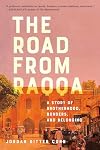
I understand why a lot of readers of this book liked as much as they did. Several have mentioned that it reads like a novel. It does have a flow to its narrative that is much like fictional work, and I do not mean that in any negative sense, despite it being, at least nominally non-fiction. My short capsule review of this book is that it is written by someone who apparently knows little or nothing about a lot of things and has written it for people who know little or nothing about a lot of things. The author apparently specializes in expounding on stories with a sports event at its core, and, in this case, he was looking for a translator for dealing with foreign athletes when a contact was made with one of two brothers. Next to nothing about sports is mentioned in the book, however. Two brothers who are both lawyers are at the heart of the story. Neither does much to convince me they think like any lawyer I have ever known, including not knowing how to approach legal matters in America. The book is mostly about family and traditions, and about making a living like pretty much everybody else in the world. Pretty early on in the book, I noted passages that were wrong enough that I started wondering if the person that provided the author with the "facts" of the story had misremembered (or lied), or if the author had misunderstood what he had been told. If it had been the latter, why had the author -- and anyone reviewing the book before publication -- not verified the show more information. Early on, it was a very minor matter...about cooking onions. It was just wrong. Not a typo. Just wrong. On the other hand, in a narrative that can easily be argued as being the most dramatic of the book, there is so much wrong about the details of it, that it is a huge misrepresentation, going well beyond mere hyperbole. Luckily, the very barest of facts -- people took a trip -- is true, keeping me from calling it all a lie. Would the book even have been made if one of the brothers hadn't had celebrities praise him for things that had nothing to do with sports or the law or even being an immigrant to America, but for remembering what two relatives had taught him about how to do things that millions of other relatives teach their family members across the world, i.e., how to prepare a home-cooked meal. Like I was taught. And which I, also, have earned money doing for others. Ah, feel free to just mark me down as a bitter little man who wants an embellished narrative written about me, too. Or not. Most folks will not care about what I cared about. I hope they read it and enjoy it as others have. show less
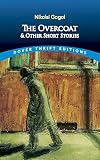
At barely 100 pages for just four short stories, I have probably taken more time to figure out what I wanted to say about this book, than I did to read it. First, given that the stories were written the better part of two centuries ago, the translation made the narrative very modern in style. In reading the first two stories, "Old-Fashioned Farmers" (a.k.a., "The Old World Landowners"), and "The Tale of How Ivan Ivanovich Quarrelled with Ivan Nikiforovich," my sense was that they were a sort of adult fairy tale. Grimms' Fairy Tales came to mind, but, as I said, in adult form, and perhaps I never read enough of them and when I did was so long ago, that my memory has distorted how I see them now. In both cases, I found the stories had levels of depth and poignancy that elevated them above the average, certainly for the time they were written. The later two stories, and probably the better known ones, were "The Nose" and "The Overcoat." for those two, Washington Irving's fictional works came to mind. Again, maybe my memory of what I read so very long ago has distorted how I recall them, but, regardless, a headless horseman and a nose dressed as an officer must link together in some way at least. Right? Oh, well, decide for yourself if this collection of stories is worth your while. Personally, I doubt anyone glued to their smartphone will take the time. The stories are neither high tech nor trendy. The fact that they might be good isn't really the point, is it?
Voices from the Pandemic: Americans Tell Their Stories of Crisis, Courage and Resilience by Eli Saslow
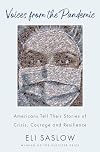
Heartbreaking. Infuriating. Nauseating. Depressing. Unless, of course, you're someone who would never read this, and then it's a hoax, a scam, hyperbole. I demote this one notch for just one reason. It doesn't cover the stories that account for the Omicron mental shift, in which the pro-vaxxers show how much they have failed to grasp many of the fundamentals about the pandemic.
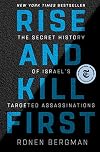
I've needed to sit on reviewing this book for a while, knowing that no matter what I write, several folks will take my assessment of it as biased. So, let's start with what the book says it's about in its title: "The Secret History of Israel's Targeted Assassinations. Yes, the book is about that. It is also about what the people targeted for assassinations did to Israelis that Israel felt justified the assassinations. Well, at least most of the person's targeted for assassination did things against Israelis. And, of course, there are the people who weren't actually targeted and hadn't done anything but be near those targeted, who were also killed or wounded. Collateral damage, I think is the term is. But, really, the book is about two sets of peoples who hate each other with a deep passion. It is also about the belief that if you fear someone may do harm to you, then "rise and kill first." Surely, having someone state openly and clearly that you need to wiped off the face of the earth, then you may believe you have good reason to rise first, but, at some point, if you assume everyone associated with that stated enemy is out to kill you, then you just end up killing a whole bunch of people. Thousands. Tens of thousands. There is no end in sight. The idea of two separate nations or a shared state are laughable in the context of this book. What the book does not cover is how this whole perpetual motion machine got started. There are other very good books on that. This book show more is very good at explaining how that machine never stops running. It's a sustainably captivating read, assuming all the hatred doesn't get in the way for you. show less
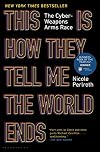
This was a very good book. One of the scariest I've read, all the more so because it's not fiction. Anyone could appreciate what it has to tell its readers: geek computer programmers, general computer techs, average computer-savvy folks. (Okay, maybe not my 95 year old mother-in-law who apparently has never used a computer.) Still, in our intensely online connected world, many readers will grasp just how important the information is that involves our computer security. Read it and you'll surely agree. Having said that, I rather abruptly had to question who the author was targeting with her book when I reached the epilogue. I've been working around computers since the very early 80s. My highest paid jobs were in computers. The ending of the book covers little if anything that I didn't already know about, but I can't say the same about the average smart phone user or Facebook junky. Certainly, one of the most recent U.S. presidents wouldn't know these things. Was the bulk of the book *not* aimed at them, too, after everything that went before? It just seemed like a disconnect to me. Moreover, the author gave a list of suggested actions to take, but, as so many similar books do, it failed to say *how* those actions would be taken, in the current American political environment where solutions are blocked simply because the opposing side suggested them, and for no other reason. In the end, I have to recommend the book, but I can't promise how you might absorb the ending.
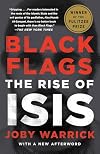
A book well worth reading. Before there was ISIS or ISIL, there was a street thug serving in a Jordanian prison providing muscle for an Islamic theologian. The bulk of this book is about Abu Musab al-Zarqawi and the Jordanian general intelligence service, or Mukhabarat. The author's writing style gives a definite suspense thriller tone to the book. It's been quite some time since I have felt so compelled to keep reading page after page of a book. As those who know the built in news spoilers for this book, Zarqawi, after a series of actions and adjustments, meets his end. There is then a shift as Abu Bakr al-Baghdadi assumes command of Zarqawi's followers, finds a new marketing package, so to speak, and the more familiar ISIS labeling takes over. What had been mostly President Bush's problem now was more President Obama's. The tone of the book perhaps loses some of its narrative tension at this point, as more reporting is taken up about the adjustments in the group while keeping the basic thrust of the group's founder. At this point, I should mention that the original book was published in 2015, but a newer version was released with a new Afterword a year later, which is worth reading. Having said that, more spoiler news about the "end" of Baghdadi comes after publication. About half way through my reading of this book, the third leader of what we now know as ISIS, Abu Ibrahim al-Hashimi al-Qurashi, also found his end. It's a bit amazing that history so recently written show more could already have a very readable book seem out-of-date so quickly. And that is my primary reason for not rating this book higher. It is informative and stimulating all the same. I would happily welcome an update from the author. show less
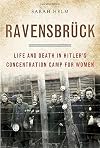
It's taken a while for me to figure this out about writing reviews for books I read, but the better the book, the harder it is for me to review it. Do I just say, "Wow, that was great!", and hope the person reading my review just takes my word for it? Not even my wife trusts me that much. So, no. Do I explain in detail why I think it's great, taking page after page to layout the book's many attributes? Nah. I need that time reading more books, and, after all, nobody likes me enough to read that much of what I have to say, so, also no. So, what can I say about this epic tome? It is epic, after all. Yet, one look at the book's subtitle, and most people I know wouldn't think twice about reading it, or should I say not reading it. Think Hitler and concentration camp, and I dare say the vast number of American's will think "Jews", "gassing", and probably Auschwitz. Who wants to read nearly 700 pages of assembly-line genocide? The thing is, this book is not even close to being that. First, it is unique, being about the Nazi concentration camp for women. Two, it very quickly fills the reader in on the breadth of depravity the Nazis had for a vast array of non-Jews, or should I say more precisely, non-Aryans, and even Aryans with "worthless lives" and any Aryan who may not support this depravity with full measure of vigor. Third, it acknowledges and points out the reaction within the camp to the various stages of this depravity, without specifying the cause of those stages. show more Emphasis of the Jewish genocide increased as German armies went toward and into Russia. The emphasis on merely killing anyone unable to walk, came when those Soviet armies won at Stalingrad, stopped Hitler from getting critical access to oil fields and started overrunning other concentration camps besides the women's camp. The author does not cite those events, but the reaction at the camp is obvious. Third, and perhaps most importantly, the author, who did masterful work both in document research and a multitude of personal interviews, lets the reader know in complex, intimate narrative about the persistent, creative, intelligent, empathetic, heroic ways many of the women in this camp, survived, if they could, and helped others survive, if they themselves could not. The idea of women as the "fairer sex" will be forever ripped from your brain, indeed if it was ever there. The deaths of so many of these women, regardless of their religion, nationality, politics, or vocation, is tragic beyond measure, but it was the will of them to withstand, to survive, that deeply colors my view of what the author has written. The book is like a great novel. I expect it to resonate with me not for just a long time, but forever. show less
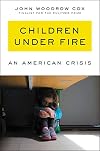
One could easily argue that my rating for this book is unnecessarily low. It does, after all, cover a great many significant points regarding gun violence in America and the dramatic impact of that violence on children. The book is essentially an extension of a body of work that led to the author being a Pulitzer Prize finalist for Feature Writing in 2018. Indeed, the emotional toll the early part of this book took upon me -- and I strongly suspect most readers -- is overwhelming. If you've been hiding under a rock and been paying little or no attention to the myriad of school shootings, or have yet to come across the multiple news stories about children killing themselves or others in "accidental" gun discharges in or around homes, then this book will be a huge surprise to you. But the author seems to feel that even those of us who have read or heard the news stories, should be paying much more attention than we have, to those children who did not die in those events. The problems I have with the book is that (1) it doesn't create a cohesive approach to the points it admittedly does end up making (it bounces from one aspect to another), and (2) it seems at a loss to tell us where to go from here to address the problems pointed out, other than to say we need to think about them a lot more. The author might claim he does offer solutions, but those are really little more than bullet points, such as "Let's do universal background checks," without coming close to show more acknowledging how and why the gun-centric culture in America sees even that as a potential avenue to taking away the one thing in life that they see saving them from their worst fear about government. Telling the government you want a gun, no matter how responsible and competent one may be to operate one, can mean the eventual path to taking that gun away. The fact that the gun owned by that person can be melted into a blob and the person using it literally vaporized into a mist, by a nuclear weapon held by the government they fear, seems to not deter that fearful gun owner of thinking they may be able to shoot down the nuclear bomb heading their way. Read the book or not. Love guns or not. Apply logic to it all or not. Nobody is holding a gun to your head to choose one over the other. show less
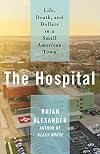
Like too many books lately, I hesitated on how best to review this book. This is not a big book, but it powerfully captures the complexity of a subject that far too many Americans have no clue how complex it is, namely, America's healthcare system. Need proof? The U.S. elected a president who famously asked, who knew how complicated it was? Who indeed? Pretty much anybody paying close attention. Something I've been doing for decades, arguably starting 50 years ago when I was working in the Orthopedic clinic for a major regional research hospital with world-class physicians. There are other healthcare related books I would recommend, but this book gives, I believe, the average reader of whatever political persuasion, the best grasp of where they stand in our system's maelstrom. What the author did to get the intimate access to a host of "characters" is really stunning journalism. I have only one gripe, and that really is perhaps not fully the author's fault. After such good investigative journalism, two things happen in the community he is covering. One is an action taken by the hospital and the other is a pandemic. Frankly, it seems to me, the author sort of loses it, as everything falls apart, and his narrative shifts gear rather dramatically. One might call it a rant. Maybe, but it is still a very accurate rant. It just isn't in keeping with the rest of the reporting. Perhaps I'm asking too much, for a slightly smaller book, and a follow-up magazine piece, to keep the show more two parts separate. It's not as if the author is wrong. He's painfully, depressingly accurate. I feel a little badly at knocking off a point on my rating. It really is very well worth reading. show less
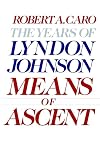
I'm not sure if it's a good thing or bad thing that I've waited two weeks to write a review about this book. My original impulse was to be a bit catty about the books subject. I was going to point out that the author, in his second of four volumes (with a fifth still being crafted), found his subject in a sort of dead zone between being an influential U.S. Congressman helping FDR win elections, and the time when that same subject became a major American legislative giant as U.S. Senate majority leader. So, to give his readers more meat to digest, the author threw in a bonus section: "1,001 Steps to Stealing a State-Wide Election and Keep It Stolen" with a much smaller bonus on how to be a politician with integrity (perhaps to show maximum contrast.) Okay, so I didn't do that. I waited and am writing now about how the author started this second volume with a sort of preamble, if you will, basically warning the reader, who may have been impressed by the first volume, that their beloved main character does some truly nasty things in this second round. Also, to be fair, that "dead zone" I mentioned earlier -- forgetting the election stealing part for the moment -- was quite captivating, all on its own. I was really expecting a bit of a let down for this second volume from the first. Wrong. So very wrong. The author continues to set the very highest standards for a biographer. The thing that most readers will pick up very quickly about this multi-volume effort, is that it is show more not only a monumental work about a particular individual, but also a stunning comment on American governance and society. Did I mention yet that I recommend it highly? show less
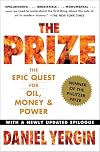
In thinking about whom I would *not* recommend read this book, I'm down to just those who have already read it, and even that's a little iffy. This is not a small book by any means, but it is fascinating, very well written, and provides the best level of business, military history, and cultural reporting. I do not recall ever felling a need to skip over or skim portions. I might point out that the author added an additional chapter and a new epilogue a few years after it was first published, so readers should make sure they pick up a later edition that includes significant updates. I started out reading an original edition hardback and switched to a more recent ebook edition. By the way, highly recommended, in case you were still wondering.
A worthy historical account, but also the most openly opinionated history text I have ever read. Admittedly, other historians may still offer their opinion by what they include or not include in their narratives, but they would have done it much more subtlety by letting the reader "jump" to the conclusion that the author may have made clear. In this case, the author quite often offers a conclusion, albeit with considerable prior evidence to back that conclusion up. I'm just not so used to the author being so blatant about it. However, all of this gets off the main point and advantage of this historical account on FDR that gives the book weight and value, this first in a trilogy is specifically about a president, namely Roosevelt, as the Commander-in-Chief of the United States, leading up to and throughout World War II. This book takes us into Pearl Harbor and to the landing of U.S. troops in North Africa in late 1942. I have already read a few individual accounts of World War II, but more comprehensively about the European and Pacific theaters of war via the first two volumes of Ian W. Toll's excellent Pacific War trilogy, which covered the eastern Pacific half of the the Pacific Theater, namely the naval half, as well as the first volume of Rick Atkinson's equally excellent Liberation Trilogy, which covers the European Theater of the war. With that two-sided background of the 1941-1942 war period from a military history perspective, it was easy for me to follow and show more assess for myself the White House-based, Commander-in-Chief part of the war. Frankly, I was impressed by this narrative of the first part of the war. The author gives great credence to FDR's skills at this point in time. The average reader will likely be more, not less, impressed by him as a president. Douglas MacArthur, unfortunately will not be. I had already read two other historical accounts of MacArthur, both from World War II and the Korean War that were far from flattering. This book introduced new material to me that makes me wonder why he was ever a general. (Think Donald Trump but without bone spurs.) On a different note, this author had what I would call a strange summary of the American landing in North Africa. To believe this author, the landing was all but child's play, while Rick Atkinson's account made it clear that was not the case. Perhaps, the degree to which this was a "walk in the park" is a product of how many American deaths is considered acceptable for a park walk. Regardless, I look forward to reading the other two volumes of this trilogy, but will be ready for critical assessment of the author's further accounts. show less