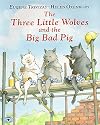
Such a fun book! This time, the three gentle furry wolves set off to build themselves a house. Beware the big bad pig! The wolves build themselves a sturdy brick house, and sure enough, the pig cannot blow it down. But he can use a sledgehammer. The wolves get smarter about their building strategies, the pig just gets out the dynamite. So the wolves decide to rethink their strategy and build a beautiful house out of flowers. By the end, they are all living happily ever after, together. A fun way to introduce creativity and twists in story telling, to talk about surprises, and predictions.
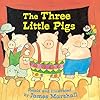
In Marshall's story, the three little pigs set out on their own. The two hillbilly brothers build their straw and stick houses, despite warnings from the men who sold the materials, and get eaten up in no time by the wolf. Meanwhile, the dapper gentleman brother builds a sturdy brick house. The wolf cannot blow it down, so he sets up little dates with the pig (to pick turnips, apples, visit the fair...), who manages to outsmart the wolf every time. In the end, the wolf jumps down the pig's chimney, right into a big boiling cauldron. Be warned, that dapper fellow eats the wolf for dinner! The expanded characterizations in the book are charming and fun, and the dialogue is great. The illustrations are colorful and goofy, accessible and interesting to any ages.
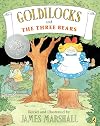
James Marshall introduces us to Goldilocks, a rambunctious, sneaky, rule-breaker. Her mom tells her to stay away from the Shortcut woods, so of course Goldilocks enters the forest. She comes upon the beautiful, peaceful bear house, and shamelessly wreaks havoc. The bears come home and find her, so she jumps out their window-- never to be seen again. Goldilocks, the villain! A great way to show kids a new perspective on a classic story.

Galdone switches the story to be from the bears' perspective. Their porridge is too hot, so they leave the house to give it time to cool. Bratty little Goldilocks shows up, and eats their porridge, breaks their chair, and so on. The bears come home, sort through all the new mysteries in their house, leading them to Goldilocks, who runs off, never to be seen again. The three different size bears even get three different size fonts-- fun for voicing the characters. This book would be great to use with other versions to talk about what authors can do to make a story their own.
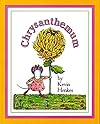
A sweet book, about a little girl mouse named Chrysanthemum. She is very proud of her unusual name, until the other kids at school start to make fun of it. In a nice little turn around, all the other kids are giving themselves flower names by the end. A great book to use to talk about feelings, respecting others, and feeling proud of our differences or appreciating what is different about others.

A classic book, about a cap peddler who awakens from a nap to find that monkeys have stolen all his merchandise, and are mocking him from the tree above. Great fro developing readers, read alouds, and rhythmic reads. It is also fun to ask kids about how the peddler got his caps back from the monkeys-- was it an accident or smart problem solving?
Beo is a little girl with a messy room full of all her friends (ie. toys and stuffed animals). Beo is busy pretending with them, when hr mother comes in, looks around, and asks, "Where's the floor?". Suddenly, Beo and all her toys are falling and hanging on over the abyss, when Bard, the teddy bear lands in the underwear drawer, from which he can save everyone (just in time for lunch)! The book is written as a wonderful narrative story, which also happens to rhyme throughout. The rhythm and rhyming makes for a fun read (not to mention the fun of the plot itself), and the fonts and text change (different colors, sizes, and styles for different characters, moments, etc), making it great to read aloud or together. The illustrations are also great, and blend wonderfully with the text.
These poems cover a variety of fairy tale and mythical type characters-- dragons, trolls, sphinx, phoenix, hobgoblins, among others. The poems can get a bit cheesy, and the language is sophisticated (better for upper elementary and above), but they are very descriptive and informative. The book could be used in fun ways to talk about classic story creatures, or as a tool to get kids to write their own poems about gargoyles and the like.
This book has 22 short (2-8 lines) poems, each about a different animal-- ranging from ant to manta ray to owl to wallaby. The poems are fun, and often silly, very rhythmic, and appropriate for children of any age. The illustrations are gorgeous mixed media collages depicting each animal, tied in to the poem.
This book has poems that cover every planet, plus the moon, constellations, comets, black holes, and more. The poems are brief, but chock full of real facts. This would be a great book for upper elementary kids-- either as a way to teach poetry (using this fun topic), or as a way to introduce some cool facts about science and astronomy. The very colorful illustrations are mixed media, including collage, pastels, ink, stamps, and even cutouts in the pages.
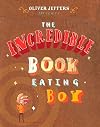
Henry starts eating books one day, and cannot stop. He eats more and more, all kinds, and the more he eats, the smarter he gets. He thinks he could become the smartest boy in the world, so he eats and eats. But then, he starts to feel a little ill. He has nightmares that books eat him. He is eating so much that all the information gets mixed up, and he doesn't seem so smart anymore. He stops eating books, and feels sad. Then, he picks up a book and, instead of eating it, reads it. He decides he could be smart by reading the books too. The illustrations in the book are amazing, mixed media, adn even a few pages have "bites" out of them.
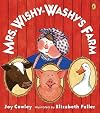
The cow, pig, and duck on Mrs. Wishy-Washy's farm decide to run away, because they hate when she gives them baths. They go to the big city, but find it chaotic and confusing, with nowhere good to eat or sleep. They get taken to the animal jail, depressed and a mess. Then, Mrs. Wishy-Washy shows up to take them home to the farm. The animals have never been so happy to take a bath in the old wash tub!
BooBoo is a little blue gosling chick. She loves to eat, and walks around her little home, visiting all the farm and pond animals, stopping to taste their food too. "Good food," she always says. One day, she eats some bubbles floating over the pond, and goes around burping them back up. The turtle helps her out, and she goes on her way. There is pattern and repetition, and cute illustrations, to help early readers.
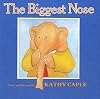
Eleanor, a little elephant girl, is made fun of at school for her big nose, and Betty the hippo bets that she has the biggest nose in school. So Eleanor goes home and ties her trunk into a knot in an attempt to make it smaller. Her whole family tries to untie the knot, until she finally sneezes it out. Eleanor is so excited to have her own nose back that she stops caring about what everyone says at school. When she goes to school the next day she admits that she might have the biggest nose, but wonders aloud who has the biggest mouth, the biggest tail, the biggest feet. This shuts all the other animals up, and Eleanor is ready for another day at school.

This story takes place in a village in Japan, but the author opens with the idea that these children are just like "you". In the Spring, the children in the village watch as their big tree grows new leaves and the river under it wakes up. When Summer comes, the children spend every day with the tree-- climbing, sitting, playing, exploring, eating, and jumping from the branches into the river to swim and make up games to play on the riverbank. The children head home in the evening to share the day with their families. It ends with a gorgeous image (visual and text) of the tree, alone, awaiting the children, generation after generation. The author does a nice job of describing things that might seem "foreign" to a reader, including games.

This book is full of the lively and nonstop action that happens in any city. It tells a circular story of a boy and his mother leaving their house, roaming the city, and then returning home. The text is rhyming (ABCBDB) and very rhythmic. The illustrations are wonderful, either narrowing in one snippet of a scene-- a street band, group of dogs-- or showing one big scene-- a playground, a fruit market. The inside cover shows a "drawn" map of the city, marked with the boy's route and all the things he saw. Written in 1950, the content is a bit outdated-- with the appearance of coal delivery, ice trucks, and an organ man with a monkey-- but the story captures a midcentury city beautifully, and could be used to talk about what life was like for that little boy..
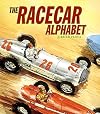
This book tells and illustrates what happens during a race car race. Each page represents one letter of the alphabet (in order, of course!), with alliteration throughout the text on that page. There are some difficult words (enduring, outpacing, vying) mixed in with simple words and simple sentence structure. The watercolor illustrations have a lot of details to help explain those big words. The illustrations also move through a history of race cars, showing us different car styles, as well as setting and clothing, progressing through time. Their is also an interesting illustration of all the cars represented in the book, with their names and years, on the inside covers. It is fast-paced, fun, and exciting to read.
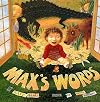
Max has a brother who collects stamps and a brother who collects coins. Max wants a coin or a stamp, but his brothers won't share. So Max decides to start collecting something too-- words! He collects big and small words, new and favorite words, until he has piles and piles. He finds he can put the words together to mean something and then rearrange them to mean something else. He starts to string together a story, and his brothers are enticed to join the fun-- and even agree to do a little trading. The illustrations are fantastic and interact with the text in creative ways.