Covering Islam : How the Media and the Experts Determine How We See the Rest of the World (Vintage) by Edward W. Said
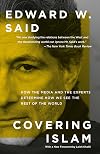
In Covering Islam, Edward W. Said makes some vitally important points that remind us that our relationship with many countries (and not just in the countries/cultures/peoples who are Arabic or Islamic or in the Middle East) is informed by a media that does not always do justice to the people they cover -- in many cases, the media generalizes and demonizes. Making one of the most important points in the book, Said reminds us that Islam (like "Christendom" or "the West" or any broad cultural category) is not a monolithic homogeneous structure, but that many journalists, pundits, spokespeople, and citizens see and portray it as such.
Said cites many examples of journalists (and academics) who fall into lazy habits when looking at and writing these cultures. Unfortunately, it seemed to me that Said makes many generalizations himself, about American media and journalists (although, to be fair, he does give some examples in the last chapter of academics and writers who he believes have a more broad and insightful and accurate viewpoint) which made it harder for me to stay engaged with the book.
Finally, I wanted to know his solutions and suggestions, not just the problem. If everything an American journalist or adademic touches in a country such as Iran or Iraq or Afghanistan is tainted by post-colonialism and oil and government, how can the average person learn about that part of the world in a genuine manner? What information is trustworthy? Said has told us the problem, or show more part of it, but did not seem, in this book anyway, to offer solutions.
(at http://www.amazon.com/gp/product/0679758909/qid=1136313442/sr=8-13/ref=sr_8_xs_a... ) show less
Said cites many examples of journalists (and academics) who fall into lazy habits when looking at and writing these cultures. Unfortunately, it seemed to me that Said makes many generalizations himself, about American media and journalists (although, to be fair, he does give some examples in the last chapter of academics and writers who he believes have a more broad and insightful and accurate viewpoint) which made it harder for me to stay engaged with the book.
Finally, I wanted to know his solutions and suggestions, not just the problem. If everything an American journalist or adademic touches in a country such as Iran or Iraq or Afghanistan is tainted by post-colonialism and oil and government, how can the average person learn about that part of the world in a genuine manner? What information is trustworthy? Said has told us the problem, or show more part of it, but did not seem, in this book anyway, to offer solutions.
(at http://www.amazon.com/gp/product/0679758909/qid=1136313442/sr=8-13/ref=sr_8_xs_a... ) show less