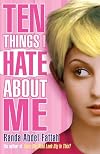
Hey, guess what? Racism's wrong! And you shouldn't be ashamed or embarrassed about who you are!
Okay, so no huge surprises here and a fairly predictable plot, and yet I think it's a point that would resonate with teen girls (even the white ones who aren't trying to hide a heritage). Be yourself and like who you are; anyone who doesn't like the real you isn't your friend anyway.
Booktalk:
Jamie’s blond hair comes from a bottle; her blue eyes are colored contacts. No one at her Australian high school—even her so-called best friends—knows that she’s actually Jamilah, that she’s Lebanese-Muslim, that her dad is super-strict and she’s not allowed out at night. All the deception pays off when the most popular guy in school shows an interest in her. He’s kind of a tool and racist to boot—but how much does that matter when he’s her ticket to social acceptance?
Okay, so no huge surprises here and a fairly predictable plot, and yet I think it's a point that would resonate with teen girls (even the white ones who aren't trying to hide a heritage). Be yourself and like who you are; anyone who doesn't like the real you isn't your friend anyway.
Booktalk:
Jamie’s blond hair comes from a bottle; her blue eyes are colored contacts. No one at her Australian high school—even her so-called best friends—knows that she’s actually Jamilah, that she’s Lebanese-Muslim, that her dad is super-strict and she’s not allowed out at night. All the deception pays off when the most popular guy in school shows an interest in her. He’s kind of a tool and racist to boot—but how much does that matter when he’s her ticket to social acceptance?
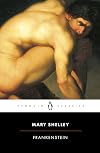
It's amazing, how the Frankenstein mythos involves things that aren't even in the story--the flat, square-topped head, the bolts in his neck, that sort of thing. I guess we have Karloff to blame for those. But what's also interesting is how not-scary this is by today's standards. All the killing is done off-screen (off-page?), and it's all the relatively clean strangulation. The real horror is that someone would think reanimating a corpse is a good idea, so maybe this wasn't too scary because science has already done so many weirder things since the original publication of this book that, frankly, a monster? eh. Lemmee show you this purple cauliflower.
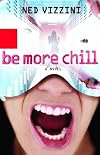
Not nearly as good as Vizzini's other books. He still writes the Teen Boy voice amazingly well, but the story itself--about a gawky high-school boy who gets an implant that will teach him how to be cooler--reads like a flimsy knock-off of Feed. Like his other novels, Vizzini's protagonist is a thinly-veiled device for exorcising Vizzini's own outcast demons from high school, but somehow this book doesn't hold together as well. Be More Chill is a series of plot points, and lacks the emotional ground his other books cover.
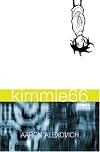
The Minx line is pretty consistent, in that every book I've read has a pretty good idea and reasonably believable characters. I liked this one a little better than some of the others, but the story was more complicated (therefore a little harder to follow, but that could be the 36-hour break I took in the middle of reading it; I lost the flow of the narrative). Probably my favorite of the Minx books so far, though to be fair it's not on par with many of the non-Minx graphic novels I've read. I'm waffling between 3 and 4 stars, so say 3.5.
"It's about a house that's bigger on the inside than it is on the outside," say some reviews, and the same can be said for the book itself. The story (stories) is (are) somehow bigger than the pages that contain it; it's a horror story, a haunted-ish house, a love story, a family struggling against the house--and the circumstances--that tries to devour them all. And it really is amazing.
For a book clocking in at over 700 pages (736, if one of the more self-referential passages is to be believed), it's surprising to find how tightly written it is. There are no wasted words here; the passages that feel sprawling are, in retrospect, sprawling with purpose, and not just basic character development. It all ties together, knotted around themes of isolation, obsession, fear, love.
There are lots of things about this book that I understand perfectly. I have theories on things I think I pulled out from the text. There's some stuff that I just don't get. This book is either way smarter than I am or incredibly pretentious; I suspect it's a bit of both.
For a book clocking in at over 700 pages (736, if one of the more self-referential passages is to be believed), it's surprising to find how tightly written it is. There are no wasted words here; the passages that feel sprawling are, in retrospect, sprawling with purpose, and not just basic character development. It all ties together, knotted around themes of isolation, obsession, fear, love.
There are lots of things about this book that I understand perfectly. I have theories on things I think I pulled out from the text. There's some stuff that I just don't get. This book is either way smarter than I am or incredibly pretentious; I suspect it's a bit of both.
Awwwwwwwww. Cinderella as teen romance. It's all very sweet and predictable, and not just due to familiarity with the source material. A light, fun read, though a bit blah and nothing I'm inclined to pass along to others.
I can't say I knew what to expect from this book, and yet it exceeded all my expectations. What started out as a rough-around-the-edges Guy story (the literary equivalent of the "buddy movie" genre) quickly becomes something that could be sinister--the hapless hero receiving playing cards in the mail with addresses on them, no explanations, and he needs to figure out what to do at each place. But the addresses aren't about mob hits or shakedowns or anything--they're about performing small mercies for people, from easing loneliness to giving kids an opportunity to work together. While it veers perilously close, I Am the Messenger never crosses into that saccharine sweetness that it could be; the story remains true while still teaching our bumbling hero what he needs to know about himself and the world he's in.
I had already mentally subtracted a half-star because I called the final two cards somewhere around a quarter-way into the book, but then I'm docking another half-star for the ending, because, wow, the conceit of the author stomping through that fourth wall? Yeeesh. Still, a solid 4 stars that could be 5, if I weren't so harsh over a couple of pages.
I had already mentally subtracted a half-star because I called the final two cards somewhere around a quarter-way into the book, but then I'm docking another half-star for the ending, because, wow, the conceit of the author stomping through that fourth wall? Yeeesh. Still, a solid 4 stars that could be 5, if I weren't so harsh over a couple of pages.
This is the third Atwood book I've read, and it's my favorite so far. There's something about this one that I like better--something in the tone, the idea that something happened to make the world this way, as opposed to just This Is How The World Is Now. It's fascinating, the slowly-unfurling revelation of what happened to create this new, empty world.
In less than a hundred years, all the damage we've done to the Earth will catch up to us. All the trees we've chopped down will contribute to the buildup of carbon dioxide in the atmosphere, speeding the greenhouse effect and melting the polar ice caps. The planet is drowning.
This is the bleak reality of Mara's island community: the sea is rising, and the people on Wing are running out of high ground. Mara has been studying, though, digging through the Weave on her outdated computer, and has found evidence of a new world built high above the ocean. If her people are to survive, they need to move there. But even after the perilous journey is over, they still can't make it past the wall.
This novel was more engrossing than I was prepared to give it credit for--the plot moves slowly, but then you look up and realize it's been an hour and 70 pages have flown by. Some elements are telegraphed right from the beginning (at least for anyone who's ever read a book)--will Mara find a way in?--but even the predictable plot points are ... well, not surprising, but somehow unexpected? They don't feel as inevitable as you'd expect. Despite being in the "greatness thrust upon her" category, Mara is a strong leader with a good heart. I can say roughly the same for the novel.
This is the bleak reality of Mara's island community: the sea is rising, and the people on Wing are running out of high ground. Mara has been studying, though, digging through the Weave on her outdated computer, and has found evidence of a new world built high above the ocean. If her people are to survive, they need to move there. But even after the perilous journey is over, they still can't make it past the wall.
This novel was more engrossing than I was prepared to give it credit for--the plot moves slowly, but then you look up and realize it's been an hour and 70 pages have flown by. Some elements are telegraphed right from the beginning (at least for anyone who's ever read a book)--will Mara find a way in?--but even the predictable plot points are ... well, not surprising, but somehow unexpected? They don't feel as inevitable as you'd expect. Despite being in the "greatness thrust upon her" category, Mara is a strong leader with a good heart. I can say roughly the same for the novel.
If a Tree Falls is told in alternating voices, Kirsten and Walk. Walk's chapters tend to be shorter, which is a shame since he's the more interesting (or at least, less annoying) character. Ordinarily this alternating-voice thing wouldn't bother me--but Kirsten's chapters are first-person and Walk's third-person, making it sound like Kirsten has a strange omniscience. The budding friendship between these two was more interesting before the Big Discovery That Changes Everything, the repercussions of which felt rushed and insincere.
After Al Capone Does My Shorts, I guess I'd expected something better. This wasn't bad, but it wasn't really great, either--it's just another addition to the long list of mediocre books I've read.
After Al Capone Does My Shorts, I guess I'd expected something better. This wasn't bad, but it wasn't really great, either--it's just another addition to the long list of mediocre books I've read.
Truly an amazing, stunning work. How far will a parent go to save his child, even when he knows the shadows will come for him in the end regardless? The love and desperation are palpable as father and son journey farther than either has gone before to escape the inescapable. Art varies between a cartoony style and scratchy pen-and-ink illustrations; both have their uses and neither is out of place. This is not a forgettable book, but rather another triumph for First Second.
Is it fair to criticize a book for being too exciting? because this is. The action just doesn't let up. Percy manages to have something like four or five major battles before the climax.
This is a lot of italics for one short review.
This is a lot of italics for one short review.

Great directions, with patterns that are very adaptable so that you're not making the same four creatures in the book over and over. The first half of the book is the basics--how to make arms, tails, ears, necks, etc., that can then be modified in any way you choose.
Inspirational, but I'll probably return it to the library before I actually DO anything with it. Worth keeping in the back of my head for rainy afternoons (like this one), though.
Inspirational, but I'll probably return it to the library before I actually DO anything with it. Worth keeping in the back of my head for rainy afternoons (like this one), though.
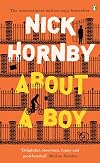
When what I'm looking for is a fluffy, warm-fuzzy read, Nick Hornby is my go-to guy. It's "chick lit" that isn't cloyingly sentimental, but isn't something I need to analyze to death to truly appreciate. About a Boy has a certain heaviness to it--a suicidal mother, a man getting mixed up in a kid's life despite is best intentions--but it still manages to be reasonably light. It's exactly what I was looking for in an airport read (because standard chick lit would make me want to hurl myself from the plane).
Like her other 2 books I've read (Surrender and Thursday's Child), this is pure poetry. Her writing is gorgeous and engrossing; you don't want the story to end (in part because you just know it won't end happily) because the writing is just so lyrical.
This lacks the surreal elements of the two other novels mentioned above, and it's a little harder to get into, but it's worth the effort. This poor kid, with all his irrational fears and his completely rational ones. Hartnett captures the pain and loneliness of childhood brilliantly.
This lacks the surreal elements of the two other novels mentioned above, and it's a little harder to get into, but it's worth the effort. This poor kid, with all his irrational fears and his completely rational ones. Hartnett captures the pain and loneliness of childhood brilliantly.
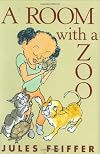
Funny, and a great voice throughout. I'd have loved this if I were 10 or a huge animal lover (not to imply I kick puppies or anything; I don't).
Yes, I'm not-so-slowly working my way through Hartnett's oeuvre.
This is one of her earlier titles, and it's fairly obvious. The characters aren't as richly drawn as in her more recent books, and her language isn't as poetic. It's still recognizably her, but somehow this novel feels like a prototype for the far-superior Thursday's Child--the same bleak landscape and poverty-stricken farm, a similar dysfunctional family. Somehow, though, despite the absence of any small feral child digging subterranean tunnels, Sleeping Dogs feels less realistic, less believable. Still, though, a good effort--just not one I'd recommend as a starting point into Hartnett's body of work.
This is one of her earlier titles, and it's fairly obvious. The characters aren't as richly drawn as in her more recent books, and her language isn't as poetic. It's still recognizably her, but somehow this novel feels like a prototype for the far-superior Thursday's Child--the same bleak landscape and poverty-stricken farm, a similar dysfunctional family. Somehow, though, despite the absence of any small feral child digging subterranean tunnels, Sleeping Dogs feels less realistic, less believable. Still, though, a good effort--just not one I'd recommend as a starting point into Hartnett's body of work.
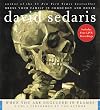
David Sedaris is still very funny, even when he's running out of experiences he hasn't yet shared with the world. This time he's focusing mainly on himself and the string of decisions he's made along the way, which makes for much more comfortable reading than Dress Your Family (in which he reveled in just how damaged his entire family was). In this collection, I never really had the laugh-nervously-and-change-the-subject feeling I had through his last book; while some entries felt a little staged, they were at least sincere and not intended to make others look bad.
I'm being somewhat inarticulate, but really, I enjoyed this collection a lot. Maybe not his best, but certainly not his most uncomfortable, either.
I'm being somewhat inarticulate, but really, I enjoyed this collection a lot. Maybe not his best, but certainly not his most uncomfortable, either.
I really do love Franzen's writing, but this collection didn't wow me. Many of the essays here aren't so much essays as articles; they read more like journalistic explorations of entities (prisons, post office corruption) rather than personal explorations of thoughts or concepts. He has some really interesting points, though many of them get bogged down in academia.
My larger concern, though, is how dated many of these essays seem to be. The most recent in the collection was 2002--not a fault of the collection, which came out shortly after that--but it's surprising that these don't hold up over time. Reading this in 2008 makes some of his late-'90s references sound anachronistic, though I'm sure they were just fine at the time.
I feel a mild disappointment, but it's not the fault of the book. Had I read it five, six years ago, I may have enjoyed it more.
Sidenote: what's Franzen been doing since The Corrections, besides showing up on The Simpsons? Doesn't he know I want to see another novel from him?
My larger concern, though, is how dated many of these essays seem to be. The most recent in the collection was 2002--not a fault of the collection, which came out shortly after that--but it's surprising that these don't hold up over time. Reading this in 2008 makes some of his late-'90s references sound anachronistic, though I'm sure they were just fine at the time.
I feel a mild disappointment, but it's not the fault of the book. Had I read it five, six years ago, I may have enjoyed it more.
Sidenote: what's Franzen been doing since The Corrections, besides showing up on The Simpsons? Doesn't he know I want to see another novel from him?
I'm hesitant to say this is a 4-star book, but I did enjoy it a lot, so I guess that makes it 4 stars. A lot of the information here is dated by now and has become common knowledge, but it's still fun to listen to, if only for Bourdain's gutter mouth and sneering references to Emeril.
I'll probably read some of his other books, but this was an enjoyable enough introduction.
I'll probably read some of his other books, but this was an enjoyable enough introduction.

The book with a hundred tags. I just can't really say where it best belongs.
Hosler's latest edu-comic focuses (ha) on the eye: how we (and other animals) see, how light works and how it's interpreted via the eye and brain, and how eyes developed in various species. Hosler alternates between the comic story of Wrinkles the Wonder Brain, traveling through time and the universe to find a magical eye he dropped, and prose non-fiction sections that explains the science Wrinkles just encountered. The comic is sweet and funny and cute; the prose sections are surprisingly lively. And relatively short, which will help.
The intended age, though, is a bit of a muddle to figure out: the comic is probably great for fourth or fifth graders; older readers might find the drawings a little too cutesy to look like it's geared for them. The explanatory chapters, on the other hand, are mostly at a bright middle-school level (he explains the material very well without dumbing it down, but it's still a lot of scientific terminology), but students would really benefit from having at least the beginnings of a biology course under their belts. All the same, the story and the writing are engaging enough that I think kids will still take to this one.
Hosler's latest edu-comic focuses (ha) on the eye: how we (and other animals) see, how light works and how it's interpreted via the eye and brain, and how eyes developed in various species. Hosler alternates between the comic story of Wrinkles the Wonder Brain, traveling through time and the universe to find a magical eye he dropped, and prose non-fiction sections that explains the science Wrinkles just encountered. The comic is sweet and funny and cute; the prose sections are surprisingly lively. And relatively short, which will help.
The intended age, though, is a bit of a muddle to figure out: the comic is probably great for fourth or fifth graders; older readers might find the drawings a little too cutesy to look like it's geared for them. The explanatory chapters, on the other hand, are mostly at a bright middle-school level (he explains the material very well without dumbing it down, but it's still a lot of scientific terminology), but students would really benefit from having at least the beginnings of a biology course under their belts. All the same, the story and the writing are engaging enough that I think kids will still take to this one.
The short story included here, "The Shawl," is a brief but powerful holocaust story, showcasing a mother's love in the worst of times. The novella, Rosa, though, is a POV I don't see much: what every-day life is like for survivors 30 years later, when they have so little to hold on to and every encounter is tainted with the memories of what they've been thorough. Quick to read, but not quick to forget.
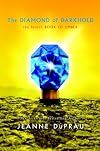
The people of Ember are now the people of Sparks, and Sparks isn't looking so hot these days--with 400 new mouths to feed, supplies are running low, and winter's only just beginning. A plot device trader comes along and gives Doon the tattered remains of a book; Doon and Lina head back to Ember to save the world.
Eh. It's better than Prophet of Yonwood, but that doesn't say much. Maybe it's the distance from when I read the first book, but this has neither the charm nor complexity of City of Ember. I remember the story being more fascinating, the characters more richly drawn, the writing more sophisticated. I'm disappointed in this.
Eh. It's better than Prophet of Yonwood, but that doesn't say much. Maybe it's the distance from when I read the first book, but this has neither the charm nor complexity of City of Ember. I remember the story being more fascinating, the characters more richly drawn, the writing more sophisticated. I'm disappointed in this.
Courtney Crumrin, Vol. 2: Courtney Crumrin & The Coven of Mystics (Courtney Crumrin Tales) by Ted Naifeh
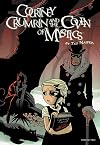
What's there to say? Courtney is pretty awesome, in her cynical-teen-with-magic-powers way.
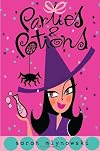
Much better than I'd expected this to be when the review envelope crossed my desk. I haven't read the rest of the series, but judging from this fourth offering, it's light and breezy and actually kinda fun. It's nice to see books that don't take themselves too seriously in their bubble-headedness!
My biggest quibble with it is the 7-legged spider on the cover, and used as section breaks within the chapters. I'd love to know where that last leg is.
My biggest quibble with it is the 7-legged spider on the cover, and used as section breaks within the chapters. I'd love to know where that last leg is.
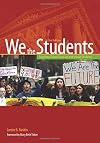
An excellent book for classrooms or research. Well-organized, current, and relevant, and includes the actual text (edited for brevity/clarity) of the decisions of the Supreme Court, and in most cases also includes dissenting opinions. Very balanced, no obvious agenda one way or the other. Presents cases on a variety of issues relevant to students: freedom of speech, dress codes, discrimination, privacy, locker searches, etc.
Can't speak to how it compares to previous editions (I can't track down the second edition) but it does include references to things that happened as recently as late 2007. Not the most engaging book I've read (or skimmed), but an important book to have around for government classes.
Can't speak to how it compares to previous editions (I can't track down the second edition) but it does include references to things that happened as recently as late 2007. Not the most engaging book I've read (or skimmed), but an important book to have around for government classes.
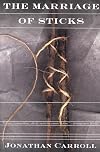
Romance, ghosts, immortality, and coming to grips with who you are, were, and could be. A little thin and preachy at times, but so much better than the last three of his I've read. It's not quite five-star material, but it's pretty close.
On reading this now, I suspect that when Carroll wrote The Ghost in Love he was trying to recreate what he did here--like maybe Marriage of Sticks didn't come out exactly as he'd planned so he tried again, only to fail miserably. There's a certain irony to him trying to reincarnate what could be an immortal love story...
On reading this now, I suspect that when Carroll wrote The Ghost in Love he was trying to recreate what he did here--like maybe Marriage of Sticks didn't come out exactly as he'd planned so he tried again, only to fail miserably. There's a certain irony to him trying to reincarnate what could be an immortal love story...
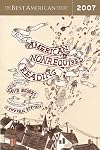
Finally catching up on last year's edition before I can start this year's.
2007 is a strong collection, blending politics, personal essays, comics, stories, and more together into a surprisingly cohesive unit. It's not as strong as the 2006, but still paints a representative picture of what the year was like.
I'll be really happy when the war is over, though--it's been a central theme every year, and I'd like to see something different. (And, of course, I want to be out of this stupid war already.)
2007 is a strong collection, blending politics, personal essays, comics, stories, and more together into a surprisingly cohesive unit. It's not as strong as the 2006, but still paints a representative picture of what the year was like.
I'll be really happy when the war is over, though--it's been a central theme every year, and I'd like to see something different. (And, of course, I want to be out of this stupid war already.)
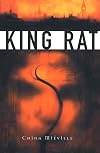
Some time back, I read an essay (or website, or something; it was a long time ago) about the human propensity toward "it's like ... but not" comparisons. We need to compare everything against others of its type; nothing can be evaluated in a vacuum.
With that in mind, King Rat is like Neverwhere, but not. It's like War For the Oaks, but not. It's like so much gritty urban fantasy, but still brings its own flavor. It's got the other-world-a-half-step-from-this-one motif, it's got the musician threads, it's got the slacker protagonist suddenly in a position of power and/or leadership. Despite all this, it doesn't feel like a knock-off or in any way derivative. It's a dark, engrossing story, with excellent pacing and good character development. There are a few instances of Cockney rhyming slang, which I just can't make any sense of, but they're not that frequent and they don't detract.
With that in mind, King Rat is like Neverwhere, but not. It's like War For the Oaks, but not. It's like so much gritty urban fantasy, but still brings its own flavor. It's got the other-world-a-half-step-from-this-one motif, it's got the musician threads, it's got the slacker protagonist suddenly in a position of power and/or leadership. Despite all this, it doesn't feel like a knock-off or in any way derivative. It's a dark, engrossing story, with excellent pacing and good character development. There are a few instances of Cockney rhyming slang, which I just can't make any sense of, but they're not that frequent and they don't detract.
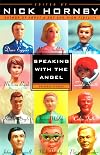
I picked this up because I was looking for a reasonably light and fun, but not brainless, collection, so Nick Hornby seemed the way to go. Mission accomplished; that's exactly what this was. Some stories were better than others, but that's to be expected in any collection.
A portion of the proceeds from the cover price go toward schools for kids with autism, making me feel like a big jerk for having bought this used. Ah, well.
A portion of the proceeds from the cover price go toward schools for kids with autism, making me feel like a big jerk for having bought this used. Ah, well.