Excellent, August 13, 2005
Dr Ian Tho has expounded both the basics of ITO as well as risk management very well in this book. The concept of the risk dimension signature he refers to has certainly added significant value to our ITO endeavour with our suppliers. The fundamental concepts he refers to are invaluable. Some of the theory he mentions are controversial but have also served to extend our ideas. This has been a real help!!
Dr Ian Tho has expounded both the basics of ITO as well as risk management very well in this book. The concept of the risk dimension signature he refers to has certainly added significant value to our ITO endeavour with our suppliers. The fundamental concepts he refers to are invaluable. Some of the theory he mentions are controversial but have also served to extend our ideas. This has been a real help!!
A voice is much more than just a string of words. Voices, unlike fingerprints, are inherently complex. Forensic Speaker Identification explains what FSI involves, and clarifies the problems of inferring identity from speech under the less than ideal conditions typical in forensics. This book has been written for forensic scientists, the legal profession and law enforcement officers. It's accessible to those with no previous knowledge of FSI, or of phonetics or acoustics. It can also be used as a base for teaching tertiary level courses in aspects of phonetics. This practical, lucid text takes the reader through all the underpinning knowledge necessary, and will bring much needed clarity to an important technique
First Sentence:
Cardiovascular disease (CVD) is still a major cause of death in Western populations and is becoming an important cause of morbidity and mortality worldwide.
Cardiovascular disease (CVD) is still a major cause of death in Western populations and is becoming an important cause of morbidity and mortality worldwide.
Book Description
what is death?
A Scientist Looks at the Cycle of Life
Answering the question "What is death?" by focusing on the individual is blinkered. It restricts attention to a narrow zone around the individual body of a creature. Instead, how expansive is the answer we receive when we look at the context of death within the biosphere. Death now is tied to all of life, via the atmosphere and ocean. Death supports the awesome biological enterprise of making abundant the green and squiggly life. Talk about death has headed us straight into a contemplation of life, not only individual life, but big life, life on a global scale. Death and life are neatly dovetailed by the supreme cabinetmaker of evolution. Again, the crucial feature is not the death of any one creature per se, but rather what is done with death. To reach into the meaning of death, we must reach out into the wider context of which death is a part.
Download Description
An exploration of the meaning of death and its profound implications about the meaning of life
In the winter of 1997, biologist and critically acclaimed science writer Tyler Volk began suffering from mysterious physical ailments that would bring him face to face with his own mortality. This experience led him to explore what death means to us–and to discover that our mortality is, paradoxically, extraordinarily life affirming. In What Is Death? Volk shows how we deal with death psychologically and come to inner peace; how as a culture we show more find our funeral rituals a tremendous comfort and a revitalization of community; and how death evolved at the cellular level and stands as one of the most beautiful necessities in our biosphere. Here is death that is at once an end and a beginning, a source of dignity and a revelation, the basis of who we are as people and as a people.
There is nothing morbid about this book. Tyler Volk's openness and sincerity about the sometimes difficult topic of death had just the opposite effect. My understanding of life, and my gratitude for it, was enhanced. - In just over 200-pages, Volk covers a lot of territory. In three parts, he sensitively explores what neurologically makes us a conscious self, warmly discusses cultural attitudes, and knowledgeably looks at how the myriad forms of death make biological life possible. - If you enjoy reading about the natural sciences or social-cultural topics, you will enjoy this book. Because I enjoy both, I had a great time. It brought to mind cell biologist Ursula Goodenough's "The Sacred Depths of Nature," which I also found edifying. - As the author of "What is Death?," Tyler Volk comes across graciously human and without pretense. Unlike an aloof scientist narrowly consumed with a field of interest, I experienced Volk as down to earth and someone who shares the foibles and joys of being alive. Like each of us, he also is trying to come to terms with his own life and death. Volk's honesty in relating some of his personal journey enhances this fine volume. show less
what is death?
A Scientist Looks at the Cycle of Life
Answering the question "What is death?" by focusing on the individual is blinkered. It restricts attention to a narrow zone around the individual body of a creature. Instead, how expansive is the answer we receive when we look at the context of death within the biosphere. Death now is tied to all of life, via the atmosphere and ocean. Death supports the awesome biological enterprise of making abundant the green and squiggly life. Talk about death has headed us straight into a contemplation of life, not only individual life, but big life, life on a global scale. Death and life are neatly dovetailed by the supreme cabinetmaker of evolution. Again, the crucial feature is not the death of any one creature per se, but rather what is done with death. To reach into the meaning of death, we must reach out into the wider context of which death is a part.
Download Description
An exploration of the meaning of death and its profound implications about the meaning of life
In the winter of 1997, biologist and critically acclaimed science writer Tyler Volk began suffering from mysterious physical ailments that would bring him face to face with his own mortality. This experience led him to explore what death means to us–and to discover that our mortality is, paradoxically, extraordinarily life affirming. In What Is Death? Volk shows how we deal with death psychologically and come to inner peace; how as a culture we show more find our funeral rituals a tremendous comfort and a revitalization of community; and how death evolved at the cellular level and stands as one of the most beautiful necessities in our biosphere. Here is death that is at once an end and a beginning, a source of dignity and a revelation, the basis of who we are as people and as a people.
There is nothing morbid about this book. Tyler Volk's openness and sincerity about the sometimes difficult topic of death had just the opposite effect. My understanding of life, and my gratitude for it, was enhanced. - In just over 200-pages, Volk covers a lot of territory. In three parts, he sensitively explores what neurologically makes us a conscious self, warmly discusses cultural attitudes, and knowledgeably looks at how the myriad forms of death make biological life possible. - If you enjoy reading about the natural sciences or social-cultural topics, you will enjoy this book. Because I enjoy both, I had a great time. It brought to mind cell biologist Ursula Goodenough's "The Sacred Depths of Nature," which I also found edifying. - As the author of "What is Death?," Tyler Volk comes across graciously human and without pretense. Unlike an aloof scientist narrowly consumed with a field of interest, I experienced Volk as down to earth and someone who shares the foibles and joys of being alive. Like each of us, he also is trying to come to terms with his own life and death. Volk's honesty in relating some of his personal journey enhances this fine volume. show less
covers at http://tinyurl.com/8ehs6 (imageshack.us PhotoBlog)
by http://what.ticio.us
A Perfect Balance!, April 7, 2004
Reviewer: Karen Cote "kcqwilter" (Rochester, NY United States) -
As an avid admirer of Lynne's work, I purchased this book expecting to see more examples of her journals, and I would have been very satisfied if that was all I'd found. But the book goes way beyond displays of wonderful journal pages. It's stuffed full of ideas and examples - not just one, but sometimes 20 or 30 different 'takes' on a technique, with a brief description of how to approach each one.
The title says it all - Exploring (the examples are fabulous, varied and stimulating) and Creating (there's just enough information to tell you what to do without drowning you in tedious 'how-to'). If you love exploring a new technique, but need only a nudge instead of endless step-by-step instructions, this is a book that you MUST have on your shelf. If you're stuck, and looking for some inspiration, flip to any page and you'll be struck with more ideas than you can implement at one time. If you just want to explore the world of art journalling, this is a great book to snuggle up with and enjoy.
I'm thrilled to add this book to my collection, and it's one I'll refer to again and again - not just for the eye candy, but for the solid examples and techniques as well. Lynne has really outdone herself, and has achieved a perfect balance of inspiration and instruction!
Yes, you do need this book, April 20, show more 2004
Reviewer: M. J. Walters "dargelos" (Chicago, IL USA) -
I don't care how many books you have on altered books, artists' journals, etc., this is a book you'll come back to over and over again. It presents material in an orderly fashion, though never in a predictable one. Not only is each technique or idea explained, but there are examples of each. The only people who might not benefit from this book are the ones who need a literal cookbook of instructions: "Take item A, place three inches from top of item B, on the left." Highly recommended both as inspiration and an easy-to-use reference work.
Artists Journals and Sketchbooks: Exploring and Creating Personal Pages, August 31, 2005
Reviewer: Elizabeth M. Robinson "E Robins" (SE USA) -
Disappointed with this book. I found it very light in fundementals of bookmaking. Lots of pictures of examples of things made, however if you are a fairly creative persons this really offers nothing new. show less
by http://what.ticio.us
A Perfect Balance!, April 7, 2004
Reviewer: Karen Cote "kcqwilter" (Rochester, NY United States) -
As an avid admirer of Lynne's work, I purchased this book expecting to see more examples of her journals, and I would have been very satisfied if that was all I'd found. But the book goes way beyond displays of wonderful journal pages. It's stuffed full of ideas and examples - not just one, but sometimes 20 or 30 different 'takes' on a technique, with a brief description of how to approach each one.
The title says it all - Exploring (the examples are fabulous, varied and stimulating) and Creating (there's just enough information to tell you what to do without drowning you in tedious 'how-to'). If you love exploring a new technique, but need only a nudge instead of endless step-by-step instructions, this is a book that you MUST have on your shelf. If you're stuck, and looking for some inspiration, flip to any page and you'll be struck with more ideas than you can implement at one time. If you just want to explore the world of art journalling, this is a great book to snuggle up with and enjoy.
I'm thrilled to add this book to my collection, and it's one I'll refer to again and again - not just for the eye candy, but for the solid examples and techniques as well. Lynne has really outdone herself, and has achieved a perfect balance of inspiration and instruction!
Yes, you do need this book, April 20, show more 2004
Reviewer: M. J. Walters "dargelos" (Chicago, IL USA) -
I don't care how many books you have on altered books, artists' journals, etc., this is a book you'll come back to over and over again. It presents material in an orderly fashion, though never in a predictable one. Not only is each technique or idea explained, but there are examples of each. The only people who might not benefit from this book are the ones who need a literal cookbook of instructions: "Take item A, place three inches from top of item B, on the left." Highly recommended both as inspiration and an easy-to-use reference work.
Artists Journals and Sketchbooks: Exploring and Creating Personal Pages, August 31, 2005
Reviewer: Elizabeth M. Robinson "E Robins" (SE USA) -
Disappointed with this book. I found it very light in fundementals of bookmaking. Lots of pictures of examples of things made, however if you are a fairly creative persons this really offers nothing new. show less
covers at http://tinyurl.com/8ehs6 (imageshack.us PhotoBlog)
by http://what.ticio.us
Audience: Beginners, mostly hobbyists and students (NVQ level 2/GCSE)
FROM THE PUBLISHER
Starting Electronics is unrivalled as a highly practical introduction for hobbyists, students and technicians. Keith Brindley introduces readers to the functions of the main component types, their uses, and the basic principles of building and designing electronic circuits.
Breadboard layouts make this very much a ready-to-run book for the experimenter; and the use of multimeter, but not oscilloscopes, puts this practical exploration of electronics within reach of every home enthusiast's pocket.
The second edition has kept the simplicity and clarity of the original. New material includes a section on digital logic and integrated circuits, which are now as much the basic building blocks for starting electronics as analog fundamentals.
Excellent value for money for students and hobbyists
A great general intro to electronics from a well known author
Strong practical emphasis throughout
============
A great little book to start with...
Reviewer: A reader
After a semester of pure theory on characteristics, filters, Fourier transforms, etc., I was fed up and decided to look for a title on beginning hands-on electronics. I read this baby in a few hours and was very pleased. The diagrams included schematics, breadboard dittos of the schematics, and photos of the parts and tools. Very easy to read and covers resistors, show more capacitors, diodes, op-amps and transistors. Also explained some graphs(uh oh, more theory). Highly recommended for a beginner, and it's a quick enjoyable read. show less
by http://what.ticio.us
Audience: Beginners, mostly hobbyists and students (NVQ level 2/GCSE)
FROM THE PUBLISHER
Starting Electronics is unrivalled as a highly practical introduction for hobbyists, students and technicians. Keith Brindley introduces readers to the functions of the main component types, their uses, and the basic principles of building and designing electronic circuits.
Breadboard layouts make this very much a ready-to-run book for the experimenter; and the use of multimeter, but not oscilloscopes, puts this practical exploration of electronics within reach of every home enthusiast's pocket.
The second edition has kept the simplicity and clarity of the original. New material includes a section on digital logic and integrated circuits, which are now as much the basic building blocks for starting electronics as analog fundamentals.
Excellent value for money for students and hobbyists
A great general intro to electronics from a well known author
Strong practical emphasis throughout
============
A great little book to start with...
Reviewer: A reader
After a semester of pure theory on characteristics, filters, Fourier transforms, etc., I was fed up and decided to look for a title on beginning hands-on electronics. I read this baby in a few hours and was very pleased. The diagrams included schematics, breadboard dittos of the schematics, and photos of the parts and tools. Very easy to read and covers resistors, show more capacitors, diodes, op-amps and transistors. Also explained some graphs(uh oh, more theory). Highly recommended for a beginner, and it's a quick enjoyable read. show less
The Web Library : Building a World Class Personal Library with Free Web Resources by Nicholas Tomaiuolo
covers at http://tinyurl.com/8ehs6 (imageshack.us PhotoBlog)
by http://what.ticio.us
Description
With this remarkable, eye-opening book and its companion Web site, Nicholas G. (Nick) Tomaiuolo shows how anyone can create a comprehensive personal library using no-cost Web resources. And when Nick says "library," he's not talking about a dictionary and thesaurus on your desktop: he means a vast, rich collection of data, documents, and images that--if you follow his instructions to the letter--can rival the holdings of many traditional libraries. If you were to calculate the expense of purchasing the hundreds of print and fee-based electronic publications that are available for free with "The Web Library" you'd quickly recognize the potential of this book to save you thousands, if not millions of dollars (fortunately, Nick does the calculating for you!). This is an easy-to-use guide, with chapters organized into sections corresponding to departments in a physical library. "The Web Library provides a wealth of URLs and examples of free material you can start using right away, but, best of all, it offers techniques for finding and collecting new content as the Web evolves. Start building your personal Web library today!
SYNOPSIS
A university librarian presents a diversity of free and low-cost online books, magazines, art, references, and other resources; techniques for accessing such; viewpoints from content providers and librarians; and a companion Web site that offers updates. show more Annotation ©2004 Book News, Inc., Portland, OR
CUSTOMER REVIEWS (average 5/5 stars, at Barnes and Noble):
Lotus Black, a public librarian, February 23, 2004,
Extremely well organized and well written.
I saw the author speak at a conference. His talk was related to this book, and many of his comments about open access to journals, books, blogging and news made sense. The book takes over where the talk left off. Lots of detail.
Also recommended: College.Edu by Lisa Guernsey
Richard Corcoran, a retiree from Florida, February 16, 2004,
Not just a list of sites.
I'm always online and I'm always exploring new sites. Believe it or not, I knew about some of the free websites the author talks about, but certainly not all of them. There's more to this book than that. A dry sense of humor comes through, plus there are a few interviews with some people that run web sites that helped me understand why some of the information on the Internet is free and some isn't.
Also recommended: Planting Your Family Tree Online.
A reviewer (zeebar44@earthlink.com), soon to be grad student, January 23, 2004,
can't always work it
I know that I don't know the web all that well. There is a lot of info here, so if you can surf it all good luck. It's well organized & pretty good and clear. Just a whole lot of stuff in there. I guess maybe i should get away from Yahoo.
A reviewer (_____@lycos.com), web searcher/teacher, January 13, 2004,
have to agree!
This one rocks! Never seen the web so well broken down & organized before. Nicholas T's new book sets the standard by which future web guides have to live up to (if they dare). If you do any web searching at all, you MUST buy this book.
webmaster, an information specialist, January 8, 2004,
Best of the Best!!!
What can I say? Dr.Tomaiuolo has written the definitive guide to searching the web. Buy his book & get the link to his fabulous web page which continuously updates the printed material therein. So,you will NEVER be out of date! Watch out Mr. Gore. You may have invented the internet, but Nicholas T. has just organized the whole dang thing. show less
by http://what.ticio.us
Description
With this remarkable, eye-opening book and its companion Web site, Nicholas G. (Nick) Tomaiuolo shows how anyone can create a comprehensive personal library using no-cost Web resources. And when Nick says "library," he's not talking about a dictionary and thesaurus on your desktop: he means a vast, rich collection of data, documents, and images that--if you follow his instructions to the letter--can rival the holdings of many traditional libraries. If you were to calculate the expense of purchasing the hundreds of print and fee-based electronic publications that are available for free with "The Web Library" you'd quickly recognize the potential of this book to save you thousands, if not millions of dollars (fortunately, Nick does the calculating for you!). This is an easy-to-use guide, with chapters organized into sections corresponding to departments in a physical library. "The Web Library provides a wealth of URLs and examples of free material you can start using right away, but, best of all, it offers techniques for finding and collecting new content as the Web evolves. Start building your personal Web library today!
SYNOPSIS
A university librarian presents a diversity of free and low-cost online books, magazines, art, references, and other resources; techniques for accessing such; viewpoints from content providers and librarians; and a companion Web site that offers updates. show more Annotation ©2004 Book News, Inc., Portland, OR
CUSTOMER REVIEWS (average 5/5 stars, at Barnes and Noble):
Lotus Black, a public librarian, February 23, 2004,
Extremely well organized and well written.
I saw the author speak at a conference. His talk was related to this book, and many of his comments about open access to journals, books, blogging and news made sense. The book takes over where the talk left off. Lots of detail.
Also recommended: College.Edu by Lisa Guernsey
Richard Corcoran, a retiree from Florida, February 16, 2004,
Not just a list of sites.
I'm always online and I'm always exploring new sites. Believe it or not, I knew about some of the free websites the author talks about, but certainly not all of them. There's more to this book than that. A dry sense of humor comes through, plus there are a few interviews with some people that run web sites that helped me understand why some of the information on the Internet is free and some isn't.
Also recommended: Planting Your Family Tree Online.
A reviewer (zeebar44@earthlink.com), soon to be grad student, January 23, 2004,
can't always work it
I know that I don't know the web all that well. There is a lot of info here, so if you can surf it all good luck. It's well organized & pretty good and clear. Just a whole lot of stuff in there. I guess maybe i should get away from Yahoo.
A reviewer (_____@lycos.com), web searcher/teacher, January 13, 2004,
have to agree!
This one rocks! Never seen the web so well broken down & organized before. Nicholas T's new book sets the standard by which future web guides have to live up to (if they dare). If you do any web searching at all, you MUST buy this book.
webmaster, an information specialist, January 8, 2004,
Best of the Best!!!
What can I say? Dr.Tomaiuolo has written the definitive guide to searching the web. Buy his book & get the link to his fabulous web page which continuously updates the printed material therein. So,you will NEVER be out of date! Watch out Mr. Gore. You may have invented the internet, but Nicholas T. has just organized the whole dang thing. show less
covers at http://tinyurl.com/8ehs6 (imageshack.us PhotoBlog)
by http://what.ticio.us
Book Description
A Web portal is a special web site designed to act as a gateway giving convenient access to other related sites. This book investigates the various types of portals and describes how they can be used in business applications. After considering the nature of portals, the book describes the first general portals like Yahoo, and how they came into being. Portals are used in businesses of all types and sizes and this book discusses how portals can be used in large business corporations as well as small to medium enterprises. Web portals have increasing importance to marketers as, by their nature, they retain their users who must return to them frequently. They also provide a useful means of making information and knowledge readily available in a convenient form to authorised users. This book covers a wide range of issues relating to the use of portals in business.
by http://what.ticio.us
Book Description
A Web portal is a special web site designed to act as a gateway giving convenient access to other related sites. This book investigates the various types of portals and describes how they can be used in business applications. After considering the nature of portals, the book describes the first general portals like Yahoo, and how they came into being. Portals are used in businesses of all types and sizes and this book discusses how portals can be used in large business corporations as well as small to medium enterprises. Web portals have increasing importance to marketers as, by their nature, they retain their users who must return to them frequently. They also provide a useful means of making information and knowledge readily available in a convenient form to authorised users. This book covers a wide range of issues relating to the use of portals in business.
covers at http://tinyurl.com/8ehs6 (imageshack.us PhotoBlog)
by http://what.ticio.us
Have you ever had doubts about when to hyphenate two words? Confused over whether you should disassociate or dissociate yourself from something? Do you know when to spell doggie as doggy? Is it really a rule that a preposition should never fall at the end of a sentence? Now there is a single convenient source you can turn to with all your questions about how to speak and write more clearly: The Oxford Guide to English Usage, now available in a completely revised New Edition.
In The Oxford Guide to English Usage Andrew Delahunty and Edmund Weiner (co-editor of the twenty-volume revised Oxford English Dictionary) provide succinct, practical advice on problems that writers struggle with every day. Designed for daily use, this marvelous handbook is organized according to basic themes (Word Formation, Pronunciation, Vocabulary, Grammar, Punctuation) and written to address the actual needs of a typical writer. Under "Word Formation," for instance, the authors offer helpful guidance on suffixes (drop the final silent e when adding -able), those troublesome hyphens, variations between British and American spelling, and why the prefix in- appears in some words and un- in others. The book's approach is consistently straightforward and practical. On the split infinitive, for example, the authors write that it should generally be avoided, but not to the extent that awkward, contorted sentences are the show more result. And they have this to say about prepositions: "It is a natural feature of the English language that many sentences and clauses end with a preposition, and has been since the earliest times. The alleged rule that forbids [it] should be disregarded." They also offer help on many other matters of grammar, punctuation, and pronunciation (with a thorough guide to differences in American and British usage). Along the way, the Oxford Guide to English Usage offers numerous examples from renowned writers that demonstrate proper usage--or how rules can be broken to good effect. For instance, after describing when the prefix un- should be used, the book offers this coinage by Anthony Burgess: "Joyce's arithmetic is solid and unnonsensical."
In the decade since The Oxford Guide to English Usage first appeared, it has emerged as a well-thumbed favorite of students and writers everywhere. This New Edition has been completely revised to keep abreast of our rapidly changing language, featuring 20% more material, along with the wry, practical advice that has made this book a classic. show less
by http://what.ticio.us
Have you ever had doubts about when to hyphenate two words? Confused over whether you should disassociate or dissociate yourself from something? Do you know when to spell doggie as doggy? Is it really a rule that a preposition should never fall at the end of a sentence? Now there is a single convenient source you can turn to with all your questions about how to speak and write more clearly: The Oxford Guide to English Usage, now available in a completely revised New Edition.
In The Oxford Guide to English Usage Andrew Delahunty and Edmund Weiner (co-editor of the twenty-volume revised Oxford English Dictionary) provide succinct, practical advice on problems that writers struggle with every day. Designed for daily use, this marvelous handbook is organized according to basic themes (Word Formation, Pronunciation, Vocabulary, Grammar, Punctuation) and written to address the actual needs of a typical writer. Under "Word Formation," for instance, the authors offer helpful guidance on suffixes (drop the final silent e when adding -able), those troublesome hyphens, variations between British and American spelling, and why the prefix in- appears in some words and un- in others. The book's approach is consistently straightforward and practical. On the split infinitive, for example, the authors write that it should generally be avoided, but not to the extent that awkward, contorted sentences are the show more result. And they have this to say about prepositions: "It is a natural feature of the English language that many sentences and clauses end with a preposition, and has been since the earliest times. The alleged rule that forbids [it] should be disregarded." They also offer help on many other matters of grammar, punctuation, and pronunciation (with a thorough guide to differences in American and British usage). Along the way, the Oxford Guide to English Usage offers numerous examples from renowned writers that demonstrate proper usage--or how rules can be broken to good effect. For instance, after describing when the prefix un- should be used, the book offers this coinage by Anthony Burgess: "Joyce's arithmetic is solid and unnonsensical."
In the decade since The Oxford Guide to English Usage first appeared, it has emerged as a well-thumbed favorite of students and writers everywhere. This New Edition has been completely revised to keep abreast of our rapidly changing language, featuring 20% more material, along with the wry, practical advice that has made this book a classic. show less
covers at http://tinyurl.com/8ehs6 (imageshack.us PhotoBlog)
by http://what.ticio.us
"Brilliant! Getting the Most from Online Learning offers a unique and comprehensive opportunity to examine e-learning from the users’ perspective–proving equally valuable to anyone contemplating either the use or creation of e-learning."
–Charlie Gardner, director, e-Learning Center, Home Depot
"This book is a driver’s manual for e-learners! Whether you’re just learning to negotiate the sharp curves of the e-learning experience or an accomplished e-traveler, this book gives you tips to stay on course throughout your e-learning journey!"
–Theresa Tommey, vice president and learning manager, Learning Strategy Group, Wachovia Corporation
"Worried about adapting to the still new world of electronic learning? This smart book enables you to understand the new technologies, such as chat rooms and discussion boards, and become a spirited self-directed learner capable and ready to leverage online technologies comfortably."
–Jim (Mo) Moshinskie, accenture professor of Human Performance, Baylor University
"Practical advice and tips for e-learners in gaining the most from the e-learning experience."
–Christine Trogdon, Wachovia Learning Strategy Design Group
by http://what.ticio.us
"Brilliant! Getting the Most from Online Learning offers a unique and comprehensive opportunity to examine e-learning from the users’ perspective–proving equally valuable to anyone contemplating either the use or creation of e-learning."
–Charlie Gardner, director, e-Learning Center, Home Depot
"This book is a driver’s manual for e-learners! Whether you’re just learning to negotiate the sharp curves of the e-learning experience or an accomplished e-traveler, this book gives you tips to stay on course throughout your e-learning journey!"
–Theresa Tommey, vice president and learning manager, Learning Strategy Group, Wachovia Corporation
"Worried about adapting to the still new world of electronic learning? This smart book enables you to understand the new technologies, such as chat rooms and discussion boards, and become a spirited self-directed learner capable and ready to leverage online technologies comfortably."
–Jim (Mo) Moshinskie, accenture professor of Human Performance, Baylor University
"Practical advice and tips for e-learners in gaining the most from the e-learning experience."
–Christine Trogdon, Wachovia Learning Strategy Design Group
E-learning Tools and Technologies : A consumer's guide for trainers, teachers, educators, and instructional designe by William Horton
covers at http://tinyurl.com/8ehs6 (imageshack.us PhotoBlog)
by http://what.ticio.us
Ann Rockley: 5 out of 5 stars
Hortons make the complex clear
William and Katherine Horton have written another excellent book. Their latest, E-Learning Tools and Technologies, provides a phenomenal amount of information about the tools and technologies that can be used to develop, manage, and deliver e-learning content. The authors cut through the clutter to clearly and succinctly explain the different types of tools, and their functionality and capabilities. Unlike many other technology books, Horton and Horton do readers a great service: they actually examine the different tools available in the commercial marketplace and share value-added information designed to help you select the best e-learning tools for your purposes. The book is divided into the following categories: Hardware and networks, Tools for accessing e-learning, Tools for offering e-learning, Tools for creating e-learning content, Picking tools and technologies, Evolution, trends, and big ideas. For each tool type, the book addresses the following: What is the tool? How does it work? What else can the tool do? What are the differences between tools? How to choose the correct tool. The capabilities to look for. The book is clear and understandable, and helps you comprehend what these tools are, why you might want them, and how to evaluate them. The conceptual information is well presented and informative. If you've ever found show more yourself confused about available e-learning technologies, or wondered if you need a particular technology or not, this is the book for you. It not only tells you what the tools do, it puts the technology in perspective for e-learning. William and Katherine Horton have distilled their years of experience into this 592-page book to help you make the right decisions and avoid the pitfalls. Highly recommended.
A comprehensive guide to help you cut through the hype in order to select the best E-Learning tools and vendors for your specific needs
With its ability to both reduce operating costs and train more people, E-Learning is an attractive option for companies that are trying to balance business and educational goals. But in order to implement an E-Learning program, you’ll have to wade through hundreds of learning management systems, learning content management systems, authoring schools, and collaboration environments to determine what solution will work best for your situation.
In this in-depth book, recognized E-Learning experts William and Katherine Horton survey the entire field of E-Learning tools for you. They provide you with a systematic way to identify, evaluate, and choose products and services based on different E-Learning scenarios.
In this no-holds barred look at E-Learning tools, the authors:
* Arm you with a complete list of questions to ask vendors before you commit to a product
* Describe product limitations throughout each chapter and include special Rant sections that you must read
* Present tips and tricks as well as common mistakes to avoid
* List potential vendors and contact information by tool category
The companion Web site contains design forms, checklists of features to look for in the various tool categories, spreadsheets, and lists of specific tools and vendors. show less
by http://what.ticio.us
Ann Rockley: 5 out of 5 stars
Hortons make the complex clear
William and Katherine Horton have written another excellent book. Their latest, E-Learning Tools and Technologies, provides a phenomenal amount of information about the tools and technologies that can be used to develop, manage, and deliver e-learning content. The authors cut through the clutter to clearly and succinctly explain the different types of tools, and their functionality and capabilities. Unlike many other technology books, Horton and Horton do readers a great service: they actually examine the different tools available in the commercial marketplace and share value-added information designed to help you select the best e-learning tools for your purposes. The book is divided into the following categories: Hardware and networks, Tools for accessing e-learning, Tools for offering e-learning, Tools for creating e-learning content, Picking tools and technologies, Evolution, trends, and big ideas. For each tool type, the book addresses the following: What is the tool? How does it work? What else can the tool do? What are the differences between tools? How to choose the correct tool. The capabilities to look for. The book is clear and understandable, and helps you comprehend what these tools are, why you might want them, and how to evaluate them. The conceptual information is well presented and informative. If you've ever found show more yourself confused about available e-learning technologies, or wondered if you need a particular technology or not, this is the book for you. It not only tells you what the tools do, it puts the technology in perspective for e-learning. William and Katherine Horton have distilled their years of experience into this 592-page book to help you make the right decisions and avoid the pitfalls. Highly recommended.
A comprehensive guide to help you cut through the hype in order to select the best E-Learning tools and vendors for your specific needs
With its ability to both reduce operating costs and train more people, E-Learning is an attractive option for companies that are trying to balance business and educational goals. But in order to implement an E-Learning program, you’ll have to wade through hundreds of learning management systems, learning content management systems, authoring schools, and collaboration environments to determine what solution will work best for your situation.
In this in-depth book, recognized E-Learning experts William and Katherine Horton survey the entire field of E-Learning tools for you. They provide you with a systematic way to identify, evaluate, and choose products and services based on different E-Learning scenarios.
In this no-holds barred look at E-Learning tools, the authors:
* Arm you with a complete list of questions to ask vendors before you commit to a product
* Describe product limitations throughout each chapter and include special Rant sections that you must read
* Present tips and tricks as well as common mistakes to avoid
* List potential vendors and contact information by tool category
The companion Web site contains design forms, checklists of features to look for in the various tool categories, spreadsheets, and lists of specific tools and vendors. show less
covers at http://tinyurl.com/8ehs6 (imageshack.us PhotoBlog)
by http://what.ticio.us
Reviewer: A reader
I am a chef getting ready to start my own restaurant/catering business. After reading this easy to understand, well-written book, I am confident in my knowledge of the math I will need to succeed. Glad someone took the time to share such useful information.
http://what.ticio.us
by http://what.ticio.us
Reviewer: A reader
I am a chef getting ready to start my own restaurant/catering business. After reading this easy to understand, well-written book, I am confident in my knowledge of the math I will need to succeed. Glad someone took the time to share such useful information.
http://what.ticio.us
cover at http://img226.imageshack.us/img226/1821/71612784mh.jpg
by http://waht.ticio.us
FROM THE PUBLISHER
Designed to help resolve most common English language problems and queries, this book has an accessible reference format with examples and explanations of mistakes regarding sentence construction, spelling, punctuation and grammar.
by http://waht.ticio.us
FROM THE PUBLISHER
Designed to help resolve most common English language problems and queries, this book has an accessible reference format with examples and explanations of mistakes regarding sentence construction, spelling, punctuation and grammar.
covers at http://tinyurl.com/8ehs6 (imageshack.us PhotoBlog)
by http://what.ticio.us
Review
“A person can be a hacker without having anything to do with computers.âÂ?
âÂÂPekka Himanen
âÂÂA thoroughly spirited and commendable framework for human creativity.âÂ?
âÂÂFinancial Times
âÂÂAs comprehensive and instructive as any [survey] to date... Himanen has a powerful grasp on that strangely intoxicating contradiction that is open-source.âÂ?
âÂÂThe New York Times Book Review
âÂÂEngagingly written and provocative, and indubitably commendable in its vision of a transformation of how all of us relate to our working life....We should all be more like hackers.âÂ?
âÂÂSalon.com
An important idea, an important book, March 9, 2001
Reviewer: Jon D Katz (Montclair, NJ USA) -
I should say up front that I'm not totally disinterested in the Hacker Ethic. I'm a media critic and author and I blurbed this book, something I don't do a lot. I did -- and am writing this review -- because I feel strongly that this is a very important book advancing a central idea -- the hacker ethic, profoundly misunderstood and demonized by the popular media, is important, both to politics and work. This isn't another in the avalanche of impenetrable cyber-culture books. It looks backwards as well as forwards, to the Protestant Ethic that has shaped many of our lives, and beyond, to the hacker joy and passion. The hacker ethic has trigger a show more true social and cultural revolution. Himanen (who I don't know) traces its roots, and perhaps more importantly, where it can take us. This is very important. If journalists, CEO's and others would read this book carefully, they might get ahead of the Net Revolution for once, instead of scrambling continuously to figure out where the world is going. If you want to know, this is a good place to start. It is also a very noble endeavor to finally give the hackers their due in the evolution of the modern world. It's not a big dense read either, which it easily could have been. It is a small book and moves quickly. It's ideas are accessible, and very, very convincing. show less
by http://what.ticio.us
Review
“A person can be a hacker without having anything to do with computers.âÂ?
âÂÂPekka Himanen
âÂÂA thoroughly spirited and commendable framework for human creativity.âÂ?
âÂÂFinancial Times
âÂÂAs comprehensive and instructive as any [survey] to date... Himanen has a powerful grasp on that strangely intoxicating contradiction that is open-source.âÂ?
âÂÂThe New York Times Book Review
âÂÂEngagingly written and provocative, and indubitably commendable in its vision of a transformation of how all of us relate to our working life....We should all be more like hackers.âÂ?
âÂÂSalon.com
An important idea, an important book, March 9, 2001
Reviewer: Jon D Katz (Montclair, NJ USA) -
I should say up front that I'm not totally disinterested in the Hacker Ethic. I'm a media critic and author and I blurbed this book, something I don't do a lot. I did -- and am writing this review -- because I feel strongly that this is a very important book advancing a central idea -- the hacker ethic, profoundly misunderstood and demonized by the popular media, is important, both to politics and work. This isn't another in the avalanche of impenetrable cyber-culture books. It looks backwards as well as forwards, to the Protestant Ethic that has shaped many of our lives, and beyond, to the hacker joy and passion. The hacker ethic has trigger a show more true social and cultural revolution. Himanen (who I don't know) traces its roots, and perhaps more importantly, where it can take us. This is very important. If journalists, CEO's and others would read this book carefully, they might get ahead of the Net Revolution for once, instead of scrambling continuously to figure out where the world is going. If you want to know, this is a good place to start. It is also a very noble endeavor to finally give the hackers their due in the evolution of the modern world. It's not a big dense read either, which it easily could have been. It is a small book and moves quickly. It's ideas are accessible, and very, very convincing. show less
Slashdot.org
An excellent source of information, analysis and good laughs. It's one of the few industry titles that will give you a large supply of stories to re-tell to other developers over a beer. Chapman's book is also an excellent case study collection of anti-management rules that one should avoid when running a high tech company.
An excellent source of information, analysis and good laughs. It's one of the few industry titles that will give you a large supply of stories to re-tell to other developers over a beer. Chapman's book is also an excellent case study collection of anti-management rules that one should avoid when running a high tech company.
Book Description
Software Evolution with UML and XML provides a forum where expert insights are presented on the subject of linking three current phenomena: software evolution, UML and XML. Software evolution and reengineering are a real problem in the software industry; various attempts have been made in these areas and there is still room for improvement. Tackling evolution with the help of UML and XML can be very beneficial to the software community, especially as the cost of software evolution makes up a considerable proportion, sometimes even 70-80%, of the total budget of a software system. Software Evolution with UML and XML not only investigates the potential powerful applications of two popularly used languages, UML and XML, in the field of software evolution, but also discovers what will happen when these three are linked to work together
Software Evolution with UML and XML provides a forum where expert insights are presented on the subject of linking three current phenomena: software evolution, UML and XML. Software evolution and reengineering are a real problem in the software industry; various attempts have been made in these areas and there is still room for improvement. Tackling evolution with the help of UML and XML can be very beneficial to the software community, especially as the cost of software evolution makes up a considerable proportion, sometimes even 70-80%, of the total budget of a software system. Software Evolution with UML and XML not only investigates the potential powerful applications of two popularly used languages, UML and XML, in the field of software evolution, but also discovers what will happen when these three are linked to work together
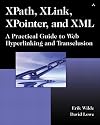
XPath, XLink, XPointer, and XML: A Practical Guide to Web Hyperlinking and Transclusion by Erik Wilde
Wes Boudville
Hyperlinks and the Semantic Web
If you are like most, your introduction to hypertext was when you used a browser for the first time. You saw how intuitive it was that links were visible on a web page, and how easy it was to click on a link and be taken anyplace else on the web. The great acceptance of the web and its browsers was due in no small part to the ease of use, and the ease of writing HTML pages. Then after a few years, some deficiencies became apparent. HTML does not separate content from presentation. To do so, XML arose, with its user definable tags. But XML, by itself, does not take the concept of linking beyond a link being a one way connection between a single source and a single destination. Yet the concept of hyperlinks is much broader and older than the web's instantiation, having been worked on in the 1960s by Nelson and Englebart. This book expounds on how hyperlinks generalise the links in HTML. You can have multiple sources and multiple destinations. The links can be bidirectional. Given a destination, you can find the documents with sources that link to it. Currently, with web pages, you have to use a search engine to see who links to your pages. And no search engine reaches over 50% of the web. The book describes the concept of a linkbase: a database of links. It can be stored separately from the underlying documents that it references. This lets you annotate a document without changing it! Imagine the possibilities. The document could show more be on a CDROM, or on someone else's website. The implementation of these concepts is through XLink, XPath and XPointer. The authors use Backus-Naur Formalism to describe the grammar and they illustrate it with examples. My only quibble is that perhaps they could have written problem sets, for newcomers to cut their teeth on. If you want to see a possible future direction of the Semantic Web, have a gander at this book. show less
Hyperlinks and the Semantic Web
If you are like most, your introduction to hypertext was when you used a browser for the first time. You saw how intuitive it was that links were visible on a web page, and how easy it was to click on a link and be taken anyplace else on the web. The great acceptance of the web and its browsers was due in no small part to the ease of use, and the ease of writing HTML pages. Then after a few years, some deficiencies became apparent. HTML does not separate content from presentation. To do so, XML arose, with its user definable tags. But XML, by itself, does not take the concept of linking beyond a link being a one way connection between a single source and a single destination. Yet the concept of hyperlinks is much broader and older than the web's instantiation, having been worked on in the 1960s by Nelson and Englebart. This book expounds on how hyperlinks generalise the links in HTML. You can have multiple sources and multiple destinations. The links can be bidirectional. Given a destination, you can find the documents with sources that link to it. Currently, with web pages, you have to use a search engine to see who links to your pages. And no search engine reaches over 50% of the web. The book describes the concept of a linkbase: a database of links. It can be stored separately from the underlying documents that it references. This lets you annotate a document without changing it! Imagine the possibilities. The document could show more be on a CDROM, or on someone else's website. The implementation of these concepts is through XLink, XPath and XPointer. The authors use Backus-Naur Formalism to describe the grammar and they illustrate it with examples. My only quibble is that perhaps they could have written problem sets, for newcomers to cut their teeth on. If you want to see a possible future direction of the Semantic Web, have a gander at this book. show less
Library Journal
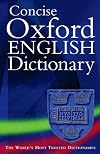
This mini-version of a giant known as the OED claims to pack the authority of the original into a handy size ideal for use in schools, offices, and at home. Perhaps a bit far-fetched but pretty darn close. Has your computer been infected with spyware? This concise OED, which lists a total of 240,000 words and phrases, explains in English as spoken in North America, Australia, West India, and the British Isles, that spyware is "a software that enables a user to obtain covert information about someone's computer activities." Other up-to-the-minute additions (which total 1700) include punditocracy, sky marshals, and plasma screens (for a complete list of new words, go to http://www.askoxford.com). Other novelties include new appendixes, an improved layout that makes browsing easier, and stories of the origins and development of hundreds of words. Copyright 2004 Reed Business Information.
This mini-version of a giant known as the OED claims to pack the authority of the original into a handy size ideal for use in schools, offices, and at home. Perhaps a bit far-fetched but pretty darn close. Has your computer been infected with spyware? This concise OED, which lists a total of 240,000 words and phrases, explains in English as spoken in North America, Australia, West India, and the British Isles, that spyware is "a software that enables a user to obtain covert information about someone's computer activities." Other up-to-the-minute additions (which total 1700) include punditocracy, sky marshals, and plasma screens (for a complete list of new words, go to http://www.askoxford.com). Other novelties include new appendixes, an improved layout that makes browsing easier, and stories of the origins and development of hundreds of words. Copyright 2004 Reed Business Information.
Library Journal
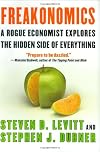
Economist Levitt and Dubner (Turbulent Souls) team up in this intriguing, quirky look at life and how to understand better the world in a new way. In 2003, the New York Times Magazine sent Dubner to do a profile of Levitt, and the idea for this book was born. Levitt looks at a variety of data, including KKK membership rolls, online dating services, and names for children, and finds in the math underlying answers to difficult questions that have a freakish quality. The quirky chapters include the commonality between schoolteachers and sumo wrestlers, why drug dealers still live with their mothers, and what makes a perfect parent. The crisp, bright narration by Dubner enlivens this title, which will appeal to fans of Malcolm Gladwell's The Tipping Point as well as to economists. Recommended for university libraries supporting a business and economics curriculum and larger public libraries.-Dale Farris, Groves, TX Copyright 2005 Reed Business Information.
Economist Levitt and Dubner (Turbulent Souls) team up in this intriguing, quirky look at life and how to understand better the world in a new way. In 2003, the New York Times Magazine sent Dubner to do a profile of Levitt, and the idea for this book was born. Levitt looks at a variety of data, including KKK membership rolls, online dating services, and names for children, and finds in the math underlying answers to difficult questions that have a freakish quality. The quirky chapters include the commonality between schoolteachers and sumo wrestlers, why drug dealers still live with their mothers, and what makes a perfect parent. The crisp, bright narration by Dubner enlivens this title, which will appeal to fans of Malcolm Gladwell's The Tipping Point as well as to economists. Recommended for university libraries supporting a business and economics curriculum and larger public libraries.-Dale Farris, Groves, TX Copyright 2005 Reed Business Information.
Review
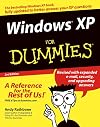
“…the most well-known range of computer books…âÂ? (Computer Active, January 2005)
âÂÂReaders will enjoy reading this bouncy, overwhelming accessible textâ¦.gives a peek at the next generation of Windows genius.âÂ? (Good Book Guide, December 2004)
âÂÂâ¦sure to be a huge sellerâ¦âÂ? (Publishing News, July 2004)
“…the most well-known range of computer books…âÂ? (Computer Active, January 2005)
âÂÂReaders will enjoy reading this bouncy, overwhelming accessible textâ¦.gives a peek at the next generation of Windows genius.âÂ? (Good Book Guide, December 2004)
âÂÂâ¦sure to be a huge sellerâ¦âÂ? (Publishing News, July 2004)