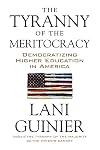
This book is a call for educational reform as a direct means to democratic reform. Author Lani Guinier has a long history as a champion of civil rights and appropriate affirmative action in higher education and she makes the case that our definition of "merit" with respect to college admissions and as a predictor for success is really just another measure of wealth and privilege.
The Tyranny of the Meritocracy begins with a critique of the use of achievement (most specifically the SAT) as a heavily weighted criterion for entry into elite universities. Issues with the SAT's cultural biases and its cottage industry in test prep for the wealthy have been well documented long before now, and Guinier doesn't really break new ground here. Where the book gets interesting is when she begins to discuss a new definition for merit, as on page 29: "Democratic merit does what our current meritocracy fails to do: it creates an incentive system that emphasizes the development of more and more individuals who serve the goals and contribute to the conditions of a thriving democracy for both their own good as well as for the collective good." In essence, she is lamenting the loss of noblesse oblige, where the elites of the past recognized their achievements were based largely on privilege rather than personal merit and were at least motivated to give back because of that. Nowadays, she argues, the wealthy and privileged feel that their high scholastic achievement and test scores are show more indicative of their entitlement and that others who don't match those specific achievements are unworthy of access to the upper echelons of education and success. Born on third base, thinks he hit a triple.
The second half of the book is given over to "solution/s" to this problem, another well-covered area. She looks at the thinking of people like Paul Tough and Carol Dweck, and cites the successes of various public and charter schools and universities in fostering collaborative thinking and learning. She looks at the abilities that student success in these environments (perseverance, grit, collaboration, teamwork, leadership, etc.) as indicators of "merit" more valuable than grades or test scores.
Ultimately, this book is a quick and interesting read, but doesn't present new or innovative information. In her acknowledgements, the author notes that this book was a decade in the making, and it seems like it would have been much more ground-breaking and timely had it come out five years before now. show less
The Tyranny of the Meritocracy begins with a critique of the use of achievement (most specifically the SAT) as a heavily weighted criterion for entry into elite universities. Issues with the SAT's cultural biases and its cottage industry in test prep for the wealthy have been well documented long before now, and Guinier doesn't really break new ground here. Where the book gets interesting is when she begins to discuss a new definition for merit, as on page 29: "Democratic merit does what our current meritocracy fails to do: it creates an incentive system that emphasizes the development of more and more individuals who serve the goals and contribute to the conditions of a thriving democracy for both their own good as well as for the collective good." In essence, she is lamenting the loss of noblesse oblige, where the elites of the past recognized their achievements were based largely on privilege rather than personal merit and were at least motivated to give back because of that. Nowadays, she argues, the wealthy and privileged feel that their high scholastic achievement and test scores are show more indicative of their entitlement and that others who don't match those specific achievements are unworthy of access to the upper echelons of education and success. Born on third base, thinks he hit a triple.
The second half of the book is given over to "solution/s" to this problem, another well-covered area. She looks at the thinking of people like Paul Tough and Carol Dweck, and cites the successes of various public and charter schools and universities in fostering collaborative thinking and learning. She looks at the abilities that student success in these environments (perseverance, grit, collaboration, teamwork, leadership, etc.) as indicators of "merit" more valuable than grades or test scores.
Ultimately, this book is a quick and interesting read, but doesn't present new or innovative information. In her acknowledgements, the author notes that this book was a decade in the making, and it seems like it would have been much more ground-breaking and timely had it come out five years before now. show less
 This review was written for LibraryThing Early Reviewers.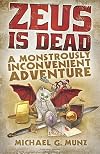
After Zeus is mysteriously murdered, the pantheon of Greek gods returns to public life and mortal worship ... with hilarious results! This was an enjoyable if somewhat predictable read, tempered by the wry commentary and narrative tropes. I particularly liked the muse Thalia's involvement and Leif the hapless hero's valiant attempts to win the heart of Tracy, daughter of Zeus. A fun, lighthearted, amusing book for fans of Greek mythology and comedy writing.
I received a copy of this title from the author via the LibraryThing Early Reviewers Program.
I received a copy of this title from the author via the LibraryThing Early Reviewers Program.
This review was written for LibraryThing Early Reviewers.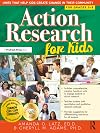
A useful resource for developing project-based, service learning projects in a classroom setting. The materials seem too focused on the specific projects reviewed in the book, rather than more broadly adaptable, but the ideas are solid.
This review was written for LibraryThing Early Reviewers.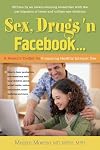
A useful primer for parents who are new to the idea of social media and to the potential risks and rewards for teens. The information is more of a basic introduction than an in-depth discussion; I hoped to use this as a resource for developing a digital citizenship curriculum for middle school students and parents, but the material was a little too low-level for this purpose. Definitely valuable for the right audience.
This review was written for LibraryThing Early Reviewers.Ancient Roots and Ruins: A Guide to Understanding the Romans, Their World, and Their Language by Joyce VanTassel-Baska Ed.D.
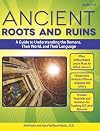
I actually ordered this book for my school library before receiving a copy through Early Reviewers. As other reviewers have noted, this isn't a curriculum on its own, but it is a great supplement to an existing history or Latin curriculum, with excellent unit and activity ideas and supporting materials. Our Middle School had a Latin club/elective taught by Latin students from our sister high school, and this made an excellent gift to my student teachers. Recommended for those interested in ancient Rome, Latin and its connection to today.
This review was written for LibraryThing Early Reviewers.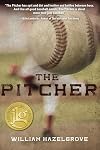
The Pitcher is an appealing sports-related book that doesn't shy away from emotional resonance. It's more of a rarity to find in YA books these days and it's great to have something to offer to baseball fans in the same way I might steer soccer fans to The Keeper. This book didn't speak to my personal tastes as I read, but it's sure to be popular among its target audience.
This review was written for LibraryThing Early Reviewers.Nick and Tesla's High-Voltage Danger Lab: A Novel with Electromagnets, Burglar Alarms, and Other Gadgets You Can Build Yourself by Bob Pflugfelder
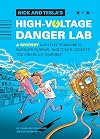
This is a promising beginning to a new series that I will definitely include in my k-8 school library. Nick and Tesla are reluctantly spending their summer in Half Moon Bay outside of San Francisco, at the home of their eccentric uncle, who could be described as a mad scientist. Although their uncle is kind and well-meaning, he is mostly out of the picture as Nick and Tesla encounter mysterious happenings in their neighborhood. The two siblings use their own science and logic skills, and their access to mad-scientist equipment, to solve mysteries. Included in the book are easy-to-follow instructions on building some of the tools Nick and Tesla use, like the Robo-Cat Dog Distractor. Enjoyable plot, fun dialogue and clever use of science to engage readers. My 8-year-old is reading it now and can't wait to build some of the inventions. Recommended.
This review was written for LibraryThing Early Reviewers.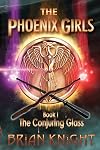
This highly entertaining YA novel would be a great choice for girls who like Rick Riordan's books or the Fablehaven series, or any fan of fantasy that is grounded in real life. Penny moves in with her godmother, Susan, after her mother's death and tries to cope with missing her mom, making new friends, and being a stranger in a small town. Susan introduces Penny to Zoe, another quirky girl who is somewhat outcast as a small-town oddball, and the two discover a strange book, a magical grove, and magical talent within themselves.
There are lots of loose ends in the book, including a beginning scene that portends ill things for the future of Penny and Zoe's friendship, as well as about Penny's mysterious mother and unknown father. However, these details just make you look forward to book 2. A good mix of high adventure and the regular issues of 13-year-old girls.
There are lots of loose ends in the book, including a beginning scene that portends ill things for the future of Penny and Zoe's friendship, as well as about Penny's mysterious mother and unknown father. However, these details just make you look forward to book 2. A good mix of high adventure and the regular issues of 13-year-old girls.
This review was written for LibraryThing Early Reviewers.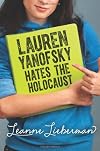
Lauren Yanofsky Hates The Holocaust was an enjoyable read that could have been so much more. As the daughter of a Holocaust historian and the granddaughter of a Holocaust survivor, Lauren has had a thorough education in the history of Jewish persecution, and ultimately decides she is done with being Jewish. She refuses Jewish high school, Jewish camp, temple activities ... she even flirts with developing some kind of anti-bat-mitzvah ritual in order to de-convert. This is a subject that many young Jews struggle with as they come into adulthood -- not just about their relationship to Jewish history, but what it means to be Jewish in the modern world. Lauren has some deep, complex thoughts and actions about this that are brushed over in order to get to the "action" -- the cute boy and the implausible anti-Semitic war games that lead to her intended moral quandary. I found the outcome rushed and disappointing. Lauren had the potential to be fully realized as a character but the author missed the mark a bit.
This could easily be intended for a younger (grades 6-8) audience but the unnecessary inclusion of profanity and dwelling on alcohol use makes it better for a high school audience. I received this through the Library Thing Early Reviewers program.
This could easily be intended for a younger (grades 6-8) audience but the unnecessary inclusion of profanity and dwelling on alcohol use makes it better for a high school audience. I received this through the Library Thing Early Reviewers program.
This review was written for LibraryThing Early Reviewers.
A quick, easy, fun read if you're willing to overlook some questionable plotting. The witness-protection conceit was difficult for me to swallow, and some of the ways in which Ty is outed just weren't believable. However, beyond that, the story was well-told and fast-moving, with enough intrigue to keep me turning pages. The voices of the different characters didn't change enough to really feel that we were getting a different view when the narrator changed, but it didn't interrupt the flow. A little too edgy for a middle school library but could work for high school populations with ESL or hi-lo needs.
This review was written for LibraryThing Early Reviewers.
Generally I enjoy simple books in which "not much happens" -- they often turn out to have a quiet brilliance -- but I had difficulty finding an "in" to this narrative. Some of the anthropological details rang more true to me than the introspection. I'd like to try this book again in a different stage of life -- I can imagine it feeling very meaningful, but it didn't do that for me this time.
This review was written for LibraryThing Early Reviewers.
The Eyes of the Desert Sand has a great premise for a YA fantasy novel, and I was looking forward to receiving and reading this book! Unfortunately, I have to agree with many of the reviewers here in saying the clumsy and amateurish writing got in the way of the plot, characterization and other elements that make a story memorable. I'd love to see this after a writing workshop worked it over a few times. Until then, I will pass on later episodes.
This review was written for LibraryThing Early Reviewers.
Isabel is a wealthy, privileged young woman living in Toledo, Spain in 1491. Though the Inquisition is raging around her, she is a devout Catholic, with connections in the royal court, and it leaves her untouched. Until (of course, there's always an "until!") she learns that her parents are secretly practicing Jews, putting her whole life in jeopardy. Her parents try to protect her by arranging her betrothal to a cruel young man with impeccable background, but Isabel begins a different kind of connection with a Jewish apprentice ...
This rather slight novel left me wanting more. While it's not impossible to believe that a devout Catholic would be attracted to learning about her newly-discovered Jewish roots, I do think it's a bit much to imagine that she'd chuck up her faith so readily ... there's a lot of theology to be abjured there, especially with Torquemada breathing down your neck like that. Character quibbles aside, the history is also slight -- I wanted to know more about the Inquisition and the Jews before and much, much more background and atmosphere.
The story kept me turning pages. I wish each page contained more. Recommended with reservations.
This rather slight novel left me wanting more. While it's not impossible to believe that a devout Catholic would be attracted to learning about her newly-discovered Jewish roots, I do think it's a bit much to imagine that she'd chuck up her faith so readily ... there's a lot of theology to be abjured there, especially with Torquemada breathing down your neck like that. Character quibbles aside, the history is also slight -- I wanted to know more about the Inquisition and the Jews before and much, much more background and atmosphere.
The story kept me turning pages. I wish each page contained more. Recommended with reservations.
This review was written for LibraryThing Early Reviewers.
As an applicant for "new standard" in the key of "troubled-kid" lit, A Tinfoil Sky hits all the right notes. Parent with substance abuse issues? Check. Young but wise-beyond-her-years, seen-it-all protagonist who's managed not to develop theft and drug habits of her own? Check. Connections made with kindly neighborhood folk like librarians and shopkeepers? Check. Bittesweet yet optimistic ending? Check. Yet this book manages not to become cloying or false. The protagonist, Mel, seems more like a 5th grader than a 7th grader in her reactions and interactions, and in some ways this makes this a more universally appealing book -- a lot of what Mel's life must be is left between the lines and unsaid, rather than falling into a voyeuristic trap. Compare this to What I Call Life, by Jill Wolfson, for another view of the struggles (and sometimes triumphs) kids face when their parents can't adequately protect them.
This review was written for LibraryThing Early Reviewers.
A book that will resonate with anyone who went to middle school, high school, or college; who ever felt that her outside didn't match her inside, and who ever wondered why a Good Lord who wanted us pure would ever put us in such sensational bodies.
Hilarious, thought-provoking and true. Can't wait to read more from this author!
Hilarious, thought-provoking and true. Can't wait to read more from this author!
This resource is intended for students grades 6-12, and the content included does indeed match the science curriculum of MS and HS, but some of the differentiation strategies seem better for younger (much younger) students. However, many of the templates and reproducibles provided could be used throughout the curriculum and at lower grade levels.
I'll keep this as a resource in my professional library, but it probably won't become a staple.
I'll keep this as a resource in my professional library, but it probably won't become a staple.
This review was written for LibraryThing Early Reviewers.
Surprisingly readable and appealing. Marketing this as a "bully reforms" book is a bit misleading (Butterball is himself bullied, and the violent incident in question is him turning on his friend in shame and rage, rather than a systematic victimization which is more the hallmark of bullying), but the message of owning your own weaknesses speaks to anyone who feels isolated and persecuted. The language rings true for urban middle schoolers (complete with liberal profanity) but is at heart somewhat wholesome and innocent. Recommended.
This review was written for LibraryThing Early Reviewers.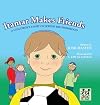
As a librarian in a Jewish day school with a large Israeli population, I am always on the lookout for authentic children's stories in English about life in Israel. A book about life in Israel with a message of friendship and brotherhood, even better! Thus it was doubly disappointing to find a story that, although it has moments of interest and value, neither rings true about life in Israel nor shares a meaningful message of acceptance.
Itamar is an 8-year-old boy from a yishuv (small village) who takes a journey to the city. He enjoys his day until he encounters three city boys who won't give him back his soccer ball because he's a kid from the village. When Itamar falls and hurts himself, the boys have a instant change of heart, walk him back to his bus, and then come to visit him out in his village a few days later.
The story seems very inauthentic -- there's no real growth among the boys; they just switch from being mean to being completely accepting and making a long journey to see another way of life. (Wouldn't it be more likely that a change of heart might result only in "Fine, here's your ball"?) I was also disappointed with the lack of detail in the illustrations. Perhaps if there was a real difference between the yishuv landscape and the city landscape, I'd have been more moved by Itamar's experience, but the hustle-bustle is just told about, not shown.
The last jarring note is the parent note at the end of the book. It talks about the need to work against show more baseless hatred between fellow Jews, and that the story is an illustration of how alike we all are despite small differences. But then it talks about how "our enemies seek to destroy the Jewish state time and time again" and about a horrific terrorist murder in a Jewish settlement that even the Palestinians condemned as inhuman and immoral. Do these words of fear and anger belong in a book for children purporting to be about brotherhood? I understand the need for the Jewish people to stand together in the face of external threats, but I fear the underlying message in the parents' note.
I would have trouble including this book in a progressive Jewish library. I hope for another book in the future, addressing this same crucial message of Jewish brotherhood, with more authenticity and more room for a brotherhood of humanity. show less
Itamar is an 8-year-old boy from a yishuv (small village) who takes a journey to the city. He enjoys his day until he encounters three city boys who won't give him back his soccer ball because he's a kid from the village. When Itamar falls and hurts himself, the boys have a instant change of heart, walk him back to his bus, and then come to visit him out in his village a few days later.
The story seems very inauthentic -- there's no real growth among the boys; they just switch from being mean to being completely accepting and making a long journey to see another way of life. (Wouldn't it be more likely that a change of heart might result only in "Fine, here's your ball"?) I was also disappointed with the lack of detail in the illustrations. Perhaps if there was a real difference between the yishuv landscape and the city landscape, I'd have been more moved by Itamar's experience, but the hustle-bustle is just told about, not shown.
The last jarring note is the parent note at the end of the book. It talks about the need to work against show more baseless hatred between fellow Jews, and that the story is an illustration of how alike we all are despite small differences. But then it talks about how "our enemies seek to destroy the Jewish state time and time again" and about a horrific terrorist murder in a Jewish settlement that even the Palestinians condemned as inhuman and immoral. Do these words of fear and anger belong in a book for children purporting to be about brotherhood? I understand the need for the Jewish people to stand together in the face of external threats, but I fear the underlying message in the parents' note.
I would have trouble including this book in a progressive Jewish library. I hope for another book in the future, addressing this same crucial message of Jewish brotherhood, with more authenticity and more room for a brotherhood of humanity. show less
This review was written for LibraryThing Early Reviewers.
This charming illustrated-journal-style book is sure to captivate the many, many budding young cryptozoologists who are pining for "true" books about mythological creatures. I am as a rule turned off by books with a non-traditional narrative structure, with cutesy little illustrations and doodles, but by page 10 I was absolutely hooked.
Abigail is an engaging young misfit, with school problems that most kids can relate to, and although she is in 8th grade, she'll definitely appeal to a younger crowd. The details about the mythical beasts is surprisingly sophisticated -- real-life sightings from historical sources like Pliny the Elder and Christopher Columbus -- along with Abigail's interpretations of what they might actually have been. I like the references to good research practice and her cited sources in the back of the book.
Like the Fablehaven series, Abigail's mysterious family is soon brought into the story, and I look forward to later books in the series fleshing out the mystery and Abigail's great destiny.
Abigail is an engaging young misfit, with school problems that most kids can relate to, and although she is in 8th grade, she'll definitely appeal to a younger crowd. The details about the mythical beasts is surprisingly sophisticated -- real-life sightings from historical sources like Pliny the Elder and Christopher Columbus -- along with Abigail's interpretations of what they might actually have been. I like the references to good research practice and her cited sources in the back of the book.
Like the Fablehaven series, Abigail's mysterious family is soon brought into the story, and I look forward to later books in the series fleshing out the mystery and Abigail's great destiny.
This review was written for LibraryThing Early Reviewers.Math Dictionary for Kids: The Essential Guide to Math Terms, Strategies, and Tables by Theresa Fitzgerald
This student reference book has many appealing features, including full-color illustrations and short, to-the-point explanations. Intended for grades 4-9, some of the definitions are written at a high level, but the illustrations often serve to illuminate. The definitions are organized by subjects such as "algebraic ideas," "problem solving" and "statistics and probability," which may make it difficult for some students to find the information they are seeking without reverting to the index (would a fifth grader know to look for "average" under "statistics"?). In most instances, this tool may be better suited for use in a math classroom with teacher support, or in a home with parent support, than as an individual student's reference. However, the "tables and charts" and " measurement conversions" sections at the end of the book will no doubt be consulted often during math class and homework sessions. Overall, a desirable resource for a classroom or school library, and an optional purchase for a home environment.
This review was written for LibraryThing Early Reviewers.
A well-written, creative page-turner of a novel, The Burning Sky follows several characters through an increasingly intertwined series of events, beginning with a suspicious fire and attack on an airship pilot and ending with the unraveling of a tangled conspiracy reaching the highest levels of government and society. The novel takes place in an alternate version of our own world (a preface says that in this world the Ice Age never fully ended, Rome never emerged as a world superpower, and Persia and North Africa are the centers of civilization). It's close enough to our own world to immediately connect (and to avoid the tedious establishment of history and hierarchy in many fantasy novels) but with enough variety to continually provoke thought. Overall, a fun and fast-paced, thoroughly enjoyable read!
I received a free copy of this e-book through a LibraryThing Member Giveaway, but the characters and story engaged me sufficiently that I purchased the next book in the trilogy.
I received a free copy of this e-book through a LibraryThing Member Giveaway, but the characters and story engaged me sufficiently that I purchased the next book in the trilogy.
This review was written for LibraryThing Member Giveaways.
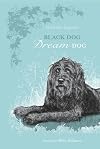
On the brink of adolescence, Samantha feels lonely and misunderstood, particularly by her mother. When she finds a huge black dog outside her house one day, she decides that this can be her secret, something that belongs to her alone. But the dog has a secret too, one Samantha may not want to hear.
This was an interesting, if somewhat underdeveloped, read -- I enjoyed the development of the very realistic conflict between Sam and her mother in how Sam is expected to take responsibility, but only in the things her mother deems appropriate. While I appreciate that actual adolescents sometimes act eight and sometimes act eighteen, the rather sophisticated needs of Samantha to be taken seriously as a young woman by her mother didn't jive well with her childlike glee about her magic dog.
However, dog lovers will certainly enjoy the instant connection between the girl and the dog, and the ultimate fate of both. A good choice for fans of the young readers' Marley and Me.
This was an interesting, if somewhat underdeveloped, read -- I enjoyed the development of the very realistic conflict between Sam and her mother in how Sam is expected to take responsibility, but only in the things her mother deems appropriate. While I appreciate that actual adolescents sometimes act eight and sometimes act eighteen, the rather sophisticated needs of Samantha to be taken seriously as a young woman by her mother didn't jive well with her childlike glee about her magic dog.
However, dog lovers will certainly enjoy the instant connection between the girl and the dog, and the ultimate fate of both. A good choice for fans of the young readers' Marley and Me.
This review was written for LibraryThing Early Reviewers.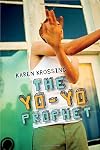
Calvin is a ninth-grade loser, invisible at best and a target at worst during school, and a victim of circumstance at home -- his mother is dead, his father is absent, and his grandmother is sick. Unexpectedly, his quirky talent with a yo-yo leads first to social acclaim -- a "queen bee" girl from school signs on as his manager, kids want to learn from him -- and then to social disaster as his initially shaky confidence turns to hubris. On the home front, Calvin's grandmother is getting sicker, she has sold her dry-cleaning business to a questionable character, and his dependable neighbor is moving away. On a tightrope without a safety net, Calvin needs to keep it all together or watch as it all comes crashing down.
I very much enjoyed the story and the writing in this book. However, this was a very quick read; perhaps too much so. I felt that the story unfolded too quickly -- Calvin's journey from pariah to rock star happens over the course of only a few chapters; the character of Rozelle, his bully/manager/rescuer is painted in such broad strokes that it's hard to see why, exactly, she is intimidating or influential or even successful, ultimately. I'd have loved to see it 75 pages longer, with the character and story development it deserves.
With the exception of a few instances of graphic language, this is a definite middle-school hit. I'd recommend it for older fans of books like The Strange Case of Origami Yoda.
I very much enjoyed the story and the writing in this book. However, this was a very quick read; perhaps too much so. I felt that the story unfolded too quickly -- Calvin's journey from pariah to rock star happens over the course of only a few chapters; the character of Rozelle, his bully/manager/rescuer is painted in such broad strokes that it's hard to see why, exactly, she is intimidating or influential or even successful, ultimately. I'd have loved to see it 75 pages longer, with the character and story development it deserves.
With the exception of a few instances of graphic language, this is a definite middle-school hit. I'd recommend it for older fans of books like The Strange Case of Origami Yoda.
This review was written for LibraryThing Early Reviewers.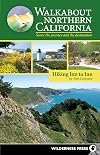
I love the idea of the domestic walkabout -- hiking through beautiful places to reach calming refuges (the introduction talks about getting to "a comfortable bed, a glass of wine, a good meal"). All good things.
The guide is both descriptive and detailed -- a lovely travelogue for vicarious hikers, and enough nitty-gritty to plan or modify the hikes included. An especially nice feature is the "transportation" part -- i.e. how to get back to where you started without doing the hike in reverse. Some hikes require two cars; some can be done completely using public transit. One disappointing aspect is the variation in the quality of lodgings. An inn is an inn -- not a motel, not a campground.
Overall, this book has given us some great ideas for our next hikes.
The guide is both descriptive and detailed -- a lovely travelogue for vicarious hikers, and enough nitty-gritty to plan or modify the hikes included. An especially nice feature is the "transportation" part -- i.e. how to get back to where you started without doing the hike in reverse. Some hikes require two cars; some can be done completely using public transit. One disappointing aspect is the variation in the quality of lodgings. An inn is an inn -- not a motel, not a campground.
Overall, this book has given us some great ideas for our next hikes.
This review was written for LibraryThing Early Reviewers.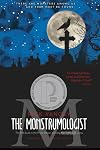
This was the goriest book I have read in ages. Gratuitously gory. I can't believe it is intended for young adults. It's about a race of cannibal creatures, apparently referenced in great literature, and set loose in Victorian-era New England. Actually, it's about the Montrumologist who chases these creatures, and this is just the First Adventure (no book acts alone these days). Seriously -- this book makes me worry for Rick Yancey's overall psychological profile. He lovingly lingers over the color of the sunset reflecting on the blood and bits of flesh dripping down the walls of the vicarage, and the limbs of the young daughter strewn about the floor like the petals of a blood-soaked daisy. Just too gross for kids or adults.
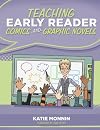
This teacher resource for using comics and graphic novels for early readers was a good introduction for educators who might be hesitant about choosing comics for their classroom. Its organization was easy to use, including recommended texts, and sample lessons and activities. If, however, you are already sold on the benefits of graphic novels to improve print-text literacy, this book does not offer much in the way of expansion. The specific definitions and kid-friendly examples of comic book vocabulary (like panel, gutter, etc.) was very helpful. Overall, a text worth having in a classroom or in a professional resource library.
* I received this as an ebook, and it did NOT format well for the Kindle. Caveat emptor.
* I received this as an ebook, and it did NOT format well for the Kindle. Caveat emptor.
This review was written for LibraryThing Early Reviewers.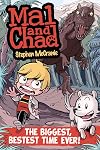
Mal and Chad are a great pair. Mal the super-genius and Chad the talking dog have a kind of Calvin-and-Hobbes relationship, although in this book the hijinks take place in reality and not in the imagination. The art is great and the story lends itself to "continuing adventures" in future installments. I enjoyed the small twists on stock characters -- Mal's nemesis Zachary is a little bit the standard school bully, but also an academic jock that wants to make sure Mal won't be messing with his science fair chances. Overall, a fun introduction for an easily-recommended series.
This review was written for LibraryThing Early Reviewers.
This won't be the first review to call this book bleak, nor probably the last. Parts of this were beautiful and parts were intense, but there's a thread of hopelessness and inevitability that keep it from being truly enjoyable. Like the Beans of Egypt, Maine, by Carolyn Chute, these characters can't break free from the paths they've been set on. Tragic.
This review was written for LibraryThing Early Reviewers.The New Face of Small-Town America: Snapshots of Latino Life in Allentown, Pennsylvania by Edgar Sandoval
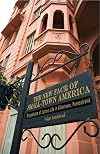
Allentown, Pennsylvania is not exactly the first city to leap to mind when considering America's growing Latino population. Yet Allentown, like so many other smaller towns and cities across the country, is both struggling with and celebrating its Latino community in a variety of ways. This collection of newspaper articles (which originally appeared in some form in the Allentown Morning Call) provides a window into the lives of members of this community. From a young girl preparing for her quinceanera to a mother facing eviction over a noise ordinance, to a Latino city councilmember, these are compelling portraits of very different lives all tied together through shared culture, both Latino and American.
I was struck by this book, in part because I live in San Jose, California, where the Latino culture is dominant, and it was thought-provoking to consider the process a place like Allentown would have to undergo as it begins to look more and more like San Jose. The nature of the book (short snippets) makes it an easy read, but also left me wanting to know more about the people whose lives are so briefly chronicled. "Snapshots" is the perfect word.
I was struck by this book, in part because I live in San Jose, California, where the Latino culture is dominant, and it was thought-provoking to consider the process a place like Allentown would have to undergo as it begins to look more and more like San Jose. The nature of the book (short snippets) makes it an easy read, but also left me wanting to know more about the people whose lives are so briefly chronicled. "Snapshots" is the perfect word.
This review was written for LibraryThing Early Reviewers.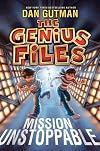
Coke and Pepsi McDonald, twins heading off on summer vacation, are in mortal peril from the first page. We know this because "JUMP OFF A CLIFF" wasn't on their to-do list for the day, and yet somehow they will manage it. This grabby beginning leads to several splashy escapes and near-captures by strange men in bowler hats as the twins take a family road trip from the San Francisco area to Washington, D.C. At each stop, there is a Google Maps tie-in, to follow the action from place to place.
The plot is thin, the characters trite, but I can imagine this new series being wildly popular with kids who have slightly outgrown My Weird School, and for whom Dan Gutman can do no wrong. I did enjoy descriptions and photos of the quirky sites the family visited (Dad is a staid history professor, but Mom runs the Amazing But True website, so it's a whole lot more Big Ball of Twine and less Gettysburg) and the clever means by which the kids escaped their nefarious pursuers at each turn. However, the "genius" bit falls flat. Any fan of The Mysterious Benedict Society will be disappointed in these two stupendously average kids somehow getting under the "genius" wire. West Marin Middle School is teaching to the test, people!
The plot is thin, the characters trite, but I can imagine this new series being wildly popular with kids who have slightly outgrown My Weird School, and for whom Dan Gutman can do no wrong. I did enjoy descriptions and photos of the quirky sites the family visited (Dad is a staid history professor, but Mom runs the Amazing But True website, so it's a whole lot more Big Ball of Twine and less Gettysburg) and the clever means by which the kids escaped their nefarious pursuers at each turn. However, the "genius" bit falls flat. Any fan of The Mysterious Benedict Society will be disappointed in these two stupendously average kids somehow getting under the "genius" wire. West Marin Middle School is teaching to the test, people!
This review was written for LibraryThing Early Reviewers.