Susie Linfield begins her extraordinary work with a quotation from Baudelaire, who wrote that "passion... raises reason to new heights." After reading those words, I sensed quickly that I would find this work not only intellectually stimulating but deeply affecting. And I did. Despite the density and raw intensity of the content, I read the last half of the book in a few hours. I could hardly put it down. It made me think very hard.
Linfield centers her discussion on two fundamental issues which have haunted photojournalism and documentary photography since their inceptions. One involves the moral implications of viewing violence and barbarism--is the photographer replicating the crime of exploitation by laying bear the suffering of others, and, by association, should we be arrested for the crime of looking with both horror and fascination? The other issue involves Linfield's problem with postmodernists, who have intellectually thrived on their own vehement suspicions of reality and the real (referring to Benjamin, Krakauer, and Baudrillard). She puts Susan Sontag's ideas under careful scrutiny, and though the author never says so directly, basically says that Sontag is wrong. To argue that photographs of political violence "do not say anything to us" is not only counterintuitive, but it impedes the potential to find meaning, to strive to speak for what seems to be beyond words (and therefore, beyond human understanding). What is difficult to put into words is not the show more photos themselves but the twisted ideologies, the senseless cruelty and sadism, behind the dismembering, torture, wounding, and suffering.
There are few photographs in Linfield's work. She relies on detailed description and commentary, and immerses herself in the discourses of history, politics, critical theory, witness testimony and biography. The apparent absence of the image illustrates, quite concretely, her defense of photographs as one of the most powerful incitements to deep reflection, mindful compassion, and hopefully, social change. Photos like those taken of the starvation in the Warsaw ghetto, the massacres of Sierra Leone, and genocide of Bosnia, should not inject us with a paralyzing guilt, as the postmodern thinkers would see it. Linfield writes at the end of chapter two: "The real issue is how we use images of cruelty. Can they help us make meaning of the present and the past? If so, what meanings do we make, and how do we act upon them? The ultimate answers to such questions reside not in the pictures but ourselves." show less
Linfield centers her discussion on two fundamental issues which have haunted photojournalism and documentary photography since their inceptions. One involves the moral implications of viewing violence and barbarism--is the photographer replicating the crime of exploitation by laying bear the suffering of others, and, by association, should we be arrested for the crime of looking with both horror and fascination? The other issue involves Linfield's problem with postmodernists, who have intellectually thrived on their own vehement suspicions of reality and the real (referring to Benjamin, Krakauer, and Baudrillard). She puts Susan Sontag's ideas under careful scrutiny, and though the author never says so directly, basically says that Sontag is wrong. To argue that photographs of political violence "do not say anything to us" is not only counterintuitive, but it impedes the potential to find meaning, to strive to speak for what seems to be beyond words (and therefore, beyond human understanding). What is difficult to put into words is not the show more photos themselves but the twisted ideologies, the senseless cruelty and sadism, behind the dismembering, torture, wounding, and suffering.
There are few photographs in Linfield's work. She relies on detailed description and commentary, and immerses herself in the discourses of history, politics, critical theory, witness testimony and biography. The apparent absence of the image illustrates, quite concretely, her defense of photographs as one of the most powerful incitements to deep reflection, mindful compassion, and hopefully, social change. Photos like those taken of the starvation in the Warsaw ghetto, the massacres of Sierra Leone, and genocide of Bosnia, should not inject us with a paralyzing guilt, as the postmodern thinkers would see it. Linfield writes at the end of chapter two: "The real issue is how we use images of cruelty. Can they help us make meaning of the present and the past? If so, what meanings do we make, and how do we act upon them? The ultimate answers to such questions reside not in the pictures but ourselves." show less
Alone Together: Why We Expect More from Technology and Less from Each Other by MIT professor Sherry Turkle is one of the most enlightening books about the ethical and social repercussions of technology I have ever read. Interestingly, I read it on my Kindle, where I recently learned how to use the highlighting and notes function. So my review isn't so much a review as a reflection on some of the most meaningful quotations from the work.
The first half of the work is devoted to Turkle's discussion of the use of robots to help people. She focuses her discussion on how robot pets and babies can ease the loneliness of the elderly in retirement homes. This, of course, is in response to the feelings of abandonment felt by people who are now seen as a burden to the younger generation. Turkle describes different experiments in which senior citizens and children (two of the most emotionally vulnerable groups) are given robots that can respond to the human voice and human touch. She then documents words and experiences of specific individuals, showing the emotional connections that the young and old can create with these objects. While I didn't find this section of the book as interesting as the second part, one cannot help but feel a kind of collective shame in being part of a society that would imagine the need for such things. Turkle, however, does not condemn so much as remind us that human needs are complex, and how we frame our ethical and social challenges are just as show more crucial, if not more, as deliberating on the possible solutions for them.
The second part of the work focuses on the impact of social networks, gaming, and virtual worlds on people's lives and relationships. While there's a good deal here that I have thought about many times before, Turkle's exposition is an effective showing and not mere telling of her beliefs. She interviews high school students, computer programmers, young professionals, and people of the pre-Internet generation and asks them about their use of technology in their everyday lives. What they have to say about how technology creates chronic demands on them and steers them to a life of loneliness and isolation is unsettling but not surprising. When we are always connected, we can no longer tolerate the idea of being alone, of not having someone respond to what we say or think. Ironically, of course, this emphasis on media performance only debilitates us socially in an interpersonal sense (if one can still even think of the world this way). We "forget" the value of stillness and solitude that can revivify our lives, lending them purpose and meaning, and strengthen our relationships. Instead, solitude frightens us. Turkle explains quite profoundly: "Loneliness is failed solitude."
I'm not a Luddite and neither is Turkle. What she proposes in the end is an examination of our values and the ways in which we frame social, even existential, problems--each are crucial to a healthier understanding of ourselves in an age of invasive technology: "What I call realtechnik suggests that we step back and reassess when we hear triumphalist or apocalyptic narratives about how to live with technology. Realtechnik is skeptical about linear progress. It encourages humility, a state of mind in which we are most open to facing problems and reconsidering decisions. The Net, she states, is still young, but the human beings who have imagined the technology we know today is not. As technology advances, always ready to "be" for us what in reality should only remain a "seem" (to quote the poet Wallace Steven's words from "The Emperor of Ice Cream") so must our understanding of what is fundamentally human: "When we are at our best, thinking about technology brings us back to questions about what really matters." show less
The first half of the work is devoted to Turkle's discussion of the use of robots to help people. She focuses her discussion on how robot pets and babies can ease the loneliness of the elderly in retirement homes. This, of course, is in response to the feelings of abandonment felt by people who are now seen as a burden to the younger generation. Turkle describes different experiments in which senior citizens and children (two of the most emotionally vulnerable groups) are given robots that can respond to the human voice and human touch. She then documents words and experiences of specific individuals, showing the emotional connections that the young and old can create with these objects. While I didn't find this section of the book as interesting as the second part, one cannot help but feel a kind of collective shame in being part of a society that would imagine the need for such things. Turkle, however, does not condemn so much as remind us that human needs are complex, and how we frame our ethical and social challenges are just as show more crucial, if not more, as deliberating on the possible solutions for them.
The second part of the work focuses on the impact of social networks, gaming, and virtual worlds on people's lives and relationships. While there's a good deal here that I have thought about many times before, Turkle's exposition is an effective showing and not mere telling of her beliefs. She interviews high school students, computer programmers, young professionals, and people of the pre-Internet generation and asks them about their use of technology in their everyday lives. What they have to say about how technology creates chronic demands on them and steers them to a life of loneliness and isolation is unsettling but not surprising. When we are always connected, we can no longer tolerate the idea of being alone, of not having someone respond to what we say or think. Ironically, of course, this emphasis on media performance only debilitates us socially in an interpersonal sense (if one can still even think of the world this way). We "forget" the value of stillness and solitude that can revivify our lives, lending them purpose and meaning, and strengthen our relationships. Instead, solitude frightens us. Turkle explains quite profoundly: "Loneliness is failed solitude."
I'm not a Luddite and neither is Turkle. What she proposes in the end is an examination of our values and the ways in which we frame social, even existential, problems--each are crucial to a healthier understanding of ourselves in an age of invasive technology: "What I call realtechnik suggests that we step back and reassess when we hear triumphalist or apocalyptic narratives about how to live with technology. Realtechnik is skeptical about linear progress. It encourages humility, a state of mind in which we are most open to facing problems and reconsidering decisions. The Net, she states, is still young, but the human beings who have imagined the technology we know today is not. As technology advances, always ready to "be" for us what in reality should only remain a "seem" (to quote the poet Wallace Steven's words from "The Emperor of Ice Cream") so must our understanding of what is fundamentally human: "When we are at our best, thinking about technology brings us back to questions about what really matters." show less
Dawkins is one of those Oxford profs who wags his finger at anyone who doesn't completely embrace empiricism and common sense. Actually, I don't mind that--he's part of that old intellectual tradition after all. I remember reading Hobbes' Leviathan in college where he says "Metaphors, and senseless and ambiguous words are like ignes fatui" or "foolish light". Dawkins quotes Hobbes but doesn't go quite that far (thank God). His thesis is that science can be as full of beauty and wonder as poetry, and that unraveling a scientific mystery does not necessarily de-mystify the "poetry" of its intricacies. He is very good in some areas (towards the end where he shares his remarkable scholarship in biology, zoology, and evolution), and irritating in others (where he rants against bogus ideologies that misappropriate science to validate certain "truths"). He calls that "bad poetic science." I am still not clear about what he means by "good poetic science." Anyway, Dawkins is my favorite atheist, but this isn't his best work. Whether he succeeds in proving that science evokes the same awe and wonder as art (in the traditional sense) is open to debate. But the man shows a real faith is reason--if that makes sense--and his writing, always clear and very, very smart, expresses his ever-constant devotion to the scientific cause.
I actually finished this a month ago but haven't logged on to update. I liked it "okay." I enjoyed Stiff much more, but Mary Roach is always fun and worth a try.
I pulled this from my shelf as I was dusting, having read it some 15 years ago. 15 years ago! I liked it then, and I still like it. Bataille critiques traditional economy and examines what he calls the 'general economy', an economy not wholly based on production (as Marx would have it), but excess and expenditure, or non-productive surplus. On a philosophical level, it defines self-consciousness or a liberated subjectivity as 'prestige'--an economy of gift exchange that runs on endless consumption and annihilation of riches. This is different from the traditional economy which sees riches as something to be accumulated, hoarded. Not so, says Bataille. Riches are there to perish, and with it, the annihilation of unified 'self'--a consciousness' most valued possession. Economics meets psychoanalysis. Reverie over. Placed it back on the shelf.
Age of Wonder How the Romantic Generation Discovered the Beauty and Terror of Science by Richard Holmes
This is a fascinating, well-researched 500 page read of biography and history of science. It injects a good deal of soul into the scientific world of the Romantic Period. I really like how this age of scientific discovery is further illuminated, interestingly enough, by the human frailties of such brilliant minds: astronomers William and Caroline Herschel, chemist Humphrey Davy, and the naturalist and explorer Joseph Banks, just to name a few fascinating individuals. This history of science is far from dry. In fact, the intensity of their lives really makes them true Romantic figures in the poetic sense. The scientists drink and dine with the poets, consumed with just as much wonder and imagination and solitude as Coleridge and Keats. I was enthralled by the brief section on the movement known as Vitalism; I was ready to re-read Mary Shelley's Frankenstein all over again. Truly, I did not expect to be so affected by this book. I now want to read Oppenheimer's biography American Prometheus, which has rested on my shelf since forever.
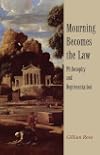
This collection of posthumously published lectures by the brilliant scholar Gillian Rose examines the political and philosophical paradoxes which emerge in the separation of metaphysics from ethics. Rationalism, or enlightenment reason, is long considered by many modern thinkers as the ground from which domination and oppression emerge, Nazi Germany representing the apotheosis of instrumental reason through the systematized murder of millions (see review on Negative Dialectics). In response, post-modernism seeks to "renunciate" reason, truth and self-identity, emphasizing fragmentation and cultural pluralism. It problematizes the notion of representation (political as well as artistic) and the status of a singular, free-thinking subject whose (self) knowledge affords it power and therefore the ability to dominate and control. Rose argues that post-modernism's insistence on plurality, fragmentation, and the 'ineffable' as well as any attempt to re-establish a "new ethics" (dependent on a substitution of the 'other' for the 'self', as in the case of Emmanuel Levinas) thwarts the possibility of an informed politics as well as any notion of 'community'. What post-modernism's anti-foundationalist stance prevents us from understanding are the mechanisms which give rise to regimes of domination, power, and authority in the first place. In no longer recognizing universals in the sphere of politics, philosophy, and art, we become blind to seeing those things which have the show more potential to control, deceive, and mislead our understanding of the world and ourselves. To me, there really isn't such a concept as 'post-modernity'(comment if you like and bring it), and even if it did exist, riddled with paradoxes, aporias, and logical impasses, it always made me feel ill at ease precisely because of this question of ethics and the de-enstatement of the subject. Post-modernity was simply an "odd logic" of modernity. That said, I liked Rose's definition of post-modernism as 'despairing rationalism without reason'. Post-Kant, post-Hegel, even post-Heidegger, she means to "reinvigorate" reason so as to envision an ethics not grounded in metaphysical "truth" or a shaky ontology, but politics and theology. She calls this revisioning the "Third City" between Athens (reason, power, the State) and Jerusalem (ethics) in the clearest, most engaging chapter in the book "Athens and Jerusalem: A Tale of Three Cities". This re-assessment of reason she calls "mourning" (following somewhat from Derrida) using a painting by Poussin and the Tragedy of Antigone as artistic representations. She discusses the painting in depth in chapter one (it's the cover of the book, too), which made me feel confident that I could understand what she would develop in the following chapters. "Mourning" is not accepting or resigning oneself to the authority of the state or any locus of power, nor is it compromising the status of a metaphysical subject for an elusive, often abysmal, ontological Being. it is something else altogether, something committed to a political activity which re-posits and re-assesses itself as an on-going dialogue. Gillian Rose was a rare and remarkable intellect who died far too young from cancer several years ago. This slim volume of 150 pages or so is dense reading for the most part, but as a series of lectures, there are many lucid passages expressed in an even, pedagogical tone. If I could describe Rose's scholarship in two words, they would be 'thorough' and 'enlightening'. Mourning Becomes the Law is not for everyone, just like this confusing review isn't. Thanks for reading, by the way. I admired the depth of Rose's thinking as well as her efforts to divulge the sometimes overlooked problems inherent in postmodern thought. What inspired me most was her commitment to the importance of political activity and the subject's role in furthering politics for the "general good", and not simply for individual, and often divisive, self-interests. show less
This book has a funny title, but it is actually quite good. It was written by respected literary critic Terry Eagleton, whose lucid writing style is always entertaining and informative. At only 100 pages, it's a rather slim volume, but it manages to cover a lot of ground, discussing heavyweights like Nietzsche, Wittgenstein, Beckett, and the king of doom, Schopenhauer.I underlined this passage, which seems to summarize Eagleton's conclusion. I agree with what he says: "The meaning of life is less a proposition than a practice. It is not an esoteric truth, but a certain form of life. As such, it can only really be known in the living...The meaning of life is not a solution to the problem, but a matter of living in a certain way. It is not metaphysical, but ethical. It is not something separate for life, but makes it worth living..."And this is my favorite part of the book: "Eternity lies not in a grain of sand but in a glass of water. The cosmos revolves on comforting the sick. When you act in this way, you are sharing in the love which built the stars. To live in this way is not just to have life, but to have it in abundance."When I was a really naive student in college, I was often frustrated with philosophy, particularly metaphysics, not only because it was so hard, but because it always seemed to find itself at an impasse--desolate, subject-centered, cold. Kant was right to call it strewn with "wreckage" even as he tried to salvage it in his own form of reason. But show more when Eagleton says that the meaning of life is more ethical than metaphysical, he addresses the "problem of existence" with a kind of warmth and humility. In ethics, we can talk of love, of practice and not just theory, of the 'other', of the imperative to live and not only to think. show less
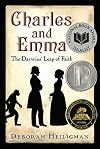
A really interesting biography and one I read relatively quickly. I have been reading a few books on Darwin lately (and started his autobiography a while ago), so one devoted to his relationship with his religious and brilliant, open-minded wife was fascinating and moving. The conflict between evolution and creation has never been a personal one for me, as I believe that each reside on two different epistemological universes. But it is evident that since the publication of On the Origin of Species, the world would forever be shaped by its profound questioning of intelligent design and Biblical doxa.Emma Darwin was extremely well-read, lively, and supportive of her husband's lifelong dedication to the study of natural history. And he, in turn, always gave his manuscripts to her first. She then edited his work for clarity and diction, even proofreading for his atrocious uses of commas. Reading On the Origin of Species and watching God slowly recede from Darwin's life was a source of anguish for her. But her love for him and her pride in his work was so very central to her existence. The biography includes letters and short diary entries written by the both of them. Their relationship was extraordinary.
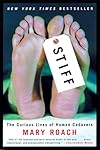
I really enjoyed this book. It's smartly written, funny, poignant, bizarre, sincere, and just plain interesting. I can't remember the last time I read something so random yet fascinating. You visit funeral homes, anatomy labs, crash test sites, forensics fields for the study of decomposition, 17th-century graveyards, a crematorium in rural China, and the scaffolds of la guillotine. Macabre by virtue of the subject, yes, but never silly or glib. I highly recommend this book and look forward to reading her one
Lanier has been around a while, so what he has to say about UNIX and asynchronous time, the shaping of consciousness and "cybernetic totalism", and the early stuff of codes and commands, are pretty interesting. But he likes to pick on Wikipedia and MIDI too often and in fairly superficial ways (not that I would stand to defend either). The redundancy only goes to show that I think he is best at being the experienced computer scientist and not the half-baked musicologist, sociologist, or cultural critic. And he's a terrible philosopher, despite his humanist bent and good intentions. I enjoyed the beginning, where Lanier flies as the informed and thoughtful historian. But 3/4 of the way, his points become horribly oblique and just plain weird in that Wired magazine kind of way (just examine the headings). I wanted to like this book, but the end just fell apart for me.

I like dystopian novels, but I found this one to be only average. It was difficult to not compare it to The Handmaid's Tale, which is far superior a work. In this world, people 50 years and older and childless are placed in a government-sanctioned unit, where they are known as "dispensables". There, they become human guinea pigs, their bodies used for scientific research, or otherwise serve as living donors, offering their organs for transplantation to more valuable members of society. Like most dystopian novels, the protagonist provides the all-important outside-looking-in-while-being-in perspective. In situations where the protagonist is also the narrator, we depend on him or her to offer insight into this world, hopefully with irony, keen observation, and intelligence. I did not see these qualities in Dorrit Weger, the narrator of this novel. That's a major reason why I did not like this book as much as I would have liked. I found her dull and overtly passive. I detected no sense of defiance or resistance in her voice, and so no one seemed to speak against the injustice or on behalf of the people who are obviously being wronged. I recommend this book to anyone who would want to read an semi-interesting dystopian novel, because the premise really is good. But because I did not find the narrator compelling, I felt that it dragged in the middle. The last third of the novel, however, improves because more simply happens. The language is simple and has its moments, but show more overall, a disappointment. show less
Deserving of the Pulitzer Prize this year? Maybe, but hell, what do I know? I think the writing is beautiful, but the structure was somewhat confusing. It moves from sequential narrative to stream-of-consciousness dream segments to over-extended imagery which must symbolize something (I am not sure what and probably need to go back). However, it's very interesting that the story about the final hours of a clock maker is largely non-chronological, making use of the above as well as flashback and flash-forward techniques. I read this book relatively quickly and am certain that I did not give it the kind of attention it deserves. Still, Harding is a talented writer who knows how to capture a moment with both poetry and grace.
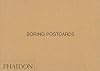
One person's boring could be another person's sublime. While I wouldn't quite use the word 'sublime' to describe the images in this book, there is something oddly fascinating, even moving, about the images here. Boring Postcards Usa is a very kitschy collection of postcards of various "ordinary" locations throughout the united states: dolled-up motel rooms, middle-of-no-where diners, highway turnpikes, department stores, airport terminals, trailer parks, and old-folks' homes. Include in the eclectic mix bank buildings, army barracks, gas stations and downtown, old-town main street intersections. The strangest postcard (to me, at least) is of a set of mechanical gears, the caption reading: "PIC features a complete line of spring-loaded, anti-backlash spur gears, worm wheels and miter-gear sets" with said objects lovingly displayed on a garish avocado green counter-top like a set of jewels.the images themselves are represented in a 1950's technicolor, a dim red having one foot still in black and white and so not looking quite that red yet, or the opposite effect, that is, a hyper-red that's almost cartoonish, as if to say, "look, we've got color now". In any case, the technicolor images are clearly of a 1950's America (there are no specific captions and no art commentary beneath the images) and in many ways reflect an upbeat post-war optimism, as one critic put it, a pride in what most would consider banal today but back then a triumph of consumer culture and economic show more prosperity. To look at this collection is a real exercise in perspective, not merely artistic but historical. Back then Woolworth's new department store in Hibbing, Minnesota was indeed a site to behold, as was Dam #15 on the Mississippi. And machine gears were the pride of PCI. This is one of my favorite "art books" because it's funny, for one, but moving and sad, too, like the postcards of gas stations that look forlorn despite their eager readiness to fill cars fresh from a then prosperous and productive Oldsmobile Plant three in Lansing, michigan (also a postcard). It's an exploration and, well, a celebration, I'd say, of American life that was happy and proud and hopeful. It also reminds me that there's a kind of poetry in everything, a lyricism that would easily be overshadowed by mere functionality and use-value. Instead, this celebration of the banal underscores the fact that behind every bank building facade and tidy motel room bed were real people who created something, not a work of art per se nor even a silly diversion, but a work worthy of recognition for what it symbolized and what it meant to everyday folks of a less complicated time. show less
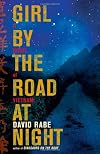
The Girl by the Road at Night by David Rabe is not a war novel. Instead, Rabe subtitles it "a novel about Vietnam”. This is true, since there are no scenes of combat described anywhere, at least not directly. It is a story about two individuals whose lives are directly impacted by the Vietnam War, trying to find refuge in human companionship. In principle, this is another casualties of war scenario, but Rabe creates something dark and beautiful through his use of prose and the rendering of his characters. His protagonists find each other really without looking for anything beyond a quick buck and a cheap lay, yet somehow immediately identify in each other the apparent loneliness which follows loss--of family, love, and innocence.The novel begins almost comically, with Private Joe Whitaker wandering aimlessly around an anti-war demonstration in Washington, DC drunk and in search of meaningless sex as a last hurrah. Recently drafted, he doesn’t quite see the devastation of the war just yet. The opening chapter serves as a characterization of Private Whitaker, and the reader won’t see anything exceptional about this would-be soldier. We know that he feels strongly about a failed relationship and therefore, is capable of feeling something beyond lust. But he is introduced to the reader as young and superficial with regard to satisfying his own base needs. With this, however, his subtle transformation becomes all the more apparent as the novel moves along, particularly show more once he arrives in Vietnam and begins his days as a jeep mechanic, and eventually, when he meets Quach Ngoc Lan.Lan is a young, slight-figured Vietnamese woman whose father is dead and whose other family members are dispersed throughout the country. She works as a prostitute cutting deals with American GIs who get "boucoup" sex and their jeeps washed at the local car wash owned by the village brothel--a kind of full-service whorehouse. The tone shifts from the surreally comic to the more melancholy when the reader is introduced to Lan, who still dreams of a childhood lost and who goes about her life with quiet, even tragic resignation. What Rabe does brilliantly at the beginning and throughout the novel is evoke emotion and sympathy in the reader without being sentimental. He does this through prose that is both lyrical and matter-of-fact, describing serene landscapes and squalid interiors, allowing setting to reflect the interactions between, and the quiet despair within, his lonely characters: “She prowls the room, the dirt-stained tile of the floor. A gecko starts and stops. Her feet are small in her worn-out slippers, and reaching the front doorway, her eyes seek into the night, the road before her thudding with a huge green truck caked with wrinkled dust, loaded with crates. The sink and surge of the pavement comes through the earth to her feet.”Whitaker is surprised by the youth and prettiness of Lan, and even more so when she expresses interest in having him as one of her customers. Never forgetting that she is only a prostitute and nothing more, he will still feel something completely unexpected in her presence, which Rabe describes perfectly in the scene of their first encounter: “Whitaker, with Lan, who has come to stand beside him wearing white cotton pajamas, her long thick hair hanging loose, feels his prick stir and lust mixes with a funny fear and loneliness he does not understand. The silence, comprehensive as sleep, is strange, as if he has never heard a rural night before.” Not quite love but more than lust, Whitaker can hardly make sense of his thoughts and feelings, and it is precisely through this confusion that the reader sees that he has moved beyond what he was at the beginning. His “funny fear and loneliness” makes him more human, more soul than body, even though it is his search for carnal pleasures which brings him to this momentary realization of the senselessness of war and the contingency of loss: “Maybe now...he will be able to find himself, he thinks, somehow locating the lost part of himself that he knows is in there.”But to hope for Whitaker’s transformation to be genuine would be asking too much in the context of war, which tears away at human decency and human dignity. When Whitaker seeks Lan a second time, he finds her getting punched in the face by another GI--yet stands there and does nothing. Later feeling guilty for not having interceded, he perform a heroic act by saving her from two hostile Vietnamese soldiers. The scene is hardly described as a grand, benevolent gesture, though the reader is appeased to know that sympathy still exists. In the end, however, heroism, love, and friendship--what was once familiar seems tenuous, senseless and haphazard. These things have their moments, but the war pollutes them and robs them of their familiar goodness and meaning.The end of the novel, like the chance encounter between Lan and Whitaker, illustrates this randomness of life painfully and succinctly. It will disappoint readers who will perhaps wish to forget that life and death and love are all really a matter of chance. The language of The Girl by the Road at Night is poetic and moving, but the intent is not to romanticize war nor to obscure the brute ugliness it. Words are infused with the weight of tragedy and despair from page to page. The characters do what they can in a universe which is cruelly indifferent to the fate of all, an indifference only worsened by the ignorance and chaos which characterized this war for so many. show less

I found this work extremely informative, stimulating, and moving. Though it is 600 pages, I felt like it moved rather quickly. if there is any single book to read about the Vietnam war, this is it. It is one of the best non-fiction works I have ever read--and I've read quite a few.
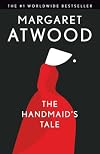
The Handmaid’s Tale by Margaret Atwood presents a horrifying tale of feminism taken to the extreme in the not-so-distant future. The protagonist narrator is Offred, whose real name we never truly learn, a young woman who dictates orally her life story as a handmaid in the Republic of Gilead. In the household of the Commander, Offred is to bear a child for his wife Serena Joy, a cold, bitter middle-aged woman who has, in her own way, become a prisoner of the socio-political reality of this patriarchal totalitarian regime like Offred. The novel is filled with irony from page to page, as all powerful political satires are, in pointing out to the reader how ideology can quickly turn on those who advocate an extreme point of view, represented here as a theocratic totalitarian regime which claims to have rid Western society from the demeaning objectification of woman. Interestingly enough, the “freedom from” this objectification of women as sex objects only reinforces a paralyzing sexism all its own, in which female domesticity becomes the radical norm and young fertile women are reduced to vessels of the State. In the context of this society is the voice of Offred, whose compelling narrative expresses a hunger for the truth, namely, the whereabouts of a daughter who was taken from her years before, and a condemnation of the political and religious hypocrisy imbedded in this world. Offred's voice, however, remains personal as it inadvertently becomes political. In a world show more in which the personal has essentially become the political and vice versa, where womanhood and motherhood are strictly defined by the State, every personal observation made by Offred becomes a powerful political act in itself. Her voice is a voice of quiet defiance, for she can hardly "take down the system" on her own. At times impudent, often wry and sarcastic, but always smart, Offred transposes the tightly woven fabric of this society with the remnants of her past, with anecdotes that are sometimes opaque, sometimes transparent, and often fragmentary. She asserts her presence in a world of sameness, where her individuality could quite easily recede in the background. Instead, her voice comes through, like the knowing smile which bleeds through the bag covering the head of a victim of the Wall. Offred’s heroism just might not be heroic enough for some readers, who may not see the social worth of her subtle acts of transgression. Still, those stolen moments are her moments to covet and our moments to savor, and whether we should ask more from Offred becomes almost insignificant. She simply does what she can, knowing that the worth of such quiet defiance is much more valuable, albeit only to her, than a complete and impotent silence. In this respect, her story will inspire us just as much as the description of her present world may horrify and unsettle us. In Gilead, where power manifests through a violence that is sometimes veiled with a seemingly innocuous biblical truth, this is the handmaid's tale, which attempts to over-write what has been deemed, by virtue of a self-destructive "freedom from," an allegedly eternal truth derived from scripture. show less
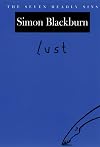
I think I like Lust much more than Pride, although the former seems to be loaded with these glib philosophical turds and whatnot (which I like, by the way). Still, I like Blackburn, especially when he's not singin' too much David Hume and that appears to be the case here.
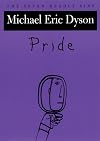
A promising start but disappointing. To be truthful, I'm not sure how this book is about pride. I anticipated a theological or philosophical discussion of some kind; I ended up with social commentary on white pride (bad) and black pride (good) for about 75% of the book. The consideration of what constitutes pride in each case I found to be accusatory and superficial. While this is truly not your Pope Gregory's pride, bring the discussion back to something remotely universal, if one can even speak of universals anymore (as anything other than guises of oppression). But call me naive. It ends with a shallowness that perhaps aims to bring shame to white folks for the sins of pride as the instigator of social injustice and racism. It's a shame that this book could not move beyond that.
These words seem to encapsulate what Weil means by "grace": "May the eternal life give, not a reason for living and working, but a sense of completeness which makes the search for any such reason unnecessary." (222) This complex work focuses its exploration on gravity (search and striving, delusions of faith, attachments to things seen and unseen, the weight of existence) which is fundamentally what it means to be human. It requires a sustained reading because in addition to being philosophical, its theology is largely meditative, almost intuitive. And so I'll have to read it again when I won't have to stop in the middle of things so frequently. Weil's prose is very controlled, elusive, and sometimes completely obscure (I have not read the original French)-- and for those very reasons, I was drawn to it. She articulates the sanctity of the divine, and this requires a language which follows the very practice Weil advocates over and over--a humility before the absolute, the human striving towards nothingness. It is wise without being preachy. It is a book which will require another reading when there are fewer distractions in my life and more mental space to reflect upon it.
The Seven Deadly Sins Set: Consisting of Greed, Gluttony, Envy, Lust, Sloth, Anger, and Pride by Phyllis A. Tickle

Phyllis Tickle. I wonder if she has a doctorate. Then she would be Dr. Tickle. Professor Tickle. Not gonna buy this set put out by Oxford University Press--separately only. Look at all the colors! I have three sins on my shelf right now. Just three. *Grin*
The proud King Lear disowns his most dutiful daughter and is consequently betrayed by his other two. A bastard son betrays both his brother and father out of jealousy and malice. I think it is the saddest of his tragedies, and it moves very quickly to me (though not as quickly as Macbeth). It is also really one of the most profound expressions of human suffering ever written in the English language. The play sees deeply into the soul, and so I would often linger a bit on a line or speech with a quiet awe. The actions pierce its characters with a sad, penetrating irony. The eyes will eventually see in their blindness. The heart bleeds and the storm rages. It is depressing, yes. But in all, as depraved as its villains are, I also read in King Lear what is very beautiful about humanity and kinship, however frail it may appear teetering on the edge of a cliff: compassion, loyalty, charity, and mercy.
As a former student of Arendt, Young-Bruehl writes in a tone that is deeply reverent but likewise stern and academic. That said, this work provides an accessible introduction to Arendt's work with an overview of her best-known works. Her discussion of The Human Condition made me want to read it again, while the one on Origins of Totalitarianism reminded me of why I could barely get through for its dense and thorough scholarship. The last section of Young-Bruehl's work on the unfinished The Life of the Mind, described as something of a follow-up to The Human Condition and a "dialogue" between Kant, Socrates, and St. Augustine, inspired me to pick it up, however intellectually intimidating. But the nice surprise about Arendt is her remarkable ability to take so much of the western philosophical tradition and be lucid about it. Such skill can only come from someone who seems to have read just about everything and who really understands what is being said, what is not being said, and most importantly, what could be said, about many ideas.
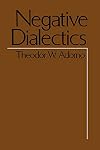
This hard-as-hell philosophical work is a meta-critique of Kant and Hegel. Hegel explains in the Phenomenology of Spirit and throughout his body of work that anything that is real can be said or expressed in some way. Anything that is beyond the scope of logos, or reason, is therefore a non-entity. Adorno has problems with enlightenment reason in this form--it has taken instrumental and oppressive forms in modern history, particularly in the 20th century. He critiques here and elsewhere the basic tenets of the enlightenment project, that reason can achieve identity between subject and object, that words can express anything that is real, that the real is only that which can be expressed, that nothing is beyond the scope of reason so long as someone can conceive it, think it, interrogate it. Adorno "opens up" Hegel and says, no, reason is and must remain indeterminate. It must maintain a status of indeterminacy by undermining its own dialectical movement towards identity, and this is what Adorno calls 'non-identical thinking'. This is a philosophy which holds that there are things in the world that are beyond the scope of reason. There are things in the world which cannot be expressed yet still exist firmly in the universe and within us. Those things are "made known" to us through human suffering. It's not the same as Kant's "thing-in-itself" which is made known ultimately through the subject. Adorno will even deny the subject such status. Radically speaking, even the show more subject must be indeterminate, incomplete, "negative". The end of Negative Dialectics reminds me of Beckett's philosophy of art which is that the creative process is driven by perpetual failure on the part of the artist to express what he means; however, the writer, the artist, the narrator, must continue to express if it is expected to survive albeit negatively : "Yet the need in thinking is what makes us think. It asks to be negated by thinking. It must disappear in thought if it is to be really satisfied; and in this negation it survives." Unfortunately, without a so-so understanding of Hegelian dialectics and Kant's metaphysics, this concept of non-identity would be impossible to understand. Adorno is not trying to negate (as in do away with) a philosophical tradition that essentially began flexing its reason muscles since Descartes. He is trying to save it. In truth, my mind can barely grasp the concept of the non-indentical thinking because of the inherent aporia or logical impasse of its formulation. It might give you a headache. It's the hardest book I ever read. show less
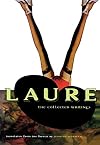
Colette (Laure) Peignot was a Parisian writer, world traveler, and revolutionary who towards the end of the her life become the lover of the philosopher of excess, George Bataille. She died at the age of 35. The romantic me did what I knew I would do when the book came in the mail, which was to jump to the end of the book to read Laure's letters to Bataille, and work my way backwards to the story of her girlhood. That's what I did.It's clear to me that Laure Peignot was a very intelligent woman. She despised the comforts of her privileged Catholic upbringing and felt a great deal of contempt for the hypocrisy and oppressive nature of its catechism. This contempt generated a confident voice which emphasized the desire for freedom, passion, and transgression. At the same time, however, there is a deep insecurity, most evident in her letters to her sister-in-law Suzanne and most poignantly to Bataille himself: "Above all I would like to tell you that it is not happiness I seek, but a latent, effective, and positive strength--I know I fool people--some think I am already very strong, assured, confident...it is not what impresses other that will satisfy me--it is what I demand of myself, and I have never attained it." Frequently, she professes her inability to express herself well (or often how poorly she expresses her ideas), which explains why she destroyed most of her writings. What remains is this small collection of letters, poems, essays, and political fragments show more annotated by friends such as Bataille and others. Bataille's recollection of Laure shortly after her death reveals that she was indeed the true love of his life. And though he was far from faithful to her, they shared a spiritual connection that was more tortured than peaceful but otherwise tender and full of meaning and significance. Bataille writes: "A being burns from being to being through the darkness, and it burns even more when love has been able to knock down the walls that imprison each person. But what can be vaster that the gap through which two beings recognize each other, escaping the vulgarity and platitude of the infinite? The one who loves is only beyond the grave (he has thus escaped the vulgarity of daily relations, but bonds that are too constricting were never shattered more than Laure--pain, terror, tears, delirium, orgy, fever, then death were the daily bread that Laure shared with me, and this bread leaves me the memory of a formidable but immense sweetness." This is a work that is humorous in its insolence, inspiring in its passion and defiance, and heart-breaking in its expressions of love and in Laure's struggle to speak her mind with the truth of her whole soul. Artistically speaking, it is an uneven, sporadic collection of writings. But it is an interesting exposition of one woman's intense awareness of her surroundings and her politics, as well as her longing desire to be rid of a life that generated as much alienation and existential pain as it did ecstasy and love. show less
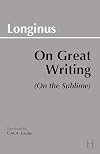
It surprises me that Longinus is not as well as known as I think he should be, given the influence of his ideas. I'll say this, though: anyone who cares about putting words together in order to express something of him or herself to the world should read On the Sublime. "Longinus" (the identity of the man who wrote this collection of writings has never been clearly established by scholars) was one of the earliest thinkers (around the first century AD) who saw in words their ability, given the proper composition, to transcend the human: "For by some innate power the true sublime uplifts our souls; we are filled with a proud exaltation and a sense of vaunting joy, just as though we had ourselves produced what we had heard." Though poets, dramatists, and orators should aim for this kind of excellence and grandeur, the sublime is hardly perfect in its manifestations, even among the best composers of words. He calls certain sections of Homer's Odyssey "nonsense" and criticizes Plato for getting too bogged down with metaphors. Yet he will always acknowledge with much admiration the flashes of innate brilliance of both (especially Homer's verses from the Iliad). Longinus defines "five sources of sublimity", which, in my opinion, are really five criteria for excellent writing (of any kind): great ideas, inspired passion, effective use of rhetoric, appropriate diction and figurative language, and the effective arrangement of words. I especially like what he says about the show more passions, emphasizing that strong emotions are not enough to create works of art that can elevate the human soul. Much of what Longinus says of the sublime has been redefined and redeveloped by many thinkers since then and seems almost common knowledge, even intuitive, to any conscientious artist. This rather short work is relatively easy to read (compared to the Poetics, let's say) and easy to appreciate. What he does very well is support his points with concrete examples from literature, and in that respect, Longinus is really my kind of literary critic: a close "reader" of texts and an analyzer of words for their rhetorical effects. This is one of my favorite works of literary criticism, ever. I wouldn't call this heavily theoretical at all; in fact, it is very accessible and I highly recommend it. Whenever I try to write something, poetry, I'll think about On The Sublime, even re-read it as I did this evening, and remind myself again that there is so much more to transcendence than powerful feelings. Since my academic background is rhetoric and philosophy, my understanding of writing and art follows much of what Longinus says: literature is as much about ideas and technique as it is about Romantic passion. Good literature that transcends requires a careful balance of both. show less
I, Pierre Riviere, having slaughtered my mother, my sister, and my brother: A Case of Parricide in the 19th Century by Michel Foucault
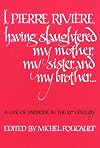
Some more light reading from Michel Foucault.
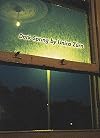
Dark Spring (1967) is described as an autobiographical coming-of-age novel by the German writer and artist Unica Zürn. It is story of a young girl’s emotionally and psychologically turbulent life between the ages of 10-12. We learn from the beginning that hers is a life of terrible parental neglect and family abuse: her father, a military officer and war veteran whom she adores and idolizes, and her mother, a cold, self-absorbed writer, ignore her without conscience . They carry on separate sexual affairs under the roof of their family home, oblivious to the curious and perplexed stares of their two young children. Her brother, who is mentally and verbally abusive, rapes her. Lonely and hurt, she then indulges in a world of sexual and masochistic fantasies, masturbating and discovering the pleasures of her own body as a means of coping with the pain of feeling unloved and insignificant. At one point in the narrative she dreams of being kidnapped by a group of “dark men” and tied to a black slab of marble, where she is subsequently gang-raped, her throat cut at the moment of sexual climax. She indulges in such fantasies throughout the work but continually acknowledges that imagined sensual pleasure does little, if anything, to fill her emotional vacancy: “She searches for something that would really complete her and she cannot find it. everything is false.”Though this slim volume of about 100 pages is considered autobiographical, the narrative is told from the show more third-person and in the present tense and not from the perspective of the more familiar “I”. The effect is two-fold: first, the narrative voice is simultaneously detached, as if the world was being viewed through the lens of camera, as well as immediate, in the way that events are described as if they were occurring in the present time. Second, the scenes of sexual (un)fulfillment, the numerous times she masturbates privately throughout the story, underscores a weird combination of naive childhood self-discovery as well as a “mature” adult sexual depravity. In one of the strangest scenes in the entire work, she describes experiencing the pleasure of a dog licking her between her legs after she wets her panties: “This gives her an idea. She goes down to the basement and over to the dog pen, where she lies down on the cement floor with her legs spread apart. The dog begins to lick between her legs. The cold only increases her sense of pleasure. Feeling the ecstasy, she arches her belly toward this patient tongue. her back hurts from the hard stone. She loves to be in pain while enduring her pleasure.” The child-like words “this gives her an idea” and the apparent lack of self-censure expresses a tone of naivete, while the last line describing pleasure and pain conveys the emotion of a woman desperate to find sexual satisfaction and emotional fulfillment. In describing a past devoid of any familial affection and intimacy using the present tense, zürn transposed the madness of her youth into the current psychological turmoil of her troubled adult life. At the same time, however, she distanced herself from "her", from the world of this twelve-year-old girl who was and was not her, who endured unspeakable pain and later ended her life at the end of the book (an event revealed in the introduction). Zürn herself had been battling bouts of depression and mental illness for ten years prior to writing the book. According to Caroline Rupprecht's introduction, she met the surrealist artist Hans Bellmer in 1953 and moved to Paris, which produced in her a terrible homesickness and a debilitating sense of isolation. She was forced to depend on bellmer completely both financially and emotionally after a certain number of years. Depressed, she was eventually treated in various mental clinics throughout France. Dark Spring is eerily prophetic in its subject matter and course of events: one year after the work was published, she committed suicide by jumping out of a sixth-story window, an event that occurs at the very end of the book and described with a strange, blissful finality: “She imagines how her body will hit the ground, and how these beautiful pajamas will be covered with blood and earth”. Zürn, who worked as a dramaturge in the advertising department of the Nazi film industry from 1933-1942, knew well enough how the world would look from a distance, how a certain vision of one's self could be constructed from fact and fiction. Dark Spring is a story that is fascinating yet moving in how it merges past, present, and future as well as dark reality and even darker fantasy. Unfortunately, the distance between the "fate" of her childhood and her adult life closed, and going back in times was as much a leap into the future as it was into the past. The work serves as a dimly-lit narrative window into a soul that struggled to uncover meaning in art, love, and the imagination, but found only tragedy and an overwhelming, all-consuming sadness in the end: “Now her room is almost dark. Only a distant street lamp glows faintly through the window." show less
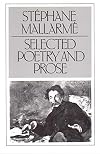
Stéphane Mallarmé is a symbolist poet whose work was greatly influenced by Baudelaire and later influential to the Surrealists (who, like Mallarme, explored the relationship of poetry to other artistic media such as painting and music) and modernists like Wallace Stevens, TS Eliot (Four Quartets, especially) and James Joyce (noticeable in Finnegan's Wake). Mallarmé's poetry is metaphysical and musical, composed syntactically as oblique "folds" and dense metaphors of negation and alchemy (Baudelaire). It's such a snob's cliche to say that his poetry should be read in the original French, but this is very true of Mallarmé. The phonemic ambiguity of his words and the inter-relationship of sound to meaning are important to really appreciating his work (and make his poems hard to translate into English). But there are good bilingual translations (like MacIntyre's, in my opinion) which capture the striking metaphors and imagery quite nicely. If anyone has read JP Sartre's book on Mallarmé provocatively titled Mallarmé, Poet of Nothingness, I would like to know about it. The book is out of print.
Herculine Barbin (Being the Recently Discovered Memoirs of a Nineteenth Century French Hermaphrodite) by Herculine Adélaîde Barbin
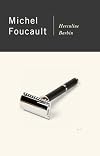
I read this five years ago but picked it up last month. In addition to being a tragic story about a hermaphrodite (designated female at birth but later reclassified as a man), it explores the power matrices (medical/scientific, legal) involved in the construction of gender identity. It sells itself as an erotic diary, but I don't believe in the accuracy of the information used, archival excavation from the French Department of Public Hygiene par Monsieur Foucault notwithstanding. Read it to be moved by a life doomed to sorrow and to be angered by "the powers that be", if nothing else.