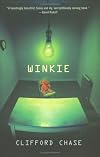
An appealing peculiar book. After all the children in his family have grown & he's been abandoned on a shelf for years, a teddy bear escapes, goes into the forest, has an offspring who is kidnapped & dies, then he is captured by law enforcement officials & put on trial as a Unabomber-style terrorist. It's uneven in style & tone, by turns tender & warm, then ridiculously satirical, taking on the paranoid style of post-9/11 law enforcement. I'm not sure how to assess the book, but I did enjoy it.
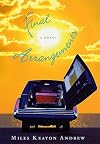
A young boy whose parents are killed in a plane crash is comforted at the funeral home. When he tells the funeral director he wants to work there, he's told to return when he's 21. He does return on his 21st birthday, is taken on as an apprentice, & adopted into the family of the family-owned & family-operated business, who quickly recognize his gift for the work. He falls in love with the director's daughter & gets involved in an effort to save the family-owned business from the evil funeral-home chain that's swallowing up the other homes in the city & region. Despite lots of sex, foul language, & graphic descriptions of disturbing techniques for preserving the dead, the general impression the book leaves is that this is a sweet, innocent, funny tale that celebrates the value of family-owned funeral homes. Ironic, I know, but true.
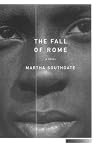
Alternating chapters are told in the voice of (1) a longtime African American teacher of classics at an elite New England prep school for boys; (2) a new English teacher at the school, recently divorced and attracted to (1), who previously taught for many years at an innter city school in Cleveland; and (3) (told in third-person for some reason) a 14-year-old African American boy from Brooklyn who enrolls at the mostly white school after his promising older brother is killed in a senseless shooting in their neighborhood. It's a very nuanced protrayal of racial issues in an intimate setting. Despite the almost trite prep school setting (something the author & her characters are aware of), it feels fresh & authentic.
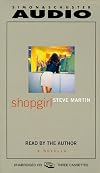
This short novella by the well-known comedian is tough for me to judge: it's a love story about people I don't know in relationships of a sort that I know nothing about. Still, it felt authentic & showed characters showing growth through their encounters with each other.
A confusing novel translated from Turkish set in the late 16th-century Ottoman Empire, I gave up after about 50 pages.
I think Kinsella phoned this one in, stringing together some baseball stories (one of which I'd read in a collection) into a larger story about an idyllic, small Iowa town that lures talented ball players with a tendency to choke to play & live where ther are no pressures. Not very challenging, but Kinsella's baseball stories are always entertaining for a baseball fan, much like a Paul Bunyan tall tale.
This book has some of the same evocative writing that marked Ahab's Wife, one of my all-time favorite books, though my sense here is that she crosses the line to being self-conscious about technique. It's also hard in the first third of the book to keep track of the multitude of characters she introduces in very short chapters to tell the story of the struggle for racial integration in Birmingham, Alabama, in 1963-65, from multiple perspectives.
In a remarkably insightful biographical treatment of Addams's coming of age, Brown shows how Addams struggled, in the context of her relations with family & friends and of the ideas of the time, to discover how best to be useful in the world.
A spellbinding story narrated by a well-meaning monk who's often blinded by his own self-centered ambition & blind loyalty to a corrupt church whose corruption he is blind to. More heroic are the knight who goes off to fight in the Crusades to redeem his older brother who perished when his ship bound for the Crusades sunk just off the coast of Spain, and the beautiful, smart lady who awaits his return. Much of the story is told in the form of a confession by the knight to the monk as a means of exorcising the knight's demons. In that sense, it's reminiscent of Mary Doria Russell's The Sparrow, though not as rich in characters or in theological or human depth & insight.
Parry creates likable, complex characters who are open enough to learn from people they have been acculturated to dismiss as inferior. There are some interesting observations about religion, too, as when a young runaway slave explains to the main character, a pious (though not extreme) Methodist, "how com Jesus was a Negro" (236-39).
A science fiction piece reminiscent of Michael Crichton, though less intense as a thriller, but with the same kind of smart, heroic but flawed characters who confront the destructive power of science. It's billed as a story about the conflict between science & faith, & the incident that initiates the devastating plague at the center of the story is a byproduct of a search for the historical (physical) Jesus, but that's pretty incidental; the heart of the story is less about a conflict between science & faith than about a struggle to maintain the human soul at the heart of scientific research rather than allowing the scientific goal, however crucial, to justify any means to attain it. It took almost half the book to set up the story,
I read this in 2 days. It's one of the most beautifully written books I've read in a while, a dark story of a runaway slave and the white man who's tracking him for distinctive reasons that are revealed through hints gradually throughout the book.
Something about Trotsky & Frida Kahlo in Mexico in 1940, but I couldn't make much sense of it by page 50, so I gave up.
Peopled by a set of wonderful characters: a married couple--he, a garbage man; she, a political science professor at a university in an Illinois college town; their 20-year-old daughter & her 6-year-old son; the wife's eccentric elderly father (the "century's son"), who claims to have lived the entire 20th century & witnessed many of its key events, including an opportunity to assassinate Stalin; and a number of other richly portrayed lesser characters. The couple's son, then 12, committed suicide years earlier, and the marriage has suffered since. It seems like a sad, uneventful story, but it's one of those fundamentally life-affirming stories because of the wonderful characters & the very keenly observed domestic details, which made me smile in recognition. The intimate details include 4 brief but brilliant passages from the perspective of the family's aging, suffering dog. A brilliant book.
Given how imaginative & entertaining Codrescu usually is on NPR, I expected more from this book. The premise is that Casanova is an old man living as a librarian on an estate in Bohemia & recalling his past adventures to a beautiful young servant who is repeatedly aroused, intellectually as well as sexually, by his stories. There's lots of sex & lots of name dropping, but it doesn't have a lot else going for it.
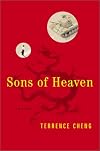
A novel inspired by the young Chinese man who faced down a tank during the Tiananmen Square Massacre in 1989. The story is told from the widely varying perspectives of that imagined character, his brother (a soldier in the People's Army who is particularly ruthless in dealing with the dissidents), and Deng Xiaoping, the reformist ruler who, at age 85, ordered the crackdown. Only the dissident's chapters, however, are told in first person. The story is interesting, but not, somehow, as moving as it seems like it should be, perhaps because the prose is pretty pedestrian; and, having read a number of other novels--good ones--in recent years set in Communist China, this somehow did not feel authentic, though I can't pin down why.
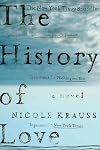
The primary narrator--an old Holocaust survivor who wrote a book based on his love for a girl he fell in love with at age 10--& his story are appealing, but the side stories are confusing, especially because of the garbled chronology, though they do all come together at the end in a fairly effective way.
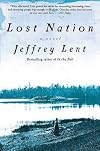
Set in 1838-39 on the frontier between New England & Canada, this novel's two main characters--a man in his late 40s (I think) who's running from his past, & the 15-year-old girl he purchases from a bordello--are immensely interesting. Both have to learn to trust, & both are amazingly perceptive in their relations with others (a source of their lack of trust). It's a real page-turner, a sometimes violent "Western" (though set on the Eastern frontier), at the same time as it's an insightful character study.
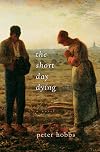
This novel in set in rural England in 1870. The narrator & main character is a 27-year-old apprentice blacksmith & lay Methodist preacher. In short chapters that read very much like weekly journal entries, with regularized spelling but irregular punctuation & run-on sentences, he recounts his spiritual & material struggles over the course of that one year. His faith is inspired by the faith of a suffering young dying woman he visits regularly, but when she dies he himself suffers a "darkness" that he cannot shake. It is a story of longing for a simpler past and both a long and a fear for the future--a longing for a future he seems to have only a dim hope of attaining and a fear that he will be alone in his darkness. From my knowledge of religious history (including a reading of some journals of early 19th-century Methodist preachers), this all appears very authentic historically--a remarkable achievement especially in capturing a past age of faith (and doubt)--but it also seems to speak to the contemporary experience of twenty-something college grads (like 2 of my daughters) who have not yet quite mapped out their future. It also spoke to my current spiritual crisis, though not in a particularly hopeful way. 3All in all, a very remarkable book, though I should add that I admired it more than I liked it.
Set at a school on a farm in Namibia, this novel seemed pointless, so I gave up on it.
A slight but amusing Christmas story in Moore's inimitable style.
A unique take on human relationships & memories of those relationships. It's an apocaplyptic novel of sorts, but kinder & gentler than any such novel I've ever read. In alternating chapters, the author writes, in spare prose, of a woman, possibly the last human survivor on earth, and her struggles to survive the harsh realities in Antarctica while remembering her past. the other chapters focus on a diverse set of people who have died & now live in some alternative world, one they hypothesize is populated solely by people who are still remembered by some living person on earth. It's an intriguing promise, but it's a good thing it's a short book, because with not much of a plot & not much character development, it doesn't really go anywhere. Still, the fine writing & keen sense of observation make it worthwhile.
After seeing a beloved, enlightened aunt burned at the stake as a witch at the instigation of her own father, the protagonist devotes her life to developing a rational proof that witches cannot exist. Through a series of adventures probably equally implausible as those in The Historian, but made more plausible by the author, she is captured by New England Indians & lives among them, bearing a daughter who dies in an epidemic, then returns to white society & becomes Benjamin Franklin's lover; returning from England, they are stranded for years on a deserted island (except for the colony of escaped slaves they come upon after several years); there she bears Franklin's son, whom upon return to society once again she leaves to Franklin to rear as she continues her research. She herself is eventually brought to trial by her brother (but at her own intentional instigation) as a witch, thinking she can thus disprove the existence of witches. But she is convicted & condemned to hang, but is saved by Franklin & his colleagues & goes into exile among the Indians she lived with earlier, eventually returning to white society one more time. Through all of these adventures, the author has lots to say about religion (mostly negative) & reason. Oh, and there's a unique narrative strategy: having the story told by a book--Newton's Mathematica Principia. It starts out highly entertaining but can't really be sustained. But the author's voice is a compelling one show more nonetheless. show less
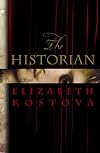
This proved to be a big disappointment. It's been a huge bestseller, & reviews always mention the huge advance it got & often say it's brilliantly structured. But I found everything about it implausible, including the narrative strategy: the father, for example, starts out telling his daughter the story in itermittent conversation in which he relates from letters verbatim. Everywhere he goes he just happens to unexpectedly encounter others who, like him, is doing research on Dracula. They repeatedly turn up bits of information that are presented as breakthroughs but never really seem to contribute to the goal of his search--to find his missing dissertation adviser. And despite a multiplicity of voices, every voice sounds the same. And even though all of the characters are supposedly smart & wise, there's remarkably little substance to the book besides the lame plot devoted to finding & destroying Dracula. The author even has to repeatedly tell us when to feel horror rather than sense it organically.
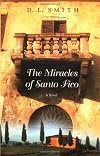
A delightful book, set in a remote Italian village, reminiscent of Simple Prayers, by Michael Golding, who provided a blurb for this one. As in The Miracle, a priest doubts that God loves him. Villagers themselves in need of redemption from lives of deception and desperation make elaborate plans to create a miracle, all of which go awry in amusing ways. In the end, redemption comes in the form of the simplest and most profound of miracles--love and forgiveness and the care of neighbor for neighbor. Wonderful characters & a delightful story made me forgive occasional over-the-top pathos.
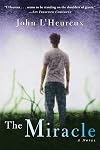
A wonderful story of a young Catholic priest struggling with his vocation, looking for a miracle to confirm that God loves him, but learning to find miracles in everyday life.
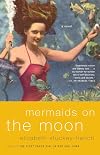
A 38-year-old divorcee from Indiana goes to Florida to resolve the mystery of her mother's disappearance after she leaves her father. Not surprisingly, she learns a lot about herself, too, as she cares for the troubled 5-year-old nephew her mother has left behind a gets to know her mother's friends, with whom she performs in an underwater mermaid act. There's little suspense, & lots of touches designed to be cute aren't really very. All in all, a pretty disappointing book.
The cover made it sound like a wonderfully goofy story, but in fact it's a pretty conventional--and largely disappointing--domestic drama. The characters--particularly the divorced mother, her 13-year-old daughter, and her farmhand (a Thomas Jefferson reenactor)--are appealing, but she puts them in some awkwardly drawn settings, and I didn't understand the function of the secondary story about the birth of 11 babies to a neighbor of the main characters.
Publishers Weekly picked this as one of the best books of 2003. I can see why some would see it as a work of genius, but it didn't really connect for me. The main character is a very early Russian filmmaker who sees the propaganda potential of film & is recruited by Stalin for the Russian Communists' propaganda machine (the Commissariat of Enlightenment). There are really only 4 long scenes in the book: the death of Tolstoy in 1910; an incident in 1917 amid the brutal struggle between the Red & White armies when the filmmaker meets his comeuppance at a monastery; the filming in 1919 of a reenactment of a key revolutionary battle; and Lenin's death in 1924. The theme throughoutis the preservation of a particular version of a hero's vision, with explicit references to Christ & Christianity. The first section seemed particularly slow to me, but there are some ingenious bits, including a final stream-of-consciousness chapter narrated by the embalmed Lenin, who reflects from his tomb on developments in the Soviet Union from his death until Gorbachev's rule & the fall of Communism.