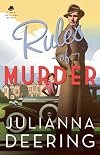
I found the pacing a bit slow, particularly in the beginning. Some of the dialogue felt a bit unrealistic and out of keeping with the time period in which the story was supposed to be set. There were a few twists at the end, I just wish the author had spent more time developing the mystery and less time with the romance. Georgette Heyer seemed to be able to have her "little romance" without it detracting too much from the mystery. Pity, Ms Deering couldn't pull off the same in this book. The religious stuff was slightly annoying too. The idea of playing with Ronald Knox's rules for detective fiction, was cute.
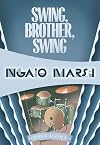
The beginning was too long and the ending too abrupt. And, considering how long it took for the thing-you-knew-was-going-to-happen to happen, the characters were one dimensional.
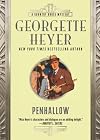
Not much happens until about twelve chapters in so the first half of the book is fairly hard going. Interesting and unusual ending. Actions have consequences, but perhaps not what was expected. I just wish there had been at least one likeable character and a little less “blah blah blah” in the beginning.
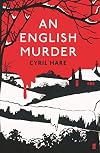
Clever use of historical trivia but the solution doesn’t quite add up.
This fun new Jeeves and Wooster book by Ben Schott provides an enjoyable read. The writing is not quite as 'tight' as that of Wodehouse, and some passages feel a bit heavy with explanations which the master probably would have left out. Wodehouse was simply clever, but Schott can't resist letting readers know how clever he is through his footnotes.
There are some very amusing scenes in this book. The dinner at Brinkley Court with the Travers is particularly amusing. However, the plot threads are less tightly interwoven than they usually would be in a J&W tale. Some scenes appear to hang on their own and could have been left out altogether.
Schott has made clever use of Spode and the 'Blackshirts' with a subtle 'wink' to modern readers. Ideas such as keeping "Britain for the British" and making things "Great Again" are surprising familiar.
There are some very amusing scenes in this book. The dinner at Brinkley Court with the Travers is particularly amusing. However, the plot threads are less tightly interwoven than they usually would be in a J&W tale. Some scenes appear to hang on their own and could have been left out altogether.
Schott has made clever use of Spode and the 'Blackshirts' with a subtle 'wink' to modern readers. Ideas such as keeping "Britain for the British" and making things "Great Again" are surprising familiar.
A beautiful heiress, a reluctant guardian, cock-fights, duels of honour, carriage races, well-dressed dandies, poison, kidnapping and (of course) a couple of marriage engagements. What else could you want? An entertaining read. Younger brother Perry offers comedic relief throughout the book. There is, however, one uncomfortable scene (a la "metoo") near the beginning of the book that doesn't look too good to modern eyes.
I found this one to be a bit tedious. Obvious solution, over done accents, under done characters, irrelevant homophobia. Marsh’s strength is in description of setting and scene. Very vivid. On to the next one in the series. Fingers crossed.
The same light and entertaining word play and silliness Wodehouse fans expect and love. I did think this one was a bit too easy for Jeeves to solve in the end. Uncle Percy seemed a bit too easy to manipulate. I also think that for modern readers, the idea of grown men congratulating each other for kicking a child is a bit “off” (of course the book was written over thirty years ago). Still good fun, overall.
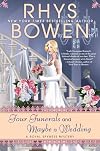
This Royal Spyness mystery takes a fair while to get going. We could have done without some of the padding at the start such as the trip to Ascot and the tired old drama of Georgie's insecurities. Mystery was fairly obvious and could have had a few more twists. Still a light read with a few amusements. Good to see some developments with the characters.
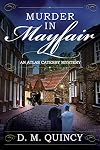
A good mystery with a few twists. Characters did not act or speak in a way to match the supposed time period. "Kick the bucket", "shagging" etc. This was a bit of a distraction throughout.
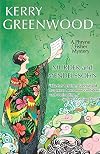
Greenwood seems to have completely lost the plot with this one in places, and it really seems she has grown tired of writing mysteries at all, and Phryne seems to have grown tired of solving them. No wonder this is the last of the series, and quite a disappointing end.
Jeeves in the Offing: (Jeeves & Wooster) by P.G. Wodehouse (7-Aug-2008) Paperback by P. G. Wodehouse
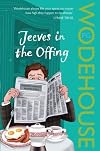
A jolly and amusing read, as always, but this one does seem to lack some indescribable something, which is found in other Jeeves & Wooster books.
Lovely, light-hearted fun. Bertie is such a charming narrator: always clustering around his pals when they are in a bit of a rummy situation. The final chapter is narrated by Jeeves, and this for me, is the only draw back of this collection of short stories. Jeeves is revealed in this chapter to be quite a Lot more manipulative and self-serving than he appears to be in stories narrated by Wooster.
Would have to be one of the more ridiculous Miss Fisher mysteries written. Phryne's activities during the book are pretty silly, and most of the work is done by Jack and his young colleague. We see very little of Dot and the Butlers.
I kept waiting for the story to get going, but it really was just a series of different episodes. Most of the characters were fairly under-developed, and difficult to keep separate in my mind. I did envy Richard and his big extended family and their seaside mansion.
The follow up to Cocaine Blues, this one fills in a little bit more of the background and introduces readers to some more of the cast of characters who we will meet again and again. It does drag a bit in the middle with perhaps one too many seductions. The solution to the death was clever and Phryne's adventure was entertaining.
Body on a train? - tick; Family inheritance? - tick; Mistaken identities? - tick; Poison in the sleeping draught? - tick; Fraudulent wills? - tick; Ridiculous solution? - tick.
This mystery has all the expected elements of a pre-WWII British murder mystery, with the addition of a spooky cave and Roman temple. An enjoyable read.
This mystery has all the expected elements of a pre-WWII British murder mystery, with the addition of a spooky cave and Roman temple. An enjoyable read.
Fairly ridiculous and somewhat disappointing, although amusing enough if you're willing to go along with it. I wish there were a few more twists and things didn't work out so easily for the protagonist.

An amusing read, and rather cleverly done. Barron claims to be simply editing one of Austen's actual diaries and throughout the book she provides footnotes which explain concepts unfamiliar to modern readers. These little facts give the book a bit of depth and add to the amusement. The mystery, however, is rather ridiculous, and its solution a bit too easily achieved.
The diary format may explain why the book is very Austen-centric. Characters she does not like are not well developed, and are a bit stereotypical. Of course, many of us are guilty of passing these kind of judgements without though, conveniently placing people in boxes based on stereotypes.
What the book is missing is some reflection on Jane's part, where she addresses how her views of each character may or may not have changed as she delves deeper into the mystery. This type of reflection would have enhanced the reader's belief in this actually being Austen's personal diary.
The diary format may explain why the book is very Austen-centric. Characters she does not like are not well developed, and are a bit stereotypical. Of course, many of us are guilty of passing these kind of judgements without though, conveniently placing people in boxes based on stereotypes.
What the book is missing is some reflection on Jane's part, where she addresses how her views of each character may or may not have changed as she delves deeper into the mystery. This type of reflection would have enhanced the reader's belief in this actually being Austen's personal diary.

Offers evidence and a gentle approach. Authors claim to take a 'middle of the road' approach, with the goal of the baby sleeping well in their own bed by the end of their first year. Easy to understand, clearly written.
Evidence-based and gentle. Dr Chilton does not offer guilt and false promises.
A creative book, but the ending was a bit of a disappointment. Some of the worlds Theo visited were quite fun and there were some amusing scenes.
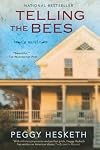
The layers are peeled away a little bit at a time, with the main character, an aging recluse revealing fragments and stories of his life growing up on a property where he learns the art of beekeeping from his father. His inability to make human connections means that the bees are his only companions as he grows older. A well written story. Some may find the lead character difficult to relate to.

This was an interesting book that weaves several decades of Irish history with the story of the childhood and young adulthood of the feisty heroine. There are a lot of characters and it was often difficult to keep them all straight. I did wonder if all of the characters and their various story lines were really necessary. The romance of the star-crossed lovers was improbable and also predictable. Overall it was charming and it gives the reader a peak into the daily lives of 19th century Ireland.
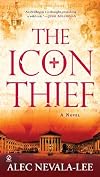
An interesting book with a few twists. Some of the historic details were a bit tedious and the dialogue often unnatural. A creative book that seems to be well researched and structured.
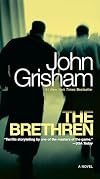
Pretty far fetched, even by Grisham standards. The actions of the CIA seem so improbable and illogical. Character developement weaker than usual.
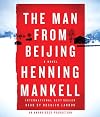
A really creative interesting story that takes place in Sweden, China, USA, and various African countries, meandering through both the present and the past. The 'main character' and narrative perspective switches around throughout the book (Swedish detective, Swedish judge, Chinese slave, Chinese business man, back to Swedish judge, Chinese political personality, back to Swedish judge, etc etc). This is perhaps a plot device, or has some grand meaning but I simply found that it made it difficult to keep focused on the story.
As others have noted, there are various strange coincidences and occurrences that are never really explained, and this is a pity.
As others have noted, there are various strange coincidences and occurrences that are never really explained, and this is a pity.

An enjoyable crime book with an interesting moral dilemma as a backdrop. Both assisted suicide and the potential cover-up of the molestation of a young boy by a priest are touched upon, while in the foreground the main character, Detective Nicholas Troy, investigates the murder of a well-to-do Sydney hospital administrator (Michael Pearson).
On the front cover of the copy that I read, it says that this is a "Nicholas Troy Mystery". I wouldn't, however, call this a 'mystery' as the murderer is fairly obvious about 1/2 way through - it certainly isn't a whodunnit type of book - just an interesting police story.
The book really could have used a good editor to clear up some of the mistakes and inconsistencies that I found annoying and distracting. Early in the book, Pearson's wife, Emily is described as a well-to-do solicitor with big-name law firm who graduated top of her class at the University of Sydney. Then, only a few paragraphs later she is described as not having very good English. I found this to be rather ridiculous and contradictory. Later in the book, a note that is described as being typed out on a computer (p. 122) is later described as being handwritten ( p.335). One character is all of a sudden referred to by the nickname "China" without any warning, leaving me having to back track to figure out what is going on. Additionally, the Emily and Charlie Pearson characters, are essentially dropped from the story line without the loose ends being tied up.
I also found show more it a bit unsettling how the author treated the indigenous characters in the book, as well as the victims of childhood molestation.
Despite the negative aspects of the book, I did find it to be an engaging plot. There were interesting concepts and moral challenges. One passage that I found particularly poignant was:
"In this war, I'm a civilian, he thought.... It was an insight into a world he'd no experience of, a place of pain and smells and anguish and death that most people didn't want to know about, let alone speak of. Exactly the kind of situation, he saw, when dark things could happen unnoticed." (p. 331) If only the whole book could have been like that, and without the errors and inconsistencies. show less
On the front cover of the copy that I read, it says that this is a "Nicholas Troy Mystery". I wouldn't, however, call this a 'mystery' as the murderer is fairly obvious about 1/2 way through - it certainly isn't a whodunnit type of book - just an interesting police story.
The book really could have used a good editor to clear up some of the mistakes and inconsistencies that I found annoying and distracting. Early in the book, Pearson's wife, Emily is described as a well-to-do solicitor with big-name law firm who graduated top of her class at the University of Sydney. Then, only a few paragraphs later she is described as not having very good English. I found this to be rather ridiculous and contradictory. Later in the book, a note that is described as being typed out on a computer (p. 122) is later described as being handwritten ( p.335). One character is all of a sudden referred to by the nickname "China" without any warning, leaving me having to back track to figure out what is going on. Additionally, the Emily and Charlie Pearson characters, are essentially dropped from the story line without the loose ends being tied up.
I also found show more it a bit unsettling how the author treated the indigenous characters in the book, as well as the victims of childhood molestation.
Despite the negative aspects of the book, I did find it to be an engaging plot. There were interesting concepts and moral challenges. One passage that I found particularly poignant was:
"In this war, I'm a civilian, he thought.... It was an insight into a world he'd no experience of, a place of pain and smells and anguish and death that most people didn't want to know about, let alone speak of. Exactly the kind of situation, he saw, when dark things could happen unnoticed." (p. 331) If only the whole book could have been like that, and without the errors and inconsistencies. show less

A thoroughly good read about two women whose paths intertwine as they seek to unravel a thousand year old mystery hidden in an ancient chess set. Catherine is a modern-day career woman, computer expert, and artist who is sent to Algeria to work for OPEC. Mirielle is a young nun whose life is turned upside down at the height of the French Revolution. Famous politicians and artists (Napolean, Fournier, Voltaire, Woodsworth) make appearances as players in this real-life chess game. While obviously highly unprobable at times, it is a fun and engaging tale.
One element that felt a bit thin was the character of Catherine, who does seem to lack a history or life prior to the start of the novel. She doesn't seem to have any family and this isn't really explained or addressed. There was no 'eureka moment' at the end when her own personal story is revealed. I think this was a lost opportunity and wish the author had been able to weave this last strand into the overarching fabric of the story.
One element that felt a bit thin was the character of Catherine, who does seem to lack a history or life prior to the start of the novel. She doesn't seem to have any family and this isn't really explained or addressed. There was no 'eureka moment' at the end when her own personal story is revealed. I think this was a lost opportunity and wish the author had been able to weave this last strand into the overarching fabric of the story.
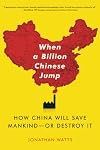
This book, which is full of detail and insight, is written in a really engagning and personal way. An enjoyable and thought-provoking read.