Doing nothing is good for us. Good for our bodies our minds and for our habitats. Paying attention to our habitats is good for our communities and teaches us to take care of one another. Kind of cerebral but the conclusion was worth my time.
Escape from Camp 14: One Man's Remarkable Odyssey from North Korea to Freedom in the West by Blaine Harden
Very interesting story. This North Korean refugee differs from others interviewed in that the young man was born and raised in a labor camp, within the authoritarian regime of the DPRK. It is not necessarily a good representation of a typical life of a North Korean citizen. It is, however, a tremendous account of how cruel and inhumane humans can be to one another. Institutional and violent detention can even drive one to turn around an inflect the same hatred and violence upon one's own family members and daily companions. Another main part of the story is the young man's adjustment to life in South Korea, and later, the United States. From a researcher's point of view, the author does a good job telling his own story of compiling this account and the difficulty of extracting story from Shin, the refugee from North Korea.
As an audiobook, it could have been done better. The reading was inconsistent, and the editing was very noticeable and distracting.
Merged review:
Very interesting story. This North Korean refugee differs from others interviewed in that the young man was born and raised in a labor camp, within the authoritarian regime of the DPRK. It is not necessarily a good representation of a typical life of a North Korean citizen. It is, however, a tremendous account of how cruel and inhumane humans can be to one another. Institutional and violent detention can even drive one to turn around an inflect the same hatred and violence upon one's own family members and show more daily companions. Another main part of the story is the young man's adjustment to life in South Korea, and later, the United States. From a researcher's point of view, the author does a good job telling his own story of compiling this account and the difficulty of extracting story from Shin, the refugee from North Korea.
As an audiobook, it could have been done better. The reading was inconsistent, and the editing was very noticeable and distracting. show less
As an audiobook, it could have been done better. The reading was inconsistent, and the editing was very noticeable and distracting.
Merged review:
Very interesting story. This North Korean refugee differs from others interviewed in that the young man was born and raised in a labor camp, within the authoritarian regime of the DPRK. It is not necessarily a good representation of a typical life of a North Korean citizen. It is, however, a tremendous account of how cruel and inhumane humans can be to one another. Institutional and violent detention can even drive one to turn around an inflect the same hatred and violence upon one's own family members and show more daily companions. Another main part of the story is the young man's adjustment to life in South Korea, and later, the United States. From a researcher's point of view, the author does a good job telling his own story of compiling this account and the difficulty of extracting story from Shin, the refugee from North Korea.
As an audiobook, it could have been done better. The reading was inconsistent, and the editing was very noticeable and distracting. show less
given all the positive reviews, i MIGHT check it out on print. but i did the audio book and it was annoying.
Katie Up and Down the Hall: The True Story of How One Dog Turned Five Neighbors into a Family by Glenn Plaskin
it's a charming story, but about a third in, i got tired of reading it. i got the premise though: dog lassos a group of new york apartment neighbors into a family. you knew that too, from the smart title.
To be honest I only made it to Page 42 before I went, "wtf am I reading??" and put it down. Apologies to all the fans and Ms Lawson, but I just don't get it. It was a bit too contrived and manic for me, or maybe my sense of humor is not normal.
I start so many books and finish so few, I was surprised to find myself posting this one. It must be Goodman’s wonderful and meandering storytelling.
This story is an excellent caution to anyone who’s ever dreamt of selling books for a living, especially used ones (Note to self: do not even think about it.) Bookselling is not for the faint to heart and those without obsessive determination. And then even the heyday has come and past.
From the epilogue:
“If the story has a villain, it is the internet. When the internet was small, booksellers fed it all their secrets. When it got big, it ate them up. This once human business is now dominated by the machines that have made it impossible for traditional secondhand stores to survive.”
This story is an excellent caution to anyone who’s ever dreamt of selling books for a living, especially used ones (Note to self: do not even think about it.) Bookselling is not for the faint to heart and those without obsessive determination. And then even the heyday has come and past.
From the epilogue:
“If the story has a villain, it is the internet. When the internet was small, booksellers fed it all their secrets. When it got big, it ate them up. This once human business is now dominated by the machines that have made it impossible for traditional secondhand stores to survive.”
Super Freakonomics: Global Cooling, Patriotic Prostitutes, and Why Suicide Bombers Should Buy Life Insurance by Steven D. Levitt
When a library patron told me he liked this volume even better than the first one, I was intrigued. I read it on the bus, and indeed, it was fascinating way to pass time. But since I'm no longer taking the bus, and therefore no longer need to pass time, I don't feel like I need to spend the time to finish this book. I'm having trouble seeing the relevancy to the big picture. It's kind of like the short stories of non-fiction, except that I like short stories.
Work Won't Love You Back: How Devotion to Our Jobs Keeps Us Exploited, Exhausted, and Alone by Sarah Jaffe
This book has many good solid examples of workers who are exploited for their love for their work, but basically the title says it all: work (and employers) doesn’t love you back. The author has good examples and narratives, and good histories of each industry, but is kind of all over the place with her main premise. I didn’t get much out of the conclusion.
My takeaways:
- It’s no question that all people should be paid adequately for their work based on their value and contributions to the employer. However, employers will use your passion or sense of calling to get away with paying you less whenever they can get away with it.
- The myth of labor-of-love is cracking under its own weight because work itself no longer works. Neoliberalism/ late-stage capitalism is counterproductive to human development and well-being of humanity.
- Autonomy (UK), 2019 report (on climate change): “... provided current levels of carbon intensity of our economies and current levels of productivity, how much work can we afford.”
My takeaways:
- It’s no question that all people should be paid adequately for their work based on their value and contributions to the employer. However, employers will use your passion or sense of calling to get away with paying you less whenever they can get away with it.
- The myth of labor-of-love is cracking under its own weight because work itself no longer works. Neoliberalism/ late-stage capitalism is counterproductive to human development and well-being of humanity.
- Autonomy (UK), 2019 report (on climate change): “... provided current levels of carbon intensity of our economies and current levels of productivity, how much work can we afford.”
I picked up this ARC at ALA 2019 and finally got around to reading it. It was alright. Not a very inventive or unexpected plot. Character development is okay (except for the cartoony main villian), but too many unnecessary backstories that disrupts the momentum. Drips with white guilt yet also white excuses. Not recommended.
A dark and whimsical love story set in Depression-era Montreal. Nice use of imagery. Plot moves quickly, making it easy to read. Character development is strong but not always logical or consistent. Graphic, violent, and abusive scenes. Will not be enjoyed by people who tend to see in black and white.
The Girl Who Circumnavigated Fairyland in a Ship of Her Own Making (Fairyland, 1) by Catherynne M. Valente
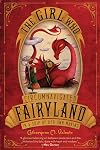
This book was about a very fine adventure. It should be read, out loud, to people of all ages, especially those who live in such interesting times as ours.
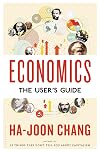
I did not read this book page-by-page, but per the author's suggestion for ten minutes and two hours (chapter titles, first page of each chapter, Chapters 1 and 2 in their entirety, Epilogue). I also stopped at random sections that caught my eye. That said, the language of this book is very approachable and friendly without being patronizing, and humorous without cheap jokes. It's a good overview of economic principles, theorists, and history, as well as summaries of existing modern systems. I came away feeling better acquainted with economic concepts. Further Reading suggestions at the end of each chapter.
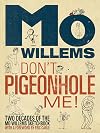
Collection of Mo Willems's annual sketchbook projects. Best one hands down is his easy reader satire "Olive Hue Show Mutts: An Intoxicatingly Hard Reader."
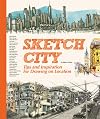
Excellent. New artists I’ve never seen before. Also never seen in an urban sketching book before: each sketch has notes about location, size, tools and materials used, and duration. This kind of annotation makes it real and gives the viewer a sense of reality of what it takes to achieve each piece. There are also notes and tips from each artist on each work.
Purchased for my five-hour flight from LAX to HNL. Purchased whilst in long lines at security. Finished this morning as my body woke to West Coast time, a wee bit earlier than I needed to be up. This is the fastest adult fiction read I've had in a long time.
The plots unfolds like it was written for a Hollywood sell. Not necessarily a bad thing. But the words, the phrasing, the verbiage will be missed should it ever become a movie. Heavy emotional situations are balanced with humor and detached point of view--ha, my kind of story.
The plots unfolds like it was written for a Hollywood sell. Not necessarily a bad thing. But the words, the phrasing, the verbiage will be missed should it ever become a movie. Heavy emotional situations are balanced with humor and detached point of view--ha, my kind of story.
i wanna ride on a Huxley! westerfeld has a brilliant imagination. he's even more brilliant to write this for ya. sneak some 20th century european history in the kids' brains when they think they're just getting a steampunk scifi adventures. i'm eagerly awaiting the next installment.
The story's kind of a cross between of Battle Royale and Scott Westerfeld's Uglies/Pretties/Specials. Also shares flavor with Ender's Game and the Maximum Ride series. Collins knows how to weave a compelling yarn. Couldn't put it down until I finished it. (I was secretly hoping Katness would figure out a way to opt out of the game, not just win it, but alas.)
Good story, horrible writing. I think I what the author was trying to get at (and perhaps exorcise some personal demons of her own?). She plays out several modern issues we face in society today: empty consumerism, rape culture, school violence, bullying. But honestly, a good editor is in dire need to fix the rambling and dizzy sentences. Too much name-dropping that made the edgy and hip seemed forced. Immature character development.
My biggest complaint is that there was some offensive content that was difficult to excuse. I'm not speaking of the violence or sex, but of the racist and uneducated language, that frankly I am surprised was allowed by such a big publisher. Even if we can say it was to demonstrate the uncouth characters, the immaturity of the teen voice, or even just for shock value, it went a bit far (I dare the author to read her chapter 7 in public).
All in all, it seems that many people enjoyed this book but as for myself I found the tone immature and unsophisticated. With a lot of polish though, perhaps I could recommend this one to readers who are into high-stakes drama.
My biggest complaint is that there was some offensive content that was difficult to excuse. I'm not speaking of the violence or sex, but of the racist and uneducated language, that frankly I am surprised was allowed by such a big publisher. Even if we can say it was to demonstrate the uncouth characters, the immaturity of the teen voice, or even just for shock value, it went a bit far (I dare the author to read her chapter 7 in public).
All in all, it seems that many people enjoyed this book but as for myself I found the tone immature and unsophisticated. With a lot of polish though, perhaps I could recommend this one to readers who are into high-stakes drama.
14 of the 50 Miss Teen Dream beauty pageant contestants survive a plane crash on a strange and mysterious island (I know, sounds like a start of a certain ABC series). At first the girls sit tight and wait out their rescue by continuing prep for their pageant. But soon enough it becomes obvious that rescue may take a while, so the girls (Team Sparkle Pony and Team Lost Girls) start to improvise survival. It's not easy. There are giant snakes, psychedelic trip-inducing fruit, men in black shirts, jars of explosive hair removal cream, pirates, and an Elvis-worshiping dictator to contend with. Through their adventure, we learn more about the little Misses, and share their journey of self-discovery, true friendship, and of course, there is always more than meets the eye.
Reads like a teen Hollywood feel-good comedy, complete with mock commercial breaks. Most of the characters show depth and have barely-believable but interesting backgrounds to discover, though a few are kept vacuous as reality for humor's sake. It will be a fun summer read for most.
Reads like a teen Hollywood feel-good comedy, complete with mock commercial breaks. Most of the characters show depth and have barely-believable but interesting backgrounds to discover, though a few are kept vacuous as reality for humor's sake. It will be a fun summer read for most.
Guys, it's so good. Do yourself a favor and set aside an evening to read it. It deeply touched the wanderer in me. The "Code of the Road" is rules for humanity and life.
In 216 short pages -- most of which is, as pointed out by another reviewer, wasted on lot of 12-point font, negative space, photograph spreads, and over-simplified charts --the author attempts to deliver the sense of urgency by bulletpointing alarming examples of how humans misunderstand Earth's bounty and waste her natural resources.
While I don't disagree that we have a very serious problem at hand, I do have a number of problems with this book. The overall tone is very patronizing (the issues aren't very new or surprising, yet I can almost hear him leading into each statement with "Did you know???). There are lots numbers and facts, but without proper citations. The pages jump from topic to topic without good transition or synergy. There doesn't seem to be a lot of good substance; maybe it would have been better to publish this as a children's or coffee table book with large glossy full-color pages. And finally, while the author is very good at pointing out that the sky is falling, he does so without giving us any workable solutions or even an umbrella to stand under (consume less! he says).
Towards the end Emmott chides those who try to help out by turning off their mobile chargers, purchasing electric cars, or foregoing children, suggesting that they are merely assuaging their guilt. Perhaps this book is just his way of doing the same.
While I don't disagree that we have a very serious problem at hand, I do have a number of problems with this book. The overall tone is very patronizing (the issues aren't very new or surprising, yet I can almost hear him leading into each statement with "Did you know???). There are lots numbers and facts, but without proper citations. The pages jump from topic to topic without good transition or synergy. There doesn't seem to be a lot of good substance; maybe it would have been better to publish this as a children's or coffee table book with large glossy full-color pages. And finally, while the author is very good at pointing out that the sky is falling, he does so without giving us any workable solutions or even an umbrella to stand under (consume less! he says).
Towards the end Emmott chides those who try to help out by turning off their mobile chargers, purchasing electric cars, or foregoing children, suggesting that they are merely assuaging their guilt. Perhaps this book is just his way of doing the same.

I've always been a Shaun Tan fan but had no idea about this published book of unpublished sketches. I adore very much to look at artists sketchbooks and wonder what they are thinking while they are drawing. Given Tan's history of fantastical creatures and stories I was not disappointed.
Grandma Gatewood's Walk: The Inspiring Story of the Woman Who Saved the Appalachian Trail by Ben Montgomery
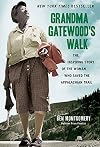
In 1955, an older person--a woman from Ohio who had already endured her share of life's tests and challenges--walks the entirety of the Appalachian Trail (or AT), from Mount Olgethorpe,Georgia to Mount Katahdin, Maine. At 67 years old, Emma Gatewood is credited as the first woman to complete the thru-hike, and the first person to complete the thru-hike three times.
Grandma Greenwood's story, on both on the trail and in her past, are decisively a woman's, creating another facet of the story of a lone hiker on the Appalachian Trail. I wasn't enamored by the writing style or tone of the author, but he gave a considerable amount of attention to the character of Grandma Gatewood, which I appreciated and enjoyed.
Grandma Greenwood's story, on both on the trail and in her past, are decisively a woman's, creating another facet of the story of a lone hiker on the Appalachian Trail. I wasn't enamored by the writing style or tone of the author, but he gave a considerable amount of attention to the character of Grandma Gatewood, which I appreciated and enjoyed.
Eighteen chapters from various professionals (would have loved a short bio on the authors, so I could follow up or look at more examples from the practitioners). Selected four or five chapters that pertained to my new duties as distance education faculty liaison, and were relevant to my institution (graduate instruction; professional military education). Part III on collaboration was especially useful. I will likely come back and read through Part IV on assessment more carefully if/when I get more involved with library instruction.
I was really into it in the beginning but then it felt rushed and forced about 60% in. The premise was interesting, but the characters a bit cliched (Will is capable, and articulate yet bitter and abrasive; Lou is like able but lacks skills, experience, and class; the peripheral people are just as bad). I found the chapters where the author slipped into the first person voice of other characters an especially distracting and weak device, like at that point the story couldn't be told from the Lou's point of view but the author really wanted to get it in there. By the end I was all meh. At least it had a realistic and sobering ending. Pretty easy read technically, but maybe not emotionally for some.
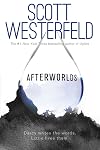
Coincidentally, the second book in a row where there are two stories going on at the same time, in alternating chapters. It's kind of fun, kind of annoying, when a book is set up this way. Luckily for this book, it's written by Scott Westerfeld, who is a great storyteller and brings a natural voice to his teen protags. Story One is a unique yet typical YA supernatural romance. Story Two is a realistic YA about the young woman who writes Story One. It's meta. It's written for YA novelists and the readers and librarians who love them. As a (former YA) librarian and a freelance copyeditor I especially loved this one.