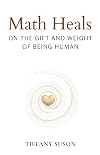
Tiffany Suson states profound life truths with clarity using the logic of mathematics. She translates the underlying structures functioning in our lives into operational formulas. These are not numerical calculations. They are not meant as solutions but as a way to understand life’s patterns. With that understanding, we are better equipped to move beyond emotions and act with intention. Suson provides the reader with a unique lens through which to view experiences and emotions. An outstanding book.
 This review was written for LibraryThing Early Reviewers.
The Christian Past That Wasn't: Debunking the Christian Nationalist Myths That Hijack History by Warren Throckmorton
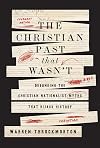
In his book The Christian Past That Wasn’t, scholar Warren Throckmorton meticulously debunks seven key myths propagated by American Christian nationalists. Throckmorton begins with an explanation of what Christian nationalism is and the psychological reasons people fall prey to the falsehoods espoused by the movement’s leaders. He then turns to primary historical documents to counter the claim that America was founded as a Christian nation. In the book’s appendix he includes the complete text of some key historical documents that give proof of the falsity of Christian nationalist claims. One of Throckmorton’s goals in writing the book is to provide readers with factual information they may use to refute Christian nationalist claims. In the conclusion of the book, he provides talking points readers may refer to when countering Christian nationalist falsehoods. This is a must read for any American who wants the United States to remain a country that protects religious freedom for all its people.
This review was written for LibraryThing Early Reviewers.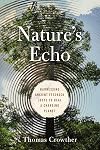
Through brief well-written chapters, the prominent global ecologist Thomas Crowther clearly explains the role of positive and negative feedback loops in the creation of our current environmental challenges and in the human response to those challenges. He is optimistic that environmental degradation can be reversed. However, he does not discount the difficulties humanity faces in trying to undo the ecological damage humans have caused. He provides examples of individuals and groups and even nations that are implementing successful regenerative efforts. Key to these efforts is creating positive ecological and social feedback loops. This positive approach feeds the motivation needed for people to take positive action rather than succumb to despair. This informative and inspirational book is for anyone who wants to contribute to the healing of our planet and society.
This review was written for LibraryThing Early Reviewers.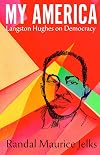
Author Randal Maurice Jelks chronicles Langston Hughes’s commitment to democracy for all peoples through the works of Hughes. Each chapter of the book starts with a writing of Hughes followed by commentary by Jelks. Jelks writes sympathetically of Hughes but does not overlook his shortcomings. Jelks elucidates the deep and lifelong commitment of Hughes to the cause of universal freedom and democracy. As Jelks chronicles the life, times, and artistic output of Hughes, the relevance of Hughes’s writings to today’s situation in America and other parts of the world is striking. This book will encourage readers interested in the fight for freedom and democracy to read the works of Langston Hughes.
This review was written for LibraryThing Early Reviewers.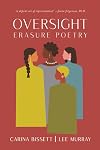
Poets Carina Bissett and Lee Murray pay tribute to sixty women whose accomplishments span time, cultures, and roles. Each woman is recognized with a short poem and a biographical sketch. The poems by Bissett and Murray are inspired by the writings, speeches, or actions of the women profiled. Many of the women included are well known. However, readers will be introduced to many women who have almost been forgotten. Readers will likely be inspired to search out the writings and biographies of the women included in this compendium.
This review was written for LibraryThing Early Reviewers.When Trees Testify: Science, Wisdom, History, and America’s Black Botanical Legacy by Beronda L. Montgomery
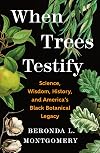
When Trees Testify is an effective blend of plant biology, Black history, and personal memoir. Plant biologist Beronda Montgomery focuses on seven tree species—pecan, sycamore, willow, poplar, mulberry, oak, apple—and one shrub—cotton. While providing biological facts about these species, the most powerful and thought-provoking aspects of her writing are the connections she makes between the trees and the African American experience. Threaded throughout the book is her personal response to the history of oppression connected with these trees. She clearly conveys the tension she experiences between her love of plant biology and the tragic associations evoked by the trees she focuses on in this book. Through her sharing the visceral response she and family members experience to the connections aroused by certain tree species, the reader comes to a better understanding of the realities of generational trauma. Montgomery has written a compelling narrative of how trees and the human experience intertwine.
This review was written for LibraryThing Early Reviewers.
In the book Dear Future: You Can Keep the Change, the author who goes by the pseudonym Ronee Hulk paints a disturbing picture of the future dominated by Artificial Intelligence. Hulk begins the book with an explanation of what AI is. The author then goes on in each chapter to illustrate the changes AI is already making in a specific area of our lives and the disruptions to come. Topics addressed include our relationship to work and to each other, healthcare, education, God, manufacturing, money, and much more. The disruptions Hulk envisions are already upon us and accelerating quickly. If you really want to feel depressed, the book ends with a QR code that will take you to a webpage that will inform you of how long before your profession will be solely performed by Artificial Intelligence, making your current job obsolete. Hulk’s advice? If you have an idea, implement it now. Create. As Hulk states in the book, “As creation has become almost instantaneous, hesitation is nothing short of fatal. The tools that accelerate innovation also punish delay.”
This review was written for LibraryThing Early Reviewers.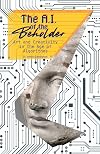
This is a readable book that explores the many questions surrounding AI generated art. The author begins with a brief history of how past technological developments have shaped artistic expression. He then explains how AI art is created. Subsequent chapters delve into the challenges and controversies surrounding AI created art. There is a discussion of the ethical, economic, and legal questions pertaining to AI art. The artist’s role in machine produced art is considered. A chapter deals with the ability to identify AI generated art and why it is important to be able to do so. The future of AI art is considered. Finally, the author confronts the question of whether AI produced art can be considered legitimate art. The author does not provide definitive answers to the controversies AI art has provoked. Rather he guides the reader in grappling with the fundamental questions surrounding art created by artificial intelligence. Key issues concerning AI art are clearly defined. The reader is presented with the questions to be considered and various ways those questions may be answered. Ultimately, though, the author leaves it to the reader to come up with his or her own answers.
This review was written for LibraryThing Early Reviewers.
This illustrated guide provides an overview of the Quran. Each page is devoted to specific verses. A synopsis of the story is provided. Highlighted verses are identified. The main theme is given. Key concepts are summarized. Individuals unfamiliar with this holy book will gain a general understanding of the text.
This guide is far more than how it is described on the product page heading. Each page of the guide provides detailed information about a book of the Bible. Each book’s description includes the theme, the author, when written, the main characters, chapter synopses, key themes, symbolism and imagery, practical applications, and the original audience for which the book was written. This information is graphically arranged to make it easy to find the details being sought. The book summary is on the right-side page. The facing page on the left is blank and unlined for journaling, jotting notes, or drawing sketches or diagrams. The information is detailed and easy to comprehend. The type is small but readable. This is a resource for both men and women. Though the writing has a slight Christian bent, this guide will help individuals of any faith or no faith better understand each of the books of the Old Testament and New Testament. This guide makes the Bible understandable and relevant to today. It will have users of this guide wanting to read the Bible.
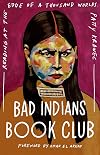
Patty Krawec has written a book that celebrates Indigenous authors who refuse to assimilate into a society that seeks to erase them. These are the “Bad Indians” who reject the stories written over their people by the colonizers. These are writers who give voice to the marginalized populations of the Americas. Their writings provide a lens through which to see an alternative past, present, and future. This is a book that will lead readers to other books and authors intent on shattering stereotypes. These are the “Bad Indians” who speak truths settler society has long attempted to silence. These are truths all of us need to hear for they lead to a realization of the underlying connectedness of all creation—human and other than human. These authors are not interested in saving the world as it is. They envision a better future for the earth and all her inhabitants.
This review was written for LibraryThing Early Reviewers.Toward a Living Archive of African Poetry: Kwame Dawes and Chris Abani on the New-Generation African Poets Chapbook Series by Kwame Dawes
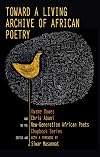
The book is a collection of the introductions to a series of ten boxed sets of African poetry chapbooks. Together, the essays not only provide a history of the series but also the development of African poets over the past decade. The authors discuss African poetic themes, literary controversies, and the publishing challenges African poets encounter. This well-written book not only introduces African poets but will motivate readers to read the series.
This review was written for LibraryThing Early Reviewers.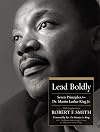
This is not a book of explicit leadership lessons as the title and subtitle might suggest. Rather it is a collection of some of Martin Luther King Jr.’s key speeches followed by commentary by philanthropist and entrepreneur Robert F. Smith. King’s speeches inform and inspire. They make readers aware of the racism that Blacks in America faced during King’s time and continue to experience today. His words also still have the power to move people to action. Smith’s reminiscences personalize the experiences of Blacks in America. He also shares what he and others are doing today to continue King’s fight against discrimination. This is a book meant to move people to take action to manifest Martin Luther King’s vision for all Americans.
This review was written for LibraryThing Early Reviewers.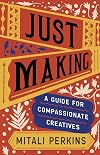
Mitali Perkins, an award-winning writer, in her book Just Making explains the importance of making art in any genre for the purpose of promoting social justice. She describes how to approach making just art, potential pitfalls, and how to overcome them. She writes honestly and with humility about her own challenges and accomplishments. She writes from a Christian perspective but not in a way that is overbearing or exclusionary. This is a book for artists interested in creating works that address social issues and for those who appreciate and wish to support the efforts of such artists.
This review was written for LibraryThing Early Reviewers.Alone, Together: Reflections on Disconnection, Division, and the Work of Rebuilding Community by Brian K. Houser
This compact, short read is packed with profound insights about how our society got to where it is today and with simple actions we can take to create the community we need. Houser’s writing is clear and succinct. He writes with understanding and wisdom. No rants. No polemics. Simply clear-eyed analysis with effective recommendations for building community. This book can be read in one sitting but will prompt many pauses to contemplate the ideas put forth by the author. This book would make a great selection for a community book club seeking to understand the current state of affairs in the United States and how each of us individually and together can create and nurture the type of communities that practice caring, compassion, and connection.
This review was written for LibraryThing Early Reviewers.This is a book of blank, unlined pages with the phrase “Trust the process” at the top of each page. Fine if you are looking for something to write or sketch in.
Mother, Creature, Kin: What We Learn from Nature's Mothers in a Time of Unraveling by Chelsea Steinauer-Scudder
The author examines the current ecological state of the world through the lens of mothering as practiced by humans and other than human species. This is not a book written for human mothers. This is a book with a message for everyone who cares about humanity and the millions of plant and animal species who share planet earth. The author’s expressive meditations draw lessons in caring from humans and other life forms existing at the edge. Readers are urged to move beyond hope, which Steinauer-Scudder considers an unreliable and “shaky foundation on which to repair the world.” It is love that will support the needed work of healing. The kind of love that nature’s mothers can teach us.
This review was written for LibraryThing Early Reviewers.How to Read a Room: Navigate Any Situation, Lead with Confidence, and Create an Impact at Work by Dr. Mike Bechtle
The author has written a clear, informative book in a comfortable style explaining how to communicate effectively in a wide variety of situations. The first part of the book discusses the three essentials for effective communication, which include mindset, process, and perceptions. Part two explains how to read a room and build confidence. Part three focuses on how to lead a room and increase your influence. The book’s fourth section is devoted to how to serve a room for impact. The author’s instructions are straightforward and can be implemented by anyone committed to improving their influence and impact.
This review was written for LibraryThing Early Reviewers.How to Be Less Socially Anxious: Practical Skills to Stop Overthinking, Be Confident, and Thrive in Social Situations by Megan Ashley Smith Lcmhc Ncc
Thanks for the free/gifted book, @penguinrandomhouse
Written by a licensed mental health therapist, this book provides practical skills for managing and overcoming social anxiety. The book is divided into two parts. Part I provides clear instruction on developing practical skills. Part II is devoted to applying the skills in various social situations with friends, romantic partners, work, school, and community. The writing is clear. Space is provided throughout the book to write responses to prompts. There is no fluff in this book. The author provides clear, concise, practical information. No need to suffer from social anxiety to benefit from this book. Anyone wanting to improve their communication and relationship skills will find the lessons in this book useful.
Written by a licensed mental health therapist, this book provides practical skills for managing and overcoming social anxiety. The book is divided into two parts. Part I provides clear instruction on developing practical skills. Part II is devoted to applying the skills in various social situations with friends, romantic partners, work, school, and community. The writing is clear. Space is provided throughout the book to write responses to prompts. There is no fluff in this book. The author provides clear, concise, practical information. No need to suffer from social anxiety to benefit from this book. Anyone wanting to improve their communication and relationship skills will find the lessons in this book useful.
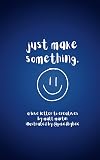
This compact volume is a fun, inspiring, and, at times, a profound read. This book is an eclectic collection of exercises, statements, drawings, questions, quotes focused on creating. Martin sets out to prove we all can be creative and each of us can create art. Don’t believe it? Read the book. You will be surprised and pleased.
This review was written for LibraryThing Early Reviewers.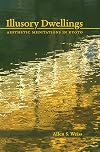
In this book Weiss illustrates for us how to use travel as an experience of discovery of ourselves as well as of our destination. He takes us through an aesthetic and spiritual tour of Japan, focusing primarily on Kyoto. We learn how culture influences the making and experience of art. We see how art can be a spiritual expression and experience. Readers of this book will come away with a new mindset about the place of art in culture and in our understanding of self.
This review was written for LibraryThing Early Reviewers.Self-Love Affirmations & Reflections: A Ritual for Self-Worth, Self-Compassion, and Self-Care by Jule Kim
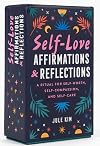
Thanks for the free/gifted book, @penguinrandomhouse.
Jule Kim is a certified life coach. She has produced this 52-card deck as a tool for nurturing self-love. Each sturdy, glossy, colorful card provides a short affirmation on the frontside. On the reverse side are reflections, questions, and tips to support a regular personal practice to nurture care and compassion for self. The cards are packaged in a sturdy slipcase. A smaller box included within the case provides for even more compact storage and ease in carrying your cards with you. This card deck is a useful tool for nurturing the mind, body, and heart.
Jule Kim is a certified life coach. She has produced this 52-card deck as a tool for nurturing self-love. Each sturdy, glossy, colorful card provides a short affirmation on the frontside. On the reverse side are reflections, questions, and tips to support a regular personal practice to nurture care and compassion for self. The cards are packaged in a sturdy slipcase. A smaller box included within the case provides for even more compact storage and ease in carrying your cards with you. This card deck is a useful tool for nurturing the mind, body, and heart.
Self-Love in Action: Practical Ways to Bring Self-Compassion into Work, Relationships & Everyday Life by Zoë Crook MA
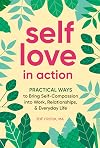
Thanks for the free/gifted book, @penguinrandamhouse.
The author is a therapist specializing in guiding individuals and couples toward healthy relationships. This book helps readers develop a loving relationship with self. The first part of the book provides an understanding of self-love. The second part focuses on the inner world, including such topics as self-talk, body love, and caring for yourself. The final section of the book looks outward to relationships with family, friends, romantic partners, work colleagues, and community. Chapters include quizzes, exercises, and case studies. At the back of the book are “love notes” to yourself that may be removed and hung about your space as reminders of the book’s messages. The author provides practical guidance written in a clear and caring style. Self-compassion is critical to good mental health. This book will help readers attain a loving relationship with self so as to be able to build compassionate relationships with others.
The author is a therapist specializing in guiding individuals and couples toward healthy relationships. This book helps readers develop a loving relationship with self. The first part of the book provides an understanding of self-love. The second part focuses on the inner world, including such topics as self-talk, body love, and caring for yourself. The final section of the book looks outward to relationships with family, friends, romantic partners, work colleagues, and community. Chapters include quizzes, exercises, and case studies. At the back of the book are “love notes” to yourself that may be removed and hung about your space as reminders of the book’s messages. The author provides practical guidance written in a clear and caring style. Self-compassion is critical to good mental health. This book will help readers attain a loving relationship with self so as to be able to build compassionate relationships with others.
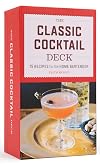
Thanks for the free/gifted book, @penguinrandomhouse
This card deck is a great resource for home bartenders. The deck includes 75 recipes. Each drink recipe is printed on its own sturdy card. The front of the card includes the drink name, number of servings the recipe produces, type of glassware to use, and if the drink is shaken or stirred. There is also a large color photo of the drink. The back of the card lists the bar tools needed to mix the drink, the ingredients, and instructions for mixing the cocktail. The glossy cards are spill resistant and easy to read. A built-in stand is provided. The cards are color coded by type of liquor. A booklet includes an index with the card number to make it easy to quickly find a recipe. The booklet also includes useful information about liquors, bartender tools, glassware, and cocktail techniques. Everything comes neatly packaged in a sturdy slipcase for easy storage.
This card deck is a great resource for home bartenders. The deck includes 75 recipes. Each drink recipe is printed on its own sturdy card. The front of the card includes the drink name, number of servings the recipe produces, type of glassware to use, and if the drink is shaken or stirred. There is also a large color photo of the drink. The back of the card lists the bar tools needed to mix the drink, the ingredients, and instructions for mixing the cocktail. The glossy cards are spill resistant and easy to read. A built-in stand is provided. The cards are color coded by type of liquor. A booklet includes an index with the card number to make it easy to quickly find a recipe. The booklet also includes useful information about liquors, bartender tools, glassware, and cocktail techniques. Everything comes neatly packaged in a sturdy slipcase for easy storage.
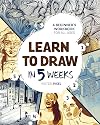
Thanks for the free/gifted book, @penguinrandomhouse
This is an ideal book for anyone of any age who wants to learn to draw. The author provides clear instructions with illustrations. There are also QR codes that lead to videos providing demonstrations. The book is organized into five weekly lessons. A seven-day practice schedule is provided for each week. The first week covers recommended materials, how to hold a pen, and practicing fine motor skills. Over the next four weeks lessons cover dimension, shapes, shadows, and craft. Following the author’s directions is like sitting with a patient and encouraging instructor. Always wanted to draw? This book provides a nonintimidating way to learn.
This is an ideal book for anyone of any age who wants to learn to draw. The author provides clear instructions with illustrations. There are also QR codes that lead to videos providing demonstrations. The book is organized into five weekly lessons. A seven-day practice schedule is provided for each week. The first week covers recommended materials, how to hold a pen, and practicing fine motor skills. Over the next four weeks lessons cover dimension, shapes, shadows, and craft. Following the author’s directions is like sitting with a patient and encouraging instructor. Always wanted to draw? This book provides a nonintimidating way to learn.
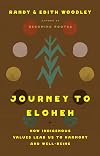
This book, written by a Native American couple, goes beyond contemporary society’s obsession with the pursuit of individual happiness and focuses on how to create wellbeing, which involves a concern for wholeness of self, others, and the environment. The authors describe ten values upon which this wellbeing is based. After telling their own personal stories, the authors devote a chapter to each of the ten values. The writing is clear and the information relevant to addressing the global issues facing civilization today. The authors make clear that the Western worldview is at odds with the wellbeing of the Earth, a just society, and personal wellbeing. The Woodley’s provide a compelling argument for the need to return to the wisdom of Indigenous peoples. Their book is a good starting point for anyone wanting to reestablish harmony with all creation.
This review was written for LibraryThing Early Reviewers.One Question a Day to Stay Close and Curious: A Couple's Journal for a Lifetime of Love by Gina Senarighi Phd Cpc
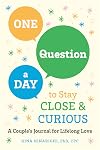
This review is based on a free review copy received from the publisher.
@penguinrandomhouse #partner
This handsomely bound journal is designed for couples by a bestselling author and relationship coach. The introduction provides instructions on ways the journal may be used and tips for supporting a loving connection. Each journal page includes a discussion prompt at the top and unlined space divided into top and bottom halves of the page for each partner to add their responses in words or drawings. The first part of the book is organized into six chapters that have each partner sharing about self. The five chapters in the second part of the book focus on the relationship between the partners. Responding to the questions in the book may be experienced as fun, thought provoking, revealing, or challenging. While the journal is designed for couples, individuals may also find the prompts useful for facilitating personal growth.
@penguinrandomhouse #partner
This handsomely bound journal is designed for couples by a bestselling author and relationship coach. The introduction provides instructions on ways the journal may be used and tips for supporting a loving connection. Each journal page includes a discussion prompt at the top and unlined space divided into top and bottom halves of the page for each partner to add their responses in words or drawings. The first part of the book is organized into six chapters that have each partner sharing about self. The five chapters in the second part of the book focus on the relationship between the partners. Responding to the questions in the book may be experienced as fun, thought provoking, revealing, or challenging. While the journal is designed for couples, individuals may also find the prompts useful for facilitating personal growth.
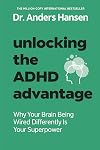
Unlocking the ADHD Advantage: Why Your Brain Being Wired Differently Is Your Superpower by Anders Hansen
This review is based on a free review copy received from the publisher.
@penguinrandomhouse #partner
Swedish psychiatrist and bestselling author Anders Hansen provides a balanced view of ADHD. He begins the book clearly explaining ADHD and its causes. He also recognizes the challenges those with ADHD may face. The main premise of the book, however, is that ADHD need not be an obstacle to living a productive life. In fact, ADHD can be an advantage. He explains these advantages and identifies ways individuals with ADHD can maximize those advantages while countering the challenges ADHD may present. This is a book to be read by those with ADHD. It is also recommended reading for parents, educators, and managers who may interact with those diagnosed with ADHD. An informative read.
@penguinrandomhouse #partner
Swedish psychiatrist and bestselling author Anders Hansen provides a balanced view of ADHD. He begins the book clearly explaining ADHD and its causes. He also recognizes the challenges those with ADHD may face. The main premise of the book, however, is that ADHD need not be an obstacle to living a productive life. In fact, ADHD can be an advantage. He explains these advantages and identifies ways individuals with ADHD can maximize those advantages while countering the challenges ADHD may present. This is a book to be read by those with ADHD. It is also recommended reading for parents, educators, and managers who may interact with those diagnosed with ADHD. An informative read.
The Little Book of Quotes by Women: Inspiring Words to Live By (Little Quote Books) by Kathleen Welton
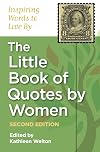
This is a compact collection of 365 quotes from women who have appeared on United States postage stamps. The short quotes are arranged under twelve subject areas. The book opens with a short introduction that includes interesting facts about postage stamps and the depiction of women on stamps. At the back of the book there are blank lined pages for recording favorite quotes. There are also pages for noting what you are grateful for in each of the subject categories and space to add your own categories. There is also space to record discoveries you have made each month from your reading of the quotations. Especially interesting is the biographical index of women on U.S. stamps. While the list includes many familiar names, there are others who are today less well known. An index provides an easy way to find quotes by individual. This is a book to turn to for inspiration and wisdom from accomplished women throughout U.S. history.
This review was written for LibraryThing Early Reviewers.
This book is more about the author’s year in Taiwan than about yin yang. We learn much about where and what the author likes to eat and drink accompanied by photos. We also are informed of the movies and TV series he likes to watch. Much of the content of the book consists of references from other authors. Rasmussen has the annoying habit of writing “(other author’s name) and I agree” as though he is personal buddies with every author. There are fragments of wisdom within the book, but one must wade through pages of irrelevant personal reminiscences to get to the core of the subject matter.