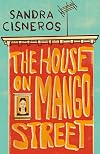
The House on Mango Street is the coming of age story of a girl growing into a writer in an impoverished Hispanic neighborhood. Poverty, cruelty, kindness, harsh treatment of women, and neglected children are seen through the eyes of a young girl as she matures, giving the reader a chance to see both childish and more adult views about each. Cisneros accurately and poignantly portrays the joys and pains of growing up and her use of language is amazing. She shows how art, specifically writing, can "keep you free" and how women can support and inspire each other in such a society as Esperanza's Hispanic neighborhood. The book also presents a unique realization of the American Dream in the "home" that Esperanza finds in writing. The House on Mango Street is relatively short and very easy to read.
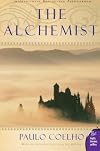
The Alchemist is simple and endearing: a boy embarks upon a journey in search of treasure and eventually finds it, but acquires far greater treasures - friendship, love, and knowledge - along the way. This novel deals with those human desires and actions that logic cannot explain. It mirrors the "journeys" of many; like Santiago, people travel, search, dream, and fall in love because something mysterious moves them. The mysterious something is not logical or understood, but it is universal and right, ultimately leading to happiness if a person is persistent. The straightforward message and happy ending might make the book appear childish to some, but it is the book's simplicity that allows it to capture the basic idea of spiritual desire and why it is stronger than any practical considerations people might have. The novel moves at a steady pace and contains many memorable quotes and characters.
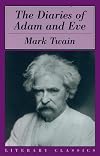
The obscure Diaries of Adam and Eve by Mark Twain is quirky, funny, light reading - I read it in about half an hour. It is of particular interest to fans of Mark Twain, as it is just as much a product of a particular period in his life as of his unorthodox views. It is one of several works, written late in Twain's life, that satirize religion, in this case the Book of Genesis. In a humorous fashion, the book deals with gender relations, human ignorance and limitations, the differences between the lazy and the productive, the creative and the unimaginative, the people with a zest for life and the people who are concerned mainly with eating and sleeping. All of this is condensed into a story of two familiar characters that makes for a brief but entertaining read.

The sequel to Jurassic Park is just as thrilling, thought-provoking, and informative as the original. While Jurassic Park focuses upon the science and ethics of genetic engineering and frames the situation within "chaos theory," The Lost World deals with these issues as well as evolution and other mathematical concepts, putting science in perspective for the modern world. The book concludes with a very profound observation about science as it relates to human life. Anyone who liked Jurassic Park or Michael Crichton's novels in general, is interested in mathematics, science, and technology, or just likes thriller novels, should enjoy The Lost World.
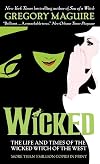
The first thing that prospective readers should know is that Wicked is very unlike, in terms of the plot and presentation, both L. Frank Baum's classic (as it takes place before, rather than during, the events of The Wizard of Oz) and the popular Broadway musical. That being said, Wicked has an intriguing plot and, aside from a few slow spaces, it keeps the reader entertained - it is at times quirky, disturbing, mischieviously funny, and emotionally charged. However, I believe that it falls short as both a book based upon Baum's The Wizard of Oz and as an exploration of the nature and origins of evil. Maguire is selective about his sources; while Wicked is supposed to draw from Baum's book, it sometimes draws instead from the movie and sometimes deviates from both, which hurts its status as a biography of Baum's witch. Maguire explains to a certain degree why certain characters are the way they are, but for the most part simply creates a reversal of roles; characters that are evil in Baum's book are good in Maguire's, and characters that are good in Baum's book are evil in Maguire's. As a result, Wicked is more a manifestation of modern trends, such as the inclination towards relative morals, disdain for religion, and the glorification of female characters, than it is an exploration of the evil on display in The Wizard of Oz. In conclusion, Wicked is entertaining but not as enlightening as it is supposed to be.
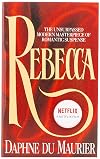
Rebecca could be considered a gothic romance, a mystery, or a ghost story - or all of the above.
Whether the supernatural is truly at work or not the reader never discovers, but that makes the novel very suspenseful and intriguing. The first few chapters move slowly and require patience, but while the book never deviates from its steady pace, I would describe the remaining chapters as hypnotic and sometimes chilling, easily leading the reader from one page to the next. The book explores marriage, murder, evil, and the relationship between the living and the dead. Part of its appeal arises from the odd places towards which the reader's sympathies are directed, which can be uncomforable but very thought-provoking. As most of the import characters are female and much of the book is concerned with female relationships, this book can probably be enjoyed most fully by female readers - however, anyone can be drawn into mystery and suspense.
Whether the supernatural is truly at work or not the reader never discovers, but that makes the novel very suspenseful and intriguing. The first few chapters move slowly and require patience, but while the book never deviates from its steady pace, I would describe the remaining chapters as hypnotic and sometimes chilling, easily leading the reader from one page to the next. The book explores marriage, murder, evil, and the relationship between the living and the dead. Part of its appeal arises from the odd places towards which the reader's sympathies are directed, which can be uncomforable but very thought-provoking. As most of the import characters are female and much of the book is concerned with female relationships, this book can probably be enjoyed most fully by female readers - however, anyone can be drawn into mystery and suspense.
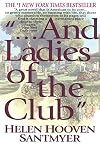
And Ladies of the Club is quite long and does not always move quickly, but it is very rewarding for those who want to learn about everyday life in nineteenth century small-town America. The novel, which revolves around the members of a female literary club, does not have a rigid, carefully crafted structure; instead, readers simply watch a group of authentic characters live their everyday lives, which are at times peaceful, chaotic, difficult, or joyous. Women's issues, post-Civil War problems, education, industrialization, business, politics, family life, and friendship can all be seen in the context of time and place. In general the pace is steady, never too fast or too slow, making for a long but enjoyable read.
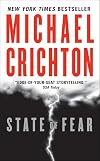
State of Fear is a thriller novel that challenges the validity of the popular theory of man-made global warming, creating a cast of characters that mirror those who are really involved in this issue: the trial lawyer, the extreme environmentalist organization, the wealthy philanthropist, the celebrity activist, and the rare skeptic. They illuminate the political and psychological aspects of global warming as a social phenomenon, while the real-life data presented in the story discredit the science behind it. This is a very worthwhile read for anyone interested in "the other side of the story." The novel is relatively slow in some places, but generally maintains the fast pace and intrigue of Crichton's other novels. The essay and appendices included at the end of the book are also very informative and interesting.
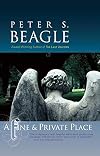
Although A Fine and Private Place is not as well known as Beagle's The Last Unicorn, it also wraps many insights into human nature into a tale of the supernatural. The most advertised plot element is the love between two ghosts who meet in a cemetery after being buried, and while this is certainly touching and entertaining, the book is really about the living man Jonathan Rebeck, who has retreated from the world and must the do the thing he fears most in order to help his friends (the two ghosts who have fallen in love). The story would be insightful and effective even if Michael and Laura were not ghosts, but rather social outcasts like Rebeck, for the main thrust of the story is Rebeck's re-entry into the world, for which he must conquer his fears and step outside of himself, a journey that many readers may be able to relate to in some way. A Fine and Private Place is a simple yet profoundly accurate story that shines with the otherworldy charm of Beagle's other novels.
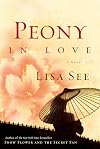
Author Lisa See believes, like many contemporary and historical women writers, that women of all cultures and times have always had a desire to be heard (specifically through writing), and ultimately this becomes the theme of Peony in Love: A Novel. Peony, the protagonist, discovers her talent for writing and "desire to be heard" amidst the pain and joy of loving in a society that oppresses women. This is not, however, an ordinary love story - the book deals heavily in the the supernatural, its protagonist dying at the end of Part One and spending the rest of the book as a ghost, watching over the man who would have been her husband. The author has meticulously researched seventeenth-century Chinese customs and beliefs about the afterlife, making the book highly informative to those interested in history. There is much to ponder concerning love, male-female relations, family, redemption, and artistic liberation, but any satisfaction or comfort that the reader may derive from the peace reached by Peony at the end of the book is hampered by the unrealistic way in which she reaches it (remaining on earth as a ghost to atone for her mistakes). Peony in Love repeats much of the celebration of women and lamentation of women's suffering that have become common in contemporary literature, but the original storyline and plentiful little-known historical facts keep the book very interesting.