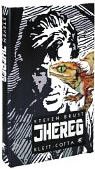
This book has first-book-itis. Bad pacing, bad dialogue, bad outtakes, a shift from third person to third person omniscient with abandon. It had sort of an interesting idea about this high level mobster/Baron messing with more high level people and pulling off a heist to kill a guy who couldn't be killed.
It has a nice fight in the end but it spends almost 200 pages trying to figure out what it wants to be when it grows up. The book is mostly "BEHOLD MY WORLD! IS IT NOT WORLDLY?" But in the end, if it would have focused more on the assassination and less on Behold my Awesome Cosmically Powered Elves, I would have enjoyed it more.
It has a nice fight in the end but it spends almost 200 pages trying to figure out what it wants to be when it grows up. The book is mostly "BEHOLD MY WORLD! IS IT NOT WORLDLY?" But in the end, if it would have focused more on the assassination and less on Behold my Awesome Cosmically Powered Elves, I would have enjoyed it more.
The Bible unearthed : archaeology's new vision of ancient Israel and the origin of its sacred texts by Israel Finkelstein
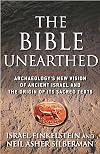
I found this book through a referral on, of all places, /r/AskHistorians on reddit, and, more to the point, the "How Much of the Bible is Historical" question linked to in the subreddit's FAQ where it was referred to as a decent reference. Having not read much Biblical Archeology in a while and finding the book in Amazon's Kindle Store, I downloaded it to my Kindle.
The Bible Unearthed is a dry, fairly technical text dealing with matching Archeology with books of the Old Testament, mainly Genesis, Exodus, Deuteronomy, Joshua, Judges, 1 Samuel, 2 Samuel, 1 Kings, 2 Kings and pieces of Jeremiah, Isaiah, Ezekiel, and lesser Prophets. Working from the beginning with Abraham and concluding at the Exile into Babylon, the authors methodically dissect the Old Testament chapter by chapter and, in some places, verse by verse and compare it to the known archeological evidence to prove their core supposition: the Old Testament and the Torah were compiled, and in no small part written, in the mid-to-late 7th Century BC in Judah for a combination of political and religious aims by likely two Kings: Hezekiah and, later, Josiah. These are not historical recordings of mid-Bronze Age wanders but of Iron Age Kings under the Assyrian yoke who were trying to forge a national identity through myths, tales, stories of various tribal peoples, and political propaganda, stamp out the local religions and create a theocratic state.
Although the book is a little out of date, as it was written in 2000, show more the evidence presented is pretty plausible stuff if one can slog through chapters based on the settlement patterns of Iron Age bedouins and their village layouts or read 100 pages on pottery sherds at different strata.
The authors present:
* No historical record of the patriarchs in any form;
* Moses's Pharaoh is far more the Pharaoh of Late Period 26th Dynasty and not a New Kingdom Monarch;
* Joshua conquers cities that do not exist in the 12th century BCE but certainly do in the 7th, and those that did exist likely collapsed in the Bronze Age Collapse at different times over a hundred years;
* No sign exists of David's Kingdom and all that remains is that of a small hill fort and David's name in secondary sources;
* No sign exists of Solomon or his works;
* The Omrides, who kindly left heaps of archeological evidence and secondary sources, were likely quite good Kings;
* Israel was likely a victim of its enduring financial success making it a tempting target for a sack;
* Deuteronomy written in the format of an Assyrian legal document to a vassal describing the rules and rights therein;
* Etc... it goes on like this for ~400 pages.
All signs point to a 7th century BC compilation of books, tales and sources into one unified whole, smoothing over the lumps and presenting the people -- many suddenly pouring into Judah from the sack of Samaria -- a new complete identity with their One God. One shouldn't besmirch the power of an enduring document that managed to forge a people, see them through the Babylonian Exile, and then become the root of three major world religions. But no archeological evidence points to the Old Testament being a reliable historical document, either.
For me, it's fascinating book showing the pressures and the prejudices of a people who were living in uncertain times with two crazed superpowers (the Assyrians and the Late Egyptians) on their borders and smaller enemies all around them and just before the Phoenicians would become "a thing." These were Kings who wanted to reconquer Israel back from Assyria and return it to its once financial glory, and they saw the way forward was to unite all these people pouring into their tiny kingdom filled with bedouins under One God and One Temple. The plan didn't work out because sticking a finger into the side of a crazed kingdom loaded with mercenaries and a religion that tells them to kill and bathe in blood _never_ works out well but the legacy of that time endures.
It's doubly fascinating to think this: in the 7th Century BCE, the great Egyptian Kingdom of Ramesses II, the Hittites, the fall of Sumeria and founding of Assyria, were as far away from them as the /Fall of Rome is from Modern Day/. The time of great civilizations and great kings was destroyed by the Bronze Age Collapse and left huge mounds where cities once stood -- and no one of Iron Age II knew why. No one read those languages. No one did satellite-based archeology. This is something to think about -- the time of Moses and Joshua and Judges were all distant myth at a time when real 7th century enemies were on the doorstep. Why _wouldn't_ there be stories about how those ancient dimly remembered cities? Why _weren't_ there be ancient kings and great heroes and an explanation of how those civilizations of the great antiquity fell? Why wouldn't those stories be forged in one narrative of one God who destroyed them in the past and will destroy them now?
Not for the highly religious, obviously. Interesting if one wants to read the constant debates on reddit, though.
ALSO: if you have no time to read the book, the BBC did a 4 part series with the authors which is available on Youtube some years ago. show less
The Bible Unearthed is a dry, fairly technical text dealing with matching Archeology with books of the Old Testament, mainly Genesis, Exodus, Deuteronomy, Joshua, Judges, 1 Samuel, 2 Samuel, 1 Kings, 2 Kings and pieces of Jeremiah, Isaiah, Ezekiel, and lesser Prophets. Working from the beginning with Abraham and concluding at the Exile into Babylon, the authors methodically dissect the Old Testament chapter by chapter and, in some places, verse by verse and compare it to the known archeological evidence to prove their core supposition: the Old Testament and the Torah were compiled, and in no small part written, in the mid-to-late 7th Century BC in Judah for a combination of political and religious aims by likely two Kings: Hezekiah and, later, Josiah. These are not historical recordings of mid-Bronze Age wanders but of Iron Age Kings under the Assyrian yoke who were trying to forge a national identity through myths, tales, stories of various tribal peoples, and political propaganda, stamp out the local religions and create a theocratic state.
Although the book is a little out of date, as it was written in 2000, show more the evidence presented is pretty plausible stuff if one can slog through chapters based on the settlement patterns of Iron Age bedouins and their village layouts or read 100 pages on pottery sherds at different strata.
The authors present:
* No historical record of the patriarchs in any form;
* Moses's Pharaoh is far more the Pharaoh of Late Period 26th Dynasty and not a New Kingdom Monarch;
* Joshua conquers cities that do not exist in the 12th century BCE but certainly do in the 7th, and those that did exist likely collapsed in the Bronze Age Collapse at different times over a hundred years;
* No sign exists of David's Kingdom and all that remains is that of a small hill fort and David's name in secondary sources;
* No sign exists of Solomon or his works;
* The Omrides, who kindly left heaps of archeological evidence and secondary sources, were likely quite good Kings;
* Israel was likely a victim of its enduring financial success making it a tempting target for a sack;
* Deuteronomy written in the format of an Assyrian legal document to a vassal describing the rules and rights therein;
* Etc... it goes on like this for ~400 pages.
All signs point to a 7th century BC compilation of books, tales and sources into one unified whole, smoothing over the lumps and presenting the people -- many suddenly pouring into Judah from the sack of Samaria -- a new complete identity with their One God. One shouldn't besmirch the power of an enduring document that managed to forge a people, see them through the Babylonian Exile, and then become the root of three major world religions. But no archeological evidence points to the Old Testament being a reliable historical document, either.
For me, it's fascinating book showing the pressures and the prejudices of a people who were living in uncertain times with two crazed superpowers (the Assyrians and the Late Egyptians) on their borders and smaller enemies all around them and just before the Phoenicians would become "a thing." These were Kings who wanted to reconquer Israel back from Assyria and return it to its once financial glory, and they saw the way forward was to unite all these people pouring into their tiny kingdom filled with bedouins under One God and One Temple. The plan didn't work out because sticking a finger into the side of a crazed kingdom loaded with mercenaries and a religion that tells them to kill and bathe in blood _never_ works out well but the legacy of that time endures.
It's doubly fascinating to think this: in the 7th Century BCE, the great Egyptian Kingdom of Ramesses II, the Hittites, the fall of Sumeria and founding of Assyria, were as far away from them as the /Fall of Rome is from Modern Day/. The time of great civilizations and great kings was destroyed by the Bronze Age Collapse and left huge mounds where cities once stood -- and no one of Iron Age II knew why. No one read those languages. No one did satellite-based archeology. This is something to think about -- the time of Moses and Joshua and Judges were all distant myth at a time when real 7th century enemies were on the doorstep. Why _wouldn't_ there be stories about how those ancient dimly remembered cities? Why _weren't_ there be ancient kings and great heroes and an explanation of how those civilizations of the great antiquity fell? Why wouldn't those stories be forged in one narrative of one God who destroyed them in the past and will destroy them now?
Not for the highly religious, obviously. Interesting if one wants to read the constant debates on reddit, though.
ALSO: if you have no time to read the book, the BBC did a 4 part series with the authors which is available on Youtube some years ago. show less
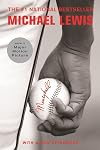
What to say about one of the most influential sports and economics books of the last decade? Like all of Michael Lewis's books, it's eminently readable and full of portraits of all kinds of crazy characters -- Billy Beane, Paul DePodesta, a bunch of major league players going through the grind of the Oakland A's system, other GMs. Great book about guerrilla warfare on an entrenched system, applying statistics to a statistics-based system, and exploiting market inefficiencies for fun and profit. No wonder it is now one of the most referenced and most quoted book whenever anyone starts to talk about baseball these days -- which every single sports podcaster does. Reading an article over on ESPN? See a reference to Moneyball? Read the book.
Better than the Big Short -- although the Big Short is relentlessly entertaining -- absolutely recommended to anyone who follows professional sports. Also better than the movie by a long shot as the movie doesn't have the same rich background on these major league players and the Double-A/Triple-A minor league system.
Yeah. You should read Moneyball.
Better than the Big Short -- although the Big Short is relentlessly entertaining -- absolutely recommended to anyone who follows professional sports. Also better than the movie by a long shot as the movie doesn't have the same rich background on these major league players and the Double-A/Triple-A minor league system.
Yeah. You should read Moneyball.
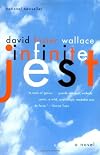
The best way to describe the book is a dense post-modern surrealist novel that is often not surrealist at all. It focuses on strong themes of depression, drug addiction and recovery, fall and redemption, tennis, Quebecqois separatism, terrorism, adolescence, suicide, LARPing, film theory, philosophy, and other fun topics all set to a tone that is best envisioned, bizarrely enough, fully animated. The world is science fiction the same way Vonnegut’s worlds are science fiction: it is a vague near future where even the years have a corporate sponsor, everyone is wired into their ‘entertainments’ and New England has been turned into an enormous toxic waste dump for electoral reasons. The future is full of American’s inalienable rights to consume and consume until they cannot consume any more, pleasure and fulfillment, and the Infinite Jest being the ultimate pleasure, a movie so pleasurable after watching it once, a victim will kill to watch it again and again and again. Now if only someone could weaponize infinite pleasure in the form of a DVD…
The story follows two separate storylines — one at an Elite Tennis Academy high school and one at a drug and alcohol addiction recovery halfway house down the hill. The cast of characters feels vast at first and impossible to track with their special ticks and personalities but this turns out to not be an insurmountable task. Both the Ennet Recovery House and the Enfield Tennis Academy are populated with dozens of show more characters, each with their own special personalities that manage to come through on the page. Some characters show up and hang around for a scene and wander out again. Some are given full and rich backgrounds until they, too, drift away. But through it the two main threads of story never quite touch except in one paragraph possibly in a flash-forward early in the book — although several characters from the two threads often cross.
Like Catch-22, Infinite Jest is not in chronological order. The story jumps around showing a future scene and then flashes back to show the full runup to that scene. (Arguably, the entire book is a run-up to the first, opening scene.) Sometimes a chunk of essential narrative is told in a long footnote. This is where the ‘challenge’ comes in — sometimes it is difficult to tell where in the cut-up machine of Infinite Jest a certain scene fits. The narrative jumps around point of view from character to character. One long stretch is told entirely in script-form with puppets. Another is the story of a particularly strange LARP played with tennis rackets and giant maps. The book is not difficult to read, not in the way a dense text from Victorian England can be difficult to physically read. The text itself is quite easy and quick to read. The book itself is structurally challenging. This is not a band thing.
Infinite Jest is highly referential in places — Dostoevsky, Melville, Shakespeare, Joyce. The Enfield Tennis Acadamy is full of Hamlet references in the last half of the book. Even the Ghost of the Father! The skull! Gravediggers! The Queen and Polonius! The final scene as Hamlet goes off and Horatio is left behind. Read or refresh Hamlet before picking up Infinite Jest. Most of the play is embedded in the book.
My favorite part of the book was the last 150 or so pages of Don Gately, the main character of the Recovery House arc, laid in a hospital bed hallucinating his life and the Ghost and the truths to complete his Redemption cycle. It is probably DFW’s very best writing and it is deeply compelling writing.
I want to recommend this book. Obviously I enjoyed it. I read the whole book and the required footnotes. The formal requirement is you must like strange, unconventional, and weird literary books that do not conform to the basic novel form. I would say — start with the essay above, and then the other essays, and then the short stories, and kind of eeeease into it. It’s a very cool book but it is extremely mind-bendy and challenging. show less
The story follows two separate storylines — one at an Elite Tennis Academy high school and one at a drug and alcohol addiction recovery halfway house down the hill. The cast of characters feels vast at first and impossible to track with their special ticks and personalities but this turns out to not be an insurmountable task. Both the Ennet Recovery House and the Enfield Tennis Academy are populated with dozens of show more characters, each with their own special personalities that manage to come through on the page. Some characters show up and hang around for a scene and wander out again. Some are given full and rich backgrounds until they, too, drift away. But through it the two main threads of story never quite touch except in one paragraph possibly in a flash-forward early in the book — although several characters from the two threads often cross.
Like Catch-22, Infinite Jest is not in chronological order. The story jumps around showing a future scene and then flashes back to show the full runup to that scene. (Arguably, the entire book is a run-up to the first, opening scene.) Sometimes a chunk of essential narrative is told in a long footnote. This is where the ‘challenge’ comes in — sometimes it is difficult to tell where in the cut-up machine of Infinite Jest a certain scene fits. The narrative jumps around point of view from character to character. One long stretch is told entirely in script-form with puppets. Another is the story of a particularly strange LARP played with tennis rackets and giant maps. The book is not difficult to read, not in the way a dense text from Victorian England can be difficult to physically read. The text itself is quite easy and quick to read. The book itself is structurally challenging. This is not a band thing.
Infinite Jest is highly referential in places — Dostoevsky, Melville, Shakespeare, Joyce. The Enfield Tennis Acadamy is full of Hamlet references in the last half of the book. Even the Ghost of the Father! The skull! Gravediggers! The Queen and Polonius! The final scene as Hamlet goes off and Horatio is left behind. Read or refresh Hamlet before picking up Infinite Jest. Most of the play is embedded in the book.
My favorite part of the book was the last 150 or so pages of Don Gately, the main character of the Recovery House arc, laid in a hospital bed hallucinating his life and the Ghost and the truths to complete his Redemption cycle. It is probably DFW’s very best writing and it is deeply compelling writing.
I want to recommend this book. Obviously I enjoyed it. I read the whole book and the required footnotes. The formal requirement is you must like strange, unconventional, and weird literary books that do not conform to the basic novel form. I would say — start with the essay above, and then the other essays, and then the short stories, and kind of eeeease into it. It’s a very cool book but it is extremely mind-bendy and challenging. show less
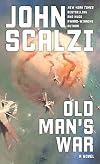
I have exactly one essential issue with "Old Man's War:"
The book ends so well and succinctly I feel no compulsion to read the sequels.
Otherwise, this book is fantastic. So many cool science fiction themes to ponder: the corporatization of space exploration and settlement, "We are the invaders," the incredible diversity in life and the further diversity in how it tries to kill us, the bizarreness of space battle, and the future of humanity, all packed into one little thin tome. The presentation of the various aliens is fantastic, and so are the ways humans die in space -- some great, some terrible.
I can gush about Old Man's War all day. It's like an evil Star Trek.
The nut of the book is this: Earth offers its old people a chance at a new life when they reach 75. If you so live that long, you can join up with the CDF, the Colonization Defense Forces, which promises a new life and a Fountain of Youth. Only hitch: you don't ever come back to Earth. Earth marks you as dead and you are gone into space forever. This is clever -- instead of poaching the breeding population, needed for colonization, it poaches the old and infirm who only drain terrestrial resources and have a full life experience. And the CDF makes good on its promise....... in a way.
Ah space, full of aliens to meet, greet and shoot in the face. Humans have a skip drive which allows them to get around in the galaxy and there, the entire cast of Star Control II awaits them. Those things that look like HR show more Giger's nightmares? Peaceful underwater mathematicians who want to bond and share with humanity. The wise deer-headed mammalian animals out of Star Trek? They love the taste of human flesh and set up human farms whenever they take out a colony. So be aware, recruit! What you think is huggable thinks you are tasty on rye.
In the CDF you aren't going to last long because everything in the galaxy wants to chew on your head. So here's your gun! Here's your BrainPal(tm) and your body full of SmartBlood(tm). Know that humanity needs to be genetically enhanced on the fly to survive in the harsh and crazy conditions of space. You're enhanced, now! Go shoot some aliens for the good of mankind!
I have special love for the super intelligent bugs with the shield around their entire solar system to keep out invaders and their religious purity and their weird war games. For should any of these aliens interact with dirty humans they will be pulverized and their molecules shot into the nearest black hole unless it is under the onus of war. Then there will be death! And rebirth! It will be glorious! Woo!
5 stars. Great book and a great look on what humanity being the alien invaders in a galaxy full of intelligent species is like and how the stupidity of life isn't confined to just Earth. Go read it. show less
The book ends so well and succinctly I feel no compulsion to read the sequels.
Otherwise, this book is fantastic. So many cool science fiction themes to ponder: the corporatization of space exploration and settlement, "We are the invaders," the incredible diversity in life and the further diversity in how it tries to kill us, the bizarreness of space battle, and the future of humanity, all packed into one little thin tome. The presentation of the various aliens is fantastic, and so are the ways humans die in space -- some great, some terrible.
I can gush about Old Man's War all day. It's like an evil Star Trek.
The nut of the book is this: Earth offers its old people a chance at a new life when they reach 75. If you so live that long, you can join up with the CDF, the Colonization Defense Forces, which promises a new life and a Fountain of Youth. Only hitch: you don't ever come back to Earth. Earth marks you as dead and you are gone into space forever. This is clever -- instead of poaching the breeding population, needed for colonization, it poaches the old and infirm who only drain terrestrial resources and have a full life experience. And the CDF makes good on its promise....... in a way.
Ah space, full of aliens to meet, greet and shoot in the face. Humans have a skip drive which allows them to get around in the galaxy and there, the entire cast of Star Control II awaits them. Those things that look like HR show more Giger's nightmares? Peaceful underwater mathematicians who want to bond and share with humanity. The wise deer-headed mammalian animals out of Star Trek? They love the taste of human flesh and set up human farms whenever they take out a colony. So be aware, recruit! What you think is huggable thinks you are tasty on rye.
In the CDF you aren't going to last long because everything in the galaxy wants to chew on your head. So here's your gun! Here's your BrainPal(tm) and your body full of SmartBlood(tm). Know that humanity needs to be genetically enhanced on the fly to survive in the harsh and crazy conditions of space. You're enhanced, now! Go shoot some aliens for the good of mankind!
I have special love for the super intelligent bugs with the shield around their entire solar system to keep out invaders and their religious purity and their weird war games. For should any of these aliens interact with dirty humans they will be pulverized and their molecules shot into the nearest black hole unless it is under the onus of war. Then there will be death! And rebirth! It will be glorious! Woo!
5 stars. Great book and a great look on what humanity being the alien invaders in a galaxy full of intelligent species is like and how the stupidity of life isn't confined to just Earth. Go read it. show less
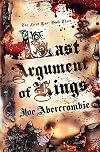
What do you say about a book that leaves you rooting for the twisted, bitter, angry torturer of the Inquisition to win? After all, in the end, he is the only one with clear motives.
Sometimes I feel "the Last Argument of Kings" is a thin excuse for a plot to connect together truly epic battle scenes. Some of these battle scenes are /fantastic/ -- Logen vs. the Feared, Bayaz vs. the Eaters, Bayaz and Yulwei vs. the horrible white demon chick, etc. Sometimes the plot is completely inexplicable. Why do the Northmen follow Collem West to the South to fight the Gurkish and leave the obviously evil Black Dow behind in Carleon? WHO KNOWS? But there's these battles in the Palace involving Eaters absolutely to be believed so that works out in its own ways.
This is a book about the ancient personal issues between two very old men who will not leave it enough alone and insist on working through their issues through the power of nations. Bayaz with the Union; Khalul with the Gurkish. They have spent a thousand years fighting over who killed whom in the misty past before either nation existed, and they now control their nations with a cast-iron grip and throw them at one another. They both have their minions, their objects of power, their Kings and their armies. Yet, as Bayaz says many times, magic leaks out of the world. It's become a world of men, not a world of magic. The future will have precious few Eaters or Seeds that flatten entire cities like in the Old World. The future will show more have banks, and debts, and Mercers, and Spicers, and great trading powers. Who owns the banks owns the kingdoms.
The best viewpoints character is Superior Sand dan Glokta with his dragging toeless foot and twisted back and mouth full of missing teeth. His drive for answers carries the downtime between the grand epic battles. And he receives the answers he seeks, but at a price. A price, it turns out, he is willing to pay.
Joe Abercrombie gets you to care about these black, twisted, horrible characters. From the inside, Logen Ninefingers is a good man but from the point of view of everyone else he is the relentless killer the Bloody-Nine, an alter-ego he can never escape. Sand dan Glokta is twisted on the outside but it hides a mind that relentlessly picks apart the mysteries. Everyone trusts Bayaz but a thousand year old man cares nothing for the daily lives of humanity when he dreams of destroying his brother Khalul. Even Jezel dan Luther loses -- a king trapped in an endless gilded Palace, chosen for his vanity and vacuity who will never be a hero but will always be a peacock for the entertainment of the people while others control the Kingdom.
Good, solid books all three. The trilogy, unlike most, comes to a fairly final end. Strong characters, extremely well written seat piece battles, and lots of blood and disembodied limbs flying around. The Last Argument of Kings was written well enough that I flew through it and blew through the last half of the (700 page) book in a long sitting.
The First Law Trilogy is highly recommend for serious Good Times with Blood and Gore. show less
Sometimes I feel "the Last Argument of Kings" is a thin excuse for a plot to connect together truly epic battle scenes. Some of these battle scenes are /fantastic/ -- Logen vs. the Feared, Bayaz vs. the Eaters, Bayaz and Yulwei vs. the horrible white demon chick, etc. Sometimes the plot is completely inexplicable. Why do the Northmen follow Collem West to the South to fight the Gurkish and leave the obviously evil Black Dow behind in Carleon? WHO KNOWS? But there's these battles in the Palace involving Eaters absolutely to be believed so that works out in its own ways.
This is a book about the ancient personal issues between two very old men who will not leave it enough alone and insist on working through their issues through the power of nations. Bayaz with the Union; Khalul with the Gurkish. They have spent a thousand years fighting over who killed whom in the misty past before either nation existed, and they now control their nations with a cast-iron grip and throw them at one another. They both have their minions, their objects of power, their Kings and their armies. Yet, as Bayaz says many times, magic leaks out of the world. It's become a world of men, not a world of magic. The future will have precious few Eaters or Seeds that flatten entire cities like in the Old World. The future will show more have banks, and debts, and Mercers, and Spicers, and great trading powers. Who owns the banks owns the kingdoms.
The best viewpoints character is Superior Sand dan Glokta with his dragging toeless foot and twisted back and mouth full of missing teeth. His drive for answers carries the downtime between the grand epic battles. And he receives the answers he seeks, but at a price. A price, it turns out, he is willing to pay.
Joe Abercrombie gets you to care about these black, twisted, horrible characters. From the inside, Logen Ninefingers is a good man but from the point of view of everyone else he is the relentless killer the Bloody-Nine, an alter-ego he can never escape. Sand dan Glokta is twisted on the outside but it hides a mind that relentlessly picks apart the mysteries. Everyone trusts Bayaz but a thousand year old man cares nothing for the daily lives of humanity when he dreams of destroying his brother Khalul. Even Jezel dan Luther loses -- a king trapped in an endless gilded Palace, chosen for his vanity and vacuity who will never be a hero but will always be a peacock for the entertainment of the people while others control the Kingdom.
Good, solid books all three. The trilogy, unlike most, comes to a fairly final end. Strong characters, extremely well written seat piece battles, and lots of blood and disembodied limbs flying around. The Last Argument of Kings was written well enough that I flew through it and blew through the last half of the (700 page) book in a long sitting.
The First Law Trilogy is highly recommend for serious Good Times with Blood and Gore. show less
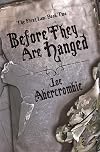
Ah middle books of a series. Books with neither a beginning nor an end. Nothing but big honking chunks of middle.
Before They Are Hanged follows three separate stories with no overlap. Of the three stories, two of them are excellent and one doesn't work. Two out of three isn't bad but the weak story is, in comparison, clearly weak and it costs the book a half a star. (It's a 3.5 stars book).
In the Union, Inquisitor Sand dan Glotka, our intrepid evil torturing hero, gets an upgrade to Superior Glotka and is sent off to the far-off exotic city of Dagoska on the edge of the Gurkhul Empire to find why Dagoska's last Inquisitor Superior disappeared. He finds a city under siege by endless armies, some sophomore attempts at underhanded politics, a military in disarray, and a city crumbling. The strongest part of the book -- and clearly Joe Abercrombie's favorite character -- Glotka demonstrates why he's a man not to be messed with, even with his broken and crippled body.
Up in Angland, the Union forces face the implacable Northern armies of King Bethod. Colonel West witnesses the Union crumble as their overestimate their own abilities and underestimate Bethod's willingness to reach into every kind of evil imaginable to crush his foes. West finds himself traveling through the Northern winter woods chasing down an army with Logan Ninefinger's old crew, Rudd Threetrees and his Named Men. Excellent battle scenes riddle West's viewpoint section as they chase through the woods to take show more out Bethod's scouts and the story unfolds to some setpiece battles.
Meanwhile, Logan Ninefingers, Bayaz and friends cross an empty continent on a quest for a rock. Road trips can be interesting but this roadtrip wasn't; the characters went through some battles but mostly they roadtripped across a vast, empty continent full of ruins. Easily the weakest part of this book, it didn't bring anything to the table except explain some of the doings of wizards thousands of years before.
When "Before They Are Hanged" is good, it is very, very, very good. Joe Abercrombie pulls off what most fantasy authors fail to do: he writes almost Tolstoy-esque battle scenes with huge set pieces all moves through the woods. The battle scenes are great. When they're small, they're personal. When they're huge, they're immense. The wars -- from the Gurkhul sieging Dagoska to the huge battles in the woods in the snow between armies -- these parts shine. But when the characters have nothing to do except talk to one another, the books just sort of fall apart.
Clearly good enough to finish the trilogy. It's a pretty decent fantasy book. It's just a middle one. So it is what it is. show less
Before They Are Hanged follows three separate stories with no overlap. Of the three stories, two of them are excellent and one doesn't work. Two out of three isn't bad but the weak story is, in comparison, clearly weak and it costs the book a half a star. (It's a 3.5 stars book).
In the Union, Inquisitor Sand dan Glotka, our intrepid evil torturing hero, gets an upgrade to Superior Glotka and is sent off to the far-off exotic city of Dagoska on the edge of the Gurkhul Empire to find why Dagoska's last Inquisitor Superior disappeared. He finds a city under siege by endless armies, some sophomore attempts at underhanded politics, a military in disarray, and a city crumbling. The strongest part of the book -- and clearly Joe Abercrombie's favorite character -- Glotka demonstrates why he's a man not to be messed with, even with his broken and crippled body.
Up in Angland, the Union forces face the implacable Northern armies of King Bethod. Colonel West witnesses the Union crumble as their overestimate their own abilities and underestimate Bethod's willingness to reach into every kind of evil imaginable to crush his foes. West finds himself traveling through the Northern winter woods chasing down an army with Logan Ninefinger's old crew, Rudd Threetrees and his Named Men. Excellent battle scenes riddle West's viewpoint section as they chase through the woods to take show more out Bethod's scouts and the story unfolds to some setpiece battles.
Meanwhile, Logan Ninefingers, Bayaz and friends cross an empty continent on a quest for a rock. Road trips can be interesting but this roadtrip wasn't; the characters went through some battles but mostly they roadtripped across a vast, empty continent full of ruins. Easily the weakest part of this book, it didn't bring anything to the table except explain some of the doings of wizards thousands of years before.
When "Before They Are Hanged" is good, it is very, very, very good. Joe Abercrombie pulls off what most fantasy authors fail to do: he writes almost Tolstoy-esque battle scenes with huge set pieces all moves through the woods. The battle scenes are great. When they're small, they're personal. When they're huge, they're immense. The wars -- from the Gurkhul sieging Dagoska to the huge battles in the woods in the snow between armies -- these parts shine. But when the characters have nothing to do except talk to one another, the books just sort of fall apart.
Clearly good enough to finish the trilogy. It's a pretty decent fantasy book. It's just a middle one. So it is what it is. show less
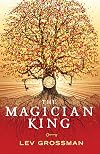
So okay, I generally enjoyed it.
The first book was all about Quentin and his friends at the fabulous magical college of Brakebills and them generally floundering around afterward to find some sort of purpose. But now Quentin has it all -- he's King of Fillory, his wonderful magical Narnia-like world. He lives in a big castle with his friends. And he's bored. He wants Adventure. He decides to build a ship and sail off to the furthest Eastern reach of his Kingdom to, of all things, go collect taxes. He takes Julia with him because she sort of kind of volunteers. Then he learns perhaps he should be careful what he asks for because he might just get it.
As Quentin and Julia go off, the book unrolls Julia's parallel history. While Quentin and his friends are off at their super special Magic College, Julia learns magic the hard way. And masters it. She, too, learns that her heart's desire isn't without steep costs.
It's a well-written adventure. It's big, it's tropey, and I enjoyed Julia's arc. The book is mainly about accepting the consequences of actions, especially when one wants something big. Sometimes, it's not all fairy tale at the end of the rainbow.
The first book was all about Quentin and his friends at the fabulous magical college of Brakebills and them generally floundering around afterward to find some sort of purpose. But now Quentin has it all -- he's King of Fillory, his wonderful magical Narnia-like world. He lives in a big castle with his friends. And he's bored. He wants Adventure. He decides to build a ship and sail off to the furthest Eastern reach of his Kingdom to, of all things, go collect taxes. He takes Julia with him because she sort of kind of volunteers. Then he learns perhaps he should be careful what he asks for because he might just get it.
As Quentin and Julia go off, the book unrolls Julia's parallel history. While Quentin and his friends are off at their super special Magic College, Julia learns magic the hard way. And masters it. She, too, learns that her heart's desire isn't without steep costs.
It's a well-written adventure. It's big, it's tropey, and I enjoyed Julia's arc. The book is mainly about accepting the consequences of actions, especially when one wants something big. Sometimes, it's not all fairy tale at the end of the rainbow.
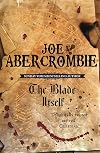
My Dad foisted the Joe Abercrombie books on me as revenge for getting him hooked on Martin's the Song of Ice and Fire. And, as for a book in the "tits, blood and scowling" genre of fiction, the first book in "the First Law" trilogy is surprisingly good.
I'm not a huge fantasy fan. If I'm going to read fantasy, I want it to be something more than the old Raymond E. Feist books. I want wars and politics and backstabbing and good stuff! Less magic, fewer fairies and unicorns, and more stabbings. More sweep of history with real people, less magic spells. The Abercrombie books fill that bill: not much in the way of sex (none in the first book) but plenty of battles, lots of blood, and tons of politics. We've have the fantasy tropes here: the barbarian/ranger, the mysterious Gandalf-like mage and his apprentice, the whiny handsome nobleman with the flashing sword, the evil kings and corrupt empires. But then we have the Inquisitor, once a jumped up nobleman himself but after being a POW not so jumped up any more, and the politics of the Throne, and wars, and the hard men of the North. Put together into a stew and churn and what comes out is a story with some cool characters and a story that moves along. The world is well realized with plenty of history and backstory and politics with the races being the races of men instead of guys with pointy ears.
The Blade Itself is clearly the first third of a book too big to publish as one standing novel. It is all setup with no conclusions show more or follow-through. As all setup, it's a compelling read but again, the book just sort of ends with the expectation that the reader will go grab the next one. Sort of the way the Song of Ice and Fire books just sort of end -- stuff and things happen but nothing gets wrapped.
It's worth it to go for the next book. Recommend for people who like their fantasy books to read more like historical novels than fairy tales. show less
I'm not a huge fantasy fan. If I'm going to read fantasy, I want it to be something more than the old Raymond E. Feist books. I want wars and politics and backstabbing and good stuff! Less magic, fewer fairies and unicorns, and more stabbings. More sweep of history with real people, less magic spells. The Abercrombie books fill that bill: not much in the way of sex (none in the first book) but plenty of battles, lots of blood, and tons of politics. We've have the fantasy tropes here: the barbarian/ranger, the mysterious Gandalf-like mage and his apprentice, the whiny handsome nobleman with the flashing sword, the evil kings and corrupt empires. But then we have the Inquisitor, once a jumped up nobleman himself but after being a POW not so jumped up any more, and the politics of the Throne, and wars, and the hard men of the North. Put together into a stew and churn and what comes out is a story with some cool characters and a story that moves along. The world is well realized with plenty of history and backstory and politics with the races being the races of men instead of guys with pointy ears.
The Blade Itself is clearly the first third of a book too big to publish as one standing novel. It is all setup with no conclusions show more or follow-through. As all setup, it's a compelling read but again, the book just sort of ends with the expectation that the reader will go grab the next one. Sort of the way the Song of Ice and Fire books just sort of end -- stuff and things happen but nothing gets wrapped.
It's worth it to go for the next book. Recommend for people who like their fantasy books to read more like historical novels than fairy tales. show less
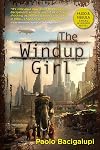
The Windup Girl by Paolo Bacigalupi is the Coen Brothers meets Blade Runner.
It's the 23rd century and global warming has run amok. The great cities of the world are under water. Enormous corporate conglomerates genetically manipulate strains of wheat and rice to feed the world while extorting the last bit of cash and blood. Countries incessantly war over resources. Genetically created diseases ravish societies. And the Japanese genetically generate the New People, their perfect servants to support a rapidly aging and non-replenishing society.
Set in Bangkok, Thailand, the book follows the stories of four main characters "Song of Ice and Fire"-like: Anderson Lake, the American 'calorie man' coming for Thailand's stock of genetic diversity, Hong Seck a Chinese Refugee from the US, Jaidee Rojjanasukchai a "white shirt" Tiger of Bangkok who works for the ministry that polices the health of the country and Emiko, a discarded "windup," a genetically modified human turned into the perfect servant but now without a master.
The four main plotlines sort of wander along telling four parallel stories that cross over and intersect and explode in exciting ways while exploring this science fiction future of ecological devastation. This is not an uplifting or positive book -- it is /very/ Coen Brothers where people are generally awful in an ever increasing tide of awfulness until the plot explodes on everyone in a mess of fiasco.
It definitely does move. As a book, it is well written, if show more not meandering at times. The problem is that the plot does meander and some of the stories don't feel terrifically satisfying. The story of Emiko the Windup Girl is by far the best of the four stories in the book but the other three tend to fall flat at times without drive.
I knock it one star for occasionally losing its point. As a science fiction book its a thinker. A downer, but a thinker. show less
It's the 23rd century and global warming has run amok. The great cities of the world are under water. Enormous corporate conglomerates genetically manipulate strains of wheat and rice to feed the world while extorting the last bit of cash and blood. Countries incessantly war over resources. Genetically created diseases ravish societies. And the Japanese genetically generate the New People, their perfect servants to support a rapidly aging and non-replenishing society.
Set in Bangkok, Thailand, the book follows the stories of four main characters "Song of Ice and Fire"-like: Anderson Lake, the American 'calorie man' coming for Thailand's stock of genetic diversity, Hong Seck a Chinese Refugee from the US, Jaidee Rojjanasukchai a "white shirt" Tiger of Bangkok who works for the ministry that polices the health of the country and Emiko, a discarded "windup," a genetically modified human turned into the perfect servant but now without a master.
The four main plotlines sort of wander along telling four parallel stories that cross over and intersect and explode in exciting ways while exploring this science fiction future of ecological devastation. This is not an uplifting or positive book -- it is /very/ Coen Brothers where people are generally awful in an ever increasing tide of awfulness until the plot explodes on everyone in a mess of fiasco.
It definitely does move. As a book, it is well written, if show more not meandering at times. The problem is that the plot does meander and some of the stories don't feel terrifically satisfying. The story of Emiko the Windup Girl is by far the best of the four stories in the book but the other three tend to fall flat at times without drive.
I knock it one star for occasionally losing its point. As a science fiction book its a thinker. A downer, but a thinker. show less
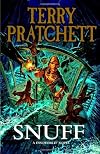
I'm a huge fan of the Discworld and the City Watch books in particular but I didn't care for Snuff as much as I could have -- or should have. Down in my gut I feel Commander Sam Vimes has had a great run but now he's so over-powerful, so unbeatable, and full of so many powerful allies (Vetinari, Lady Sybil, his unstoppable assassin-butler, the demon who lives in his head, every City Watch post ever, etc) he's no longer much of a joy to read. He has no challenge. He has no mountain to climb. The term for this is Mary Sue, and Vimes has become a Mary Sue character.
I would have happily rolled with Vimes, Duke of Ankh-Morpork if the book had turned into a commentary on Upstairs-Downstairs like it promised in the beginning, or would have kept to the city and focused on the goblins, or simply had more focus /in general/. Too much was going on and not enough was going on that had focus. We had some Class Warfare AND smuggling AND murderers AND drugs AND poor oppressed goblins whom no one understands AND What Happens to Fred Colon AND Vimes Taking Charge... the book lacked focus and the lack of focus took away from the more interesting action sequences and themes. Oppression bad, yes. But it didn't have the feeling of freeing an oppressed people like, say, Feet of Clay did, even though it was, at its core, the same story.
I would have been happier, perhaps with two books: Vimes investigating a MURDER in a Countryside Upstairs-Downstairs and a more focused story about the show more Goblins. Or something to that effect. Much like Unseen Academicals, Snuff is a long way from being unreadable but I had to force myself to finish it. It didn't grab me the same way Discworld books normally do. It's no "The Times" or "Going Postal." If I had to rank them, Snuff would dwell somewhere in the bottom third.
A high point: the continuation of Wee Mad Arthur's education as a Nac Mac Feegle from _I Shall Wear Midnight_. I adore the Feegles and having one who isn't Rob Anybody's crew is always good.
Here's hoping PTerry still has a few books left in him -- and if they are City Watch books, they star Carrot and Angua and Cheery and the crew. show less
I would have happily rolled with Vimes, Duke of Ankh-Morpork if the book had turned into a commentary on Upstairs-Downstairs like it promised in the beginning, or would have kept to the city and focused on the goblins, or simply had more focus /in general/. Too much was going on and not enough was going on that had focus. We had some Class Warfare AND smuggling AND murderers AND drugs AND poor oppressed goblins whom no one understands AND What Happens to Fred Colon AND Vimes Taking Charge... the book lacked focus and the lack of focus took away from the more interesting action sequences and themes. Oppression bad, yes. But it didn't have the feeling of freeing an oppressed people like, say, Feet of Clay did, even though it was, at its core, the same story.
I would have been happier, perhaps with two books: Vimes investigating a MURDER in a Countryside Upstairs-Downstairs and a more focused story about the show more Goblins. Or something to that effect. Much like Unseen Academicals, Snuff is a long way from being unreadable but I had to force myself to finish it. It didn't grab me the same way Discworld books normally do. It's no "The Times" or "Going Postal." If I had to rank them, Snuff would dwell somewhere in the bottom third.
A high point: the continuation of Wee Mad Arthur's education as a Nac Mac Feegle from _I Shall Wear Midnight_. I adore the Feegles and having one who isn't Rob Anybody's crew is always good.
Here's hoping PTerry still has a few books left in him -- and if they are City Watch books, they star Carrot and Angua and Cheery and the crew. show less
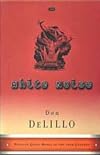
Don DeLillo won the National Book Award for White Noise in 1985. Theoretically, as marked as our Great Minds as a Great American Novel, I should be very for this book. I picked it up because I am a fiend for all things David Foster Wallace and I know he had an ongoing professional relationship with Don DeLillo and took some of the craft of his dialogue for Infinite Jest from this novel.
So why didn't I love it?
It's a couple of things. The Kindle edition has a double space between each paragraph which throws off the flow of the dialogue which, I'm sure, was a mitigating factor. Some of the black comedic assessments of our media culture seem dated simply because they were so prescient. (A friend recently pointed out that science fiction that fails to come true is fascinating; science fiction that does is cliche. Think of the 20 page digression on SSH in Cryptonomicon. It was certainly interesting for its time and a pointless digression today.) Partly because the book seems, in the end, like it is trying to be a meaningful meditation on modern existence and it tries too hard.
Jack (J.A.K.) Gladney is a professor at a small midwestern college in Hitler Studies. He and his current wife Babette have numerous children from previous marriages. One day there is an enormous industrial spill -- the Airbourne Toxic Event -- where they all pile in the car and flee. During which, Jack is infected with a small dose of industrial compound and is informed that, some day in the future, it show more will kill him. Maybe not today, maybe not tomorrow, but someday. Eventually. The last half of the book is consumed with Babette's addiction to a drug Dylar, Jack's obsession with the way Babette acquires the Dylar and the Dylar itself, and Jack's obsession with death.
So we have the big themes: rampant consumerism (lots of scenes in the grocery store), death, more death, media saturation, underground conspiracies, the family, and violence.
Not really for everyone, no. White Noise is a black satire. It is humorous in places, and has some incredible bits of craft in imagery and language. I found myself highlighting some of the better and more interesting passages. But in the end, the story didn't hang together as well as it could. This novel is definitely Your Milage May Vary. show less
So why didn't I love it?
It's a couple of things. The Kindle edition has a double space between each paragraph which throws off the flow of the dialogue which, I'm sure, was a mitigating factor. Some of the black comedic assessments of our media culture seem dated simply because they were so prescient. (A friend recently pointed out that science fiction that fails to come true is fascinating; science fiction that does is cliche. Think of the 20 page digression on SSH in Cryptonomicon. It was certainly interesting for its time and a pointless digression today.) Partly because the book seems, in the end, like it is trying to be a meaningful meditation on modern existence and it tries too hard.
Jack (J.A.K.) Gladney is a professor at a small midwestern college in Hitler Studies. He and his current wife Babette have numerous children from previous marriages. One day there is an enormous industrial spill -- the Airbourne Toxic Event -- where they all pile in the car and flee. During which, Jack is infected with a small dose of industrial compound and is informed that, some day in the future, it show more will kill him. Maybe not today, maybe not tomorrow, but someday. Eventually. The last half of the book is consumed with Babette's addiction to a drug Dylar, Jack's obsession with the way Babette acquires the Dylar and the Dylar itself, and Jack's obsession with death.
So we have the big themes: rampant consumerism (lots of scenes in the grocery store), death, more death, media saturation, underground conspiracies, the family, and violence.
Not really for everyone, no. White Noise is a black satire. It is humorous in places, and has some incredible bits of craft in imagery and language. I found myself highlighting some of the better and more interesting passages. But in the end, the story didn't hang together as well as it could. This novel is definitely Your Milage May Vary. show less
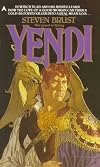
This is 1/2 of an interesting book and 1/2 of a terrible one. The street level mob war in the first half of the book was highly entertaining, if not pretty shoddily written. It is certainly not Elmore Leonard, but no one can disagree with throwing someone out a second story window.
But once it gets into the Magic Elves with Cosmic Pokey Sticks who Cannot be Killed Politics, it becomes unbelievably dull. What was a pretty good grimy crime novel turns into mostly people sitting at dinner chattering about Thrones and Empires and all this nonsense. Why is this small town hood with his hood girlfriend sitting at dinner with The Great and the Mighty to talk about Empire Succession when really he should be sniping other mobsters? I couldn't figure it out.
I can't rate this book highly. I've read a million mob books and really, what I want out of a mob book is the mob. It was definitely an interesting idea with a lack of execution.
But once it gets into the Magic Elves with Cosmic Pokey Sticks who Cannot be Killed Politics, it becomes unbelievably dull. What was a pretty good grimy crime novel turns into mostly people sitting at dinner chattering about Thrones and Empires and all this nonsense. Why is this small town hood with his hood girlfriend sitting at dinner with The Great and the Mighty to talk about Empire Succession when really he should be sniping other mobsters? I couldn't figure it out.
I can't rate this book highly. I've read a million mob books and really, what I want out of a mob book is the mob. It was definitely an interesting idea with a lack of execution.
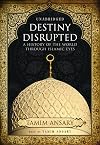
I came to Destiny Disrupted through the large number of positive reviews hoping to get a good sweep of Islamic history, especially Medieval Islamic History. The author admits to not being a professional historian in the introduction and it shows: he often puts himself into the story, his lens of focus on different parts of history is not even, he's often biased, and he drops and loses interest in large swaths of Islamic history in places not Persia. His section on the rise of the Umayyids in Spain is especially spotty.
The reason this book gets one star is the opening to the chapter on the Crusades and the Mongols. He starts off with a multi-page ranting chain of ignorance. According to the author, in 1100 AD the entire peninsula of Italy was still in smoking ruins overrun with Germanic barbarians (incorrect), no Europeans outside of Byzantium had made it to the East (incorrect, esp with Vikings), and the major advances in agriculture like crop rotation and the horse collar are "minor innovations of no note." No one bothered with Europe not because Byzantium was a huge walled city on a choke point armed with Greek Fire or that the Moors were beaten back by the Franks, but because there was "no one worth trading with."
I find I am fine with calling the Crusades what they are -- enormously ignorant campaigns of extreme hubris. I'm fine with the opinion that the Europeans were unwashed barbarians. But be very careful going into territory where ignorance on a subject shows show more through because after running into page after page of factually incorrect information, I could not reliably believe anything else I read in the book. It was invalidated.
Entertaining read but there are much better histories on the Middle East. Unless looking for an opinionated piece on the history of the world from one man's perspective, this one is a miss. show less
The reason this book gets one star is the opening to the chapter on the Crusades and the Mongols. He starts off with a multi-page ranting chain of ignorance. According to the author, in 1100 AD the entire peninsula of Italy was still in smoking ruins overrun with Germanic barbarians (incorrect), no Europeans outside of Byzantium had made it to the East (incorrect, esp with Vikings), and the major advances in agriculture like crop rotation and the horse collar are "minor innovations of no note." No one bothered with Europe not because Byzantium was a huge walled city on a choke point armed with Greek Fire or that the Moors were beaten back by the Franks, but because there was "no one worth trading with."
I find I am fine with calling the Crusades what they are -- enormously ignorant campaigns of extreme hubris. I'm fine with the opinion that the Europeans were unwashed barbarians. But be very careful going into territory where ignorance on a subject shows show more through because after running into page after page of factually incorrect information, I could not reliably believe anything else I read in the book. It was invalidated.
Entertaining read but there are much better histories on the Middle East. Unless looking for an opinionated piece on the history of the world from one man's perspective, this one is a miss. show less
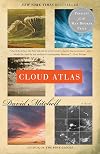
At one point in David Mitchell's amazing Buddhist science fiction novel "Cloud Atlas," a character in the past comments on a character in the future he might or might not reincarnate into which you, the reader, knows is true (the action and the reincarnation) because you already read that passage about the character in the future because you're reading from the future to the past and your brain explodes all over the wall in a big greasy lumpy mess you say "Maybe this is a good book."
Six sections all written in the style of the section's time period (the Canticle for Lebowitz section is arguably the strangest to read);
Six different stories from a South Pacific Travelogue to the transcript of a futuristic TV show all referring back to the events in the stories backward _and forward_ in time;
At least four character reincarnating with one ascending to Buddhahood and returning to suffering to help usher in a new era;
Big themes of the novel hidden in the structure of the novel itself;
A big puzzle of nesting stories where actions in one story impacts the others;
And an awesome science fiction novel for 33% of the story.
You might not bother to see the movie but you should read the book.
Six sections all written in the style of the section's time period (the Canticle for Lebowitz section is arguably the strangest to read);
Six different stories from a South Pacific Travelogue to the transcript of a futuristic TV show all referring back to the events in the stories backward _and forward_ in time;
At least four character reincarnating with one ascending to Buddhahood and returning to suffering to help usher in a new era;
Big themes of the novel hidden in the structure of the novel itself;
A big puzzle of nesting stories where actions in one story impacts the others;
And an awesome science fiction novel for 33% of the story.
You might not bother to see the movie but you should read the book.
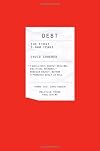
I had a difficult time slogging through Debt. It shares a similar problem with Niall Fergeson's completely unreadable "the Ascent of Money:" it mixes in the author's politics and political leanings with history to give everything this weird political sheen (in this case left to Fergeson's right.) In this case, Graeber's book covers more facts than political lecturing but it's bumped several stars for being overt.
However, Debt is a worthy read for anyone interested in the span of history from early Sumerian - Middle Ages. The sections on Babylonian debt-based society and the Roman slave society are especially strong; the entire chapter on the Axial Age and the move to coinage over debt to pay for mercenaries is good and solid read full of meaty "stuff." The effect of the fall of the Roman Empire on the coinage left in circulation and how that contributed to the Dark Ages while the smaller communities returned to earlier debt and borrow strategies is also good. I liked the breakdown on how debt goes back to wife trading and wife purchasing with cows as demonstrated in Africa and moving from that to a more generalized market -- the first people to ever price physical objects were, of course, thieves who needed to sell them for other things. And the most precious commodity is a human being.
Debt falls down in the Islam chapter and the China chapter, both which feel thin and full of conjecture. China has a big piece to play in the Cortez-dumping-silver-on-the-European-economy show more section but otherwise, it's glossed over. The chapter on the rise of Islam and the role it plays is dry and nearly unreadable.
What I want to say about Debt is to skip the boring parts and read the interesting ones. Skipping to halfway through the book to the Axial Age chapter is a good strategy. Skip everything after the Middle Ages -- Graeber hardly has interest in things like 18th century stock bubbles (although mentioned) and the rise of the East India Company. Saying, "Yeah this is a great book on ROME!" is good. Saying, "This is a great book on the history of monetary policy!" is not. It's an okay introduction to the genesis of debt, a great discussion about ancient and near-ancient monetary policy, and a fairly terrible one on the modern day.
Not a waste of time, but not 5 stars either. A good 3.5 star book. show less
However, Debt is a worthy read for anyone interested in the span of history from early Sumerian - Middle Ages. The sections on Babylonian debt-based society and the Roman slave society are especially strong; the entire chapter on the Axial Age and the move to coinage over debt to pay for mercenaries is good and solid read full of meaty "stuff." The effect of the fall of the Roman Empire on the coinage left in circulation and how that contributed to the Dark Ages while the smaller communities returned to earlier debt and borrow strategies is also good. I liked the breakdown on how debt goes back to wife trading and wife purchasing with cows as demonstrated in Africa and moving from that to a more generalized market -- the first people to ever price physical objects were, of course, thieves who needed to sell them for other things. And the most precious commodity is a human being.
Debt falls down in the Islam chapter and the China chapter, both which feel thin and full of conjecture. China has a big piece to play in the Cortez-dumping-silver-on-the-European-economy show more section but otherwise, it's glossed over. The chapter on the rise of Islam and the role it plays is dry and nearly unreadable.
What I want to say about Debt is to skip the boring parts and read the interesting ones. Skipping to halfway through the book to the Axial Age chapter is a good strategy. Skip everything after the Middle Ages -- Graeber hardly has interest in things like 18th century stock bubbles (although mentioned) and the rise of the East India Company. Saying, "Yeah this is a great book on ROME!" is good. Saying, "This is a great book on the history of monetary policy!" is not. It's an okay introduction to the genesis of debt, a great discussion about ancient and near-ancient monetary policy, and a fairly terrible one on the modern day.
Not a waste of time, but not 5 stars either. A good 3.5 star book. show less
This town : two parties and a funeral--plus, plenty of valet parking!--in America's gilded capital by Mark Leibovich
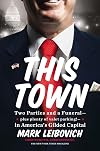
I returned from vacation to discover the Washington Post -- a major character in a book I finished, _This Town_ -- was sold for $250 million in cash to Jeff Bezos.
_This Town_ is mostly about the WaPo's main competitor, Politico, and the destruction it has wreaked on the cloistered world of Washington DC. But not just Politico -- the entire class of politicians using public service as a springboard to lobbying millions and how a trickle has become a flood. No longer do people get elected to public office to serve in public office. Now they get elected to public office for fame, for hanging out in television show green rooms, for cash, for bribes, for parties, for recognition, and to appear, yes, in the daily emailed letters from Politico.
The best way to read _This Town_ is to pretend all the characters in the story are fictional. Otherwise, the temptation to throw the book into the sea becomes so great it overwhelms the senses and over the side of the boat it goes. The people are, for the most part, horrible people and they are horrible a-politically -- _This Town_ does not subscribe to any left-right politics and rare is the political book who treats all the horrible people with equal even-handedness. They are all horrible, regardless where they fall on the political spectrum. It's best to pretend because otherwise reality is too awful.
A few of the characters in the book are exactly as they are on the tin: Haley Barbour (who clearly played along extensively with the show more author), Darrell Issa, Bill Clinton, Trent Lott. A few come out looking better than you would expect: Hillary Clinton, Joe Biden, Paul Ryan. But the rest -- the status seekers and the money seekers and the party goers and the insecure politicians -- are a horrible class of people with varying degrees of terrible.
And then there's Barack Obama for whom I left with a very confused picture -- just like everyone else on earth, apparently. He's a man who hates the DC game and refuses to play and is endlessly frustrated by the insistence of everyone around him to play instead of getting down to the hard wonkish business of government. He feels like a man trapped in a glass box. He wants to be there but everyone around him would rather be at a cocktail party in Georgetown. What is a President to do?
I greatly enjoyed _This Town_. It's a refreshing break from the pointless back and forth of the blogs and twitter and Facebook and "winning the cycle" to walk through Washington as it is today with no agenda. I got more out of this book than I have out of a 1,000 hours of reading various op-eds and "serious" journalistic pieces. I was left with a healthy hatred for Politico (and Terry McAuliffe and Dirk Gephardt), a worry about the sanity for the staffers who inhabit the halls of power like tiny ants, and a resignation at the Gilded Age-era rotating door between Congress and enormous lobby firms -- excuse me, "strategic consultants."
If you want to understand the news, read _This Town_. But don't read it on a full stomach. show less
_This Town_ is mostly about the WaPo's main competitor, Politico, and the destruction it has wreaked on the cloistered world of Washington DC. But not just Politico -- the entire class of politicians using public service as a springboard to lobbying millions and how a trickle has become a flood. No longer do people get elected to public office to serve in public office. Now they get elected to public office for fame, for hanging out in television show green rooms, for cash, for bribes, for parties, for recognition, and to appear, yes, in the daily emailed letters from Politico.
The best way to read _This Town_ is to pretend all the characters in the story are fictional. Otherwise, the temptation to throw the book into the sea becomes so great it overwhelms the senses and over the side of the boat it goes. The people are, for the most part, horrible people and they are horrible a-politically -- _This Town_ does not subscribe to any left-right politics and rare is the political book who treats all the horrible people with equal even-handedness. They are all horrible, regardless where they fall on the political spectrum. It's best to pretend because otherwise reality is too awful.
A few of the characters in the book are exactly as they are on the tin: Haley Barbour (who clearly played along extensively with the show more author), Darrell Issa, Bill Clinton, Trent Lott. A few come out looking better than you would expect: Hillary Clinton, Joe Biden, Paul Ryan. But the rest -- the status seekers and the money seekers and the party goers and the insecure politicians -- are a horrible class of people with varying degrees of terrible.
And then there's Barack Obama for whom I left with a very confused picture -- just like everyone else on earth, apparently. He's a man who hates the DC game and refuses to play and is endlessly frustrated by the insistence of everyone around him to play instead of getting down to the hard wonkish business of government. He feels like a man trapped in a glass box. He wants to be there but everyone around him would rather be at a cocktail party in Georgetown. What is a President to do?
I greatly enjoyed _This Town_. It's a refreshing break from the pointless back and forth of the blogs and twitter and Facebook and "winning the cycle" to walk through Washington as it is today with no agenda. I got more out of this book than I have out of a 1,000 hours of reading various op-eds and "serious" journalistic pieces. I was left with a healthy hatred for Politico (and Terry McAuliffe and Dirk Gephardt), a worry about the sanity for the staffers who inhabit the halls of power like tiny ants, and a resignation at the Gilded Age-era rotating door between Congress and enormous lobby firms -- excuse me, "strategic consultants."
If you want to understand the news, read _This Town_. But don't read it on a full stomach. show less
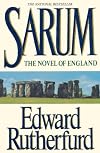
I greatly enjoyed Sarum. All 1033 pages of it.
Sarum is the first Edward Rutherford book I tackled, although his New York book has stared at me with longing on a shelf for years. Starting at the end of the last Ice Age, Sarum follows the generational paths of five families through time to the modern day. The book hits all the strong beats: the building of Stonehenge, the Roman Invasion of Britain and their colonization, the Dark Ages, Saxon Britain, the Norman Invasion, the War of the Roses, the High Middle Ages and the Black Death, the coming of Protestantism and Queen Elizabeth II, the English Civil War, the conquest of India and the American Revolution, Trafalgar and Waterloo, the Great Wars of the 20th Century. Sarum left me with a great sense of breadth and time and gave me an appreciation for age and the passing of time. Everything starts and everything ends -- cultures, religions, industry and business, technology, reigns great and small. That which felt eternal at the time it happened passed and soon became someone else's archeology.
The highlights of the book are the grisly Stonehenge chapter (nearly a novella in itself), the building of the Salisbury Cathedral and the horrible chapter on the Black Death, followed by the Revolution and the Cavaliers in the Civil War. Of the five families, two are the main focus of the book: the horrible decedents of Tep, the river man who has always been there since before the Ice Age ended, and the Shockleys, decedents of a show more Saxon Thane whose fortunes rise and fall with England's. For 1500 years those two families have back and forths, constantly crossing paths until finally joining in the 20th century. The other families (Caius Porteus's decedents, the family of Nooma the Mason, and the Godefrei's) play second fiddle -- save in the Cathedral chapter -- to the others.
Sometimes the chapters felt a little too short and that generation ended too soon but, generally, I read this book with Wikipedia and my (nonfiction) history of England open to flesh out some of the details where the book glossed over. Overall, I enjoyed the rich detail Rutherford supplies in with the every day lives of his inhabitants of Sarum to give grounding in the time period. No politics get injected in the background of historical period detail -- it is told, straight, to help couch the feelings and motivations of the characters.
I recommend this book to anyone who wants to read some meaty historical fiction or to get an entertaining grounding in the history of Britain. Although some of the archeology in the early part of the book is a little wobbly now (book came out in 1987), the rest is solid and was backed by my reference books.
Five stars. show less
Sarum is the first Edward Rutherford book I tackled, although his New York book has stared at me with longing on a shelf for years. Starting at the end of the last Ice Age, Sarum follows the generational paths of five families through time to the modern day. The book hits all the strong beats: the building of Stonehenge, the Roman Invasion of Britain and their colonization, the Dark Ages, Saxon Britain, the Norman Invasion, the War of the Roses, the High Middle Ages and the Black Death, the coming of Protestantism and Queen Elizabeth II, the English Civil War, the conquest of India and the American Revolution, Trafalgar and Waterloo, the Great Wars of the 20th Century. Sarum left me with a great sense of breadth and time and gave me an appreciation for age and the passing of time. Everything starts and everything ends -- cultures, religions, industry and business, technology, reigns great and small. That which felt eternal at the time it happened passed and soon became someone else's archeology.
The highlights of the book are the grisly Stonehenge chapter (nearly a novella in itself), the building of the Salisbury Cathedral and the horrible chapter on the Black Death, followed by the Revolution and the Cavaliers in the Civil War. Of the five families, two are the main focus of the book: the horrible decedents of Tep, the river man who has always been there since before the Ice Age ended, and the Shockleys, decedents of a show more Saxon Thane whose fortunes rise and fall with England's. For 1500 years those two families have back and forths, constantly crossing paths until finally joining in the 20th century. The other families (Caius Porteus's decedents, the family of Nooma the Mason, and the Godefrei's) play second fiddle -- save in the Cathedral chapter -- to the others.
Sometimes the chapters felt a little too short and that generation ended too soon but, generally, I read this book with Wikipedia and my (nonfiction) history of England open to flesh out some of the details where the book glossed over. Overall, I enjoyed the rich detail Rutherford supplies in with the every day lives of his inhabitants of Sarum to give grounding in the time period. No politics get injected in the background of historical period detail -- it is told, straight, to help couch the feelings and motivations of the characters.
I recommend this book to anyone who wants to read some meaty historical fiction or to get an entertaining grounding in the history of Britain. Although some of the archeology in the early part of the book is a little wobbly now (book came out in 1987), the rest is solid and was backed by my reference books.
Five stars. show less
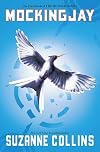
This review containers spoilers for Mockingjay.
At one point in the book, Joanna Mason, one of the victors from Catching Fire, has this exchange with Katniss:
"Is that why you hate me?" I ask.
"Partly," she admits. "Jealousy is certainly involved. I also think you're a little hard to swallow. With your tacky romantic drama and your defender-of-the-helpless act. Only it isn't an act, which make you more unbearable. Please feel free to take this personally."
I like Joanna because she sums up why I only give Mockinjay, the last book in the Hunger Games trilogy, a 3.5 -- although Goodreads only allows me to give full stars. About half of the book is Katniss moping around or mooning or complaining or whining or otherwise not moving the plot along much at all. Entire chapters devolve into "and Katniss feels bad." I get she feels bad and she's had some unbelievably bad life experiences at the hands of the Capital that defy belief but she's also the main viewpoint character and the complaining got old.
The other half of the book is full of action sequences, one more implausible than the next. And here are some of my bigger plot gripes:
- Anyone notice Katniss gets turned into Hawkeye? Anyone? I couldn't decide if this was good or bad, honestly. On one hand, thumbs up Avengers! On the other hand... isn't Hawkeye in the Avengers? It turns out I like the character of Beetee and I did like District 13s crazy cache of technology and weaponry but this felt silly.
- The bombing of District 12 show more which, on any level of examination, makes no sense. If District 12 is mining, and the military uses coal to run its generators for the mountain military base for the scene with District 2, doesn't blowing up District 12... shoot the Capital in the foot? Or, as everything seems to run on nuclear -- those hovercraft ain't steampunk -- what was the point of District 12 the whole time? A buffer to District 13?
- Everyone forgets Peeta is missing a leg. The whole book forgets Peeta is missing a leg. I suppose the new leg is so awesome it no longer needs mention? And why does Peeta, who, I should mention, is missing a leg sent on a military mission for District 13 after they made such a hoopty-do about military training and people going on military missions being in military fit condition? Why is Peeta thrown in with their squad? This makes no sense whatsoever.
- Why is the entire military of the Capital housed under one mountain in District 12? Can they not... find two mountains? A mountain and a big sprawling fort? I dunno, a mountain and a freaking castle? Who designs their military to have one massive point of failure?
- And my biggest gripe: why the hell did the Capital trap the entire city where normal people live like the Arena? I was completely down with the Arena-like mobile pods of death. Those rocked hard. But when streets opened up into whirring meatwheels of death, I was like... okay, shark? You have been jumped.
I can go on and on. The whole book doesn't work.
It sounds and feels like sour grapes for a kid's book that never made the slightest pretension of sci-fi worldbuilding. I rolled with it in Hunger Games and Catching Fire because the centerpiece, Katniss, and what happened to her was gripping and awful enough to keep the book rolling. Here, in Mockingjay, the actual rebellion is abstracted out as big events unfold offscreen (notably Peeta's rescue). The whole world is in flames and we see Katniss curled up in a corner. Good sequences, like the bombing of District 13 and the firefight in District 8, are overshadowed by strings of "buh" moments. For a big global rebellion, the book is missing some essential meat. I can't see it. Even the news updates aren't enough. Like Katniss, I can only know about it in the abstract, and it makes the first 70% of the book unsatisfying.
The final end is good. Mockingjay gets back a star for the final pages.
I wanted more. I didn't get more. The book is the weakest of the three. Of course read it to finish off the series, but no reason to re-read a second time. show less
At one point in the book, Joanna Mason, one of the victors from Catching Fire, has this exchange with Katniss:
"Is that why you hate me?" I ask.
"Partly," she admits. "Jealousy is certainly involved. I also think you're a little hard to swallow. With your tacky romantic drama and your defender-of-the-helpless act. Only it isn't an act, which make you more unbearable. Please feel free to take this personally."
I like Joanna because she sums up why I only give Mockinjay, the last book in the Hunger Games trilogy, a 3.5 -- although Goodreads only allows me to give full stars. About half of the book is Katniss moping around or mooning or complaining or whining or otherwise not moving the plot along much at all. Entire chapters devolve into "and Katniss feels bad." I get she feels bad and she's had some unbelievably bad life experiences at the hands of the Capital that defy belief but she's also the main viewpoint character and the complaining got old.
The other half of the book is full of action sequences, one more implausible than the next. And here are some of my bigger plot gripes:
- Anyone notice Katniss gets turned into Hawkeye? Anyone? I couldn't decide if this was good or bad, honestly. On one hand, thumbs up Avengers! On the other hand... isn't Hawkeye in the Avengers? It turns out I like the character of Beetee and I did like District 13s crazy cache of technology and weaponry but this felt silly.
- The bombing of District 12 show more which, on any level of examination, makes no sense. If District 12 is mining, and the military uses coal to run its generators for the mountain military base for the scene with District 2, doesn't blowing up District 12... shoot the Capital in the foot? Or, as everything seems to run on nuclear -- those hovercraft ain't steampunk -- what was the point of District 12 the whole time? A buffer to District 13?
- Everyone forgets Peeta is missing a leg. The whole book forgets Peeta is missing a leg. I suppose the new leg is so awesome it no longer needs mention? And why does Peeta, who, I should mention, is missing a leg sent on a military mission for District 13 after they made such a hoopty-do about military training and people going on military missions being in military fit condition? Why is Peeta thrown in with their squad? This makes no sense whatsoever.
- Why is the entire military of the Capital housed under one mountain in District 12? Can they not... find two mountains? A mountain and a big sprawling fort? I dunno, a mountain and a freaking castle? Who designs their military to have one massive point of failure?
- And my biggest gripe: why the hell did the Capital trap the entire city where normal people live like the Arena? I was completely down with the Arena-like mobile pods of death. Those rocked hard. But when streets opened up into whirring meatwheels of death, I was like... okay, shark? You have been jumped.
I can go on and on. The whole book doesn't work.
It sounds and feels like sour grapes for a kid's book that never made the slightest pretension of sci-fi worldbuilding. I rolled with it in Hunger Games and Catching Fire because the centerpiece, Katniss, and what happened to her was gripping and awful enough to keep the book rolling. Here, in Mockingjay, the actual rebellion is abstracted out as big events unfold offscreen (notably Peeta's rescue). The whole world is in flames and we see Katniss curled up in a corner. Good sequences, like the bombing of District 13 and the firefight in District 8, are overshadowed by strings of "buh" moments. For a big global rebellion, the book is missing some essential meat. I can't see it. Even the news updates aren't enough. Like Katniss, I can only know about it in the abstract, and it makes the first 70% of the book unsatisfying.
The final end is good. Mockingjay gets back a star for the final pages.
I wanted more. I didn't get more. The book is the weakest of the three. Of course read it to finish off the series, but no reason to re-read a second time. show less
This book should come with a helpful Public Service Announcement:
"While reading this book, you will not eat, drink, sleep, or go to the bathroom. If you do go to the bathroom, you will take the book with you. May cause stress, loud meeping noises, insomnia, and an intense need to grab the next book."
Thankfully, it's a short book. Otherwise, I'd have to work out some sort of cunning bathroom-based scheme or come down with a terrible case of one day ebola to get the book done. There's no reading it over multiple days. This is an official One Day Book where that's what you do on that day. You read the Hunger Games.
Pretty much everyone knows about this book: dystopia future, brave girl fighting for her life in a sadistic arena, courage in the face of great odds, science fiction, etc. My interest while reading the book was to pull as many sources I could without resorting to the tvtropes page. I recognized:
- Shirley Jackson's "The Lottery"
- Stephen King's "The Running Man"
- Aldous Huxley's "Brave New World"
- Raiders of the Lost Ark ("Bad Dates.")
- Theseus and the Minotaur
- Imperial Rome
- Etc.
I have a quibble. It's not all rosy rainbows. The economy of Panem doesn't... work. Normally, in a science fiction novel this would bother me but, here, the problem is easily brushed under the rug by reminding oneself that a) this is a Young Adult Fiction Novel and not Foundation or Childhood's End here b) the economics are not the point of the story and c) why are we dwelling on the show more internal politics of Panem when oh my God that guy JUST DIED HORRIBLY DID YOU SEE THAT???!? In my book, which, to be fair, is a pretty big book, a good blood splatter covers a multitudes of sins, and a well-written blood splatter written in a tight, snappy, almost Elmore Leonard-like prose covers the sin of failed internal economics. I'm okay with it, and when you read the book, you'll be okay with it, too. Trust me on this one. It's a mere quibble.
So I like the book. I liked it I went diving into the next book immediately on finishing the first. Now, granted, I am expecting Peeta Mellack to burst into some John Savage to Mustapha Mond like lecture about the uselessness of the Capital and the trueness of the rest of the world (and not Katniss, Katniss is established as open mouth, insert foot, and I appreciate that about her so it has to be Peeta). Without this, it won't be Brave New World enough.
I don't know if I would read it a second time. I've read Brave New World something like seven times, a world record in my reading, and it's not up there. It's not a great dystopian novel. But it's one hell of a story and it's written in snappy, fast prose. Five stars. show less
"While reading this book, you will not eat, drink, sleep, or go to the bathroom. If you do go to the bathroom, you will take the book with you. May cause stress, loud meeping noises, insomnia, and an intense need to grab the next book."
Thankfully, it's a short book. Otherwise, I'd have to work out some sort of cunning bathroom-based scheme or come down with a terrible case of one day ebola to get the book done. There's no reading it over multiple days. This is an official One Day Book where that's what you do on that day. You read the Hunger Games.
Pretty much everyone knows about this book: dystopia future, brave girl fighting for her life in a sadistic arena, courage in the face of great odds, science fiction, etc. My interest while reading the book was to pull as many sources I could without resorting to the tvtropes page. I recognized:
- Shirley Jackson's "The Lottery"
- Stephen King's "The Running Man"
- Aldous Huxley's "Brave New World"
- Raiders of the Lost Ark ("Bad Dates.")
- Theseus and the Minotaur
- Imperial Rome
- Etc.
I have a quibble. It's not all rosy rainbows. The economy of Panem doesn't... work. Normally, in a science fiction novel this would bother me but, here, the problem is easily brushed under the rug by reminding oneself that a) this is a Young Adult Fiction Novel and not Foundation or Childhood's End here b) the economics are not the point of the story and c) why are we dwelling on the show more internal politics of Panem when oh my God that guy JUST DIED HORRIBLY DID YOU SEE THAT???!? In my book, which, to be fair, is a pretty big book, a good blood splatter covers a multitudes of sins, and a well-written blood splatter written in a tight, snappy, almost Elmore Leonard-like prose covers the sin of failed internal economics. I'm okay with it, and when you read the book, you'll be okay with it, too. Trust me on this one. It's a mere quibble.
So I like the book. I liked it I went diving into the next book immediately on finishing the first. Now, granted, I am expecting Peeta Mellack to burst into some John Savage to Mustapha Mond like lecture about the uselessness of the Capital and the trueness of the rest of the world (and not Katniss, Katniss is established as open mouth, insert foot, and I appreciate that about her so it has to be Peeta). Without this, it won't be Brave New World enough.
I don't know if I would read it a second time. I've read Brave New World something like seven times, a world record in my reading, and it's not up there. It's not a great dystopian novel. But it's one hell of a story and it's written in snappy, fast prose. Five stars. show less
Pulphead is more of a 3.5-3.75 star book than a 4 star, but the rating system will not allow me to award partial stars so I'm rounding up.
I found Pulphead on the Guardian's "Best Books of 2011" list and I was itching for something new to read. The review pimped it out as being analogous to David Foster Wallace's "A Supposedly Fun Thing I Will Never Do Again." To be fair, this pushed my expectations a little high because almost nothing except, perhaps, Hunter Thompson's "The Great Shark Hunt" comes close to the above essay about going to a huge commercial luxury cruise (no Mr. Pibb!) but I found essays to enjoy in Pulphead anyway.
No collection of essays is ever completely even or completely excellent. Here, we find three essays worth the price of admission:
- The Axl Rose retrospective about old, fat, no longer touring with Guns N Roses but pretending to tour with Guns N Roses Axl Rose and his original home town in Indiana. The essay is pure Fiasco RPG fodder. And hilarious while, at the same time, horrifying beyond words.
- The essay about Michael Jackson wanting to break away from the Jackson 5 and strike out on his own away from the controlling interests of Motown. Excellent focus on his relationship with his sister Janet and brother Randy, the winning of Grammys for Off the Wall, his obsession with his nose, and the NBC broadcast where Jackson first performed "Billie Jean" and did the Moonwalk.
- The tale of going to the Christian Rock festival and the hollowness of show more Christian Rock. Opens with a great story about renting an enormous RV (but just enormous enough), the weird tensions between different groups of Christian Fundamentalists, and the limpness of the music they all came to hear.
A few other essays, the one about renting his house out to a TV show on the CW, the story of the Rastafarians in Jamaica and story of the caves in Tennessee are all interesting but not as good as the above three. And like all other essay collections, the rest are mostly filler. Sullivan is at his best when he is writing about music, and decent when he is writing about something other than himself, but when he starts to inject himself into the narrative things tend to go a little off the tracks.
Pulphead is a good, enjoyable, breezy read. Except for the retrospective on Axl Rose, none of the essays really linger. They aren't thick, meaty longreads. These aren't the sort of essays you roll around in your head for days and pick apart and analyze and then go argue with people on the Internet. I don't put Pulphead anywhere near the same level as David Foster Wallace. They're good and fun but, for the most part, light reads. show less
I found Pulphead on the Guardian's "Best Books of 2011" list and I was itching for something new to read. The review pimped it out as being analogous to David Foster Wallace's "A Supposedly Fun Thing I Will Never Do Again." To be fair, this pushed my expectations a little high because almost nothing except, perhaps, Hunter Thompson's "The Great Shark Hunt" comes close to the above essay about going to a huge commercial luxury cruise (no Mr. Pibb!) but I found essays to enjoy in Pulphead anyway.
No collection of essays is ever completely even or completely excellent. Here, we find three essays worth the price of admission:
- The Axl Rose retrospective about old, fat, no longer touring with Guns N Roses but pretending to tour with Guns N Roses Axl Rose and his original home town in Indiana. The essay is pure Fiasco RPG fodder. And hilarious while, at the same time, horrifying beyond words.
- The essay about Michael Jackson wanting to break away from the Jackson 5 and strike out on his own away from the controlling interests of Motown. Excellent focus on his relationship with his sister Janet and brother Randy, the winning of Grammys for Off the Wall, his obsession with his nose, and the NBC broadcast where Jackson first performed "Billie Jean" and did the Moonwalk.
- The tale of going to the Christian Rock festival and the hollowness of show more Christian Rock. Opens with a great story about renting an enormous RV (but just enormous enough), the weird tensions between different groups of Christian Fundamentalists, and the limpness of the music they all came to hear.
A few other essays, the one about renting his house out to a TV show on the CW, the story of the Rastafarians in Jamaica and story of the caves in Tennessee are all interesting but not as good as the above three. And like all other essay collections, the rest are mostly filler. Sullivan is at his best when he is writing about music, and decent when he is writing about something other than himself, but when he starts to inject himself into the narrative things tend to go a little off the tracks.
Pulphead is a good, enjoyable, breezy read. Except for the retrospective on Axl Rose, none of the essays really linger. They aren't thick, meaty longreads. These aren't the sort of essays you roll around in your head for days and pick apart and analyze and then go argue with people on the Internet. I don't put Pulphead anywhere near the same level as David Foster Wallace. They're good and fun but, for the most part, light reads. show less
In August in 2047, in the city of Varanasi in the country of Bharat in central India, nine people converge on one singular event that changes everything for mankind. For some, it's an asteroid containing the alien relic the Tabernacle. For others it is chasing down AIs. And for others, it is about finding themselves in the midst of a water war when the monsoon rains no longer come and the Ganga runs dry.
The good: River of Gods does very interesting things with the arc of the growth of computers and computing into every corner of life. Even the very popular soap, "Town and Country," is completely computer rendered with fake AI actors having fake AI-based weddings and entire "People Magazine"-like publications fawn over the imaginary private lives of the AIs inhabiting the rendered soap opera. Everyone has a cellphone-like device, even the most poor. Everything is wired together. And AIs (called aeais in the book) fill every corner of existence -- driving cars (but apparently not the taxis), running heating and cooling systems, injecting themselves into medical devices, everywhere. One of the main themes of the book is hunting down rogue AIs, those who have somehow "evolved" through illicit programming or through happenstance to become "Generation Three" AIs, those AIs that have developed full native intelligence. The question the book grapples with is not only how these beings come about and flow through the interconnectedness of all computers, but how they see existence show more and how their consciousness is represented by copying millions of copies of themselves. The other is how humans react to the super intelligent AIs, hunting them down, and "excommunicating" them with huge EMP pulses and destroying all the copies hiding in the machines.
Another bit of good comes from grappling with how humans are forcing their own evolution through selective breeding, gene therapy, and remaking themselves with extensive surgery. From this comes a shortage of women, strange children who age at 1/2 the rate of regular human beings called Brahmins who have no empathy for the human race, and nutes -- a group of people who have surgically removed all gender. The reaction from normal humans is revulsion but the book implies this is the forward trajectory of humanity and the normal people will soon be an out-bred relic of the past.
The bad: I generally like books with multiple viewpoints but River of Gods has nine and it felt overdone. The themes of the book were focused over the actual characterization of the characters. Only the nute Tal really stood out as a distinct personality. The rest of the characters tended to flow together into one amorphous mass. All the characters _do_ get a different view of the actions during August 2047 to give a perspective on how the whole plot comes together in the end -- with a little bit of Science Fiction Plot Device thrown in.
The science fiction is a little too precious at times. Sometimes it wants to be Arthur C. Clarke and sometimes it wants to be Blade Runner with just a dash of the original Philip K Dick and it doesn't seem to know which is which.
The Hindi sprinkled through is not much of a challenge. However, the kindle version of the book lacks bookmarks so looking up terms in the back of the book is a major challenge. Also, the kindle version is sprinkled throughout the text with enough typos for it to be called out.
The ending is about middling for a science fiction book. It's not awful. It's no Sphere. It's not a total collapse like Snow Crash. The book ends very definitively.
River of Gods by Ian McDonald is an awful lot of book. It's big. In parts it goes on and on and on and on. Some of it drags in places when it goes BEHOLD MY INDIA OF THE FUTURE! For an easy comparison on pure word count, it's about 1 Red Mars. Figure out how long it took to read Red Mars, add a tax for having to look up all the words in Hindi in the appendix in the back, and that's about how long it takes to get through River of Gods.
So, not bad. I made it all the way through. It definitely does have some good ideas and it is one of the better science fiction novels floating around. It's in the "pretty good" category but it's not Childhood's End or anything. It's a decent read but it's not one of those science fiction novels that lays hooks in your brain that lie there and fester until they get disgorged in some argument one day. I give it about a 3.75 stars but the rating system isn't that fine grained so I round it up to a four. It's not quite a four star book. It's very much a 3.75 star book. show less
The good: River of Gods does very interesting things with the arc of the growth of computers and computing into every corner of life. Even the very popular soap, "Town and Country," is completely computer rendered with fake AI actors having fake AI-based weddings and entire "People Magazine"-like publications fawn over the imaginary private lives of the AIs inhabiting the rendered soap opera. Everyone has a cellphone-like device, even the most poor. Everything is wired together. And AIs (called aeais in the book) fill every corner of existence -- driving cars (but apparently not the taxis), running heating and cooling systems, injecting themselves into medical devices, everywhere. One of the main themes of the book is hunting down rogue AIs, those who have somehow "evolved" through illicit programming or through happenstance to become "Generation Three" AIs, those AIs that have developed full native intelligence. The question the book grapples with is not only how these beings come about and flow through the interconnectedness of all computers, but how they see existence show more and how their consciousness is represented by copying millions of copies of themselves. The other is how humans react to the super intelligent AIs, hunting them down, and "excommunicating" them with huge EMP pulses and destroying all the copies hiding in the machines.
Another bit of good comes from grappling with how humans are forcing their own evolution through selective breeding, gene therapy, and remaking themselves with extensive surgery. From this comes a shortage of women, strange children who age at 1/2 the rate of regular human beings called Brahmins who have no empathy for the human race, and nutes -- a group of people who have surgically removed all gender. The reaction from normal humans is revulsion but the book implies this is the forward trajectory of humanity and the normal people will soon be an out-bred relic of the past.
The bad: I generally like books with multiple viewpoints but River of Gods has nine and it felt overdone. The themes of the book were focused over the actual characterization of the characters. Only the nute Tal really stood out as a distinct personality. The rest of the characters tended to flow together into one amorphous mass. All the characters _do_ get a different view of the actions during August 2047 to give a perspective on how the whole plot comes together in the end -- with a little bit of Science Fiction Plot Device thrown in.
The science fiction is a little too precious at times. Sometimes it wants to be Arthur C. Clarke and sometimes it wants to be Blade Runner with just a dash of the original Philip K Dick and it doesn't seem to know which is which.
The Hindi sprinkled through is not much of a challenge. However, the kindle version of the book lacks bookmarks so looking up terms in the back of the book is a major challenge. Also, the kindle version is sprinkled throughout the text with enough typos for it to be called out.
The ending is about middling for a science fiction book. It's not awful. It's no Sphere. It's not a total collapse like Snow Crash. The book ends very definitively.
River of Gods by Ian McDonald is an awful lot of book. It's big. In parts it goes on and on and on and on. Some of it drags in places when it goes BEHOLD MY INDIA OF THE FUTURE! For an easy comparison on pure word count, it's about 1 Red Mars. Figure out how long it took to read Red Mars, add a tax for having to look up all the words in Hindi in the appendix in the back, and that's about how long it takes to get through River of Gods.
So, not bad. I made it all the way through. It definitely does have some good ideas and it is one of the better science fiction novels floating around. It's in the "pretty good" category but it's not Childhood's End or anything. It's a decent read but it's not one of those science fiction novels that lays hooks in your brain that lie there and fester until they get disgorged in some argument one day. I give it about a 3.75 stars but the rating system isn't that fine grained so I round it up to a four. It's not quite a four star book. It's very much a 3.75 star book. show less
I usually don't read tech books cover to cover. Typically, they're used for reference -- looking up something here or there, finding a technique and reading the chapter, or just giving up because the book is written so badly the more advanced sections are completely impenetrable. This was an exception. I read every chapter, did every exercise, and came out feeling I actually learned enough to be dangerous.
"Cocoa Programming: A Quick Start" is not for beginners. It assumes from the outside the reader has had years of C and C experience, is familiar with all of the standard programming techniques and the standards OO development techniques and, near the end, has a good grasp of threading and functional programming. The idea is not to teach /programming/ per se but to get a professional software engineer from 0 to building useful MacOSX, iPhone and iPad apps in a relatively short about of time. Projects begin with the very simple, no code required application using widgets all the way through to writing somewhat complex applications using threading and queuing with all the very important pieces -- delegates, notifications, memory management, persistence, introductions to core data -- in between.
For someone dedicated to working through the book, I found it takes about three weeks to get through all of the tutorials. The tutorials must be completed -- no skipping steps -- because the next chapter often builds upon the first. The text is clear and I found all the code samples show more in the book to be pretty bug-free. The concepts move pretty fast. Only a few paragraphs are spared for a new concept before jumping in feet first. Since I'm one of those people who "learn by doing" this worked for me. After typing in the tutorials by the end of the book I was comfortable with the Objective C MVC models, I understood how connections and bindings worked, and I could see how to extend my own controllers with new messages to make new event-driven models. I was surprised how many applications fall into CRUD models (create/read/update/delete) but also pleasantly surprised how easy it is to work with Core Data to make data-driven applications.
I only have really two issues with the book. The first is mechanical: the text applies to XCode 3. XCode 4 was a major revision to the GUI interface of the iDE so many of the hot keys and screen shots no longer apply. This was incredibly confusing for the first few chapters until I learned where everything was. The second is finishing the book leaves me with a "what now?" feeling. There's a few days of failing while ideas about projects coalesce.
I would and do recommend this book to seasoned adventurers who are looking for a brave new world to conquer. Objective C, once one gets past the mildly bizarre Simula-based syntax, isn't that bad and there's lots of cool things to build. "Cocoa Programming" is a pretty strong place to start to get oriented and get going causing app-based havoc. show less
"Cocoa Programming: A Quick Start" is not for beginners. It assumes from the outside the reader has had years of C and C experience, is familiar with all of the standard programming techniques and the standards OO development techniques and, near the end, has a good grasp of threading and functional programming. The idea is not to teach /programming/ per se but to get a professional software engineer from 0 to building useful MacOSX, iPhone and iPad apps in a relatively short about of time. Projects begin with the very simple, no code required application using widgets all the way through to writing somewhat complex applications using threading and queuing with all the very important pieces -- delegates, notifications, memory management, persistence, introductions to core data -- in between.
For someone dedicated to working through the book, I found it takes about three weeks to get through all of the tutorials. The tutorials must be completed -- no skipping steps -- because the next chapter often builds upon the first. The text is clear and I found all the code samples show more in the book to be pretty bug-free. The concepts move pretty fast. Only a few paragraphs are spared for a new concept before jumping in feet first. Since I'm one of those people who "learn by doing" this worked for me. After typing in the tutorials by the end of the book I was comfortable with the Objective C MVC models, I understood how connections and bindings worked, and I could see how to extend my own controllers with new messages to make new event-driven models. I was surprised how many applications fall into CRUD models (create/read/update/delete) but also pleasantly surprised how easy it is to work with Core Data to make data-driven applications.
I only have really two issues with the book. The first is mechanical: the text applies to XCode 3. XCode 4 was a major revision to the GUI interface of the iDE so many of the hot keys and screen shots no longer apply. This was incredibly confusing for the first few chapters until I learned where everything was. The second is finishing the book leaves me with a "what now?" feeling. There's a few days of failing while ideas about projects coalesce.
I would and do recommend this book to seasoned adventurers who are looking for a brave new world to conquer. Objective C, once one gets past the mildly bizarre Simula-based syntax, isn't that bad and there's lots of cool things to build. "Cocoa Programming" is a pretty strong place to start to get oriented and get going causing app-based havoc. show less
What do I say about this book?
The Girl who Kicked the Hornet's Nest the Return of the King of exceedingly trashy thriller novels. Conspiracy! Fraud! Illegal Wire Tapping! Chase scenes! More chase scenes! Good cops! Bad cops! Evil cops! Hacking! Hot heroic women! And, of course... MURDER. Oh, and don't forget the sex, the yugoslavian mafia guys, the biker gangs, the evil government officials, and the Heroics of Mikhael Blomqvist and Lisbeth Salander and the Millennium crew! When I say "trashy" I don't mean it in a bad way. Trashy is good. Trashy is often great! But art it is not and boy is this novel trashy. It transcends cheese and right out the other side into glorious, glorious trash.
The story is 600 pages of chase novel. It opens with Lisbeth Salander in the hospital after being shot in the head (!!) and then the quest to clear her of All Wrongs and her eeeevil father, the ex-Soviet military spy and defector to Sweden, just down the hall plotting her horrible demise. Meanwhile, a super secret government group called the Section comes out of retirement to deal with their wayward spy, cover all their tracks, destroy Millennium before evidence is published, and bury Lisbeth Salander forever in a mental institution. No one is going to keep Mikhael Blomqvist from getting the story -- and along the way a girl -- about something as scandalous as a bunch of old Cold Warriors who will do anything to keep an old Soviet Spy who has moved into sex trafficking a secret.
And then show more everyone runs all over Sweden -- except Lisbeth, who spends 80% of the novel lying in bed in a hospital hacking. The Girl who Kicks the Hornet's Nest is the book where Stieg Larsson figured out how to write. The scenes are short and breathless. The chapters are laid out day by day so while Horrible Things happen one day you just have to know what happens on the next. Despite having an enormous cast, the plot moves along at breakneck pace. It's a fun read! And surprisingly, fairly well plotted.
Most of Lisbeth's hacking actually manages to pass the smell test. It's a little exaggerated in places simply through time compression but otherwise its likely plausible enough. My only true quibble with this book is the Erika Berger B plot which seems to serve no purpose other than for Erika to leave, run around, whine, and then return to Millennium older and wiser and having learned a Valuable Lesson. Perhaps I simply do not like the Erika Berger character, but I found the B plot to be a little tedious and pointless. Otherwise, I enjoyed most of the second fiddle characters -- the Milton Security guys (and gal), the Constitutional Protection Police in SIS, the regular cops, and, overall, the bad guys who, to their credit, are immensely bad.
The Girl Who Kicked the Hornet's Nest firmly earns its 5 star rating by bringing the story to a complete conclusion. The very end is a tad rushed but it ends. The trilogy concludes. I feel comfortable walking away from Lisbeth Salander and Mikhael Blomqvist and all their friends and enemies. The story has been told.
I feel comfortable recommending the series after the conclusion of the Girl Who Kicked the Hornet's Nest. I know, you're probably looking at the books and going: "Man, these books are everywhere. Should I really read them?" My answer: yep. The third book is all payoff, baby. show less
The Girl who Kicked the Hornet's Nest the Return of the King of exceedingly trashy thriller novels. Conspiracy! Fraud! Illegal Wire Tapping! Chase scenes! More chase scenes! Good cops! Bad cops! Evil cops! Hacking! Hot heroic women! And, of course... MURDER. Oh, and don't forget the sex, the yugoslavian mafia guys, the biker gangs, the evil government officials, and the Heroics of Mikhael Blomqvist and Lisbeth Salander and the Millennium crew! When I say "trashy" I don't mean it in a bad way. Trashy is good. Trashy is often great! But art it is not and boy is this novel trashy. It transcends cheese and right out the other side into glorious, glorious trash.
The story is 600 pages of chase novel. It opens with Lisbeth Salander in the hospital after being shot in the head (!!) and then the quest to clear her of All Wrongs and her eeeevil father, the ex-Soviet military spy and defector to Sweden, just down the hall plotting her horrible demise. Meanwhile, a super secret government group called the Section comes out of retirement to deal with their wayward spy, cover all their tracks, destroy Millennium before evidence is published, and bury Lisbeth Salander forever in a mental institution. No one is going to keep Mikhael Blomqvist from getting the story -- and along the way a girl -- about something as scandalous as a bunch of old Cold Warriors who will do anything to keep an old Soviet Spy who has moved into sex trafficking a secret.
And then show more everyone runs all over Sweden -- except Lisbeth, who spends 80% of the novel lying in bed in a hospital hacking. The Girl who Kicks the Hornet's Nest is the book where Stieg Larsson figured out how to write. The scenes are short and breathless. The chapters are laid out day by day so while Horrible Things happen one day you just have to know what happens on the next. Despite having an enormous cast, the plot moves along at breakneck pace. It's a fun read! And surprisingly, fairly well plotted.
Most of Lisbeth's hacking actually manages to pass the smell test. It's a little exaggerated in places simply through time compression but otherwise its likely plausible enough. My only true quibble with this book is the Erika Berger B plot which seems to serve no purpose other than for Erika to leave, run around, whine, and then return to Millennium older and wiser and having learned a Valuable Lesson. Perhaps I simply do not like the Erika Berger character, but I found the B plot to be a little tedious and pointless. Otherwise, I enjoyed most of the second fiddle characters -- the Milton Security guys (and gal), the Constitutional Protection Police in SIS, the regular cops, and, overall, the bad guys who, to their credit, are immensely bad.
The Girl Who Kicked the Hornet's Nest firmly earns its 5 star rating by bringing the story to a complete conclusion. The very end is a tad rushed but it ends. The trilogy concludes. I feel comfortable walking away from Lisbeth Salander and Mikhael Blomqvist and all their friends and enemies. The story has been told.
I feel comfortable recommending the series after the conclusion of the Girl Who Kicked the Hornet's Nest. I know, you're probably looking at the books and going: "Man, these books are everywhere. Should I really read them?" My answer: yep. The third book is all payoff, baby. show less
"The Girl who Played with Fire" has middle book of a trilogy syndrome. It doesn't have all the setup and introductions and background and exploration of character that the first book has and it doesn't have the resolution of a final book. It is the Empire Strikes Back of the Millennium Trilogy --- neither an opener nor a closer, but with plenty of "I am your father, Luke" moments. This leaves the book feeling a little bit at loose ends.
My biggest issue with "The Girl who Played with Fire" is that nothing of plot consequence happens for the first full third of the book. It opens with a big "meanwhile" where Lisbeth Salandar does stuff for a while and Mikhael Blomqvist does stuff for a while and the magazine does stuff for a while and really, people do stuff for a while. There's some good old fashioned lesbian sex, some regular straight sex, and lots of people sitting around drinking and talking. Then people get shot up real good and blood splatters and the book becomes enjoyable. We demand blood splatters! Give us dead bodies or go home!
The book tosses in characters who are so numerous it gets hard to follow after a while: cops, bikers, a professional boxer, the staff at Millennium magazine, the people at Milton Security, some dude named Zala, a big blond giant who goes around hitting people with his fists, government flunkies... and they all have names that end in "... berg." It becomes an exercise in being cross-eyed after a while. The story becomes /super/ exciting when show more it involves Lisbeth Salandar (our autistic heroine) or Mikael Blomqvist (our intrepid reporter) but then stalls a bit when it flashes to this secondary character or that secondary character. Well, I guess those characters need to have lives, too. Then there are fights --- one thing I can say about Stieg Larsson books is the guy knew how to write an exciting fight scene --- and implacable villains who are implacable and villainous and an absolutely amazing final 10% of the book full of, to put it bluntly, Empire Strikes Back moments with Big! Gasping! Revelations! GASP! Read that passage again! GASP!!!!
Except Lisbeth Salander gets to keep her hand. Sort of.
For the final 10% I bumped my review from three stars to four simply because the payoff is worth the slog at the beginning. For the most part, "The Girl who Played with Fire" is a three and a half star book. It plods in the beginning and bogs in places where the cops run around coming to incorrect conclusions. It is not as tightly plotted or as cleanly written as "The Girl with the Dragon Tattoo." It isn't as enjoyably trashy, either -- sure, it has a lesbian sex scene but it is a bit on the tame side and Blomqvist doesn't sleep with /everyone/. It is trashy, sure, but it is not quite as trashy as the first book. In places it even feels a little conservative. The closing scenes, though, are worth the price of admission.
It also has no resolution. It's a middle series book. No opening and no closing. Luckily one can get "the Girl Who Kicked the Hornet's Nest" from Amazon and it downloads right to the Kindle... show less
My biggest issue with "The Girl who Played with Fire" is that nothing of plot consequence happens for the first full third of the book. It opens with a big "meanwhile" where Lisbeth Salandar does stuff for a while and Mikhael Blomqvist does stuff for a while and the magazine does stuff for a while and really, people do stuff for a while. There's some good old fashioned lesbian sex, some regular straight sex, and lots of people sitting around drinking and talking. Then people get shot up real good and blood splatters and the book becomes enjoyable. We demand blood splatters! Give us dead bodies or go home!
The book tosses in characters who are so numerous it gets hard to follow after a while: cops, bikers, a professional boxer, the staff at Millennium magazine, the people at Milton Security, some dude named Zala, a big blond giant who goes around hitting people with his fists, government flunkies... and they all have names that end in "... berg." It becomes an exercise in being cross-eyed after a while. The story becomes /super/ exciting when show more it involves Lisbeth Salandar (our autistic heroine) or Mikael Blomqvist (our intrepid reporter) but then stalls a bit when it flashes to this secondary character or that secondary character. Well, I guess those characters need to have lives, too. Then there are fights --- one thing I can say about Stieg Larsson books is the guy knew how to write an exciting fight scene --- and implacable villains who are implacable and villainous and an absolutely amazing final 10% of the book full of, to put it bluntly, Empire Strikes Back moments with Big! Gasping! Revelations! GASP! Read that passage again! GASP!!!!
Except Lisbeth Salander gets to keep her hand. Sort of.
For the final 10% I bumped my review from three stars to four simply because the payoff is worth the slog at the beginning. For the most part, "The Girl who Played with Fire" is a three and a half star book. It plods in the beginning and bogs in places where the cops run around coming to incorrect conclusions. It is not as tightly plotted or as cleanly written as "The Girl with the Dragon Tattoo." It isn't as enjoyably trashy, either -- sure, it has a lesbian sex scene but it is a bit on the tame side and Blomqvist doesn't sleep with /everyone/. It is trashy, sure, but it is not quite as trashy as the first book. In places it even feels a little conservative. The closing scenes, though, are worth the price of admission.
It also has no resolution. It's a middle series book. No opening and no closing. Luckily one can get "the Girl Who Kicked the Hornet's Nest" from Amazon and it downloads right to the Kindle... show less
Kim lent me a copy of the hardbound first collection of the graphic novel Castle Waiting by Linda Medley and produced by Fantagraphics Books. The story is a sort of feminist Chaucer set in the never never land of fairy tales. It opens with the story of Castle Waiting, a castle set over a land once lush and prosperous until it became the bramble-covered castle of the story of Sleeping Beauty. Once the Prince woke the Princess and everyone else from their century-long sleep the town was gone and the castle destroyed. With the castle abandoned by all but a few, it became Castle Waiting.
The stories in Castle Waiting are charming and entertaining but lack emotional punch. It's difficult not to be charmed by the book as the stories are light, funny and entertaining. A pregnant woman flees from her abusive husband and falls into peril before she manages to reach Castle Waiting and give birth to her strange green son. A horse-headed knight and the stork-shaped keeper of the castle go into town for supplies and meet up with bandits. A full second half of the book involves the story of the local nun and how a bearded girl joined a circus, left a circus, and found herself among a feminist order in the service of God. The story of the nun goes on too long -- it spins into backstories about backstories that have backstories -- but is otherwise fun to read. It's sort of the fantasy lives of the women of various fantasy series while their men go off and fight wars and the great battles show more between Good and Evil.
It's a fun read. It's well and clearly written. The art is top-notch for being b&w. It's very light. I'm not certain it's a "read more than once" but it is handsomely bound and looks good sitting on a shelf among other books. It makes a nice introduction to comics for people who aren't enormous comic-book people and aren't interested in requiring an encyclopedic knowledge of this universe or that one going back 40 years. Although it has fairy tale references it is a self-contained volume.
I'll happily read volume #2 when it comes out. This one comes recommended for those looking to get into comics and not knowing where to start, or those who enjoy comics from time to time but don't want to invest in some huge story. It's a great intro-story. It may not be a good recommendation for people who are hard core comics nerds who are looking for more meat out of their stories.
(Also, it needs to go back to its owner!) show less
The stories in Castle Waiting are charming and entertaining but lack emotional punch. It's difficult not to be charmed by the book as the stories are light, funny and entertaining. A pregnant woman flees from her abusive husband and falls into peril before she manages to reach Castle Waiting and give birth to her strange green son. A horse-headed knight and the stork-shaped keeper of the castle go into town for supplies and meet up with bandits. A full second half of the book involves the story of the local nun and how a bearded girl joined a circus, left a circus, and found herself among a feminist order in the service of God. The story of the nun goes on too long -- it spins into backstories about backstories that have backstories -- but is otherwise fun to read. It's sort of the fantasy lives of the women of various fantasy series while their men go off and fight wars and the great battles show more between Good and Evil.
It's a fun read. It's well and clearly written. The art is top-notch for being b&w. It's very light. I'm not certain it's a "read more than once" but it is handsomely bound and looks good sitting on a shelf among other books. It makes a nice introduction to comics for people who aren't enormous comic-book people and aren't interested in requiring an encyclopedic knowledge of this universe or that one going back 40 years. Although it has fairy tale references it is a self-contained volume.
I'll happily read volume #2 when it comes out. This one comes recommended for those looking to get into comics and not knowing where to start, or those who enjoy comics from time to time but don't want to invest in some huge story. It's a great intro-story. It may not be a good recommendation for people who are hard core comics nerds who are looking for more meat out of their stories.
(Also, it needs to go back to its owner!) show less
The day Unfamiliar Fishes came out, it was downloaded to my Kindle. I loved Sarah Vowell's previous books, especially Assassination Vacation. Sarah Vowell has turned into a sort of deep sticky underbelly of American History sort of historian whose books feel like long episodes of The American Life (and I love This American Life). I foist them on everyone I see -- "Want to learn bizarre facts of American History? Read these books!"
I liked Unfamiliar Fishes, a book on the history of Hawai'i from 1778-1900, but the subject matter is so soul-crushingly depressing the upbeat sarcastic tone of the text clashed with the actual text at times. The narrative begins with the death of Captain Cook in 1778 at the then-named "Sandwich Islands" for doing horrible things to the local natives and then discusses what Hawai'i was like at that time: not a peaceful paradise. The islands had just been forged into a Kingdom after a bloody civil war. The society was highly stratified with bloodlines of chiefs and a feudalistic system of land division. Men and women were segregated from one another at meal times and women were forbidden to eat certain foods under kapu laws. They had their own Gods -- Ku the War God gets prominent mention for his prominent temple. Then the missionaries came with their Jesus and their Bibles in 1820 and everything changed.
Everything would have changed anyway. Had it not been the missionaries it would have been someone else. The missionaries at least came with the show more printing press and a zeal for learning. They translated the Bible into a new written form of Hawai'ian and, from there, others wrote down all the chants and religion and myths and culture they could to preserve it. The missionaries came to save the Hawai'ians, which meant stamping out the local culture, shoving New England Protestantism on it, and persuading the high Chiefs to do away with various bits of their culture to make it more "modern." Granted, by the time the missionaries came, the Hawai'ians were starting to dismantle some of their culture anyway, so perhaps some of it is moot, but it would have taken a different course.
Then the shipping came, and then the sugar plantations, and the imported workers, and the round trips from newly established and totally hot San Francisco, and then with it came the smallpox and the malaria and the dysentery and everything else that could wipe out a local population. In time, the US Navy started eying Hawai'i as a Pacific port, especially with the sexy Pearl Harbor. Enterprising grandchildren of the original missionaries decided to stage a coup, and then decided to get Hawai'i annexed to the US to avoid tariffs on sugar. When Congress voted against the treaty of annexation due to the protest of the islanders, Pres. William McKinley decided it was good old "American Manifest Destiny" and figured out a back door to get annexation through anyway.
The sugar plantations are gone, now. And there's a huge revival of local culture -- a good thing.
Why did I give this book 3 stars? Mostly because Goodreads won't allow me to set 3.5. This is a good book, but not a great book. It does feel like a long episode of This American Life, but not one that sticks in the memory. I also felt terrible and depressed at the end because it's a terrible and depressing subject, and no amount of sarcasm and no number of funny stories about insane Mormons who are trying to become King of the Pacific make up for how sad and depressing the story is. It reminded me strongly of George Carlin's bit, "Religious Lift." It goes like this:
"Like I say, religion is a lift in your shoe, man. If you need it, cool. Just don't let me wear your shoes if I don't want 'em and we don't have to go down and nail lifts onto the native's feet!" show less
I liked Unfamiliar Fishes, a book on the history of Hawai'i from 1778-1900, but the subject matter is so soul-crushingly depressing the upbeat sarcastic tone of the text clashed with the actual text at times. The narrative begins with the death of Captain Cook in 1778 at the then-named "Sandwich Islands" for doing horrible things to the local natives and then discusses what Hawai'i was like at that time: not a peaceful paradise. The islands had just been forged into a Kingdom after a bloody civil war. The society was highly stratified with bloodlines of chiefs and a feudalistic system of land division. Men and women were segregated from one another at meal times and women were forbidden to eat certain foods under kapu laws. They had their own Gods -- Ku the War God gets prominent mention for his prominent temple. Then the missionaries came with their Jesus and their Bibles in 1820 and everything changed.
Everything would have changed anyway. Had it not been the missionaries it would have been someone else. The missionaries at least came with the show more printing press and a zeal for learning. They translated the Bible into a new written form of Hawai'ian and, from there, others wrote down all the chants and religion and myths and culture they could to preserve it. The missionaries came to save the Hawai'ians, which meant stamping out the local culture, shoving New England Protestantism on it, and persuading the high Chiefs to do away with various bits of their culture to make it more "modern." Granted, by the time the missionaries came, the Hawai'ians were starting to dismantle some of their culture anyway, so perhaps some of it is moot, but it would have taken a different course.
Then the shipping came, and then the sugar plantations, and the imported workers, and the round trips from newly established and totally hot San Francisco, and then with it came the smallpox and the malaria and the dysentery and everything else that could wipe out a local population. In time, the US Navy started eying Hawai'i as a Pacific port, especially with the sexy Pearl Harbor. Enterprising grandchildren of the original missionaries decided to stage a coup, and then decided to get Hawai'i annexed to the US to avoid tariffs on sugar. When Congress voted against the treaty of annexation due to the protest of the islanders, Pres. William McKinley decided it was good old "American Manifest Destiny" and figured out a back door to get annexation through anyway.
The sugar plantations are gone, now. And there's a huge revival of local culture -- a good thing.
Why did I give this book 3 stars? Mostly because Goodreads won't allow me to set 3.5. This is a good book, but not a great book. It does feel like a long episode of This American Life, but not one that sticks in the memory. I also felt terrible and depressed at the end because it's a terrible and depressing subject, and no amount of sarcasm and no number of funny stories about insane Mormons who are trying to become King of the Pacific make up for how sad and depressing the story is. It reminded me strongly of George Carlin's bit, "Religious Lift." It goes like this:
"Like I say, religion is a lift in your shoe, man. If you need it, cool. Just don't let me wear your shoes if I don't want 'em and we don't have to go down and nail lifts onto the native's feet!" show less
Consider the Lobster is a square four and a half instead of a 5, but Goodreads doesn't allow for half stars, so I'll stick with the 5, but dock for the half star for the last essay.
The essays themselves are inspired -- the title essay about wondering if lobsters feel pain when put into a boiling pot of water whole, the travels and travails with the McCain press corps in 2000, the disappointment in sports memoirs, the wandering the halls of Caesar's Palace in Vegas during a Porn Convention and Awards Show. The focus isn't on mere traveling gonzo journalism but a laser-like focus on the cast of crazy people who are often populating the back corners of these little bits of American culture.
All of the essays succumb to DFW's habitual overuse of the footnote but only the last essay, "the Host," is actively unreadable for it.
Very readable and enjoyable, and makes you miss DFW. Highly recommended.
The essays themselves are inspired -- the title essay about wondering if lobsters feel pain when put into a boiling pot of water whole, the travels and travails with the McCain press corps in 2000, the disappointment in sports memoirs, the wandering the halls of Caesar's Palace in Vegas during a Porn Convention and Awards Show. The focus isn't on mere traveling gonzo journalism but a laser-like focus on the cast of crazy people who are often populating the back corners of these little bits of American culture.
All of the essays succumb to DFW's habitual overuse of the footnote but only the last essay, "the Host," is actively unreadable for it.
Very readable and enjoyable, and makes you miss DFW. Highly recommended.
5 stars is, alas, the most stars I can give this book. But I give it an extra imaginary star just for good measure.
What can I say about a book that, in concise and funny verbiage, examines some of the worst parts of a mission to Mars? Things you never, ever think about? How do clothes get washed? What happens if you have to go to the bathroom? What about food particles? G-forces? Can you jump out of a crashing space lander? How much food does it take for a two year manned mission? Can you have sex in zero-G? And really, how do they design the toilets?
And more. I loved Mary Roach's previous books but this one is the best of all of them. If you are interested in manned space flight at all, this book is incredibly educational. And it will make you really think about the engineering of getting human beings to Mars.
Absolutely recommended. Brisk, fun, educational read. Available on the Kindle.
What can I say about a book that, in concise and funny verbiage, examines some of the worst parts of a mission to Mars? Things you never, ever think about? How do clothes get washed? What happens if you have to go to the bathroom? What about food particles? G-forces? Can you jump out of a crashing space lander? How much food does it take for a two year manned mission? Can you have sex in zero-G? And really, how do they design the toilets?
And more. I loved Mary Roach's previous books but this one is the best of all of them. If you are interested in manned space flight at all, this book is incredibly educational. And it will make you really think about the engineering of getting human beings to Mars.
Absolutely recommended. Brisk, fun, educational read. Available on the Kindle.
I am of two minds about this book. Either:
* Everyone in the world should read this book
... or ...
* No one should /ever/ read this book.
When The Big Short first came out, I heard about it on NPR, listened to a review on Planet Money, listened to an interview with Michael Lewis on Planet Money, heard several more people talk about this book, and then decided not to read it for 'rage management' reasons. Planet Money recently released their recommended books about the crash and the economy and, this time around, I felt enough time passed between the crash and now that the rage would be a lesser rage, that I would not throw my Kindle into the wall, and the teeth grinding would be lessened.
The Big Short is a concise history of Wall Street from 2003-2008. By following the lives, and trades, of several sets of investors who saw the crash coming from miles away, the book delves deeply into the world of mortgage backed securities. As well as anyone can, it explains bond trading, tranches, credit default swaps (CDS), collatoralized debt obligations (CDOs), and synthesized CDOs which are CDOs made, bewilderingly, of other CDOs. Then the book goes on to talk about the crazy trader at Deutsche Bank who ran around selling CDSes on everything, the bond trader group -- who used to be equity traders -- who went short on everything they could find, the doctor come hedge fund manager who fought endlessly to tell his investors that these no-doc, negative amortizing adjustable rate mortgages show more with 2 year teaser rates were going to blow up and they did not listen, the kids from Berkeley who tried to make a killing and the people who actually went long on these things.
The pinnacle of the book is the "Wing Chau" scene, where the equity trader met someone on the other side of his trades who, in 2006, when bonds were already going bad, was convinced of the status quo forever and ever. Then the equity trader went home going "oh my god..."
The game was rigged. In theory Americans would refinance every two years from one terrible mortgage to the next to generate endless fees to dump into endless bonds that pretended to be "riskless." In the end, the mortgage deals blew up and the huge bundles of bonds were not riskless. Housing did not increase in value forever.
And yes, the few people who saw it coming made hundreds of millions off the crash, but at what cost to society as a whole? Most of them left, never to return to the game. They made their money but the cost to themselves was so high it wasn't worth it anymore.
It's a story of massive collective delusion, of outright greed, of fraud, of lies, of gamed rating agencies, of banks shifting massive untold risk on to their shareholders, of normal banking becoming too 'boring', of an industry who sucked up trillions of dollars and produced nothing, and of people who were playing with things they had no hope of understanding. A story of a giant game played with people's homes and people's ignorance on a mass scale and turning the American homeowner into just one dot in a giant Ponzi Scheme that was bailed out, no questions asked, by the US Government with even more of the American homeowner's money.
The book has an incredibly hooky style. It's clear. It's concise. It's sarcastic. It's entertaining. It's compulsive. It reads quickly. It's also a drive by on a twenty car accident on a freeway. I want desperately to recommend it but I feel everyone who reads this book will promptly sell their house, pull their money out of the banks, and go live on a compound somewhere in Western Michigan.
Seriously two thumbs up but now, when I read the economics blogs -- all which recommend the Big Short -- I am always going to think about one bond trader screaming at another one: "I'M SHORTING YOUR HOUSE!" show less
* Everyone in the world should read this book
... or ...
* No one should /ever/ read this book.
When The Big Short first came out, I heard about it on NPR, listened to a review on Planet Money, listened to an interview with Michael Lewis on Planet Money, heard several more people talk about this book, and then decided not to read it for 'rage management' reasons. Planet Money recently released their recommended books about the crash and the economy and, this time around, I felt enough time passed between the crash and now that the rage would be a lesser rage, that I would not throw my Kindle into the wall, and the teeth grinding would be lessened.
The Big Short is a concise history of Wall Street from 2003-2008. By following the lives, and trades, of several sets of investors who saw the crash coming from miles away, the book delves deeply into the world of mortgage backed securities. As well as anyone can, it explains bond trading, tranches, credit default swaps (CDS), collatoralized debt obligations (CDOs), and synthesized CDOs which are CDOs made, bewilderingly, of other CDOs. Then the book goes on to talk about the crazy trader at Deutsche Bank who ran around selling CDSes on everything, the bond trader group -- who used to be equity traders -- who went short on everything they could find, the doctor come hedge fund manager who fought endlessly to tell his investors that these no-doc, negative amortizing adjustable rate mortgages show more with 2 year teaser rates were going to blow up and they did not listen, the kids from Berkeley who tried to make a killing and the people who actually went long on these things.
The pinnacle of the book is the "Wing Chau" scene, where the equity trader met someone on the other side of his trades who, in 2006, when bonds were already going bad, was convinced of the status quo forever and ever. Then the equity trader went home going "oh my god..."
The game was rigged. In theory Americans would refinance every two years from one terrible mortgage to the next to generate endless fees to dump into endless bonds that pretended to be "riskless." In the end, the mortgage deals blew up and the huge bundles of bonds were not riskless. Housing did not increase in value forever.
And yes, the few people who saw it coming made hundreds of millions off the crash, but at what cost to society as a whole? Most of them left, never to return to the game. They made their money but the cost to themselves was so high it wasn't worth it anymore.
It's a story of massive collective delusion, of outright greed, of fraud, of lies, of gamed rating agencies, of banks shifting massive untold risk on to their shareholders, of normal banking becoming too 'boring', of an industry who sucked up trillions of dollars and produced nothing, and of people who were playing with things they had no hope of understanding. A story of a giant game played with people's homes and people's ignorance on a mass scale and turning the American homeowner into just one dot in a giant Ponzi Scheme that was bailed out, no questions asked, by the US Government with even more of the American homeowner's money.
The book has an incredibly hooky style. It's clear. It's concise. It's sarcastic. It's entertaining. It's compulsive. It reads quickly. It's also a drive by on a twenty car accident on a freeway. I want desperately to recommend it but I feel everyone who reads this book will promptly sell their house, pull their money out of the banks, and go live on a compound somewhere in Western Michigan.
Seriously two thumbs up but now, when I read the economics blogs -- all which recommend the Big Short -- I am always going to think about one bond trader screaming at another one: "I'M SHORTING YOUR HOUSE!" show less