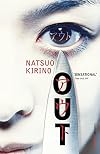
I am overall unfamiliar with Japanese thrillers and when I found this book in a second-hand bookstore, I decided to take a chance on it after hearing positive reviews. Although I generally read science fiction and fantasy I've been trying to expand my reading palette, especially into non-American authors.
I was not prepared for this books. I have read some of the twisted, creepy thrillers that have been popular in the past decade, but the stark brutality of [b:Out|25365|Out|Natsuo Kirino|https://images.gr-assets.com/books/1386749063s/25365.jpg|849266] was something I definitely was not expecting. And I think it distracted from the power the novel could've had.
The character of Satake is "too much." The story of the four women had me hooked. I loved watching their relationships come together and then fall apart and the ways that sexism and the demands of Japanese culture forced them into these situations, but throwing in Satake and his intense sexual sadism sucked all the power from the narrative of the four women. The fixation becomes on Satake, his vendetta, and his sexual urges. I believe that there is a much more intense story in the relationship between these women than the drama between Satake and Masako. Perhaps it is a more titillating drama because of the sexual element and the way Satake is set up as a foil for Masako, but I think that ultimately revealing the conflict to be the base man v. woman set-up reduces the novel to be too simplistic.
I was not prepared for this books. I have read some of the twisted, creepy thrillers that have been popular in the past decade, but the stark brutality of [b:Out|25365|Out|Natsuo Kirino|https://images.gr-assets.com/books/1386749063s/25365.jpg|849266] was something I definitely was not expecting. And I think it distracted from the power the novel could've had.
The character of Satake is "too much." The story of the four women had me hooked. I loved watching their relationships come together and then fall apart and the ways that sexism and the demands of Japanese culture forced them into these situations, but throwing in Satake and his intense sexual sadism sucked all the power from the narrative of the four women. The fixation becomes on Satake, his vendetta, and his sexual urges. I believe that there is a much more intense story in the relationship between these women than the drama between Satake and Masako. Perhaps it is a more titillating drama because of the sexual element and the way Satake is set up as a foil for Masako, but I think that ultimately revealing the conflict to be the base man v. woman set-up reduces the novel to be too simplistic.
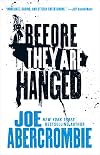
Before They are Hanged by Joe Abercrombie is the second in The First Law trilogy. The first novel I bought on a whim at a bookstore in Oxford while I studied there. I knew some of my favorite authors recommended it (and a good friend) and I thought the cover was pretty (it was shiny!) and I wanted a British fantasy author to buy before I went back to America. The first book was entertaining enough so I needed to read the rest.
As I started reading the book my thoughts were: interesting characters, interesting development, very dark, but nothing extremely innovative or creative to me. I noted the repeated use of certain descriptors and I thought that this was indicative of lazy writing, but the more I thought about it the more I realized that this was a clever tactic to get us into the heads of the characters. Glokta’s italicized thoughts to himself show us his isolation, his conflict, the only person he can talk to is himself. Dogman’s use of dialect and vernacular shows us his difference between the Union citizens, how he stands apart form them. Jezal’s prose is the most “traditional” because he is a nobleman raised in the way we would expect someone to write. But when we read Ferro’s story we find her very style of speaking to be abrasive, enforcing the idea of her own abrasiveness.
Abercrombie offers us a chance to have a conversation about voice, style, and form. There is something much deeper to the characterization in these books than just another show more fantasy novel. Abercrombie’s strength rests in his ability to create deeply character driven novels. The language of the narrative itself informs and shapes the characters. It is an amazing gift and talent. For me, nothing makes a novel more compelling than good characterization. The way Abercrombie can use the exact voice of his characters as the narrator is absolutely brilliant. Other writers try to do this, but so few actually succeed so well. My reading experience was one of submersion into the minds of these characters and each experience was realized fully.
His books are a beautiful thing, although very dark. The darkness in some ways was only able to be communicated by being so deep in the character’s minds that things that were truly able to as devastating as they were. Yes, the actions were not nice, especially involving Glokta, but the things that were so horrible and dark were made all the more traumatic because the reader is so deeply embedded into the character’s mind, every single hurt because the character and you morph together. It is a beautiful and truly authentic reading experience. show less
As I started reading the book my thoughts were: interesting characters, interesting development, very dark, but nothing extremely innovative or creative to me. I noted the repeated use of certain descriptors and I thought that this was indicative of lazy writing, but the more I thought about it the more I realized that this was a clever tactic to get us into the heads of the characters. Glokta’s italicized thoughts to himself show us his isolation, his conflict, the only person he can talk to is himself. Dogman’s use of dialect and vernacular shows us his difference between the Union citizens, how he stands apart form them. Jezal’s prose is the most “traditional” because he is a nobleman raised in the way we would expect someone to write. But when we read Ferro’s story we find her very style of speaking to be abrasive, enforcing the idea of her own abrasiveness.
Abercrombie offers us a chance to have a conversation about voice, style, and form. There is something much deeper to the characterization in these books than just another show more fantasy novel. Abercrombie’s strength rests in his ability to create deeply character driven novels. The language of the narrative itself informs and shapes the characters. It is an amazing gift and talent. For me, nothing makes a novel more compelling than good characterization. The way Abercrombie can use the exact voice of his characters as the narrator is absolutely brilliant. Other writers try to do this, but so few actually succeed so well. My reading experience was one of submersion into the minds of these characters and each experience was realized fully.
His books are a beautiful thing, although very dark. The darkness in some ways was only able to be communicated by being so deep in the character’s minds that things that were truly able to as devastating as they were. Yes, the actions were not nice, especially involving Glokta, but the things that were so horrible and dark were made all the more traumatic because the reader is so deeply embedded into the character’s mind, every single hurt because the character and you morph together. It is a beautiful and truly authentic reading experience. show less
These books are some of the most illogical, unplanned, hack jobs I've ever read. But I can't stop reading them.
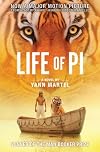
This is a book about God. If you don't want to read about God do not read this book. This is not a book about a tiger or a boy, even though they are there. This is really a book about God and about man's insignificance in the face of the Almighty.
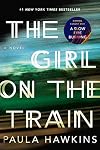
There were less twists and surprises in this book than I wanted. Definitely not Gone Girl level of psychotic. But still quite excellent.
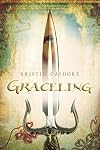
Graceling is a wonderful and powerful debut novel, the first in a trilogy. The novel tackles issues off sex, gender, identity, good, and evil in ways that are an original take on old themes. There is much positive to say about this book, but also some negatives. But first, the good, and the good is very good. First, Katsa is a very powerful female character. She doesn’t need a man to make her life complete, she grapples with very real and heavy emotions, and her motives for things are more complex than many women are given credit for in much of fantasy literature. For me, the biggest question cats was asking herself was: What is a monster? Is she a monster because she kills or does she kill because she’s a monster? Do the actions or the intentions make the monster? And how can she reconcile her desire to do good and the fact that she always has to kill because she is owned by the king, a king who is no good at all.
These questions are very big things to be tackling, especially as a 16 year old girl, but she is forced to deal with them as the plot thickens. But the plot is where I have the most issue with this novel. While the characterization and the setting are wonderful, the plot doesn’t live up. The plot is fairly mediocre and is too small for the big characters of this novel. I care about things because I love Katsa so much, but the full emotional impact of the novel is lost on me because the stakes in the novel are not raised in a well-written way. I know that show more bad things are happening and bad things will happen if Katsa and Po do not succeed on their quest, but I don’t really understand how that will be relevant to me or the characters.
I thought that Katsa’s characterization was the best part of the book by far. She is a very accurate depiction of a teenage girl who is struggling with first rushes of sexual feelings and love, with trying to figure out what sort of adult she wants to be, and how everything will all fit together. What may seem like sudden character changes (like when she figures out her grace isn’t killing, but survival) to me some very accurate to the way teenagers have to deal with life. They will be very angsty and then all the sudden on day the problem they were so angsty about is gone and they are fine again and on to a different issue to be solved.
While Po and Katsa’s relationship seems very sudden and quick to adult readers, to the teenage audience this is intended for this would seem natural and reasonable. For teenagers everything is happening for the first time. All of their adult feelings and emotions and worries are brand new and they are trying to figure out how they work and how to control them. So teenagers rush into things. Thy experience things very deeply, with very high highs and very low lows. Their emotions are often selfish even as they try to figure out how to act selflessly. They are awkward and clumsy and unsure. And I think Cashore did a brilliant job of expressing that exact feeling. The awkward confidence of being an adolescent is something adult writers so very barely are able to accurate capture, but Cashore managed to pull it off.
I also want to applaud her for acknowledging the sexuality of teenagers. So many writers if they are writing about teenagers treat them like adults with no sexual desires or more complex emotions. Like large children. It is very narrowminded and unfortunate and doesn’t allow these characters to be as full as they could be.
Overall, this book is very excellent, but reflects the fact Cashore is a new writer and is still learning her craft, but I have very high hopes for her future and look forward to reading the rest of the series. show less
These questions are very big things to be tackling, especially as a 16 year old girl, but she is forced to deal with them as the plot thickens. But the plot is where I have the most issue with this novel. While the characterization and the setting are wonderful, the plot doesn’t live up. The plot is fairly mediocre and is too small for the big characters of this novel. I care about things because I love Katsa so much, but the full emotional impact of the novel is lost on me because the stakes in the novel are not raised in a well-written way. I know that show more bad things are happening and bad things will happen if Katsa and Po do not succeed on their quest, but I don’t really understand how that will be relevant to me or the characters.
I thought that Katsa’s characterization was the best part of the book by far. She is a very accurate depiction of a teenage girl who is struggling with first rushes of sexual feelings and love, with trying to figure out what sort of adult she wants to be, and how everything will all fit together. What may seem like sudden character changes (like when she figures out her grace isn’t killing, but survival) to me some very accurate to the way teenagers have to deal with life. They will be very angsty and then all the sudden on day the problem they were so angsty about is gone and they are fine again and on to a different issue to be solved.
While Po and Katsa’s relationship seems very sudden and quick to adult readers, to the teenage audience this is intended for this would seem natural and reasonable. For teenagers everything is happening for the first time. All of their adult feelings and emotions and worries are brand new and they are trying to figure out how they work and how to control them. So teenagers rush into things. Thy experience things very deeply, with very high highs and very low lows. Their emotions are often selfish even as they try to figure out how to act selflessly. They are awkward and clumsy and unsure. And I think Cashore did a brilliant job of expressing that exact feeling. The awkward confidence of being an adolescent is something adult writers so very barely are able to accurate capture, but Cashore managed to pull it off.
I also want to applaud her for acknowledging the sexuality of teenagers. So many writers if they are writing about teenagers treat them like adults with no sexual desires or more complex emotions. Like large children. It is very narrowminded and unfortunate and doesn’t allow these characters to be as full as they could be.
Overall, this book is very excellent, but reflects the fact Cashore is a new writer and is still learning her craft, but I have very high hopes for her future and look forward to reading the rest of the series. show less
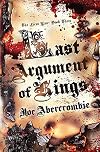
I greatly appreciate Abercrombie's style and panache. I think he is a very skilled writer, I just find his worldview to be utterly disheartening. Some people might laud him for having the guts to make his characters truly suffer, but what is the point of such suffering if his character don't gain anything in the end? Ferro is left haunted by demons, hellbent on revenge. Jezal is turned into a puppet king with none of his own agency. Logen is presumed dead. What was the point of the suffering, the pain, the struggle if in the end nothing changes? Why should I care at all about the characters and their fight? To me, the ending turned the books into nothing more than a nihilistic farce. All of the love I had built for the characters crumbled away like dust in the wind.
Now don't get me wrong. I do not demand happy endings. In fact, I find happy endings just as repulsive as this emptiness. There is no point in raising the stakes so high and making the characters suffer so much if in the end they don't get anything for their troubles. There is such an emphasis on the characters becoming better people. Jezal and Logen both want to be better men. But all this book showed me was that it is impossible to ever become a better person. If you try, you are left even worse off than you were before.
So I'm left with the question: What is the point of this book?
Now don't get me wrong. I do not demand happy endings. In fact, I find happy endings just as repulsive as this emptiness. There is no point in raising the stakes so high and making the characters suffer so much if in the end they don't get anything for their troubles. There is such an emphasis on the characters becoming better people. Jezal and Logen both want to be better men. But all this book showed me was that it is impossible to ever become a better person. If you try, you are left even worse off than you were before.
So I'm left with the question: What is the point of this book?
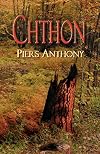
I didn't actually even finish this book. I questioned for a long time whether I would or wouldn't finish it and I got through about 3/4 of it and then abandoned it.
My first questions about whether or not I would actually finish it arose because of the blatant disregard with which rape is treated. The main character, Anton, rapes a woman as a way of "teaching her a lesson" and this woman goes on to be totally in love with him. This falls into this theme that women receive love as abuse and hurt. Maybe at the end there was some sort of "redemption" for this perspective, but I couldn't take reading this abuse and vitriol launched at women; this condoning of abusive relationships, arguing that women [i]want[/i] abuse, that this is the way that women feel and want love. This is an entirely ridiculous proposition and really just evidence of the hate women have to endure, especially in early science fiction.
My second questions about whether or not I would finish it, and the reason I eventually abandoned it, was just how badly the second half was written. I couldn't make heads or tails of what was going on and I read Faulkner for fun. Anthony became more obsessed with talking about how woman should be treated and explicating the female psyche that his prose suffered.
The parts of the story that revolve around the prison break and being in the prison (besides the totally okay rape??) are really great. But then it devolves for the writer's own agenda.
My first questions about whether or not I would actually finish it arose because of the blatant disregard with which rape is treated. The main character, Anton, rapes a woman as a way of "teaching her a lesson" and this woman goes on to be totally in love with him. This falls into this theme that women receive love as abuse and hurt. Maybe at the end there was some sort of "redemption" for this perspective, but I couldn't take reading this abuse and vitriol launched at women; this condoning of abusive relationships, arguing that women [i]want[/i] abuse, that this is the way that women feel and want love. This is an entirely ridiculous proposition and really just evidence of the hate women have to endure, especially in early science fiction.
My second questions about whether or not I would finish it, and the reason I eventually abandoned it, was just how badly the second half was written. I couldn't make heads or tails of what was going on and I read Faulkner for fun. Anthony became more obsessed with talking about how woman should be treated and explicating the female psyche that his prose suffered.
The parts of the story that revolve around the prison break and being in the prison (besides the totally okay rape??) are really great. But then it devolves for the writer's own agenda.
The fact that there are so many reviews talking about how awful this book is and ragging on Rothfuss for not getting done quicker , just affirms for me that he is doing something right and that there is something special about him. When is genius truly recognized in its own time? When we people truly able to realize how great something is in its moment? And as far as time...Tolkien took 16 years to write Lord of the Rings, with multiple years between each book. People really need to calm down.
As for this book, it is amazing and beautiful. If you don't like this book then you fall into the category of people who are not broken and misplaced and trying to sort their way through the world like Auri is. And I don't think that there are many people that are like that really. Rothfuss is seeing himself in Auri and would we want Rothfuss's mind to be completely accessible to everyone? This book takes after the likes of Joyce and Faulkner, falling into a grand tradition of authors who break outside of the mold and create beautiful things.
As for this book, it is amazing and beautiful. If you don't like this book then you fall into the category of people who are not broken and misplaced and trying to sort their way through the world like Auri is. And I don't think that there are many people that are like that really. Rothfuss is seeing himself in Auri and would we want Rothfuss's mind to be completely accessible to everyone? This book takes after the likes of Joyce and Faulkner, falling into a grand tradition of authors who break outside of the mold and create beautiful things.
Charlotte Temple was the biggest best teller in American, basically until [b:Uncle Tom's Cabin|46787|Uncle Tom's Cabin|Harriet Beecher Stowe|https://d.gr-assets.com/books/1414349231s/46787.jpg|2478635] came along. Considering the intensity with which female sexuality and expressions are strictly controlled throughout the entire book, I am somewhat surprised the book was so popular. But, I suppose, at the same time I'm not. Published in the 1790s, there was a dark cloud of female suppression hanging over America at this time. I supposed I just wanted to believe that women would have recognized their own abilities, talents, skills, understandings, and depths and not dismissed them so readily as is indicated by the vast popularity of this work. This work directly links the titular character's death to the fact she decided to have sex. If she had appropriately obeyed the male authority figures in her life she would be alive and perfectly happy and content.
Although I think this book is a sentimental, anti-woman work, there is something important to be said about the fame of this early work of American literature that was written by a woman. An article by Jane Tompkins elucidates the importance and unjust treatment received by Susanna Rowson in her lifetime and how that heritage of dismissal was carried on into our age. Charles Brockden Brown is considered the father of the American novel, but Rowson was writing at the same period and much more prolifically than Brown did. show more But because of the gender stereotyping and restrictions, considering her for the role of the mother of the American novel would've been impossible to consider. In many ways, Rowson would've agreed with this assessment of her work, at least considering the contents of this novel. She is not interested in exalting the place of women, but in reaffirming the status quo. In this way Brown should be considered the father of American literature because he challenged the status quo in many ways. show less
Although I think this book is a sentimental, anti-woman work, there is something important to be said about the fame of this early work of American literature that was written by a woman. An article by Jane Tompkins elucidates the importance and unjust treatment received by Susanna Rowson in her lifetime and how that heritage of dismissal was carried on into our age. Charles Brockden Brown is considered the father of the American novel, but Rowson was writing at the same period and much more prolifically than Brown did. show more But because of the gender stereotyping and restrictions, considering her for the role of the mother of the American novel would've been impossible to consider. In many ways, Rowson would've agreed with this assessment of her work, at least considering the contents of this novel. She is not interested in exalting the place of women, but in reaffirming the status quo. In this way Brown should be considered the father of American literature because he challenged the status quo in many ways. show less
The Circle by David Eggers is a brilliant update and combination of 1984 and A Brave New World. The story centers around Mae Holland and her journey in Circle, an internet/technology conglomeration that is quite creepy. At first, the company sounds like something useful, just another social media/networking/business website/company that is trying to reinvent the wheel (read: Facebook). But as the book progresses they are revealed to be ever more disturbing, proclaiming at the end of Book I: Privacy Is Theft. The book is presenting an utopian society where no one has anything to keep secret or anything they need to hide. If you have something you want to keep secret, or even private, then it is something that you are ashamed of.
For example, when Mae is filmed without her permission giving a man a hand job, she wants the man to delete the recording. But he refuses saying it is his property and that in the Circle nothing is every deleted. In fact, this video is available to anyone who has access to the cloud it is stored in, which is everyone. Although no one does view the tape, someone could if they wanted to. When Mae is asked why she would have anything to hide she brings up such indelicacies like sex, and is shot down. After all, everyone does it, why should it be a secret? This book shows the blurring lines between secret and privacy which are present even in our own culture. Think about how Facebook and Google are invading every single part of our internet experience. show more Similar to Homie in The Circle, Amazon has a service where you can install a small button and automatically order new supplies of basic household good when you notice you are running low. The future portrayed by Eggers is not that far off and Eggers shows us how dangerous this future really is.
Mae talks about a tear and through the tear are screaming voices. This tear is especially apparent to her when she is looking at something that portrays a very human connection, like when she is watching a live feed of a poor African family going about their day as she is falling asleep. Or when she experiences nature. Of course, she is chastised for her kayaking experiences because she is “off the grid.” She doesn’t post anything about the experiences, no pictures, no videos, no zings. And being off the grid is the worst thing she could possibly be. She has to be constantly involved in the social media/networking aspect of her job, it is more important than her actual work that she is being paid to do, or at least it seems that way. Circle is much more interested in tracking people than in anything else. She has to use the company store, the company doctor, go to all the company events. I can’t imagine being an introvert in this society. She even becomes a Settler, someone who is now living on the company campus. Everything about her life is completely managed and dictated by the Circle.
In contract to her is Mercer. He gets upset and offended when she posts things about him online without his permission. He reprimands her for never talking to him directly, but instead she always has to bring in a hundred other people in order to have a conversation ever. This is made even more relevant when she ‘goes clear’ or for most of her day wears a tiny camera around her neck to document her every movement, word, and action - including the ones of all the people around her, whether they want to be documented or not. She herself is a fan of this idea, believing that it will hold her accountable an make her a more honorable and noble person. But underneath that veneer she is screaming. She cannot do anything that will come across as being anything less than chipper, cheery, and happy or tens of thousands of people around the world will be immediately aware. And the little headpiece in her ear will let her know that what she is doing is not in line, although, of course, they would never reprimand her so directly. Everything at the Circle is about making sure you feel good about yourself.
In some senses, it is like a cult (something Mercer compares the circle to). In cults, new members are subjected to a practice known as lovebombing. The new member is surrounded by love, affirmation, attention, and devotion, but as soon as the member does something that cult doesn’t approve of, s/he is cut off from all that emotional deluge. After being so surrounded by affirmation, made to feel so incredibly good about yourself, no longer have that support system is devastating. So they of course immediately realign their behaviors in order to be accepted back into the cult. Similar things are happening with Mae. The reader might see her as being stupid, can’t she see what is going on around her? But the fact is, she can’t. She is literately incapable of seeing any of the practices of Circle as being anything but amazing and positive. She has drunk the Kool-Aid. show less
For example, when Mae is filmed without her permission giving a man a hand job, she wants the man to delete the recording. But he refuses saying it is his property and that in the Circle nothing is every deleted. In fact, this video is available to anyone who has access to the cloud it is stored in, which is everyone. Although no one does view the tape, someone could if they wanted to. When Mae is asked why she would have anything to hide she brings up such indelicacies like sex, and is shot down. After all, everyone does it, why should it be a secret? This book shows the blurring lines between secret and privacy which are present even in our own culture. Think about how Facebook and Google are invading every single part of our internet experience. show more Similar to Homie in The Circle, Amazon has a service where you can install a small button and automatically order new supplies of basic household good when you notice you are running low. The future portrayed by Eggers is not that far off and Eggers shows us how dangerous this future really is.
Mae talks about a tear and through the tear are screaming voices. This tear is especially apparent to her when she is looking at something that portrays a very human connection, like when she is watching a live feed of a poor African family going about their day as she is falling asleep. Or when she experiences nature. Of course, she is chastised for her kayaking experiences because she is “off the grid.” She doesn’t post anything about the experiences, no pictures, no videos, no zings. And being off the grid is the worst thing she could possibly be. She has to be constantly involved in the social media/networking aspect of her job, it is more important than her actual work that she is being paid to do, or at least it seems that way. Circle is much more interested in tracking people than in anything else. She has to use the company store, the company doctor, go to all the company events. I can’t imagine being an introvert in this society. She even becomes a Settler, someone who is now living on the company campus. Everything about her life is completely managed and dictated by the Circle.
In contract to her is Mercer. He gets upset and offended when she posts things about him online without his permission. He reprimands her for never talking to him directly, but instead she always has to bring in a hundred other people in order to have a conversation ever. This is made even more relevant when she ‘goes clear’ or for most of her day wears a tiny camera around her neck to document her every movement, word, and action - including the ones of all the people around her, whether they want to be documented or not. She herself is a fan of this idea, believing that it will hold her accountable an make her a more honorable and noble person. But underneath that veneer she is screaming. She cannot do anything that will come across as being anything less than chipper, cheery, and happy or tens of thousands of people around the world will be immediately aware. And the little headpiece in her ear will let her know that what she is doing is not in line, although, of course, they would never reprimand her so directly. Everything at the Circle is about making sure you feel good about yourself.
In some senses, it is like a cult (something Mercer compares the circle to). In cults, new members are subjected to a practice known as lovebombing. The new member is surrounded by love, affirmation, attention, and devotion, but as soon as the member does something that cult doesn’t approve of, s/he is cut off from all that emotional deluge. After being so surrounded by affirmation, made to feel so incredibly good about yourself, no longer have that support system is devastating. So they of course immediately realign their behaviors in order to be accepted back into the cult. Similar things are happening with Mae. The reader might see her as being stupid, can’t she see what is going on around her? But the fact is, she can’t. She is literately incapable of seeing any of the practices of Circle as being anything but amazing and positive. She has drunk the Kool-Aid. show less
For those who are not familiar, the novel is set up very uniquely. There is an opening chapter which introduces the reader to the main actors and our narratorial voice, Jane. At the end of this chapter Jane is presented with a choice to choose to follow five different characters. Depending on which she follows she ends up in a different genre. Now because they all stem from the same set-up, all the same plots are still in the background, they just play out different depending on Jane's involvement. This is kind of hard to explain without specifics, so without trying to give too much away: In choice 1, Jane gets involved in a whodunnit mystery. The item that got stolen is still stolen regardless of which choice Jane makes, the resolution of the whodunnit just doesn't matter to Jane when she is involved in other details.
This structure is fascinating to me, creative and a lot could be done with exploring it, but I have a lot of issues with Cashore's execution which led to me rating this novel with only two stars.
First, I don't understand why each choice leads to a different genre. The first two are a mystery and a spy thriller, but the other three are horror, science fiction, and fantasy. So the last three are much, much harder to be believable are happening in the background of the other plots, especially the horror plot which involvesthe house (and the missing stepmother) to be eating guests of the house. In the other plots, there aren't any people mysteriously missing show more and the way certain characters are effected by the house is not apparent in the other plots .
Second, I don't think Cashore does a good job in representing each genre. Short fiction doesn't seem to be a strong suit of Cashore's, but each of these multiverse stories is, essentially, a short story which does not entirely belong in the genres they represented. For instance, in the first plot, the mystery, one of the generic requirements of the mystery genre is that the reader is left with enough clues in order to solve the mystery on their own, so at the end you have one of those "I should've figured that out!" moments, or the delight of having outsmarted the detective. Jane is not a good detective and she fully admits her conclusion to the mystery basically comes from intuition. There are similar problems in each of the other genres as well. Cashore attaches a large number of the trapping of certain genres to her plots--spaceships in the science fiction plot, magic in the fantasy plot, spies in the spy thriller, stolen valuable goods in the mystery--but does not seem to really understand how these genres fundamentally function.
Third, although the novel's trajectory hinges on Jane's choice she doesn't make a lot of active choices; her choice is ultimately who to follow and which plot to watch unfold. Although she does make some active choices along the way, she is a fairly reactionary character. I found myself much more interested in other characters--especially Kiran--than in Jane. She sort of fades into the background as only a conduit for the reader to observe. Cashore says on her blog that she originally wrote this in second person as more of a choose-your-own-adventure and that presents, to me, even more problematics, of turning a living human being into a tool for her story, not just paper and ink people.
I love Cashore's other books (the Graceling Realm trilogy) and have even written about them in my academic career, so I was disappointed that this new offering from her was not more fleshed out. I think she is an imaginative writer, but I think she needs to still hone her craft more. show less
This structure is fascinating to me, creative and a lot could be done with exploring it, but I have a lot of issues with Cashore's execution which led to me rating this novel with only two stars.
First, I don't understand why each choice leads to a different genre. The first two are a mystery and a spy thriller, but the other three are horror, science fiction, and fantasy. So the last three are much, much harder to be believable are happening in the background of the other plots, especially the horror plot which involves
Second, I don't think Cashore does a good job in representing each genre. Short fiction doesn't seem to be a strong suit of Cashore's, but each of these multiverse stories is, essentially, a short story which does not entirely belong in the genres they represented. For instance, in the first plot, the mystery, one of the generic requirements of the mystery genre is that the reader is left with enough clues in order to solve the mystery on their own, so at the end you have one of those "I should've figured that out!" moments, or the delight of having outsmarted the detective. Jane is not a good detective and she fully admits her conclusion to the mystery basically comes from intuition. There are similar problems in each of the other genres as well. Cashore attaches a large number of the trapping of certain genres to her plots--spaceships in the science fiction plot, magic in the fantasy plot, spies in the spy thriller, stolen valuable goods in the mystery--but does not seem to really understand how these genres fundamentally function.
Third, although the novel's trajectory hinges on Jane's choice she doesn't make a lot of active choices; her choice is ultimately who to follow and which plot to watch unfold. Although she does make some active choices along the way, she is a fairly reactionary character. I found myself much more interested in other characters--especially Kiran--than in Jane. She sort of fades into the background as only a conduit for the reader to observe. Cashore says on her blog that she originally wrote this in second person as more of a choose-your-own-adventure and that presents, to me, even more problematics, of turning a living human being into a tool for her story, not just paper and ink people.
I love Cashore's other books (the Graceling Realm trilogy) and have even written about them in my academic career, so I was disappointed that this new offering from her was not more fleshed out. I think she is an imaginative writer, but I think she needs to still hone her craft more. show less

Best Served Cold by Joe Abercrombie is yet another extremely dark and extremely brutal installation in the First Law world. The primary rule of this world seems to be eat or be eaten. There is always someone to seek revenge on and always someone that deserves to be killed or tortured. This world exists exclusively on principle of hatred and revenge with little to concern for anything or anyone else. Characters that do try to show a care or love for someone else usually end up dead or with any sort of love eradicated rom them. Shivers is an example of this. He strives to become a better man, but any attempt to be better only leads him to deeper darkness and blacker pain. All attempts to be a better person quickly turn sour and he left much worse than he began, all joy and light sucked out of him, an empty carcass of a man, a pure killer. But one almost thinks that he is better of that way because the world of Abercrombie doesn’t really leave much space for there to be anyone who isn’t pure killer. If you are a “good” person then you will be killed. In order to survive you have to be cold and bitter. Throughout the book there are multiple references to how farmers suffer the most in war, how the innocent and the civilians are the ones who pay the highest price for the fleeting glory of the nobility and their petty wars.
This book is about nothing, but in the absolute best possible way. When I say this book is about nothing, I don’t mean that there is nothing show more happening in this book or there is no theme or no point, but that this book is, literally, about nothing. This is the most detailed and believable exploration of nihilism I have ever encountered and shows the utter tragedy of what happens when humanity is left entirely unfettered with nothing greater to think of than the self. Every character in this book thinks first of themselves and then everyone else. And look where that gets everyone.
The only true critique I would have of this novel is that Monza has to be yet another hard-bitten, angry woman. I am so tired of the mad woman trope. If you are going to be a woman who fights, you have to be extremely angry, extremely hard, and extremely dedicated. You have to be entirely consumed with thoughts of revenge. Women, after all, can only fight if they want revenge. This emotion-fueled image of the woman warrior is so narrow and incomplete. A woman can go to war for reasons besides revenge, but it doesn’t seem like literature (or any other art form) really gives a woman any other option. And her only way to fit is to become the most bitter, hardcore, ruthless, merciless fighter available because otherwise she won’t be “accepted.” If this is truly a fantasy world, just make gander equality a thing and move on with it. Give the reading public a more interesting female character because we are sick of this kind of woman.
While I appreciate the empty brutality of Abercrombie’s works, I could definitely do without the gender stereotyping and closed-minded roles for women. The men in his books are allowed to have a much greater range of emotions and reasons for doing things, but the women seem to only ever be fueled by one thing. Toward the end of the story, there is much more revealed about Monza and what she is capable of, but I think that took too long to reveal.
My only other real compliant is that the ending was a bit deus ex machine. Shenkt just sort of appeared from no where and was behind the whole thing the whole time. His master is all shadowy and confused (although one assumes it is Bayaz) and he is probably an Eater but he has obviously way too much ability to just resolve everything. It gave the ending a very unsatisfying feel and not in the good way one wants from something as broken and dark as this story is. show less
This book is about nothing, but in the absolute best possible way. When I say this book is about nothing, I don’t mean that there is nothing show more happening in this book or there is no theme or no point, but that this book is, literally, about nothing. This is the most detailed and believable exploration of nihilism I have ever encountered and shows the utter tragedy of what happens when humanity is left entirely unfettered with nothing greater to think of than the self. Every character in this book thinks first of themselves and then everyone else. And look where that gets everyone.
The only true critique I would have of this novel is that Monza has to be yet another hard-bitten, angry woman. I am so tired of the mad woman trope. If you are going to be a woman who fights, you have to be extremely angry, extremely hard, and extremely dedicated. You have to be entirely consumed with thoughts of revenge. Women, after all, can only fight if they want revenge. This emotion-fueled image of the woman warrior is so narrow and incomplete. A woman can go to war for reasons besides revenge, but it doesn’t seem like literature (or any other art form) really gives a woman any other option. And her only way to fit is to become the most bitter, hardcore, ruthless, merciless fighter available because otherwise she won’t be “accepted.” If this is truly a fantasy world, just make gander equality a thing and move on with it. Give the reading public a more interesting female character because we are sick of this kind of woman.
While I appreciate the empty brutality of Abercrombie’s works, I could definitely do without the gender stereotyping and closed-minded roles for women. The men in his books are allowed to have a much greater range of emotions and reasons for doing things, but the women seem to only ever be fueled by one thing. Toward the end of the story, there is much more revealed about Monza and what she is capable of, but I think that took too long to reveal.
My only other real compliant is that the ending was a bit deus ex machine. Shenkt just sort of appeared from no where and was behind the whole thing the whole time. His master is all shadowy and confused (although one assumes it is Bayaz) and he is probably an Eater but he has obviously way too much ability to just resolve everything. It gave the ending a very unsatisfying feel and not in the good way one wants from something as broken and dark as this story is. show less
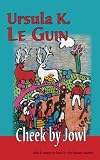
This book had a lot of interesting things to say about animals especially. Although the staunch atheistic and sometimes even anti-Christian point of view disappointed me there is still a lot to recommend in this analysis of animals, fantasy, and children's literature. Le Guin is consistently an excellent, personably writer with a unique perspective that, I believe, accurately reflects the thoughts of many readers of SF&F.

I found this to primarily be an exploration of grief and the various ways the members of Addie's family dealt with her passing. I didn't think it was a good as [i]The Sound and the Fury[/i], but was definitely typical of Faulkner. I did find the constant changing of point of view more distracting than in [i]The Sound and the Fury[/i] where there was just the four sections. If you are a fan of modernist American literature or Southern literature I would definitely recommend this book, but just be forewarned this employs quite a few unconventional techniques and formal experimentalism. Highly recommended for those interested in study literature but if you are more of a casual reader probably not something to just pick up on the spur of the moment.
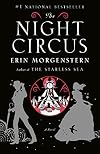
What is most striking about The Night Circus is not the beautifully written prose, the creative plot, or the well-rounded characters, but the careful interweaving of all these parts and finding the perfect setting to put it all in. After all, the title of the book is The Night Circus, not something more directly about the main characters or the plot or themes or other more traditional routes. And “the night circus” isn’t even the name of the circus itself. It is a moniker, describing the circus more than anything else. Because we are entering the night circus as soon as we peel back the front cover, pushing aside the black, white, grey, and red to reveal the stark black and white of the text - just like the circus itself.
Although, ostensibly, this is a book about Celia and Marcus and their duel (and eventual romance), really this is a book about dreaming and reading. Although there is love in it, it is not about love. Although there is mystery, it is not about a mystery. Although there is magic, it is not about fantasy. It is all of these things and none of these things. If you are looking for a book with a straightforward plot, a simple to follow theme and idea, this is not the book for you.
The second person snippets, almost like invocations, show the true depth and mystery of this novel. The parts of the novel are being revealed to us just like a circus. We are only allowed to see exactly what Morgenstern is allowing us to see. The circus has a backstage and this show more novel has one too, one we will never see. Throughout the book, the reader feels like s/he is part of the backstage of the circus (something repeatedly mentioned by the characters), there is a feeling of inclusion. But these second person narratives, although ostensibly meant to make the reader feel more like a part of the circus performers, to pull the reader in even more, really just ends up setting the reader apart even further. The “you” is just another audience member being wowed just as much as the fictional audience members in the book. There is nothing differentiating “you” from “them” from “us.” “You” is never part of “them” (the circus performers).
Reading other reviews, many people want to force a plot out of this book, to force it to make sense in the traditional narrative sense, but this book is not designed for such mundane and prosaic constrictions. This is a non-traditional narrative model, experimental in many ways, trying to show what a books looks like when it focuses not on characters, not on themes, not on experiences, but on a place and what that place means to the people who come in contact with it.
Some people might find the slow pace of the novel off-putting or disconcerting, but places move slowly. Places don’t change much. Places, even places that move around as much as a circus, are still fairly slow moving things. Considering that this particular place is frozen in time, it is even more apt to consider that it won’t change much, that nothing will ever move quickly. So this context between Marcus and Celia will never come to some epic duel like Harry Potter and Voldemort, but does the world really need more of that sort of flashy sort of battle? Don’t we have enough of focusing on what happens when pure evil and good enough to look pure good come in contact with each other? Can’t we experience something a little different in this world and not throw a fit? We all have a place that is especially dear to us and we never want that place to change. Maybe it is the bedroom you grew up in. Or your car. Or some natural landmark. Whatever it is, if that place altered drastically you would be devastated. You would feel like some part of your identity was taken away, something that kept this place pure and sacred is destroyed and you can never regain that sense of innocence and peace you found there. This is what this story is trying to capture. To show “you” how this place, this magical wondrous place, is always there, you can always find this magical spot. Any time you open this book, this spot will be here, this place. Any time you open any book, that place will be there, it will be the same, unchanging, comfortable, the same. It will always be pure. show less
Although, ostensibly, this is a book about Celia and Marcus and their duel (and eventual romance), really this is a book about dreaming and reading. Although there is love in it, it is not about love. Although there is mystery, it is not about a mystery. Although there is magic, it is not about fantasy. It is all of these things and none of these things. If you are looking for a book with a straightforward plot, a simple to follow theme and idea, this is not the book for you.
The second person snippets, almost like invocations, show the true depth and mystery of this novel. The parts of the novel are being revealed to us just like a circus. We are only allowed to see exactly what Morgenstern is allowing us to see. The circus has a backstage and this show more novel has one too, one we will never see. Throughout the book, the reader feels like s/he is part of the backstage of the circus (something repeatedly mentioned by the characters), there is a feeling of inclusion. But these second person narratives, although ostensibly meant to make the reader feel more like a part of the circus performers, to pull the reader in even more, really just ends up setting the reader apart even further. The “you” is just another audience member being wowed just as much as the fictional audience members in the book. There is nothing differentiating “you” from “them” from “us.” “You” is never part of “them” (the circus performers).
Reading other reviews, many people want to force a plot out of this book, to force it to make sense in the traditional narrative sense, but this book is not designed for such mundane and prosaic constrictions. This is a non-traditional narrative model, experimental in many ways, trying to show what a books looks like when it focuses not on characters, not on themes, not on experiences, but on a place and what that place means to the people who come in contact with it.
Some people might find the slow pace of the novel off-putting or disconcerting, but places move slowly. Places don’t change much. Places, even places that move around as much as a circus, are still fairly slow moving things. Considering that this particular place is frozen in time, it is even more apt to consider that it won’t change much, that nothing will ever move quickly. So this context between Marcus and Celia will never come to some epic duel like Harry Potter and Voldemort, but does the world really need more of that sort of flashy sort of battle? Don’t we have enough of focusing on what happens when pure evil and good enough to look pure good come in contact with each other? Can’t we experience something a little different in this world and not throw a fit? We all have a place that is especially dear to us and we never want that place to change. Maybe it is the bedroom you grew up in. Or your car. Or some natural landmark. Whatever it is, if that place altered drastically you would be devastated. You would feel like some part of your identity was taken away, something that kept this place pure and sacred is destroyed and you can never regain that sense of innocence and peace you found there. This is what this story is trying to capture. To show “you” how this place, this magical wondrous place, is always there, you can always find this magical spot. Any time you open this book, this spot will be here, this place. Any time you open any book, that place will be there, it will be the same, unchanging, comfortable, the same. It will always be pure. show less