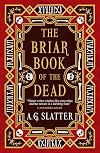
This book took a while to reel me in. It didn't capture my interest until about chapter 4 or 5, when I felt it picked up a bit. The book maintained a pretty mild and constant pace throughout. It wasn't boring, but it was distinctly low in big, flashy events. The majority of the book really worked to solidify the main character's personality and show the dynamics of the town.
All of the action started at chapter 33 and lasted about 60 pages. In a book of 398 pages, 60 pages of action may be too little for most readers. I didn't have an issue with the amount of action, per se, but with the pacing of it. The entire book, as I said before, was mildly paced, but those 60 pages ramped up quickly and felt put of pace with the rest of the book. If it had ended at the ramped up pace, I might not have been so bothered by it, but the final chapter attempts to wrap up the story with a return to normalcy that it really didn't need. The book could have ended at chapter 39 and been great. Omitting the events in chapter 40 could have provided space for readers to make their own assumptions and created an ending that felt more final.
Overall, I really liked the book. It was an interesting take on witchcraft, and it was fun getting to know the characters. It's definitely a more laid-back read for the majority of the story, so it's a good option for anyone looking to unwind while being drawn into the world of Silverton.
All of the action started at chapter 33 and lasted about 60 pages. In a book of 398 pages, 60 pages of action may be too little for most readers. I didn't have an issue with the amount of action, per se, but with the pacing of it. The entire book, as I said before, was mildly paced, but those 60 pages ramped up quickly and felt put of pace with the rest of the book. If it had ended at the ramped up pace, I might not have been so bothered by it, but the final chapter attempts to wrap up the story with a return to normalcy that it really didn't need. The book could have ended at chapter 39 and been great. Omitting the events in chapter 40 could have provided space for readers to make their own assumptions and created an ending that felt more final.
Overall, I really liked the book. It was an interesting take on witchcraft, and it was fun getting to know the characters. It's definitely a more laid-back read for the majority of the story, so it's a good option for anyone looking to unwind while being drawn into the world of Silverton.
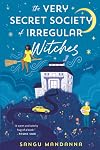
Overly simplistic solutions to problems, little nuance, and little magic for a book about witches. The story was fine, but not overly deep. Good representation of minority populations. A quick read if you want something easy that ends happily.
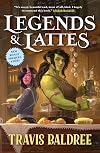
Good queer representation, but too much pulled me out of the story. Several geniuses gather in a coffee shop, including ratatouille (not actually, but a genius baker ratkin) who invents biscotti, cinnamon rolls, and chocolate croissants, a master carpenter who also knows how to jury-rig electrical marvels, and a master musician who is somehow the first ever person to use a guitar and an amplifier in this mythical universe. The entire Cafe gets put together initially in probably a week and a half, the rebuilding of the entire Cafe from scratch takes maybe a few months. The mob boss in town is somehow appeased by an offering of a few pastries each week instead of the protection money she normally would strong-arm from all the local businesses. And for some reason, the main character who was highly morally opposed to paying a mobster was perfectly okay with still having physical product extorted from her as an acceptable midway solution.

Overall, this was a calm and fun book to read. It felt paced, measured, and relaxed. Nothing about it really felt too important or pressing for the majority of the book, which isn't to say it was bad or boring; it was a GREAT read. I fully expected Wallace to be brought back to life, but as the story progressed, I started coming to terms with the idea that maybe the story wasn't meant to go there, to the stereotypical happy ending. I sobbed through most of chapter 21, and I knew the book couldn't end with Wallace coming back to life because it would completely undermine his sacrifice, his journey. It was my absolute favorite chapter of the entire book. I think if the book had ended after chapter 21, I wouldn't have minded. Or maybe I would have, but I think the story after chapter 21 detracted, rather than added. If you've watched the movie Stranger than Fiction, I think this book suffers from the same problem as the main book in that movie. It could have been a masterpiece, but instead, it was okay; but I think that's okay. I am absolutely going to read it again, regardless of the ending.
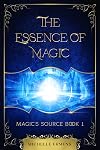
I'm honestly in love with the premise of these books (I'm on the second book now), but Ms. Ermens needs to fire her editor. I habitually correct things as I read them, and I had several grammatical mistakes, typos, missing words, etc. highlighted by the end of this book. I actually came back to review it because in the second book, there was another missing word less than 100 pages in, and I bounced around the sentence for a while, confused.
Aside from that (admittedly harsh) critique, I think the book is fantastic. It's an easy read that never feels like a slog. The characters are interesting, if not always likeable. The magic system is interesting, and the world is unique. Kindle Unlimited didn't have the 2nd book, so I ended up buying the entire series in physical paperback form for my birthday.
Aside from that (admittedly harsh) critique, I think the book is fantastic. It's an easy read that never feels like a slog. The characters are interesting, if not always likeable. The magic system is interesting, and the world is unique. Kindle Unlimited didn't have the 2nd book, so I ended up buying the entire series in physical paperback form for my birthday.
The cliffhanger is diabolical. Don't read this unless you have the next book lined up and ready to go. Otherwise, you might just die of anticipation.
Ugh. I loved it, and I HATED it.
The book draws un unnerving parallel to the state of the world during times of panic when rights are slowly stripped away and fear is more important than the truth.
I felt, in the first book, like Anna was supposed to be a side character and Effie the true main character. It felt like that in this book, too, for most of it; Anna finally felt like the main character in the last 80ish pages.
As much as I liked this book, I recognized some issues; there was a lot of faffing about. I liked the beginning, I liked (and hated) the end (a cliffhanger!), but about 200 pages in the middle felt repetitive and unnecessary. Yes, Anna needed to grow. Yes, Anna needed to process. Yes, Anna needed to learn. But Anna didn't need to spend that many pages doing it. The amount of time spent on Anna processing her own feelings left me already knowing her language, determining the true perpetrator(s), and deducing how they would stop the hysteria before I was even halfway through the book. There wasn't a whole lot of subtlety in the "mystery" of everything.
All that said, I would still read it again (and will likely have to when the next book comes out, as I had to reread the first one before reading this). The one thing the LONG buildup does well is to let the reader see how quickly and insidiously the world is letting their fear imprison everyone, innocent and guilty alike.
When I say, "I loved it, and I hated it," I mean that very seriously. I almost DON'T want show more to read the next book because this one made me angry, uncomfortable, and disheartened. There was so much growth and hope, but just as much disappointment. It made me mad, and I don't often get mad while reading. Nervous? Sure. Filled with aniticpation? Absolutely. But mad? That's RARE for a fiction book. It definitely made me emotional, and it made me feel for the characters. I also liked many of the new characters and the slow and subtle shifting of some of the previous side characters.
If I had known, when I bought the first book , that was going to be a 4-book series, I wouldn't have started reading it. As it stands with the end of the second book, I'm not sure if it's good that I didn't know or if I'm regretting ever starting it.
Overall, I wouldn't give it a 5, but it deserves better than a 4. Unfortunately, that isn't an option, and I feel it tipped just slightly closer to the 4 side of things.
-THIS BIT IS SLIGHTLY SPOILERY. VERY SLIGHTLY-
I was especially upset that the coven wasn't pulled out of school and that none of the parents demanded their children only be questioned with them present. It doesn't make you look guilty to pull your children out of a school performing literal witch hunts and showing clear bias against specific students. It would make MORE sense to remove your student from a school endorsing such reprehensible acts. Also, considering the WIPS weren't even a sanctioned government organization, the fact that they were allowed to speak to and interrogate students without any parental or even school administrator oversight is just unrealistic. Parents would have been DEMANDING to be in the room while their children were being questioned; the fact that absolutely all of them seemed to be cowed by an entirely private investigation firm questioning their CHILDREN is the most unbelievable part of this book by far. show less
The book draws un unnerving parallel to the state of the world during times of panic when rights are slowly stripped away and fear is more important than the truth.
I felt, in the first book, like Anna was supposed to be a side character and Effie the true main character. It felt like that in this book, too, for most of it; Anna finally felt like the main character in the last 80ish pages.
As much as I liked this book, I recognized some issues; there was a lot of faffing about. I liked the beginning, I liked (and hated) the end (a cliffhanger!), but about 200 pages in the middle felt repetitive and unnecessary. Yes, Anna needed to grow. Yes, Anna needed to process. Yes, Anna needed to learn. But Anna didn't need to spend that many pages doing it. The amount of time spent on Anna processing her own feelings left me already knowing her language, determining the true perpetrator(s), and deducing how they would stop the hysteria before I was even halfway through the book. There wasn't a whole lot of subtlety in the "mystery" of everything.
All that said, I would still read it again (and will likely have to when the next book comes out, as I had to reread the first one before reading this). The one thing the LONG buildup does well is to let the reader see how quickly and insidiously the world is letting their fear imprison everyone, innocent and guilty alike.
When I say, "I loved it, and I hated it," I mean that very seriously. I almost DON'T want show more to read the next book because this one made me angry, uncomfortable, and disheartened. There was so much growth and hope, but just as much disappointment. It made me mad, and I don't often get mad while reading. Nervous? Sure. Filled with aniticpation? Absolutely. But mad? That's RARE for a fiction book. It definitely made me emotional, and it made me feel for the characters. I also liked many of the new characters and the slow and subtle shifting of some of the previous side characters.
If I had known, when I bought the first book , that was going to be a 4-book series, I wouldn't have started reading it. As it stands with the end of the second book, I'm not sure if it's good that I didn't know or if I'm regretting ever starting it.
Overall, I wouldn't give it a 5, but it deserves better than a 4. Unfortunately, that isn't an option, and I feel it tipped just slightly closer to the 4 side of things.
-THIS BIT IS SLIGHTLY SPOILERY. VERY SLIGHTLY-
I was especially upset that the coven wasn't pulled out of school and that none of the parents demanded their children only be questioned with them present. It doesn't make you look guilty to pull your children out of a school performing literal witch hunts and showing clear bias against specific students. It would make MORE sense to remove your student from a school endorsing such reprehensible acts. Also, considering the WIPS weren't even a sanctioned government organization, the fact that they were allowed to speak to and interrogate students without any parental or even school administrator oversight is just unrealistic. Parents would have been DEMANDING to be in the room while their children were being questioned; the fact that absolutely all of them seemed to be cowed by an entirely private investigation firm questioning their CHILDREN is the most unbelievable part of this book by far. show less