Bread, toast, crumbs : recipes for no-knead loaves and meals to savor every slice by Alexandra Stafford
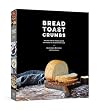
This book looks at cooking from "loaf to crumb." It covers the bread baking process, including savory and sweet breads. The second section provides a variety of recipes that use toast as a base from salads and sandwiches to sweets. And, finally, there's a section on crumbs, helping you to use up your bread in ways you never imagined. It's a beautiful book with a variety of practical recipes.
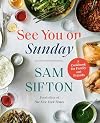
It's a cookbook framed around the idea of gathering people together once a week either on a Sunday or another day that substitutes for Sunday. The recipes are varied with options for scaling up or down based on the number of people attending. There are also recipes for multiple styles and moods, including one-pot meals, formal dinners, dinners that require less time, etc. Most importantly, Sifton weaves in stories about the importance of gathering together on a regular basis. Even if you're not into cookbooks, those stories alone make this book worth reading.
The food in jars kitchen : 140 ways to cook, bake, plate, and share your homemade pantry by Marisa McClellan
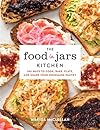
This book is the fourth in her food preserving series and offers a range of ways to utilize the items she has helped you create in her first books. I enjoyed the various suggestions offered, ranging form breakfasts, pastries, lunches and glazes.
Decision Making for Creative Professionals: How Writers, Designers, Artists, and Creative Professionals Overcome Creative Blocks, Make Faster Choices, and Get More Done Without Second-Guessing by M.D. Saly

I received this book as part of LibraryThing's Early Reviewers program.
The book's basic premise is "volume beats polish" and that creatives just need to make quick decisions and push work out. Sadly, the book reflects that ethos. Part of a chapter's content is missing. There are also multiple generalizations throughout - one writer said, one graphic designer said, one creative said - with no context or understanding of how creatives actually think.
In addition, the book feels like it may have been written with a lot of help from AI. There's a lot of repetitive content and sentence structure.
The book's basic premise is "volume beats polish" and that creatives just need to make quick decisions and push work out. Sadly, the book reflects that ethos. Part of a chapter's content is missing. There are also multiple generalizations throughout - one writer said, one graphic designer said, one creative said - with no context or understanding of how creatives actually think.
In addition, the book feels like it may have been written with a lot of help from AI. There's a lot of repetitive content and sentence structure.
 This review was written for LibraryThing Early Reviewers.
Naturally sweet food in jars : 100 preserves made with coconut, maple, honey, and more by Marisa McClellan
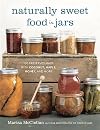
This book is the third of McClellan's preserving series. It continues her theme of small batch canning, while focusing on naturally sweet ways to can and preserve using maple, honey and other products to maintain a safe canning balance. The recipes are diverse, covering multiple seasons and offer a wide variety of preserved goods. (And, the maple-based recipes are especially yummy.)
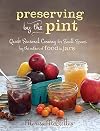
This book is perfect for people who want to preserve and can, but don't have the space or the family size to justify large batches of canned goods. The recipes are designed for people who want to make a small batch (few half-pints) of something. They are also aligned with the seasons, which make it easy for people to use up seasonal produce they find at the farmers' market.
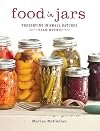
This book is a lovely hands-on guide for anyone who wants to get started with preserving their own canned goods. It's specifically focused on small batch canning, which makes the recipes more accessible to those individuals who are living in small spaces. I've tried many of the recipes, with all of them exceeding my expectations. The recipes are diverse covering lots of different foods and easy to follow.

It's a great addition to my regular rotation of cookbooks. It incorporates a well-written historical narrative with accessible recipes.