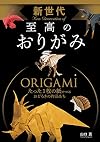

A short book of amazing pop-up paper sculptures. Excellent paper engineering and aesthetics to match.

Over several decades during the late 19th and early 20th century, Elizabeth Ware and her daughter Mary Lee Ware funded German artisans Leopold and Joseph Blaschka to produce a stunning collection of botanical glass models to be used for teaching and education at Harvard University. This booklet, including about six pages of text and four color plates, briefly describes the collection and summarizes its history. While the booklet serves its purpose as an introduction to the collection, words cannot adequately capture the remarkable artistry that a visitor experiences when seeing these scientific and artistic wonders in person at the Harvard Museum of Natural History. Further information on the collection is available at https://hmnh.harvard.edu/glass-flowers. In addition, several longer works on the glass flowers have been published, including "The Glass Flowers at Harvard" by Richard Evans Schultes and William A. Davis, and "Glass Flowers: Marvels of Art and Science at Harvard" by Jennifer Brown, Scott E. Fulton, and Donald H. Pfister.
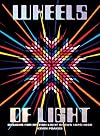
"Wheels of Light" is a well-illustrated exploration of devices used to create psychedelic light shows in the 60s and 70s. The 'wheels' of the title refers to interchangeable transparent dics that were inserted into rotating projectors. Many images of the discs are included. These were (are?) an unusual form of art and reflect a part of the culture from an interesting period in time.
Living with Air Plants: A Beginner's Guide to Growing and Displaying Tillandsia by Yoshiharu Kashima (Protoleaf)

Quickly thumbing through ‘Living with Air Plants: A Beginner's Guide to Growing and Displaying Tillandsia’ by Yoshiharu Kashima, it is clearly an attractive book with many appealing photos. It begins with a short section (about 15 pages) on growing and caring for air plants, followed by section on displaying plants. The latter is illustrated with stylish photos. The third, and longest, section of this compact 96 page volume catalogs common air plant species (epiphytes in the genus Tillandsia, which is, surprisingly, in the same plant family as pineapple and bromeliads). Each entry is illustrated with a photo accompanied by a short description.
While stylish and accessible, the book does feel a bit superficial to me. Growing and care recommendations often seem generic, a trait that is sadly common in many popular gardening books. The book does not describe much of the biology or natural history of these unusual plants (which could enhance the ability of home gardeners to cultivate them), but instead focuses on their decorative potential. Readers, like myself, who are botanically or horticulturally inclined may be left wanting, although those whose interest are in design will perhaps appreciate this editorial approach. I also felt that a few parts of the text felt slightly awkward, a possible result of translation.
In short, ‘Living with Air Plants’ is a pretty introduction to a fascinating and popular group of plants, but like air plants themselves, it lacks deep roots.
While stylish and accessible, the book does feel a bit superficial to me. Growing and care recommendations often seem generic, a trait that is sadly common in many popular gardening books. The book does not describe much of the biology or natural history of these unusual plants (which could enhance the ability of home gardeners to cultivate them), but instead focuses on their decorative potential. Readers, like myself, who are botanically or horticulturally inclined may be left wanting, although those whose interest are in design will perhaps appreciate this editorial approach. I also felt that a few parts of the text felt slightly awkward, a possible result of translation.
In short, ‘Living with Air Plants’ is a pretty introduction to a fascinating and popular group of plants, but like air plants themselves, it lacks deep roots.

This amazing book succeeds in combining astronomy, art, and paper modeling. Basic concepts of time and celestial mechanics that are needed for understanding sundials are clearly introduced, but the stars of the show, if the pun can be forgiven, are the sundial models. Each model includes instructions and templates to cut out and assemble to produce interesting and unique paper instruments that can be used to tell time or identify direction. The delight in assembling these models—and then seeing them silently track celestial movements, and thus the time—is hard to overstate. A fantastic book!

This wonderful little book (186 pages) was my introduction to paperfolding in the late 1960s. Written by Robert Harbin, it includes simple to intermediate traditional models, as well as some models from several mid-t0-late 20th-century folders. I can still recall the joy of learning Harbin's multiform (that produces a picture frame, a wallet, a basket, and a boat as the folding sequence progresses). I have folded these models many hundreds of times over the years.
In addition to the basic models, this book (an American reprint of Harbin's 'Teach Yourself Origami') is an interesting look back on how origami was perceived and the subtle ways it has changed since 1969. I also think that this little paperback has my favorite cover of any origami book, although I don't think the model depicted is shown in the book itself. If someone knows its origin I would appreciate learning it.
In addition to the basic models, this book (an American reprint of Harbin's 'Teach Yourself Origami') is an interesting look back on how origami was perceived and the subtle ways it has changed since 1969. I also think that this little paperback has my favorite cover of any origami book, although I don't think the model depicted is shown in the book itself. If someone knows its origin I would appreciate learning it.

A lovely book showcasing the whimsical kinetic automata of British artist Paul Spooner. The text of the book is primarily in Japanese, although the names of the individual kinetic art pieces are typically in English. (A separate PDF file written by Spooner is available.) The book is unpaginated and no ISBN is evident. As of 2020, the volume is available from Cabernet Mechanical Theatre (https://cabaret.co.uk/product/paul-spooner-book/).

A short introduction to Napier's bones (also known as Napier's rod). Invented by John Napier, Napier's bones are a mechanical calculating device or aid. This slim and accessible volume (only 23 numbered pages) describes the history and discovery of Napier's bones and some modifications, as well as presenting a short guide on their use. A brief bibliography is also included. The volume is nicely illustrated.
Excellent overview of the history and development of the abacus.