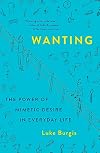
I've been recommending this to lots of people. Unusually good. Minor quibbles but overall helpful in tone and content. Girard captures biblical wisdom, and Burgis translates Girard into accessible language and practical responses along with added value.
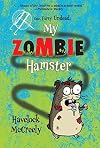
I read an advance reader's copy via netgalley to my 7 and 9 year old boys. They very much enjoyed it and await the sequel. It was hard to stop reading since they wanted to know what comes next. The book itself is engaging enough but depends too much on pop culture references, so tends occasionally to trip up those who haven't been utterly immersed in a specific genre of films. It will be somewhat opaque to immigrants etc. I trust the final kindle edition will be better formatted than the galley.

Storyline generally engaging, though not gripping. A moderately funny read. Looking at other reviews, I agree that I should have read [b:Doughnut|15790906|Doughnut|Tom Holt|https://d202m5krfqbpi5.cloudfront.net/books/1361315869s/15790906.jpg|21512463] first. Perhaps I can still figure out what happened in the ending of this novel if I do so later.
Minor: The problem with plotting that depends on plays on words is that it is dialect-dependent. You need a Brit translator to read this book. Pacing reasonable. Protagonist irritating. Female role flat.
Major: Some interesting philosophizing, but several points where the characters are not properly following through on their premises. Overall, the book came across as oddly skittish about the potential for real omnipotence in a multiverse. At several places the author approaches transcendence but backs off as if hitting a taboo or considering something truly risque.
It's been a while since I read any of Holt's books, but I seem to recall that the trope of a polytheistic cosmology active in today's world is one of his hallmarks. Unfortunately for Holt, this novel got too serious and asked too many hard questions. It also offered enough attempt at serious answers that this reader was tripped up and dropped out of the suspension of disbelief by the failure to take seriously (or even comically) answers on offer in the real world.
It's telling when the story includes a reference or joke about nearly every mythological and religious show more system ever worshiped or conceived by humanity, yet seemingly takes exquisite care to direct our attention away from a rather significant one. In the end, Holt runs into the same flaw that undermines Neil Gaiman's [b:American Gods|4407|American Gods|Neil Gaiman|https://d202m5krfqbpi5.cloudfront.net/books/1258417001s/4407.jpg|1970226]. To achieve internal consistency, both need to address the failure of polytheism in the face of monotheism.
In this book, a cramped worldview has produced a novel about a cramped multiverse. Holt invested a lot of effort into conceiving a bigger coffin. I was left feeling that it's not so much a jar as a message in a bottle thrown out bravely and pointlessly into the seas of human consciousness: Hope and meaning wanted; No deities allowed. show less
Minor: The problem with plotting that depends on plays on words is that it is dialect-dependent. You need a Brit translator to read this book. Pacing reasonable. Protagonist irritating. Female role flat.
Major: Some interesting philosophizing, but several points where the characters are not properly following through on their premises. Overall, the book came across as oddly skittish about the potential for real omnipotence in a multiverse. At several places the author approaches transcendence but backs off as if hitting a taboo or considering something truly risque.
It's been a while since I read any of Holt's books, but I seem to recall that the trope of a polytheistic cosmology active in today's world is one of his hallmarks. Unfortunately for Holt, this novel got too serious and asked too many hard questions. It also offered enough attempt at serious answers that this reader was tripped up and dropped out of the suspension of disbelief by the failure to take seriously (or even comically) answers on offer in the real world.
It's telling when the story includes a reference or joke about nearly every mythological and religious show more system ever worshiped or conceived by humanity, yet seemingly takes exquisite care to direct our attention away from a rather significant one. In the end, Holt runs into the same flaw that undermines Neil Gaiman's [b:American Gods|4407|American Gods|Neil Gaiman|https://d202m5krfqbpi5.cloudfront.net/books/1258417001s/4407.jpg|1970226]. To achieve internal consistency, both need to address the failure of polytheism in the face of monotheism.
In this book, a cramped worldview has produced a novel about a cramped multiverse. Holt invested a lot of effort into conceiving a bigger coffin. I was left feeling that it's not so much a jar as a message in a bottle thrown out bravely and pointlessly into the seas of human consciousness: Hope and meaning wanted; No deities allowed. show less

Good. A bit episodic; much left implied; would have liked more connecting tissue.
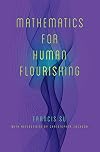
Excellent discussion and treatment of the theme. Honest and charitable. A model for Christian public engagement. Virtue approach helps a lot.
A bit too defensive in tone in places; you can hear apologizing rather than apologetics. Careful distinctions of terms and categories except in one minor case. Not even a mathematician can define systemic accusations convincingly. The appeal to generalities in that case is telling.
But overall very helpful and inspiring and helpful even beyond its field.
A bit too defensive in tone in places; you can hear apologizing rather than apologetics. Careful distinctions of terms and categories except in one minor case. Not even a mathematician can define systemic accusations convincingly. The appeal to generalities in that case is telling.
But overall very helpful and inspiring and helpful even beyond its field.