Only after a comprehensive destruction is it possible to think about a resurrection. p. 276
Coca-Cola has succeeded, where Marxist philosophy has failed, at uniting the proletarians of all nations under its banner. p. 269
Coca-Cola has succeeded, where Marxist philosophy has failed, at uniting the proletarians of all nations under its banner. p. 269
They told me not to take that job : tumult, betrayal, heroics, and the transformation of Lincoln Center by Reynold Levy
I was so eager to read this book that I pre-ordered it. The reviews I read were really positive. I’ve always been interested in what goes on behind the scenes in the performing arts and Levy presided over Lincoln Center during some big events – the demise of the City Opera, the financial problems and strike threat at the Metropolitan Opera and overhaul and redesign of the campus complete with neon signs along the stairs leading up to the halls.
The book was a monumental disappointment.
Levy doesn’t hesitate to name names and to question the actions of others, but usually in what appears to be an attempt to bolster our image of his business and organizational acumen. Tsk, tsk, if only they had listened to him. He is absolutely the hero of his own story – with some grating false modesty to temper his tales of derring do. He also boasts about some of the innovations he implemented to raise funds – pricing strategies that nickel and dime concert goers as well as naming rights for large donors. Since I find these to be some of the most odious modern trends, I was doubly offended by the pride he took in implementing them. To quote Mel Brooks..it’s good to be the king.
The latter part of the book is devoted to the lessons he’s learned during his tenure as Lincoln Center’s president, wisdom he feels he should impart to the reader. Most if not all of these are standard management techniques that can be found in any Business 101 textbook.
The book was a monumental disappointment.
Levy doesn’t hesitate to name names and to question the actions of others, but usually in what appears to be an attempt to bolster our image of his business and organizational acumen. Tsk, tsk, if only they had listened to him. He is absolutely the hero of his own story – with some grating false modesty to temper his tales of derring do. He also boasts about some of the innovations he implemented to raise funds – pricing strategies that nickel and dime concert goers as well as naming rights for large donors. Since I find these to be some of the most odious modern trends, I was doubly offended by the pride he took in implementing them. To quote Mel Brooks..it’s good to be the king.
The latter part of the book is devoted to the lessons he’s learned during his tenure as Lincoln Center’s president, wisdom he feels he should impart to the reader. Most if not all of these are standard management techniques that can be found in any Business 101 textbook.
Alice Munro’s characters always remind me of wading into the ocean. We float along following the lead of gentle ups and downs of the waves and are lulled as we learn to keep up with the rhythm – until a huge surge crashes, smacks us from behind and washes over us. After the initial shock, we get up and swim on.
Munro’s characters in this (her final?) collection of beautiful short stories, are people who have been floating along accepting life’s rhythm even when it’s not exactly what they had imagined. They don’t seem to have big plans (although they often have ambitions). They are then confronted with large or small disappointments that they ultimately overcome with the same sense of quiet acceptance that they have shown with all the events in their lives. They continue on. There is a yielding to events in life and to fate, even when the characters themselves make the decisions themselves. Toward the end of Amundsen, one of the most perfect stories in the book, a character who long ago had been abruptly dropped by a lover, meets that lover many years later.
"Going in opposite directions. .. He called out, ‘How are you?’ and I answered ‘Fine.’ Then added for good measure, ‘Happy.’"
Characters move on, life throws out disappointment and they soldier on. Happiness is basically an afterthought.
Munro’s incisive prose is quiet and compact but manage, in a brief space to create an entire world. Most of the stories are incredibly and powerfully wise, some show more are just perfection. show less
Munro’s characters in this (her final?) collection of beautiful short stories, are people who have been floating along accepting life’s rhythm even when it’s not exactly what they had imagined. They don’t seem to have big plans (although they often have ambitions). They are then confronted with large or small disappointments that they ultimately overcome with the same sense of quiet acceptance that they have shown with all the events in their lives. They continue on. There is a yielding to events in life and to fate, even when the characters themselves make the decisions themselves. Toward the end of Amundsen, one of the most perfect stories in the book, a character who long ago had been abruptly dropped by a lover, meets that lover many years later.
"Going in opposite directions. .. He called out, ‘How are you?’ and I answered ‘Fine.’ Then added for good measure, ‘Happy.’"
Characters move on, life throws out disappointment and they soldier on. Happiness is basically an afterthought.
Munro’s incisive prose is quiet and compact but manage, in a brief space to create an entire world. Most of the stories are incredibly and powerfully wise, some show more are just perfection. show less
Nothing makes you free : writings by descendants of Jewish Holocaust survivors by Melvin Jules Bukiet
Melvin Jules Bukiet writes in his introduction to Nothing Makes You Free:
"How do you cope when the most important events in your life occurred before you were born? What does this do to your sense of time? Of authenticity? As they were ghosts in history, you’re a ghost in your own safe little suburban bedroom with cowboy lampshades. All you know is that you’ve received a tainted inheritance, secondhand knowledge of the worst event in history.“
Bukiet has compiled an anthology of writing (both fiction and non-fiction) by what he terms the “Second Generation” or 2G, that is, children of Holocaust Survivors. As someone who has read 2G works since Helen Epstein’s 1979 book “Children of the Holocaust” and obsessively searched out others such as Thane Rosenbaum, Art Spiegelman, Carl Friedman and Yossi Klein Halevi, I was eager to read this book.
The works of 2G writers are often angrier, more strident and more acerbic than those of their parents. There is a sense of desperate futility in that rage because many 2G’s were subconsciously attempting to “save” their parents retroactively – and there are definitely trends in how that was done – much of which is conveyed in the 2G literature. With a few exceptions, the parents, the actual survivors (including the ones who wrote about the Holocaust) seemed more sorrowful, sometimes bitter but seldom enraged. They were also determined, at least superficially, to establish themselves and to rebuild their lives. show more It was, I think their way of proving that they were the victors, not (only) the victims. The children, were living, breathing proof of their victory.
What I particularly liked about the anthology was its international scope - many of the included works are translations. Some of the pieces are quite moving, but on the whole, I do prefer these authors' full-length works; they tend to be more nuanced. Most of the pieces convey the underlying paranoia and suspicion imparted by the parents. That paradoxical combination of suspicion and their parent's determination to build (at least the facade of) a new and thoroughly ordinary life fundamentally defined who the 2G’s were and who they became. If there is a running theme in the works in this anthology it is growing up with this paradox. show less
"How do you cope when the most important events in your life occurred before you were born? What does this do to your sense of time? Of authenticity? As they were ghosts in history, you’re a ghost in your own safe little suburban bedroom with cowboy lampshades. All you know is that you’ve received a tainted inheritance, secondhand knowledge of the worst event in history.“
Bukiet has compiled an anthology of writing (both fiction and non-fiction) by what he terms the “Second Generation” or 2G, that is, children of Holocaust Survivors. As someone who has read 2G works since Helen Epstein’s 1979 book “Children of the Holocaust” and obsessively searched out others such as Thane Rosenbaum, Art Spiegelman, Carl Friedman and Yossi Klein Halevi, I was eager to read this book.
The works of 2G writers are often angrier, more strident and more acerbic than those of their parents. There is a sense of desperate futility in that rage because many 2G’s were subconsciously attempting to “save” their parents retroactively – and there are definitely trends in how that was done – much of which is conveyed in the 2G literature. With a few exceptions, the parents, the actual survivors (including the ones who wrote about the Holocaust) seemed more sorrowful, sometimes bitter but seldom enraged. They were also determined, at least superficially, to establish themselves and to rebuild their lives. show more It was, I think their way of proving that they were the victors, not (only) the victims. The children, were living, breathing proof of their victory.
What I particularly liked about the anthology was its international scope - many of the included works are translations. Some of the pieces are quite moving, but on the whole, I do prefer these authors' full-length works; they tend to be more nuanced. Most of the pieces convey the underlying paranoia and suspicion imparted by the parents. That paradoxical combination of suspicion and their parent's determination to build (at least the facade of) a new and thoroughly ordinary life fundamentally defined who the 2G’s were and who they became. If there is a running theme in the works in this anthology it is growing up with this paradox. show less
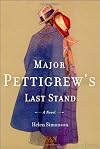
A very charming love story set in a British village. Major Pettigrew, a retired military man is a stodgy widower who is set in his ways and in the ways of his tightly knit, insular community. With the death of his brother, he encounters a number of events that open his eyes to his life of mundane and humdrum routine. One of these events is his burgeoning friendship with Mrs. Ali, a local storekeeper of a certain age and herself a widower. As he and Mrs. Ali become closer and closer, the people of the village and his materialistic and very snobby son begin to look askance at the relationship between this firmly conventional and traditional Englishman with a proud military family history and Mrs. Ali, a Pakistani woman raised in England with a very traditional family of her own. The result is a sweet mix of comedy of errors combined with biting observations on the intolerance of people usually in the name of tradition. Will Major Pettigrew and Mrs. Ali’s love triumph over narrow-mindedness? In his last stand, Major Pettigrew provides the answer in this sharp but poignant look at values and mores.
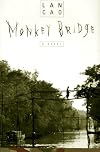
A monkey bridge is a perilous and precarious Vietnamese rope bridge that requires a very delicate balancing act to cross. Mai, the Vietnamese immigrant main character of Lan Cao’s heartbreaking novel has to cross a metaphorical monkey bridge as she simultaneously balances her new life in the United States with her efforts to hold on to her Vietnamese roots and history. Her attempts are complicated even more because the novel’s action takes place in the mid to late 1970’s – a time when the U.S. was trying hard to forget its involvement in an unpopular war in that country.
Mai, who came to the U.S. through the benevolence of an American soldier her family befriended, is joined by her mother, Thanh after the fall of Saigon. Her mother has a difficult time adjusting and is dependent on Mai to negotiate and interpret a completely alien culture and lifestyle. When Thanh falls ill, Mai tries to locate her grandfather, Thanh’s father, who was left behind in Vietnam. Mai hopes that his presence will provide comfort for Thanh so that Mai can leave her mother with a support system when she goes away to college.
Immigrant novels abound, but what makes this story unique is the fact that the Vietnam War was so unpopular that once it ended, Americans tried hard to forget it. Unwanted reminders of the war (such as Vietnam vets and Vietnamese refugees) were inconvenient truths who were ignored at best and more typically abandoned. As a result, Thanh makes efforts to present a show more carefully constructed version of her personal history to her daughter; a history that in the end, she cannot sustain.
It is noteworthy that both mother and daughter have two sets of fathers, each of whom symbolize a distinct and tragic segment of Vietnamese history. Their stories are the story of 20th Century Vietnam.
Cao’s writing is beautiful and successfully blends both ancient Vietnamese mythology and culture with American pop culture.
The author describes the physical shape of Vietnam as a seahorse. Interestingly, she uses that same word to describe Mai’s mother. Mai’s mother is the embodiment of the land and her complicated family history is the history of the country. Balancing past and present, Mai has to navigate her own perilous monkey bridge - an act that requires that she hold on to both her Vietnamese heritage and the new life she is making in the United States. show less
Mai, who came to the U.S. through the benevolence of an American soldier her family befriended, is joined by her mother, Thanh after the fall of Saigon. Her mother has a difficult time adjusting and is dependent on Mai to negotiate and interpret a completely alien culture and lifestyle. When Thanh falls ill, Mai tries to locate her grandfather, Thanh’s father, who was left behind in Vietnam. Mai hopes that his presence will provide comfort for Thanh so that Mai can leave her mother with a support system when she goes away to college.
Immigrant novels abound, but what makes this story unique is the fact that the Vietnam War was so unpopular that once it ended, Americans tried hard to forget it. Unwanted reminders of the war (such as Vietnam vets and Vietnamese refugees) were inconvenient truths who were ignored at best and more typically abandoned. As a result, Thanh makes efforts to present a show more carefully constructed version of her personal history to her daughter; a history that in the end, she cannot sustain.
It is noteworthy that both mother and daughter have two sets of fathers, each of whom symbolize a distinct and tragic segment of Vietnamese history. Their stories are the story of 20th Century Vietnam.
Cao’s writing is beautiful and successfully blends both ancient Vietnamese mythology and culture with American pop culture.
The author describes the physical shape of Vietnam as a seahorse. Interestingly, she uses that same word to describe Mai’s mother. Mai’s mother is the embodiment of the land and her complicated family history is the history of the country. Balancing past and present, Mai has to navigate her own perilous monkey bridge - an act that requires that she hold on to both her Vietnamese heritage and the new life she is making in the United States. show less
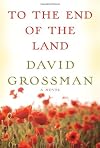
Though very difficult to slog through, this is a moving story that is at once both hopeful and depressing. The book centers on two damaged people who, in my opinion are metaphors for the existential story of Israel, a country in constant struggle.
Ora, is the mother of two boys who are fathered by two men, each of whom plays a central role in her life and in each other’s lives. Ora’s younger son has finished military duty but has signed up for one more campaign. Ora is convinced that if she is in constant movement, wandering “to the end of the land” without the ability of the army “notifiers” who bring families the news of combat deaths, to locate her, she can keep her son alive. She wanders the country with her son’s father Avram, a man she hasn’t seen in a long time, but with whom she and her husband had a tight and complicated bond. As a condition of accompanying Ora on her wandering, Avram must agree to hear about the boy’s (his biological son’s) life. She is compelled to tell him about the son in minute detail and in doing so brings both father and son to life through her recounting. There is throughout their wanderings, an almost manic desperation to her actions and words.
The power of words to insure and reclaim life seems to be an underlying theme in the book. Ora meets both Avram and Ilan (her estranged husband) while the three of them are in a hospital after the Six Day War. Avram is a writer and his words bring the three back to life while in show more the hospital. Later, during the Yom Kippur War. Avram is captured and physically, emotionally and mentally brutalized and tortured. He initially is able to maintain radio contact with the Israelis. His words don’t provide information but are non-stop verbal flights of fancy. His incessant talking (like Ora’s) is more an affirmation of life than anything else. Grossman’s writing is masterful as he conveys the desperation of both these people to affirm life and in the case of Avram, to portray through silence how he despairs of life after he is physically and mentally crushed post-captivity. Grossman seems to be telling us that as long as we can speak of life, life exists.
The book is difficult to read; it is dense and overly long, but still packs a punch. We learn about the brutality of war, the ability to hold on to hope and the need to remember and communicate. The story of these people is, no doubt, an allegory of the country itself and never sugar coats but evokes the desperation, hope and the often ruthless actions that come from a constant and complex struggle. show less
Ora, is the mother of two boys who are fathered by two men, each of whom plays a central role in her life and in each other’s lives. Ora’s younger son has finished military duty but has signed up for one more campaign. Ora is convinced that if she is in constant movement, wandering “to the end of the land” without the ability of the army “notifiers” who bring families the news of combat deaths, to locate her, she can keep her son alive. She wanders the country with her son’s father Avram, a man she hasn’t seen in a long time, but with whom she and her husband had a tight and complicated bond. As a condition of accompanying Ora on her wandering, Avram must agree to hear about the boy’s (his biological son’s) life. She is compelled to tell him about the son in minute detail and in doing so brings both father and son to life through her recounting. There is throughout their wanderings, an almost manic desperation to her actions and words.
The power of words to insure and reclaim life seems to be an underlying theme in the book. Ora meets both Avram and Ilan (her estranged husband) while the three of them are in a hospital after the Six Day War. Avram is a writer and his words bring the three back to life while in show more the hospital. Later, during the Yom Kippur War. Avram is captured and physically, emotionally and mentally brutalized and tortured. He initially is able to maintain radio contact with the Israelis. His words don’t provide information but are non-stop verbal flights of fancy. His incessant talking (like Ora’s) is more an affirmation of life than anything else. Grossman’s writing is masterful as he conveys the desperation of both these people to affirm life and in the case of Avram, to portray through silence how he despairs of life after he is physically and mentally crushed post-captivity. Grossman seems to be telling us that as long as we can speak of life, life exists.
The book is difficult to read; it is dense and overly long, but still packs a punch. We learn about the brutality of war, the ability to hold on to hope and the need to remember and communicate. The story of these people is, no doubt, an allegory of the country itself and never sugar coats but evokes the desperation, hope and the often ruthless actions that come from a constant and complex struggle. show less

Who would have thought that a book about the history of European porcelain manufacturing would be a fun read? But that’s exactly what The Arcanum is and it makes this history read like a novel. It is the story of a Johann Frederick Bottger, a precocious young 18th century chemist who in a misguided attempt to prove his worthiness to a King (August the Strong of Saxony and Poland) promises that he has the ability to create gold out of ordinary metals. The King orders Bottger locked away in a castle for years so that he can provide this creation for the King’s benefit.
Eventually, in desperation for some freedom and to avoid execution for fraudulently representing himself, Bottger instead comes up with the formula (the Arcanum) for making hard porcelain in the manner of the Chinese. Chinese porcelain had been highly prized in Europe for its delicacy, beauty and durability. The Europeans could not replicate porcelain until Bottger figured out how. Once he did, August the Strong opened a factory in Meissen, Germany (where it still remains) which produced highly sought beautiful and delicate objects. The book details the intrigues in the factory as well as the plots and conspiracies throughout Europe in efforts to steal the porcelain formula and compete with August’s monopoly on this lucrative, highly desired and valuable luxury.
It really is a fascinating and enjoyable story and Gleeson manages to provide historical and political background as well as a real taste of show more life in the 1700’s in Europe. If I have one complaint about the book, it is that there are no photos of Meissen porcelain. Given that Meissen established the precedent for this decorative art in Europe, it seems that the inclusion of photos of the porcelain would have added a lot to the book and the lack of photography is a huge omission. Simply put, seeing examples of Meissen would have visually answered the question of what the fuss was all about 300 years ago. show less
Eventually, in desperation for some freedom and to avoid execution for fraudulently representing himself, Bottger instead comes up with the formula (the Arcanum) for making hard porcelain in the manner of the Chinese. Chinese porcelain had been highly prized in Europe for its delicacy, beauty and durability. The Europeans could not replicate porcelain until Bottger figured out how. Once he did, August the Strong opened a factory in Meissen, Germany (where it still remains) which produced highly sought beautiful and delicate objects. The book details the intrigues in the factory as well as the plots and conspiracies throughout Europe in efforts to steal the porcelain formula and compete with August’s monopoly on this lucrative, highly desired and valuable luxury.
It really is a fascinating and enjoyable story and Gleeson manages to provide historical and political background as well as a real taste of show more life in the 1700’s in Europe. If I have one complaint about the book, it is that there are no photos of Meissen porcelain. Given that Meissen established the precedent for this decorative art in Europe, it seems that the inclusion of photos of the porcelain would have added a lot to the book and the lack of photography is a huge omission. Simply put, seeing examples of Meissen would have visually answered the question of what the fuss was all about 300 years ago. show less

Ralph Waldo Emerson said:
"It is very easy in the world to live by the opinion of the world. It is very easy in solitude to be self-centered. But the finished man is he who in the midst of the crowd keeps with perfect sweetness the independence of solitude.”
At a time when most, if not all of our electronic activity leaves footprints and is monitored either for commercial or other purposes and we ourselves have become a society of compulsive sharers, Eggers book is a timely indictment of our worship of all things digital and our willingness to sacrifice privacy in return for contact and connection.
The story takes place in the not too distant future on the beautiful almost Utopian corporate campus of a Google-like company where a Mae, recent college graduate is thrilled to find herself beginning a new job. As she becomes more and more proficient at her job, the company urges her to participate in the corporate culture in ways that straddle both her personal and private life until they are one in the same. As she enthusiastically sheds any semblance of privacy, she is rewarded at work and finds validation and encouragement in social media through the novel’s equivalent of likes and thumbs ups. Her discarding of her privacy has consequences in her actual (as opposed to her virtual) relationships and the frightening connection between enforced transparency and tyranny and between commercial and political surveillance is clearly made in this book.
Eggers’ characters are show more somewhat thinly drawn, their dialog can sometimes be didactic, and I was able to figure out plot twists early on, but the story as a modern day 1984 is an easy and fun read and the story (though not as fleshed out as it could be, is relevant and does provide food for thought. show less
"It is very easy in the world to live by the opinion of the world. It is very easy in solitude to be self-centered. But the finished man is he who in the midst of the crowd keeps with perfect sweetness the independence of solitude.”
At a time when most, if not all of our electronic activity leaves footprints and is monitored either for commercial or other purposes and we ourselves have become a society of compulsive sharers, Eggers book is a timely indictment of our worship of all things digital and our willingness to sacrifice privacy in return for contact and connection.
The story takes place in the not too distant future on the beautiful almost Utopian corporate campus of a Google-like company where a Mae, recent college graduate is thrilled to find herself beginning a new job. As she becomes more and more proficient at her job, the company urges her to participate in the corporate culture in ways that straddle both her personal and private life until they are one in the same. As she enthusiastically sheds any semblance of privacy, she is rewarded at work and finds validation and encouragement in social media through the novel’s equivalent of likes and thumbs ups. Her discarding of her privacy has consequences in her actual (as opposed to her virtual) relationships and the frightening connection between enforced transparency and tyranny and between commercial and political surveillance is clearly made in this book.
Eggers’ characters are show more somewhat thinly drawn, their dialog can sometimes be didactic, and I was able to figure out plot twists early on, but the story as a modern day 1984 is an easy and fun read and the story (though not as fleshed out as it could be, is relevant and does provide food for thought. show less
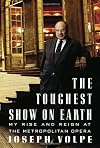
Joseph Volpe’s improbable rise from apprentice carpenter to General Manager of the Metropolitan Opera is documented in his memoir The Toughest Show on Earth. His rough and tumble personality often created friction between him and some of the Met management’s “bluebloods” who saw him as too unrefined to lead. He writes about this friction with a mix of pride and resentment.
The book is wildly self-serving and is Volpe’s opportunity to publicly settle more than a few scores. At times too, Volpe is somewhat self-aggrandizing, often scornful and occasionally just plain mean, but this book delivers what others only promise – lots of juicy insider dish. What also comes through is his dogged protectiveness and love for the Met.
Volpe pulls no punches and writes both lovingly and with rancor about some of the Met’s personalities. He is surprisingly brutal in his descriptions of various individuals in the Met’s management - with two major exceptions. He describes how Rudolf Bing who is Volpe's polar opposite in every way, mentored him. He also writes how Bruce Crawford, the Met’s Board President brilliantly and skillfully stewarded the Met back from near bankruptcy.
Though he's not one to dwell, he does discuss several regrets. His soured relationship with John Dexter, the director of numerous acclaimed productions in the late 1970’s and early 1980’s and his famous firing of the notoriously difficult soprano Kathleen Battle are both described and justified. show more He does seem a bit wistful that both relationships could not be salvaged.
He has soaring praise and respect for James Levine and he writes lovingly and protectively of Luciano Pavarotti. Pavarotti evidently could even charm Volpe, a man who seems immune to that brand of outsized charisma in other divas.
For all his bluster, the book illustrates Volpe’s fierce protectiveness and love for the institution. Toward the end, he writes:
"It’s a company in the true sense-a collective of singers, musicians, dancers, directors, designers, and backstage and front-of-the-house people of many callings. They all work at the Met because making opera is a job for the human spirit." show less
The book is wildly self-serving and is Volpe’s opportunity to publicly settle more than a few scores. At times too, Volpe is somewhat self-aggrandizing, often scornful and occasionally just plain mean, but this book delivers what others only promise – lots of juicy insider dish. What also comes through is his dogged protectiveness and love for the Met.
Volpe pulls no punches and writes both lovingly and with rancor about some of the Met’s personalities. He is surprisingly brutal in his descriptions of various individuals in the Met’s management - with two major exceptions. He describes how Rudolf Bing who is Volpe's polar opposite in every way, mentored him. He also writes how Bruce Crawford, the Met’s Board President brilliantly and skillfully stewarded the Met back from near bankruptcy.
Though he's not one to dwell, he does discuss several regrets. His soured relationship with John Dexter, the director of numerous acclaimed productions in the late 1970’s and early 1980’s and his famous firing of the notoriously difficult soprano Kathleen Battle are both described and justified. show more He does seem a bit wistful that both relationships could not be salvaged.
He has soaring praise and respect for James Levine and he writes lovingly and protectively of Luciano Pavarotti. Pavarotti evidently could even charm Volpe, a man who seems immune to that brand of outsized charisma in other divas.
For all his bluster, the book illustrates Volpe’s fierce protectiveness and love for the institution. Toward the end, he writes:
"It’s a company in the true sense-a collective of singers, musicians, dancers, directors, designers, and backstage and front-of-the-house people of many callings. They all work at the Met because making opera is a job for the human spirit." show less
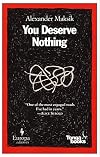
This first novel, by Alexander Maksik, received some notoriety when it recently came out that it may be a thinly veiled memoir.
It is a take on a story we have all seen and read – Will Silver is an expat who teaches at an international school in Paris and has developed a reputation as an inspirational and beloved high school teacher who captures students' imagination and sparks their love of learning. He is an almost cult figure among the students who adore him for both his cool persona and his ideals. The students witness first hand that his own life doesn’t live up to the ideals he espouses in a number of ways, the most egregious of which is his sexual involvement with a student.
The story is told from both Will’s perspective as well that of several of the students. While it is well written and might be an interesting piece of fiction, I think that if it is biographical, there is a decided "ick" factor to this book. This is particularly the case since the author excuses his actions with the female student with whom he is involved by having her justify and defend their relationship. Ew.
Edit | More
It is a take on a story we have all seen and read – Will Silver is an expat who teaches at an international school in Paris and has developed a reputation as an inspirational and beloved high school teacher who captures students' imagination and sparks their love of learning. He is an almost cult figure among the students who adore him for both his cool persona and his ideals. The students witness first hand that his own life doesn’t live up to the ideals he espouses in a number of ways, the most egregious of which is his sexual involvement with a student.
The story is told from both Will’s perspective as well that of several of the students. While it is well written and might be an interesting piece of fiction, I think that if it is biographical, there is a decided "ick" factor to this book. This is particularly the case since the author excuses his actions with the female student with whom he is involved by having her justify and defend their relationship. Ew.
Edit | More
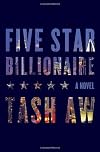
Tash Aw’s Five Star Billionaire captures in mesmerizing detail, the intertwining stories of five very different people who come from Malaysia to Shanghai in pursuit of fame and fortune. Each individual is vastly different from the others, but all have in common two traits: a desire to take advantage of the anonymity and opportunity that Shanghai provides in order to reinvent themselves, and their association with Walter Chao, the title character, whose enigmatic relationship with each one simultaneously enables their worldly ambitions while unpeeling those materialistic dreams to reveal deeper, more fundamental human needs.
Each character is fully drawn and compelling. We meet Gary, an American Idol type pop singer, whose fame and trajectory is disrupted by his own misbehavior, Phoebe, a provincial young girl whose goal is to marry a wealthy cosmopolitan man, Yinghui, a former scholar and activist who is now intent on building a business empire and Justin, whose wealthy family sends him to Shanghai to expand their influence and real estate holdings in Mainland China. Finally, the reader meets Walter, the Five Star Billionaire, businessman/philanthropist, whose aims are clouded in mystery.
The book is divided into chapters that rotate among the stories of each character as each one becomes more fully fleshed out. Interspersed with these chapters are the chapters about Walter. These are the only chapters in the first person and they recount his story chronologically. The show more Walter chapters are also in a different font to underscore, I believe, that his is the thread that weaves the fabric of the book together. Indeed, all the main characters are connected to each other to some degree and we gradually begin to suspect that Walter is the puppet master of these characters. Why he becomes involved in their lives is unclear and we do not know until the end of the novel if his involvement is coincidental, benign or malignant.
The backdrop of their stories is Shanghai, which practically serves as a sixth character. The author brings this frenetic city to life as it too is reinventing itself. There is a running theme of destroying old buildings to construct modern, functional and soulless ones that mirrors the journeys of the protagonists. These contrasting images of old and new Shanghai are vibrant and Aw’s descriptions of the people, buildings, streets, sights, sounds and smells that define the city animate the story.
Aw’s book is well written, the story itself is compelling. I found the beginning slow-going as the reader is introduced to each character, but as the narratives of these characters begins to take life and Aw brings those narratives together, the story gains a momentum that makes for great reading. show less
Each character is fully drawn and compelling. We meet Gary, an American Idol type pop singer, whose fame and trajectory is disrupted by his own misbehavior, Phoebe, a provincial young girl whose goal is to marry a wealthy cosmopolitan man, Yinghui, a former scholar and activist who is now intent on building a business empire and Justin, whose wealthy family sends him to Shanghai to expand their influence and real estate holdings in Mainland China. Finally, the reader meets Walter, the Five Star Billionaire, businessman/philanthropist, whose aims are clouded in mystery.
The book is divided into chapters that rotate among the stories of each character as each one becomes more fully fleshed out. Interspersed with these chapters are the chapters about Walter. These are the only chapters in the first person and they recount his story chronologically. The show more Walter chapters are also in a different font to underscore, I believe, that his is the thread that weaves the fabric of the book together. Indeed, all the main characters are connected to each other to some degree and we gradually begin to suspect that Walter is the puppet master of these characters. Why he becomes involved in their lives is unclear and we do not know until the end of the novel if his involvement is coincidental, benign or malignant.
The backdrop of their stories is Shanghai, which practically serves as a sixth character. The author brings this frenetic city to life as it too is reinventing itself. There is a running theme of destroying old buildings to construct modern, functional and soulless ones that mirrors the journeys of the protagonists. These contrasting images of old and new Shanghai are vibrant and Aw’s descriptions of the people, buildings, streets, sights, sounds and smells that define the city animate the story.
Aw’s book is well written, the story itself is compelling. I found the beginning slow-going as the reader is introduced to each character, but as the narratives of these characters begins to take life and Aw brings those narratives together, the story gains a momentum that makes for great reading. show less
 This review was written for LibraryThing Early Reviewers.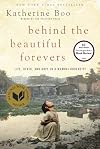
Katherine Boo has written a powerful and affecting book as she tells the story of individuals who live in one of Mumbai’s many overcrowded, dangerous and filthy slums. In her afterword, Boo reminds us that although India has become a powerful nation and an economic force with which to be reckoned, its population represents one third of the poverty, and one-quarter of the hunger, on the planet. Though she gives us this shocking statistic and there is no doubt that she has done extensive research and legwork, her talent lies in her writing. She presents us with the stories of a few individuals in a specific slum and in doing so gives us a reality that is at once intimate and personal as well as providing a sense of the collective experience. It is also noteworthy I think, that these stories unfold without any sense that the Pulitzer Prize winning journalist that Boo is, is reporting. Through dialog, narrative, and description, Boo brings drama to this story in a way that is usually the reserved domain of the best novelists.
Boo tells the stories of individuals who live in the Annawadi slum located behind Mumbai’s international airport. The juxtaposition of this modern airport and its neighboring ultra-modern, luxurious hotels with this filthy, disease-ridden, garbage laden and overpopulated village abutting what residents call the sewage “lake” is striking and symbolic of the issues Boo attempts to highlight.
Boo chronicles the story of Abdul and his family as they show more stand accused of beating their crippled neighbor and setting her on fire. The family’s desperate attempts to maneuver through a corrupt criminal justice and legal system that works almost exclusively on bribery (if it works at all) bring them into close contact with another family in the slum – that of Asha, the politically connected and striving slum leader and her family. Their stories and their struggles to survive are often horrifying and always pitiful.
The title comes from a billboard that separates the slum from the airport hotels. The billboard advertises a flooring company, whose slogan Beautiful Forevers, is repeated over and over again. It is the perfect symbol and the perfect title for this terrific and heartbreaking book. show less
Boo tells the stories of individuals who live in the Annawadi slum located behind Mumbai’s international airport. The juxtaposition of this modern airport and its neighboring ultra-modern, luxurious hotels with this filthy, disease-ridden, garbage laden and overpopulated village abutting what residents call the sewage “lake” is striking and symbolic of the issues Boo attempts to highlight.
Boo chronicles the story of Abdul and his family as they show more stand accused of beating their crippled neighbor and setting her on fire. The family’s desperate attempts to maneuver through a corrupt criminal justice and legal system that works almost exclusively on bribery (if it works at all) bring them into close contact with another family in the slum – that of Asha, the politically connected and striving slum leader and her family. Their stories and their struggles to survive are often horrifying and always pitiful.
The title comes from a billboard that separates the slum from the airport hotels. The billboard advertises a flooring company, whose slogan Beautiful Forevers, is repeated over and over again. It is the perfect symbol and the perfect title for this terrific and heartbreaking book. show less
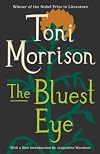
Morrison addresses so many issues in this compelling yet devastating book, but the dominant one is the effect of entrenched racism on individuals.
The story centers mainly on Pecola Breedlove, a young girl who, when she is noticed at all, is the object of vicious cruelty by her classmates, her neighbors and most appallingly, by her parents. Tormented by everyone, Pecola is convinced that the reason for everyone’s brutality toward her is her ugliness, that is, that she is darker than everyone else. Because of what her skin color and hair represent, Pecola is the family and community target and scapegoat. In her desperation for acceptance, she tries to attain society’s image of beauty. Pecola drinks quarts and quarts of milk in a Shirley Temple mug, hoping to drink in not only the whiteness of the milk, but the blueness of Shirley Temple’s eyes. Eventually, she begins to pray each night for blue eyes.
The book also details the stories of Pecola’s parents and the two girls who are kind to her. Each of these characters has methods of dealing with their own or vicarious experience with racist cruelty, animosity and humiliation. These methods range from immersion in and exclusive love for a white employer to preemptive hostility and in one case criminality and extreme violence. This last instance demonstrates the exertion of power on one who has even less power.
Apart from the story itself, I think that what makes this book so compelling is the writing style. Most show more chapters begin with excerpts from the old Dick and Jane reading primer. Simple idyllic statements about white families living a comfortable life run into each other and become a driving and ironic counterpoint to the plot and characters’ situations. Most of the story is narrated by the two girls who show Pecola some compassion, but there are several chapters describing various characters and their histories that seem to be in the author’s voice. These different voices might be viewed as distracting and incongruous in another book, but here serve as part of the fluid trajectory of this heartbreaking story. This is a really tough story to read, but is rendered beautifully and powerfully. show less
The story centers mainly on Pecola Breedlove, a young girl who, when she is noticed at all, is the object of vicious cruelty by her classmates, her neighbors and most appallingly, by her parents. Tormented by everyone, Pecola is convinced that the reason for everyone’s brutality toward her is her ugliness, that is, that she is darker than everyone else. Because of what her skin color and hair represent, Pecola is the family and community target and scapegoat. In her desperation for acceptance, she tries to attain society’s image of beauty. Pecola drinks quarts and quarts of milk in a Shirley Temple mug, hoping to drink in not only the whiteness of the milk, but the blueness of Shirley Temple’s eyes. Eventually, she begins to pray each night for blue eyes.
The book also details the stories of Pecola’s parents and the two girls who are kind to her. Each of these characters has methods of dealing with their own or vicarious experience with racist cruelty, animosity and humiliation. These methods range from immersion in and exclusive love for a white employer to preemptive hostility and in one case criminality and extreme violence. This last instance demonstrates the exertion of power on one who has even less power.
Apart from the story itself, I think that what makes this book so compelling is the writing style. Most show more chapters begin with excerpts from the old Dick and Jane reading primer. Simple idyllic statements about white families living a comfortable life run into each other and become a driving and ironic counterpoint to the plot and characters’ situations. Most of the story is narrated by the two girls who show Pecola some compassion, but there are several chapters describing various characters and their histories that seem to be in the author’s voice. These different voices might be viewed as distracting and incongruous in another book, but here serve as part of the fluid trajectory of this heartbreaking story. This is a really tough story to read, but is rendered beautifully and powerfully. show less
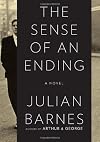
"History is the certainty produced at the point where the imperfections of memory meet the inadequacies of documentation."
The Sense of an Ending is all about history; but this book focuses on our histories, that is, our personal histories, the way that we remember, the way those around us remember and where the truth lies.
The story is prosaic enough -- Barnes writes elegantly and sparsely about Tony Webster, a fairly ordinary man who has lived a fairly ordinary life. One day, he hears from a lawyer regarding a bequest to him from the newly deceased mother of Veronica, a former girlfriend from his student days. The bequest includes the diary of a dead mutual friend who also had been Veronica’s lover at one time. Veronica has possession of the diary and refuses to hand it over.
Tony’s relationship with Veronica had been fraught with tensions, misunderstandings and resentments and his pursuit of this diary and the former girlfriend’s intransigence allow the two to reconnect and reexamine the relationship they had, and reignites old resentments. Tony doesn’t just want the diary he's been bequeathed, but wants to know why Veronica’s mother had it at all and why Veronica refuses to let him have it.
The answers he ultimately discovers come at a price – the price of self-awareness, self-knowledge and a more truthful and difficult appraisal of who he really is.
The book is concisely written yet fully captures Tony’s mind-set, feelings and character. Though the show more message behind the story is serious, much of the book is presented in a light-hearted manner. We watch Tony’s evolution as he becomes aware that his life as he chose to recall it does not depict complete reality. The twists and turns that are revealed do not feel contrived. On the contrary, they pack a punch for the reader as much as for the main character. show less
The Sense of an Ending is all about history; but this book focuses on our histories, that is, our personal histories, the way that we remember, the way those around us remember and where the truth lies.
The story is prosaic enough -- Barnes writes elegantly and sparsely about Tony Webster, a fairly ordinary man who has lived a fairly ordinary life. One day, he hears from a lawyer regarding a bequest to him from the newly deceased mother of Veronica, a former girlfriend from his student days. The bequest includes the diary of a dead mutual friend who also had been Veronica’s lover at one time. Veronica has possession of the diary and refuses to hand it over.
Tony’s relationship with Veronica had been fraught with tensions, misunderstandings and resentments and his pursuit of this diary and the former girlfriend’s intransigence allow the two to reconnect and reexamine the relationship they had, and reignites old resentments. Tony doesn’t just want the diary he's been bequeathed, but wants to know why Veronica’s mother had it at all and why Veronica refuses to let him have it.
The answers he ultimately discovers come at a price – the price of self-awareness, self-knowledge and a more truthful and difficult appraisal of who he really is.
The book is concisely written yet fully captures Tony’s mind-set, feelings and character. Though the show more message behind the story is serious, much of the book is presented in a light-hearted manner. We watch Tony’s evolution as he becomes aware that his life as he chose to recall it does not depict complete reality. The twists and turns that are revealed do not feel contrived. On the contrary, they pack a punch for the reader as much as for the main character. show less
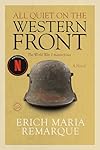
I read this book, and several equally harrowing anti-war novels (notably Johnny Got His Gun) when I was in high school during the Vietnam War. I remember the book had a huge impact on me then, but re-reading it now, I am struck not just by the story and message, but the reason that this book is so impactful.
The story is told in first person by Paul Bäumer, who, with the nationalistic prodding of his bumptious schoolteacher enlists in the army at the outset of World War One. The book’s language is direct, simple and completely devastating. It is through Paul's eyes that the reader sees trench warfare, chemical warfare, night-time sentry duty, hospital stays and home leave.
The story is written so that recounting events is secondary to creating the sense of immediacy and of being there. The story is evocative, that is, it is a series of impressions that expose the consciousness and emotional state of an individual in combat. Remarque removes the barrier between the reader and Paul and it is through Paul's lens that we witness and experience his terror of losing life before it has begun, his bitterness toward those who promote and incite conflict yet relegate the fight to others, his horror at the impossibly brutal and gruesome deaths of those around him, his despair of a life of unending misery and his recognition of his developing callousness and loss of humanity that combatants require to survive. We experience his consciousness of the experience of the war. And I show more believe it is this experience that makes Paul’s horrific journey so spellbinding to the reader.
"We have become wild beasts. We do not fight, we defend ourselves against annihilation. It is not against men that we fling our bombs, what do we know of men in the moment when Death is hunting us down.." show less
The story is told in first person by Paul Bäumer, who, with the nationalistic prodding of his bumptious schoolteacher enlists in the army at the outset of World War One. The book’s language is direct, simple and completely devastating. It is through Paul's eyes that the reader sees trench warfare, chemical warfare, night-time sentry duty, hospital stays and home leave.
The story is written so that recounting events is secondary to creating the sense of immediacy and of being there. The story is evocative, that is, it is a series of impressions that expose the consciousness and emotional state of an individual in combat. Remarque removes the barrier between the reader and Paul and it is through Paul's lens that we witness and experience his terror of losing life before it has begun, his bitterness toward those who promote and incite conflict yet relegate the fight to others, his horror at the impossibly brutal and gruesome deaths of those around him, his despair of a life of unending misery and his recognition of his developing callousness and loss of humanity that combatants require to survive. We experience his consciousness of the experience of the war. And I show more believe it is this experience that makes Paul’s horrific journey so spellbinding to the reader.
"We have become wild beasts. We do not fight, we defend ourselves against annihilation. It is not against men that we fling our bombs, what do we know of men in the moment when Death is hunting us down.." show less
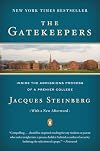
Unlike other college books that are intended to be "how to's", The Gatekeepers puts human faces on both the kids and the college admissions personnel who have vested interests in the process. Beginning in 1999, Jacques Steinberg of the New York Times, was given unfettered access to both a select group of high school seniors and the admissions department of Wesleyan University. It is through their eyes that he observes the selection process for that year.
What is most moving about this book is that way that Steinberg shows us how agonizing and personal the process is for both sides of this process. Steinberg is a terrific writer and gives us the back stories of each "character". In doing so, his book makes for captivating reading. We want to know more about these individuals.I found myself rooting for some of these kids as they begin to struggle for a place in the world. More than anything else, the book reinforces that this is a very human process, in which individuals on both sides of the "gate" bring his or her own hopes and dreams.
By shining a very personal light on the applications process, the book also underscores the more universal concerns of both colleges and and students including access to education and the issue of fairness in the process.
I don't know that I would have read the book if the issue wasn't something that was close to home right now, but it is a compelling read and there were many occasions when I had to control the lump in my throat.
The edition of show more the book I read contains an afterword that updates us on all the individuals who were profiled (both the admissions personnel and the students) and after we had come to know these people during this fixed time period of their lives, it was heartwarming to read about their place in the world today. show less
What is most moving about this book is that way that Steinberg shows us how agonizing and personal the process is for both sides of this process. Steinberg is a terrific writer and gives us the back stories of each "character". In doing so, his book makes for captivating reading. We want to know more about these individuals.I found myself rooting for some of these kids as they begin to struggle for a place in the world. More than anything else, the book reinforces that this is a very human process, in which individuals on both sides of the "gate" bring his or her own hopes and dreams.
By shining a very personal light on the applications process, the book also underscores the more universal concerns of both colleges and and students including access to education and the issue of fairness in the process.
I don't know that I would have read the book if the issue wasn't something that was close to home right now, but it is a compelling read and there were many occasions when I had to control the lump in my throat.
The edition of show more the book I read contains an afterword that updates us on all the individuals who were profiled (both the admissions personnel and the students) and after we had come to know these people during this fixed time period of their lives, it was heartwarming to read about their place in the world today. show less
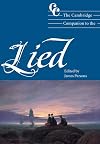
"In the Beginning Was Poetry”
The title of this chapter sets the tone (pardon the pun) for this book on the Lied or Austrian-German art song. Arguably the most sublime and personal musical genre, Lieder perfectly combine poetry with music. This book, a compilation of essays presents an in-depth study of the genre, its development, cultural and musical significance and interpretation. I found some essays were more interesting than others, but taken in the whole, the book gives the reader a fantastic historical framework and analysis of both some of the individual songs and composers, as well as the rise and fall of Lieder.
The book begins with a time-line and is then broken into chronological sections that focus on the lied’s development, stature and ultimate demise nearly 200 years later. The book examines the zenith of the Lied with an appropriate, though by no means exclusive, focus on Schubert. The reader comes to understand how this art form evolved from intimate performances at home, from songs or ballads that have their roots in folk songs and other cultural influences to exquisitely beautiful, musically sophisticated concert hall performances.
One of my favorite essays is by the pianist and Lieder accompanist, Graham Johnson. He provides a light, very honest, funny and completely unpretentious look at the trials and tribulations of the Lied, its performance and performers and its cultural significance. Astonishingly, he even takes a gentle swipe at one of the show more “gods” of the Lieder, Dietrich Fischer-Dieskau, whom Johnson accompanied many, many times.
Okay, so this book won’t be made into a “major motion picture, coming to a theater near you” anytime soon. But it is unpretentious and non-technical and for many who have an almost visceral love for this genre, I recommend it highly. show less
The title of this chapter sets the tone (pardon the pun) for this book on the Lied or Austrian-German art song. Arguably the most sublime and personal musical genre, Lieder perfectly combine poetry with music. This book, a compilation of essays presents an in-depth study of the genre, its development, cultural and musical significance and interpretation. I found some essays were more interesting than others, but taken in the whole, the book gives the reader a fantastic historical framework and analysis of both some of the individual songs and composers, as well as the rise and fall of Lieder.
The book begins with a time-line and is then broken into chronological sections that focus on the lied’s development, stature and ultimate demise nearly 200 years later. The book examines the zenith of the Lied with an appropriate, though by no means exclusive, focus on Schubert. The reader comes to understand how this art form evolved from intimate performances at home, from songs or ballads that have their roots in folk songs and other cultural influences to exquisitely beautiful, musically sophisticated concert hall performances.
One of my favorite essays is by the pianist and Lieder accompanist, Graham Johnson. He provides a light, very honest, funny and completely unpretentious look at the trials and tribulations of the Lied, its performance and performers and its cultural significance. Astonishingly, he even takes a gentle swipe at one of the show more “gods” of the Lieder, Dietrich Fischer-Dieskau, whom Johnson accompanied many, many times.
Okay, so this book won’t be made into a “major motion picture, coming to a theater near you” anytime soon. But it is unpretentious and non-technical and for many who have an almost visceral love for this genre, I recommend it highly. show less

The Road into the Open is an unnerving and prescient indictment of early 20th century Vienna and the disintegration of a civilization’s culture. Schnitzler uses, I believe, the symbolism of child/parent to describe, both literally and figuratively, the hopelessness and demise of a once thriving, industrious and creative culture. That the book was written in 1908, pre-dating both world wars is truly astonishing.
The novel follows Baron Georg von Wergenthin, an aristocratic young composer over the course of a year that begins with the death of his father and ends with the stillborn birth of his illegitimate son. During this time, we meet his friends and acquaintances and many of their parents. We witness firsthand the growing and ominous development of overt anti-Semitism. We also observe the birth of Zionism as well as expansion of socialism.
The characters in the book (and there are so many that it’s tough to keep up initially) all are deeply rooted in the customs and mores of the time but many – most prominently the book’s protagonist - seem to languish in those customs without a sense of direction or purpose. Others see something threatening in Vienna’s political and societal direction and become either desperate or look for escape. The overriding sense of looming menace is pervasive throughout the novel.
This is a fascinating book on so many levels – as a work of fiction, as a psychological and cultural study and finally, as a peek into the times. It is a show more gloomy and sad book, but one that I found I couldn’t put down. show less
The novel follows Baron Georg von Wergenthin, an aristocratic young composer over the course of a year that begins with the death of his father and ends with the stillborn birth of his illegitimate son. During this time, we meet his friends and acquaintances and many of their parents. We witness firsthand the growing and ominous development of overt anti-Semitism. We also observe the birth of Zionism as well as expansion of socialism.
The characters in the book (and there are so many that it’s tough to keep up initially) all are deeply rooted in the customs and mores of the time but many – most prominently the book’s protagonist - seem to languish in those customs without a sense of direction or purpose. Others see something threatening in Vienna’s political and societal direction and become either desperate or look for escape. The overriding sense of looming menace is pervasive throughout the novel.
This is a fascinating book on so many levels – as a work of fiction, as a psychological and cultural study and finally, as a peek into the times. It is a show more gloomy and sad book, but one that I found I couldn’t put down. show less
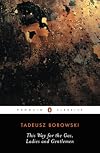
Not for the faint of heart, this one.
There are three facets of Borowski’s work that I believe make his writing unique in Holocaust literature: The sardonic yet emotionless narrative, the almost visceral sense of chaotic desperation and terror experienced by the arriving transports and finally, the numbness that develops when witnessing industrialized, mechanized and assembly-line mass murder.
The title as well as the tone of many of the stories bear a cutting, almost mocking quality which might be seen by some as offensive. In my opinion though, the authenticity of a survivor’s testimony can give integrity to this tone and it certainly does in this case. Borowski was a Polish non-Jew imprisoned as a laborer in Auschwitz. He worked in a kommando – a work gang. Though his life was always in danger, he was not slated for the crematoria. He was often put in charge of other laborers and the fictional stories (which are thinly veiled memoirs) portray the ways in which he bartered for food, clothing and survival in general. In fact the power struggles among the ranks of inmates is gruesomely depicted in these stories. The stories underscore how, where survival is the sole goal, one’s humanity is stripped away in order to endure. The fact that Borowski presents these stories in a very subdued matter of fact manner while underscoring the complete absurdity of this existence gives them even greater impact.
"We said that there is no crime that a man will not commit in order show more to save himself. And, having saved himself, he will commit crimes for increasingly trivial reasons: he will commit them first out of duty, then from habit and finally – for pleasure."
The running theme of Borowski’s stories is the industrialized and nearly mechanical nature of the death camps. Borowski describes the ceaseless pattern of the march to the crematoria from the unloading of transports upon arrival to the color and smell of the smoke. He is the detached observer, dryly recounting the standard operating procedure that enabled the death camps to implement mass murder in an efficient and industrialized manner. It sounds impossible, but Borowski describes the terror and chaos in numb and methodical tones. No other book I’ve read (and I’ve been fairly obsessed with this topic throughout my life so, I’ve read a lot) has ever resounded so profoundly or frighteningly.
I highly recommend this book, but I will say, that it's not for everyone. show less
There are three facets of Borowski’s work that I believe make his writing unique in Holocaust literature: The sardonic yet emotionless narrative, the almost visceral sense of chaotic desperation and terror experienced by the arriving transports and finally, the numbness that develops when witnessing industrialized, mechanized and assembly-line mass murder.
The title as well as the tone of many of the stories bear a cutting, almost mocking quality which might be seen by some as offensive. In my opinion though, the authenticity of a survivor’s testimony can give integrity to this tone and it certainly does in this case. Borowski was a Polish non-Jew imprisoned as a laborer in Auschwitz. He worked in a kommando – a work gang. Though his life was always in danger, he was not slated for the crematoria. He was often put in charge of other laborers and the fictional stories (which are thinly veiled memoirs) portray the ways in which he bartered for food, clothing and survival in general. In fact the power struggles among the ranks of inmates is gruesomely depicted in these stories. The stories underscore how, where survival is the sole goal, one’s humanity is stripped away in order to endure. The fact that Borowski presents these stories in a very subdued matter of fact manner while underscoring the complete absurdity of this existence gives them even greater impact.
"We said that there is no crime that a man will not commit in order show more to save himself. And, having saved himself, he will commit crimes for increasingly trivial reasons: he will commit them first out of duty, then from habit and finally – for pleasure."
The running theme of Borowski’s stories is the industrialized and nearly mechanical nature of the death camps. Borowski describes the ceaseless pattern of the march to the crematoria from the unloading of transports upon arrival to the color and smell of the smoke. He is the detached observer, dryly recounting the standard operating procedure that enabled the death camps to implement mass murder in an efficient and industrialized manner. It sounds impossible, but Borowski describes the terror and chaos in numb and methodical tones. No other book I’ve read (and I’ve been fairly obsessed with this topic throughout my life so, I’ve read a lot) has ever resounded so profoundly or frighteningly.
I highly recommend this book, but I will say, that it's not for everyone. show less
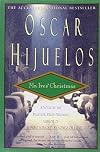
Recently, Paul Elias wrote an article in the NYT Book Review entitled “Has Fiction Lost Its Faith”. He states that “if any patch of our culture can be said to be post-Christian, it is literature”. Interestingly enough Oscar Hijuelos wrote in response that in fact, his book Mr. Ives’ Christmas refuted Elias’ claim. Indeed, Mr. Ives’ Christmas is at once a very contemporary and very ancient story. By the way, there are no spoilers in this review, since the pivotal incident in the book is described at the beginning of the book.
Major events in Edward Ives’ life all take place around Christmastime. An orphan, he is adopted during the holidays by a very kind man of deep faith who instills in Ives a love of both tradition and religion. As an adult, Ives meets the love of his life and together they build a family and a happy life surrounded by good friends. He meets increasing success and fulfillment in his career and all the while, maintains his devotion to his church and beliefs. He relishes accumulating family memories as well the conventions and ceremonial trappings of religion (music, Christmas cards, etc) and almost as a reflection of these mementos, takes pride in his collectibles, notably a first edition signed copies of novels by Charles Dickens.
He shares his love for the church with his family and is very pleased and proud when his son decides to become a priest. After holiday shopping with his wife, one Christmas, he returns home to find that his son show more has been the fatal victim of a random shooting. He questions his fundamental beliefs and his faith and his life are shattered. This is the story of how he deals with this tragedy, and the nature of his faith.
The reconciliation between divine power and innocent suffering and the question of why bad things happen to good people has been the subject of discussion since (and probably before) the writing of the Book of Job and is an issue that is addressed in every culture and in every faith. Like Job, Ives is surrounded by friends who attempt to address his grief either through retribution or explanations for the tragedy. Like Job too, Ives also experiences a theophany when after a frightening experience, he leaves his Madison Avenue office and has a vision of a gigantic sun and a multi-colored wind. Ives learns to live with faith that isn’t grounded in reason. His clarity doesn’t come from certainty or tradition, but ultimately from passion, compassion, and the courage to embrace spirituality.
Hijuelos may have written about profound concepts, but his writing style is straightforward, quiet, at times humorous, occasionally magical and always very engaging. He is, at heart, a storyteller, but his story leaves one with much more to think about. It is a marvelous book show less
Major events in Edward Ives’ life all take place around Christmastime. An orphan, he is adopted during the holidays by a very kind man of deep faith who instills in Ives a love of both tradition and religion. As an adult, Ives meets the love of his life and together they build a family and a happy life surrounded by good friends. He meets increasing success and fulfillment in his career and all the while, maintains his devotion to his church and beliefs. He relishes accumulating family memories as well the conventions and ceremonial trappings of religion (music, Christmas cards, etc) and almost as a reflection of these mementos, takes pride in his collectibles, notably a first edition signed copies of novels by Charles Dickens.
He shares his love for the church with his family and is very pleased and proud when his son decides to become a priest. After holiday shopping with his wife, one Christmas, he returns home to find that his son show more has been the fatal victim of a random shooting. He questions his fundamental beliefs and his faith and his life are shattered. This is the story of how he deals with this tragedy, and the nature of his faith.
The reconciliation between divine power and innocent suffering and the question of why bad things happen to good people has been the subject of discussion since (and probably before) the writing of the Book of Job and is an issue that is addressed in every culture and in every faith. Like Job, Ives is surrounded by friends who attempt to address his grief either through retribution or explanations for the tragedy. Like Job too, Ives also experiences a theophany when after a frightening experience, he leaves his Madison Avenue office and has a vision of a gigantic sun and a multi-colored wind. Ives learns to live with faith that isn’t grounded in reason. His clarity doesn’t come from certainty or tradition, but ultimately from passion, compassion, and the courage to embrace spirituality.
Hijuelos may have written about profound concepts, but his writing style is straightforward, quiet, at times humorous, occasionally magical and always very engaging. He is, at heart, a storyteller, but his story leaves one with much more to think about. It is a marvelous book show less
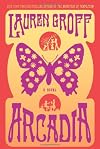
This novel which tracks the lives of members of an upstate New York commune – Arcadia - during the 1970’s and then through its dissolution, into the present and finally in the near future, sounded really interesting. Indeed, the book takes one back to a time when it seemed everything was possible, even the creation of a utopia. There was a lot I enjoyed about this book and some things that really annoyed me and detracted from the writing.
Groff’s writing can be beautiful and eloquent though it occasionally veers toward the overly florid and pretentious, in my opinion. Her characters (particularly Bit, the main character), are fully drawn and complex and I found myself completely involved in their lives. The story is told in the third person through Bit’s eyes. We meet him at the age of five and Groff succeeds in presenting us with his worldview at this young and innocent age and then, as he matures as a teen and ultimately as an adult.
The description of Arcadia as Utopia is also interesting. We see sincere individuals who strive to create a better, nurturing and more ethical society. We follow their stories and the story of Arcadia as deception, outside influences and corruption creep in and fray the seams of this once tightly knit community. Interestingly, Arcadia is located near an Amish community. Arcadia, which has (at best) tenuous rules, advances the idea of individual freedom. This kind of utopia cannot endure, whereas, common faith and sacrifice for the show more good of the group allow the Amish to flourish.
So what was my problem with the book? Simply that Groff does not want to give her reader credit for understanding her meaning. Instead, she often gives her characters didactic dialog that summarizes the meaning for us. This kind of writing infuriates me. If the author wants to expound on reasons for the dissolution of the principles and ideals that led to the founding of United States as an experiment as a “more perfect” society, she might have written an essay to make explicit her beliefs and thoughts. She instead clobbers the reader over the head with this notion through some very artificial and "preachy" sounding dialog. The best stories let the story evoke the concepts. She is also terribly politically correct. For example, an African-American child brought up in Arcadia grows up to become a commentator on a conservative cable channel. Funny enough, but Groff won’t let this go and wears us out by insulting him over and over and over again.
In all, I did enjoy the story and felt connected to the main characters. Even with its flaws, it's a book worth reading. show less
Groff’s writing can be beautiful and eloquent though it occasionally veers toward the overly florid and pretentious, in my opinion. Her characters (particularly Bit, the main character), are fully drawn and complex and I found myself completely involved in their lives. The story is told in the third person through Bit’s eyes. We meet him at the age of five and Groff succeeds in presenting us with his worldview at this young and innocent age and then, as he matures as a teen and ultimately as an adult.
The description of Arcadia as Utopia is also interesting. We see sincere individuals who strive to create a better, nurturing and more ethical society. We follow their stories and the story of Arcadia as deception, outside influences and corruption creep in and fray the seams of this once tightly knit community. Interestingly, Arcadia is located near an Amish community. Arcadia, which has (at best) tenuous rules, advances the idea of individual freedom. This kind of utopia cannot endure, whereas, common faith and sacrifice for the show more good of the group allow the Amish to flourish.
So what was my problem with the book? Simply that Groff does not want to give her reader credit for understanding her meaning. Instead, she often gives her characters didactic dialog that summarizes the meaning for us. This kind of writing infuriates me. If the author wants to expound on reasons for the dissolution of the principles and ideals that led to the founding of United States as an experiment as a “more perfect” society, she might have written an essay to make explicit her beliefs and thoughts. She instead clobbers the reader over the head with this notion through some very artificial and "preachy" sounding dialog. The best stories let the story evoke the concepts. She is also terribly politically correct. For example, an African-American child brought up in Arcadia grows up to become a commentator on a conservative cable channel. Funny enough, but Groff won’t let this go and wears us out by insulting him over and over and over again.
In all, I did enjoy the story and felt connected to the main characters. Even with its flaws, it's a book worth reading. show less
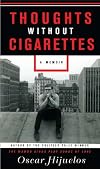
The memoir by the Pulitzer Prize winning novelist Oscar Hijuelos was an absolute delight that pulled me in from the first page. Hijuelos writes about his struggle with his identity and his journey to discover who he is both as a writer and even more fundamentally, as a person.
He begins by painting an almost dreamlike picture of his parent’s beginnings in their native Cuba. Shortly after their unlikely marriage in the 1940’s (neither family is thrilled with their union), they immigrate to Morningside Heights on New York’s Upper West Side. He recounts their struggles and adjustment to an entirely different kind of life both financially and culturally. Oscar and his brother are immersed in their family’s culture and language, which culminates in a trip the boys take with their mother back to Cuba. Though he was only four at the time, Hijuelos recounts the pure joy and freedom he experiences there. While the trip and his happy experiences there should have instilled in him, a love of his ancestral home, he develops nephritis and upon returning to the U.S., is confined for a year to a convalescent hospital in Connecticut. The experience leaves him isolated and cut off from both his family and culture. One way this rupture is manifest is that upon his return home, he no longer speaks Spanish.
Hijuelos describes further attempts at independence from both his overprotective mother and his family in general as he grows up in a dangerous time and place. He witnesses what show more happens to his neighborhood as Columbia University expands & the university dispossesses huge swaths of neighborhood residents. What had been an economically and culturally diverse neighborhood, replete with Columbia professors, working class and middle class residents, becomes a dangerous, marginalized and crime ridden area. Hijuelos rejects his culture and his home and essentially becomes a streetwise *hood*, both preying and being preyed upon. Eventually, to even his surprise, he enrolls in City College. It is there that he meets and is mentored by the likes of Donald Barthelme and Susan Sontag and discovers writing. It is more or less through this discovery that he re-discovers and comes to appreciate and love both his roots and his family.
At times, like a contemporary Proust, his memories are sparked by the foods that symbolize his relationship with each of his parents, with his community and culture. Hijuelos’s writing style is conversational and often funny (complete with little asides to both the reader and those to whom he is referring). His eventual embrace of his personal and cultural heritage is told in an informal and earthy style and in the end, had me in tears. show less
He begins by painting an almost dreamlike picture of his parent’s beginnings in their native Cuba. Shortly after their unlikely marriage in the 1940’s (neither family is thrilled with their union), they immigrate to Morningside Heights on New York’s Upper West Side. He recounts their struggles and adjustment to an entirely different kind of life both financially and culturally. Oscar and his brother are immersed in their family’s culture and language, which culminates in a trip the boys take with their mother back to Cuba. Though he was only four at the time, Hijuelos recounts the pure joy and freedom he experiences there. While the trip and his happy experiences there should have instilled in him, a love of his ancestral home, he develops nephritis and upon returning to the U.S., is confined for a year to a convalescent hospital in Connecticut. The experience leaves him isolated and cut off from both his family and culture. One way this rupture is manifest is that upon his return home, he no longer speaks Spanish.
Hijuelos describes further attempts at independence from both his overprotective mother and his family in general as he grows up in a dangerous time and place. He witnesses what show more happens to his neighborhood as Columbia University expands & the university dispossesses huge swaths of neighborhood residents. What had been an economically and culturally diverse neighborhood, replete with Columbia professors, working class and middle class residents, becomes a dangerous, marginalized and crime ridden area. Hijuelos rejects his culture and his home and essentially becomes a streetwise *hood*, both preying and being preyed upon. Eventually, to even his surprise, he enrolls in City College. It is there that he meets and is mentored by the likes of Donald Barthelme and Susan Sontag and discovers writing. It is more or less through this discovery that he re-discovers and comes to appreciate and love both his roots and his family.
At times, like a contemporary Proust, his memories are sparked by the foods that symbolize his relationship with each of his parents, with his community and culture. Hijuelos’s writing style is conversational and often funny (complete with little asides to both the reader and those to whom he is referring). His eventual embrace of his personal and cultural heritage is told in an informal and earthy style and in the end, had me in tears. show less
Erich Kästner’s Das Doppelte Lottchen was translated into English as Lisa and Lottie, but its plot is probably most familiar to American movie goers of both the 1960’s and 1990’s as The Parent Trap. The basic plot device has been used by many authors from Charles Dickens to Mark Twain and even to Shakespeare: separated twins who meet as strangers and conspire to switch identities. In this case, two identical girls serendipitously meet at summer camp and discover that they are in fact twins whose parents, upon divorcing, each took one twin to live with them. The twins switch places and return to the home of the other parent with the goal of reuniting them. Of course, havoc ensues since though they look alike, each twin has a distinct and opposing personality.
Kästner presents this story in a playful and almost silly manner. Some of this playfulness is writing style, some is the language (although the language in his other famous children’s novel Emil and the Detectives” is even sillier). I couldn’t help but think of the heavy-handed manner that divorce (or any other “issue”) might be portrayed in contemporary children’s literature.
Kästner also gives the young reader a lighthearted opportunity to explore one’s sense of self and identity, showing us “Odd Couple” extremes and demonstrating how, in the end these extremes are tempered by coming together. Finally, it wasn’t until I re-read this book now that I saw the theme of re-unification. show more Kästner wrote the book in 1949 in a post-war divided Germany. Maybe it’s a stretch, but could this book also have been an appeal for a reunified nation? show less
Kästner presents this story in a playful and almost silly manner. Some of this playfulness is writing style, some is the language (although the language in his other famous children’s novel Emil and the Detectives” is even sillier). I couldn’t help but think of the heavy-handed manner that divorce (or any other “issue”) might be portrayed in contemporary children’s literature.
Kästner also gives the young reader a lighthearted opportunity to explore one’s sense of self and identity, showing us “Odd Couple” extremes and demonstrating how, in the end these extremes are tempered by coming together. Finally, it wasn’t until I re-read this book now that I saw the theme of re-unification. show more Kästner wrote the book in 1949 in a post-war divided Germany. Maybe it’s a stretch, but could this book also have been an appeal for a reunified nation? show less
Several years ago when visiting Vienna, we attended (at my insistence) a ballet based on Wilhelm Busch’s children’s classic Max and Moritz. It’s a book I grew up with and one that was read to me from an early age. We in the audience laughed heartily at Max and Moritz’s antics and even the ballet music – Rossini - was cheerful and bubbly. I turned and saw my husband and daughter seated next to me in slack-jawed shock and horror!
Max and Moritz: A Children’s Story in Seven Parts, was written during the mid-19th Century and is a story, told in rhyming couplets, of two boys who play tricks on various people in the community. Eventually, they get their comeuppance, much to the satisfaction of the targets of their misdeeds. Intended to be a cautionary tale about naughty or bad behavior (in the manner of another German classic: Der Struwwelpeter), both the tricks and the punishment are over-the-top. The tricks, which include an attempted drowning and explosions, are all at the expense of very proper, upstanding members of the community who are (naturally) outraged. The eventual punishment they exact is also extreme!
What is noteworthy about this book (apart from the extreme violence) is the format of the book. Max and Moritz is the pre-cursor of the comic book complete with onomatopoeia, invented language and other language devices typically used to describe the action in comics. The language is playful and intended to be an accompaniment to the illustrations. Each show more character is illustrated as a caricature and in fact, I’ve always thought that the boys themselves bear a striking resemblance to Laurel and Hardy.
There is no question that the humor in this book is cruel so after the performance and after re-reading the book now, I wondered why we often are inclined to laugh at cruelty. I am thinking particularly of some types of slapstick humor - the premise of which is often to laugh at the misfortunes or even (often inflicted) pain, of others. So too, some of the cartoons we grew up watching were extremely violent and in ways, similar to Max and Moritz (didn’t Wily Coyote always get his?). Maybe this kind of hyperbole serves to underscore the purpose of the violence - retribution, ignorance, disobedience, etc. Because we understand that it's not real, we can take in the lesson without being appalled. Whatever the intentions, Max and Moritz is fascinating both for its social commentary as well as its importance in the history of the development of children’s literature and the graphic novel/cartoon. show less
Max and Moritz: A Children’s Story in Seven Parts, was written during the mid-19th Century and is a story, told in rhyming couplets, of two boys who play tricks on various people in the community. Eventually, they get their comeuppance, much to the satisfaction of the targets of their misdeeds. Intended to be a cautionary tale about naughty or bad behavior (in the manner of another German classic: Der Struwwelpeter), both the tricks and the punishment are over-the-top. The tricks, which include an attempted drowning and explosions, are all at the expense of very proper, upstanding members of the community who are (naturally) outraged. The eventual punishment they exact is also extreme!
What is noteworthy about this book (apart from the extreme violence) is the format of the book. Max and Moritz is the pre-cursor of the comic book complete with onomatopoeia, invented language and other language devices typically used to describe the action in comics. The language is playful and intended to be an accompaniment to the illustrations. Each show more character is illustrated as a caricature and in fact, I’ve always thought that the boys themselves bear a striking resemblance to Laurel and Hardy.
There is no question that the humor in this book is cruel so after the performance and after re-reading the book now, I wondered why we often are inclined to laugh at cruelty. I am thinking particularly of some types of slapstick humor - the premise of which is often to laugh at the misfortunes or even (often inflicted) pain, of others. So too, some of the cartoons we grew up watching were extremely violent and in ways, similar to Max and Moritz (didn’t Wily Coyote always get his?). Maybe this kind of hyperbole serves to underscore the purpose of the violence - retribution, ignorance, disobedience, etc. Because we understand that it's not real, we can take in the lesson without being appalled. Whatever the intentions, Max and Moritz is fascinating both for its social commentary as well as its importance in the history of the development of children’s literature and the graphic novel/cartoon. show less
I’ve read Coetzee’s Disgrace and absolutely loved the book. The Life and Times of Michael K is a small but equally powerful book.
There are three chapters or sections of this book. The first and third is the story of Michael K told in third person. These sections bookend a middle one which tells Michael’s story from the perspective of an unnamed doctor under whose care Michael finds himself. This double-telling, helps to paint a fuller portrait of a baffling and strangely innocent individual caught in a no-win situation in a society that has completely broken down. Michael K is portrayed as a complete innocent who tries unsuccessfully to stay above the fray. He encounters obstacles with which he is completely unequipped to deal or understand. Though Coetzee writes about K’s encounters with South African bureaucrats that even the most logical and articulate person couldn’t handle, he clearly is writing about a universal existence in an irrational and brutal world devoid of any social order. As the book progresses, K. abandons what little language he has, much to the frustration of those who want to help him as well as to those who want to harm him. I found this lack of language a moving literary device.
Coetzee tips his hat to Kafka both through the name of the main character as well as to references to “The Castle” and it seems to me that his subject matter, though specific to South Africa is similar to that of Kafka’s books. Both authors grapple with the show more concept of freedom and the individual's attempt to make sense of a world devoid of sense. show less
There are three chapters or sections of this book. The first and third is the story of Michael K told in third person. These sections bookend a middle one which tells Michael’s story from the perspective of an unnamed doctor under whose care Michael finds himself. This double-telling, helps to paint a fuller portrait of a baffling and strangely innocent individual caught in a no-win situation in a society that has completely broken down. Michael K is portrayed as a complete innocent who tries unsuccessfully to stay above the fray. He encounters obstacles with which he is completely unequipped to deal or understand. Though Coetzee writes about K’s encounters with South African bureaucrats that even the most logical and articulate person couldn’t handle, he clearly is writing about a universal existence in an irrational and brutal world devoid of any social order. As the book progresses, K. abandons what little language he has, much to the frustration of those who want to help him as well as to those who want to harm him. I found this lack of language a moving literary device.
Coetzee tips his hat to Kafka both through the name of the main character as well as to references to “The Castle” and it seems to me that his subject matter, though specific to South Africa is similar to that of Kafka’s books. Both authors grapple with the show more concept of freedom and the individual's attempt to make sense of a world devoid of sense. show less

I was reminded that I owned this book when I read a New Yorker article about Zweig several months ago. I’ve read a number of Zweig’s fictional works (short stories, novels ) and I’m also fascinated by early twentieth century Vienna, so I was eager to read the book.
Stefan Zweig came of age at the turn of the 19th century in Imperial Vienna during a golden period that helped to define twentieth century art, music, literature and science -- in fact, that set the stage for cultural and intellectual life in the 20th century. Though this book is an autobiography, it is also his elegy for this lost era. Zweig was born into a solidly middle class Jewish, Viennese family and describes a time full of stability, intellectual curiosity and promise. Though deeply attached to Vienna and Viennese life, Zweig also considered himself a citizen of Europe and describes his time traveling and living throughout the continent and the UK. Along the way, he encounters many of the great and creative minds of the time.
He witnesses the first chink in his solid and promising world with the events leading up to and then the outbreak of the First World War. The slaughter that takes place during WWI cannot but help to influence Zweig's attitude toward conflict, national pride and continental unity. He becomes an active pacifist though despite his pacifism and horror of the war, he writes mournfully about the break-up of the Hapsburg Empire and describes that break-up as an amputation. show more Nevertheless, he clings to his hope that this post-war world can be mended. Indeed, despite hints as to what is to come, he finds success, renown and personal stability and happiness durng the 1920’s.
Sadly, with the rise of Nazism in Germany and the annexation of Austria, he becomes a firsthand witness to the death of this hope and the loss of his place in the world.
I found this book fascinating because it provided an insider's view of a time and place that were both molded by great minds and that molded them. show less
Stefan Zweig came of age at the turn of the 19th century in Imperial Vienna during a golden period that helped to define twentieth century art, music, literature and science -- in fact, that set the stage for cultural and intellectual life in the 20th century. Though this book is an autobiography, it is also his elegy for this lost era. Zweig was born into a solidly middle class Jewish, Viennese family and describes a time full of stability, intellectual curiosity and promise. Though deeply attached to Vienna and Viennese life, Zweig also considered himself a citizen of Europe and describes his time traveling and living throughout the continent and the UK. Along the way, he encounters many of the great and creative minds of the time.
He witnesses the first chink in his solid and promising world with the events leading up to and then the outbreak of the First World War. The slaughter that takes place during WWI cannot but help to influence Zweig's attitude toward conflict, national pride and continental unity. He becomes an active pacifist though despite his pacifism and horror of the war, he writes mournfully about the break-up of the Hapsburg Empire and describes that break-up as an amputation. show more Nevertheless, he clings to his hope that this post-war world can be mended. Indeed, despite hints as to what is to come, he finds success, renown and personal stability and happiness durng the 1920’s.
Sadly, with the rise of Nazism in Germany and the annexation of Austria, he becomes a firsthand witness to the death of this hope and the loss of his place in the world.
I found this book fascinating because it provided an insider's view of a time and place that were both molded by great minds and that molded them. show less
I read Toibin’s The Master some years ago and enjoyed the imagining of the inner life of Henry James. This fictional account of James’ relationship with his family succeeded in humanizing the man who grew up in one of America’s most successful and accomplished families. In the novella, The Testament of Mary, Toibin explores the relationship of a much more storied and celebrated family – Jesus and Mary – through a fictionalized first-hand telling of the story by Mary. The result is both poetic and iconoclastic.
The book takes place years after the crucifixion and consists of Mary’s reflections on her life, Jesus’ life and their relationship. Toibin doesn’t portray her as silent and sorrowful as she is in art, (the Pieta), or in the Gospels of the New Testament. Instead, he gives her a strong and at times, angry voice as he explores the relationship of mother and son (as opposed to Mother and Son). Mary expresses the profound concern she had about the people with whom he chose to associate, their influence on him and most of all, she worried about his public behavior and his safety. Her concerns are those of all mothers throughout the ages. Toibin allows her to discuss her frantic, futile attempts to protect and save him.
Toibin’s writing is absolutely mesmerizing and his imagery, particularly the description of the crucifixion, is vivid and horrifying. No word in this book is a wasted one and together they create a lyrical, frightening, reflective and show more unique interpretation and exploration of a human life and a mother's love for her son. show less
The book takes place years after the crucifixion and consists of Mary’s reflections on her life, Jesus’ life and their relationship. Toibin doesn’t portray her as silent and sorrowful as she is in art, (the Pieta), or in the Gospels of the New Testament. Instead, he gives her a strong and at times, angry voice as he explores the relationship of mother and son (as opposed to Mother and Son). Mary expresses the profound concern she had about the people with whom he chose to associate, their influence on him and most of all, she worried about his public behavior and his safety. Her concerns are those of all mothers throughout the ages. Toibin allows her to discuss her frantic, futile attempts to protect and save him.
Toibin’s writing is absolutely mesmerizing and his imagery, particularly the description of the crucifixion, is vivid and horrifying. No word in this book is a wasted one and together they create a lyrical, frightening, reflective and show more unique interpretation and exploration of a human life and a mother's love for her son. show less
The Quiet American is at once infuriating and compelling. Greene’s story of America's early intervention in South East Asia clearly foreshadows not only our misguided and disastrous war there, but our recent attempts at “democratization” and “nation building” in the Mid-East. At the same time, Greene (unwittingly?) shows us the European exploitation of their colonies and colonists.
The story itself is an allegory, its characters are metaphors. Alden Pyle, a young, naïve and very straight-laced American has been sent to Vietnam as an agent to establish a “third force”, that is, an alternative to European colonialism and Asian communism. He meets Thomas Fowler, a cynical British journalist who has been stationed in Vietnam for some time and who has been having an affair with a young Vietnamese girl named Phuong. Phuong is depicted as quiet and acquiescent but her sister is eager to see her married and settled. Pyle falls in love with her and becomes determined to marry her. He also declares his intentions to Fowler believing that this too, is the right and honorable thing to do.
The book begins with Pyle’s murder and the bulk of the story is flashback. The mystery of Pyle’s death is only revealed toward the end of the book. As we follow the relationship between Pyle and Fowler, we also are exposed to Greene’s attitude toward the United States. Fowler clearly believes that the United States’ attempt to intervene in Southeast Asian politics is at once show more arrogant and self-serving. Early on, Fowler (speaking for Greene) states about Pyle:
"He was absorbed already in the Dilemmas of Democracy and the responsibilities of the West; he was determined … to do good, not to any individual person but to a country, a continent, a world. Well, he was in his element now with the whole universe to improve."
What was most interesting to me is the way in which the three characters are portrayed. Pyle, representing the archetypal American wants to do the right thing by Phuong, that is, he wants a to foist on her a conventional American marriage with the prospect of children. Just as he bases his beliefs, activities and goals in Vietnam on foreign policy books he’s read, so too, he plans his marriage in a dry, formulaic "by the book" manner. He envisions Phuong as the typical American wife, living the typical American dream. He doesn’t see this as imposing cultural change; in his mind, it’s the only option – he’s doing the right thing. It mirrors exactly his (and by extension, the U.S.) goals in Indochina.
Fowler is depicted as cynical, detached, selfish and arrogant. Married to a devout Catholic woman who won’t grant him a divorce, he is content to use Phuong for drugs and sex. He admires her in a condescending way. His way is the colonial way.
Finally, Phuong is the metaphor for European colonies – silent, exotic and compliant. She is an object exploited for Fowler's use and pleasure.
In this age of “nation building”, leading from behind and democratization, the book serves as a cautionary tale. On the other hand, whether Greene intended to show us or not, he demonstrates how European smugness, cynicism, exploitation and arrogance can also lead to a dangerous and resentful world.
The book's portrayal of people (and by extension, nations) who are oblivious to other's perception of them made me think of the Robert Burns quote:
*O would some power the giftie gie us to see ourselves as others see us.* show less
The story itself is an allegory, its characters are metaphors. Alden Pyle, a young, naïve and very straight-laced American has been sent to Vietnam as an agent to establish a “third force”, that is, an alternative to European colonialism and Asian communism. He meets Thomas Fowler, a cynical British journalist who has been stationed in Vietnam for some time and who has been having an affair with a young Vietnamese girl named Phuong. Phuong is depicted as quiet and acquiescent but her sister is eager to see her married and settled. Pyle falls in love with her and becomes determined to marry her. He also declares his intentions to Fowler believing that this too, is the right and honorable thing to do.
The book begins with Pyle’s murder and the bulk of the story is flashback. The mystery of Pyle’s death is only revealed toward the end of the book. As we follow the relationship between Pyle and Fowler, we also are exposed to Greene’s attitude toward the United States. Fowler clearly believes that the United States’ attempt to intervene in Southeast Asian politics is at once show more arrogant and self-serving. Early on, Fowler (speaking for Greene) states about Pyle:
"He was absorbed already in the Dilemmas of Democracy and the responsibilities of the West; he was determined … to do good, not to any individual person but to a country, a continent, a world. Well, he was in his element now with the whole universe to improve."
What was most interesting to me is the way in which the three characters are portrayed. Pyle, representing the archetypal American wants to do the right thing by Phuong, that is, he wants a to foist on her a conventional American marriage with the prospect of children. Just as he bases his beliefs, activities and goals in Vietnam on foreign policy books he’s read, so too, he plans his marriage in a dry, formulaic "by the book" manner. He envisions Phuong as the typical American wife, living the typical American dream. He doesn’t see this as imposing cultural change; in his mind, it’s the only option – he’s doing the right thing. It mirrors exactly his (and by extension, the U.S.) goals in Indochina.
Fowler is depicted as cynical, detached, selfish and arrogant. Married to a devout Catholic woman who won’t grant him a divorce, he is content to use Phuong for drugs and sex. He admires her in a condescending way. His way is the colonial way.
Finally, Phuong is the metaphor for European colonies – silent, exotic and compliant. She is an object exploited for Fowler's use and pleasure.
In this age of “nation building”, leading from behind and democratization, the book serves as a cautionary tale. On the other hand, whether Greene intended to show us or not, he demonstrates how European smugness, cynicism, exploitation and arrogance can also lead to a dangerous and resentful world.
The book's portrayal of people (and by extension, nations) who are oblivious to other's perception of them made me think of the Robert Burns quote:
*O would some power the giftie gie us to see ourselves as others see us.* show less
Leon Botstein is the longtime president of Bard College (at 23 he was the youngest college president in American history), he is the director and principal conductor of the American Symphony Orchestra and is an iconoclastic educator. In many ways, he is a true Renaissance man.
I guess I should have read this book several years ago – my daughter attends Bard High School Early College – the school Botstein founded and that is based on the ideas in this book. Better late than never I guess because the book was compelling and Botstein is clearly brilliant.
Botstein maintains that high school, or at least the high school curriculum has been reduced to rote learning reinforced by standardized tests. He basically makes a case that, by and large, teens are warehoused until college. He states that this is not only a huge disservice to teens who are eager and wired to learn, and are bored in the current system, but warehousing kids in high school for four years is an unnecessary public expense. Essentially, he advocates abolishing much of high school, taking advantage of the teenage mind and treating that mind with more respect by challenging teens to analyze, explore ideas and to learn how to think critically. In other words, he is advocating for a more substantive education. He argues that teenagers are ready and wired to start thinking critically and that advancing them supports this readiness and motivates them. He argues against those who hold that the American educational show more system has decayed and that we need to examine and replicate the past. He posits that this is a kind of backward thinking based in nostalgia and not necessarily on past success.
In order to accomplish the abolition of high school and the advancement of younger teens to college level education, Botstein encourages an evolution in both a parental and educator approach to teens. He advocates for a cross between teacher and college professor for kids. He wants kids to be exposed to people trained in subject specialties rather than teaching/education; people who are both passionate about and immersed in particular subject specialties. He also makes the case that in general, teachers need to emulate sports coaches in that there needs to be constant and immediate response to kids in to maximize effectiveness. For parents, Botstein provides twenty-four maxims (one for every hour of the day) by which to live and raise intellectually curious kids.
I was impressed by the book. Botstein is ground breaker and since the writing of this book many early college high schools based on my daughter’s school have opened throughout the country. Though the workload is huge and she has had to sacrifice some out of school interests, my daughter is thriving at the school, loves it and wouldn’t think of being anywhere else. show less
I guess I should have read this book several years ago – my daughter attends Bard High School Early College – the school Botstein founded and that is based on the ideas in this book. Better late than never I guess because the book was compelling and Botstein is clearly brilliant.
Botstein maintains that high school, or at least the high school curriculum has been reduced to rote learning reinforced by standardized tests. He basically makes a case that, by and large, teens are warehoused until college. He states that this is not only a huge disservice to teens who are eager and wired to learn, and are bored in the current system, but warehousing kids in high school for four years is an unnecessary public expense. Essentially, he advocates abolishing much of high school, taking advantage of the teenage mind and treating that mind with more respect by challenging teens to analyze, explore ideas and to learn how to think critically. In other words, he is advocating for a more substantive education. He argues that teenagers are ready and wired to start thinking critically and that advancing them supports this readiness and motivates them. He argues against those who hold that the American educational show more system has decayed and that we need to examine and replicate the past. He posits that this is a kind of backward thinking based in nostalgia and not necessarily on past success.
In order to accomplish the abolition of high school and the advancement of younger teens to college level education, Botstein encourages an evolution in both a parental and educator approach to teens. He advocates for a cross between teacher and college professor for kids. He wants kids to be exposed to people trained in subject specialties rather than teaching/education; people who are both passionate about and immersed in particular subject specialties. He also makes the case that in general, teachers need to emulate sports coaches in that there needs to be constant and immediate response to kids in to maximize effectiveness. For parents, Botstein provides twenty-four maxims (one for every hour of the day) by which to live and raise intellectually curious kids.
I was impressed by the book. Botstein is ground breaker and since the writing of this book many early college high schools based on my daughter’s school have opened throughout the country. Though the workload is huge and she has had to sacrifice some out of school interests, my daughter is thriving at the school, loves it and wouldn’t think of being anywhere else. show less