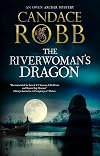
This book is focused on Magda Digby, the Riverwoman the plot has numerous twists and turns involving her daughter and great-grandson, her neighbours, clients and, of course, Owen Archer and his wife Lucie, local merchants, churchmen and the poor. It all comes together but I did have trouble keeping all the lines and people straight. Magda didn’t, she continued to treat her expectant mothers, discover a murder, hid from people who wanted to see her dead and deal with the broken relationships with her relations.
Magda Digby has appeared in every Owen Archer book with an increased presence until now she has her own book. She has developed the persona of an older, wise woman with a mystical aura, a healer and midwife.
Robb started writing this book in 2020 as COVID-19 was making its presence known. In [The Riverwoman’s Dragon] the Black Plague was reappearing and she questioned having it do so under her writing circumstances but it’s presence had already worked it’s way into the plot so she noted the similarities in peoples behaviour and carried on. It wasn’t know until I read the Author’s Note that I learned this and it isn’t obvious in the book unless the reader looks at characters’ behaviour.
October 31, 2022
I read books quickly and when I finished this I realized I had lost a twist of the plot here or the background of a not-so-minor character there. I decided to reread it at a slower pace and I enjoyed Robb’s use of English, her descriptions of the show more woodlands anew. I followed each of the characters from the young River Boys who guarded Magda’s abode to the guards Owen used in the city. The ending made sense with all, well mostly all of the plot’s twists and turns. Something has to be left for another book.
📚📚📚📚📚
Reviewed 2022-10-31 show less
Magda Digby has appeared in every Owen Archer book with an increased presence until now she has her own book. She has developed the persona of an older, wise woman with a mystical aura, a healer and midwife.
Robb started writing this book in 2020 as COVID-19 was making its presence known. In [The Riverwoman’s Dragon] the Black Plague was reappearing and she questioned having it do so under her writing circumstances but it’s presence had already worked it’s way into the plot so she noted the similarities in peoples behaviour and carried on. It wasn’t know until I read the Author’s Note that I learned this and it isn’t obvious in the book unless the reader looks at characters’ behaviour.
October 31, 2022
I read books quickly and when I finished this I realized I had lost a twist of the plot here or the background of a not-so-minor character there. I decided to reread it at a slower pace and I enjoyed Robb’s use of English, her descriptions of the show more woodlands anew. I followed each of the characters from the young River Boys who guarded Magda’s abode to the guards Owen used in the city. The ending made sense with all, well mostly all of the plot’s twists and turns. Something has to be left for another book.
📚📚📚📚📚
Reviewed 2022-10-31 show less
The Mystery of Julia Episcopa by John I. Rigoli (2021)
Written in the early days of the growth of the Christian Church and in the present day reporting on the past this is an interesting view of the role women have played in the development of the church and what men continue to do to protect their power in the church.
Two women archeologists discover information in the Vatican Library which leads them to research the life of Julia Episcopa whom they believe was a bishop in the Catholic Church in the first century. They keep their discovery a secret until they are able to meet with the Pope and his top officials. The reaction to this was generally similar in both the first and twenty-first centuries - negative although there were a couple of the clergy who saw it as positive for the Church. A death, perhaps a murder follows and the case is dismissed. All are sworn to secrecy. But will it hold?
I liked the movement between the centuries and the women telling the story. It was interesting to see how behaviours and beliefs have not changed over the centuries.
I received this book through LibraryThing’s Early Reviewers Program.
📚📚📚📚
Written in the early days of the growth of the Christian Church and in the present day reporting on the past this is an interesting view of the role women have played in the development of the church and what men continue to do to protect their power in the church.
Two women archeologists discover information in the Vatican Library which leads them to research the life of Julia Episcopa whom they believe was a bishop in the Catholic Church in the first century. They keep their discovery a secret until they are able to meet with the Pope and his top officials. The reaction to this was generally similar in both the first and twenty-first centuries - negative although there were a couple of the clergy who saw it as positive for the Church. A death, perhaps a murder follows and the case is dismissed. All are sworn to secrecy. But will it hold?
I liked the movement between the centuries and the women telling the story. It was interesting to see how behaviours and beliefs have not changed over the centuries.
I received this book through LibraryThing’s Early Reviewers Program.
📚📚📚📚
 This review was written for LibraryThing Early Reviewers.
#172. [Dead in the Alley], [[Sharon Michalove]]
The chef/owner went out in the alley for a smoke and to consider his problems and gets run over, again and again, by a motorcycle. When the police investigate they add drug trafficking to the case and are surprised to find no trace of money in the restaurant or the owner’s accounts. The suspects include his very surprised wife, kitchen workers, business associates, in-laws and friends.
The restaurant was opened in northern Michigan to get them away from the problems of running one in New York City. It was a success. The one problem that follows Bay, wife, co-owner, baker and in charge of the front of the restaurant, is her relationship with her family. Was she adopted? Why have her parents always treated her like an outsider? She and her husband moved back to her hometown to open their restaurant and her family is a thorn in her side. To the point that after the funeral she moves in with a girlfriend to escape them. She has no place of her own to go to thanks to her late husband.
To complicate matters one of the police officers investigating the case is a former high school sweetheart of Bay’s. It was a serious relationship until he became an international bike racing star and he ‘ghosted’ her. Something else for Bay to overcome.
The book moves quickly with each of the main characters, easily identified, contributing to the telling. I particularly liked this aspect of the book. However I think the author went overboard show more with all that he added, homosexuality, kidnapping by the evil villain who is losing control, the difficult family relationships, the secrets around Bay’s birth. Some of this would be fine but not all of it. Regardless I couldn’t put the book down!
I received this through LibraryThing’s Early Reviewers Program.
📚📚📚📚 show less
The chef/owner went out in the alley for a smoke and to consider his problems and gets run over, again and again, by a motorcycle. When the police investigate they add drug trafficking to the case and are surprised to find no trace of money in the restaurant or the owner’s accounts. The suspects include his very surprised wife, kitchen workers, business associates, in-laws and friends.
The restaurant was opened in northern Michigan to get them away from the problems of running one in New York City. It was a success. The one problem that follows Bay, wife, co-owner, baker and in charge of the front of the restaurant, is her relationship with her family. Was she adopted? Why have her parents always treated her like an outsider? She and her husband moved back to her hometown to open their restaurant and her family is a thorn in her side. To the point that after the funeral she moves in with a girlfriend to escape them. She has no place of her own to go to thanks to her late husband.
To complicate matters one of the police officers investigating the case is a former high school sweetheart of Bay’s. It was a serious relationship until he became an international bike racing star and he ‘ghosted’ her. Something else for Bay to overcome.
The book moves quickly with each of the main characters, easily identified, contributing to the telling. I particularly liked this aspect of the book. However I think the author went overboard show more with all that he added, homosexuality, kidnapping by the evil villain who is losing control, the difficult family relationships, the secrets around Bay’s birth. Some of this would be fine but not all of it. Regardless I couldn’t put the book down!
I received this through LibraryThing’s Early Reviewers Program.
📚📚📚📚 show less
This review was written for LibraryThing Early Reviewers.
Deceived by Ornament by Edward J. Leahy (2022)
Five murders: two policeman, a Latino immigration lawyer, a social worker and a church housekeeper and the suspected murderer is a policeman. Each body is marked on the chest with a pagan symbol which connects the bodies and indicates more to come to complete the symbolism. It is clear that a strong dislike of migrants and people of colour, in particular Latinos, regardless of the fact that they maybe American citizens born and bred, runs through the group behind the killings and the subsequent riots in the city.
The lead detective, Kim Brady, has a successfully solved homicide case on her record and is able to keep numerous balls in the air at one time. She has been landed with an officer who doesn’t have the qualifications or the knowledge to work in the department but does have someone pulling strings for him. It is clear one of her senior officers is being blackmailed which makes her investigate difficult, however with a strong team she succeeds in solving the case.
I liked the book but had a number of problems with it. The title doesn’t make sense, the chest carvings don’t sat ornaments to me. There are a large, perhaps too large, number of characters and I found them difficult to keep track of particularly as many of the last names started with the same letter, “C.” There is a lot of action in various parts of the city and again keeping track of who was doing what where was confusing. Perhaps I have been reading show more too many rural English police procedurals!
I received this book through LibraryThing’s Early Reviewers Program.
Reviewed September 24, 2022
📚📚📚1/2
I had a problem downloading this book and actually read it as a KindleUnlimited title. show less
Five murders: two policeman, a Latino immigration lawyer, a social worker and a church housekeeper and the suspected murderer is a policeman. Each body is marked on the chest with a pagan symbol which connects the bodies and indicates more to come to complete the symbolism. It is clear that a strong dislike of migrants and people of colour, in particular Latinos, regardless of the fact that they maybe American citizens born and bred, runs through the group behind the killings and the subsequent riots in the city.
The lead detective, Kim Brady, has a successfully solved homicide case on her record and is able to keep numerous balls in the air at one time. She has been landed with an officer who doesn’t have the qualifications or the knowledge to work in the department but does have someone pulling strings for him. It is clear one of her senior officers is being blackmailed which makes her investigate difficult, however with a strong team she succeeds in solving the case.
I liked the book but had a number of problems with it. The title doesn’t make sense, the chest carvings don’t sat ornaments to me. There are a large, perhaps too large, number of characters and I found them difficult to keep track of particularly as many of the last names started with the same letter, “C.” There is a lot of action in various parts of the city and again keeping track of who was doing what where was confusing. Perhaps I have been reading show more too many rural English police procedurals!
I received this book through LibraryThing’s Early Reviewers Program.
Reviewed September 24, 2022
📚📚📚1/2
I had a problem downloading this book and actually read it as a KindleUnlimited title. show less
This review was written for LibraryThing Early Reviewers.
#152. [Life at the Dakota: New York's Most Unusual Address], [[Stephen Birmingham]]
When this apartment building was built 1880-84 it was said in New York City to be so far west it must be in the Dakota Territory and the Clark family named it thus. The Dakota was extremely unique in its architecture, construction and the layout of the apartments but it had two major issues to overcome. New York society was settled in large mansions on the east side, led by Mrs. Astor and secondly although apartments (flats) were common in Europe they weren’t in America and the Dakota was trying to set a new trend. One that took some time to be accepted.
Birmingham, in a long, slow style, goes into great detail on the history of the Dakota up to the late 1970’s: the various tenants, the decor of different apartments, the renovations and the removal of much of the original wood and plaster work, the turning of an original elevator car into a bar, the turning of it into a co-operative in the early 1960’s and much more.
The detail was more than I expected. Perhaps if I were an American instead of a Canadian perhaps the family names would have meant more, although I expect one needs to be from New York City to fully appreciate the ‘who’s who’ details. He even goes into the accounts and the accompanying correspondence. By the end of it I was scanning the chapters. I think most readers would find it dense.
Reviewed September 4, 2022
📚📚1/2
When this apartment building was built 1880-84 it was said in New York City to be so far west it must be in the Dakota Territory and the Clark family named it thus. The Dakota was extremely unique in its architecture, construction and the layout of the apartments but it had two major issues to overcome. New York society was settled in large mansions on the east side, led by Mrs. Astor and secondly although apartments (flats) were common in Europe they weren’t in America and the Dakota was trying to set a new trend. One that took some time to be accepted.
Birmingham, in a long, slow style, goes into great detail on the history of the Dakota up to the late 1970’s: the various tenants, the decor of different apartments, the renovations and the removal of much of the original wood and plaster work, the turning of an original elevator car into a bar, the turning of it into a co-operative in the early 1960’s and much more.
The detail was more than I expected. Perhaps if I were an American instead of a Canadian perhaps the family names would have meant more, although I expect one needs to be from New York City to fully appreciate the ‘who’s who’ details. He even goes into the accounts and the accompanying correspondence. By the end of it I was scanning the chapters. I think most readers would find it dense.
Reviewed September 4, 2022
📚📚1/2
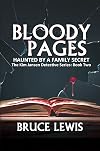
#153. [Bloody Pages], [[Bruce Lewis]]
Photographer Edward Curtis published “ The North American Indian” however not all the photos had been taken by him although he took the credit. From 1924 to 1930 William Byrne was one of his photographic assistants and he took many of the photos. Curtis’ behaviour created a situation in the Byrne family which is called intergenerational violence - the abused becomes the abuser. It took three generations and much physical and mental suffering for it to be recognized and stopped.
Colin Byrne finds his grandfather’s journals and finally realizes how the anger started. He has an idea of stealing the 1924-30 volumes of Curtis’ book from the Portland Public Library Rare Book Room. He doesn’t plan to sell them, the complete set is worth three million, but to use them to highlight abuse in some way. His plan is vague. He convinces a friend to steal them but the great amount of planning does not work. A security guard is severely injured and the police are involved. In some ways what follows is a comedy of errors before an arrest is finally made.
As each new character is added their background information ends in having them wake from a nightmare. Why is final revealed at the end of the book. I was just tired of nightmares and thought the author could have come up with some other behaviour.
The introductions and the planning makes the pace of the book slow and in some cases repetitive. The editor slipped up on a number of occasions show more where there is an extra word in a sentence. An example is “… we will put it back on display it for the public’s enjoyment.” Having edited books I know things creep in but when it is the same problem it should be caught. It is book two in a series but reads well as a stand alone. Overall what stands out for me is the information on intergenerational violence.
I received this book through LibraryThing’s Early Reviewers program.
📚📚📚 show less
Photographer Edward Curtis published “ The North American Indian” however not all the photos had been taken by him although he took the credit. From 1924 to 1930 William Byrne was one of his photographic assistants and he took many of the photos. Curtis’ behaviour created a situation in the Byrne family which is called intergenerational violence - the abused becomes the abuser. It took three generations and much physical and mental suffering for it to be recognized and stopped.
Colin Byrne finds his grandfather’s journals and finally realizes how the anger started. He has an idea of stealing the 1924-30 volumes of Curtis’ book from the Portland Public Library Rare Book Room. He doesn’t plan to sell them, the complete set is worth three million, but to use them to highlight abuse in some way. His plan is vague. He convinces a friend to steal them but the great amount of planning does not work. A security guard is severely injured and the police are involved. In some ways what follows is a comedy of errors before an arrest is finally made.
As each new character is added their background information ends in having them wake from a nightmare. Why is final revealed at the end of the book. I was just tired of nightmares and thought the author could have come up with some other behaviour.
The introductions and the planning makes the pace of the book slow and in some cases repetitive. The editor slipped up on a number of occasions show more where there is an extra word in a sentence. An example is “… we will put it back on display it for the public’s enjoyment.” Having edited books I know things creep in but when it is the same problem it should be caught. It is book two in a series but reads well as a stand alone. Overall what stands out for me is the information on intergenerational violence.
I received this book through LibraryThing’s Early Reviewers program.
📚📚📚 show less
This review was written for LibraryThing Early Reviewers.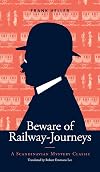
#104. [Beware of Railway-Journeys], [[Frank Heller]]
I did not finish reading this book, a rare occurrence for me. I read the first 200 of 800 pages (pdf) and it didn’t make any sense to me. A young Swedish man catches a train to Paris because he is captivated by a glimpse of a female passenger. A few stops later he is arrested and spends a couple of days in jail before the police admit to mistaken identity. When he arrives in Paris he finds a note in his pocket directing him to a fancy hotel where he finds the woman who then attacks him for following her. His luggage which he left in the German train station appears unexpectedly. Then a young Indian prince with, it is rumoured 125 wives, arrives at the hotel, seeking an European princess to marry. It was at this point I gave up. Perhaps another day in another mood I might read it but I don’t feel like putting anymore time into it now.
I received this through the Early Reviewers program.
June 16, 2022
I did not finish reading this book, a rare occurrence for me. I read the first 200 of 800 pages (pdf) and it didn’t make any sense to me. A young Swedish man catches a train to Paris because he is captivated by a glimpse of a female passenger. A few stops later he is arrested and spends a couple of days in jail before the police admit to mistaken identity. When he arrives in Paris he finds a note in his pocket directing him to a fancy hotel where he finds the woman who then attacks him for following her. His luggage which he left in the German train station appears unexpectedly. Then a young Indian prince with, it is rumoured 125 wives, arrives at the hotel, seeking an European princess to marry. It was at this point I gave up. Perhaps another day in another mood I might read it but I don’t feel like putting anymore time into it now.
I received this through the Early Reviewers program.
June 16, 2022
This review was written for LibraryThing Early Reviewers.
Ellen Adams has given up control of her vast multimedia empire to her daughter and become Secretary of State for President Douglas Williams. Adams looks like a fifties June Cleaver from the 1950’s television series “Leave it to Beaver,” she looks gullible and easily fooled. Williams is counting on that, he was made out to be a fool on a show run on one of her channels and he sees his appointment as payback. She accepted to serve her country. By the way she knows her appearance can be used to confuse. Williams’ administration is hampered by the actions of his predecessor who sounds much like Trump.
Three nuclear physicists are murder when bombs are left on buses in London, Paris and Frankfort, also killing and injuring hundreds of innocent adults and children.Who is behind it? Are there more bombings to come? Could they be nuclear and in the United States?
Adams begins her search for an answer by making the first visit to Iran by an American politician since President Jimmy Carter in 1979. Information received sends her to Pakistan and finally to Russia, where the leader will remind you of Putin. At the same time her journalist son, who was thrown of the bus in Frankfort just before it blew up, goes to Afghanistan seeking information based on time he spent there as a kidnapped victim and barely escaped with his head.
There are multiple characters and threads that run throughout the plot presenting history, views and the actions of others that support, positively or show more otherwise what Adams is doing. One of these points to a group who want to see the U. S. return to a white, Christian, right-wing country and they are positioned to make it happen and will do what they can to stop positive progress.
Ellen Adams, with assistance, brings the many threads together, the really bad guy is captured, others are identified. Her actions have moved her country forward in regaining its status as a world leader which had been damaged by the previous president. Her belief in telling the truth, no more lies to the public, will build on this.
The one bit that didn’t sit quite right with me was having it end in Three Pines, Quebec, the setting of many of Penny’s mysteries. It seemed contrived.
The multi-layers of the plot, the activities of numerous characters and the movement from place to place could make this book quite confusing. But, on the whole, it is relatively easy to follow. However it is a book I will reread and I know I will pick up on new items. Unfortunately what is happening in the world today, plus the recent history of Trump, makes this book believable. The authors have done a good job of not over writing the actions and use current world events well in “State of Terror.”
📚📚📚📚
Reviewed June 12, 2022 show less
Three nuclear physicists are murder when bombs are left on buses in London, Paris and Frankfort, also killing and injuring hundreds of innocent adults and children.Who is behind it? Are there more bombings to come? Could they be nuclear and in the United States?
Adams begins her search for an answer by making the first visit to Iran by an American politician since President Jimmy Carter in 1979. Information received sends her to Pakistan and finally to Russia, where the leader will remind you of Putin. At the same time her journalist son, who was thrown of the bus in Frankfort just before it blew up, goes to Afghanistan seeking information based on time he spent there as a kidnapped victim and barely escaped with his head.
There are multiple characters and threads that run throughout the plot presenting history, views and the actions of others that support, positively or show more otherwise what Adams is doing. One of these points to a group who want to see the U. S. return to a white, Christian, right-wing country and they are positioned to make it happen and will do what they can to stop positive progress.
Ellen Adams, with assistance, brings the many threads together, the really bad guy is captured, others are identified. Her actions have moved her country forward in regaining its status as a world leader which had been damaged by the previous president. Her belief in telling the truth, no more lies to the public, will build on this.
The one bit that didn’t sit quite right with me was having it end in Three Pines, Quebec, the setting of many of Penny’s mysteries. It seemed contrived.
The multi-layers of the plot, the activities of numerous characters and the movement from place to place could make this book quite confusing. But, on the whole, it is relatively easy to follow. However it is a book I will reread and I know I will pick up on new items. Unfortunately what is happening in the world today, plus the recent history of Trump, makes this book believable. The authors have done a good job of not over writing the actions and use current world events well in “State of Terror.”
📚📚📚📚
Reviewed June 12, 2022 show less
Death in Paris: Màiri Maguire Cozy Mysteries (Màiri Maguire Cozy Murder Mysteries Book 1) by Kate Darroch
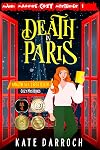
Mairi Maguire is an English teacher in Glasgow and she decides she needs a change after her boyfriend of 14 years announces he is marrying an Asian bar maid. She accepts a new position in Istanbul and persuades her friend Lianna to go with her. But first they go on a week long package tour of Paris. The taxman who has been hassling Lianna shows up in Paris and is murdered and she is arrested. Maguire is determined to prove her innocent. Unknown to her the murder is tied into Algerian terrorists who plan to blow up the Eiffel Tower and national police forces are investigating them. Both parties are successful.
I found the beginning of the book confusing with characters being added with no explanation of who they were or what was their role in the plot. Bearing in mind that the events are being told by an English teacher in 1970 her grammar is wrong. For example she doesn’t use the pronoun “I” instead she uses “me” as in “Me and Lianna.” It grated every time I read it. For me this book was too ‘cozy.’
I received this book through LibraryThing Early Reviewers program.
📚📚📚
I found the beginning of the book confusing with characters being added with no explanation of who they were or what was their role in the plot. Bearing in mind that the events are being told by an English teacher in 1970 her grammar is wrong. For example she doesn’t use the pronoun “I” instead she uses “me” as in “Me and Lianna.” It grated every time I read it. For me this book was too ‘cozy.’
I received this book through LibraryThing Early Reviewers program.
📚📚📚
This review was written for LibraryThing Early Reviewers.
Kati Marton wrote this biography of Angela Merkel during her last four years in office, in the midst of a pandemic based on interviews and time spent with Merkel. She had no written record, a diary or journal, to go to and very few public interviews as the Chancellor was an extremely private person who sharply delineated between her public and private lives.
Merkel’s father was a Lutheran pastor who chose to move to East Germany. Russian soldiers and Stasi spies outnumbered the local population and made their present felt in all aspects of their lives. Angela studied sciences at university and earned a Ph.D in physics. In 1989 when the Berlin Wall fell she was in a dead end, boring job but saw this as a means to start a new life, in politics.
She used her scientifically oriented brain to bear on the political issues, prepared herself, knew what she believed in and as one of the few women available was given work which caused her to be noticed by what she produced. The bulk of the book covers from 2005 when she became Chancellor until her retirement in 2021. I think her major fault was she dealt with facts and presented them like a scientist, without emotion, lacking a human touch in most cases.
Her four terms required her to touch in someway on all the big issues, climate change, refugees, financial crash, the problems within the European Union, first Russian -
Ukrainian War in 2014, trade with China, Putin, Trump, and COVID-19. In some cases she was seen as the European show more leader not just the German Chancellor. She was untouched by scandal which wasn’t the case with her predecessors and some colleagues, in and outside Germany.
Marton’s writing is mainly clear and reflects the straightforward style used by Markel. At times I needed to reread a sentence or paragraph to follow the sense of it. One sentence that caused me pause and some thought was written about Merkel’s first visit to Israel and she is about to enter the parliament building. The author comments on Israel’s “blue and white banner” and “Germany’s red, black and gold flag” outside the building. Israel’s FLAG is blue and white! I couldn’t decide what the sentence was trying to express, but it didn’t sit well with me.
Merkel played a prominent role in international politics in this century. This book clearly lays out what she accomplished, how she did it and how it was received.
📚📚📚📚 show less
Merkel’s father was a Lutheran pastor who chose to move to East Germany. Russian soldiers and Stasi spies outnumbered the local population and made their present felt in all aspects of their lives. Angela studied sciences at university and earned a Ph.D in physics. In 1989 when the Berlin Wall fell she was in a dead end, boring job but saw this as a means to start a new life, in politics.
She used her scientifically oriented brain to bear on the political issues, prepared herself, knew what she believed in and as one of the few women available was given work which caused her to be noticed by what she produced. The bulk of the book covers from 2005 when she became Chancellor until her retirement in 2021. I think her major fault was she dealt with facts and presented them like a scientist, without emotion, lacking a human touch in most cases.
Her four terms required her to touch in someway on all the big issues, climate change, refugees, financial crash, the problems within the European Union, first Russian -
Ukrainian War in 2014, trade with China, Putin, Trump, and COVID-19. In some cases she was seen as the European show more leader not just the German Chancellor. She was untouched by scandal which wasn’t the case with her predecessors and some colleagues, in and outside Germany.
Marton’s writing is mainly clear and reflects the straightforward style used by Markel. At times I needed to reread a sentence or paragraph to follow the sense of it. One sentence that caused me pause and some thought was written about Merkel’s first visit to Israel and she is about to enter the parliament building. The author comments on Israel’s “blue and white banner” and “Germany’s red, black and gold flag” outside the building. Israel’s FLAG is blue and white! I couldn’t decide what the sentence was trying to express, but it didn’t sit well with me.
Merkel played a prominent role in international politics in this century. This book clearly lays out what she accomplished, how she did it and how it was received.
📚📚📚📚 show less

Beyond the Trees: A Journey Alone Across Canada’s Arctic, Adam Shoalts
A quiet hike along the dirt trail called the Demster Highway, from the sign indicating the Arctic Circle to the shores of the MacKenzie River, was the beginning of the journey. Adam Shoalts is crossing the Arctic from west to east which means he is paddling against the current as he goes up rivers like the MacKenzie and the Coppermine.
Each river and lake provides different challenges, rapids, waterfalls, ice in Great Bear Lake, the world’s eighth largest, fog, high winds and currents to the point he is land bound. His approach is the tortoise and the hare, he knows one wrong step could be life threatening. He conquers each river by paddle, pole, rope, hauling his canoe by hand and when necessary portaging his belongings. The latter is not a single trip but three return trips and finally the seventh with his canoe.
He finds the animals, grizzly bears, foxes, wolves, squirrels and the musk ox to a certain extent, are as curious about him as he is about them. He describes the landscape from the coming of summer to that of winter. The changing colours of the vegetation and of the animals. The rainbows and ever changing skies enchant him. He is very much in tune with the environment.
What amazed me the most, but was so in keeping with him, was his quiet arrival in Baker Lake, Nunavut, his final destination. He landed his canoe for the last time, did some hiking around the area, talked to old timers and show more left two days later. No big announcement, although he did tell the airline. He had sadly committed to leaving his canoe as he couldn’t afford to fly it out. When the airline heard what he had done they offered to fly the canoe to Winnipeg.
A quiet beginning, an eventful middle and a quiet ending to mark a solo journey across a beautiful but unknown part of our country, Canada.
“Beyond the Trees” is well written and researched. I thought the historical information on earlier travellers added interest to his journey.
📚📚📚📚1/2 show less
A quiet hike along the dirt trail called the Demster Highway, from the sign indicating the Arctic Circle to the shores of the MacKenzie River, was the beginning of the journey. Adam Shoalts is crossing the Arctic from west to east which means he is paddling against the current as he goes up rivers like the MacKenzie and the Coppermine.
Each river and lake provides different challenges, rapids, waterfalls, ice in Great Bear Lake, the world’s eighth largest, fog, high winds and currents to the point he is land bound. His approach is the tortoise and the hare, he knows one wrong step could be life threatening. He conquers each river by paddle, pole, rope, hauling his canoe by hand and when necessary portaging his belongings. The latter is not a single trip but three return trips and finally the seventh with his canoe.
He finds the animals, grizzly bears, foxes, wolves, squirrels and the musk ox to a certain extent, are as curious about him as he is about them. He describes the landscape from the coming of summer to that of winter. The changing colours of the vegetation and of the animals. The rainbows and ever changing skies enchant him. He is very much in tune with the environment.
What amazed me the most, but was so in keeping with him, was his quiet arrival in Baker Lake, Nunavut, his final destination. He landed his canoe for the last time, did some hiking around the area, talked to old timers and show more left two days later. No big announcement, although he did tell the airline. He had sadly committed to leaving his canoe as he couldn’t afford to fly it out. When the airline heard what he had done they offered to fly the canoe to Winnipeg.
A quiet beginning, an eventful middle and a quiet ending to mark a solo journey across a beautiful but unknown part of our country, Canada.
“Beyond the Trees” is well written and researched. I thought the historical information on earlier travellers added interest to his journey.
📚📚📚📚1/2 show less
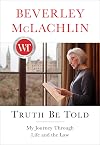
#160. [Truth Be Told: My Journey Through Life and the Law], [[McLachlin Beverley]]
Beverley McLachlin grew up outside Pincher Creek, Alberta in the 1940 and 1950’s. Part of the time her log home didn’t have electricity or running water. But the town had a library and it offered music and drama programs. Her parents raised her to accept all people, to question before she believed and to have an open mind.
In the 1950’s the careers open to women were nursing and teaching or being a waitress. At age 18 she moved to Edmonton, to the University of Alberta with the vague idea of taking education but instead took an Arts degree because she felt she didn’t know anything. This led her to philosophy. When she graduated she realized she had to do more so she could do something with her life. A friend had once suggested she consider law and that floated back into her mind. A few weeks into her law degree she knew she had found her home.
Her work included time with a small law firm and teaching at the law school at the University of British Columbia before she moved into being a judge. This led quickly to the Supreme Court of Canada, in Ottawa, where she stayed for 28 years. She was the Chief Justice for over 17 years, the longest serving one in Canada and the first woman in the position.
More of her personal life is covered as well as a review of the important landmark cases the court dealt with in her time there. Her continued love of Justice and the importance of people show more understanding what the Supreme Court did and peoples access to Justice led to community involvement and public speaking on these issues in Canada and internationally. The Canadian Supreme Court had an international reputation for its deal with constitutional issues following the passing of the Charter of Rights and Freedoms.
McLachlin always wanted to write fiction and as she drew closer to retirement she turned her hand a writing a legal mystery which was published and well accepted. She has written a second and I hope she follows it up with more.
Her life has not been with out its struggles but these can be matched with sitting at a dinner with her childhood heroine and talking to the Queen for an hour!
⭐️⭐️⭐️⭐️1/2 show less
Beverley McLachlin grew up outside Pincher Creek, Alberta in the 1940 and 1950’s. Part of the time her log home didn’t have electricity or running water. But the town had a library and it offered music and drama programs. Her parents raised her to accept all people, to question before she believed and to have an open mind.
In the 1950’s the careers open to women were nursing and teaching or being a waitress. At age 18 she moved to Edmonton, to the University of Alberta with the vague idea of taking education but instead took an Arts degree because she felt she didn’t know anything. This led her to philosophy. When she graduated she realized she had to do more so she could do something with her life. A friend had once suggested she consider law and that floated back into her mind. A few weeks into her law degree she knew she had found her home.
Her work included time with a small law firm and teaching at the law school at the University of British Columbia before she moved into being a judge. This led quickly to the Supreme Court of Canada, in Ottawa, where she stayed for 28 years. She was the Chief Justice for over 17 years, the longest serving one in Canada and the first woman in the position.
More of her personal life is covered as well as a review of the important landmark cases the court dealt with in her time there. Her continued love of Justice and the importance of people show more understanding what the Supreme Court did and peoples access to Justice led to community involvement and public speaking on these issues in Canada and internationally. The Canadian Supreme Court had an international reputation for its deal with constitutional issues following the passing of the Charter of Rights and Freedoms.
McLachlin always wanted to write fiction and as she drew closer to retirement she turned her hand a writing a legal mystery which was published and well accepted. She has written a second and I hope she follows it up with more.
Her life has not been with out its struggles but these can be matched with sitting at a dinner with her childhood heroine and talking to the Queen for an hour!
⭐️⭐️⭐️⭐️1/2 show less

The cover labels “Iced” “A Dick Francis Novel” and I think this is a misnomer. Dick Francis wrote novels that had a tie in to horses with a mystery front and central.
“Iced” features the past and present life of former steeplechase jockey Miles Pussett and his mental health problems and the various ways they developed and his attempts to deal with them before receiving professional help. It is interesting, particularly when looking at the news and seeing people in the public eye facing similar problems. The saddest part is as they lose confidence in themselves they are used by others who have power over them.
I was disappointed because I was looking forward to a mystery, however I did gain insight to the mental health issues and their impact on an individual. There is a mystery but it is a small portion of the book. It is well written, which I would expect from Felix Francis, and, perhaps, it is his break away from his father’s style of book from which, I thought, he has been moving away successfully. I was led by the promotion to expect one thing and I got something else. I give it ⭐️⭐️⭐️1/4 stars.
“Iced” features the past and present life of former steeplechase jockey Miles Pussett and his mental health problems and the various ways they developed and his attempts to deal with them before receiving professional help. It is interesting, particularly when looking at the news and seeing people in the public eye facing similar problems. The saddest part is as they lose confidence in themselves they are used by others who have power over them.
I was disappointed because I was looking forward to a mystery, however I did gain insight to the mental health issues and their impact on an individual. There is a mystery but it is a small portion of the book. It is well written, which I would expect from Felix Francis, and, perhaps, it is his break away from his father’s style of book from which, I thought, he has been moving away successfully. I was led by the promotion to expect one thing and I got something else. I give it ⭐️⭐️⭐️1/4 stars.
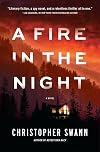
A Fire in the Night, Christopher Swann
First off, I think I was mislead by the Early Reviewers blurb because this is more violent than what I normally read. However I paced myself through the bad parts and enjoyed the rest.
Annalise loses her parents in a deliberately set fire and discovers she has an uncle, her father’s brother. It is her father’s actions that brought this about and the continued actions of the terrorists who are seeking the information he has been trying to sell to the highest bidder.
I did enjoy the well-rounded characters and how niece and uncle develop their relationship. I didn’t find the plot entirely believable but it is the second book I have come across a very similar situations involving Saudi oil, unrest in the Middle East and U. S. involvement in the past two weeks.
I received this e-book through LibraryThing’s Early Reviewers Program.
⭐️⭐️⭐️1/2
Reviewed August 11, 2021
First off, I think I was mislead by the Early Reviewers blurb because this is more violent than what I normally read. However I paced myself through the bad parts and enjoyed the rest.
Annalise loses her parents in a deliberately set fire and discovers she has an uncle, her father’s brother. It is her father’s actions that brought this about and the continued actions of the terrorists who are seeking the information he has been trying to sell to the highest bidder.
I did enjoy the well-rounded characters and how niece and uncle develop their relationship. I didn’t find the plot entirely believable but it is the second book I have come across a very similar situations involving Saudi oil, unrest in the Middle East and U. S. involvement in the past two weeks.
I received this e-book through LibraryThing’s Early Reviewers Program.
⭐️⭐️⭐️1/2
Reviewed August 11, 2021
This review was written for LibraryThing Early Reviewers.
The Personal Librarian by Marie Benedict, Victoria Christopher Murray
Belle de Costa Greene (Belle Marian Greener) is the personal librarian to Junius Pierpont Morgan starting in 1906. She learned to love and appreciate books from her father Richard Greener, the first African American to graduate from Harvard and a leader in the civil rights movement in the late 1800’s. She influenced Morgan’s selection of items for the library and carried on as its director until she retired in 1948. She took it from a private to a public library as she believed everyone should have the opportunity to read and be inspired by the collection.
She lived her life as a white woman because she was pale enough to pass. Her mother brought up the entire family in that manner. It was a constant internal battle for her, particularly as she became more aware of the lack of rights for African Americans.
Marie Benedict wanted to write this book for some time but felt she couldn’t do it herself, hence she asked Victoria Christopher Murray to write with her. They edited and rewrote the book through the COVID-19 Pandemic and the racial events of it were discussed. I didn’t know this until I read the author statements at the end of the book, but it was published in 1921 so it was on my mind, some things haven’t changed.
This is historical fiction but well researched and very much based on fact.
⭐️⭐️⭐️⭐️
Belle de Costa Greene (Belle Marian Greener) is the personal librarian to Junius Pierpont Morgan starting in 1906. She learned to love and appreciate books from her father Richard Greener, the first African American to graduate from Harvard and a leader in the civil rights movement in the late 1800’s. She influenced Morgan’s selection of items for the library and carried on as its director until she retired in 1948. She took it from a private to a public library as she believed everyone should have the opportunity to read and be inspired by the collection.
She lived her life as a white woman because she was pale enough to pass. Her mother brought up the entire family in that manner. It was a constant internal battle for her, particularly as she became more aware of the lack of rights for African Americans.
Marie Benedict wanted to write this book for some time but felt she couldn’t do it herself, hence she asked Victoria Christopher Murray to write with her. They edited and rewrote the book through the COVID-19 Pandemic and the racial events of it were discussed. I didn’t know this until I read the author statements at the end of the book, but it was published in 1921 so it was on my mind, some things haven’t changed.
This is historical fiction but well researched and very much based on fact.
⭐️⭐️⭐️⭐️
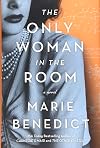
I puzzled over the title until close to the end of the book. In ,1942 the U. S. Navy turned down the opportunity to misdirect enemy torpedoes and to correct a problem with their own torpedo system because it was developed by a woman. They told her not to play with science and to sell war bonds instead. The system she had developed with musician George Antheil received a patent but that didn’t prevent the government from using the information, without permission or compensation until into the 1990’s.
Lemarr, a name given to her by Louis B. Mayer, was a stage star in Vienna before the war. It was from listening to table talk when entertaining her first husband’s guests that she learned about armaments and the problems Hitler had with his torpedoes that started her learning. It was the Nazis’ torpedoing of a British relief ship with close to a hundred children on board that started her scientific search for a solution. Her escape from that marriage and Austria took her to a film career in Hollywood. The book ends on a night in 1942 in Philadelphia where she raised two million two hundred and fifty thousand dollars for war bonds!
As always Benedict’s notes are worth reading. I found the pace of this book slow and repetitive. However I still gave the book four stars because of the way the author presents the many facets of Lemarr in a non- judgmental manner.
⭐️⭐️⭐️⭐️
Reviewed June 27, 2021
Lemarr, a name given to her by Louis B. Mayer, was a stage star in Vienna before the war. It was from listening to table talk when entertaining her first husband’s guests that she learned about armaments and the problems Hitler had with his torpedoes that started her learning. It was the Nazis’ torpedoing of a British relief ship with close to a hundred children on board that started her scientific search for a solution. Her escape from that marriage and Austria took her to a film career in Hollywood. The book ends on a night in 1942 in Philadelphia where she raised two million two hundred and fifty thousand dollars for war bonds!
As always Benedict’s notes are worth reading. I found the pace of this book slow and repetitive. However I still gave the book four stars because of the way the author presents the many facets of Lemarr in a non- judgmental manner.
⭐️⭐️⭐️⭐️
Reviewed June 27, 2021
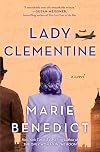
I have read a number of the titles Benedict recommends on Clementine Churchill and although they touch on her war work it is not presented in the same way as this book. The emphasis is truly on Mrs. Churchill, warts and all, as a wife, mother and individual. She was a strong woman and accomplished much, but also suffered from depression which she gradually learned to control Theirs was a true love match, it was not always smooth but their love never faltered.
Her early life is covered but the emphasis is on her life with Winston Churchill until the end of World War II. She made a decision to put her husband before her children, and he put himself before everyone most of the time. The impact of this on the family clearly shows and it is only with Mary, her youngest daughter, raised by her nanny, that Lady Churchill develops a real adult relationship.
During the war she identified issues that have an impact on women and families and works to solve them. The first being the state of air raid shelters where people spent 12 - 14 hours a day. Her work with the Red Cross led to a project with the Russian Red Cross and in 1945 a six week tour there. She was received with much acclaim by all but Stalin. She also worked closely with her husband on his speeches and letters, preparing for foreign visitors and supporting Winston’s unsure side which he hides from others.
The partnership with the United States was crucial to the war effort and both before and after it’s entry into the show more war a great deal of time and attention by both Churchill’s was devoted to developing it. Roosevelt’s turning away from W. Churchill and Britain and toward Stalin and Russia in the last year and a half of the war was a bitter blow. More so to the Prime Minister, she had never developed a relationship with Roosevelt and in fact lacked trust in him. The country that had stood alone against Nazi Germany at the beginning of the war is once again alone at the end.
The author’s notes and acknowledgments are worth reading. They clearly show the depth of research she undertook. This is a historical fiction but it has a good foundation of fact.
⭐️⭐️⭐️⭐️
Reviewed June 26, 2021 show less
Her early life is covered but the emphasis is on her life with Winston Churchill until the end of World War II. She made a decision to put her husband before her children, and he put himself before everyone most of the time. The impact of this on the family clearly shows and it is only with Mary, her youngest daughter, raised by her nanny, that Lady Churchill develops a real adult relationship.
During the war she identified issues that have an impact on women and families and works to solve them. The first being the state of air raid shelters where people spent 12 - 14 hours a day. Her work with the Red Cross led to a project with the Russian Red Cross and in 1945 a six week tour there. She was received with much acclaim by all but Stalin. She also worked closely with her husband on his speeches and letters, preparing for foreign visitors and supporting Winston’s unsure side which he hides from others.
The partnership with the United States was crucial to the war effort and both before and after it’s entry into the show more war a great deal of time and attention by both Churchill’s was devoted to developing it. Roosevelt’s turning away from W. Churchill and Britain and toward Stalin and Russia in the last year and a half of the war was a bitter blow. More so to the Prime Minister, she had never developed a relationship with Roosevelt and in fact lacked trust in him. The country that had stood alone against Nazi Germany at the beginning of the war is once again alone at the end.
The author’s notes and acknowledgments are worth reading. They clearly show the depth of research she undertook. This is a historical fiction but it has a good foundation of fact.
⭐️⭐️⭐️⭐️
Reviewed June 26, 2021 show less
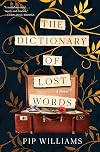
When I was young and I asked my mother how to spell a word she would say “Look it up in the dictionary.” And I would reply I can’t because I can’t spell it.” This historical fiction covers the years 1886 to 1989 and significant events told through the words of Esme Nicoll.
At age five she introduces us to the Oxford English Dictionary and how it is compiled, how decisions are made on what words are included and, more importantly, the words, mainly words related too and used by women are omitted. Her father is one of the associates and her first relationship with the dictionary’s workings is sitting under the work table and picking up the discarded slips.
Esme becomes friends with an actress who introduces her to the world of the protesting suffragettes. Not a place where she is comfortable and she struggles with what actions in which she can become involved. This friendship leaves another major mark on Esme’s life.
The third event is World War One which has a major impact of the progress of the dictionary as young men enlist. Her wedding to Gareth, a compositor with the Oxford University Press who is working on the dictionary takes place before he goes to the front. It also leads her to a new use of words and language working with soldiers who have lost the ability to speak as a result of what they suffered in battle.
The dictionary is finally completed in November, 1928 and work has already started on the first of several supplements before the second edition show more is released in 1989. This is a historical novel for people who love words. The ending brought tears to my eyes.
I don’t always read the Afterwords and Acknowledgments but in this case I urge you do so as the history of the dictionary continues. They identify the historical people and reinforce the true activities that are in the novel.
⭐️⭐️⭐️⭐️1/2
Reviewed June 23, 2021 show less
At age five she introduces us to the Oxford English Dictionary and how it is compiled, how decisions are made on what words are included and, more importantly, the words, mainly words related too and used by women are omitted. Her father is one of the associates and her first relationship with the dictionary’s workings is sitting under the work table and picking up the discarded slips.
Esme becomes friends with an actress who introduces her to the world of the protesting suffragettes. Not a place where she is comfortable and she struggles with what actions in which she can become involved. This friendship leaves another major mark on Esme’s life.
The third event is World War One which has a major impact of the progress of the dictionary as young men enlist. Her wedding to Gareth, a compositor with the Oxford University Press who is working on the dictionary takes place before he goes to the front. It also leads her to a new use of words and language working with soldiers who have lost the ability to speak as a result of what they suffered in battle.
The dictionary is finally completed in November, 1928 and work has already started on the first of several supplements before the second edition show more is released in 1989. This is a historical novel for people who love words. The ending brought tears to my eyes.
I don’t always read the Afterwords and Acknowledgments but in this case I urge you do so as the history of the dictionary continues. They identify the historical people and reinforce the true activities that are in the novel.
⭐️⭐️⭐️⭐️1/2
Reviewed June 23, 2021 show less
#86. [The Bombay Prince (A Perveen Mistry Novel Book 3)], [[Sujata Massey]]
The future King of England and Emperor of India, Prince Edward (VIII) is touring the Indian subcontinent for four months start in Bombay in November, 1921. The tension that is seething across the country becomes the backdrop for the action of this interesting mystery. The divisive issue is independence, some people want it and others don’t and the Prince’s visit brings out the demonstrators, the terrorists, freedom activists and the racial and religious conflicts.
Indian students at a small Scottish Presbyterian college have been told they will see the Prince as a group, a decision that is not welcomed by all students and faculty. While the Royal party is driving by the college a male student chases the vehicle down the street and is arrested, and the body of a female student is found in the grounds. The first thought is suicide but the coroner rules it murder by strangulation.
Perveen Mistry is involved because the young woman had asked her for an opinion just a few days earlier. Could the College expel a student who refused to attend the viewing? The answer was it depended on whether a contract had been signed upon admission and what it included and/or if there was a handbook on student behaviour and expectations. Mistry was on the grounds when Cuttingmaster’s body was found and she and her father attended the Coroner’s Inquest representing her parents.
The Police claim that Cuttermaster was show more a terrorist because of her involvement in the Student Union Club and her stand in favour of independence. Also some of her belongings were found near a railway that had been sabotaged. An American journalist appears everywhere and seems to know more than he should.
The book conveys a real sense of what being in Bombay was like following the riots and destruction of businesses and local properties. As well as the conflict among the population groups India is divided in to: Indian, British, Anglo Indian and other local groups plus the major religions, Hindus, Muslim, Buddhists, Christian and Sikhs and minor ones like Parsi which is prominent in this book.
Massey’s research into the Prince’s visit and its impact on Bombay and the different aspects of society is evident I particularly enjoyed her descriptions of the architecture of the city, buildings like the Asiatic Society of Bombay (Mumbai) and its many gardens.
“The Bombay Prince” is the third title in the Perveen Mistry series and award winning author Sujata Massey doesn’t disappoint her readers.
⭐️⭐️⭐️⭐️
Reviewed June 4, 2021 show less
The future King of England and Emperor of India, Prince Edward (VIII) is touring the Indian subcontinent for four months start in Bombay in November, 1921. The tension that is seething across the country becomes the backdrop for the action of this interesting mystery. The divisive issue is independence, some people want it and others don’t and the Prince’s visit brings out the demonstrators, the terrorists, freedom activists and the racial and religious conflicts.
Indian students at a small Scottish Presbyterian college have been told they will see the Prince as a group, a decision that is not welcomed by all students and faculty. While the Royal party is driving by the college a male student chases the vehicle down the street and is arrested, and the body of a female student is found in the grounds. The first thought is suicide but the coroner rules it murder by strangulation.
Perveen Mistry is involved because the young woman had asked her for an opinion just a few days earlier. Could the College expel a student who refused to attend the viewing? The answer was it depended on whether a contract had been signed upon admission and what it included and/or if there was a handbook on student behaviour and expectations. Mistry was on the grounds when Cuttingmaster’s body was found and she and her father attended the Coroner’s Inquest representing her parents.
The Police claim that Cuttermaster was show more a terrorist because of her involvement in the Student Union Club and her stand in favour of independence. Also some of her belongings were found near a railway that had been sabotaged. An American journalist appears everywhere and seems to know more than he should.
The book conveys a real sense of what being in Bombay was like following the riots and destruction of businesses and local properties. As well as the conflict among the population groups India is divided in to: Indian, British, Anglo Indian and other local groups plus the major religions, Hindus, Muslim, Buddhists, Christian and Sikhs and minor ones like Parsi which is prominent in this book.
Massey’s research into the Prince’s visit and its impact on Bombay and the different aspects of society is evident I particularly enjoyed her descriptions of the architecture of the city, buildings like the Asiatic Society of Bombay (Mumbai) and its many gardens.
“The Bombay Prince” is the third title in the Perveen Mistry series and award winning author Sujata Massey doesn’t disappoint her readers.
⭐️⭐️⭐️⭐️
Reviewed June 4, 2021 show less

The Comfort Bearers, Cathy L. Patrenos
Soon Ja was 16 when her parents were persuaded to let her go from Korea to Japan to work in a silk factory and earn much need money for her family. Where she ended up was at a Comfort Station in Manchuria. Her ability to meditate saves her sanity as she services soldier after soldier. Men, both good and bad, determine the direction of the next few years of her life. Koshiro, the kind Japanese medical doctor who does the in frequent examinations on the woman discovers she is pregnant and has her moved to his home, not as a sexual partner but a guest. Ping, the truck driver and Resistance fighter against the Japanese, who rescues her when she and the doctor are arrested. Rescued from death but not from a return to the Comfort Station life. Determined to find a way to gather information for the Resistance she prepares herself to be selected by Colonel Yamada, the new camp commander, as his ‘woman.’ This leads her to Shanghai where the Colonel is killed in a terrorist bombing and she is severely injured. Akira, Yamada’s aide, and a Red Cross nurse protect her during her recovery. She ends the war as a nurse before returning to Korea. Years later she testifies on her experiences in a class-action suit against the government of Japan but it takes years for a decision. However it does bring the story full circle when she is reunited with her family.
Prior to and during World War II over 200,000 women from across Asia, with the majority show more from Korea, were forced to work as Comfort Women by the Japanese military. Other more appropriate terms would be prostitute or sex worker or whore. There is historical documentation on this although it is still strongly denied in Japan or told with a different slant that recognizes men’s needs, not women’s rights. It is clear the author did a fair amount of research into this and the ongoing conflicts between Japan and Russia, Manchuria and China prior to WW II.
I liked the book and learned from it however I feel there was too much repetition on her meditations. They were important to her but I didn’t need to be told more than a couple of times. This includes the mountain descriptions. Also the atrocities that Japan’s military practiced are overused in making the point. I felt she was reaching to deface Japan when she had already clearly established its place in history. Readers do forget some details but don’t want to be bombarded by them over and over to ensure they don’t.
On the whole it is an interesting accounting of a little know historical event that violated international law and was a crime against humanity.
⭐️⭐️⭐️1/2
Reviewed June 1, 2021 show less
Soon Ja was 16 when her parents were persuaded to let her go from Korea to Japan to work in a silk factory and earn much need money for her family. Where she ended up was at a Comfort Station in Manchuria. Her ability to meditate saves her sanity as she services soldier after soldier. Men, both good and bad, determine the direction of the next few years of her life. Koshiro, the kind Japanese medical doctor who does the in frequent examinations on the woman discovers she is pregnant and has her moved to his home, not as a sexual partner but a guest. Ping, the truck driver and Resistance fighter against the Japanese, who rescues her when she and the doctor are arrested. Rescued from death but not from a return to the Comfort Station life. Determined to find a way to gather information for the Resistance she prepares herself to be selected by Colonel Yamada, the new camp commander, as his ‘woman.’ This leads her to Shanghai where the Colonel is killed in a terrorist bombing and she is severely injured. Akira, Yamada’s aide, and a Red Cross nurse protect her during her recovery. She ends the war as a nurse before returning to Korea. Years later she testifies on her experiences in a class-action suit against the government of Japan but it takes years for a decision. However it does bring the story full circle when she is reunited with her family.
Prior to and during World War II over 200,000 women from across Asia, with the majority show more from Korea, were forced to work as Comfort Women by the Japanese military. Other more appropriate terms would be prostitute or sex worker or whore. There is historical documentation on this although it is still strongly denied in Japan or told with a different slant that recognizes men’s needs, not women’s rights. It is clear the author did a fair amount of research into this and the ongoing conflicts between Japan and Russia, Manchuria and China prior to WW II.
I liked the book and learned from it however I feel there was too much repetition on her meditations. They were important to her but I didn’t need to be told more than a couple of times. This includes the mountain descriptions. Also the atrocities that Japan’s military practiced are overused in making the point. I felt she was reaching to deface Japan when she had already clearly established its place in history. Readers do forget some details but don’t want to be bombarded by them over and over to ensure they don’t.
On the whole it is an interesting accounting of a little know historical event that violated international law and was a crime against humanity.
⭐️⭐️⭐️1/2
Reviewed June 1, 2021 show less

First off the subtitle is misleading as Dr. Henry deals with the time she hears about this respitory disease in China at the end of 2018 until April, 2019. It explains it reached British Columbia and spread through and the steps they developed to track it, study it, make decisions regarding actions and communicating information on COVID-19 to the public and particular community groups. The process she under took is quite fascinating.British Columbia has a large Asian population, many business links with China and numerous airlines connected China and Vancouver. So it was natural for the disease to show up there first.
Dr. Bonnie Henry is the Provincial Health Officer for the Province of British Columbia, Canada. She consults with the Minister and Deputy Minister of Health and an assortment of community, provincial, national and international groups but is solely responsible for making the rulings that govern public health in the province. Her’s is not a political appointment.
The book covers in detail the development of her planned public health response for the province of British Columbia in dealing with the pandemic. I remember watching her news briefings from that time and how impressed I was with the way she presented detailed information to the public in a calm, straightforward manner. She has the ability to make hard decisions knowing how they will impact individuals but does so because they have to be done. Each statistic she reports is a person, not a number. show more She has become an hero for many in B. C. The title “Be Kind, Be Calm, Be Safe” comes from one of the mantras she repeats. Another is “It’s Not Forever, But It Is For Now.”
She opens a part of her life to the public. Just after closing down a variety of services, including hair salons she realized it is time for a cut and colour. She knows her hairdresser would go to her home but she also knows she can’t ask her to do so. Instead the hairdresser drops off some products and directions and she and her sister, Lynn do her hair. Following her next weekly televised press conference comments start circulating about her hair. So on the next Friday she tells the story of her hair, admitting neither she or her sister would be good hairdressers.
I found the book interesting but it could have been edited to make it easier to read. I found it dense, particularly in the prologue which was full of acronyms referring to public health organizations and national and international groups set up to deal with COVID-19, which were unnecessary as they weren’t used in the rest of the book. Because of her work with her team the province handled the first wave well and if the book continued it would show the preparations continued to hold.
If you live elsewhere this book will provide you with one government’s approach to dealing with COVID-19. If you somehow missed the beginning, how it developed in Wuhan, China and spread across the world this book might interest you. In Canada the Chief Public Health Officer of each province was the key person but each province dealt with it differently, although there was an exchange of information. The role of the Federal Government is with overarching matters, the closure of the border with the United States for example.
It amazes me that Dr. Henry found the time to write this book!
⭐️⭐️⭐️⭐️
Reviewed May 30, 2021 show less
Dr. Bonnie Henry is the Provincial Health Officer for the Province of British Columbia, Canada. She consults with the Minister and Deputy Minister of Health and an assortment of community, provincial, national and international groups but is solely responsible for making the rulings that govern public health in the province. Her’s is not a political appointment.
The book covers in detail the development of her planned public health response for the province of British Columbia in dealing with the pandemic. I remember watching her news briefings from that time and how impressed I was with the way she presented detailed information to the public in a calm, straightforward manner. She has the ability to make hard decisions knowing how they will impact individuals but does so because they have to be done. Each statistic she reports is a person, not a number. show more She has become an hero for many in B. C. The title “Be Kind, Be Calm, Be Safe” comes from one of the mantras she repeats. Another is “It’s Not Forever, But It Is For Now.”
She opens a part of her life to the public. Just after closing down a variety of services, including hair salons she realized it is time for a cut and colour. She knows her hairdresser would go to her home but she also knows she can’t ask her to do so. Instead the hairdresser drops off some products and directions and she and her sister, Lynn do her hair. Following her next weekly televised press conference comments start circulating about her hair. So on the next Friday she tells the story of her hair, admitting neither she or her sister would be good hairdressers.
I found the book interesting but it could have been edited to make it easier to read. I found it dense, particularly in the prologue which was full of acronyms referring to public health organizations and national and international groups set up to deal with COVID-19, which were unnecessary as they weren’t used in the rest of the book. Because of her work with her team the province handled the first wave well and if the book continued it would show the preparations continued to hold.
If you live elsewhere this book will provide you with one government’s approach to dealing with COVID-19. If you somehow missed the beginning, how it developed in Wuhan, China and spread across the world this book might interest you. In Canada the Chief Public Health Officer of each province was the key person but each province dealt with it differently, although there was an exchange of information. The role of the Federal Government is with overarching matters, the closure of the border with the United States for example.
It amazes me that Dr. Henry found the time to write this book!
⭐️⭐️⭐️⭐️
Reviewed May 30, 2021 show less

[Extraordinary Canadians: Stories from the Heart of Our Nation], [[Peter Mansbridge]], [[Mark Bulgutch]]
This book was not what I expected but was so much more. I thought it would be about Canadians whose name I would recognize, from history or the news. Instead it was about ‘ordinary’ Canadians who took steps to make their lives extraordinary. People who lived through the circumstances live gave them and used what they learned to educate and do good for others. There are seventeen stories in total, the majority about single individuals.
Hope Swinimer from Nova Scotia who studied to be an accountant so she could manage a veterinarian clinic and opened the first wildlife rescue and rehabilitation shelter in the province. Jessica Grossman, now an actor and model, from age 8 to 13 lived in and out of hospital in agonizing abdominal pain, she couldn’t sleep or eat. She had Crohn’s disease and it wasn’t until she had surgery at age 13 and got an ostomy bag that she could live her life. She took up educating people about ‘the bag’ through a blog and public speaking. Bill Campbell started successful not-for-profit housings projects in Prince Edward Island. Robb Nash does about 250 musical performances in schools annually helping students deal with depression and suicidal thoughts. He has been there, he knows.
There are more interesting people and their stories, each told in the words of the subject. This adds to the interest ad variety of the book.
The author, Peter show more Mansbridge, worked for the CBC and ended his career as the top broadcast journalist in the country. What he does, he does well. The book was published in 2020 and includes an article on an emergency room nurse in Vancouver planning how to treat COVID-19. Even if you aren’t Canadian the people will appeal to you.
⭐️⭐️⭐️⭐️⭐️
Reviewed May 7, 2021 show less
This book was not what I expected but was so much more. I thought it would be about Canadians whose name I would recognize, from history or the news. Instead it was about ‘ordinary’ Canadians who took steps to make their lives extraordinary. People who lived through the circumstances live gave them and used what they learned to educate and do good for others. There are seventeen stories in total, the majority about single individuals.
Hope Swinimer from Nova Scotia who studied to be an accountant so she could manage a veterinarian clinic and opened the first wildlife rescue and rehabilitation shelter in the province. Jessica Grossman, now an actor and model, from age 8 to 13 lived in and out of hospital in agonizing abdominal pain, she couldn’t sleep or eat. She had Crohn’s disease and it wasn’t until she had surgery at age 13 and got an ostomy bag that she could live her life. She took up educating people about ‘the bag’ through a blog and public speaking. Bill Campbell started successful not-for-profit housings projects in Prince Edward Island. Robb Nash does about 250 musical performances in schools annually helping students deal with depression and suicidal thoughts. He has been there, he knows.
There are more interesting people and their stories, each told in the words of the subject. This adds to the interest ad variety of the book.
The author, Peter show more Mansbridge, worked for the CBC and ended his career as the top broadcast journalist in the country. What he does, he does well. The book was published in 2020 and includes an article on an emergency room nurse in Vancouver planning how to treat COVID-19. Even if you aren’t Canadian the people will appeal to you.
⭐️⭐️⭐️⭐️⭐️
Reviewed May 7, 2021 show less

[Hot Money], [[Dick Francis]]
Hot Money is one of my favourite Francis books. A VERY wealthy man, Malcolm Pembroke has an uncanny ability to make money buying gold and stocks and knowing just when to sell. He is spending his money and six of his seven children are very upset as they see it as ‘their’ money. He is supporting charities, establishing scholarships, buying horses.
His fifth ex- wife was recently murdered and except for his strong alibi the police would have arrested him. Now someone, he suspects one of his ex-wives or children, has made two attempts on his life (so far.) He has turned to his son, Ian, for protection and a solution.
Dick Francis writes a study of people. In this case it is of a family fighting over the size of a future inheritance. They don’t see the millions their father earned as his to do with what he wishes, it is their future and he should leave it alone. Although he set up each of them with trust funds they want more, now and later. A situation that occurs everyday over hundreds of pounds to millions.
Ian, who believes it is his father’s money to enjoy, studies each of his half-brothers and sisters to determine if they are making the attempts on Malcolm’s life. What he learns is an interesting study in family dynamics. It also leads him to the murderer, but how to prove it?
By the end Ian causes some upheaval in the family and definitely some rethinking of personal desires. For himself he decides to move from amateur to show more professional steeplechase jockey for the remaining 4/5 years of his career and then look to training. He has also faced up to why he has remained single, he didn’t want to follow his father’s example. Certainly the unveiling of the murderer makes a major impact on the family. At the end the rebuilding of Malcolm’s home which had been twice bombed, is seen as a sign of rebuilding the family.
Reviewed March 10, 2021
⭐️⭐️⭐️⭐️ show less
Hot Money is one of my favourite Francis books. A VERY wealthy man, Malcolm Pembroke has an uncanny ability to make money buying gold and stocks and knowing just when to sell. He is spending his money and six of his seven children are very upset as they see it as ‘their’ money. He is supporting charities, establishing scholarships, buying horses.
His fifth ex- wife was recently murdered and except for his strong alibi the police would have arrested him. Now someone, he suspects one of his ex-wives or children, has made two attempts on his life (so far.) He has turned to his son, Ian, for protection and a solution.
Dick Francis writes a study of people. In this case it is of a family fighting over the size of a future inheritance. They don’t see the millions their father earned as his to do with what he wishes, it is their future and he should leave it alone. Although he set up each of them with trust funds they want more, now and later. A situation that occurs everyday over hundreds of pounds to millions.
Ian, who believes it is his father’s money to enjoy, studies each of his half-brothers and sisters to determine if they are making the attempts on Malcolm’s life. What he learns is an interesting study in family dynamics. It also leads him to the murderer, but how to prove it?
By the end Ian causes some upheaval in the family and definitely some rethinking of personal desires. For himself he decides to move from amateur to show more professional steeplechase jockey for the remaining 4/5 years of his career and then look to training. He has also faced up to why he has remained single, he didn’t want to follow his father’s example. Certainly the unveiling of the murderer makes a major impact on the family. At the end the rebuilding of Malcolm’s home which had been twice bombed, is seen as a sign of rebuilding the family.
Reviewed March 10, 2021
⭐️⭐️⭐️⭐️ show less

#26. [The Paris Library], [[Janet Skeslien Charles]]
The American Library in Paris was officially established in 1920 and it grew out of the American Library Association service to provide books to American soldiers in Europe during World War I. A building was converted into a library and between the wars it provided reference services, educational outreach and was a bridge between America and France. 2020 was its 100rd anniversary.
The Paris Library is the story of two women, Odile Souchet, who grew up in Paris and Lily, Odile’s neighbour in Montana in 1983. Odilie’s story is that of the library and the way it worked to continue its services despite the restrictions placed on it as well as her personal story. Lily is a high school student who befriends her neighbor and gradually learns her story.
I was attracted to the book because it was about a library and it lives up to my expectations of what libraries do that are beyond what most people would ever expect of them. I was a librarian in various types of libraries so am aware of what good library service can do. The personal stories fill in the impact of the German control of Paris on the daily lives of its citizens. Worth reading.
Reviewed February 11, 2021
⭐️⭐️⭐️⭐️
The American Library in Paris was officially established in 1920 and it grew out of the American Library Association service to provide books to American soldiers in Europe during World War I. A building was converted into a library and between the wars it provided reference services, educational outreach and was a bridge between America and France. 2020 was its 100rd anniversary.
The Paris Library is the story of two women, Odile Souchet, who grew up in Paris and Lily, Odile’s neighbour in Montana in 1983. Odilie’s story is that of the library and the way it worked to continue its services despite the restrictions placed on it as well as her personal story. Lily is a high school student who befriends her neighbor and gradually learns her story.
I was attracted to the book because it was about a library and it lives up to my expectations of what libraries do that are beyond what most people would ever expect of them. I was a librarian in various types of libraries so am aware of what good library service can do. The personal stories fill in the impact of the German control of Paris on the daily lives of its citizens. Worth reading.
Reviewed February 11, 2021
⭐️⭐️⭐️⭐️

#37. [Just as I Am: A Memoir], [[Cicely Tyson]]
I enjoyed this book but was also frustrated by it. It gives an interesting and honest accounting of the ups and downs in her life. An example being the abusive marriage between her parents, her father was a womanizer and it became violent when her mother could take no more, in the middle of the night, Cicely would be between her parents, crying, trying to stop the fight. Her own relationship with Miles Davis followed a similar pattern. However it was when she excused her father’s behaviour because his background came from slavery where Blacks were mistreated that I had a problem. Why do other men behave in the same fashion? I think it has more to do with power and guilt.
In other sections she talks about the poor Blacks as if they were the only immigrants to experience a hard life. What about the Irish, Italians, Poles and Spanish, to say nothing of the Jews? Each immigrant group left their families and home land under different circumstances and suffered for it. Africans were not given a choice, they were brought to North and South America as well as the Arab world to be slaves. It was much more drastic for them but that does not erase what happened to White immigrants. I capitalized White because, for the first time, I realized in reading this book that other ‘races’ were given that distinction but not Whites. Not in anything I have read.
Our experiences are the same and different but, as in the case of this book, more show more often separated in unusual ways. I am making a point of this because Tyson did, enough to make me think about more than one side of the immigration history. She talks about not having time to mourn her mother because Blacks have to go back to work to earn a living. This point is made in such a way that this reader thought she didn’t think it doesn’t happen to others, they have as much time as they want. This is not the case.
Tyson played some amazing, strong women in her career. She chose this as her way of protesting the life of Blacks in the United States. She did not carry banners and march in parades. She spoke through her art. One point she made was the few roles written for Black women actors. I am not a movie watcher so it is not something I had thought about before. In some cases I can see it making a difference, for example she portrayed Harriet Tubman and a maid in “The Help” roles that call for Black actors. On the other hand actors of different backgrounds have acted in Shakespeare’s work. Does the colour of the actor or the strength and experience they bring to a role matter more? I don’t know.
She earned many awards and honours for her acting as well as the work she did in promoting Blacks in this field. This included the Kennedy Honours and a special Oscar.
I found this book interesting but full of contradictions. It made me think of thinks that I am not sure Tyson expected. I don’t expect this to be accepted by all but I hope it makes you think when you read it. Which I think you should do.
Reviewed February 28, 2021
⭐️⭐️⭐️1/2 show less
I enjoyed this book but was also frustrated by it. It gives an interesting and honest accounting of the ups and downs in her life. An example being the abusive marriage between her parents, her father was a womanizer and it became violent when her mother could take no more, in the middle of the night, Cicely would be between her parents, crying, trying to stop the fight. Her own relationship with Miles Davis followed a similar pattern. However it was when she excused her father’s behaviour because his background came from slavery where Blacks were mistreated that I had a problem. Why do other men behave in the same fashion? I think it has more to do with power and guilt.
In other sections she talks about the poor Blacks as if they were the only immigrants to experience a hard life. What about the Irish, Italians, Poles and Spanish, to say nothing of the Jews? Each immigrant group left their families and home land under different circumstances and suffered for it. Africans were not given a choice, they were brought to North and South America as well as the Arab world to be slaves. It was much more drastic for them but that does not erase what happened to White immigrants. I capitalized White because, for the first time, I realized in reading this book that other ‘races’ were given that distinction but not Whites. Not in anything I have read.
Our experiences are the same and different but, as in the case of this book, more show more often separated in unusual ways. I am making a point of this because Tyson did, enough to make me think about more than one side of the immigration history. She talks about not having time to mourn her mother because Blacks have to go back to work to earn a living. This point is made in such a way that this reader thought she didn’t think it doesn’t happen to others, they have as much time as they want. This is not the case.
Tyson played some amazing, strong women in her career. She chose this as her way of protesting the life of Blacks in the United States. She did not carry banners and march in parades. She spoke through her art. One point she made was the few roles written for Black women actors. I am not a movie watcher so it is not something I had thought about before. In some cases I can see it making a difference, for example she portrayed Harriet Tubman and a maid in “The Help” roles that call for Black actors. On the other hand actors of different backgrounds have acted in Shakespeare’s work. Does the colour of the actor or the strength and experience they bring to a role matter more? I don’t know.
She earned many awards and honours for her acting as well as the work she did in promoting Blacks in this field. This included the Kennedy Honours and a special Oscar.
I found this book interesting but full of contradictions. It made me think of thinks that I am not sure Tyson expected. I don’t expect this to be accepted by all but I hope it makes you think when you read it. Which I think you should do.
Reviewed February 28, 2021
⭐️⭐️⭐️1/2 show less

We learn through flashbacks that narrator Kelly Hughes and trainer Dexter Cranfield have just lost their licenses; an enquiry panel was of the opinion that Kelly had held back his odds-on favorite and let another Cranfield-trained horse win. However, there was enough inconsistent behavior exhibited by the panel that Kelly believes he was set up.
This book is a study in social class at all levels. Kelly’s family, poor farm workers in the mountains of Wales belief he ‘deserved’ to lose his license because ‘The Lord’ Steward said so just as much as the Steward who was a ‘Lord’ believed he had the right to take it away. Wealthy trainer Canfield felt the ruling had more impact on him because of his social position than it did on his workers who he laid off for something which they had no responsibility. Roberta Canfield exposed only to her parents views acts the same way and wonders why she is treated as she is by ‘Hughes,’ as she refers to Kelly. Like father, like 19 year old daughter.
In addition to social levels determined by birth and wealth, Francis throws in behaviour towards deviant sexual practices and mental illness. It is rare that a person is looked at for themselves and then have their circumstances are accessed before behaviour or standing is judged.
Reviewed
2021-2-16
⭐️⭐️⭐️⭐️
This book is a study in social class at all levels. Kelly’s family, poor farm workers in the mountains of Wales belief he ‘deserved’ to lose his license because ‘The Lord’ Steward said so just as much as the Steward who was a ‘Lord’ believed he had the right to take it away. Wealthy trainer Canfield felt the ruling had more impact on him because of his social position than it did on his workers who he laid off for something which they had no responsibility. Roberta Canfield exposed only to her parents views acts the same way and wonders why she is treated as she is by ‘Hughes,’ as she refers to Kelly. Like father, like 19 year old daughter.
In addition to social levels determined by birth and wealth, Francis throws in behaviour towards deviant sexual practices and mental illness. It is rare that a person is looked at for themselves and then have their circumstances are accessed before behaviour or standing is judged.
Reviewed
2021-2-16
⭐️⭐️⭐️⭐️

Noor Inayat Khan was born in Moscow, grew up outside Paris and lived her early adulthood there and in England before WW II turned her known world upside down. Her father was an Indian Sufi mystic who believed in harmony, beauty and tolerance and he practiced and taught it while living in the world as it was, not as he would have liked it to be. And this was the legacy he left his daughter. As she told one British Special Operations Executive (SOE), you don’t tell a lie, you say nothing. He didn’t believe it possible but she did it.
Noor Khan was a beautiful young woman, a musician, a writer with the ambition to write children’s books when the war was over. She did have one published in 1939. She could be very organized - or not, calm - or not, in which case she lost her voice. People either believed in her or not when it can to being a member of the SOE.
Unfortunately she landed in France in late 1943 when the Germans had just taken over the last large resistance cell around Paris and the SOE didn’t know. She made many mistakes and broke the SOE rules and was saved and corrected by others and luck or intuition. The expected lifespan of a radio operator was eight weeks, Noor operated for twice that and some before a former neighbour gave her up to the Gestapo. But not before she sent off information that was crucial in pre D-Day planning.
Once captured she was not tortured instead had ‘conversations’ about music, literature and the like once it was accepted she show more wouldn’t answer any questions about her work. She escaped twice and was recaptured and after D-Day (she didn’t know it had happened) she was moved to Dachau and killed with three other women. Noor has been officially honoured by the French and British governments as well as individual groups.
The book is based on extensive research, including manuscripts and documents, as well as interviews. At times it was a ponderous read particularly when dealing with some of the Sufi teachings, as well as the SOE. I think it is the author’s writing style as well as the subject matter. Having read a number of researched historical fiction on the resistance in France and the role of the SOE learning how it operated with Noor was an eye-opener. It wasn’t the smoothly operating organization portrayed in other books. This could be because of timing, it was published in 2020 so more documents may have been made available to researchers. It is worth reading.
⭐️⭐️⭐️⭐️ show less
Noor Khan was a beautiful young woman, a musician, a writer with the ambition to write children’s books when the war was over. She did have one published in 1939. She could be very organized - or not, calm - or not, in which case she lost her voice. People either believed in her or not when it can to being a member of the SOE.
Unfortunately she landed in France in late 1943 when the Germans had just taken over the last large resistance cell around Paris and the SOE didn’t know. She made many mistakes and broke the SOE rules and was saved and corrected by others and luck or intuition. The expected lifespan of a radio operator was eight weeks, Noor operated for twice that and some before a former neighbour gave her up to the Gestapo. But not before she sent off information that was crucial in pre D-Day planning.
Once captured she was not tortured instead had ‘conversations’ about music, literature and the like once it was accepted she show more wouldn’t answer any questions about her work. She escaped twice and was recaptured and after D-Day (she didn’t know it had happened) she was moved to Dachau and killed with three other women. Noor has been officially honoured by the French and British governments as well as individual groups.
The book is based on extensive research, including manuscripts and documents, as well as interviews. At times it was a ponderous read particularly when dealing with some of the Sufi teachings, as well as the SOE. I think it is the author’s writing style as well as the subject matter. Having read a number of researched historical fiction on the resistance in France and the role of the SOE learning how it operated with Noor was an eye-opener. It wasn’t the smoothly operating organization portrayed in other books. This could be because of timing, it was published in 2020 so more documents may have been made available to researchers. It is worth reading.
⭐️⭐️⭐️⭐️ show less
Into the Fire, Adrienne Giordano, Mary Jo Briscione
RaeLynn Demming, a young reporter from North Dakota, is fascinated by a photo of Rose Trudeau published on the cover of “Time Magazine.” It is of a distraught woman covered in ash and black from the burning La Grande Hotel and Casino, a fire that killed over one people and injured as many more. Her best friend was inside and didn’t escape as Rose did. The fire was thirty years ago and Demming wants to do an interview with Trudeau, who has never spoken of it. Through her wits and stubbornness she gains access to Trudeau and what starts as an interview turns into an investigation, including a visit to the hotel ruins on the Caribbean island of La Paradisio. They uncover links among Hollywood’s elite, stars, producers, lawyers and a politician with a focus on sex, money and cover-ups. In the end they unmask the arsonist.
Trudeau and Demming take turns relating the mystery so the readers get two different perspectives. They advance the action, providing both historical and personal contexts. There are many characters but I found them easy to keep straight. The plot was interesting and kept me hanging as to who was the main bad guy until the end.
I received this book through the LibraryThing Early Reviewer program. Thanks to the publishers who donate the books.
⭐️⭐️⭐️⭐️
RaeLynn Demming, a young reporter from North Dakota, is fascinated by a photo of Rose Trudeau published on the cover of “Time Magazine.” It is of a distraught woman covered in ash and black from the burning La Grande Hotel and Casino, a fire that killed over one people and injured as many more. Her best friend was inside and didn’t escape as Rose did. The fire was thirty years ago and Demming wants to do an interview with Trudeau, who has never spoken of it. Through her wits and stubbornness she gains access to Trudeau and what starts as an interview turns into an investigation, including a visit to the hotel ruins on the Caribbean island of La Paradisio. They uncover links among Hollywood’s elite, stars, producers, lawyers and a politician with a focus on sex, money and cover-ups. In the end they unmask the arsonist.
Trudeau and Demming take turns relating the mystery so the readers get two different perspectives. They advance the action, providing both historical and personal contexts. There are many characters but I found them easy to keep straight. The plot was interesting and kept me hanging as to who was the main bad guy until the end.
I received this book through the LibraryThing Early Reviewer program. Thanks to the publishers who donate the books.
⭐️⭐️⭐️⭐️
This review was written for LibraryThing Early Reviewers.
Orchids And Lies by Fiona Gartland
The catalog entry for Fiona Gartland’s “Orchids and Lies” includes the statement “An intriguing Irish thriller with a beautiful backdrop that will keep you guessing to the end. (A Beatrice Barrington Thriller Book 3).” Perhaps I misunderstood this but the words intriguing and thriller, particularly the latter word, made me expect a fast paced book and that it is not. The romances of minor (and major) characters take up a large part of the book as do the descriptions of Dublin, the Irish countryside and the National Botanical Gardens in Dublin. However the plot, based on orchids, is intriguing. Slow paced but interesting.
A quick summary, a gardener dies at the Botanical Gardens and most people assume it is a suicide, but not Beatrice Barrington who was one of the people who found him. Beatrice and a retired Gardai start looking into the first death and the long list of possible suspects. It takes the murder of another gardener before the Gardai (police) take a more serious look at the first death. It all comes together when she nearly dies.
It is worth reading as long as you aren’t put off by lengthy descriptions that don’t move the plot forward. This is the third, and most recent, in the series. I will read the first to give it another chance, and I need something to read and it is on my Kindle.
I received this e-book book through LibraryThing’s Early Reviewers Program.
⭐️⭐️⭐️
The catalog entry for Fiona Gartland’s “Orchids and Lies” includes the statement “An intriguing Irish thriller with a beautiful backdrop that will keep you guessing to the end. (A Beatrice Barrington Thriller Book 3).” Perhaps I misunderstood this but the words intriguing and thriller, particularly the latter word, made me expect a fast paced book and that it is not. The romances of minor (and major) characters take up a large part of the book as do the descriptions of Dublin, the Irish countryside and the National Botanical Gardens in Dublin. However the plot, based on orchids, is intriguing. Slow paced but interesting.
A quick summary, a gardener dies at the Botanical Gardens and most people assume it is a suicide, but not Beatrice Barrington who was one of the people who found him. Beatrice and a retired Gardai start looking into the first death and the long list of possible suspects. It takes the murder of another gardener before the Gardai (police) take a more serious look at the first death. It all comes together when she nearly dies.
It is worth reading as long as you aren’t put off by lengthy descriptions that don’t move the plot forward. This is the third, and most recent, in the series. I will read the first to give it another chance, and I need something to read and it is on my Kindle.
I received this e-book book through LibraryThing’s Early Reviewers Program.
⭐️⭐️⭐️
This review was written for LibraryThing Early Reviewers.
#98. [The Daughter of Time], [[Josephine Tey]]
Alan Grant, a Scotland Yard inspector is in the hospital and bored until a friend brings him a handful of portraits to speculate on, as he fancies that he can tell a lot about a person from their face. The only one to interest him is Richard III, know for being a hunchback, murdering the two princes in the Tower of London and, according to Shakespeare saying “My kingdom for a horse” when he is losing the Battle of Bosworth Field. His death during this last significant battle of the War of the Roses opened the way for the House of Tutor and Henry VII.
Grant doesn’t know who the portrait is of, but he likes the face and finally decides he was a judge. He finds it difficult to accept the face as Richard with his personal history. With the assistance of a young American researcher he sets out to explore this history. He can’t find a contemporary account that links Richard and the deaths, in fact it takes a few years for them to be reported dead and the how is different in various accounts and Richard is not mentioned in their missing. In the end after thorough research of all the people who could possibly be involved he determines that the princes were murdered upon the order of Henry VII.
As a student of history and mysteries I thought he made a good case, using reliable methods. He does have some interesting views on the writers of history and their limited vision. What is lacking in the book is an author’s statement on show more her research. The 13th. century people are real, as are the historians whose books are referred to in the mystery but there is lacking the connection between Tey and this information. That, in my mind, weakens the whole book. So I only give it ⭐️⭐️⭐️3/4 stars, which will appear as 3.5. You may think that not fair, that I should judge the book as written, in that case it would be ⭐️⭐️⭐️⭐️, but the absence of the author’s statement bothers me. She wrote this in 1951 when, I don’t think, these all that common, but so much of the book depends on the research I don’t think It is to much to ask for a reference. My final question is about the title, who is the daughter, this is a book about men?
Overall an intriguing read and certainly a different approach to history. show less
Alan Grant, a Scotland Yard inspector is in the hospital and bored until a friend brings him a handful of portraits to speculate on, as he fancies that he can tell a lot about a person from their face. The only one to interest him is Richard III, know for being a hunchback, murdering the two princes in the Tower of London and, according to Shakespeare saying “My kingdom for a horse” when he is losing the Battle of Bosworth Field. His death during this last significant battle of the War of the Roses opened the way for the House of Tutor and Henry VII.
Grant doesn’t know who the portrait is of, but he likes the face and finally decides he was a judge. He finds it difficult to accept the face as Richard with his personal history. With the assistance of a young American researcher he sets out to explore this history. He can’t find a contemporary account that links Richard and the deaths, in fact it takes a few years for them to be reported dead and the how is different in various accounts and Richard is not mentioned in their missing. In the end after thorough research of all the people who could possibly be involved he determines that the princes were murdered upon the order of Henry VII.
As a student of history and mysteries I thought he made a good case, using reliable methods. He does have some interesting views on the writers of history and their limited vision. What is lacking in the book is an author’s statement on show more her research. The 13th. century people are real, as are the historians whose books are referred to in the mystery but there is lacking the connection between Tey and this information. That, in my mind, weakens the whole book. So I only give it ⭐️⭐️⭐️3/4 stars, which will appear as 3.5. You may think that not fair, that I should judge the book as written, in that case it would be ⭐️⭐️⭐️⭐️, but the absence of the author’s statement bothers me. She wrote this in 1951 when, I don’t think, these all that common, but so much of the book depends on the research I don’t think It is to much to ask for a reference. My final question is about the title, who is the daughter, this is a book about men?
Overall an intriguing read and certainly a different approach to history. show less