I was annoyed fairly early in the book when two WWI veterans from different branches of the service met and casually started talking about their feelings about their war experiences, disregarding any British reserve and ignoring the fact that there was a young lady in the room. It rang very false and didn't even serve the plot in any way that I could tell. The romance felt forced, especially the resolution, and there weren't any real surprises in the mystery.
ghosts supernatural mystery soldier Afghanistan South Dakota weather magic lightning

Portier de Savin-Duplais, who studied magic but could not create it, is the librarian for the collegia magica until being tapped for a secret investigation by his royal relative. He must discover the truth behind attempted murder, mysterious disappearances and murky magical resonances. Partnered with a popinjay and a gruff sorceror, he uncovers revelations about himself, his companions, the court and the nature of magic.
This is a book worth reading and keeping. Characters are built via slow and careful clues, then surprising revelations. Minor characters return, providing insights on their situations as well as the plot developments. The mystery is explored well, although there seems to be more than can be completely resolved in one book. The world-building is interesting and leaves you wanting to know more. All this makes me want to track down Berg's previous work, as well as continuing with any future books in this series.
This is a book worth reading and keeping. Characters are built via slow and careful clues, then surprising revelations. Minor characters return, providing insights on their situations as well as the plot developments. The mystery is explored well, although there seems to be more than can be completely resolved in one book. The world-building is interesting and leaves you wanting to know more. All this makes me want to track down Berg's previous work, as well as continuing with any future books in this series.

This book provides a quick, reasonably entertaining read. Eddie LaCrosse, a resourceful former mercenary, makes his living investigating and solving problems in a medieval-style city. There are some fantasy elements, but LaCrosse has little faith in magic (or in most other people).
I haven't read the first book in the series; there were numerous references to previous events, but the backstory was explained well enough that I didn't have any trouble understanding motivations or following the plot here.
One thing that bothered me was LaCrosse's frequent references to brand-named, as though mass-manufactured, weapons, which conflicted with the otherwise fairly standard medieval fantasy background.
The plot elements are also pretty standard; not much surprised me here. However, it's all assembled pretty well, and I enjoyed how the author crossed the fantasy genre with the hard-boiled detective genre. Overall, it's a fun diversion.
Warnings: Killings, torture (referred to after the fact, but not depicted), and an elimination toward the end that I found somewhat disturbing.
I haven't read the first book in the series; there were numerous references to previous events, but the backstory was explained well enough that I didn't have any trouble understanding motivations or following the plot here.
One thing that bothered me was LaCrosse's frequent references to brand-named, as though mass-manufactured, weapons, which conflicted with the otherwise fairly standard medieval fantasy background.
The plot elements are also pretty standard; not much surprised me here. However, it's all assembled pretty well, and I enjoyed how the author crossed the fantasy genre with the hard-boiled detective genre. Overall, it's a fun diversion.
Warnings: Killings, torture (referred to after the fact, but not depicted), and an elimination toward the end that I found somewhat disturbing.
This was okay, but nothing special. I didn't think it was as interesting as the first two Virgil Flowers books, and as a character, he has yet to involve me the way Lucas Davenport did from the beginning. Sandford is trying to develop a younger protagonist than Davenport, which is understandable. I'll read the next Flowers book or two, hoping that he grows on me (it's not that I dislike him, but that I just don't care all that much).
I enjoyed the flashing wit and sly implications of the conversations, and the intricate and ultimately satisfying plotting. Gabaldon's writing is very evocative of her settings, both in time and in place. I find Lord John a sympathetic character, and others are interesting as well. However, readers who can't handle depictions of homosexual sex or light S&M should stay away from this series.
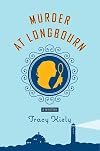
I enjoyed the Jane Austen references, but the murder plot and romance plot were both completely predictable.
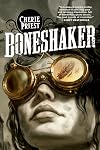
Having really enjoyed Wings to the Kingdom and Dreadful Skin (though I couldn't get into Fathom), I was very eager to read Priest's first foray into the steampunk genre. Boneshaker fully lived up to my expectations.
Zeke, being a teenage boy, makes one very foolish decision, to go into a devastated, zombie-ridden 1880s Seattle to clear his father's name, but after that, he proves to be fairly intelligent and likeable. The real star of the story, though, is Blair, his mother, who goes after him to rescue him. She is just trudging through life at the beginning, suppressing her former life as much as possible, but finds a reservoir of strength and courage from her mother-love. Minor characters are also interesting, although I felt that a revelation about a criminal overlord came from out of the Blue, so to speak.
The setting is rich with detail, and it was easy to feel the hardships of daily life, and the huge difficulties of underlife in Seattle, with gas masks, etc., along with the mad-science-style engineering. I was also intrigued by side issues such as the decades-long Civil War and racial/ethnic tensions over Chinese immigrants, and the airship scenes were fun without taking over the story.
I see from cmpriest.livejournal.com that Priest is planning several more books in this Clockwork Century world-setting. I will definitely be checking them out, too.
Zeke, being a teenage boy, makes one very foolish decision, to go into a devastated, zombie-ridden 1880s Seattle to clear his father's name, but after that, he proves to be fairly intelligent and likeable. The real star of the story, though, is Blair, his mother, who goes after him to rescue him. She is just trudging through life at the beginning, suppressing her former life as much as possible, but finds a reservoir of strength and courage from her mother-love. Minor characters are also interesting, although I felt that a revelation about a criminal overlord came from out of the Blue, so to speak.
The setting is rich with detail, and it was easy to feel the hardships of daily life, and the huge difficulties of underlife in Seattle, with gas masks, etc., along with the mad-science-style engineering. I was also intrigued by side issues such as the decades-long Civil War and racial/ethnic tensions over Chinese immigrants, and the airship scenes were fun without taking over the story.
I see from cmpriest.livejournal.com that Priest is planning several more books in this Clockwork Century world-setting. I will definitely be checking them out, too.
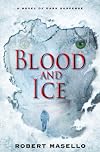
The worst book I read in 2009, hands down. I expected to like it, what with the combination of so many interests - vampires, journalism, science, the Crimean War, etc. The writing as prose wasn't too bad, but the plot-anvils and atrocious characterizations made me wish I could burn it to save other library patrons. I could have accepted the main character being guilt-ridden enough to act totally obsessed, but to have ALL the scientists encountered conspiring in a massive coverup (those that weren't dead yet, anyway), including the brilliant one who just wanted to go back to his fissssshhhh, was just unbelievable. I could go on and on, but I don't want to spoil it any more for those less critical than I.
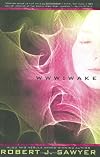
An experiment to help a blind girl's brain interpret visual stimuli results in her ability to visually perceive the World Wide Web as well. This lets her discover, and help develop, a growing self-aware artificial intelligence. Several subplots seem at first to be just there to throw interesting parallels up for comparison, with minor interactions on the main plot, but then I found at that two more books are planned. Various other issues arise, such as proprietary research (the girl wants her knowledge to be open source, but the scientist who developed the tech wants to protect his university's rights to it), pattern recognition, etc.
I found the book engaging and clever, and I want to read more. Fans of this might also enjoy Donna Andrews' Turing Hopper mysteries (less about tech, more about AI ethics and AI-human interactions).
I found the book engaging and clever, and I want to read more. Fans of this might also enjoy Donna Andrews' Turing Hopper mysteries (less about tech, more about AI ethics and AI-human interactions).
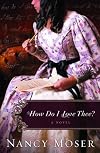
A novelized biography of reclusive invalid poet Elizabeth Barrett and her romance with poet Robert Browning. Reasonably good writing, and seemed pretty accurate, with no jarring anachronisms. I appreciated the notes at the end, and really liked that "Sonnets from the Portuguese" were included.
Ba's journey from unquestioning obedience to eventually making her own choices was portrayed pretty clearly. I did think several times that the book was getting a bit sappy, but then I would remind myself that this was basically the way it really happened -- the main facts, anyway; letters are edited down and dialogues (especially internal monologues) are invented.
Although fans of period romance and/or Elizabeth Barrett Browning may well enjoy this, I didn't find it very moving. I found it hard to identify with her, and kept wanting to tell her to have some courage, even though at that time, patriarchs really did exert a lot of control over their families. If you don't have a lot of patience, you might like to watch "The Barretts of Wimpole Street" instead (it's been a while, but I think I saw the 1934 movie).
Summary: Good for fans of the poet, but historical romance fans may just want to rent a movie instead.
Ba's journey from unquestioning obedience to eventually making her own choices was portrayed pretty clearly. I did think several times that the book was getting a bit sappy, but then I would remind myself that this was basically the way it really happened -- the main facts, anyway; letters are edited down and dialogues (especially internal monologues) are invented.
Although fans of period romance and/or Elizabeth Barrett Browning may well enjoy this, I didn't find it very moving. I found it hard to identify with her, and kept wanting to tell her to have some courage, even though at that time, patriarchs really did exert a lot of control over their families. If you don't have a lot of patience, you might like to watch "The Barretts of Wimpole Street" instead (it's been a while, but I think I saw the 1934 movie).
Summary: Good for fans of the poet, but historical romance fans may just want to rent a movie instead.