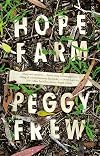
4 stars. A fresh voice, unique storyline and interesting subject matter.
Hope Farm is a rich fictional recollection on the life of a young mother and daughter living in a sludgy hippie commune in 1980's Victoria. This structureless community, with its drug infused ideals and lack of parenting, trigger traumatic events which lead to lifelong struggles.
Hope Farm is a rich fictional recollection on the life of a young mother and daughter living in a sludgy hippie commune in 1980's Victoria. This structureless community, with its drug infused ideals and lack of parenting, trigger traumatic events which lead to lifelong struggles.
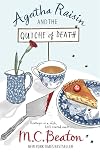
Well isn’t this a little gem of a novel! The first in the Agatha Raisin mystery series, this book is best comparative to a hot mug of tea: it warms you up, it is quite cosy, and it generates just the right amount of mental stimulation (as opposed to, say, a Gillian Flynn thriller – a long black). M.C Beaton’s prose is simply marvelous, and the character of Agatha Raisin is a charmingly flawed human.
Set in a quaint little town nestled among the rolling hills of the Cotswold’s, Agatha Raisin begins her retirement by purchasing her dream cottage. Though shortly after arriving, Agatha realizes that this town isn’t particularly what she had envisioned. As the title suggests, the Quiche of Death is in fact a murder tool, but how did it become one? Was it accidental? Who baked it? And why? Agatha is on a mission to answer these questions herself, investigating the crime in order to prove her innocence.
There is an exploration of loneliness and isolation in this book, specifically that of which can be triggered by the head-down-hard-work that people push themselves to do, oftentimes to avoid acknowledging the existential dread of existence. As the reader, you’re taken on a journey of judgement and presumption about certain characters, and may see things in a way that society has influenced us to think, which highlights the lawful term ‘innocent until proven guilty’. Reminding us that the grass is not always greener and that satisfaction is never a lasting result show more of revenge.
I just know I’ll read this again and again, and look forward to following it up with the rest of the Agatha Raisin series in future. Immediately sending my copy of this to my Mum as I know she’ll gobble it up just as appreciatively as I did.
- from polreaderblog[dot]wordpress[dot]com show less
Set in a quaint little town nestled among the rolling hills of the Cotswold’s, Agatha Raisin begins her retirement by purchasing her dream cottage. Though shortly after arriving, Agatha realizes that this town isn’t particularly what she had envisioned. As the title suggests, the Quiche of Death is in fact a murder tool, but how did it become one? Was it accidental? Who baked it? And why? Agatha is on a mission to answer these questions herself, investigating the crime in order to prove her innocence.
There is an exploration of loneliness and isolation in this book, specifically that of which can be triggered by the head-down-hard-work that people push themselves to do, oftentimes to avoid acknowledging the existential dread of existence. As the reader, you’re taken on a journey of judgement and presumption about certain characters, and may see things in a way that society has influenced us to think, which highlights the lawful term ‘innocent until proven guilty’. Reminding us that the grass is not always greener and that satisfaction is never a lasting result show more of revenge.
I just know I’ll read this again and again, and look forward to following it up with the rest of the Agatha Raisin series in future. Immediately sending my copy of this to my Mum as I know she’ll gobble it up just as appreciatively as I did.
- from polreaderblog[dot]wordpress[dot]com show less
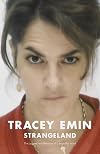
Some books are crucial at certain points in your life, and this was one of those for me. I stumbled upon this book in the library when I was studying an Arts degree in the country. It was a strange – and possibly the most detrimental – time of my life, where I was growing into an adult woman. I had begun experiencing a great amount of conflicting emotions due to a big break-up, isolation from my home-town, and the painfully new feeling of ‘fending for myself’. This book was an absolute awakening for me in many ways, it was my first real insight into feminism, poverty, privilege, misogyny, life as a young woman in the world. This book became one of my favourites all those years ago – so recently I decided to re-read it and see how my perception of it had changed. I was rather pleased to discover that it was still as impactful now as it had been all those years ago.
Strangeland is a memoir, separated into three parts: Motherland, Fatherland and Traceyland. It is an array of recollections, stories and musings describing certain pivotal moments in Emin’s life, some of which are utterly unimaginable. Starting at Motherland, we get an insight into the rape and abuse she experienced as a young child whilst living in poverty, which is incredibly intense and difficult to stomach. Fatherland takes us through Emin’s Turkish culture, exploring the history and tradition of her fathers roots, including brief mentions of her Sudanese Grandfather. Emin has experienced an show more abnormal amount of misfortune in her life, especially as a young woman – even within this more cultural section of the book, she deals with issues that most young people will never face – including her father’s interest in marrying a 16 year old girl, whilst in his 60’s.
Finally we arrive at Traceyland, a place where Emin is completely herself, in all her feminist, artistic glory. In this section, I noticed a tone which is representative of the current #metoo movement, where Emin discusses the fact that ‘no means no’ and other ways in which men abuse power. The female body is a battleground as a young woman, and Emin explores this within her writing. There is a whole chapter titled ‘Advice on Unwanted Pregnancy’s’, including how to avoid them but also how to deal with them, and be kind to yourself during such an isolating time. Traceyland also explores the dichotomy that is the pain of being a tortured artist, whilst art has also saved her.
Strangeland is certainly not for the faint of heart, it combines lucid dreaming, disjointed essays, poetry and musings into one conglomerate of chapters that delve deep into Emin’s life. I’m glad I discovered this book at a pivotal point of my life, and that I was able to revisit it without disappointment. Emin is certainly not literary, but she can write an engaging and eye opening memoir.
- from polreaderblog[dot]wordpress[dot]com show less
Strangeland is a memoir, separated into three parts: Motherland, Fatherland and Traceyland. It is an array of recollections, stories and musings describing certain pivotal moments in Emin’s life, some of which are utterly unimaginable. Starting at Motherland, we get an insight into the rape and abuse she experienced as a young child whilst living in poverty, which is incredibly intense and difficult to stomach. Fatherland takes us through Emin’s Turkish culture, exploring the history and tradition of her fathers roots, including brief mentions of her Sudanese Grandfather. Emin has experienced an show more abnormal amount of misfortune in her life, especially as a young woman – even within this more cultural section of the book, she deals with issues that most young people will never face – including her father’s interest in marrying a 16 year old girl, whilst in his 60’s.
Finally we arrive at Traceyland, a place where Emin is completely herself, in all her feminist, artistic glory. In this section, I noticed a tone which is representative of the current #metoo movement, where Emin discusses the fact that ‘no means no’ and other ways in which men abuse power. The female body is a battleground as a young woman, and Emin explores this within her writing. There is a whole chapter titled ‘Advice on Unwanted Pregnancy’s’, including how to avoid them but also how to deal with them, and be kind to yourself during such an isolating time. Traceyland also explores the dichotomy that is the pain of being a tortured artist, whilst art has also saved her.
Strangeland is certainly not for the faint of heart, it combines lucid dreaming, disjointed essays, poetry and musings into one conglomerate of chapters that delve deep into Emin’s life. I’m glad I discovered this book at a pivotal point of my life, and that I was able to revisit it without disappointment. Emin is certainly not literary, but she can write an engaging and eye opening memoir.
- from polreaderblog[dot]wordpress[dot]com show less
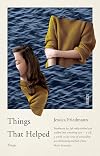
Never has a book been so relatable, so deeply connected to my identity. I often felt as though I was reading something I myself had written in a dream - regardless of the fact that I am currently childless. I thoroughly appreciate the raw realness of mental health being openly expressed in such a beautifully immaculate way.
My favorite essays (though they were all perfect, these ones resonated deeply for me): Maribyrnong; Pho; Red lips; Swanlights, turning; Rings; Ainslie.
'Nobody tells you, as a child that your initiation into womanhood might come at the price of a craving for misuse and violence; that you can protect yourself from others, but that nobody can protect yourself from you.' - Swanlights, turning.
'I look at Mike's sleeping body when I wake, and marvel at the ongoingness of his presence in our bed, this solid, freckled pillar of strong bone and love. For the moment, in the richness of a morning, it is vividly, intensely enough.' - Rings
I am instantly yearning for Friedman's next book.
My favorite essays (though they were all perfect, these ones resonated deeply for me): Maribyrnong; Pho; Red lips; Swanlights, turning; Rings; Ainslie.
'Nobody tells you, as a child that your initiation into womanhood might come at the price of a craving for misuse and violence; that you can protect yourself from others, but that nobody can protect yourself from you.' - Swanlights, turning.
'I look at Mike's sleeping body when I wake, and marvel at the ongoingness of his presence in our bed, this solid, freckled pillar of strong bone and love. For the moment, in the richness of a morning, it is vividly, intensely enough.' - Rings
I am instantly yearning for Friedman's next book.
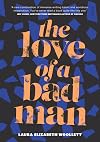
This is a collection of historical fiction short-stories by the local (Melbourne) female writer Laura Elizabeth Woollett. I have to say, this is a truly brilliant concept for a book, and I’ve not read anything like it. Woollett has the ability to take the horrific stories that people have heard over and over before, and rewrite them from a fresh angle.
Clearly this is fiction, but whilst there are painful truths to these stories which make them incredibly difficult to read, there is a lot to gain from the imagination of Woollett herself. I’ve read a few reviews from people who were uncomfortable with the presumptiveness that the women in the stories were less guilty than the ‘bad’ men around them. My take on this is that it is simply fiction, and it was an interesting perspective to tackle.
After finishing each short story, I found myself immediately Google-ing the characters to educate myself. Woollett did an incredible job of stepping into each character and writing from such varied perspectives. Much like with acting, I always admire a writer who has the ability to make me completely forget their existence as they become the voice of their characters – and Woollett has achieved just that.
I hired this book from the library, but it’s one of those books I’ve become so fascinated by that I’ll be searching out a copy for my own shelves as soon as possible. I’m truly anticipating Woollett’s next book, whatever that may be.
- from show more polreaderblog[dot]wordpress[dot]com show less
Clearly this is fiction, but whilst there are painful truths to these stories which make them incredibly difficult to read, there is a lot to gain from the imagination of Woollett herself. I’ve read a few reviews from people who were uncomfortable with the presumptiveness that the women in the stories were less guilty than the ‘bad’ men around them. My take on this is that it is simply fiction, and it was an interesting perspective to tackle.
After finishing each short story, I found myself immediately Google-ing the characters to educate myself. Woollett did an incredible job of stepping into each character and writing from such varied perspectives. Much like with acting, I always admire a writer who has the ability to make me completely forget their existence as they become the voice of their characters – and Woollett has achieved just that.
I hired this book from the library, but it’s one of those books I’ve become so fascinated by that I’ll be searching out a copy for my own shelves as soon as possible. I’m truly anticipating Woollett’s next book, whatever that may be.
- from show more polreaderblog[dot]wordpress[dot]com show less
Adult Fantasy: searching for true maturity in an age of mortgages, marriages, and other adult milestones by Briohny Doyle
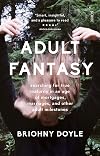
A brilliantly articulated collection of essays about the elusiveness of identifying as an adult, in a voice that is particularly relatable for millennials.
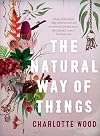
The Natural Way of Things is an absolutely brutal book. If the content of this story had been described to me beforehand I wouldn’t have read it, and yet it’s immediately become one of my favourite reads of the year so far. When I finished this book, the first thing I said to my husband (to explain how powerful it is) was some kind of rephrasing of the actual title. It was only then that it hit me how perfectly the title fits the contents of the book.
The narrative closely follows the perspectives of two young women, who have awoken (among others) in a drugged stupor, to find themselves in an old house in the middle of the Australian bush. What follows is a slow but tedious set of events that are best told through no other adjective than primal. Brutally primal, in fact. Each of the women in this story go through an unusual inner journey, reliving the events that they believe brought them to this strange and isolated place, longing for home and it’s comforts.
It’s interesting to me how quickly this book became a dichotomy for me, between the comfort, calm and grounding elements I relate to home; Gum trees, Kookaburras and Cockatoos calling – to the horrific and brutal elements of this dystopian Australia; chains, abuse and neglect. This is a story that blurs the line where animal ends and human begins. It is enormously graphic, stomach churning and raw – but amidst all of this brutality and horror is also the story of friendship, the incredible strength of show more women and the necessity of hope even in the darkest of human struggles. An important Australian novel that will no-doubt become a classic.
- from polreaderblog[dot]wordpress[dot]com show less
The narrative closely follows the perspectives of two young women, who have awoken (among others) in a drugged stupor, to find themselves in an old house in the middle of the Australian bush. What follows is a slow but tedious set of events that are best told through no other adjective than primal. Brutally primal, in fact. Each of the women in this story go through an unusual inner journey, reliving the events that they believe brought them to this strange and isolated place, longing for home and it’s comforts.
It’s interesting to me how quickly this book became a dichotomy for me, between the comfort, calm and grounding elements I relate to home; Gum trees, Kookaburras and Cockatoos calling – to the horrific and brutal elements of this dystopian Australia; chains, abuse and neglect. This is a story that blurs the line where animal ends and human begins. It is enormously graphic, stomach churning and raw – but amidst all of this brutality and horror is also the story of friendship, the incredible strength of show more women and the necessity of hope even in the darkest of human struggles. An important Australian novel that will no-doubt become a classic.
- from polreaderblog[dot]wordpress[dot]com show less
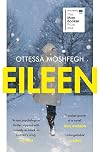
A beautifully written book with gut wrenching subject matter. I’d call this a character study, with somewhat of a storyline towards the latter half. Full review to come in my April wrap up.
Beautifully poetic! I was completely immersed in this story, often finding myself daydreaming of the characters and the happenings within. I will definitely read it again sometime.
"There is no intimacy as great as that between young girls. Even between lovers, who cross boundaries we are accustomed to thinking of as at the furthest territories of closeness, there is a constant awareness of separateness, the wonder at the fact that the loved one is distant, whole, with a past and a mind housed behind the eyes we gaze into that exist, inviolate, without us."
"There is no intimacy as great as that between young girls. Even between lovers, who cross boundaries we are accustomed to thinking of as at the furthest territories of closeness, there is a constant awareness of separateness, the wonder at the fact that the loved one is distant, whole, with a past and a mind housed behind the eyes we gaze into that exist, inviolate, without us."
What a journey! I am in awe of Carrie and the life she has lead.
Exquisite. I didn’t put this down from the moment I began. My favourite read of the year.
‘If I think of the worst, then the worst is unlikely to happen’
An excellent graphic novel embodying childhood anxiety and fear. Super relatable for me - the anxiety, being a much younger sibling, feeling the age gap and the loneliness that comes with it. One of the best graphic novels I’ve read.
An excellent graphic novel embodying childhood anxiety and fear. Super relatable for me - the anxiety, being a much younger sibling, feeling the age gap and the loneliness that comes with it. One of the best graphic novels I’ve read.
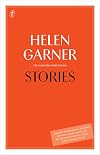
Garner is an impeccable writer, in my opinion. She’s one of the few people who manages to have me laughing out loud at the absurdities of life one minute, and quietly pondering it’s meaning the next. These stories are fictional accounts from different times throughout her life, some stories I loved more than others, but I will certainly be reading them all again, it’s always a pleasure. Recommended for those who enjoy life’s lesser noticed quirks.
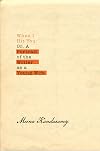
Domestic abuse is something that has begun to receive more of a dialogue in the mainstream media lately, which is hugely important, given how common it is. When I Hit You (or a portrait of the writer as a young wife) is an incredibly heart-wrenching, painfully important and raw account of a young Indian woman’s experience with domestic abuse.
We are taken through the life of an intelligent young writer who falls in love with a uni professor, and shortly afterwards accepts his marriage proposal. This short-lived romantic phase slowly turns into the disabling, isolation, repression, psychological manipulation, rape and physical abuse of the narrators character. The abuse within this story is best described as malignant, and Kandasamy does an excellent job of portraying just how difficult it is to break away from something so malevolent, especially as a woman.
With a strong, intelligent Feminist voice, the narrator describes her horrid journey of marriage in modern day India, and we’re left feeling exhausted yet awakened to the brutality that unfortunately lives in many homes around us today. An extremely important book.
- from polreaderblog[dot]wordpress[dot]com
We are taken through the life of an intelligent young writer who falls in love with a uni professor, and shortly afterwards accepts his marriage proposal. This short-lived romantic phase slowly turns into the disabling, isolation, repression, psychological manipulation, rape and physical abuse of the narrators character. The abuse within this story is best described as malignant, and Kandasamy does an excellent job of portraying just how difficult it is to break away from something so malevolent, especially as a woman.
With a strong, intelligent Feminist voice, the narrator describes her horrid journey of marriage in modern day India, and we’re left feeling exhausted yet awakened to the brutality that unfortunately lives in many homes around us today. An extremely important book.
- from polreaderblog[dot]wordpress[dot]com
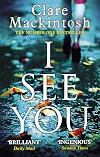
A quick and easy read, engaging with some ‘edge of your seat’ twists. It didn’t trick me well enough though, I need a bit more of a challenge in crime mysteries.

Esther Perel has the ability to delve so deep into human connection and understand relationships. I'm always blown away by her empathy and intelligence. However, a lot of what is in this book has been touched on in one aspect or another in her previous work (including the podcast) so I wasn't as engaged as I would have been if it was a fresh look at Perel's work. I also found it a little bit too long, though I did listen to the audiobook so I'm not sure I'd feel the same with a hardcopy. Genius stuff, nonetheless. Recommend it to anyone who is a human and wants to understand infidelity and reconciliation.
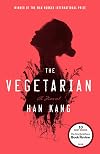
There are many important messages in this story, but I don’t feel it was executed as well as I’d hoped.
EDIT: This book still hasn't left my psyche, which is saying something. I've upped my rating, and I will be doing a re-read soon!
EDIT: This book still hasn't left my psyche, which is saying something. I've upped my rating, and I will be doing a re-read soon!
I Love Dick: The cult feminist novel, now an Amazon Prime Video series starring Kevin Bacon by Chris Kraus
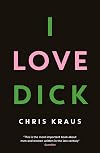
A brilliantly complex piece of work, I was engaged mostly, until about midway at which point I lost the urgent interest. I still enjoyed it, and am intrigued to read more of Kraus' work.
I found it difficult to put a rating on this book. I hesitated to begin with as I found that the prose was a bit rigid and simplified for me.
Though after a few chapters, I was so deep in the lives of the characters that my preconceived ideas slipped away and I found myself unable to put it down.
It may seem to some that this is a book about nothing, and it could be taken that way - but it's so much more than that. This is a book about abuse, the process of greif, depression, friendship, family; the complications of, and work it takes to maintain relationship. The characters and places are still lingering in my memory.
I conneted with so many of parts of this book, and I am so impressed that this was written by a young female writer the same age as me.
Though after a few chapters, I was so deep in the lives of the characters that my preconceived ideas slipped away and I found myself unable to put it down.
It may seem to some that this is a book about nothing, and it could be taken that way - but it's so much more than that. This is a book about abuse, the process of greif, depression, friendship, family; the complications of, and work it takes to maintain relationship. The characters and places are still lingering in my memory.
I conneted with so many of parts of this book, and I am so impressed that this was written by a young female writer the same age as me.
This is a great book, Juno's audio reading is amicable, she is a great writer, and this would be easily approachable for anyone - even young people. Also, this would be a great book for anyone who isn't yet educated/enlightened on the trans experience, or modern feminism. I felt like I, personally, didn't learn anything new with this book because I have already read a lot of non-fiction in these areas. It was enjoyable though, and I wouldn't hesitate to recommend it to others.
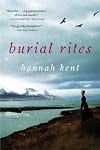
I am completely lost for words. This was both a beautifully compelling and hauntingly gripping read. I haven't spent much time with period peices, but Kent sure has drawn me into their guise. I have underlined countless exquisite lines throughout, though towards the end I was so captivated that I couldn't bring myself to pause. Let me leave you with this:
"I can turn to that day as though it were a page in a book. It's written so deeply upon my mind I can almost taste the ink".
"I can turn to that day as though it were a page in a book. It's written so deeply upon my mind I can almost taste the ink".
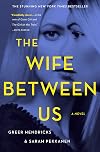
Didn't bother finishing this. I was hoping for a nice little pop thriller to palate cleanse between reads, but this did not suffice. Very simple story-line, I didn't care for any of the characters, and the first few twists were too obvious for me.

Funny, light and relevant to today's dating scene. Aziz does state at the beginning that this book is mostly for the hetero-monogamous type, though there is some mention of polyamory and the LBGT community. Recommended for anyone monogamous leaning humans who are dating in this decade!

Garners prose is just magic. She could write a cleaning manual and I’d give it 5 stars. The trials and tribulations of drug culture is always a rough read, but Garner does it in a way like no other. I wish I’d read this in my youth instead of Kerouac and Bukowski. I know I’ll read it again, just to lose myself in that visceral writing of hers.
The Woman Who Fooled The World: Belle Gibson's cancer con, and the darkness at the heart of the wellness industry by Beau Donelly
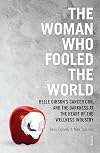
I’m glad this book was written, a lot of people needed closure on the elusive Gibson saga. A mighty easy read... too easy, in fact. There were a few grammatical errors that irritated me and the writing style wasn’t great. Nevertheless, it was an absorbing story. I can only imagine how incredible it would have been from Helen Garners perspective (one can dream).
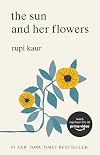
Completely absorbing and beautifully written.
A brilliant and completely engrossing Scandinavian crime thriller. I’m a bit late to the party with this one, but I’m so glad I finally picked it up. Straight onto number 2 of the series.
3.5 stars
I have devoured most of Esther Perel's work (Ted Talk, Podcast series, interviews etc) and this book was written well before that, so I didn't get a lot more from it. Regardless, it's an interesting take on reconciling eroticism in long-term relationships, something most people fail to address until it's too late. I'm really looking forward to her new book, released in 2017.
I have devoured most of Esther Perel's work (Ted Talk, Podcast series, interviews etc) and this book was written well before that, so I didn't get a lot more from it. Regardless, it's an interesting take on reconciling eroticism in long-term relationships, something most people fail to address until it's too late. I'm really looking forward to her new book, released in 2017.