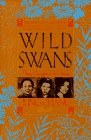
An exceptional tribute to three generations of courageous and articulate Chinese women: the grandmother, born in 1909 into a still feudal society; the mother, a Communist official and then ``enemy of the people''; and a daughter, the author, raised during the Cultural Revolution, then sent abroad in 1978 to study in the U.K., where she now lives. Chang provides a vivid picture of 20th century Chinese history through the eyes of three radically different generations of women in her family. The account of her parent’s relationship is especially poignant in its depiction of how two people struggled with the competing loyalties of ideology and personal bonds.
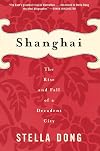
In her first book, Dong has filled her absorbing history of Shanghai with vivid details that leave little doubt as to how Shanghai earned its reputation as Pearl of Asia. She offers tidbits on colorful local personalities, such as the Chinese warlord who never left home without his enormous lacquered teak coffin, the radical American feminist who was indirectly responsible for the end of Mao Zedong's second marriage and the wealthy Chinese businessman whose two younger daughters married Chiang Kai-shek and Sun Yat-sen. Although the city was inhabited by 250,000 Chinese when the British invaded in 1842, it wasn't long before the nationals were serving the foreigners, who were making Shanghai one of the world's wealthiest business centers. Banking and manufacturing were the respectable professions, but it was opium--controlled largely by foreigners but used largely by Chinese--that built modern Shanghai. The arrogance and excess of foreigners, who set up their own courts, lived lavishly and excluded the Chinese from governing bodies and private clubs, created the uneven balance of power and economics that helped pave the way for Communism. Dong skillfully packs her narrative with all of the city's "sordid pleasures and exploitation," offering an account that is at once informative and entertaining.
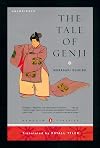
See the review in Education about Asia, http://www.aasianst.org/EAA/TaleOFGenji.pdf


See the Celebrated Cases of Judge Dee by Van Gulik
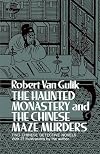
See the Celebrated Cases of Judge Dee by Van Gulik


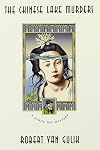
See the Celebrated Cases of Judge Dee by Van Gulik

See the Celebrated Cases of Judge Dee by van Gulik
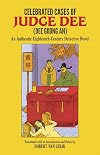
One of my favorites! A rich depiction of traditional China (probably Ming/Wing era) and excellent insight into the Chinese legal system. These stories echo many traditional story-telling formats in a very convincing way. While it is not an authentic piece of Chinese lit it may be an accessible approximation with many curricular possibiiities. A review of these stories is available from Education about Asia, http://www.aasianst.org/EAA/wilson.htm
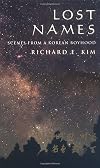
This is a compelling tale of occupied Korea. It is largely autobiographica so can be treated as a primary source. It pairs well with "Year of Impossible Goodbyes" by Sook Nyul Choi. The protagonist in Lost Names is a boy, while a girl "stars" in "Year of Impossible Goodbyes".
A review of "Lost Names" providing substantial background info about the author is available from Education about Asia, http://www.aasianst.org/EAA/lostname.htm
A review of "Lost Names" providing substantial background info about the author is available from Education about Asia, http://www.aasianst.org/EAA/lostname.htm
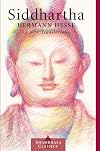
Hesse's book is an excellent exploration of European existentialism, Buddhist origins and philosophy, and a very Daoist philosophy that I believe Hesse promotes as the "Right" direction through the character of the ferryman. I have used Siddhartha as a way to pull together Indian and Chinese religious traditions and as a way to compare Buddhism and Daoism
For a review see the Education about Asia article "A Symposium on Herman Hesse's Siddahartha, http://www.aasianst.org/EAA/Siddhartha.htm
For a review see the Education about Asia article "A Symposium on Herman Hesse's Siddahartha, http://www.aasianst.org/EAA/Siddhartha.htm
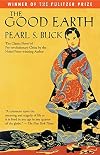
For an excellent review of the classic, see the Education About Asia article "What's So Bad about The Good Earth" http://www.aasianst.org/EAA/hayford.htm
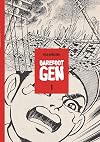
In the graphic novel Barefoot Gen, Keiji Nakazawa tells a semi-autobiographical story of his life in Hiroshima at the end of World War II. Volume one of what became a ten volume work deals primarily with the four months just before the United States dropped the atomic bomb on Hiroshima. The difficulties of family and community life during wartime, and the particular struggles of a family with a father publicly opposed to the war, make up the bulk of this book: the bombing itself does not occur until page 248 of this 284 page volume.
The protagonist, six-year-old Gen, is taunted and bullied by local children because of his father’s politics, and while he fights back valiantly, he also wishes that his father would just go to war like everyone else. Early in the book, Gen gets his father’s message that you must not back down from what you believe is right, but his little brother, Shinji, continues to want his family members to do whatever is necessary in order that he can eat and play like other little boys. The author’s directness in revealing this complicated family situation provides rich material for discussions on family loyalty, sibling relationships, the pressure to conform to community standards, and the terrible pressure and demands the war effort put on the family.
In addition to the personal, and deeply moving, story of Gen Nakaoka’s family during wartime, the reader also learns of what is happening elsewhere during the period just before the atomic bombs show more were dropped. Gen’s eldest brother, Koji, signs up for the Japanese Naval Air Corps prep pilot course in order to save his family from being known only as traitors. Nakazawa reveals that the young men looking forward to flying for their country would become the Kamikaze pilots used as “like so many human bullets.” Another brother, Akira, is sent to the assumed safety of the country, but what his family thinks is a school where he will learn and be well-fed turns out to be a brutal work camp. Through the anti-Korean racism toward the Nakaoka’s neighbor, Mr. Pak, the reader also learns of the treatment the Koreans and Chinese received from the Japanese at the time. Nakazawa also takes the reader to the United States to follow the development and testing of the atomic bomb.
This funny, engaging, hopeful, and heart-breaking story of a family during wartime has many classroom applications. This family’s struggle to maintain their ethical principles in the face of unspeakable difficulties provides material for a range of humanities courses, including language arts, government, civics, philosophy, and ethics. History/Social Studies classes studying World War II could use this title in the same way that many currently use Art Spiegelman’s Maus to study the Holocaust in Europe.
In spite of the clear benefits to using this title in the classroom, there are a few potentially troubling issues. The father places blame for the war squarely on Japan’s leaders, and even though the US develops and deploys the bomb, the Allies motives for waging war are not really held up to scrutiny. The casual violence and scatological humor might raise some eyebrows, but could probably be placed in the context of Japanese comics fairly easily. (The fart jokes will surely appeal to quite a few reluctant readers!) The most appealing characters are also drawn to be the least typically Japanese, and the most hateful characters, in many cases, tend to look stereotypically Asian. While the material in this book is best suited for children in middle and high school, the protaganist’s youth might make it somewhat difficult for young adults to engage. However, the fact that he is only six years old is not emphasized, and Gen seems to leave early childhood behind very quickly. Overall, I highly recommend this title for classroom use. show less
The protagonist, six-year-old Gen, is taunted and bullied by local children because of his father’s politics, and while he fights back valiantly, he also wishes that his father would just go to war like everyone else. Early in the book, Gen gets his father’s message that you must not back down from what you believe is right, but his little brother, Shinji, continues to want his family members to do whatever is necessary in order that he can eat and play like other little boys. The author’s directness in revealing this complicated family situation provides rich material for discussions on family loyalty, sibling relationships, the pressure to conform to community standards, and the terrible pressure and demands the war effort put on the family.
In addition to the personal, and deeply moving, story of Gen Nakaoka’s family during wartime, the reader also learns of what is happening elsewhere during the period just before the atomic bombs show more were dropped. Gen’s eldest brother, Koji, signs up for the Japanese Naval Air Corps prep pilot course in order to save his family from being known only as traitors. Nakazawa reveals that the young men looking forward to flying for their country would become the Kamikaze pilots used as “like so many human bullets.” Another brother, Akira, is sent to the assumed safety of the country, but what his family thinks is a school where he will learn and be well-fed turns out to be a brutal work camp. Through the anti-Korean racism toward the Nakaoka’s neighbor, Mr. Pak, the reader also learns of the treatment the Koreans and Chinese received from the Japanese at the time. Nakazawa also takes the reader to the United States to follow the development and testing of the atomic bomb.
This funny, engaging, hopeful, and heart-breaking story of a family during wartime has many classroom applications. This family’s struggle to maintain their ethical principles in the face of unspeakable difficulties provides material for a range of humanities courses, including language arts, government, civics, philosophy, and ethics. History/Social Studies classes studying World War II could use this title in the same way that many currently use Art Spiegelman’s Maus to study the Holocaust in Europe.
In spite of the clear benefits to using this title in the classroom, there are a few potentially troubling issues. The father places blame for the war squarely on Japan’s leaders, and even though the US develops and deploys the bomb, the Allies motives for waging war are not really held up to scrutiny. The casual violence and scatological humor might raise some eyebrows, but could probably be placed in the context of Japanese comics fairly easily. (The fart jokes will surely appeal to quite a few reluctant readers!) The most appealing characters are also drawn to be the least typically Japanese, and the most hateful characters, in many cases, tend to look stereotypically Asian. While the material in this book is best suited for children in middle and high school, the protaganist’s youth might make it somewhat difficult for young adults to engage. However, the fact that he is only six years old is not emphasized, and Gen seems to leave early childhood behind very quickly. Overall, I highly recommend this title for classroom use. show less

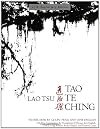
Lao-tzu : Te-tao ching : a new translation based on the recently discovered Ma-wang-tui texts by Lao Tzu

This is the version of the Tao that I prefer. Of course I am biased since Dr. Henricks was my teacher at Dartmouth. But I find his translation most satisfying and his introductory material most rewarding. I have in my office an article that he wrote that is an elaboration of his introduction and essentially the notes from a stunning lecture he delivered to his Chinese Religions courses entitled "The Tao and the Field."
It is very chilling to read the Tao as a manual of strategy much like Sunzi's Art of War. See the entry for the Denma translation of Sunzi for more on that topic.
Also be aware that a very good translation is available online at http://www.hm.tyg.jp/~acmuller/fiveclassics.htm
It is very chilling to read the Tao as a manual of strategy much like Sunzi's Art of War. See the entry for the Denma translation of Sunzi for more on that topic.
Also be aware that a very good translation is available online at http://www.hm.tyg.jp/~acmuller/fiveclassics.htm
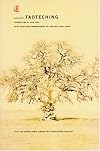
See Lao-tzu : Te-tao ching translated by Robert Henricks
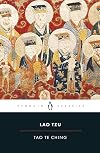
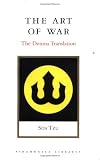
This translation of the Art of War by Kidder Smith (Bowdoin College) is, in my opinion, the best one currently available. I find the translation the most accessible and the most subtle. Books that could be paired with it for a study of comparative strategy include “The Unfettered Mind”, a book of Zen philosophy influential on the Japanese swordsmen Musashi, as well as Musashi’s own “Book of the Five Rings”. The Dao De Jing is also a fascinating book to read as a manual of strategy, rather than naturalistic philosophy. Actually it is quite chilling. (I prefer the Robert Hendricks translation, but I am biased, he was my instructor at Dartmouth). Also there is of course the Prince as comparable source of European strategy.
Sun-Tzu: the Art of Warfare: the first English translation incorporating the recently discovered Yin-ch°üeh-shan by Sun Tzu
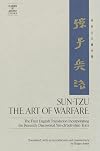
A very scholarly edition. See Art of War: the Denma Translation by Kidder Smith, Bowdoin College
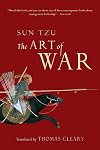
Avoid this translation. See Art of War: the Denma Translation by Kidder Smith, Bowdoin College.
See Art of War: the Denma Translation by Kidder Smith, Bowdoin College