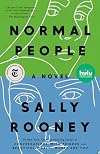
pretty good. It's true, no double quotes to mark dialogue. It made me cry several times despite so much exposition in such simple language and extraneous physical description. Clocking in at 273, it's a about hundred pages shorter than Hazelwood's romcoms.
There's a lot of emotional power in Rooney's exposition of feelings in interior monologue--and I'm not too sure how she does it.
There's a lot of emotional power in Rooney's exposition of feelings in interior monologue--and I'm not too sure how she does it.
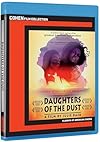
Art house style; live stage acting; historically important

No sci-fi with traversable wormholes and time travel qualifies as hard SF, but Interstellar is a wonderful story of love between a father and daughter.
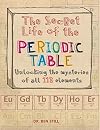
Fun reference and nice history, but the introduction to the design of the periodic table and it’s underlying physics isn’t deep enough and terminology isn’t used consistently.
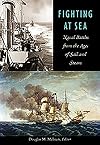
Very detailed and strong overview of the strategic picture; only the British side in the Atlantic conflict; importance of technological advances--such as the snorkel and acoustic-homing torpedo.
Covers a lot of ground in a fun way: chaos theory, NP-completeness, graph theory.
Seamanship in the Age of Sail: An Account of the Shiphandling of the Sailing Man-of-War 1600-1860, Based on Contemporary Sources by John H. Harland
An encyclopedia of the parts of a sailing vessel and how to handle it, but not much on the weapons aspect or history of its use.

A bit too much hero-worship of Nelson and unrealistic: calling the English sailors happy with their naval life and how it was preferable to the shore life, especially for the poor--when they would desert to America to avoid "the lash". Excellent detail of the battles, although I'd say Forester does one better.

Forester's descriptions of the brutality of the ship-to-ship battles in his nonfiction work The Age of Fighting Sail about the War of 1812 is riveting.
Quite the tome! Short sections on qubits--flux, phase, and transmon--and SQUIDs: basics and interesting historical note in 2011 that quantum dots and ion traps haven't been developed enough.
Skimmed the 1991 edition (https://search.worldcat.org/en/title/22733985): very technical but a lot of solid diagrams and pictures; nice applications chapter at the end.
Superconductivity, Superfluids, and Condensates (Oxford Master Series in Condensed Matter Physics) by James F. Annett
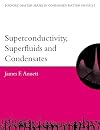
Very technical; has sections on Josephson Effect, Cooper pairs, and SQUIDs, which are relevant to superconducting quantum computing.
After comparing log line with Butcher's story question to a friend, Butcher's is more useful for framing the MC's GMC.
I really loved the idea about the decaying hexes. You also have some strong metaphors like "It was the original Lauren, whose memories were inside my head, but I was only a kid carved out of bits in the hands of the cruel, omniscient Master Geppetto that we called the System." But I did notice that there was quite a bit of exposition like the description about the decay starting with "Not that I have seen the Decay yet" as well as filtering through the character's senses like "I felt how easily the sword sliced through the tentacle." Yet, these are craft things that can be easily fixed. More importantly, you have a lot of creative ideas, which are not easy to come by.

Published in 1946 (translated in 1991)! The story's writing style doesn't quite stand the test of time as it's practically all narrative summary, but it has a touching unrequited-love subarc--and if you want to know what xianxia was originally all about, you won't be disappointed. There are good Daoists (cultivators) and evil Daoists as well as evil Buddhist monks. There are the Miao who are stereotyped as primitive but have strong magic--still, one heroine is Miao. I've attached some text where they talk about sects and schools.

the epistolary short eponymous to the collection's title and, unfortunately, @mverant, although a creative metaphor for entropy, I couldn't suspend my disbelief: the whole brain tech was more fantastical than sci-fi and yet it was set in the sci-fi genre. I read the flash piece that was published in Nature Futures and it was clever and worth a chuckle. Epistolary is one of my least favorite styles and time-travel the hardest of sci-fi subgenres to swallow. Perhaps, those are a couple of counts against those stories. But I suppose it must be his distant POV and unadorned, matter-of-fact authorial voice.
It was long and the characters could sometimes go over and over the same issues and using the same dialogue: for example, Rosasharn bemoaning her absent husband Connie. Nevertheless, and in spite of the omniscient POV, it was very riveting and beautiful; for writers, it's a case study of omniscient, using rhythm to imitate singing, and many other craft techniques.
Read after "How to Teach Quantum Physics to Your Dog" and "Simply Quantum Physics". A lot of facts that require more interconnected, underpinning concepts are thrown at you beginning at about halfway. Nevertheless, a worthwhile read that you can come back to once you learn more--and it really provides a solid overview of a hugely important field.

Big meh: no exciting ideas and the narrative summary delivery bores me to tears.
I've read two or three books on quantum physics and this is the best: explains things clearly in plain English (although the later explanations of entanglement and teleportation are a bit tangled up) and, most importantly, is very fun--especially for dog lovers!
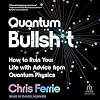
Solid science when he got to explaining it—but Too many interruptions.

DNF'd: Characterization is solid, but world-building is too light for my taste.
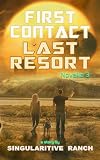
Strap yourselves in and get ready to blast off into outer space and social space.
Warning, warning, astronomical challenges ahead!
I love how the team has its own trials but pulls through because of their shared vision and dedication to striving to be on the right side of history. Although the individual team members have always played a significant role in the story, the laser focus on them and the global impact of their contributions in this novella underline how science is a team sport.
Warning, warning, social challenges ahead!
Although many of this third novella's technological challenges are extensions of the previous novella, it's here that their impacts are extrapolated in detail and borne out in society--because technology in and of itself is worthless without its human component. One of those technologies, super skinning, which promotes skin colour fluidity, propels societal change and like the social animals we are, we organize and reorganize: Technological Evolutionists, Technology Optimists, Union for the Mitigation of Societal Stratification and Strife, Doubters of Technology Elite. And we develop new political systems: Scalable Trusted Representative Democracy to help ourselves organize more effectively.
Don't forget to get super-skinned, girls and boys, and strap on your string bikinis before you rocket into both spaces!
Warning, warning, astronomical challenges ahead!
I love how the team has its own trials but pulls through because of their shared vision and dedication to striving to be on the right side of history. Although the individual team members have always played a significant role in the story, the laser focus on them and the global impact of their contributions in this novella underline how science is a team sport.
Warning, warning, social challenges ahead!
Although many of this third novella's technological challenges are extensions of the previous novella, it's here that their impacts are extrapolated in detail and borne out in society--because technology in and of itself is worthless without its human component. One of those technologies, super skinning, which promotes skin colour fluidity, propels societal change and like the social animals we are, we organize and reorganize: Technological Evolutionists, Technology Optimists, Union for the Mitigation of Societal Stratification and Strife, Doubters of Technology Elite. And we develop new political systems: Scalable Trusted Representative Democracy to help ourselves organize more effectively.
Don't forget to get super-skinned, girls and boys, and strap on your string bikinis before you rocket into both spaces!

Series wrapped up in blood-soaking madness with a matching bloody bow
If you'd made it this far, then all you want to know is: Was it all worth it?
The answer is absolutely yes!
Get ready to be immersed in the blood-soaking madness of the finalé with its world, plot, and character arcs neatly tied up with matching bloody bows. (Need I mention that there's copious amounts of blood?)
Don't delay your insatiable vampiric desires and read it now.
If you'd made it this far, then all you want to know is: Was it all worth it?
The answer is absolutely yes!
Get ready to be immersed in the blood-soaking madness of the finalé with its world, plot, and character arcs neatly tied up with matching bloody bows. (Need I mention that there's copious amounts of blood?)
Don't delay your insatiable vampiric desires and read it now.
A cute yet tragic story. It has some real potential for more interesting scenarios in that world.. I'd read more if Kritzer chooses to explore it.

A idea-laden and, at times, beautiful book in the postmodern literary tradition that can't be fully captured in text, which is to imply that it would have been eminently more effective as a multimedia work.
If you're a postmodern literature enthusaist and enjoy fictionalized academic writing, then you won't be disappointed.
If you're a postmodern literature enthusaist and enjoy fictionalized academic writing, then you won't be disappointed.
Dragon's Blood is a well-crafted prequel that slow-drips world-building clues and never lets up on its buildup to the emotional final scene. Can't wait for the full novel The Dragon Thief. I pre-ordered it!
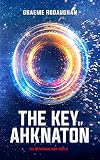
A must-read for the reveals, justice meted out in large doses, and action-packed battle sequences. A fitting penultimate lead-up to the upcoming finalé [b:The Metaframe Adept|58920556|The Metaframe Adept (The Metaframe War, #7)|Graeme Rodaughan|https://s.gr-assets.com/assets/nophoto/book/50x75-a91bf249278a81aabab721ef782c4a74.png|92842714].