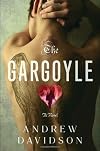
This book so was SO hyped for so long that I simply could not wait to read it, and when I tucked in late Friday night and started reading graphic burn descriptions, I thought “this is going to be awesome.” The sentiment did not last long, but I pushed through and finished the book up this afternoon, hoping for a “twist” of some sort to redeem the experience. Sadly, it never came. There are things I really liked and then things I really didn’t like.
Let’s start with things I really liked:
1. Descriptions. Davidson knows how to describe things in such vivid detail that you can really see and imagine what he is writing about. A couple examples that stand out are the car crash and burn descriptions, especially the excerpt in which he tells you burn yourself on a stove in varying degrees, the descriptions of debridement, and descriptions of what he looked like before and after the burns.
2. Short stories. The short stories sprinkled throughout reminded me of The Blood of Flowers, and I really enjoyed them; they are beautifully written and wonderfully creative.
3. Protagonist. I really appreciated the honesty of the protagonist, especially the unabashed details of his admittedly seedier days pre-burn. I felt I could trust him and I thought he was pretty good about keeping his head amidst falling in love with a crazy (?) person and dealing with drug addiction and disfigurement.
4. The Bitchsnake. I thought this element of the story was super clever, creative, and show more entertaining.
Now, the things I didn’t like:
1. The language. It felt contrived and as if Davidson was trying too hard to be casual/colloquial to notice that the language sometimes just felt sloppy and sappy. Overall, I found the writing pretty cheesy.
2. The “love story.” For two people who were supposedly destined for each other, what’s-his-face (why does protagonist have no name, anyway?) and Marianne Engel don’t really seem all that crazy about each other in the present time. There are no descriptions of passionate emotions, save protagonist’s excitement about Marianne’s body, and Marianne spends so much time carving gargoyles and telling stories that it doesn’t seem like she could really know anything about what’s-his-face.
3. Crazy Love. Is Marianne seriously mentally ill or does love just conquer all and she really is 700 yrs old? Is this a fantasy story or isn’t it? This doesn’t work for me, and I don’t feel like Davidson did a good job at convincing me that Marianne’s not really nuts. To me, over the top romanticism of the story just felt cheesy, and like I said before, they didn’t seem to be that into each other.
4. Inferno Insert. This part was really boring to me, didn’t make sense or add to the story, or clarify or reveal anything about Marianne or the love story. I got the feeling this was the climax of their grand love story, but to me it just seemed like Davidson really likes the Inferno and wanted to “cover” it. Definitely not as good as the real thing.
Overall, I thought the book was entertaining, had some really interesting and like-able characters (Sayuri, the psychologist, and Dr. Nan), some good stories within stories, with bouts of fine writing, but was overall cheesy and fell flat of the hype. At the end I still wanted to know what the real story was with Marianne, and it just wasn’t written in a way where not knowing worked as a clever “choose-your-own-ending” type closing. I also thought there were many simply unnecessary pages. I show less
Let’s start with things I really liked:
1. Descriptions. Davidson knows how to describe things in such vivid detail that you can really see and imagine what he is writing about. A couple examples that stand out are the car crash and burn descriptions, especially the excerpt in which he tells you burn yourself on a stove in varying degrees, the descriptions of debridement, and descriptions of what he looked like before and after the burns.
2. Short stories. The short stories sprinkled throughout reminded me of The Blood of Flowers, and I really enjoyed them; they are beautifully written and wonderfully creative.
3. Protagonist. I really appreciated the honesty of the protagonist, especially the unabashed details of his admittedly seedier days pre-burn. I felt I could trust him and I thought he was pretty good about keeping his head amidst falling in love with a crazy (?) person and dealing with drug addiction and disfigurement.
4. The Bitchsnake. I thought this element of the story was super clever, creative, and show more entertaining.
Now, the things I didn’t like:
1. The language. It felt contrived and as if Davidson was trying too hard to be casual/colloquial to notice that the language sometimes just felt sloppy and sappy. Overall, I found the writing pretty cheesy.
2. The “love story.” For two people who were supposedly destined for each other, what’s-his-face (why does protagonist have no name, anyway?) and Marianne Engel don’t really seem all that crazy about each other in the present time. There are no descriptions of passionate emotions, save protagonist’s excitement about Marianne’s body, and Marianne spends so much time carving gargoyles and telling stories that it doesn’t seem like she could really know anything about what’s-his-face.
3. Crazy Love. Is Marianne seriously mentally ill or does love just conquer all and she really is 700 yrs old? Is this a fantasy story or isn’t it? This doesn’t work for me, and I don’t feel like Davidson did a good job at convincing me that Marianne’s not really nuts. To me, over the top romanticism of the story just felt cheesy, and like I said before, they didn’t seem to be that into each other.
4. Inferno Insert. This part was really boring to me, didn’t make sense or add to the story, or clarify or reveal anything about Marianne or the love story. I got the feeling this was the climax of their grand love story, but to me it just seemed like Davidson really likes the Inferno and wanted to “cover” it. Definitely not as good as the real thing.
Overall, I thought the book was entertaining, had some really interesting and like-able characters (Sayuri, the psychologist, and Dr. Nan), some good stories within stories, with bouts of fine writing, but was overall cheesy and fell flat of the hype. At the end I still wanted to know what the real story was with Marianne, and it just wasn’t written in a way where not knowing worked as a clever “choose-your-own-ending” type closing. I also thought there were many simply unnecessary pages. I show less
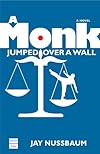
I had absolutely no idea what to expect from this book. When I was notified that I would recieve the book via LibraryThing Early Reviewers, it sounded kind of suspense-y and about a lawyer, so I (ignorantly) conjured up some image of your standard Grisham fare (or at least what I imagined Grisham is like; I’ve never actually read any of his work). The book opens in the midst of a meeting at the protagonist’s, J.J.’s, law firm, the first words are spoken by wh I instantly recognize as the cocky-wins-often-probably-partner lawyer, and I am immediately transported to much beloved Boston Legal episodes in which Denny Crane heartlessly and obliviously speaks down to whomever he is sitting across. Nussbaum throws J.J.’s “rock bottom” episode at us quickly, and I think the way he lets us into J.J.’s dark past vis-à-vis a drunken and overly emotional interchange in the bar scene is a little cheesy, but I quickly forgive this as I’m transported for real back into J.J.’s past. I really like the plot formatting of present/past, present/past; it made me feel like I was watching a movie instead of reading a book, which was surprising and really engaging—I read this book fast. Also surprising were the couple of laugh-out-loud funny moments, which I find very rare in the “serious literary” fiction I usually read. While there is certainly humor and the story is fast-paced, this is not what I would call a “light” read. J.J. goes through some serious spiritual, show more identity, and relational crises, and the resolutions Nussbaum provide illustrate his beliefs about what’s important/worth caring about and doing in life. Karate is a major element of the story, which I thought might turn me off, which pretty much acts as the vehicle to providing “answers” to J.J.’s crises; it sounds cheesy, but it works. The story behind the title of the book is very interesting, and is revealed pretty early on in the novel, and it sets the tone for the rest of the book; if you keep it in mind, it will help you understand J.J. and keep you from getting too frustrated with some of his actions. Overall, this was an enjoyable book that made me think about things we all grapple with on a daily basis (read existential questions) in a different way, which was refreshing. I’m sure you have all heard authors say “write about what you know,” and I think Nussbaum did an exemplary job at it—having read about him on his website, I kept wondering if/how much of the book was autobiographical, and that kept me intrigued. I will definitely be picking up Nussbaum’s “first” novel Blue Road to Atlantis. show less
 This review was written for LibraryThing Early Reviewers.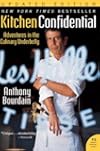
Pirate-esque hijinks. Debauchery of every kind. Sex, drugs, and…walk-in freezers? This is Tony Bourdain’s first culinary expose, before A Cook’s Tour, The Nasty Bits, and No Reservations. I was expecting a gossip-filled, hard-core, greasy, filthy, raunchy, expletive-filled tale of life behind the scenes, and I was not disappointed. Bourdain takes you on a semi-chronological journey of his love affair with food and cooking. Did you know there was a difference between a chef and a cook? That all cooks do not necessarily love food or cooking? Bourdain will teach you the lingo, the tricks to dressing up your own meals, and the dos and don’ts of eating out. Although Bourdain does use quite a bit of potentially offensive (obscene and sexist) language, it only serves to further paint the picture of what his experience in kitchens has been like. You will savor story after hilarious story written in Bourdain’s frank, funny, and completely blunt voice.
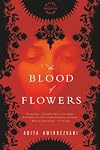
I don’t know about you, but for me it is hard to deal with protagonists who are subject to societal and historical limitations to their character development and (fictional) life chances. Settings that are overtly patriarchal, gender divided, and misogynistic frustrate my post-modern American sensibilities and especially confound me if I feel a strong connection/identify with the protagonist. In The Blood of Flowers, I definitely set up residence in the protagonist’s brain. It was so easy to sympathize with ______ (the author purposely never names her, which is a rather poignant way of asserting her as “every girl, Islam/Iran/Middle Eastern”), but you realize that you can never empathize with her, unless you’ve experienced the kind of dependency on every-man-in-your-life’s whims, homelessness, extreme poverty, and social invisibility. Although the main character has an exhaustingly difficult life, she is as resilient, sassy, and enterprising as any Western characters I’ve encountered (and even more so because her survival necessitates it). ______ and her mother move from their small village to live with an unknown uncle in the big city after the death of her father. Because _____ and her mother are completely dependent on uncle’s generosity and his wife’s unrealistic worries about the family’s finances, they are basically servants uncle’s house. Uncle just happens to be the city’s most talented carpet maker, and ______, an amateur carpet maker show more herself, finagles her way into becoming his home apprentice. The author includes plenty of compelling drama, including family gossip, love triangles, and intrigue, however, my favorite element of the novel are the legends/stories/fairy tales told by many different characters inserted in just the right places. The tales serve as foreshadowing, metaphors for the character’s lives, insight into the culture, and motivation for the characters to act/not act in certain ways. The ending is ambiguous, depending on the meaning you ascribe to the tales, which I like because that means each reader gets to imagine their own ending depending on how/to what degree you identify and empathize with the protagonist. This is also a book you “talk to,” meaning at times I was saying out loud to the hot-headed protagonist “no, don’t do that” and “not again, don’t be so hasty!” All in all, this is a fun, fast, and easy read, yet also has the potential for you to go deeper, in a “you get out what you put in” kind of way. show less
“The tectonic layers of our lives rest so tightly one on top of the other that we always come up against earlier events in later ones, not as matter that has been fully formed and pushed aside, but absolutely present and alive.” p. 217
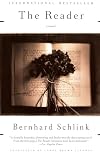
This novel was a bit of a departure from the fiction I’ve been reading lately. Reading the back of the book cannot prepare you for this story. Immediately the reader is confronted with a situation that the likely gut reaction to is “this is just wrong,” however, as the plot continues in the same vein, you get used to it–numbed, if you will. The remarkably quick pace of the novel, thanks to its tightly packed diction, forces you to adapt along with the protagonist and because you are solely in his head, you have no choice other than to see things from his perspective. You find yourself identifying with the ups and downs of his statutory relationship because the young narrator describes it with such candidness; he tricks you into believing him mature beyond his years. And perhaps he is–who am I to judge? This question of “who are you to judge” keeps creeping up in the back of your head as you rationalize and agonize along with the protagonist over the actions of his childhood lover. Set against the backdrop of one of the most morally reprehensible events in history (the holocaust), the readers ethical ideals and human weaknesses are tested in ways most readers have never imagined. This is a very short book (218 pgs) with very show more little text on each small page. This is not your typical relationship story/drama/saga, and all the philosophical gems are at the end, so it is worth the trek. show less
This novel was a bit of a departure from the fiction I’ve been reading lately. Reading the back of the book cannot prepare you for this story. Immediately the reader is confronted with a situation that the likely gut reaction to is “this is just wrong,” however, as the plot continues in the same vein, you get used to it–numbed, if you will. The remarkably quick pace of the novel, thanks to its tightly packed diction, forces you to adapt along with the protagonist and because you are solely in his head, you have no choice other than to see things from his perspective. You find yourself identifying with the ups and downs of his statutory relationship because the young narrator describes it with such candidness; he tricks you into believing him mature beyond his years. And perhaps he is–who am I to judge? This question of “who are you to judge” keeps creeping up in the back of your head as you rationalize and agonize along with the protagonist over the actions of his childhood lover. Set against the backdrop of one of the most morally reprehensible events in history (the holocaust), the readers ethical ideals and human weaknesses are tested in ways most readers have never imagined. This is a very short book (218 pgs) with very show more little text on each small page. This is not your typical relationship story/drama/saga, and all the philosophical gems are at the end, so it is worth the trek. show less